
Thailand vs Vietnam for First-Time Visitors: Which Is Better?
Thailand vs Vietnam for first-time visitors is less about travel difficulty than about the days each country offers. Thailand pairs temple-and-market days in Bangkok with a cooler, slower north around Chiang Mai and limestone islands reached by longtail boat. Vietnam moves from the karst islands of Ha Long Bay to the imperial monuments of Hue, the old port of Hoi An and the waterways of the Mekong Delta, with street food and coffee filling the hours between sights.
In both countries, one region makes a complete short trip and several regions make a fuller two- or three-week route. Your month and passport shape the details.
Thailand vs Vietnam for first-time visitors: at a glance
The table puts the character of each trip next to the practical points that shape it.
| Thailand | Vietnam | |
|---|---|---|
| Landscapes | River city, northern hills, limestone islands and beaches | Karst bay, mountains, heritage towns, river delta |
| Signature days | Island boat trips, markets, temples | Historic towns, Ha Long cruise, street food and coffee |
| Evenings | Walking-street markets up to big nightlife strips | Street food, cafés and night markets |
| About 10 days | One or two regions, such as Bangkok and Chiang Mai, or an island coast | One region: north, centre or south |
| Longer routes | Regions linked by domestic flights, including direct Chiang Mai–Phuket | Regions strung along about 1,650 km, linked by flights and trains |
| Before you fly | Free TDAC; 30 days visa-exempt for most Western passports | Pre-arrival declaration; 45 days visa-free or e-visa |
| Easiest months (cities and north) | November to February | Varies by region; February to April workable everywhere |
| Day-to-day costs | Generally higher | Generally lower |
What a first trip to Thailand feels like
A first Thailand trip is usually a set of contrasting stays. Bangkok is the city stretch, with its temples, markets and the Chao Phraya river, and the old royal capital of Ayutthaya lies within day-trip reach to the north. The north around Chiang Mai brings a slower pace, and the south brings the islands. Each region is its own base with its own hotel, and the regions do not have to be joined through Bangkok: domestic flights also run directly between them, including Chiang Mai to Phuket in about two hours.
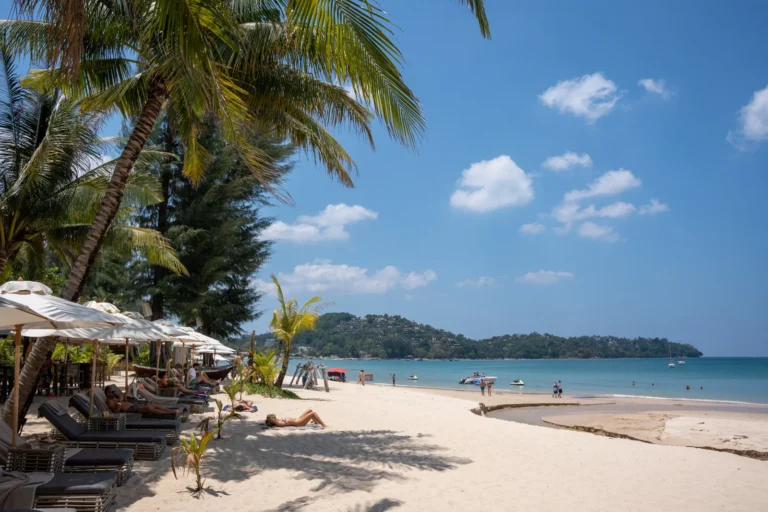
The islands are where Thailand’s character is clearest. Around Krabi the scenery is limestone cliffs and boat days: Railay is a cliff-bound peninsula reached only by longtail boat, and island trips run out to Phi Phi and the Hong Islands. From Koh Samui, day tours head to Ang Thong, 42 islands of limestone, caves and an inland marine lake. The Andaman coast (Phuket, Krabi) and the Gulf coast (Koh Samui) have their best weather at different times of year, so your month picks the side.
Evenings come in every size. Phuket’s Bangla Road, a strip of around 200 bars, clubs and cabaret venues, sits at one end; at the other are walking-street markets such as Phuket Old Town’s on Sundays and Fisherman’s Village on Koh Samui on Fridays. Food runs through all of it. Phuket holds the title of UNESCO Creative City of Gastronomy, and street stalls and markets across the country run on cash. For vegetarians, two words help: “mang sa wirat” means vegetarian but often still uses fish sauce or stock, while “jay” is the stricter, vegan-style version with no animal products.
Thailand rewards travellers who want temples and markets, a mountain town and island boat days in one trip, with evenings that range from a night market to a late bar street.
What a first trip to Vietnam feels like
Vietnam’s regions differ sharply. The country runs about 1,650 km from north to south and narrows to about 50 km in the former Quang Binh province, now part of Quang Tri, and each region has its own climate, food and history.
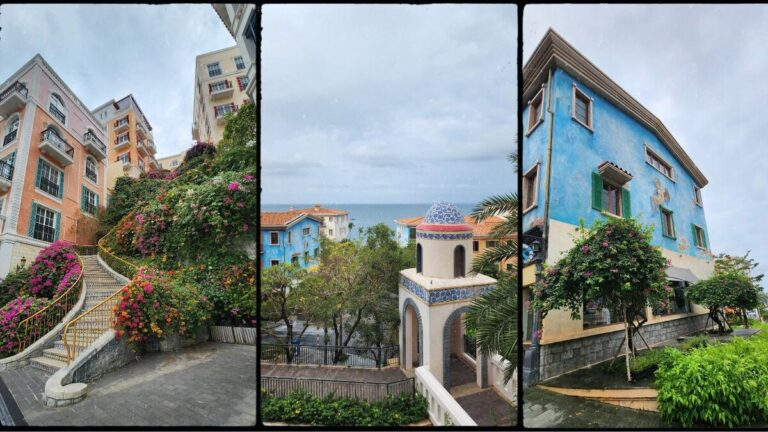
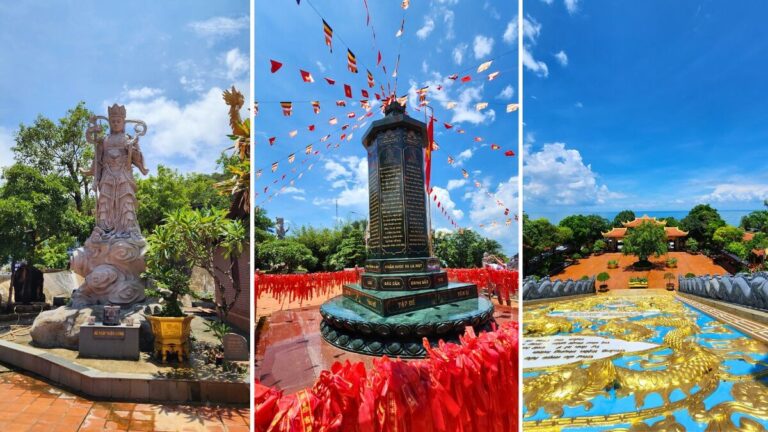
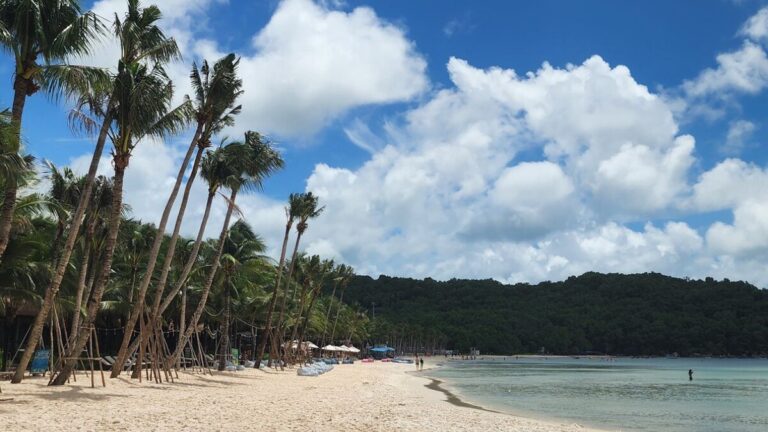
The north centres on Hanoi, with cruises among the limestone islands of Ha Long Bay, a UNESCO World Heritage site, and the mountains around Sapa, reached by an overnight train to Lao Cai and a short drive. The centre is the history stretch: the imperial monuments of Hue and the old trading port of Hoi An, both on the UNESCO list, with the beaches of Da Nang between them. The south is Ho Chi Minh City and the waterways of the Mekong Delta, with Phu Quoc as an island finish.
Travel days can be highlights in their own right. The Hue to Da Nang rail leg runs by day along a scenic stretch in roughly two and a half hours, an easy fit for a first trip, and the overnight Sapa train turns a transfer into a night on the move.
Food and street life carry the days between sights. A day might run on pho, plates of fresh herbs, banh mi from a street stall, and coffee in a café culture with its own rituals, set out in the Vietnamese coffee guide. The cities move on motorbikes, and evenings lean towards street food, cafés and night markets more than big nightlife strips; Phu Quoc, for example, offers night markets and shows rather than a club scene.
Vietnam rewards travellers led by food, history and landscape, whether they spend the whole trip in one region or watch the country change across several.
One region or the whole country
A short trip works in both countries when it stays regional. With about ten days, Bangkok plus Chiang Mai, or Bangkok plus Krabi or Phuket, makes a complete Thai trip. Vietnam works the same way by region: the centre (Hue, Da Nang, Hoi An) or the north (Hanoi, Ha Long Bay, Sapa) fills ten days on its own, and since Hanoi and Da Nang both take international flights, neither route needs a domestic flight.
Longer trips add regions in both countries, with a change of base at each. A two- or three-week Thai route can take in Bangkok, the north and one or two coasts, flying directly between regions where it saves time; the overnight sleeper from Bangkok’s Krung Thep Aphiwat Central to Chiang Mai, about 12 to 13 hours, can replace a hotel night on the way.
Vietnam’s long shape suits a route in one direction, Hanoi to Ho Chi Minh City or the reverse. Covering both ends in two weeks needs at least one domestic flight: Hanoi to Da Nang takes about 1 h 20 to 1 h 30 in the air, but transfers and check-in make each move roughly half a day, and the full rail line takes about 33 hours.
As a rule of thumb, two weeks covers Bangkok plus two regions, or Vietnam end to end at a steady pace, and three weeks adds rest days or side trips in either.
Which country suits your travel month
Each country runs on regional seasons, so match the month to the regions on your route.
Thailand’s cities and north, Bangkok and Chiang Mai included, are most comfortable in the cool season from mid-October to mid-February, with December and January the coolest. From mid-February to mid-May the heat builds, and April is the hottest month and hard going for city sightseeing. The rainy season runs from mid-May to mid-October and is wettest in August and September.
Vietnam’s three regions keep different calendars. The north is cool, misty and sometimes cold from December to March, so pack layers; summer brings heat and storms that can cancel Ha Long cruises. The centre is dry from about February to August, while September to November brings flood risk and peak typhoons, so a north-to-south route then needs spare days. The south is dry from December to April and wet from May to November, mostly in short, heavy bursts that rarely wreck a city day.
Read together, the calendars give a month guide. December to February favours Thailand, or Vietnam’s south. February to April is the window when all three Vietnamese regions are workable, while Thailand heats up. May to August tilts towards central Vietnam, which is dry while Thailand is in its rainy season. From September to November central Vietnam carries the storm risk, and Thailand’s north dries out from mid-October.
Is Vietnam cheaper than Thailand?
Day to day, yes: food and local transport generally cost less in Vietnam. Treat that as a direction rather than a budget. What moves the total is three choices you control: how many flights you take between regions, how often you change base, and which hotel tier you book. A Vietnam route with three domestic flights and a new hotel every two nights can cost more than a slower Thai trip built on one Bangkok base and a single return flight north.
Entry and arrival in brief
Paperwork
Thailand has allowed most Western and Indian travellers a 30-day, tourism-only visa exemption since 15 September 2026; staying longer takes a visa or an extension that is not guaranteed. Each arrival also needs the free online arrival form, the TDAC, filed through the official TDAC website within three calendar days before arrival, counting the arrival day.
In Vietnam, UK, Japanese, South Korean and most European passports get 45 days without a visa, under two schemes that currently run to 2028; most other travellers, including Americans, Canadians and Australians, need an e-visa of up to 90 days from the government portal ending in .gov.vn. Air arrivals at Hanoi, Ho Chi Minh City, Da Nang, Cam Ranh or Phu Quoc also send in the free pre-arrival declaration through prearrival.immigration.gov.vn in the three days before landing, visa-free travellers included, and show its QR code at immigration. The Phu Quoc visa guide covers the island’s own 30-day exemption.
Rides and money
Ride apps take most of the negotiation out of arriving. Grab works in the main destinations of both countries, alongside Bolt in Thailand and Xanh SM, a Vietnamese electric-taxi app, in Vietnam, and the price is fixed before you get in, as long as the phone has data the moment you land.
This article contains affiliate links. If you book through one of them, I may earn a commission at no extra cost to you.
An eSIM set up before departure gives the phone data in the arrivals hall, so the first ride can be booked before you reach the kerb. Compare data plans for Thailand or Vietnam before you fly.
Cards work in Thai chains, malls and hotels, while Vietnam leans more on cash day to day, and street food runs on cash in both. Thai ATMs commonly charge foreign cards a fixed fee of roughly 220 baht per withdrawal, so a few larger withdrawals cost less than many small ones. In both countries, choose the local currency when a terminal or ATM offers a conversion.
Can you combine Thailand and Vietnam in one trip?
Yes, by air. The two countries share no land border, and Bangkok to Hanoi takes about 1 h 40 to 2 hours nonstop, Bangkok to Ho Chi Minh City about 1 h 25 to 2 hours, with several nonstop flights a day on each route. An open-jaw long-haul ticket, into one country and home from the other, avoids doubling back. Let the month set the order: in December and January, Bangkok, Chiang Mai and southern Vietnam are all in their dry season, so Thailand first and Ho Chi Minh City last fits well, while in March Vietnam’s north works too and the route can run the other way.
Combining earns its place at around three weeks, a planning line drawn from the travel times above rather than a fixed rule: each country then gets ten days or so, enough for a region or two each. Under two weeks, one country with one or two regions gives a fuller trip than two countries with a rushed region each. Between two and three weeks, combine only if one region per country is enough for you.
The verdict: Thailand, Vietnam or both
Four inputs decide the choice for a first visit: the kind of days you want, your month, your passport and how many regions you want to see.
Thailand is the better first trip when you want temples and markets, a cooler mountain town and island boat days, with beach stays and evenings that range from night markets to Bangla Road. It fits November to February for Bangkok and the north, and suits passports that would need an e-visa for Vietnam.
Vietnam is the better first trip when history, street food and changing landscapes lead the wish list and your dates match Vietnam’s better windows in the month guide. One region makes a full short trip; two weeks or more opens the whole length. A UK or listed European passport adds 45 days with no visa application.
Plan both when the trip runs to about three weeks or longer and you are happy to fly into one country and home from the other.
Your first bookings: the ticket, then the first base
Book the flights first, because they fix everything else. If Thailand is on the route, hold an onward or return flight out of the country, since immigration officers can ask to see one. If your passport needs a Vietnam e-visa, the application locks in your entry and exit airports, so match them to the ticket. On self-connected tickets through Bangkok, check whether each flight uses Suvarnabhumi (BKK) or Don Mueang (DMK), and leave time to cross between them. With those airports in view, compare open-jaw and onward options.
The first base follows from the trip you chose: Bangkok, Chiang Mai or the island you start on for a Thai trip, or Hanoi, Da Nang or Ho Chi Minh City as the starting point of a Vietnamese region or route. For those first two or three nights, weigh location against cancellation terms.
Other questions first-timers ask
What are the main safety risks for first-timers in Thailand and Vietnam?
Road traffic is the main one in both countries, and a first trip is the wrong time to learn to ride a scooter; app rides or a driver are the easier option. If you do ride, you need a licence valid for the vehicle in the country you are visiting. Check whether your licence requires an International Driving Permit and whether your insurance covers riding. Beyond the roads, watch for drink spiking and methanol in drinks in tourist areas of both countries, bag-snatching from passing motorbikes in Vietnam, and unsolicited “free” transfers.
Can you travel overland between Thailand and Vietnam?
Yes, through Laos via Vientiane, but the journey takes about 40 to 45 hours and is best split over at least two days, so on a first trip flying is the better use of time unless the overland journey is itself the point. Visa-exempt entries into Thailand by land are also capped at two per calendar year.
Does Tet affect a trip to Vietnam in early 2027?
Yes, if you travel between late January and mid-February. Tet, the Lunar New Year, falls on 6 February 2027, and the official public holiday runs from 4 to 10 February. Domestic flights, trains and hotels fill up, prices rise, and some businesses close around the core days. Book Vietnam transport early for those dates, or spend that stretch of the trip in Thailand.