
Thailand vs Vietnam vs Malaysia for a Beach Holiday
Your travel month matters most when comparing Thailand vs Vietnam vs Malaysia for a beach holiday, because their coasts have different dry seasons. For December to March, the strong options are Thailand’s Andaman coast, Langkawi, Phu Quoc and, from January, Nha Trang.
For June to August, they are Thailand’s Gulf islands, Malaysia’s east-coast islands, Da Nang with Hoi An, and Nha Trang again. October and November are a compromise in all three countries.
Once the month has narrowed the list, the real choice is the kind of beach holiday you want: reef or resort pool, boat days or a town to wander, a late bar street or a quiet terrace.
Thailand vs Vietnam vs Malaysia for a beach holiday: the season map
None of the three countries has a single beach season, so the table works coast by coast. Find your month in the second column, then read the last one before you commit.
| Coast (examples) | Best months | Weakest months | What the wet season changes |
|---|---|---|---|
| Thailand, Andaman coast (Phuket, Krabi, Khao Lak) | Dec–Mar | May–Oct | Red-flag days; Similan and Surin parks closed mid-May to mid-Oct |
| Thailand, Gulf islands (Koh Samui and neighbours) | Feb–Sep | Oct–Dec | Wettest mid-Oct–Dec (peak Nov); Jan changeable |
| Vietnam, Phu Quoc | Dec–Mar best; late Nov and Apr transition | May–Oct (wettest Aug–Sep) | West coast rough; south-east more sheltered |
| Vietnam, Nha Trang | Jan–Aug | Sep–Dec | Vietnam’s shortest rainy season |
| Vietnam, Da Nang and Hoi An | Mar–Aug (swimming from about Apr/May) | Sep–Dec | Storm and heavy-rain peak Sep–Nov |
| Vietnam, north (Ha Long Bay) | Apr–May, Sep–Nov (for cruising) | Dec–Mar cool; Jun–Aug stormy | A scenery and cruise coast, weak for swimming |
| Malaysia, Langkawi | Dec–Mar | Aug–Oct | Inter-monsoon storms from late September into November |
| Malaysia, east-coast islands (Perhentian, Redang, Tioman) | Mar/Apr–Sep (October shoulder) | Nov–Feb | Treat as closed; boats only on calm days |
Two things the table cannot show. Phu Quoc runs on the same calendar as Thailand’s Andaman coast, so it is a different kind of holiday in the same months and no escape from Phuket’s rainy season. Its month-by-month pattern is in when to visit Phu Quoc. Malaysia, for its part, swaps sides: Langkawi has its best months while the east-coast islands are closed, then the east coast takes over.
What each coast feels like: beaches, reefs and evenings
Thailand’s Andaman coast: the most choice, on land and at sea
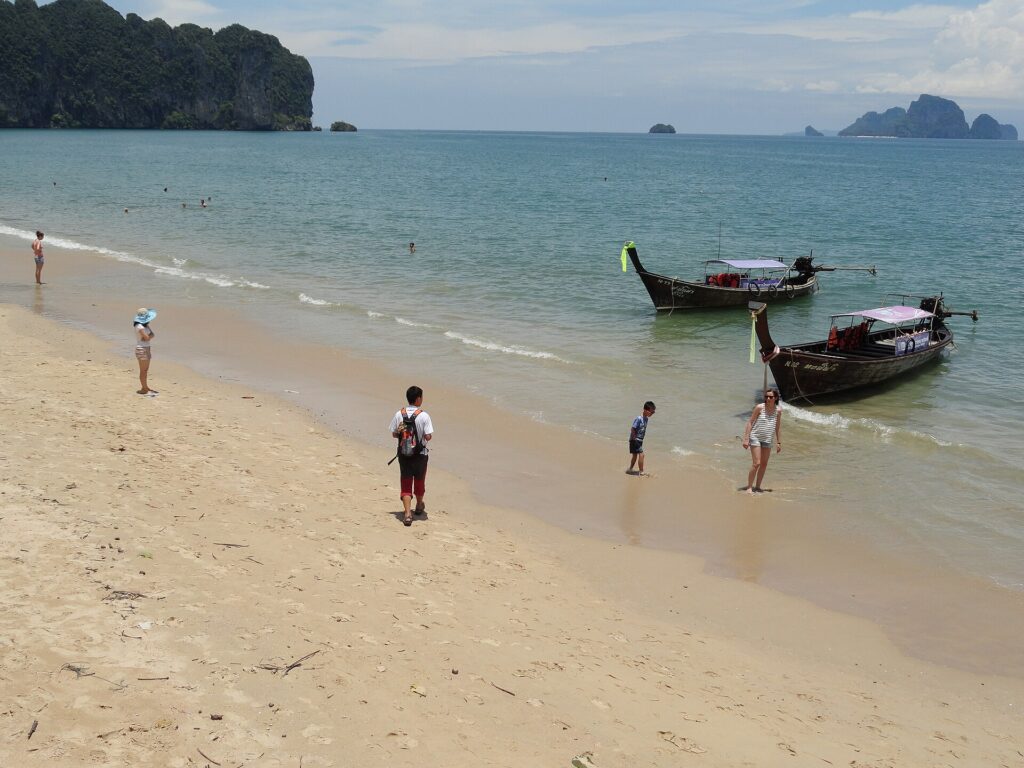
Phuket is Thailand’s biggest island, and its beaches change character as you move along the west coast. The south is busier, with Patong grown into something close to a small town and Kata and Karon set up for water sports. The north is far quieter. Across the water in Krabi, the day centres on boats. Longtails leave Ao Nang for Railay, a cliff-bound peninsula reached only by sea, and for half-day trips around four small islands in the bay. Divers and snorkellers head the other way, to the Similan Islands, a boat trip from Phuket or Khao Lak.
Evenings are where Thailand stands apart from the other two countries. Bangla Road in Patong turns into a pedestrian street from about 18:00, and its licensed venues may stay open until 04:00. Krabi’s bars on Ao Nang’s main road keep smaller and earlier hours, and the quiet northern beaches of Phuket put the strip a taxi ride away.
Thailand’s Gulf islands: resort bays with a lively and a quiet side
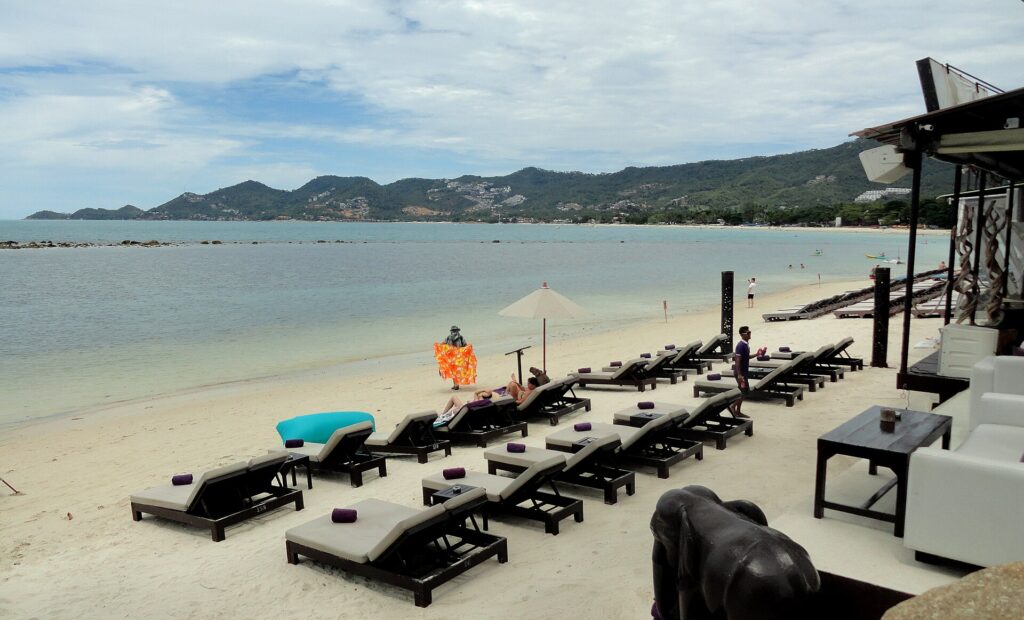
Koh Samui is a resort and villa island with gentler bays in its season. Chaweng is its liveliest district and Lamai is lively but more relaxed, while Bophut’s Fisherman’s Village, a strip of old Chinese shophouses, suits a dinner and a stroll, and turns into a walking street on Friday evenings. The neighbouring islands widen the day: Koh Phangan is 30 to 60 minutes away by boat, and Koh Tao, about an hour and a half by catamaran, is the Gulf’s diving island and keeps diving open through a June to September trip.
Phu Quoc: a sunset coast and a sheltered one
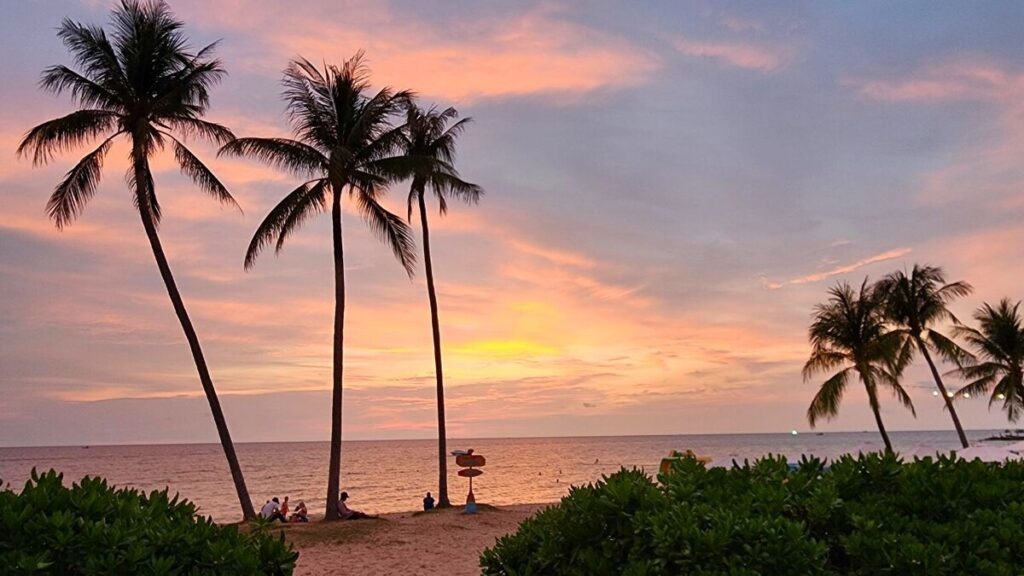
Phu Quoc’s west coast is built around Long Beach, more than 20 km of sand facing the sunset, with Ong Lang on the same coast. Sao and Khem sit on the south-east coast. Rach Vem in the north draws visitors for its starfish between November and April. The reef is gentle rather than dramatic: shallow coral around the southern islands suits first-time snorkellers, on boat trips from An Thoi (the route is in Phu Quoc island hopping). From An Thoi, the Hon Thom cable car, which set a Guinness World Record in 2018 for its non-stop three-rope span of about 7.9 km, crosses to Hon Thom island.
Phu Quoc is no party island. Evenings mean the night market and bars around Duong Dong and Long Beach, or the Kiss of the Sea show with fireworks in Sunset Town at about 21:00, and there are few clubs. Taxis and Grab cover the island well when the days are grouped by area, as a no-scooter plan for Phu Quoc shows.
Da Nang and Hoi An: a city beach with an old town next door
My Khe is Da Nang’s city beach, about 3 km from the airport, with lifeguards on roped swimming zones. The pairing that makes this coast different is Hoi An, whose Ancient Town is a UNESCO World Heritage Site, so a beach morning can turn into an evening in a historic trading port. Grab works in both, and the Hoi An travel guide covers the town side.
Nha Trang: a city base for island boat days
Nha Trang is the mainland option for reef time by boat. Day trips go out to Hon Mun and other islands, where the coral reefs are protected, and the town stays the base you return to each evening.
Langkawi: an upscale resort island without a boat transfer
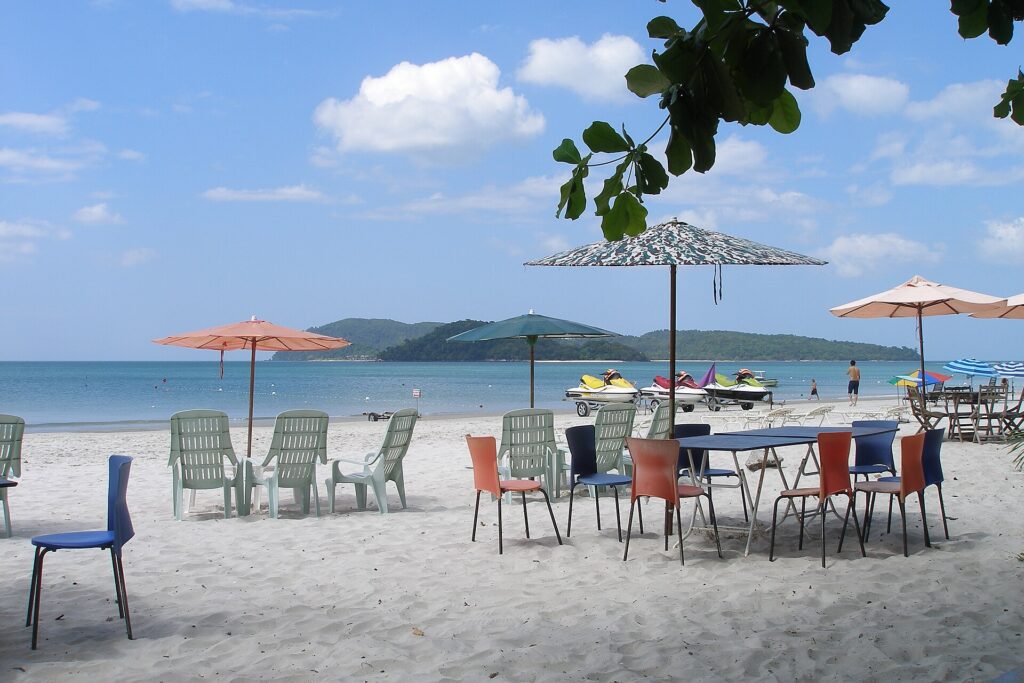
Langkawi suits a comfortable, low-effort beach week: one flight in, a short drive and an upscale resort, with no boat leg at either end. Its reef is at Pulau Payar marine park, about an hour away by boat, and the park closes for part of the spring each year.
Perhentian, Redang and Tioman: reef at the door, quiet after dark
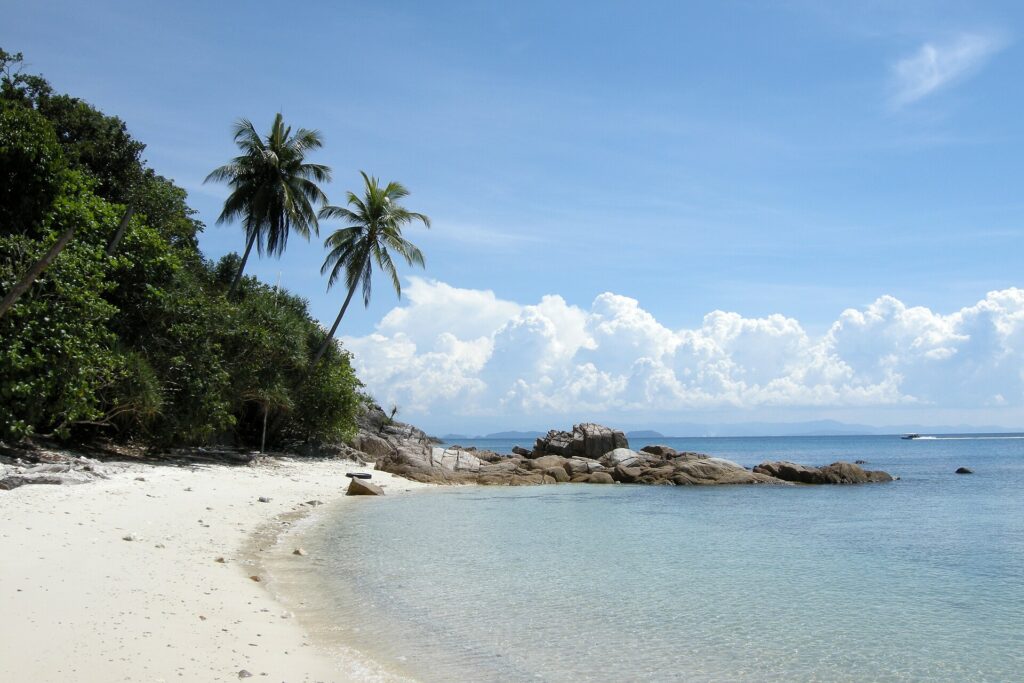
Perhentian and Redang are the islands for travellers who come for the water. Redang’s waters became a marine park in 1985 and are known for coral gardens, while Perhentian’s reefs are home to green turtles and blacktip reef sharks. Diving peaks from April to September, with visibility typically of 10 to 30 metres, best around Redang, which makes these islands the strongest case in this comparison for reef close to a beach island.
Life on land is simple. Perhentian has no roads or cars: jungle trails link some beaches, water taxis link the rest, and power comes from generators. On Perhentian and Redang, places to stay are mostly chalets and mid-range resorts with a few upscale options, evenings are low-key, and alcohol availability varies by resort, so check before booking if a drink at sunset matters. Tioman, further south, follows the same season and is reached by ferry.
If you travel at the edge of the season
A red flag on Thai Andaman beaches means do not swim, and boat trips there may be called off at short notice during the south-west monsoon; families who want to swim most days between June and September are better served by the Gulf side. In Da Nang, swim inside the lifeguard zones. On Phu Quoc between May and October, the south-east coast around Sao and Khem holds up better than Long Beach.
On Perhentian and Redang, several large resorts stay open from November to February, but boats run only on calm days, so treat those months as closed unless the resort confirms the transfer. On Tioman, the Tanjung Gemok ferry terminal closes from November to February.
This article contains affiliate links. If you book through one of them, I may earn a commission at no extra cost to you.
For a Phuket stay, compare Phi Phi day trips departing from Phuket. Check the pickup area, whether park fees are included and how weather cancellations are handled before choosing a departure:
From the airport to the sand: how many legs each beach takes
Leg counts start once you land at the gateway airport; add one flight wherever your route connects through a hub such as Bangkok, Kuala Lumpur, Ho Chi Minh City or Hanoi.
| Beach base | Gateway airport | Legs after landing | Last leg |
|---|---|---|---|
| Phuket | Phuket | 1 | Road; Grab pickups allowed at the airport |
| Koh Samui | Samui, a private airport; most trips connect via Bangkok | 1 (2 for Koh Phangan or Koh Tao) | Road, plus a ferry for the neighbouring islands |
| Phu Quoc | Phu Quoc (PQC), direct from several regional hubs | 1 | Road; no boat |
| Da Nang | Da Nang | 1 | About 3 km to the north end of My Khe beach, 10–15 minutes |
| Nha Trang | Cam Ranh | 1 | Road, about 30 km |
| Langkawi | Langkawi, via Kuala Lumpur or Penang, or direct from Singapore | 1 | Short drive; no boat |
| Perhentian or Redang | Kota Bharu (KBR) or Kuala Terengganu, by domestic flight | 2 | Perhentian: 1 h road, 30–45 min speedboat. Redang: 35 min road, 45 min boat |
| Tioman | Singapore, or Senai in Johor | 2 | Road to Mersing (3.5 h or 2 h), then about 2 h by ferry |
The reef islands are the ones that cost a full travel day. There are no scheduled flights to Redang itself now; the route runs through Kuala Terengganu and the boat from Merang, which many resort packages include. Malaysia’s marine parks also charge visitors without a Malaysian MyKad a conservation fee of RM30 per adult and RM15 per child aged 6 to 12 or senior, paid in cash at the jetty on Tioman.
Once the coast is set, route the flight to the gateway that saves the most legs: for Perhentian or Redang, plan the domestic leg to Kota Bharu or Kuala Terengganu together with the international flight; for Phu Quoc, see whether a direct regional flight saves the mainland connection.
Choose by month first: the verdict
December to March. Thailand’s Andaman coast suits couples and groups who want the most beaches to choose from, boat days to Railay or the Similans, and Patong’s late evenings within reach. Phu Quoc suits families who want a sunset beach, gentle snorkelling and evenings of markets and shows. Langkawi is the low-effort pick: one flight, no boat and an upscale resort. Nha Trang joins from January for reef boat days on the Vietnamese mainland.
April and May. April is a transition month on the Andaman coast and Phu Quoc. Koh Samui, Nha Trang and Da Nang are in good shape, and Da Nang with Hoi An gives a family the shortest transfer once the swimming season starts. Reef-first travellers can already head to Perhentian or Redang, where the peak diving months begin in April.
June to August. Four coasts are in season at once. The Gulf islands give a Thai resort holiday with Chaweng’s bars or Bophut’s quieter evenings, plus Koh Tao for divers. Perhentian and Redang reward couples and families who put the reef first and accept four legs and quiet nights, and Tioman is the east-coast option for a trip that starts in Singapore. Da Nang with Hoi An mixes beach days with an old town, and Nha Trang is the Vietnamese all-rounder for boat days.
September. The Gulf islands and the Malaysian east coast still work, which makes them the safest picks for a September week. Vietnam’s beaches are better left for another month.
October and November. No coast in the three countries is strong in these months. The Andaman coast and Phu Quoc improve as November goes on, which makes late November on one of those two the least-bad bet, booked on flexible terms in case the season turns late.
With one or two coasts chosen, compare resorts there for your dates. On Perhentian, Redang or Tioman, check that the resort is open on those dates and whether the boat transfer is included.
Before you book: paperwork and two-country trips
What paperwork do the three countries need?
Thailand lets UK, US, Australian, Canadian and EU passport holders stay 30 days without a visa for tourism, enough for any one- or two-week beach trip; the free Thailand Digital Arrival Card (TDAC) goes in online at tdac.immigration.go.th during the last three days before arrival. Malaysia’s free Malaysia Digital Arrival Card (MDAC) is due no more than three days before arrival.
In Vietnam, UK and most EU passport holders get 45 days visa-free; US, Canadian and Australian passport holders need an e-visa. A Phu Quoc-only trip on a direct international flight gets 30 days visa-free, as the Phu Quoc visa guide explains. The five main Vietnamese arrival airports (Da Nang, Cam Ranh, Phu Quoc, Hanoi and Ho Chi Minh City) take the free pre-arrival declaration: file it online at prearrival.immigration.gov.vn no more than three days before landing, even on a visa-free passport, and show its QR code at immigration.
Can you split one beach holiday between two of these countries?
Yes, if both coasts share a season. Each extra country adds at least one flight, usually through a hub. Langkawi and Phu Quoc make a workable December to March pair: Singapore has direct flights to both. On a 7 to 14 day trip, one coast still tends to beat two, because each switch costs most of a day that could be spent on the sand.