Hoi An Travel Guide: Old Town, Tickets, Food & Where to Stay
This Hoi An travel guide is for anyone who has seen the yellow walls, silk lanterns and river photos and wondered whether there is much more to the city than the postcard version.
There is.
Hoi An is beautiful, but the pretty streets make more sense once you understand what they grew out of: centuries of trade, Chinese merchant communities, Japanese connections, Vietnamese traditions and a river that linked the town to a much wider world.
The lanterns are part of Hoi An. They are not the whole story.

Hoi An at a Glance
| Best for | History, architecture, food, workshops, slow travel and evening atmosphere |
| Minimum time | 1 full day |
| Better | 2 days / 1–2 nights |
| Old Town ticket | 120,000 VND at the time of writing |
| Best time in the center | Early morning and late afternoon into evening |
| From Da Nang | About 30 km |
| Stay overnight? | Yes, if your schedule allows |
Is Hoi An Worth More Than a Day Trip?
Yes, if you have the time.
You can absolutely visit Hoi An from Da Nang in one long day. I did, and managed to combine the Ancient Town, heritage sites, a museum, Cam Thanh basket boats and the evening lantern atmosphere.
You can see exactly how that day worked in my Hoi An Day Trip from Da Nang.
But staying overnight changes the pace. You can see the town after the day-trippers start leaving, add a workshop or evening show, and return to the streets again in the morning without watching the clock.
For a first visit, I would choose at least one night if the itinerary allows it.
A Short History of Hoi An
Long before Hoi An became the international trading town preserved today, the Thu Bon River estuary was already connected to the maritime world of Champa.
The town’s major period of international trade came later, particularly from the 16th century onward. Japanese traders, Chinese merchants and European sailors passed through the port, while different communities established religious, commercial and social spaces of their own.
Those layers are still visible.
Hoi An does not feel entirely Vietnamese, Chinese or Japanese. The mixture is the point.
As the Thu Bon River silted up and maritime trade shifted toward deeper-water ports, Hoi An gradually lost its former commercial importance. Reduced development pressure also helped preserve much of its traditional urban fabric.
If you are using Da Nang as your base, my Da Nang History guide explains how the neighboring city developed in a very different direction.
And if the Champa period interests you, I visited My Son as part of my 2-Day Motorbike Trip from Da Nang.
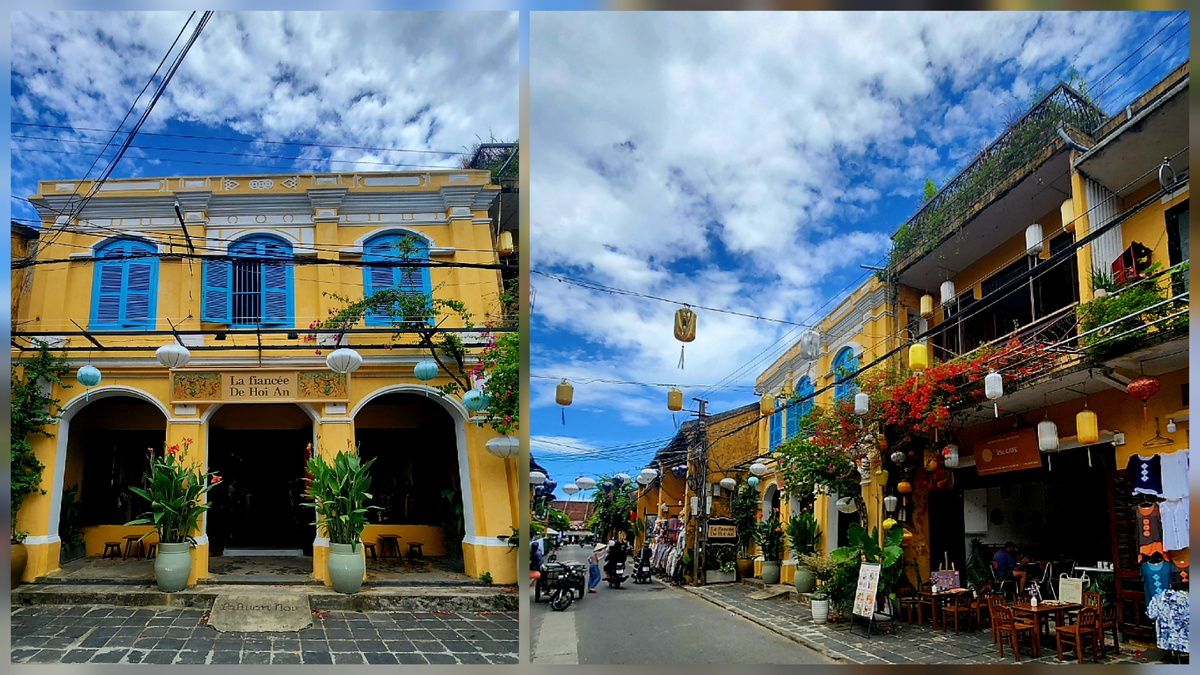
Hoi An’s Yellow Walls
There is no single neat explanation for why yellow became so dominant across Hoi An’s historic façades.
You will hear theories involving symbolism, prosperity, climate and practical building traditions, but it is better not to reduce the town’s appearance to one convenient story.
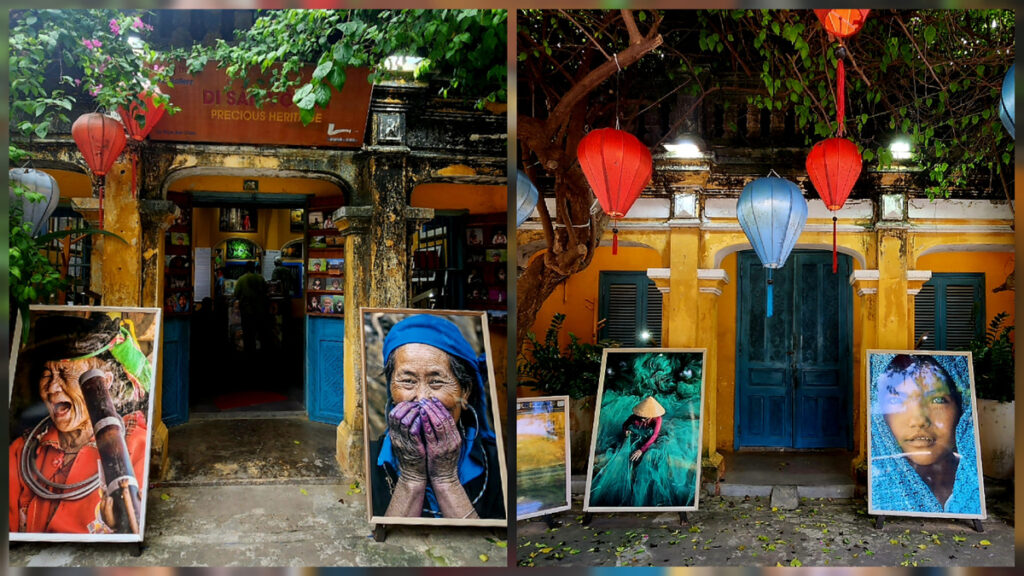
What is clear is that the ochre façades, dark timber, shutters and lanterns have become part of the preserved visual identity of the Ancient Town.
Hoi An Old Town Tickets
You do not need a ticket simply to walk around Hoi An Ancient Town.
You can explore the streets, riverfront, shops and cafés without paying an entrance fee.
The Old Town ticket is for entering selected heritage buildings, museums, assembly halls and old houses. At the time of writing, the main ticket for international visitors costs 120,000 VND.
Do not treat it as a checklist.
For a first visit, I would choose:
- one assembly hall;
- one merchant house;
- one museum or family heritage site.
That gives you different sides of Hoi An without spending the entire day moving between interiors.
What to See in Hoi An Ancient Town
Japanese Covered Bridge
The Japanese Covered Bridge is one of Hoi An’s most recognizable landmarks.
It is small, so do not expect a huge attraction. Its importance comes from what it represents: the historic Japanese presence in a port shaped by international trade.
There is also a temple structure incorporated into the bridge.
A popular legend links the bridge to a giant mythical creature stretching across Asia. According to the story, movement of the creature caused earthquakes and floods, and the bridge was built like a sword pinning it down.
It is folklore rather than an architectural explanation, but it is one of the more memorable stories attached to the city.

Which Assembly Hall Should You Visit?
Hoi An’s Chinese assembly halls served religious, social and community functions for different merchant groups.
You probably do not need all of them.
Fujian Assembly Hall
Best first choice.
It is one of the most visually impressive, with ornate gates, courtyards, dragons and large hanging incense coils.
The main worship is associated with Thiên Hậu, the sea goddess traditionally connected with sailors and merchants.
In an old trading port, that connection feels particularly appropriate.
Cantonese Assembly Hall
Best for decoration.
Choose this one if you want another richly decorated complex with vivid color and elaborate courtyard details.
Trieu Chau Assembly Hall
Best for craftsmanship.
This is the one to consider if detailed woodcarving interests you more than scale.
Which Old House Should You Visit?
The old merchant houses make Hoi An’s trading history easier to visualize because they show how family life and business existed inside the same narrow buildings.
Old House of Tan Ky
Best first choice.
Commercial space, private rooms and Vietnamese, Chinese and Japanese architectural influences appear inside one house.
It gives you a much clearer idea of Hoi An as a merchant city than another paragraph of dates.
Phung Hung Old House
Best for architecture.
It feels larger and more open than Tan Ky and is worth considering if traditional wooden construction is one of your main interests.
Quan Thang Old House
Best for a more intimate scale.
A smaller traditional house with an internal courtyard and a quieter feel.
Museums and Family Heritage
If you still have time after an assembly hall and an old house, add a smaller museum or family site.
The Museum of Trade Ceramics fits particularly well with the story of Hoi An as an international port.
The Tran Family Chapel offers a different perspective, focusing on family heritage, domestic architecture and the relationship between the building and its garden.
Cam Thanh and Hoi An’s Basket Boats
A few kilometers from the Ancient Town, the atmosphere changes completely.
Cam Thanh is known for its water coconut landscape and the round bamboo boats called thúng chai.
These boats are not simply modern tourist props. Round woven boats have long been part of coastal life in Vietnam.
You may also hear a popular story claiming that fishermen adopted the basket shape partly to avoid a colonial tax on conventional boats. It is an entertaining origin story, but difficult to verify, so I would treat it as folklore rather than established history.
Today, Cam Thanh experiences range from quiet rides through the waterways to loud spinning-boat performances with music.
Know which version you are booking.
I preferred the slower side of it: green waterways, shade, a boatwoman weaving small figures from leaves and a complete contrast with the busy historic center.
Markets, Crafts and Workshops
Hoi An works particularly well if you want to do something rather than spend the entire trip looking at monuments.
The town is full of tailors, galleries, craft shops and workshops.
Popular activities include:
- lantern making;
- cooking;
- painting traditional conical hats;
- leatherwork;
- textiles;
- Vietnamese coffee experiences.
The Central Market is also worth walking through, particularly earlier in the day when it feels more like a working market than another tourist stop.

Cooking Classes
Cooking classes often combine more than the lesson itself.
Depending on the program, you may also visit a market, herb garden or local village, travel by boat or shop for ingredients before cooking.
If another museum does not appeal to you, this is an easy way to replace conventional sightseeing with something hands-on.
Hoi An at Night
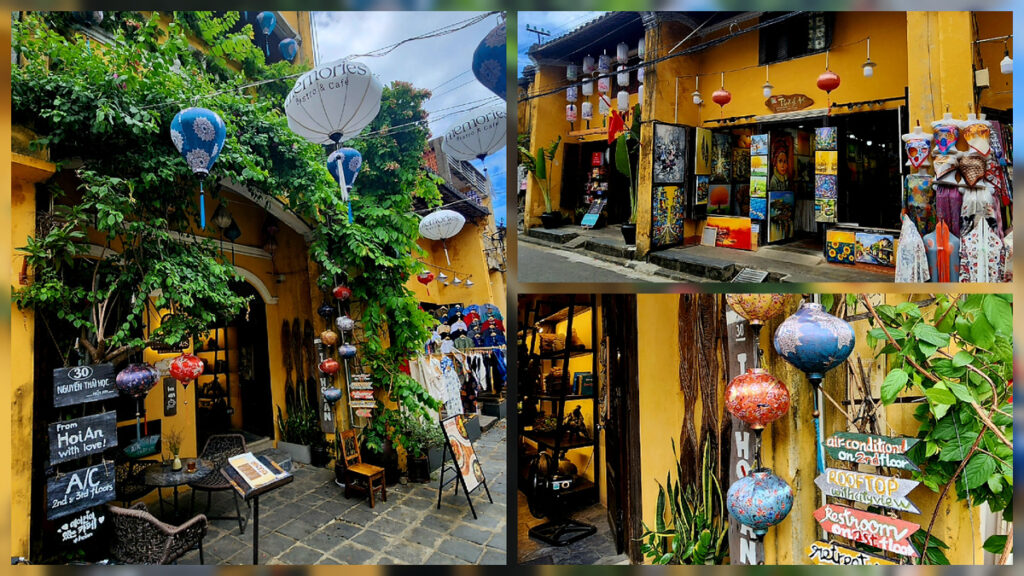
Hoi An after dark is the version of the city that appears in almost every photograph.
And yes, it is beautiful.
But I think the best moment comes slightly earlier.
Arrive before sunset and watch the change happen.
The yellow façades are still visible, then the lanterns become brighter, the river starts reflecting the lights and the daytime heritage town gradually shifts into its evening version.
You can:
- walk along the river;
- take a short boat ride;
- release a small candle lantern;
- visit the night market;
- stop for dinner;
- continue to Hoi An Memories Show.
It gets busy, particularly around the river.
That does not mean you should skip it. Just do not expect solitude in the most photographed part of town.

Hoi An Memories Show
If you want a large-scale evening activity, Hoi An Memories Show is the obvious one.
The outdoor production tells a stylized version of the city’s history through a very large cast, costumes, choreography, lighting and a riverside stage.
This is not an intimate cultural performance.
It is spectacle.
That distinction is useful because it tells you whether it belongs in your itinerary.
I had planned to see the show during my own Hoi An trip and missed it when my phone stopped charging, so it is still on my list for a return visit.
Check the current performance schedule before planning the rest of your evening around it.
Beyond the Old Town: Rice Fields and An Bang Beach
Hoi An becomes rural surprisingly quickly once you leave the historic center.
Rice Fields
Cycling through the surrounding countryside is less about a single viewpoint and more about the landscape itself:
- narrow lanes;
- rice fields;
- water buffalo;
- village houses;
- open sky.
Morning is a particularly good time for this part of Hoi An.

An Bang Beach
An Bang Beach is only a few kilometers from the Old Town and works well as a slower afternoon before returning to the center for sunset.
I would not come to Hoi An only for the beach.
But for a two- or three-day trip, the combination of Ancient Town, countryside and coast gives the destination much more range.
What to Eat in Hoi An
You do not need a huge restaurant checklist.
Start with the local dishes.
Cao Lầu
Probably the dish most strongly associated with Hoi An.
Thick noodles are served with pork, herbs, greens and crunchy elements.
If you want to try something specifically connected with the city, start here.
White Rose Dumplings
Small steamed dumplings with translucent wrappers, typically served as a light dish to share.
Cơm Gà
Hoi An-style chicken rice is another local staple and an easy everyday meal between sightseeing stops.
Bánh Mì
Bánh Mì Phượng appears on almost every food list.
I tried it.
It was good.
I am glad I went.
I did not have a life-changing sandwich moment.
And that is fine. Famous food does not have to become your favorite food.
Three Hoi An Cafés Worth Knowing
Rather than list every photogenic café in town, I would remember three for three different reasons.
Reaching Out Tea House
A quiet concept where staff with hearing and speech disabilities work in an environment designed around written communication and simple objects instead of noisy conversation.
It feels very different from the streets outside.
Mót Hoi An
More of a quick stop than a long café session.
Mót is known for its herbal drink and very photogenic presentation.
Expect a queue.
Faifo Coffee
This one is mainly about the rooftop.
If you want a classic view over Hoi An’s tiled roofs, this is one of the best-known places to get it.
Come for the view rather than expecting a hidden local secret.

Where to Stay in Hoi An
Where you stay changes the kind of Hoi An trip you have.
Anantara Hoi An Resort
Best for: riverside luxury and easy access to the historic center.
Allegro Hoi An
Best for: boutique atmosphere close to the Old Town.
A good option if being able to walk into the historic center matters more than resort facilities.
Hoi An Memories Resort & Spa
Best for: combining your hotel stay with Hoi An Memories Show.
It is located in the same island area as the performance complex.
Victoria Hoi An Beach Resort
Best for: a beach-first stay.
Choose this if the coast matters as much as the Ancient Town and you are happy to travel into the center.
Getting From Da Nang to Hoi An
Hoi An is roughly 30 km from Da Nang, which is why the two destinations are so easy to combine.
Taxi or Ride-Hailing
The simplest indepenent option for many travelers.
Travel time is usually around 45–60 minutes depending on traffic and where you start.
Private Transfer
Useful if you have luggage, arrive at Da Nang Airport or simply want a driver waiting.
Shuttle
Shared shuttle services operate between the two cities.
Schedules and pickup points can change, so check the current arrangement shortly before travelling rather than relying on an old timetable.
Scooter or Motorbike
This gives you more flexibility, but only makes sense if you are legally entitled to ride, properly insured and comfortable in Vietnamese traffic.
Do not rent a bike simply because it appears to be the cheapest option.
Hoi An in 1 Day vs 2 Days
If You Have 1 Day
Morning
- arrive early;
- walk through the Ancient Town;
- choose one assembly hall;
- visit one old merchant house;
- add a museum if it interests you.
Lunch
- try cao lầu, cơm gà or another local dish.
Afternoon
- Cam Thanh basket boat or a workshop.
Late afternoon
- return to the Old Town before sunset.
Evening
- river and lanterns;
- dinner;
- either a short boat ride or Hoi An Memories Show.
For a real version of this route, see my Hoi An Day Trip from Da Nang.
If You Have 2 Days
Day 1
- Ancient Town;
- heritage sites;
- local food;
- cafés;
- sunset;
- evening atmosphere;
- Hoi An Memories Show.
Day 2
- countryside or rice fields;
- workshop or cooking class;
- Cam Thanh;
- An Bang Beach;
- another slow evening in town.
With two days, you stop having to choose between culture, countryside and the beach.
Planning Your Hoi An Trip
Tours and Activities
For walking tours, basket boats, cooking classes and other experiences:
Old Town Tickets
Hoi An Memories Show
Hotels
If you prefer to compare a wider range rather than one of the specific hotels above:
Flights
Do Nang International Airport is the main gateway for most Hoi An trips.
Private Transfer
Hoi An Travel Guide FAQ
Do You Need a Ticket to Enter Hoi An Old Town?
No.
You can walk around the historic center without buying an Old Town ticket.
The ticket is for entering selected heritage buildings, museums and other included sites.
Is Hoi An Very Touristy?
Yes, particularly around the main Old Town streets and river after sunset.
That does not mean the city has lost all character.
Go early, walk beyond the busiest streets and leave room for smaller stops between the famous attractions.
What Is the Best Time of Day to Visit Hoi An?
If possible, experience more than one part of the day.
Early morning is quieter.
Late afternoon gives you softer light and a chance to watch the city change.
Stay into the evening for the lanterns and river atmosphere.
If I had to choose only one window, I would arrive in the late afternoon and stay after dark.
Hoi An Is Better When You Leave Space in the Plan
It is easy to arrive in Hoi An with a long list.
Bridges, assembly halls, old houses, basket boats, cafés, workshops, food, river cruises, beaches.
But the town is at its best when there is enough space between those things to notice what you did not plan.
A courtyard.
A workshop.
A quiet tea house.
A street you did not mean to take.
Come with a plan.
Just do not make it so tight that Hoi An has no room to interrupt it.
Some links in this article are affiliate links. If you book through them, I may earn a small commission at no extra cost to you.