Sun Group Vietnam: How It Builds Entire Tourist Destinations
In southern Phu Quoc, you can ride a cable car almost eight kilometres above the sea, spend the afternoon at an island water park, wander through Mediterranean-style streets and finish the evening watching a spectacular show over the water.
At first, these might seem like separate attractions. But the Hon Thom cable car, Sunset Town, Kiss Bridge and several major entertainment experiences are connected to the same company: Sun Group.
And Phu Quoc is only part of the story.
The company has also helped transform Ba Na Hills near Da Nang, made the summit of Fansipan accessible by cable car and developed entertainment complexes around Ha Long Bay.
What interests me most isn’t simply the scale of these projects. It’s the logic behind them.
Sun Group doesn’t just build places to visit. It creates connected tourism experiences that can turn an overlooked location into a reason to plan an entire trip.
After spending time in Phu Quoc’s Sunset Town and visiting other major attractions in Vietnam, I began noticing how these developments fit together.
The more you look, the more interesting the pattern becomes. Cable cars, bridges, hotels, shows, airports and even an airline are parts of a much larger tourism strategy.
But does this approach actually make travel better? And what happens when an entire destination is deliberately designed around tourism?
What Is Sun Group in Vietnam?
Sun Group is a Vietnamese private corporation established in Vietnam in 2007. Its businesses include tourism, entertainment, hospitality, property development and infrastructure.
For most international visitors, the company is best known through Sun World, its network of tourist attractions and entertainment complexes.
But Sun World is only one part of Sun Group’s activities.
The company also develops resorts, urban areas, transport connections and major infrastructure projects.
That’s an important distinction because many of its best-known attractions weren’t designed to function in isolation.
A cable car might bring visitors to a mountain. A distinctive bridge makes the location internationally recognisable. Restaurants and entertainment encourage people to spend more time there, while nearby hotels make overnight stays possible.
Different developments contribute to a larger visitor experience.
Major Sun Group Tourism Projects at a Glance
| Project | Location | Main attraction | Role in the wider strategy |
|---|---|---|---|
| Sunset Town | Phu Quoc | Mediterranean-style waterfront town, Kiss Bridge and shows | Creates a connected evening destination |
| Sun World Hon Thom | Phu Quoc | Sea-crossing cable car and island entertainment | Combines transportation with attractions |
| Ba Na Hills | Da Nang | Golden Bridge, mountain cable cars and French Village | Turns a mountain into a full-day destination |
| Fansipan Legend | Sa Pa | Cable car to Vietnam’s highest mountain | Makes a difficult destination accessible to more visitors |
| Sun World Ha Long | Ha Long | Queen Cable Car, Sun Wheel and amusement facilities | Adds land-based activities to a cruise destination |
| Sun World Cat Ba | Cat Ba | Cable car connecting the mainland and island | Improves access while making the journey an experience |
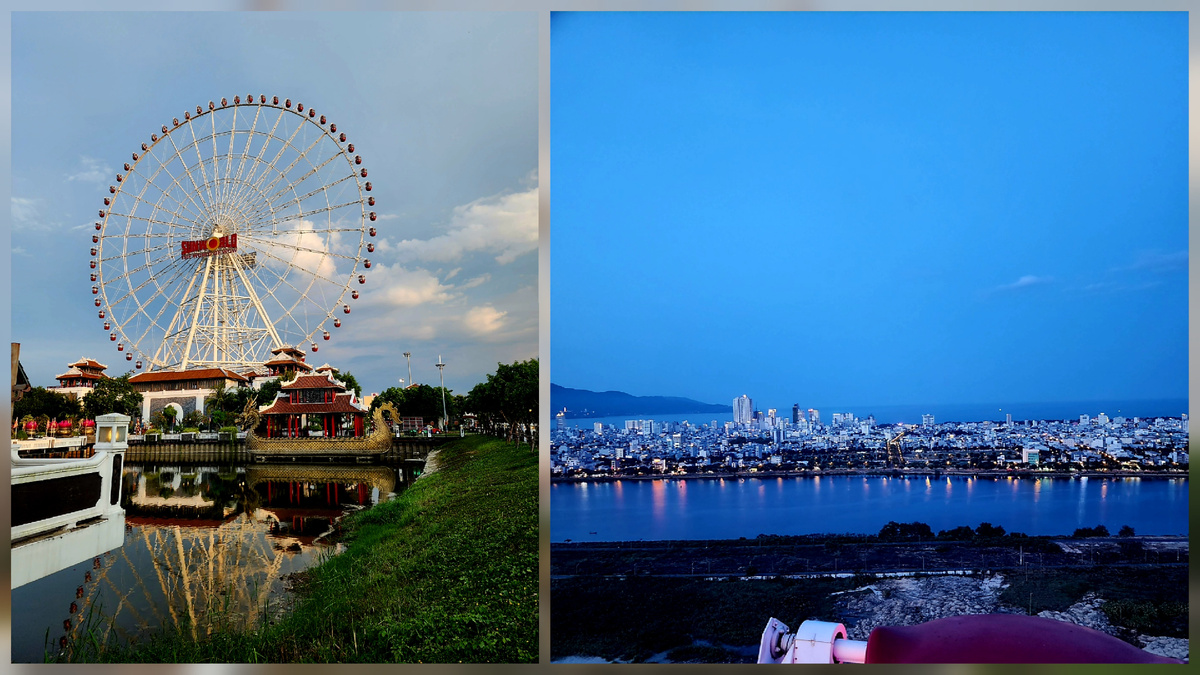
| Da Nang Downtown | Da Nang | Formerly Asia Park, including the Sun Wheel | Historical urban entertainment project; operations suspended in September 2025 |
These are selected examples, not Sun Group’s complete portfolio. Individual attraction operations, ticket arrangements and development phases can change.
The Strategy: Access, Attraction, Experience and Stay
Imagine an island with beautiful scenery but inconvenient transport connections.
Travellers might visit occasionally, yet the area may struggle to attract large numbers of tourists.
Now imagine a developer investing in access, creating a landmark attraction and surrounding it with restaurants, hotels and entertainment.
The island becomes easier to reach, more recognisable and capable of supporting longer visits.
Many Sun Group projects follow some variation of this pattern.
1. Access: Make the Destination Reachable
This might involve a cable car, road, port or airport.
Fansipan is a particularly clear example.
For years, reaching the summit was primarily an adventure for hikers willing to undertake a physically demanding trek.
The cable car changed the experience.
Visitors can now reach the upper mountain area without committing to a multi-day climb, although some walking and stairs may still be involved.
The mountain itself didn’t change. Who could experience it did.
2. Attraction: Create a Reason to Visit
Accessibility alone doesn’t necessarily create a popular tourist destination.
There must also be something memorable.
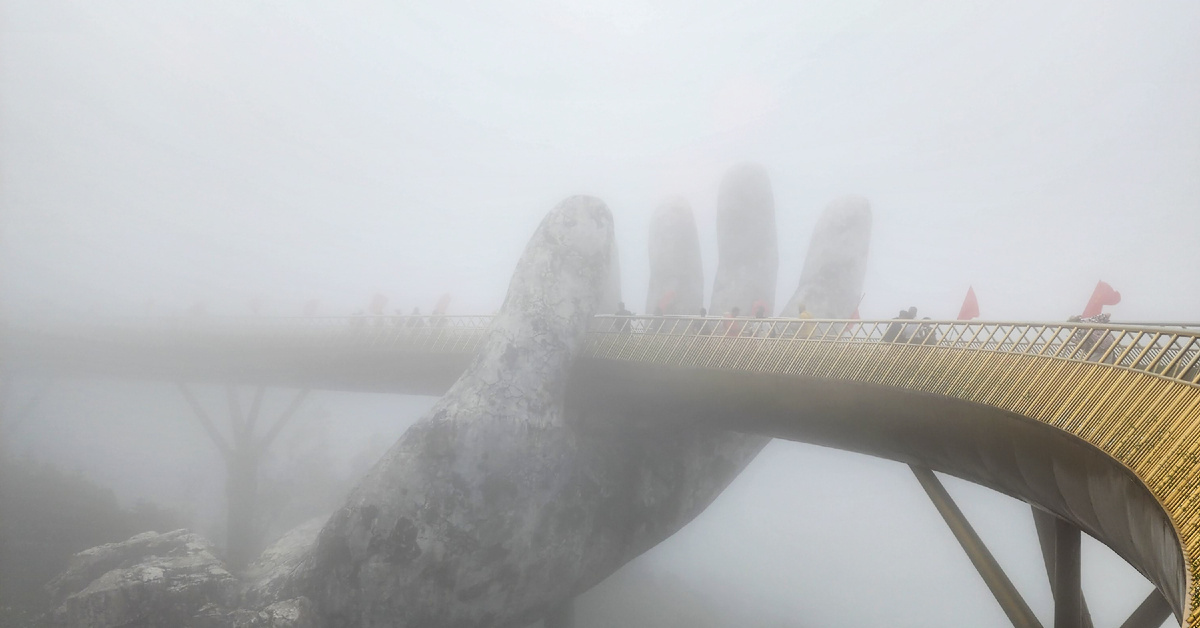
At Ba Na Hills, the Golden Bridge became an instantly recognisable international image.
At Phu Quoc, the Hon Thom cable car offers spectacular views over the An Thoi archipelago.
In both cases, infrastructure doubles as an attraction.
And that’s commercially valuable: something that might otherwise be merely a way to reach a destination becomes a reason to visit in its own right.
3. Experience: Give Visitors Reasons to Stay Longer
A landmark may attract visitors for a photograph. An entire collection of experiences encourages them to spend an afternoon or a full day.
That’s where restaurants, themed streets, gardens, amusement parks, evening performances and shopping areas become important.
Each additional activity creates another possible reason to remain in the destination.
4. Stay: Turn an Excursion into a Longer Visit
Hotels and resorts can extend the visitor experience beyond a single day.
A traveller might originally plan a day trip but discover that staying overnight allows them to enjoy evening entertainment, avoid a long return journey or visit several attractions.
Not every project follows these four stages in the same order, and Sun Group doesn’t own every business operating within its destinations.
But this model helps explain why the company’s investments often involve entire territories rather than individual structures.
Phu Quoc: How an Entire Tourism Ecosystem Works
Phu Quoc is where this strategy becomes particularly easy to understand.
I spent time living in Sunset Town, rather than simply passing through on a day trip, and that gave me a different perspective on how the area works.
You don’t necessarily need a ticket to enjoy its streets.
You can walk between colourful buildings, explore public spaces, photograph the architecture and watch the sunset over the sea.
But the surrounding attractions create opportunities to turn that free visit into a much bigger experience.
Sunset Town: The Attraction Begins Before You Buy a Ticket
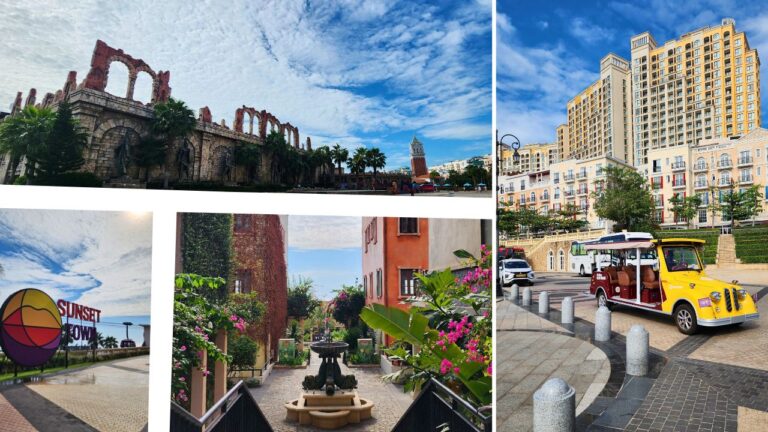
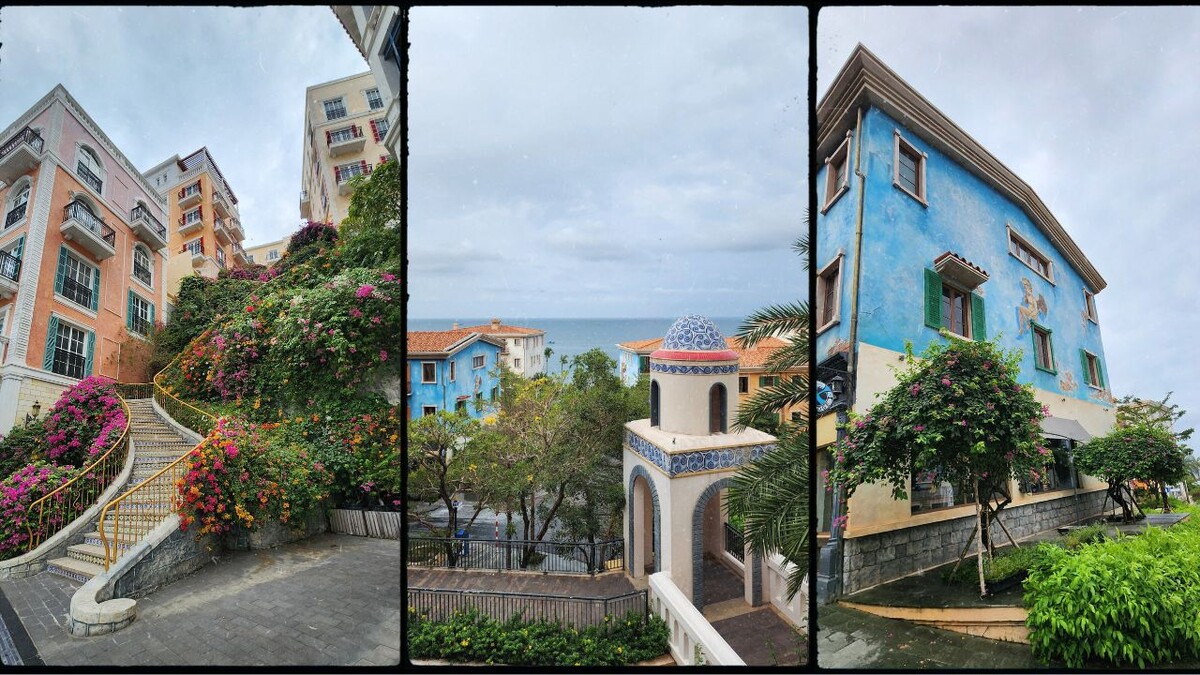
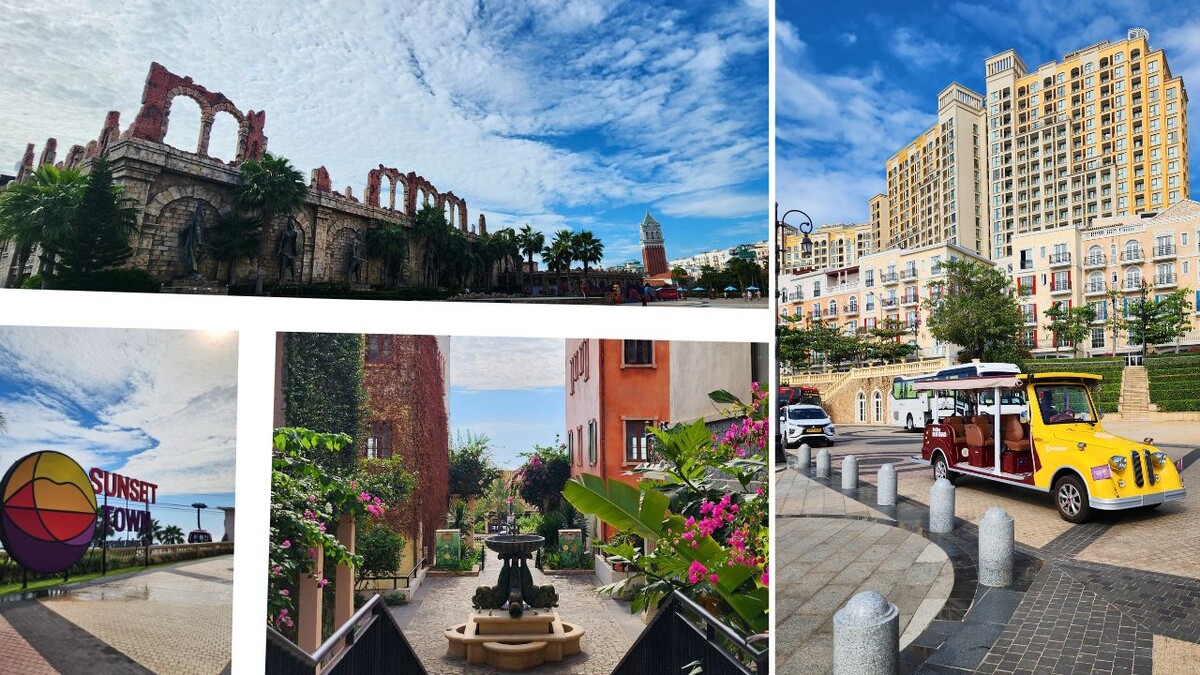
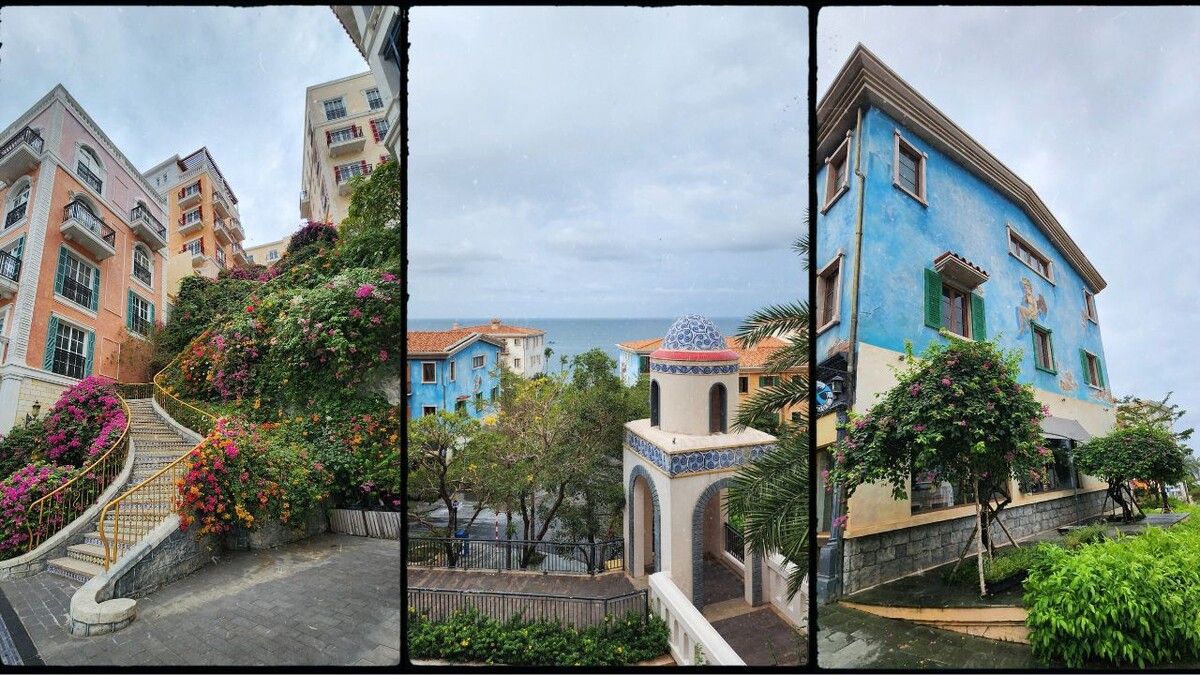
Sunset Town was designed to look like a Mediterranean coastal settlement.
There are pastel-coloured buildings, stone staircases, towers, plazas and streets overlooking the water.
It isn’t a preserved Italian or French town, nor does it pretend to be traditional Vietnamese architecture.
It’s a purpose-built tourism environment.
And that’s what makes it interesting.
The architecture itself attracts visitors. Walking through the streets can be an enjoyable activity even without purchasing a separate attraction ticket.
But once you’re there, Kiss Bridge, restaurants, cafés and evening performances offer reasons to spend more time in the area.
The destination introduces additional experiences as part of the visit.
You might arrive just before sunset, stay for dinner and decide to watch a show.
What began as a free walk becomes an evening itinerary.
The combination is effective because the different activities support one another.
Hon Thom: When Transportation Becomes Entertainment
The Hon Thom cable car takes this idea even further.
Opened in 2018, the approximately 7.9-kilometre route crosses the sea between southern Phu Quoc and Hon Thom Island.
The journey offers views of fishing boats, small islands and the turquoise waters of the An Thoi archipelago.
It’s transportation, but few people experience it as an ordinary transfer.
The journey itself is one of the main reasons to go.
Once on Hon Thom, visitors can enjoy island attractions, including Aquatopia Water Park and other entertainment facilities.
This changes the economics of the experience.
The cable car brings people to the island, while the additional attractions give them reasons to remain.
For travellers, the important detail is that different ticket packages may include different combinations of the cable car, water park and other services.
A ticket to one element shouldn’t automatically be assumed to cover everything.
Kiss Bridge and Evening Shows: Extending the Day
Sunset Town’s evening attractions reveal another part of the strategy.
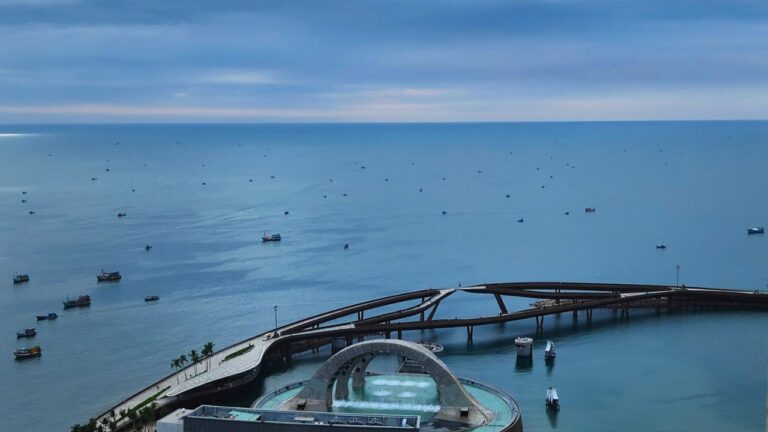
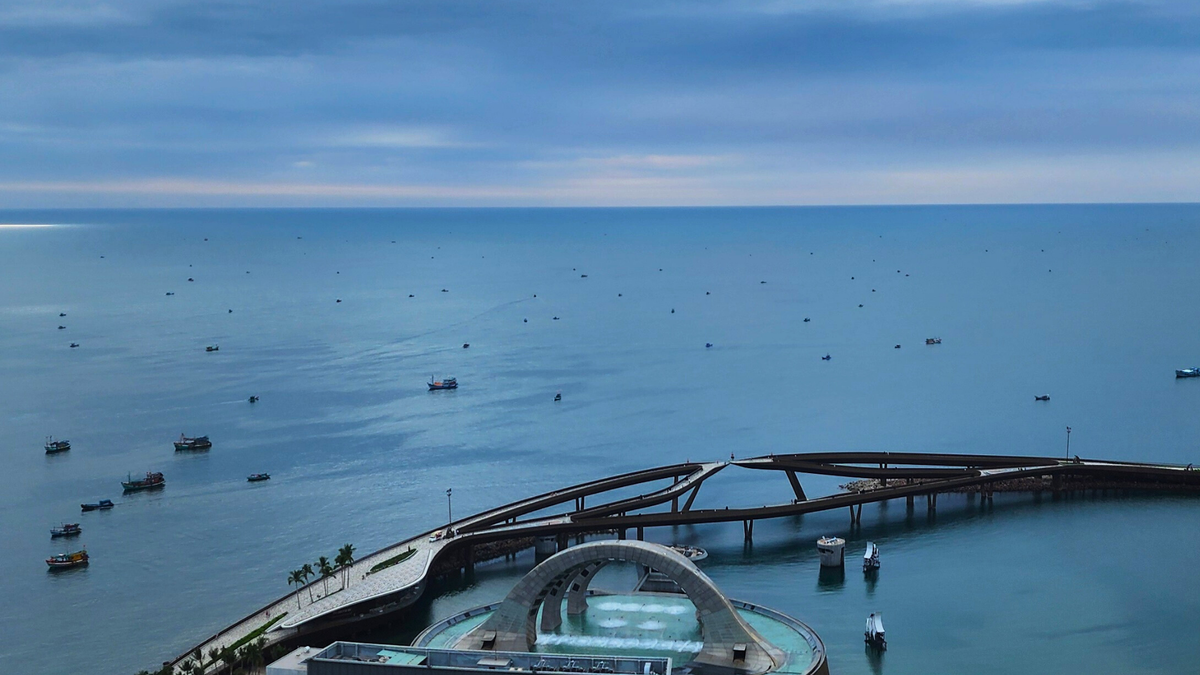
Kiss Bridge is designed around its position over the sea and the experience of sunset.
Performances such as Kiss of the Sea add entertainment after daylight hours.
Rather than relying entirely on daytime excursions, the destination offers reasons to stay into the evening.
That matters for nearby restaurants, hospitality businesses and accommodation.
It also changes the way visitors might plan their time on the island.
Instead of making one isolated trip to a viewpoint, they can build an entire afternoon and evening around the southern coast.
Where You Stay Changes the Experience
There’s also a practical consequence for visitors.
Phu Quoc is a large island, and staying in the wrong area for your plans can mean considerable travel time.
If your priority is Hon Thom, Sunset Town and evening shows, accommodation in the south may be more convenient.
If you’re mainly interested in the northern attractions, other parts of the island may make more sense.
You don’t need to stay inside a Sun Group development to enjoy its attractions.
But understanding their geography can save unnecessary journeys across the island.
The Missing Piece: Air and Sea Connections
The strategy now extends beyond the visitor attractions.
On January 1, 2026, Sun Airport Corporation, a Sun Group subsidiary, officially took over the management and operation of Phu Quoc International Airport.
The group is also investing in airport expansion as the island prepares for APEC 2027.
In March 2026, Sun Group signed a strategic partnership with Changi Airports International to bring international airport-management expertise into the project.
Sun PhuQuoc Airways adds another aviation component to the company’s business.
And in August 2026, Sun Group announced that it had assumed operating rights at An Thoi Port, strengthening its involvement in the island’s maritime infrastructure.
This doesn’t mean Sun Group controls every flight, hotel, road or tourism business on Phu Quoc.
But it does mean the company’s activities extend across several connected stages of the visitor journey.
Phu Quoc is no longer just an example of Sun Group building attractions. It’s an example of a developer becoming involved in both the reasons tourists visit and the infrastructure that helps them arrive.
How the Same Strategy Works Across Vietnam
Phu Quoc offers the most complete illustration, but other Sun Group projects demonstrate different parts of the model.
Ba Na Hills: Creating a Mountain Destination
Ba Na Hills is among the company’s most recognisable projects.
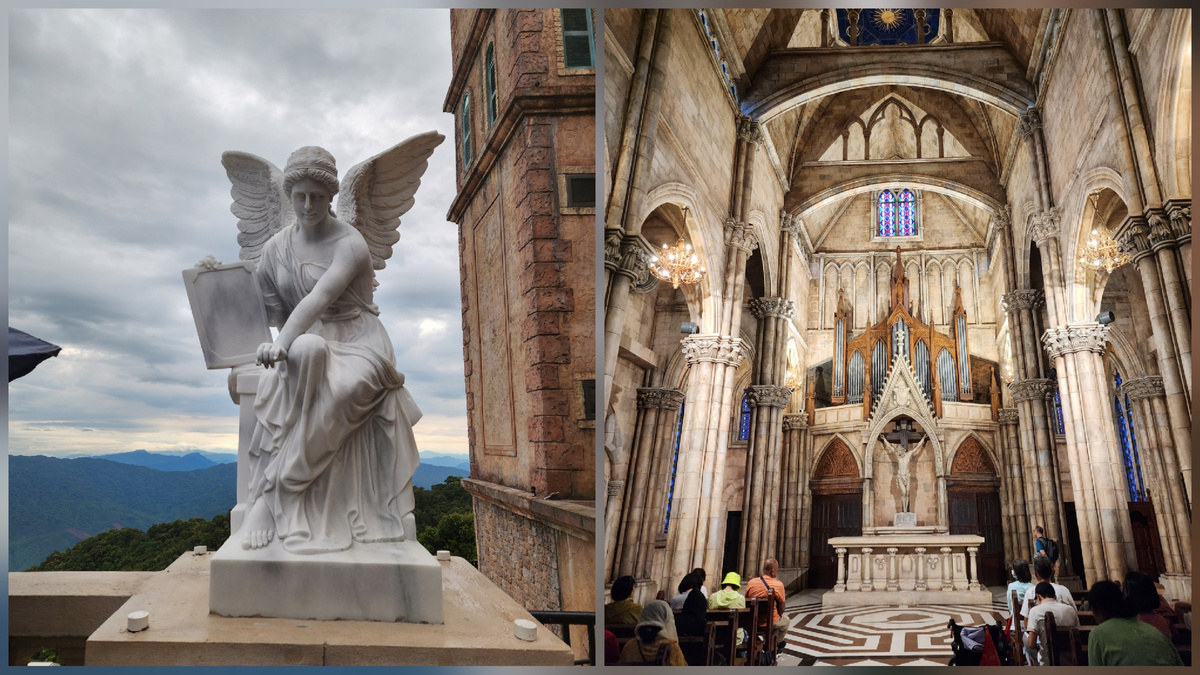
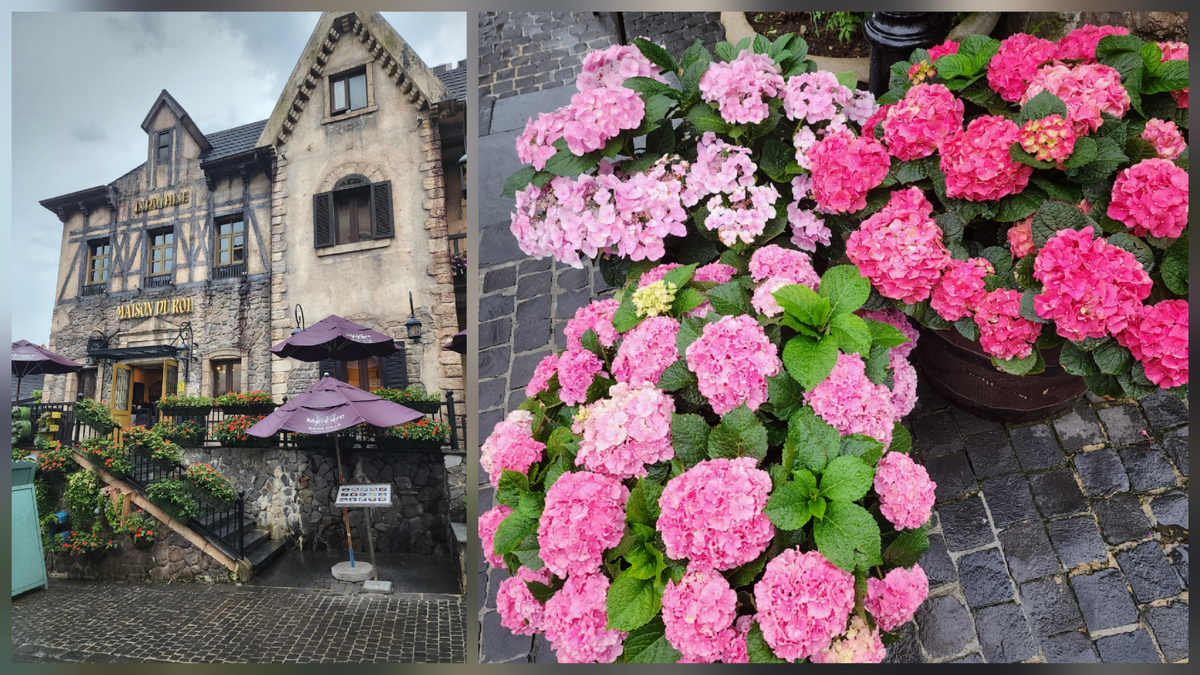
Situated in the mountains outside Da Nang, the complex includes cable cars, the Golden Bridge, French Village, gardens, viewpoints and entertainment facilities.
The Golden Bridge, with its enormous sculpted hands, attracts international attention.
But visitors arriving solely for a photograph may underestimate the scale of the site.
Ba Na Hills is designed as a complete mountain experience.
The cable car solves the problem of reaching the mountain, while the architecture and attractions provide reasons to spend several hours exploring.
The European-inspired setting is deliberately theatrical, especially when contrasted with the Vietnamese coastal city below.
Some people love the fantasy. Others find it artificial.
Either way, the destination has developed an identity distinct from the beaches and urban attractions of Da Nang.
For travellers: Treat Ba Na Hills as a full-day excursion. Mountain weather can change quickly, and reaching the Golden Bridge doesn’t mean you’ve explored the entire complex.

Fansipan Legend: Turning an Expedition into a Tourist Experience
Fansipan, near Sa Pa, reaches approximately 3,143 metres above sea level.
Long before the cable car, the mountain attracted trekkers hoping to conquer the highest summit in Vietnam and Indochina.
Sun World Fansipan Legend introduced a very different way to experience it.
The cable car, opened in 2016, dramatically reduced the effort required to reach the upper mountain area.
Visitors can now enjoy mountain scenery and explore cultural and religious structures without undertaking the traditional multi-day trek.
But accessibility doesn’t eliminate the mountain environment.
Clouds, cold weather, high altitude and remaining stairs can still affect the visit.
The interesting part of the project is how dramatically it expanded the potential audience.
A destination once associated mainly with hiking became available to families, groups and travellers with limited time.
For travellers: Check the forecast, dress for mountain conditions and remember that the cable car doesn’t remove every physical challenge.

Sun World Ha Long: Making the City Part of the Trip
Ha Long Bay is famous for its limestone formations and boat cruises.
For many visitors, the central experience is being out on the water.
Sun World Ha Long adds another dimension through the Queen Cable Car, Sun Wheel and amusement attractions.
The goal is easy to understand: give travellers something to do on land, rather than treating Ha Long City only as a place to board a cruise.
That can make an extra afternoon or overnight stay more appealing.
Still, the existence of attractions doesn’t prove that every visitor stays longer, or that all development produces the expected economic benefits.
It simply shows the strategy being applied to a destination that already has a powerful international identity.


Cat Ba: Turning the Journey into Part of the Visit
Cat Ba Island is known for its national park, limestone landscapes and access to Lan Ha Bay.
Transport has always been an important part of visiting the island.
Sun World’s Cat Ba cable car provides a connection from Cat Hai to Cat Ba, with impressive coastal views along the way.
Like Hon Thom, it makes the journey itself an attraction.
But the two destinations serve different purposes.
At Hon Thom, the cable car connects directly with an entertainment island. On Cat Ba, visitors often continue onwards to accommodation, national park areas or boat trips.
The cable car is therefore one component of a wider journey rather than necessarily the main reason to visit.
For travellers: Check current operating times and onward transport before choosing the cable car instead of another island transfer.
Da Nang Downtown: Even Major Attractions Have a Life Cycle
Not every Sun Group project continues operating in its original form.
Da Nang Downtown, previously known as Asia Park, was an urban amusement destination associated with the Sun Wheel and themed entertainment.
Unlike the mountain or island complexes, this project was integrated into an existing city.
It served both local leisure needs and tourism.
However, operations were suspended in September 2025 as the site entered a redevelopment phase.
This is an important reminder that large-scale tourism projects aren’t permanent simply because they involve substantial investment.
Attractions may be rebranded, redesigned, replaced or closed.
The Sun Group model is therefore about long-term development and adaptation, not a guarantee that every individual entertainment concept will remain successful indefinitely.
Why Sun Group Loves World Records and Dramatic Architecture
Sun Group’s record-breaking cable cars and distinctive landmarks are often discussed as engineering achievements.
But they’re also powerful marketing tools.
Consider the difference between promoting a mountain cable car and promoting a cable car associated with a world record.
The second is easier to remember.
The same principle applies to the Golden Bridge, Hon Thom and the Queen Cable Car.
Their unusual scale and visual characteristics give them international publicity beyond conventional advertising.
Architecture serves a similar purpose.
The giant hands of the Golden Bridge are instantly recognisable.
Sunset Town’s colourful waterfront creates a memorable visual identity.
These landmarks become images associated with a destination, encouraging people to consider visiting even if they previously knew little about the surrounding region.
But visual impact isn’t the same as authenticity.
A French-inspired village built in the Vietnamese mountains is not historical France. A Mediterranean-style waterfront on Phu Quoc isn’t an old European coastal town.
These are designed environments.
The more useful question is whether visitors understand what they’re going to experience and whether the destination delivers something they genuinely enjoy.
From Cable Cars to Airports: A Different Scale of Tourism Development
Cable cars make specific attractions accessible.
Airports can influence the development of entire regions.
That is why Sun Group’s involvement in aviation infrastructure represents a significant expansion of its destination-building approach.
Van Don International Airport
Van Don International Airport, in Quang Ninh Province, opened in 2018.
Developed by Sun Group, it became Vietnam’s first privately developed international airport.
The project was intended to strengthen access to northeastern Vietnam, including the wider Ha Long region.
An airport, however, doesn’t automatically create a successful tourism destination.
Passenger demand depends on airline routes, connections, prices, competing airports and the wider attractiveness of the region.
Van Don illustrates both the ambition and the uncertainty of large infrastructure investment.
Phu Quoc International Airport and Sun PhuQuoc Airways
Phu Quoc adds another layer because Sun Group is already deeply involved in the island’s visitor attractions and hospitality development.
The airport operation agreement that took effect in January 2026, the subsequent partnership with Changi Airports International and the development of Sun PhuQuoc Airways bring different aviation activities into the wider ecosystem.
Airport management, airline operations and tourism development are separate businesses with different responsibilities.
Their proximity within the same corporate group doesn’t mean they function as a single booking system or that travellers must use the company’s services.
But the strategic connection is clear.
Making it easier to reach an island can support demand for the hotels, attractions and entertainment already developed there.
And developing those attractions gives airlines additional reasons to promote the destination.
The relationship works in both directions.
The Benefits and Trade-Offs of Building Entire Destinations
One of the most interesting questions about Sun Group is whether a purpose-built tourism destination is necessarily less valuable than a place that developed gradually.
I don’t think the answer is that simple.
Sunset Town isn’t an ancient Mediterranean village. Ba Na Hills isn’t a preserved French mountain settlement.
Yet both can offer experiences that visitors enjoy.
The issue isn’t just whether a destination is artificial. It’s what people gain, what they give up and whether they understand the experience they’re choosing.
| What travellers may gain | What to consider |
|---|---|
| Easier access to mountains and islands | More visitors and greater pressure on natural environments |
| Multiple attractions within one area | Separate admission fees can increase the total cost |
| Recognisable landmarks and maintained public spaces | Architecture may feel staged rather than locally rooted |
| Ready-made itineraries and transport options | Less flexibility than independent exploration |
| Hotels close to major attractions | Staying in a resort complex can feel different from living in a local neighbourhood |
| New tourism infrastructure | Benefits and costs may be unevenly distributed among local communities |
The Environmental Question
A cable car may reduce the need for difficult individual journeys to a remote location.
But it can also make that location accessible to dramatically larger numbers of people.
More visitors may create additional demand for roads, utilities, waste management and commercial development.
Whether the overall environmental impact is positive or negative depends on the specific project, its construction and the way visitor numbers are managed.
It’s not something that can be established simply by pointing to a new cable car or a landscaped park.
Who Benefits From the Spending?
Large destinations create commercial opportunities for hotels, restaurants, employees and service providers.
However, spending within an integrated tourism complex doesn’t necessarily reach independent local businesses in the same proportions as spending across a traditional town.
Some destinations may create substantial opportunities for nearby communities. Others may concentrate more of the visitor economy within a particular development.
Answering that question properly requires local economic data, not just attractive visitor photographs.
Authenticity Versus Enjoyment
This is the part I find especially interesting.
A tourist might criticise the artificial appearance of Sunset Town and still enjoy walking through it at sunset.
Another might prefer the atmosphere of a traditional Vietnamese town and see little reason to visit.
Neither experience is contradictory.
A purpose-built destination can be enjoyable without being historic or culturally authentic.
The important thing is not to confuse the two.
What Travellers Should Know Before Visiting Sun World Attractions
Understanding the Sun Group model can help you make better decisions when planning a Vietnam trip.
Check Exactly What Your Ticket Includes
A cable car ticket isn’t always the same as admission to every attraction within the destination.
At Hon Thom, for example, compare packages carefully to see whether the water park and other activities are included.
At Ba Na Hills, check the admission conditions for transport, meals and special experiences.
The cheapest ticket isn’t necessarily the best value if it excludes something you already plan to do.
Allow Enough Time
Large Sun World destinations are often designed around extended visits.
Ba Na Hills and Hon Thom can take up much of a day.
Trying to squeeze them into a packed sightseeing schedule may mean spending more time getting there than enjoying the attractions.
Consider the Weather
Cable cars and mountain attractions depend heavily on local conditions.
Fansipan may be cloudy even when Sa Pa has clear weather.
Ba Na Hills can be noticeably cooler and wetter than central Da Nang.
For Hon Thom, sea conditions and weather may affect transport operations and outdoor activities.
Check the forecast and official announcements close to your visit.
Choose Accommodation Around Your Priorities
Staying in the right area can make a bigger difference than choosing a hotel solely by its star rating.
For Ba Na Hills, many travellers stay in Da Nang and make a day trip.
For Sunset Town and Hon Thom, staying in southern Phu Quoc can be convenient if you plan to spend several evenings there.
For Fansipan, Sa Pa is the natural base for most visitors.
A hotel inside a major development may offer convenience, while accommodation in a local neighbourhood can provide a different experience of the destination.
Compare Tours and Transfers Separately
A package with transport may be worthwhile for distant attractions, especially when you don’t want to organise a driver independently.
But compare the total price with booking admission and transport separately.
Also check pickup locations, return arrangements and cancellation policies.
For Ba Na Hills, Hon Thom and other destinations, look for listings that clearly identify the attraction and inclusions rather than relying on a general sightseeing description.
What Sun Group Reveals About Tourism in Vietnam
Sun Group’s projects raise an interesting question: does a destination need to grow naturally to be worth visiting?
Sunset Town isn’t an old Mediterranean village. Ba Na Hills isn’t a historic French town, and the Hon Thom cable car was built precisely to turn a journey into an attraction.
Yet people travel to all three for experiences they genuinely enjoy.
The company has taken an approach that combines engineering, architecture, entertainment, hospitality and increasingly major transport infrastructure.
Sometimes the result is spectacular. Sometimes it feels deliberately artificial. And not every project follows the same path or remains unchanged.
But together, they demonstrate how a private developer can influence the identity of entire destinations.
The important distinction isn’t simply between authentic and artificial.
It’s between understanding the kind of place you’re visiting and arriving with the wrong expectations.
That’s what makes Sun Group such an interesting case in modern Vietnamese tourism.
The company isn’t only developing places to see. It’s helping shape how visitors experience entire regions.
Useful Travel Resources
Planning a trip through Vietnam’s Sun World destinations? These resources can help you compare accommodation, transportation and activities across different regions, especially when attractions are located outside major cities.
Where to Stay
Your hotel location can make a big difference when visiting Sun World attractions. For Ba Na Hills, compare accommodation in Da Nang. For Hon Thom and Sunset Town, consider whether southern Phu Quoc fits your itinerary. Staying close to an attraction isn’t always necessary, but it can save time.
Flights to Vietnam
Vietnam’s major tourism destinations are spread across the country. Compare routes to Da Nang, Hanoi, Phu Quoc and other airports before deciding how to connect multiple regions in one trip.
Tours & Activities
Some Sun World experiences require separate tickets for cable cars, entertainment, meals or transport. Compare the exact inclusions and available packages before booking, especially for Ba Na Hills, Fansipan and Hon Thom.
Airport Transfers
Prearranged transport can make arrivals easier when your accommodation is far from the airport, particularly on Phu Quoc or when travelling with luggage.
eSIM & Mobile Internet
Mobile data is useful for checking attraction schedules, accessing digital tickets, contacting drivers and navigating unfamiliar areas.
Car Rental
For independent mainland journeys, compare rental conditions, insurance coverage and Vietnamese driving-licence requirements before booking. Not every destination or route is equally convenient for self-driving.
Some links on this page are affiliate links. If you make a booking or purchase through one of them, I may earn a small commission at no extra cost to you.