Ho Quoc Pagoda Phu Quoc, Vietnam: Sunrise & Visiting Guide
Ho Quoc Pagoda sits between green hills and the sea on the southeastern coast of Phu Quoc Island, Vietnam. It is the largest pagoda on the island, but what stayed with me most was not its size. It was the setting.
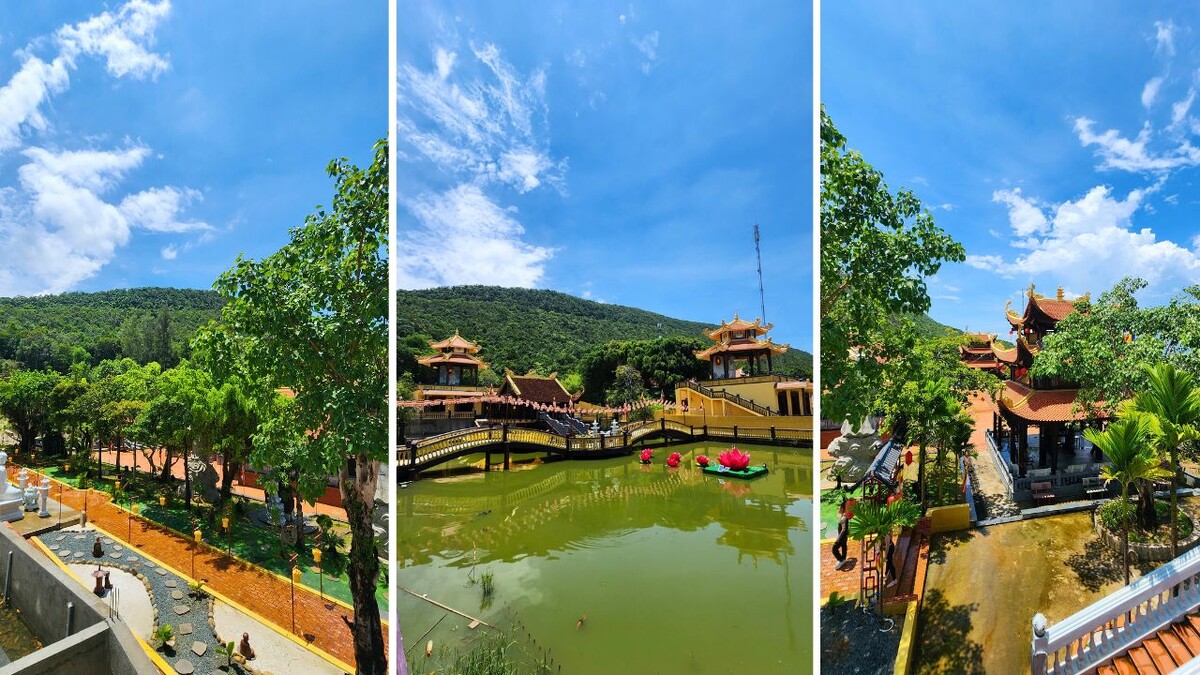
I visited Ho Quoc in the morning while driving around southern Phu Quoc. From the parking area, a broad staircase lined with stone dragons leads upward through the complex. Higher up, the space opens toward the sea, with temple roofs, Buddhist statues and a white Guanyin figure facing the water.
I did not arrive before dawn, so I cannot tell you what sunrise here looked like from personal experience. But the pagoda faces east over the sea, and once you stand on the upper terraces, it is easy to understand why Ho Quoc has become one of Phu Quoc’s best-known sunrise stops.
Quick answer: Ho Quoc Pagoda is worth visiting for the combination of traditional Buddhist architecture, sea views and its dramatic mountainside setting. Allow around 45 to 60 minutes for the temple itself, or longer if you come for sunrise. It fits particularly well into a day exploring southern Phu Quoc.
Ho Quoc Pagoda at a Glance
Full name: Trúc Lâm Hộ Quốc Zen Monastery
Location: Suoi Lon, Duong To, southeastern Phu Quoc
Distance: around 10 km from Phu Quoc International Airport and about 20 km from central Duong Dong
Entrance: free
Current opening hours: 6:00 AM to 6:00 PM daily, checked September 2026
Time needed: around 45 to 60 minutes for a normal visit
Best for: Buddhist architecture, sea views, photography, sunrise and a cultural stop during a South Phu Quoc day
Good to know: Ho Quoc is a modern temple complex rather than an ancient pagoda. Construction began in 2011 and the complex opened in 2012.
My Visit to Ho Quoc Pagoda
My visit came during a longer road trip around Phu Quoc.
We had spent the night on the east coast, where the sun rises over the water rather than setting into it as it does on much of the western side of the island. After breakfast, we continued south and stopped at Ho Quoc.
The temple stands on a slope above the sea.
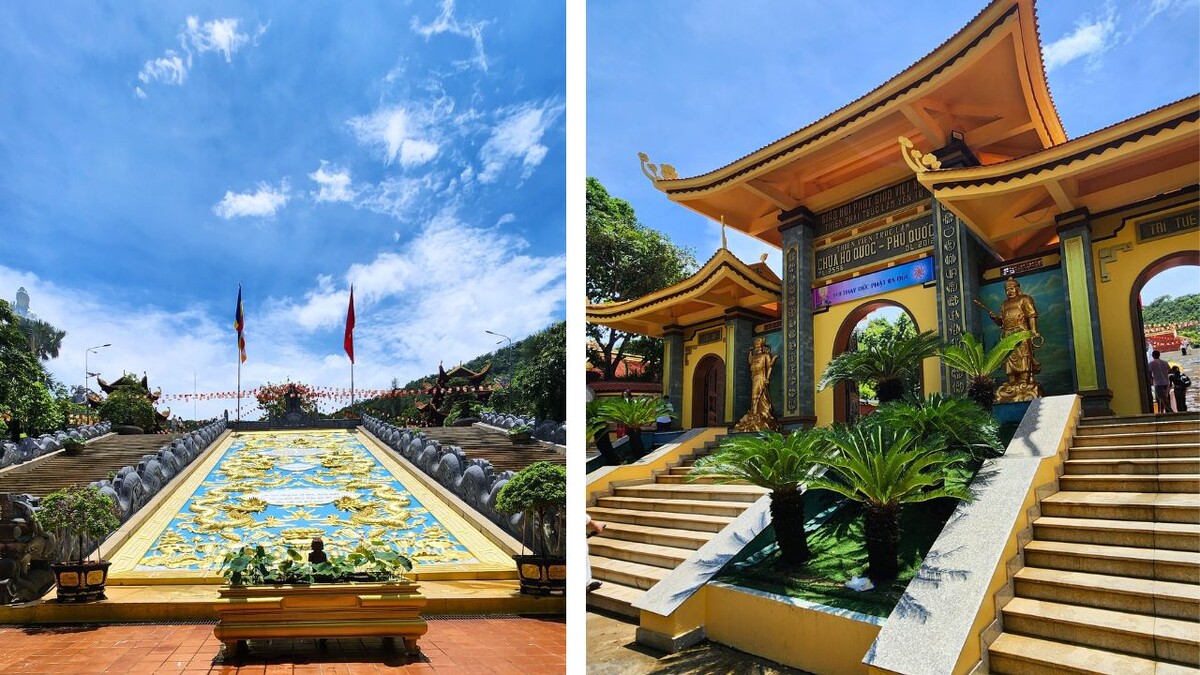
From the lower area, you climb a wide staircase decorated with stone dragons. At the upper level, the complex opens into a much larger space than it first appears from the road.
What I remember most clearly is the combination of architecture and location: the dragons along the stairs, the open courtyard, the white Guanyin looking toward the water and the sea beyond the temple.
It did not feel like visiting one isolated building. The landscape is part of Ho Quoc.
What Makes Ho Quoc Pagoda Different?
Ho Quoc is the largest pagoda on Phu Quoc, but it is also one of the island’s newer Buddhist complexes.
That distinction matters.
You do not come here for centuries-old temple walls. You come for a large contemporary monastery built in traditional Vietnamese Buddhist style and placed in an unusually dramatic location.
The mountains rise behind the complex while the temple looks outward toward the sea.
Descriptions of Ho Quoc often refer to this as a classic “mountain behind, sea in front” feng shui position. The name Hộ Quốc is commonly translated as “Protecting the Nation.”
Even without interpreting the symbolism too deeply, the physical arrangement is easy to appreciate when you are standing there.
The temple feels protected by the hillside while remaining completely open toward the horizon.
What to See at Ho Quoc Pagoda
There is more here than one main hall, so it is worth walking through the complex rather than climbing to the highest terrace, taking a photo and immediately leaving.
The Tam Quan Gate
The traditional three-entrance Tam Quan Gate is the first major architectural element.
Its three passages are known as:
- Địa Giác, the central gate;
- Bất Nhị;
- Giải Thoát.
Modern descriptions of the monastery connect these entrances with Buddhist ideas of awakening and liberation.
You do not need to understand every layer of symbolism to appreciate the gate itself. It establishes the transition from the road and parking area into the temple complex.
The Courtyard Buddha
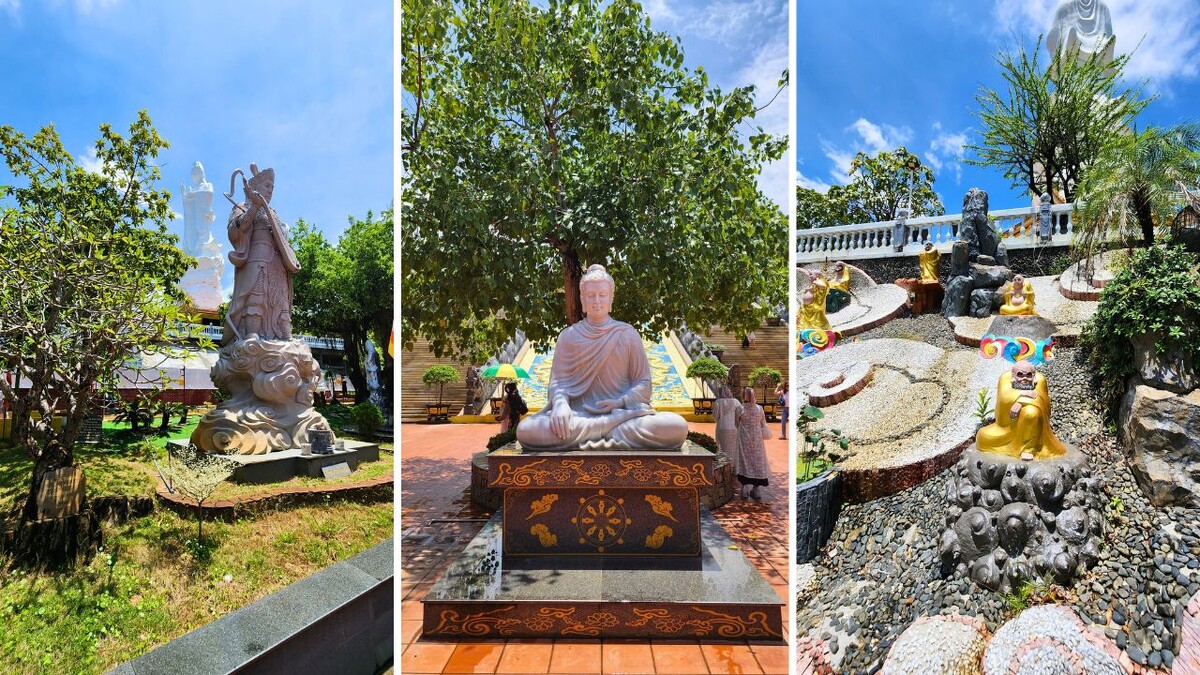
Beyond the entrance is a large open courtyard framed by greenery, temple architecture and glimpses of the sea.
A Buddha statue nearly three meters high stands prominently in this area.
This is also where the scale of Ho Quoc starts to become apparent. There is enough open space that the temple rarely feels visually compressed, even though the complex rises in levels against the hillside.
The 70-Step Dragon Staircase
This was one of the features I remembered most clearly from my visit.
Around 70 stone steps lead toward the main temple area, with carved dragons running along both sides.
The staircase is both practical and visually important. From below, it pulls your eye upward toward the main buildings. From higher up, turning around gives you an increasingly open view back toward the sea.
If you only have time for a short visit, this staircase and the upper terrace are two of the features I would not skip.
The Main Hall
At the top is the main worship area.
The architecture follows the traditional style associated with Vietnamese Buddhist temples, with sweeping tiled roofs, upturned corners and extensive decorative carving.
Ho Quoc is an active monastery rather than an architectural museum, so the main hall should be treated accordingly.
If people are praying, give them space. Remove your shoes where required, keep your voice down and treat photographs inside worship areas more carefully than photos from the terraces.
Bell and Drum Towers
Traditional bell and drum structures form part of the complex and add to the symmetry of the upper temple area.
They are visually distinctive even if you are not present during a ceremony.
I would avoid planning a visit around an assumed bell or drum schedule unless you have checked current information locally.

The White Guanyin
One of the details I particularly remember is the tall white Guanyin, the bodhisattva associated with compassion.
The statue faces toward the water.
Against the sea and green hillside, it is one of the most recognizable images in the complex and another reason the outdoor spaces at Ho Quoc are as memorable as the main hall itself.
The 18 Arhats
You will also find statues of the 18 Arhats, important disciples within Buddhist tradition.
Rather than treating them as identical decorative figures, look at their faces, poses and individual attributes. The variation between them makes this section more interesting than it may appear in a quick photograph.

The Upper Terraces and Sea View
For me, this is what pulls everything together.
Once you have climbed through the complex, turn back toward the water.
Temple roofs sit below you, the mountains remain behind, and the sea opens in front.
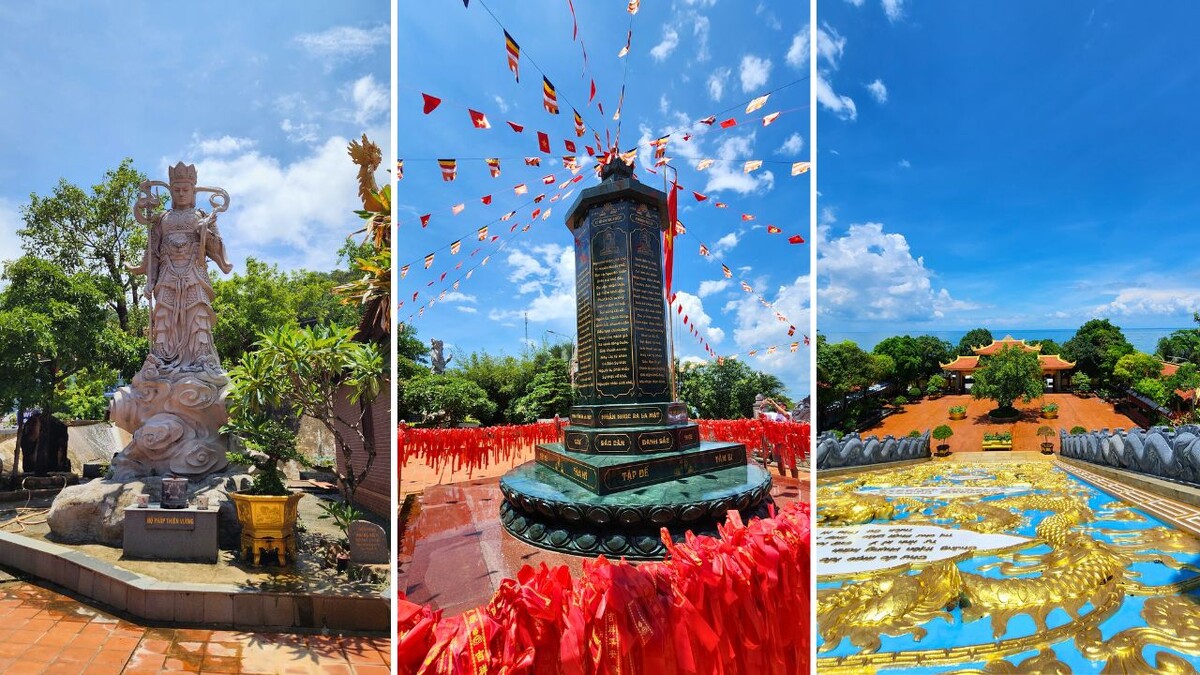
Ho Quoc would still be an impressive complex without this location, but the setting is what makes it particularly memorable on Phu Quoc.
A Short History of Ho Quoc Pagoda
Ho Quoc is formally known as Trúc Lâm Hộ Quốc Zen Monastery.
Construction began in 2011, and the monastery officially opened in December 2012.
That makes it very young compared with historic Buddhist temples elsewhere in Vietnam.
The architecture draws on traditional Vietnamese Buddhist forms and the Trúc Lâm Zen tradition, so the complex can look much older in photographs than it actually is.
I think knowing this improves the visit rather than diminishing it.
Ho Quoc is interesting partly because it shows how traditional Vietnamese temple architecture continues to be used in a modern religious complex rather than existing only as preserved history.
Is Ho Quoc Pagoda Worth Visiting at Sunrise?
Ho Quoc is one of the most obvious places on Phu Quoc to consider for sunrise because the temple faces east over the sea.
I visited later in the morning after seeing sunrise from the east coast, so I would not pretend I personally watched the sun come up from the pagoda.
Even then, its sunrise potential was obvious.
The terraces look directly toward the water, and morning light suits the setting much better than the harshest part of the day.
If sunrise is the main reason for your visit, check the latest opening information before making a special early trip. Current official tourism information lists the pagoda as opening at 6:00 AM.
I would also allow time after sunrise to explore the complex itself rather than treating the temple only as a viewpoint.
The staircase, main temple buildings, Guanyin, statues and upper terraces deserve their own time.
How Long Do You Need at Ho Quoc Pagoda?
For a normal visit, I would allow around 45 to 60 minutes.
That is enough time to walk through the gate, explore the lower courtyard, climb the dragon staircase, visit the main temple area, see the statues and spend some time looking out over the sea.
If you are coming specifically for sunrise, allow longer.
You may want to arrive around opening time, wait for the light, take photographs and then explore after sunrise.
Ho Quoc can technically be visited more quickly, but I do not think rushing through in twenty minutes makes much sense unless you have a very tight itinerary.
How to Get to Ho Quoc Pagoda
Ho Quoc is in Duong To, around 20 km from Duong Dong and about 10 km from Phu Quoc International Airport.
By Car
I visited by car, which worked particularly well because Ho Quoc was part of a much larger route around the island.
A car makes even more sense if you are continuing to Phu Quoc Prison, Khem Beach, Sao Beach or the southern part of the island afterwards.
My Phu Quoc by Car guide explains how I used a rental car to connect the island’s more scattered attractions.
By Scooter
A scooter gives you similar flexibility if you are already comfortable riding.
The main advantage is that Ho Quoc does not need to be your only destination. You can continue farther south without returning to your hotel between stops.
By Taxi or Ride-Hailing Car
A taxi or ride-hailing service is the simplest option if you do not want to drive.
If you are planning several stops, compare the cost of individual rides with hiring a car and driver for part of the day.
If you prefer to explore Phu Quoc without riding yourself, my Phu Quoc Without a Scooter guide covers the broader transport options around the island.
What to Wear and Temple Etiquette
Ho Quoc is an active Buddhist monastery, not only a viewpoint.
Wear clothes that cover your shoulders and knees, particularly if you plan to enter the main worship areas.
Remove your shoes where required.
Keep your voice low inside the temple buildings, avoid playing music and do not block worshippers while taking photographs.
If someone is praying at an altar, give them space rather than treating the altar as a photo backdrop.
Entry is free. Donations are optional.
What to Combine With Ho Quoc Pagoda
Ho Quoc is easy to include in a South Phu Quoc route because several major attractions are farther along the same side of the island.
Ho Quoc + Khem Beach
This is one of the easiest combinations.
Visit the temple in the morning, then continue toward Khem Beach for the beach part of the day.
My full Khem Beach guide also covers the surrounding southern area and the JW Marriott side of the beach.
Ho Quoc + Phu Quoc Prison
This is close to what I actually did.
After Ho Quoc, we continued to Phu Quoc Prison.
The mood changes completely. Ho Quoc is open, peaceful and visually beautiful; the prison deals with a much heavier part of the island’s history.
I would not treat the prison as entertainment, but the contrast between the two stops gives you a much broader picture of Phu Quoc than spending the entire day at the beach.
Ho Quoc + Hon Thom + Sunset Town
If your priority is the major attractions in southern Phu Quoc, Ho Quoc can also be the cultural stop before heading farther south.
The Hon Thom Cable Car works best as a substantial half-day experience rather than a quick ride.
After returning, Sunset Town can take over the evening with walking streets, restaurants, sea views and shows.
Do not try to force every southern attraction into one day. Ho Quoc is easy to add, but Hon Thom itself can take several hours.
For a wider plan, see my 5-day Phu Quoc itinerary.
Where to Stay for Ho Quoc Pagoda and South Phu Quoc
You do not need to choose a hotel purely because you want to visit Ho Quoc, but your base makes a big difference if southern Phu Quoc is a major part of the trip.
Khem Beach and Southern Phu Quoc
This area makes sense if your priorities include Ho Quoc Pagoda, Khem Beach, Phu Quoc Prison and the southern coast.
You are already much closer to the attractions in this part of the island, so you spend less of the day driving back and forth from Duong Dong.
It works particularly well if you want a quieter resort-style base and plan to dedicate significant time to southern Phu Quoc.
Sunset Town
Sunset Town is the better choice if your southern itinerary revolves around Hon Thom, Kiss Bridge, evening shows, restaurants and walkable attractions.
It is not the closest possible base to Ho Quoc, but the temple fits easily into a day trip from here.
The bigger advantage comes at night. You can return to Sunset Town and continue walking, eating or watching a show without another long transfer.
If this sounds like your kind of base, see my Where to Stay in Sunset Town guide.
Long Beach, Sonasea and the Marina Area
This is the compromise option.
Stay around Long Beach, Sonasea or the Marina area if you want easier access to the airport and central Phu Quoc while still being able to drive south for Ho Quoc, Khem Beach or Sunset Town.
I would choose this kind of base if Ho Quoc is only one day trip in a broader island itinerary rather than the beginning of several days focused on the south.
Is Ho Quoc Pagoda Worth Visiting?
For me, yes.
But I would visit for the setting and the complete experience, not because Ho Quoc is an ancient historical monument.
It is actually a modern monastery.
What makes it worthwhile is the way the complex is positioned between mountains and sea, the long dragon staircase, the large courtyard, the Guanyin facing the water, the traditional architecture and the views from the upper levels.
It also works extremely well geographically.
If you are already exploring southern Phu Quoc, Ho Quoc adds a cultural stop without demanding half a day of its own.
If you are interested in sunrise, the east-facing sea view gives you an additional reason to come early.
And if temples are not normally high on your travel list, I still think Ho Quoc is one of the easier Buddhist sites on Phu Quoc to appreciate simply because the landscape is such a large part of the experience.
Bottom Line
Ho Quoc Pagoda is the largest pagoda on Phu Quoc, but size is not the main reason I would include it in a trip.
The memorable part is climbing from the lower courtyard toward the temple with stone dragons beside you, reaching the upper levels and seeing the sea open beyond the roofs and statues.
Come early if sunrise interests you. Otherwise, a morning visit of around an hour works very well before continuing through southern Phu Quoc.
Pair Ho Quoc with Khem Beach, Phu Quoc Prison or a longer route toward Hon Thom and Sunset Town, and it becomes a natural part of one of the island’s strongest sightseeing days.
Some links on this page are affiliate links. If you make a booking or purchase through one of them, I may earn a small commission at no extra cost to you.