Vietnamese Coffee: 7 Drinks, History & How to Order
The first sip of traditional Vietnamese coffee can be a surprise.
It’s strong, dark, sometimes intensely bitter, and often balanced with enough sweetened condensed milk to turn it into something closer to dessert.
If you’re used to delicate arabica with floral notes and gentle acidity, Vietnamese coffee can feel like an entirely different drink.
And in many ways, it is.
Vietnam has developed one of the world’s most distinctive coffee cultures. You’ll find tiny metal filters dripping slowly onto condensed milk, plastic cups of iced coffee sold beside busy roads, thick egg cream floating above espresso-dark coffee, and salty foam that somehow makes the whole drink taste sweeter.
Some of these traditions grew out of limited access to ingredients. Others emerged from local creativity, changing tastes and a coffee industry built around robusta.
Today, Vietnam is one of the world’s largest coffee producers, yet the most interesting part of its coffee culture isn’t the export figures.
It’s what happens in the cafés.
This guide explains seven Vietnamese coffee drinks worth knowing, why Vietnamese coffee tastes different, how to order it, and what makes the coffee scene distinctive in Hanoi, Hue, Da Nang, Ho Chi Minh City and Da Lat.
Vietnamese Coffee at a Glance
| Question | Quick answer |
|---|---|
| What makes Vietnamese coffee different? | Widespread use of robusta, strong brewing methods and distinctive sweet or creamy combinations |
| Traditional brewing method | Phin, a small metal drip filter |
| Most recognisable drink | Cà phê sữa đá, iced coffee with sweetened condensed milk |
| Famous Hanoi specialty | Cà phê trứng, egg coffee |
| Famous Hue specialty | Cà phê muối, salt coffee |
| Best for people who dislike strong coffee | Bạc xỉu, a milk-heavy coffee drink |
| Where is much of Vietnam’s coffee grown? | The Central Highlands, particularly provinces such as Đắk Lắk and Lâm Đồng |
| What should first-time visitors try? | Start with cà phê sữa đá, then choose egg, salt or coconut coffee according to your taste |
Why Does Vietnamese Coffee Taste So Different?
There isn’t one secret ingredient that explains Vietnamese coffee.
The distinctive flavour comes from a combination of beans, brewing methods, roasting traditions and the ingredients added to the cup.
1. Robusta Is Everywhere
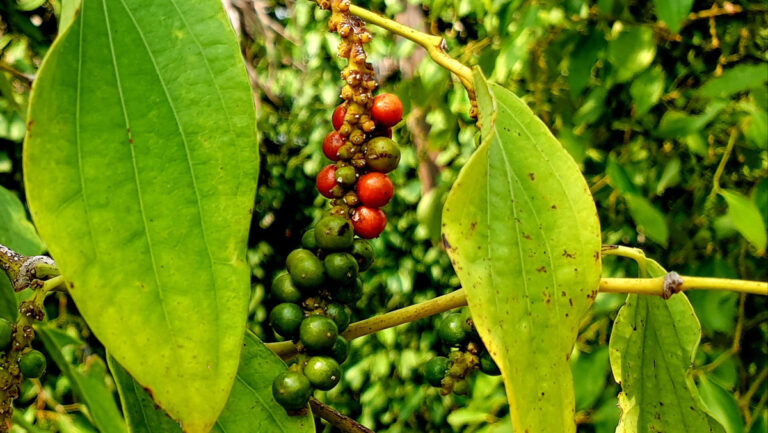
Vietnam is one of the world’s most important robusta producers.
Robusta generally contains more caffeine than arabica and often has a heavier body, lower perceived acidity and more pronounced earthy, nutty or bitter notes.
That strong foundation works particularly well with sweetened condensed milk and ice.
But there’s an important distinction.
Robusta doesn’t automatically mean low-quality coffee.
Carefully cultivated and processed robusta can offer chocolate, nutty, caramel-like and other complex flavours without the harshness associated with poorly handled beans.
Vietnam’s growing interest in fine robusta is challenging the idea that arabica is always the superior choice.
2. The Roast Can Be Bold
Many traditional Vietnamese coffee blends use darker roasting profiles.
These emphasise roasted, chocolate-like and sometimes smoky notes rather than delicate acidity.
Some commercial roasting traditions also involve butter, oil or flavouring ingredients, although these aren’t universal practices and shouldn’t be confused with the characteristics of the coffee bean itself.
Modern specialty roasters increasingly use approaches designed to reveal the bean’s natural flavour.
So the coffee you drink at a roadside stall may taste very different from a carefully prepared robusta at a contemporary café.
Both can be part of Vietnamese coffee culture.
3. Sweetened Condensed Milk Changes Everything
One of Vietnam’s best-known coffee combinations uses sweetened condensed milk instead of ordinary fresh milk.
Historically, preserved milk was practical in conditions where fresh dairy was less accessible and refrigeration wasn’t widespread.
It also happens to work remarkably well with intense coffee.
The thick sweetness softens bitterness, adds body and creates the familiar contrast between dark coffee and pale milk.
Pour that mixture over ice, and you have one of Vietnam’s most recognisable drinks.
From French Plantations to a Robusta Powerhouse
Coffee arrived in Vietnam during the French colonial period.
The introduction of coffee plants is commonly dated to 1857, when French missionaries began cultivating coffee in northern Vietnam.
Early production was relatively limited.
Arabica was grown in some areas, but coffee cultivation gradually expanded towards regions better suited to large-scale production.
The Central Highlands became particularly important.
Its climate, elevation and growing conditions supported the expansion of robusta cultivation, especially around Đắk Lắk.
But Vietnam didn’t become a global coffee powerhouse simply because French colonists brought coffee plants.
The major transformation came much later.
The Coffee Boom After Đổi Mới
Economic reforms introduced in 1986, known as Đổi Mới, helped transform Vietnamese agriculture.
Changes in agricultural production, market incentives and export opportunities encouraged the rapid expansion of coffee cultivation.
Robusta became central to that growth.
The country developed a vast coffee-producing sector supplying international markets, including the instant-coffee industry.
According to USDA figures for the 2025/26 marketing year, Vietnam accounted for approximately 17.7% of global coffee production, making it the world’s second-largest producer after Brazil.
That’s an extraordinary position for an industry whose modern expansion is relatively recent.
From Quantity to Quality
For many years, international discussions about Vietnamese coffee focused on volume and price.
Robusta was often treated as a commodity rather than a product capable of expressing distinctive regional flavours.
That view is changing.
Farmers, processors and specialty roasters are experimenting with improved harvesting, fermentation, processing and roasting.
Fine robusta is becoming an increasingly important part of the conversation.
For travellers, this means Vietnam offers two very different coffee experiences.
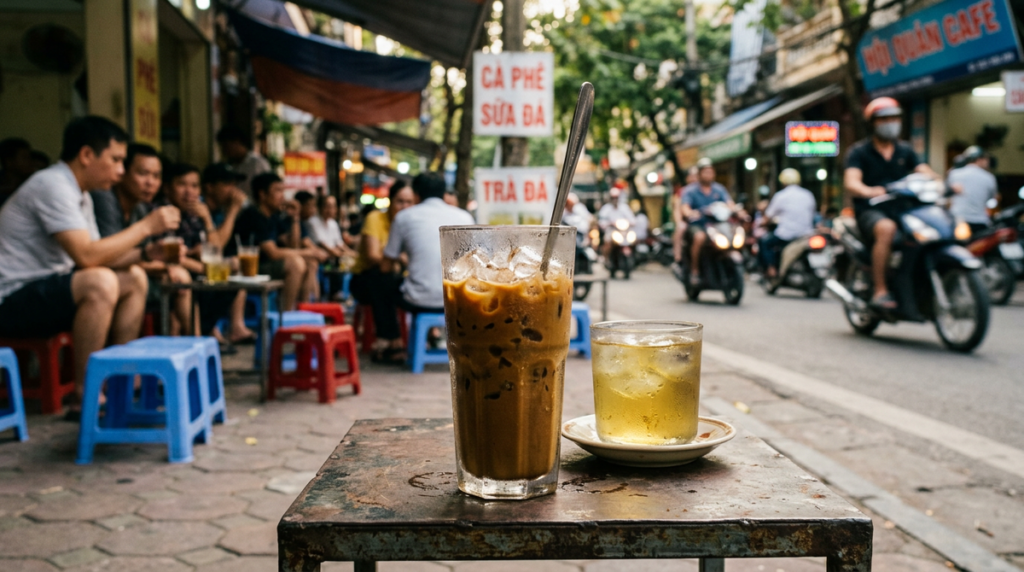
You can enjoy a strong, sweet traditional iced coffee on a busy street.
Or you can visit a specialty café and taste a carefully prepared Vietnamese robusta without milk or sugar.
Both tell part of the country’s coffee story.
Phin vs Takeaway: Two Rhythms of Vietnamese Coffee
One of my favourite things about Vietnam’s coffee culture is that it seems to move at two completely different speeds.
Sometimes coffee is an excuse to stop.
Sometimes it’s something you grab in seconds without even getting off your motorbike.
Slow Coffee: The Phin Filter
The traditional Vietnamese phin is a small metal filter that sits directly on top of a cup or glass.
Ground coffee goes inside, hot water is added, and the drink slowly passes through the filter.
Drop by drop.
Depending on the coffee and preparation, the process generally takes several minutes.
There’s no need for an expensive espresso machine.
Just a filter, coffee, hot water and a little patience.
The result is usually a small, concentrated serving with plenty of body.
If condensed milk is waiting at the bottom of the glass, the dark coffee gradually collects above it.
Then you stir.
Or wait a little longer.
That’s part of the ritual.
A phin coffee invites you to sit at a table, watch the street and allow the drink to arrive at its own pace.

Fast Coffee: Cà Phê Mang Đi
Then there’s the opposite experience.
Cà phê mang đi means takeaway coffee.
At busy roadside stalls, the coffee may already be prepared.
The seller fills a cup with ice, pours in strong coffee, adds milk or sugar if requested, seals it and hands it over.
A motorbike stops.
The customer orders.
A few moments later, the drink is travelling down the street with them.
It’s a completely different rhythm from watching a phin filter drip onto condensed milk.
Neither is more authentically Vietnamese than the other.
They simply reflect different moments of everyday life.
And the same person might enjoy both.

7 Vietnamese Coffee Drinks You Should Know
Vietnamese coffee is far more varied than one glass of iced coffee with condensed milk.
These seven drinks offer a useful introduction to the country’s flavours, regional traditions and creative combinations.
1. Cà Phê Đen Đá: Black Iced Coffee
Best for: People who want to taste the coffee itself.
Cà phê đen đá is black coffee served over ice.
There’s no milk to soften the flavour, although sugar may be added depending on the café and how you order.
With traditional dark-roasted robusta, expect a bold, concentrated drink.
It can be bitter, earthy and intensely roasted.
But a well-prepared version made with quality beans may reveal much more complexity.
If you’re curious about modern fine robusta, try ordering a black coffee at a specialty café.
It’s one of the easiest ways to understand how much the quality and preparation of the beans matter.
How to order: Cà phê đen đá.
For black coffee without sugar, ask for cà phê đen đá không đường.
2. Cà Phê Sữa Đá: Vietnam’s Classic Iced Coffee
Best for: A first introduction to traditional Vietnamese coffee.
This is the drink many travellers immediately associate with Vietnam.
Strong coffee.
Sweetened condensed milk.
Lots of ice.
The sweetness and bitterness balance each other, creating a rich, creamy drink that remains unmistakably coffee.
Its popularity also reflects the practical history of preserved milk in a tropical country.
Fresh dairy wasn’t always easy to distribute and store, while condensed milk offered a convenient alternative.
Over time, that practical ingredient became central to a distinctive national taste.
And although the drink is sweet, it can still contain a substantial amount of caffeine.
How to order: Cà phê sữa đá.
If you don’t like very sweet drinks, ask whether the café can use less condensed milk.
3. Cà Phê Trứng: Hanoi’s Famous Egg Coffee
Best for: Anyone who enjoys creamy desserts and unusual coffee textures.
Egg coffee sounds strange until you try it.
Instead of adding ordinary milk foam, the drink is topped with a thick, sweet cream traditionally made with whipped egg yolk and sugar, often with condensed milk or other ingredients.
The result is closer to dessert than a conventional cup of coffee.
Imagine a rich, silky cream sitting above strong black coffee.
Some people compare it to tiramisu.
The story behind it is just as interesting.
The Story of Nguyễn Văn Giảng
Egg coffee is traditionally credited to Nguyễn Văn Giảng, who worked as a bartender at Hanoi’s Metropole Hotel.
According to the well-known history associated with his family and Café Giảng, he developed the drink in 1946, when milk shortages encouraged him to experiment with whipped egg yolks.
The substitution became a successful recipe in its own right.
Giảng later established a family café, helping turn the drink into one of Hanoi’s most recognisable specialties.
Today, egg coffee is available in various Vietnamese cities, but Hanoi remains the place most closely associated with its origins.
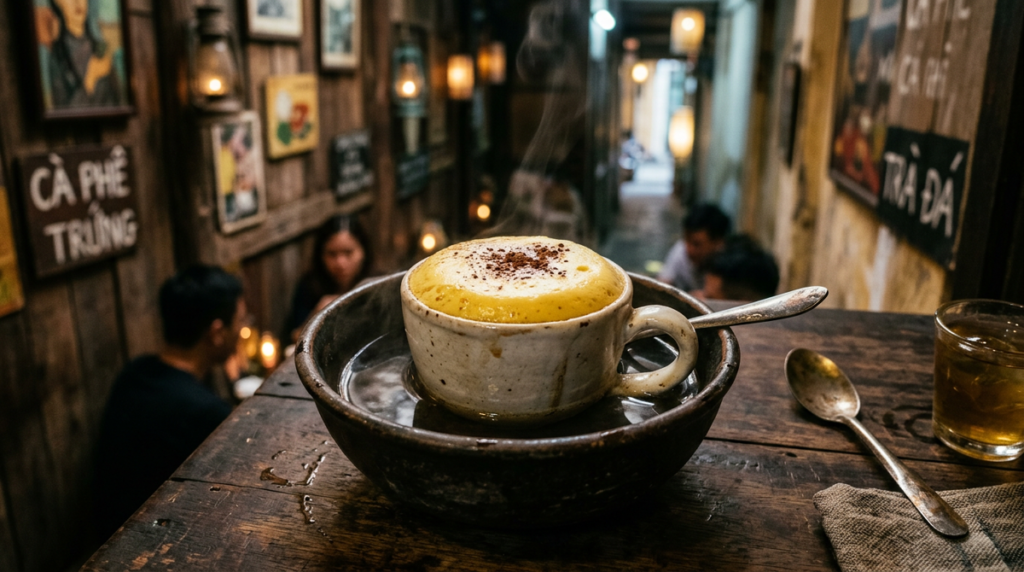
How to order: Cà phê trứng.
Try it warm if you want the traditional dessert-like experience.
4. Cà Phê Muối: Salt Coffee From Hue
Best for: People who enjoy creamy drinks with a sweet-and-salty contrast.
Salt coffee might sound even stranger than egg coffee.
But the combination makes sense once you taste it.
A typical version includes strong coffee, condensed milk and a lightly salted creamy topping.
The salt changes how the sweetness and bitterness are perceived.
It doesn’t simply make the drink salty.
Instead, a small amount creates balance, making the cream seem smoother and the coffee less aggressively bitter.
Where Salt Coffee Began
One of Vietnam’s best-known modern coffee inventions comes from Hue.
In 2010, Hồ Thị Thanh Hương and Trần Nguyễn Hữu Phong opened a café on Nguyễn Lương Bằng Street and developed their own salt coffee recipe.
Their idea was to offer something distinctive by combining familiar coffee ingredients in an unexpected way.
The drink gradually became associated with Hue and later spread to cafés in other parts of Vietnam.
So although salt coffee became widely popular in recent years, it wasn’t invented in 2025 or 2026.
Its story began much earlier.
If you’re visiting the former imperial capital, salt coffee is a wonderful addition to a day exploring the city’s food, architecture and history.
2 Days in Hue, Vietnam: Imperial City, Royal Tombs & the Perfume River
How to order: Cà phê muối.
Both hot and iced versions exist, although many cafés serve it cold.
5. Bạc Xỉu: More Milk, Less Coffee
Best for: People who find traditional Vietnamese coffee too strong.
Bạc xỉu is closely associated with the Chinese-Vietnamese coffee culture of southern Vietnam, particularly Saigon.
The idea is simple.
Instead of making coffee the dominant ingredient, you start with a milk-heavy drink and add a smaller amount of coffee.
The result is sweet, creamy and much gentler in flavour.
It’s an excellent choice if you enjoy the aroma of coffee but don’t want the intense bitterness of a traditional black robusta.
However, it still contains caffeine.
The name itself comes from the Cantonese-influenced linguistic heritage of the Chinese community in southern Vietnam.
It’s a small reminder that Vietnamese coffee culture developed through more than one historical influence.
How to order: Bạc xỉu.
An iced version is commonly available.
6. Cà Phê Cốt Dừa: Coconut Coffee
Best for: Hot afternoons and people who enjoy sweet, cold drinks.
Coconut coffee is one of the most enjoyable modern variations on Vietnamese coffee.
It often combines concentrated coffee with a blended coconut mixture made with coconut milk or cream, ice and sweetening ingredients.
Depending on the café, the texture can resemble a frozen dessert or frappe.
The contrast is the attraction.
Cold, sweet coconut meets strong, dark coffee.
Unlike egg coffee, whose origin is associated with wartime shortages, coconut coffee is better understood as an example of the country’s creative use of local flavours.
It’s particularly appealing when the weather is hot and humid.
How to order: Cà phê cốt dừa.
In some cafés, you’ll also see the English name coconut coffee.
7. Sữa Chua Cà Phê: Yogurt Coffee
Best for: Adventurous coffee drinkers.
Yogurt coffee is another combination that may seem unusual at first.
It brings together sweet or tangy yogurt and strong coffee, often served cold.
The acidity of the yogurt contrasts with the bitter roasted notes of the coffee.
Depending on the recipe, the drink may include condensed milk, sugar or ice.
Some versions are thick and dessert-like.
Others are lighter and easier to drink.
It’s particularly associated with northern Vietnamese café culture, although you may encounter it elsewhere.
If you’ve already tried egg coffee, salt coffee and coconut coffee, yogurt coffee is a fun next experiment.

How to order: Sữa chua cà phê.
Which Vietnamese Coffee Should You Try First?
If you’re looking at a café menu and don’t know what to order, start with what you usually enjoy.
| Your preference | Try |
|---|---|
| Strong black coffee | Cà phê đen đá |
| Classic sweet iced coffee | Cà phê sữa đá |
| Creamy, dessert-like drinks | Cà phê trứng |
| Sweet and salty combinations | Cà phê muối |
| Mild, milky coffee | Bạc xỉu |
| Cold, tropical flavours | Cà phê cốt dừa |
| Unusual tangy flavours | Sữa chua cà phê |
My suggestion: Start with cà phê sữa đá if you’ve never tried Vietnamese coffee before. Then choose a regional specialty depending on where you’re travelling.
If you’re in Hanoi, try egg coffee.
In Hue, look for salt coffee.
In southern Vietnam, give bạc xỉu a chance.
And wherever you are, don’t overlook a simple phin coffee. Watching it brew is part of the experience.
Vietnamese Coffee by City: Where to Try What
Vietnam doesn’t have one uniform coffee scene.
The same drinks can be found across the country, but different cities have their own histories, settings and specialties.
Hanoi: Egg Coffee and Hidden Cafés
Hanoi is the natural place to explore the history of egg coffee.
In and around the Old Quarter, some cafés are tucked into narrow passages or upper floors of older buildings.
Finding them can feel like discovering a completely different side of the city.
The atmosphere is often as interesting as the drink itself.
A small room, low tables, old furniture and a cup topped with thick egg cream can make a welcome break from the busy streets below.
Café Giảng is one of the best-known places associated with the drink’s history.
But Hanoi isn’t limited to traditional egg coffee.
The city also has modern specialty cafés experimenting with Vietnamese beans, roasting and contemporary brewing methods.
Hue: The Birthplace of Salt Coffee
Hue deserves its own place on Vietnam’s coffee map.
The former imperial capital is famous for its royal history, traditional cuisine and distinctive local food culture.
Salt coffee fits naturally into that picture.
The original Cà Phê Muối business dates to 2010, with its first location on Nguyễn Lương Bằng Street.
Today, versions of the drink appear on menus throughout the country.
But tasting salt coffee in Hue gives you the chance to connect the drink with the city where the modern recipe became famous.
It doesn’t require a complicated tasting tour.
Simply stop at a café, order cà phê muối and notice how the salt, sweetness and coffee work together.
Da Nang: Traditional Coffee Meets Modern Café Culture
Da Nang has a different atmosphere.
You’ll find roadside coffee stalls, small neighbourhood cafés, large air-conditioned spaces and modern specialty coffee shops.
For people spending several weeks in the city, cafés become part of everyday routines.
Some are convenient places to work for a few hours.
Others are better for sitting outside, watching traffic and enjoying a slow morning.
And because Da Nang is close to Hue and Hoi An, you can encounter different Central Vietnamese coffee styles without travelling very far.
This combination of traditional drinks and modern café environments is one of the pleasures of staying in the city rather than passing through for a day.
For more on neighbourhoods and daily life:
Living in Da Nang Vietnam: Best Areas, Costs & Lifestyle
Ho Chi Minh City: Street Coffee and Bạc Xỉu
Ho Chi Minh City moves at its own pace.
Motorbikes fill the streets, cafés occupy busy corners, and takeaway coffee is an essential part of the urban landscape.
But Saigon’s coffee culture isn’t only about speed.
There are traditional sidewalk cafés where people spend plenty of time talking and watching the city.
There are historic neighbourhood establishments shaped by Chinese-Vietnamese influences.
And there are modern coffee shops serving everything from fine robusta to experimental iced drinks.
Bạc xỉu is particularly worth trying here because of its connection with the city’s Chinese-Vietnamese heritage.
The contrast between a tiny pavement café and a polished modern coffee shop says a lot about the city itself.
Da Lat and the Central Highlands: Coffee at Its Source
Da Lat offers a different perspective again.
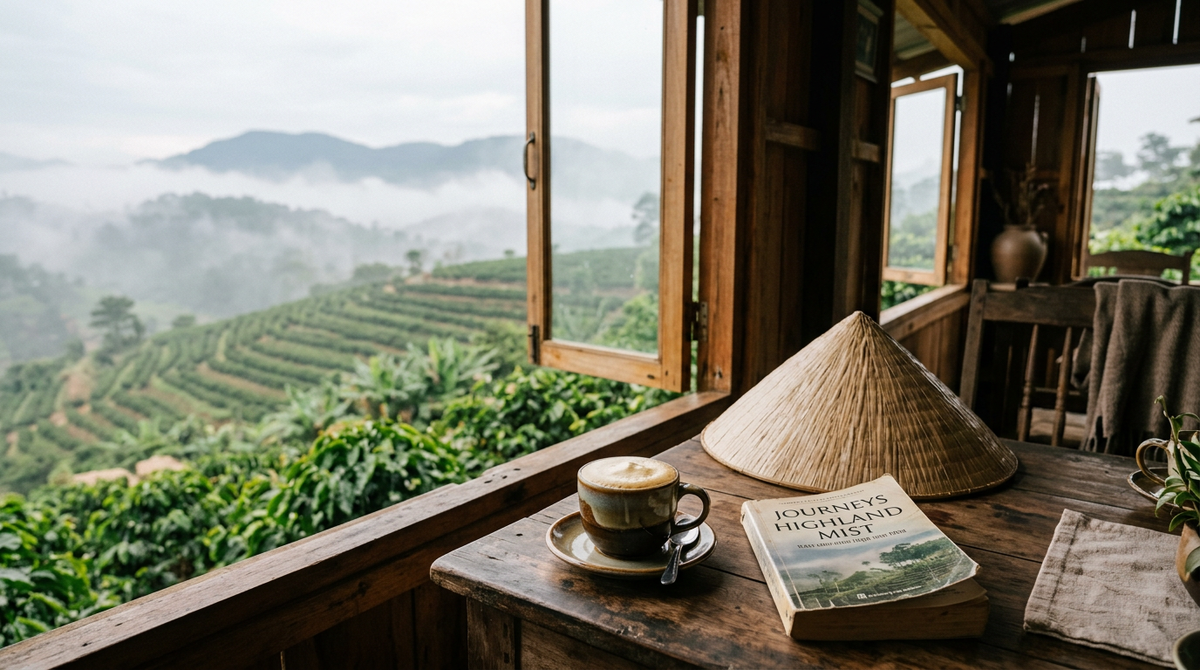
Instead of focusing only on the finished drink, this is a region where travellers can learn more about coffee cultivation.
The cooler highland environment supports arabica production in parts of Lâm Đồng, while the broader Central Highlands are essential to Vietnam’s robusta industry.
Da Lat is not the country’s only important coffee-growing area.
Đắk Lắk, including the Buôn Ma Thuột region, has played a particularly important role in robusta production.
But Da Lat and the surrounding highlands provide opportunities to explore coffee farms, processing and the relationship between growing conditions and flavour.
If you’re interested in coffee beyond café menus, look for a farm visit or tasting experience that explains cultivation, processing and roasting.
The most interesting question is no longer simply whether a bean is arabica or robusta.
It’s how the bean was grown and what happened to it before reaching your cup.

How to Order Coffee in Vietnam
You don’t need to speak Vietnamese to enjoy the country’s coffee culture.
In tourist areas, many cafés have English menus.
But a few Vietnamese words can make ordering much easier, especially at small local shops.
Useful Coffee Words
| Vietnamese | Meaning |
|---|---|
| Cà phê | Coffee |
| Đen | Black |
| Sữa | Milk |
| Đá | Ice |
| Nóng | Hot |
| Không đường | No sugar |
| Ít đường | Less sugar |
| Ít đá | Less ice |
| Không đá | No ice |
| Mang đi | Takeaway |
Examples You Can Use
Cà phê sữa đá
Iced coffee with sweetened condensed milk.
Cà phê đen nóng
Hot black coffee.
Cà phê đen đá không đường
Black iced coffee without sugar.
Cà phê sữa đá ít đá
Iced milk coffee with less ice.
Cho tôi một cà phê sữa đá.
I’d like one iced milk coffee.
You don’t have to pronounce everything perfectly.
Pointing to a menu and saying the drink’s name is often enough.
A Note About Sugar and Condensed Milk
Asking for less sugar doesn’t always mean the drink will be much less sweet.
Some Vietnamese coffee recipes use sweetened condensed milk as a core ingredient.
If you want the drink less sweet, ask whether the café can reduce the condensed milk.
And if you’re avoiding dairy, don’t assume that coconut coffee is automatically dairy-free.
Recipes vary, and some cafés add condensed milk or other dairy ingredients.
How Much Does Coffee Cost in Vietnam?
There isn’t one reliable nationwide price for a cup of coffee.
A small roadside stall, a traditional neighbourhood café and a modern specialty coffee shop operate at very different price points.
A basic black or milk coffee at a local stall is generally cheaper than a large iced drink in a tourist-oriented café.
Egg coffee, coconut coffee and elaborate cream-based drinks often cost more than simple phin coffee because of their ingredients and preparation.
Specialty cafés may charge a premium for carefully sourced beans and individual brewing methods.
Rather than relying on one average price for the whole country, check the menu and compare the type of establishment.
A higher price doesn’t automatically mean better coffee.
Sometimes the simplest roadside cup is exactly what you’re looking for.
Coffee Shops as Part of Everyday Life
Vietnamese coffee culture isn’t only about what goes into the glass.
It’s also about what happens around it.
In many traditional cafés, ordering a coffee gives you more than a drink.
It gives you somewhere to sit.
You can meet friends, talk, read, check your phone or simply watch the street.
Small tables and low stools turn pavements and quiet corners into informal social spaces.
In some cafés, a glass of iced tea, trà đá, accompanies the coffee.
Sometimes it’s complimentary. Sometimes it isn’t.
The custom varies by establishment, but the combination of strong coffee, cold tea and unhurried conversation is familiar across much of Vietnam.
Modern cafés offer a different setting.
Air conditioning, comfortable seating, Wi-Fi and larger tables make them useful for work, meetings or escaping the midday heat.
Both formats are part of the same evolving culture.
And both coexist with takeaway stalls serving people who barely have time to stop their motorbikes.
That’s what I find particularly interesting.
Coffee doesn’t demand one kind of experience in Vietnam.
It fits into whatever rhythm the day requires.

Frequently Asked Questions About Vietnamese Coffee
Why Is Vietnamese Coffee So Strong?
Vietnamese coffee often uses robusta beans, which generally contain more caffeine than arabica. Traditional phin brewing and dark roasting styles can also produce a concentrated, intense-tasting drink.
However, strength varies by bean, serving size and preparation.
What Is the Most Popular Vietnamese Coffee?
Cà phê sữa đá, iced coffee with sweetened condensed milk, is one of the country’s most recognisable drinks.
Black coffee and many regional variations are also widely enjoyed.
Is Vietnamese Egg Coffee Made With Real Eggs?
Yes. Traditional egg coffee uses whipped egg yolk as part of its creamy topping.
Recipes vary between cafés.
If you have an egg allergy or other dietary restriction, ask about the ingredients before ordering.
What Is the Difference Between Egg Coffee and Salt Coffee?
Egg coffee is associated with Hanoi and uses a rich whipped egg-based cream.
Salt coffee originated in Hue and is typically made with coffee, sweetened milk and lightly salted cream.
Both are creamy, but the flavours and textures are different.
Is Vietnamese Coffee Always Sweet?
No.
Black coffee is widely available, and modern specialty cafés also serve Vietnamese beans without milk or sugar.
Sweetened condensed milk is important to many traditional drinks, but it doesn’t define every Vietnamese coffee.
Final Thoughts: More Than Just Strong Coffee
Vietnamese coffee tells a much larger story than its reputation for strength.
It began with an imported crop, developed into a major agricultural industry and became part of everyday life in countless different forms.
Robusta helped build the country’s coffee economy.
Condensed milk gave traditional drinks their distinctive sweetness.
An inventive bartender in Hanoi helped turn egg yolks into an enduring coffee specialty.
A small café in Hue developed a salty cream combination that eventually spread across the country.
And modern producers are demonstrating that Vietnamese coffee can be about quality and complexity as well as intensity.
But the part I like most is simpler.
One person stops briefly for an iced coffee on the way to work.
Another sits at a little table, waiting for the last drops to fall through a metal phin filter.
Both are enjoying Vietnamese coffee.
And sometimes the best part of the experience isn’t the first sip.
It’s sitting there for a while, listening to the motorbikes passing, watching people go about their day and noticing how slowly the ice melts in your glass.
Useful Travel Resources
Hotels in Vietnam
Choosing a convenient neighbourhood makes it easier to explore local cafés, morning markets and everyday life beyond the major tourist attractions.
Flights to Vietnam
Compare flight connections and arrival times when planning a journey between Hanoi, Da Nang, Ho Chi Minh City and other destinations.
Food Tours and Local Experiences
Food walks, coffee tastings and hands-on workshops can be a useful introduction to regional Vietnamese food culture. Check each tour’s itinerary to see whether coffee experiences are actually included.
Airport Transfers
A prearranged transfer can be convenient when arriving in an unfamiliar Vietnamese city, particularly with luggage or after a late flight.
Vietnam eSIM
Mobile internet helps with maps, translating menus, checking café locations and arranging transport.
Some links on this page are affiliate links. If you make a booking or purchase through one of them, I may earn a small commission at no extra cost to you.