Kampot Cambodia: Things to Do, Day Trips & How Long to Stay
At one point, my route through Cambodia looked like this: Siem Reap, Phnom Penh, Sihanoukville, then south toward Vietnam and Phu Quoc.
Kampot fitted naturally in the middle.
I did not see it as somewhere to spend one night simply because it was on the way. I wanted to stop because the town seemed to combine several things I was looking for after bigger Cambodian destinations: a walkable riverfront, old architecture, cafés, slower evenings and an unusually good collection of day trips.
Bokor Mountain is nearby. So are Kampot pepper plantations, salt fields, limestone caves and the seaside town of Kep.
That is what makes Kampot work.
The town itself does not require a packed sightseeing schedule. It is a comfortable base for exploring southern Cambodia, with enough going on in the evenings that returning after a day on the road still feels enjoyable.
If Kampot is part of a longer overland journey, you can also see my Phnom Penh to Phu Quoc route via Sihanoukville, Kampot and Bokor.
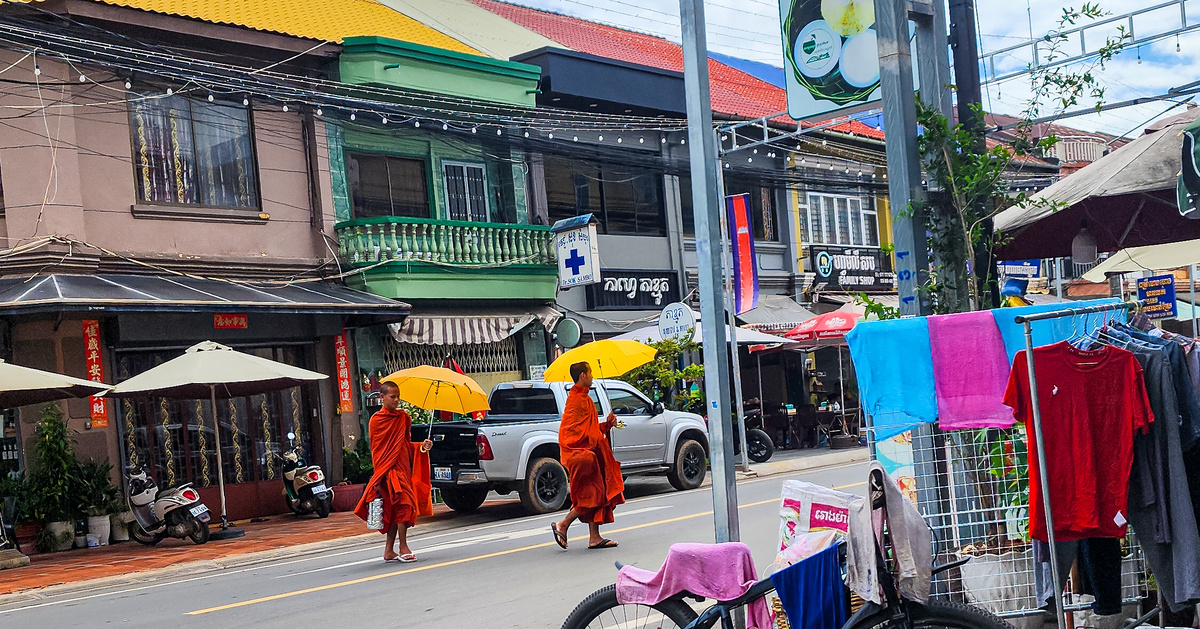
Kampot Quick Guide
| Location | Southern Cambodia |
|---|---|
| Best for | Slow travel, food, countryside and day trips |
| How long to stay | 3 to 4 nights |
| Best time | November to February for cooler, drier weather |
| Main day trips | Bokor Mountain, pepper farms, Kep, salt fields and Phnom Chhngok |
| Getting around town | Walking, bicycle or tuk-tuk |
| Countryside transport | Tuk-tuk, private driver, organised tour or scooter for experienced riders |
| Train | Kampot is on Cambodia's Southern Line |
| Good next stop | Kep, Sihanoukville, Phnom Penh or the Vietnam border |
Why Kampot Is Worth More Than One Night
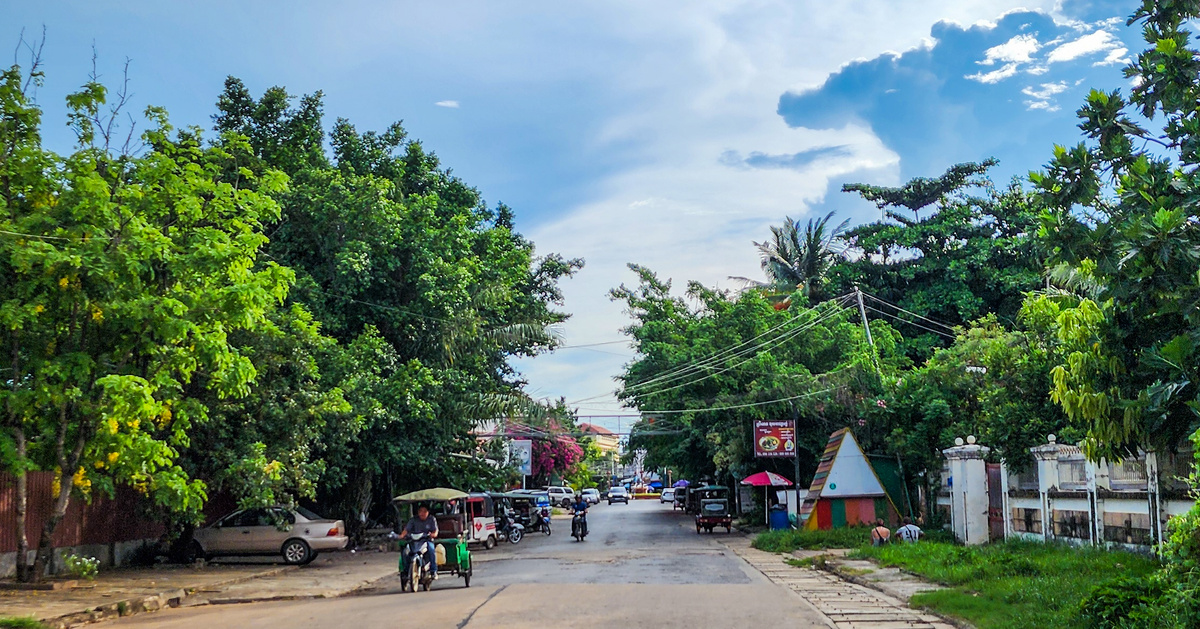
Kampot is compact enough that you can understand the centre quite quickly.
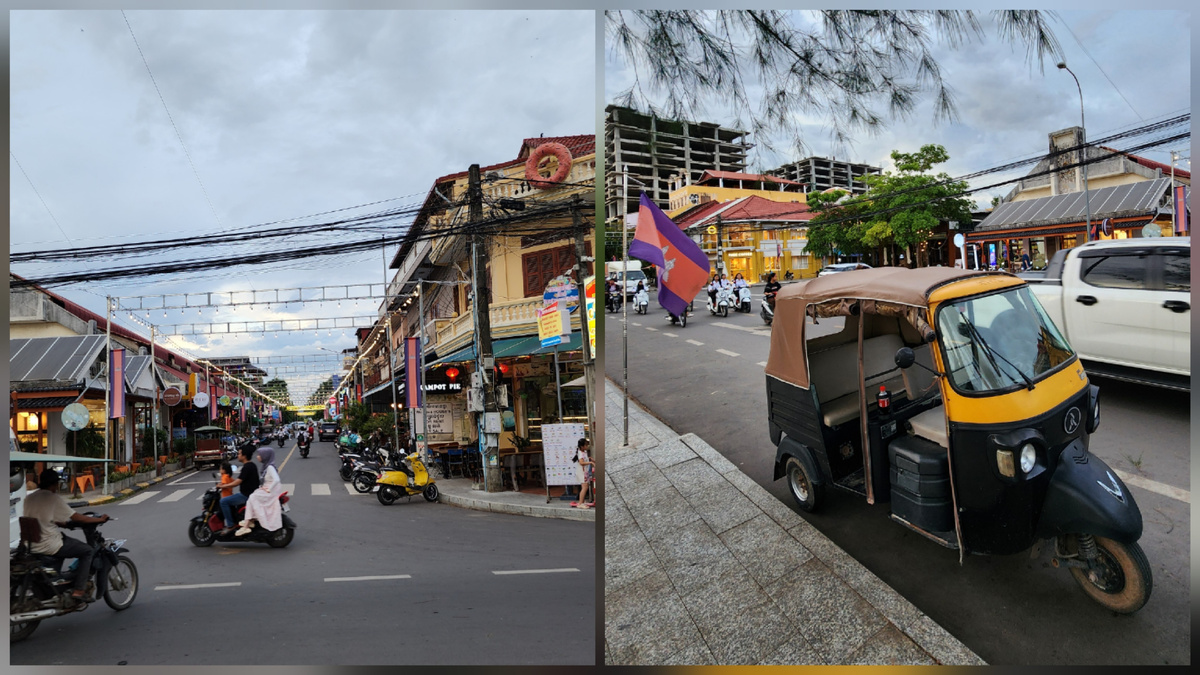
The river gives the town a natural focal point. Around it are low-rise streets, old shophouses, cafés, restaurants, hotels and ordinary local businesses.
It feels very different after Phnom Penh or Sihanoukville.
There is traffic, of course, but the scale is smaller. You can leave the hotel in the evening without a plan, walk toward the river and simply see where you end up.
That is basically what I did.
The bigger reason to stay, though, is what lies outside the centre. Within a day you can move from a cool mountain plateau to pepper farms, salt fields, caves or the coast.
Kampot works best when you think of the town and its surroundings as one destination.
Where to Stay in Kampot
For a first visit, I would stay around central Kampot or within easy walking distance of the river.
It keeps evenings simple and makes pickups for countryside trips easy.
Find hotels in Kampot on Trip.com
Things to Do in Kampot Town
Walk the Riverfront and Old Quarter
If you have one free evening, start at the river.
Kampot's waterfront is both a walking route and part of everyday city life. In the evening you see people exercising, families outside, food vendors, boats on the water and groups sitting along the promenade.
From there, turn into the streets behind the river.
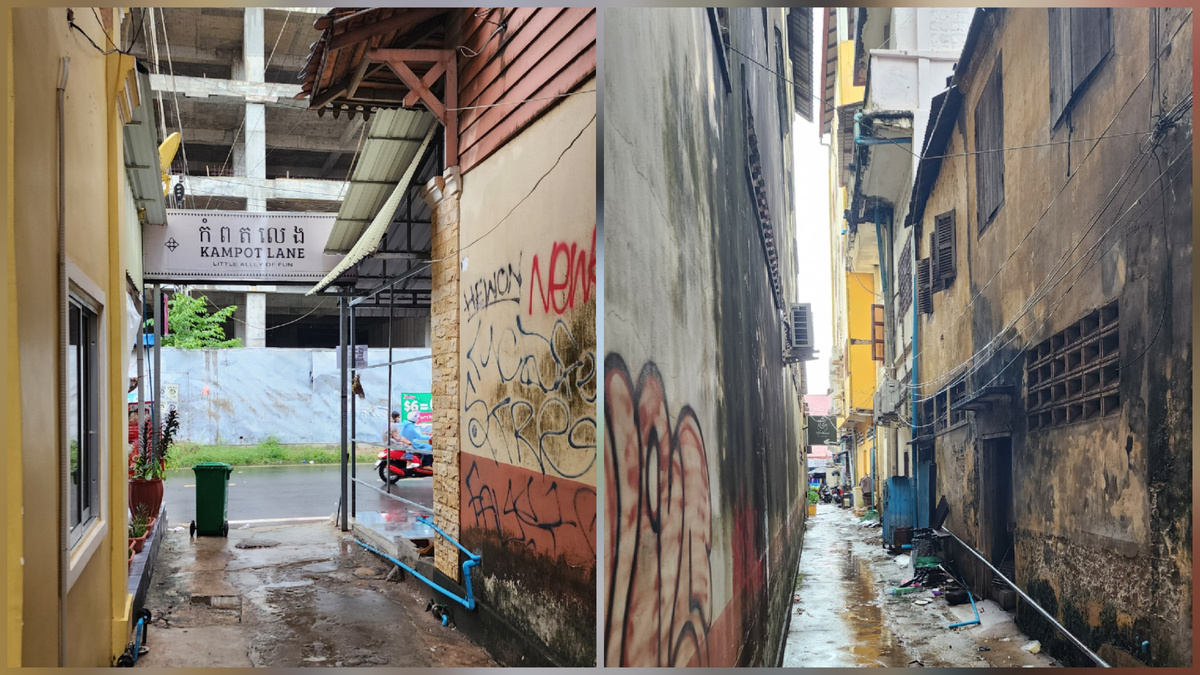
The old centre contains a mixture of colonial-era buildings, traditional shophouses and later additions. Some facades are faded and worn, others have been converted into cafés, bars, hotels or shops.
I actually like that it has not been polished into a perfect heritage district.
The old buildings are still part of the working city.

Durian Roundabout and the Seahorse
Kampot has a surprisingly memorable collection of public landmarks.
The most famous is Durian Roundabout, with its enormous durian sculpture in the middle.
It is not somewhere you need to schedule a visit, but you will probably pass it several times and quickly start using it as an orientation point.
The durian also makes sense here. Kampot Province is an important agricultural region, even if pepper gets most of the international attention.
Closer to the river is the large seahorse statue, a much newer addition to Kampot.
It has become a popular evening photo stop and fits naturally into a riverfront walk.
Neither landmark needs a separate excursion. They are simply part of the city.
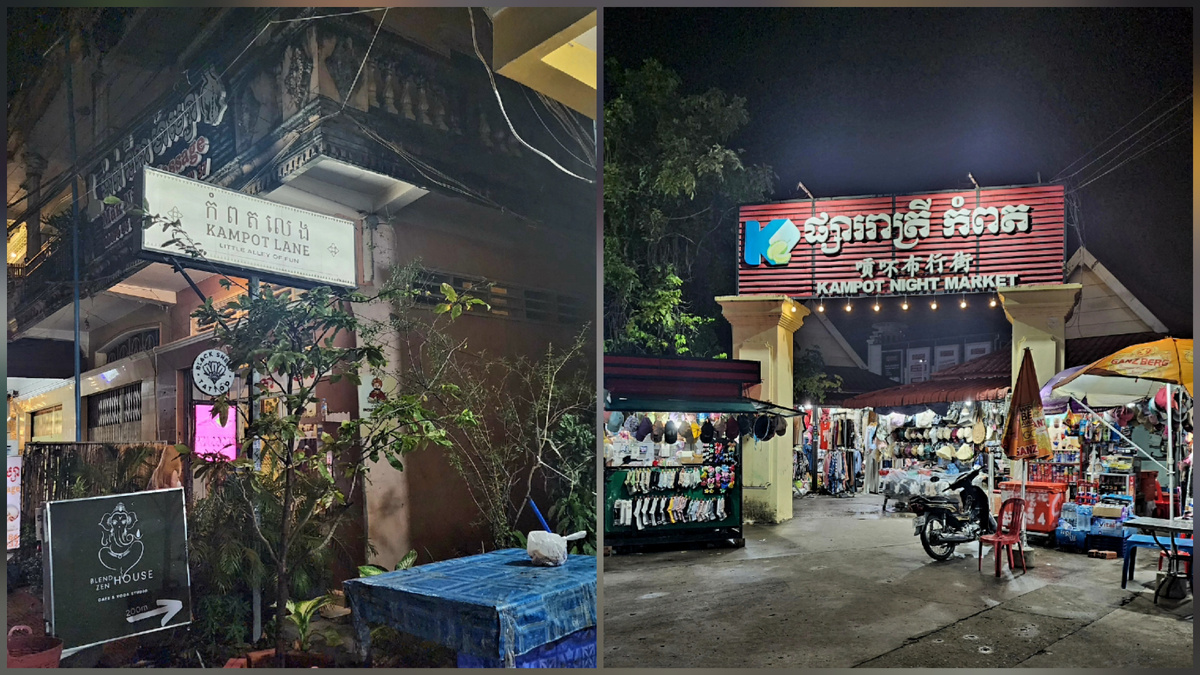
Markets and Evening Kampot
Kampot is better experienced in the morning and evening than during the hottest part of the afternoon.
Local market areas are busiest earlier in the day, while evenings shift toward the river, restaurants and night-market areas.
The night market is modest compared with huge tourist markets elsewhere in Southeast Asia.
That is fine.
Go for a walk, grab something to eat and watch how the town changes after sunset rather than expecting a major shopping attraction.

Cafés and Restaurants I Would Actually Keep on the List
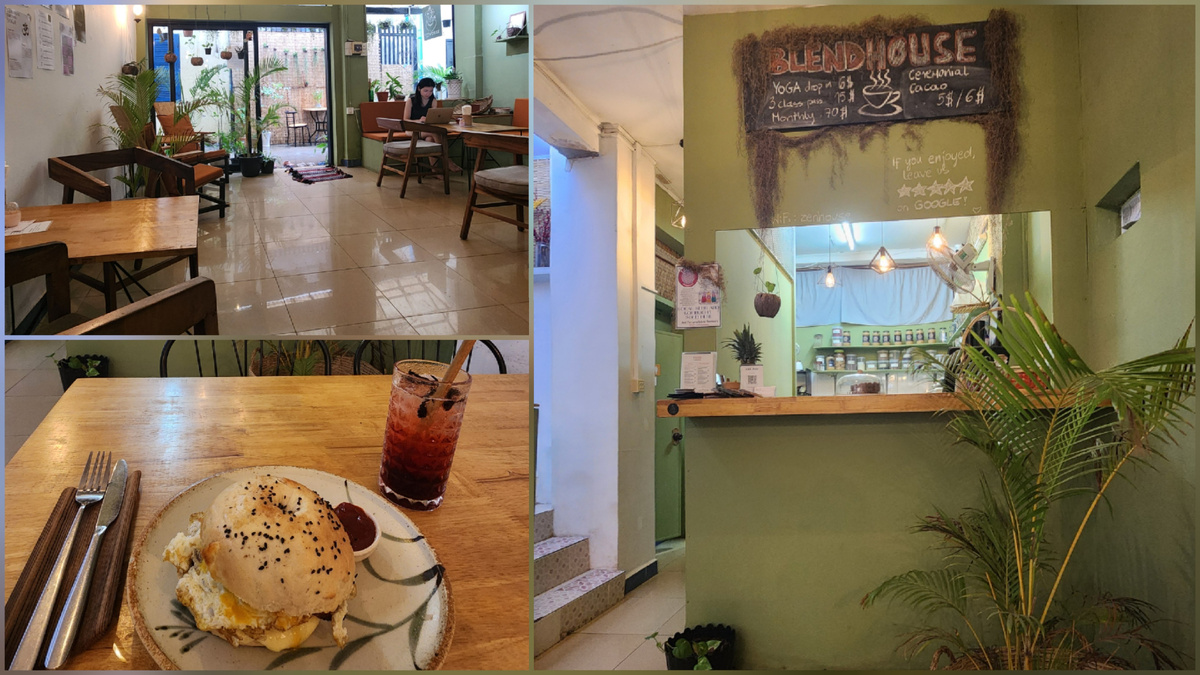
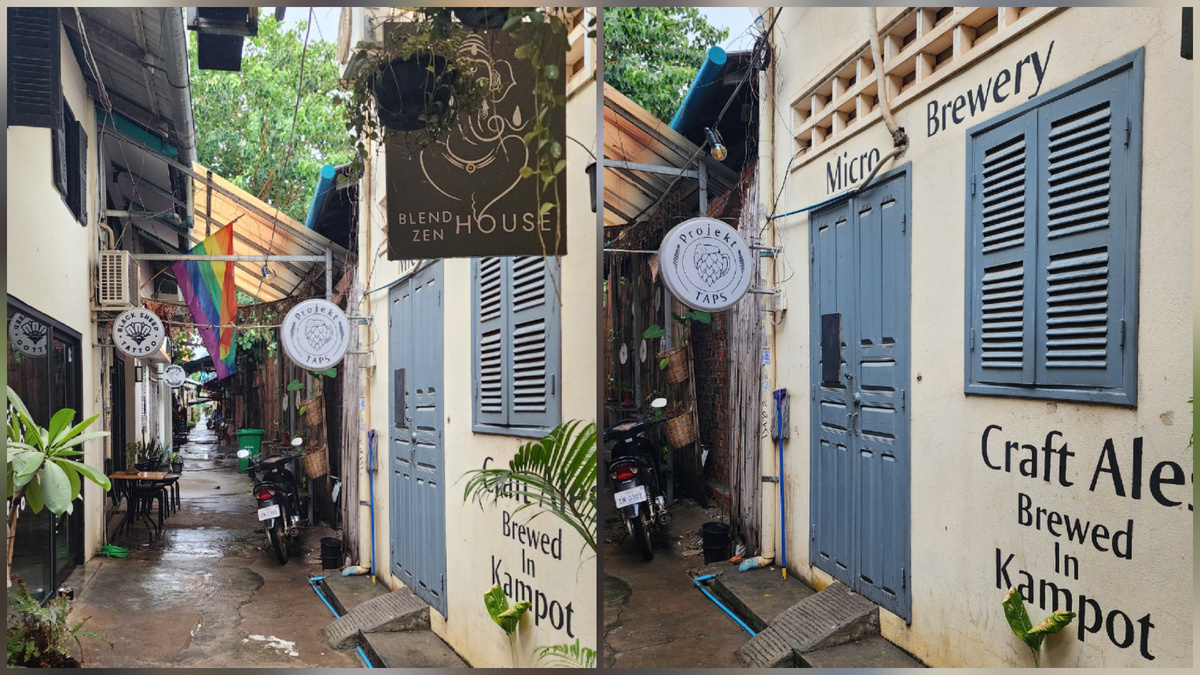
Kampot has far more cafés and restaurants than you might expect from a provincial town this size.
I originally had a very long list, but there is no point turning a travel guide into a directory that becomes outdated every six months.
A few places are worth mentioning.
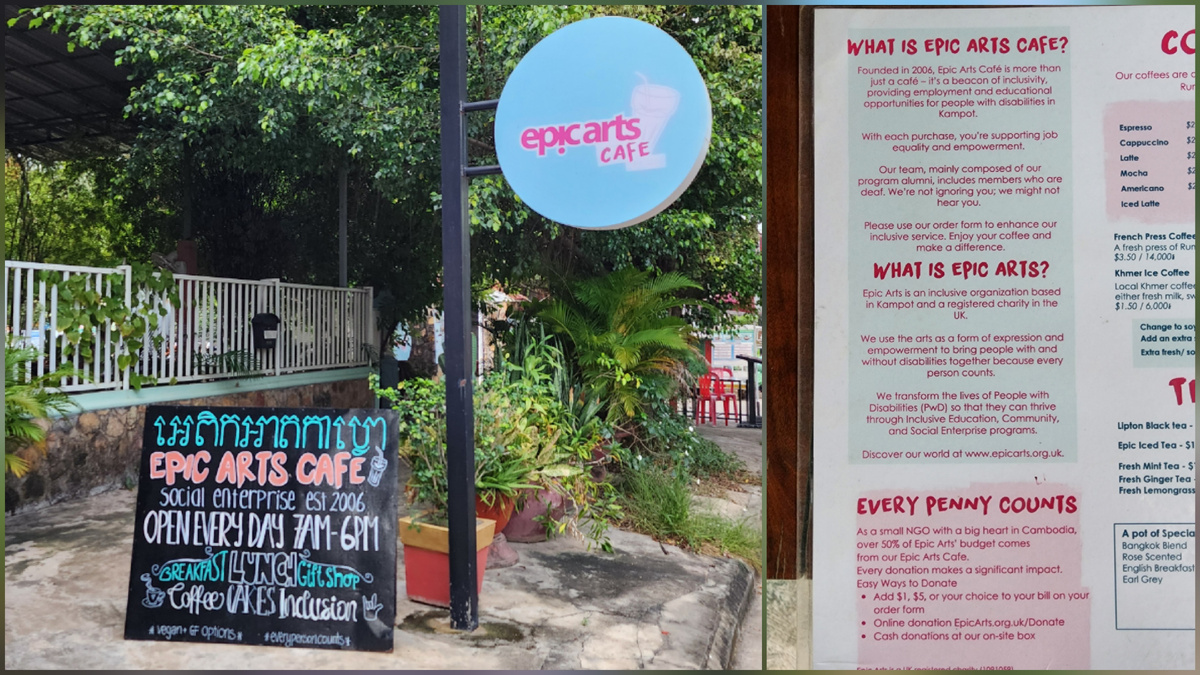
Epic Arts Café
Epic Arts is more than a café.
It is connected with an inclusive arts organisation that works with people with and without disabilities in Kampot.
It is a good place for breakfast or coffee, but the social project behind it is the more interesting reason to stop.

Cafe Espresso Roastery
If you care about coffee, this is one of the established names in town.
Kampot has a sizeable expat and long-stay community, and that has helped create a café scene that feels much bigger than the town itself.
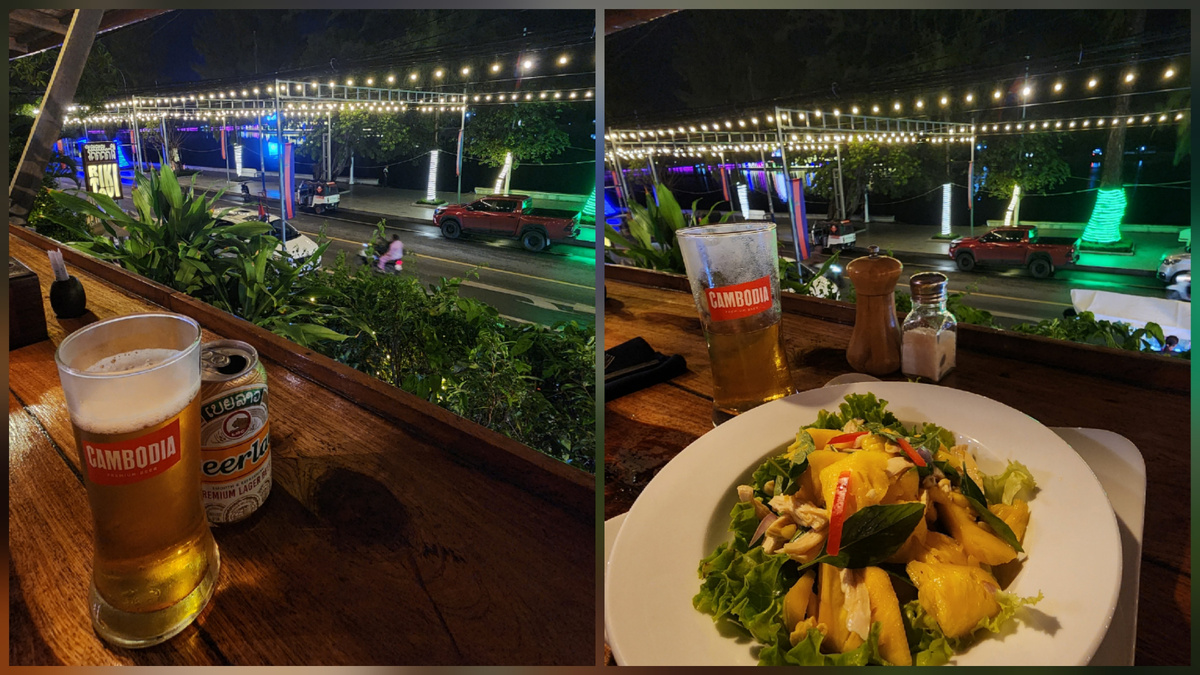
Rikitikitavi
This one is personal.
I sat upstairs at Rikitikitavi overlooking the river, with the breeze coming in and the city moving below.
After a full day on the road, it was exactly the kind of evening Kampot does well.
You do not necessarily need nightlife here.
Sometimes a table above the river and nowhere else to be is enough.
Take a Sunset Cruise on the River
Boat trips leave along the river in the late afternoon and evening.
Some are marketed as sunset and firefly cruises.
I would book one for the river itself rather than making the decision based entirely on fireflies. Wildlife sightings always depend on the conditions, season and exact route.
Around sunset, the temperature is easier, the mountains form a backdrop behind the river and Kampot looks completely different from the water.
Best Day Trips from Kampot
This is where Kampot becomes much more interesting.
I would split the surroundings into two main days:
Day 1: Bokor Mountain.
Day 2: countryside, pepper, caves, salt and Kep.
Trying to force everything into one day means spending more time moving than actually seeing anything.
Bokor Mountain
Bokor is the most obvious full-day trip from Kampot.
The road climbs out of tropical heat toward a much cooler plateau in Preah Monivong Bokor National Park.
The mountain combines scenery with several layers of Cambodian history: the old Catholic church, Le Bokor Palace, Wat Sampov Pram, Popokvil Waterfall, former royal sites, modern development and the giant Buddha currently under construction.
Weather can change dramatically on the way up. Kampot may be hot and sunny while the plateau is covered in cloud, wind and mist.
I have a separate guide because Bokor deserves much more than a few paragraphs here:
Bokor Mountain Cambodia: Ghost Town History, Colonial Ruins & What to See

Visit a Kampot Pepper Farm
Kampot Pepper is one of the products most strongly associated with southern Cambodia.
A plantation visit is much more useful than simply buying a packet in town because you can see how the vines grow and how the same pepper fruit eventually becomes green, black, red or white pepper depending on harvest stage and processing.
La Plantation is one of the best-known visitor farms, although it is not the only option in the region.
If you want the history, GI system, pepper types and plantation details, I have covered those separately:
Kampot Pepper Cambodia: Why It's Famous, Types & Plantation Guide
Browse Kampot countryside tours on GetYourGuide
Phnom Chhngok Cave Temple
One of the more unusual places around Kampot is Phnom Chhngok.
The limestone cave contains a small brick Hindu sanctuary from the pre-Angkorian period.
That is what makes the site interesting.
Instead of approaching a temple through a monumental archaeological complex, you enter a natural cave and find an ancient brick structure inside it.
Stalactites and limestone formations surround the sanctuary, making it feel completely different from the temples around Siem Reap.
The site is not huge, so it works particularly well as part of a countryside day rather than as a standalone full-day excursion.
Wear shoes with decent grip. Cave floors and steps can be uneven.
Kampot Salt Fields
Between Kampot and the coast are wide salt-production areas.
During the dry season, seawater is channelled into shallow rectangular pans and left to evaporate before the salt is collected.
The landscape changes depending on the production stage.
Sometimes the fields look like enormous mirrors reflecting the sky. At other times you see white salt piled beside the pans.
It is an interesting stop partly because the process is still highly physical and labour-intensive.
I would not travel to Kampot solely to see the salt fields, but they fit naturally into a day heading toward the pepper-growing areas or Kep.
Kep and the Crab Market
Kep is around 25 kilometres from Kampot and is easy to combine with the countryside.
The town is small, coastal and much quieter than Cambodia's larger beach destinations.
Its most famous food stop is the Crab Market.
Blue swimmer crabs are sold directly beside the sea, and the classic regional combination is crab cooked with fresh green Kampot pepper.
The pepper is used while still soft and fresh, often left on the stem and cooked with the crab.
If you are interested in southern Cambodian food, this is one of those combinations that actually makes sense to try where the ingredients come from.
Kep and Kampot have completely different atmospheres, even though they are close together.
Kampot revolves around its river and town centre. Kep feels more scattered and coastal.
For a first trip, I would normally sleep in Kampot and visit Kep during the day unless you specifically want a few quiet days by the sea.
A Good Kampot Countryside Day
If I were planning one full countryside day, I would combine:
- Phnom Chhngok Cave Temple
- A Kampot pepper plantation
- Salt fields
- Kep
- Crab Market
The exact order depends on your chosen plantation, pickup point and how much time you want in Kep.
I would not add Bokor.
Give the mountain its own day.
How I Explored the Area
I travelled around the Kampot region independently on a rented scooter.
The freedom is excellent.
You can stop when you want, turn into smaller roads and spend more time somewhere without worrying about a driver's schedule.
But I would only recommend this if you already know how to ride confidently.
This is not where I would learn.
Rain, dust, unfamiliar traffic and changing road conditions are enough to deal with. Bokor adds a long mountain road, bends, fog and rapidly changing weather.
If you do not normally ride, take a tuk-tuk, driver or organised tour instead.
You lose very little and probably enjoy the scenery more.
Browse Kampot tours & activities on Trip.com
How Many Days Do You Need in Kampot?
2 Nights
This is enough to see the town and choose one major excursion.
Spend your first afternoon and evening around the river, then use the next full day for either Bokor or the countryside.
I would consider two nights the minimum.
3 Nights
For most first-time visitors, three nights works very well.
You can have:
- one arrival afternoon and evening in Kampot;
- one full day on Bokor Mountain;
- one full countryside day with pepper, caves, salt fields and Kep.
This gives you the main experiences without turning the trip into a race.
4 Nights
Four nights is better if you prefer slower travel.
You gain some room for weather, a lazy morning, café time or an extra afternoon by the river.
Kampot is exactly the kind of place where an additional day does not require an additional attraction.
How to Get to Kampot
From Phnom Penh
Road transport is straightforward, with buses and minivans operating between Phnom Penh and Kampot.
Kampot is also served by Cambodia's Southern Line railway.
The train is not necessarily the fastest option, but it is a completely different way to see southern Cambodia.
From Sihanoukville
Kampot fits naturally after Sihanoukville if you are travelling along the south of the country.
You can travel by road, and both cities are also on the Southern Line.
From Kep
Kep is close enough that travelling between the two is simple.
They can easily be combined even on a short southern Cambodia itinerary.
Toward Vietnam and Phu Quoc
Kampot also makes sense if you are continuing toward the Ha Tien border area and southern Vietnam.
That was part of my own route.
For the full connection, see Phnom Penh to Phu Quoc via Sihanoukville, Kampot & Bokor.
Best Time to Visit Kampot
For the most comfortable combination of lower rainfall and less intense heat, November to February is the easiest period.
March and April are still part of the drier season but become significantly hotter.
The rainy season changes the region completely.
The countryside becomes much greener and waterfalls such as Popokvil on Bokor are more impressive, although heavy rain can interfere with outdoor plans and rural roads.
Bokor also creates its own weather.
Whatever the forecast says for Kampot, take an extra layer if you are heading up the mountain.
Is Kampot Worth Visiting?
Yes.
But I would not go because Kampot has one essential monument that everyone needs to photograph.
That is not what the town is good at.
Kampot works because of the combination.
You can walk along the river in the evening, spend the next day in mountain fog, visit pepper vines and a cave temple, cross salt fields and then eat crab beside the sea in Kep.
After bigger Cambodian destinations, the slower scale also feels good.
For me, Kampot was not simply a stop between Sihanoukville and Vietnam.
It became the base from which southern Cambodia started making sense.
Useful Travel Resources
These are the services I use or check when planning trips and comparing travel options.
Flights
Compare routes and fares for Cambodia and Southeast Asia.
Hotels
Compare accommodation in Kampot and other stops around southern Cambodia.
Tours & Activities
Search tours, transfers and activities around Kampot and Kep.
Browse tours & activities on Trip.com
Tours & Experiences
Compare Bokor Mountain and Kampot countryside experiences.
Find Kampot tours on GetYourGuide
Airport Transfers
Pre-book transfers where available for your Cambodia itinerary.
Book an airport transfer on Trip.com
eSIM
Arrange mobile data before arriving in Cambodia.
Car Rental
Compare rental options if self-driving suits your itinerary.
Travel Insurance
Check travel insurance before your trip.
Check travel insurance with EKTA
This post contains affiliate links. If you book or purchase through one of these links, I may earn a commission at no extra cost to you.