Banteay Chhmar Temple: Cambodia’s Remote Face-Tower Ruins Beyond Angkor
After three full days around Siem Reap, I still had one place written in my notes for “next time”: Banteay Chhmar.
We did not manage to visit it on that trip, so this is not a personal trip report. It is a route I researched after local guides repeatedly recommended it as the place to go once you have already seen the major temples of Angkor and want something much quieter and more remote.
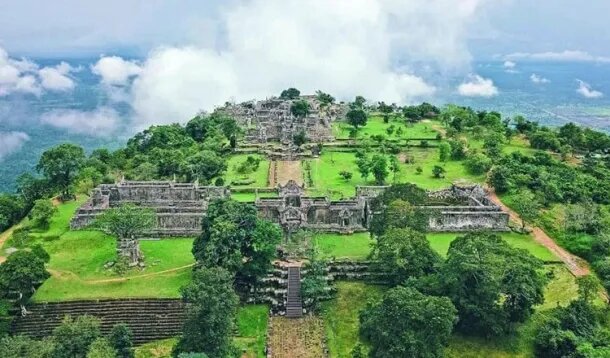
Banteay Chhmar is several hours from Siem Reap, close to Cambodia’s northwestern borderlands. It has monumental face towers reminiscent of Bayon, long narrative bas-reliefs, collapsed galleries and a surrounding village where community-based tourism has developed on a small scale.
It is also a very different proposition from adding another temple to the Angkor Grand Circuit. The distance means Banteay Chhmar needs its own day, and an overnight stay makes considerably more sense than treating it as a quick excursion.
If you are still planning your first visit to the main temples, start with my three-day Siem Reap and Angkor itinerary. Banteay Chhmar is more of a second-stage destination once you already understand the basic history and architecture of Angkor.
Banteay Chhmar Quick Guide
| Location | Banteay Meanchey Province, northwestern Cambodia |
| Nearest major town | Sisophon |
| Distance from Angkor | About 110 km |
| Period | Late 12th to early 13th century |
| King | Jayavarman VII |
| Religion | Primarily Mahayana Buddhist |
| Known for | Face towers, bas-reliefs and multi-armed Avalokiteshvara |
| UNESCO status | Cambodia’s Tentative List |
| Time at the temple | Around 2–4 hours for a thorough visit |
| Best transport | Private car with driver |
| Best trip format | Long day trip or preferably 1 night |
| Accommodation | Local guesthouses and community homestays |
Where to Stay Before the Trip
Most travellers will start from Siem Reap, particularly if Banteay Chhmar comes after several days around Angkor. Staying centrally also makes it easier to arrange a private driver for an early departure.
Where Is Banteay Chhmar?
Banteay Chhmar is in Banteay Meanchey Province in northwestern Cambodia, relatively close to the Thai border.
The temple lies about 65 kilometres north of Sisophon and approximately 110 kilometres from the Angkor World Heritage area.
Coming from Siem Reap, the normal route first heads west toward Sisophon and then turns north toward Banteay Chhmar.
In practical terms, this is not a temple you casually add to an Angkor day. Depending on traffic, road conditions and stops, the drive from Siem Reap can take several hours each way.
Public transport can get you as far as Sisophon relatively easily, but the final section requires additional transport. For a short trip, a private car with a driver is much simpler than trying to coordinate buses, local taxis and return connections.
What Is Banteay Chhmar?
Banteay Chhmar was built during the reign of Jayavarman VII, the same Khmer king responsible for some of the most recognisable monuments of late Angkor, including Bayon and major Buddhist foundations such as Ta Prohm and Preah Khan.
The complex dates to the late 12th and early 13th centuries.
An inscription connects the temple with Prince Srindrakumara, described as a son or protégé of Jayavarman VII, and four warriors who saved him during fighting against the Cham.
This military context appears directly in the art.
The surviving galleries contain long narrative reliefs depicting battles between Khmer and Cham forces, troops, elephants, boats, royal scenes and religious imagery.
Banteay Chhmar was also a major Mahayana Buddhist institution rather than simply a provincial copy of a temple at Angkor.
Its remote location made it strategically important within the wider network of roads and settlements extending toward the northwestern edge of Jayavarman VII’s realm.
Why Is Banteay Chhmar Compared with Bayon?
The most obvious connection is the face towers.
Like Bayon, Banteay Chhmar once had towers bearing enormous serene stone faces looking outward in several directions.
Only part of this architecture survives today because sections of the complex collapsed over centuries, but the resemblance is strong enough that Banteay Chhmar is sometimes informally described as a “second Bayon.”
That description is useful for giving first-time readers an idea of what the temple looks like, but Banteay Chhmar should not be treated simply as a smaller duplicate.
The complex developed its own architectural and religious programme. Some scholars have even argued that the Banteay Chhmar face towers may represent an important stage in the development of the form later used at Bayon.
The relationship between the two sites is therefore more interesting than one copying the other.
The Bas-Reliefs of Banteay Chhmar
The surviving bas-reliefs are one of the strongest reasons to make the journey.
Long carved galleries once surrounded much more of the central complex. Although significant sections have collapsed or disappeared, the remaining panels preserve unusually detailed scenes of Angkorian warfare and religious life.
You can find:
- Khmer and Cham armies in battle;
- naval scenes and boats;
- soldiers and military processions;
- elephants;
- royal audiences;
- Buddhist imagery;
- scenes involving Avalokiteshvara.
The military reliefs are particularly valuable because they do not depict an abstract mythological war. They relate to political conflicts involving the Khmer Empire and the Cham.
This gives Banteay Chhmar some of the same documentary quality that makes the reliefs at Bayon so interesting.
The Multi-Armed Avalokiteshvara
Among the most unusual carvings at Banteay Chhmar are monumental representations of Avalokiteshvara, the bodhisattva of compassion.
One famous surviving panel shows the figure with numerous arms extending outward from the body.
These multi-armed forms are particularly important because they are unusual within Khmer monumental art and form part of the strong Mahayana Buddhist programme associated with Jayavarman VII.
Originally there were more of these reliefs.
Looting caused major losses during the 20th century, particularly when sections of the temple were poorly protected.
That history makes the carvings still in place considerably more important than they might appear from photographs.
Looting and the Lost Reliefs
Banteay Chhmar’s remoteness protected it from mass tourism, but it did not protect it from looting.
The temple suffered badly during periods of political instability in Cambodia. Carved blocks and sections of relief were removed and trafficked across the region.
One notorious case occurred in the late 1990s when more than a hundred carved stone pieces taken from Banteay Chhmar were intercepted near the Thai border.
Some stolen material was eventually recovered and returned to Cambodia.
The episode also demonstrates one of the problems facing remote archaeological sites. When a monument covers a huge area far from major towns, guarding every wall and collapsed gallery is extremely difficult.
Conservation at Banteay Chhmar is therefore about more than rebuilding fallen stone. It also involves documentation, site security and working with the surrounding community.
Why So Much of the Temple Has Collapsed
Do not expect a polished archaeological park.
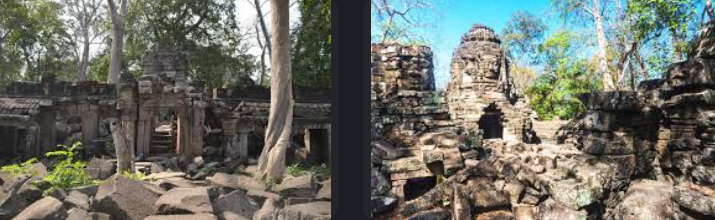
Large parts of Banteay Chhmar are ruined. Galleries have fallen, stone blocks remain scattered across the ground and some structures require support or conservation work.
Vegetation has also grown through sections of the complex.
The condition is the result of several factors: structural failure, centuries of weathering, vegetation, limited historical conservation and looting.
This is part of what makes the site attractive to travellers who have already seen extensively managed temples around Siem Reap, but it is important not to romanticise the deterioration.
Collapsed galleries are not archaeological decoration. They are evidence of a monument that remains vulnerable and requires continuing conservation.
Is It Really Like Ta Prohm Without the Crowds?
The comparison appears frequently because both places contain a combination of Khmer architecture, vegetation and partially collapsed structures.
But they are different experiences.
Ta Prohm is one of Cambodia’s most visited temples and has carefully organised visitor routes, extensive conservation work and some deliberately preserved tree-and-stone compositions.
Banteay Chhmar is much more remote and extensive.
The atmosphere is quieter, but the trade-off is less infrastructure and a monument in a significantly more fragile state.
If what you liked most about Ta Prohm was not the movie connection but the relationship between ruins, trees and an incomplete archaeological landscape, Banteay Chhmar is likely to be much more interesting than another perfectly restored temple.
The Temple Is Bigger Than a Single Ruin
Banteay Chhmar is not one isolated sanctuary.
The main temple forms part of a much larger archaeological landscape containing enclosures, moats, reservoirs and satellite temples.
This wider scale is one reason you should allow more than a quick hour at the site.
A rushed visitor can see the principal face towers and a few famous reliefs, but the real value comes from having enough time to understand the structure of the complex and walk beyond the obvious central sections.
If you are travelling with a local guide, this is where the extra context becomes particularly useful.
Banteay Chhmar and UNESCO
Banteay Chhmar is not currently a UNESCO World Heritage Site.
It was added to Cambodia’s Tentative List in 2020, which means the Cambodian government has identified it as a property that may be considered for future World Heritage nomination.
That distinction matters.
You will sometimes see travel articles describe Banteay Chhmar as though UNESCO status is already inevitable or nearly complete. A place can remain on a Tentative List for many years, and inclusion does not guarantee eventual inscription.
What the status does show is that the archaeological complex is recognised nationally as a site of considerable cultural importance.
Community-Based Tourism in Banteay Chhmar
One of the more interesting aspects of visiting Banteay Chhmar is what happens outside the temple.
A local Community-Based Tourism programme, usually shortened to CBT, has operated in the village for years.
Rather than developing the area around large resorts, the programme connects visitors with local homestays, guesthouses, guides, meals and village activities.
The accommodation is simple.
This is rural Cambodia rather than a tourism district in Siem Reap, so expectations should be adjusted accordingly. Homestays are designed around local houses and village life rather than resort-style facilities.
The advantage is that part of the tourism income stays directly within the community surrounding the archaeological site.
Guesthouses are also available if you prefer a conventional room rather than staying in a family home.
Should You Stay Overnight?
This is the option I would choose.
Technically, you can leave Siem Reap very early, visit Banteay Chhmar and return the same evening.
The problem is that a large proportion of your day then consists of driving.
Staying for one night allows you to visit the temple without constantly calculating when you need to start the return journey.
A simple plan would be:
Day 1
Drive from Siem Reap to Banteay Chhmar, ideally leaving in the morning.
Have lunch in or around the village and spend the afternoon exploring the main temple complex with a local guide.
Stay overnight in a homestay or guesthouse.
Day 2
Use the morning for another walk around the archaeological area or village before returning toward Sisophon and Siem Reap.
This is not a luxury excursion. The point of staying overnight is slower travel, not hotel facilities.
Can You Visit Banteay Chhmar as a Day Trip?
Yes, but it will be a long day.
For a day trip from Siem Reap, I would use a private car with a driver and leave early in the morning.
Trying to build the journey around public transport creates too many moving parts for a same-day return.
I would also avoid planning a long list of additional attractions. Banteay Chhmar is already the reason for the journey, and spending several hours driving there only to rush through the temple in ninety minutes rather defeats the point.
If you want an organised route rather than arranging each piece separately, check private Cambodia and Siem Reap excursions to see whether a customised long-distance itinerary is available.
Does the Angkor Pass Cover Banteay Chhmar?
No.
Banteay Chhmar is outside the Angkor Archaeological Park and is not covered by the standard Angkor Pass.
The temple has its own local admission arrangements.
Because prices and local procedures can change, particularly at a remote site, I would check the current entrance fee when organising transport or accommodation rather than relying on an old online price.
This is particularly important if you are booking through the local CBT programme, which may be able to arrange admission and a local guide together with accommodation.
How Long Do You Need at the Temple?
For the central complex alone, I would plan at least two to three hours.
Allow more if you:
- want to study the bas-reliefs carefully;
- hire a local guide;
- photograph architecture;
- explore the wider archaeological area;
- prefer not to walk quickly through ruins.
This is one of those places where travelling several hours and then rushing makes very little sense.
What to Bring
Banteay Chhmar has far less tourism infrastructure than the main Angkor temples.
I would bring:
- plenty of drinking water;
- sun protection;
- mosquito repellent;
- comfortable closed shoes;
- lightweight clothing covering shoulders and knees;
- some cash;
- a power bank;
- snacks for the road.
Uneven stone, collapsed sections and vegetation also make proper footwear more important here than at heavily managed tourist sites.
During the rainy season, conditions can be muddy and slippery.
Who Should Visit Banteay Chhmar?
I would put Banteay Chhmar fairly low on the list for someone who has only two days in Cambodia and has never seen Angkor Wat.
The major Angkor temples should come first.
Banteay Chhmar starts to make sense when you have already seen places such as Angkor Wat, Bayon, Preah Khan and Ta Prohm and want to understand how far Khmer monumental architecture extended beyond the capital.
It is particularly suitable if you:
- have already visited Angkor;
- are interested in Jayavarman VII;
- enjoy bas-reliefs and Khmer history;
- prefer quieter archaeological sites;
- are comfortable with long drives and simple infrastructure;
- want to spend a night in rural Cambodia rather than return immediately to Siem Reap.
It is less suitable if your priority is convenience, nightlife or fitting as many famous attractions as possible into a short trip.
Is Banteay Chhmar Worth the Journey?
For a first trip to Cambodia with limited time, probably not.
For a second trip, or for someone already spending several days exploring Khmer history, it becomes much more compelling.
Banteay Chhmar offers something increasingly difficult to find around the busiest parts of Angkor: a major royal monument that still feels geographically remote and archaeologically incomplete.
Its face towers connect it with the world of Bayon, while the bas-reliefs preserve military and religious narratives tied directly to the reign of Jayavarman VII. At the same time, collapsed galleries, missing carvings and the history of looting show how vulnerable these monuments can be once you move away from Cambodia’s most heavily protected sites.
I did not manage to reach Banteay Chhmar on my last trip, which is exactly why it remains on my list for the next one. If I go, I would not try to squeeze it into a return journey between sunrise and sunset. I would stay overnight, use a local guide and give the temple the time that a four-hour drive deserves.
Useful Travel Resources
These are the services I use or check when planning trips and comparing travel options.
Flights
Compare flights to Cambodia and routes around Southeast Asia.
Hotels
Compare accommodation in Siem Reap before or after a trip to Banteay Chhmar.
Tours & Activities
Search Cambodia activities and transport options.
Tours & Experiences
Compare private tours and day trips from Siem Reap.
Airport Transfers
Pre-book a transfer between Siem Reap Angkor International Airport and your hotel.
eSIM
Arrange mobile data before arriving in Cambodia.
Car Rental
Compare rental options if self-driving is appropriate for your wider itinerary.
Travel Insurance
Check travel insurance before travelling.
This post contains affiliate links. If you book or purchase through one of these links, I may earn a commission at no extra cost to you.