Ta Prohm Temple: History, Giant Tree Roots & How to Visit
Ta Prohm is one of the few places in Angkor where the passing of time is still part of what you see.
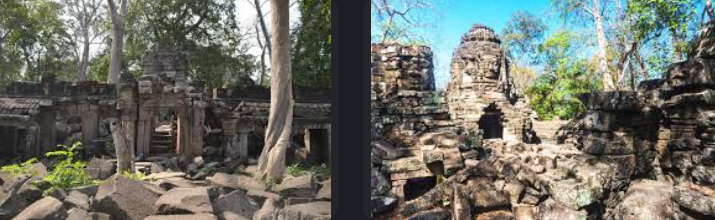
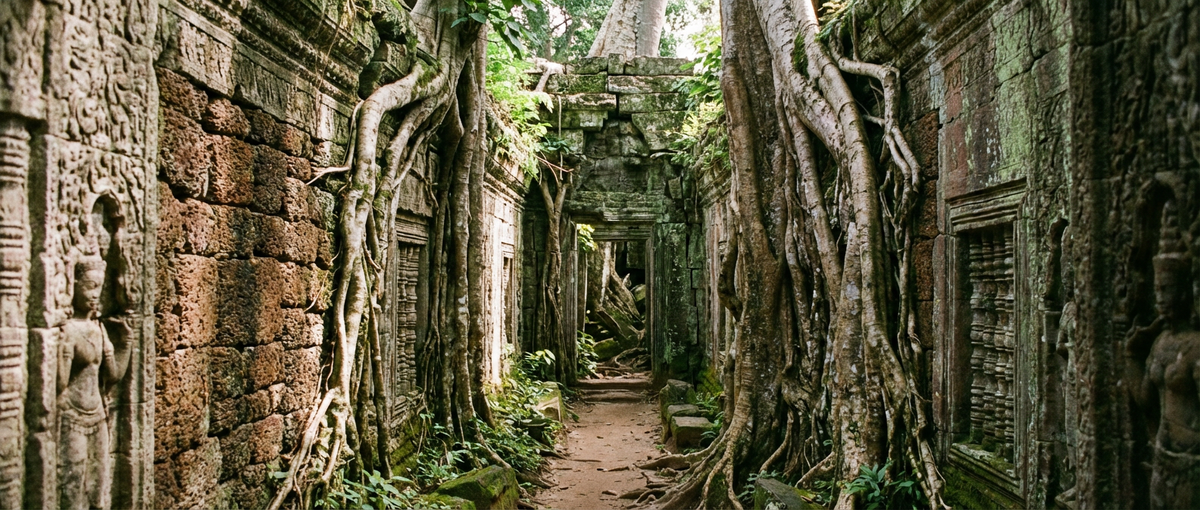
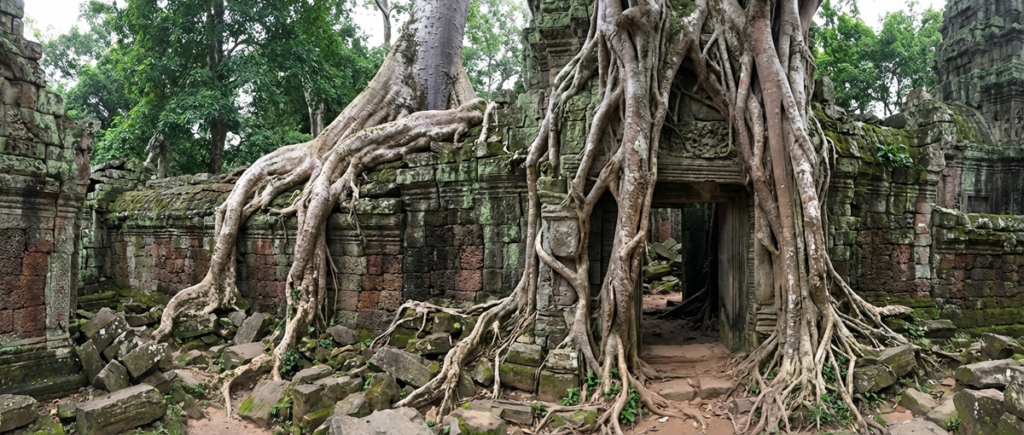
Huge roots spill over sandstone walls. Trees rise directly from ruined galleries. Doorways disappear beneath trunks, while carefully carved blocks sit at impossible angles underneath them.
It is tempting to describe Ta Prohm as a temple that lost its battle with the jungle.
The real story is more interesting.
Ta Prohm was once a major Buddhist monastery supported by thousands of people. Centuries later, vegetation transformed the abandoned complex. When conservation work began at Angkor, restorers deliberately preserved more of that relationship between ruins and forest here than at many other temples.
Today Ta Prohm is neither an untouched ruin nor a fully reconstructed monument. It is actively conserved while the trees, roots and centuries of change remain visible.
That balance is what made Ta Prohm famous long before most visitors learned its history.
Ta Prohm Quick Guide
| Location | Angkor Archaeological Park, Siem Reap |
|---|---|
| Original name | Rajavihara, or Royal Monastery |
| Founded | 1186 |
| King | Jayavarman VII |
| Religion | Mahayana Buddhism |
| Dedicated to | The king’s mother through Prajnaparamita |
| Known for | Giant tree roots growing through and around the ruins |
| Opening hours | 7:30 AM to 5:30 PM |
| Time needed | About 1 to 1.5 hours |
| Ticket | Included in the Angkor Pass |
| Film connection | Lara Croft: Tomb Raider |
From Royal Monastery to Jungle Temple
Ta Prohm was founded under Jayavarman VII, one of the most ambitious kings of the Khmer Empire.
The temple was consecrated in 1186 and originally called Rajavihara, meaning Royal Monastery.
Its central religious image represented Prajnaparamita, the Buddhist personification of transcendent wisdom. Jayavarman VII identified the figure with his mother.
A few years later, he created another major foundation, Preah Khan, associated with his father through the bodhisattva Lokesvara.
Ta Prohm was therefore much more than an isolated sanctuary.
An inscription connected with the temple describes a huge religious and economic institution. More than 12,000 people were directly associated with it, including priests, officials, assistants, dancers, teachers and students. Tens of thousands more lived in villages connected with supplying and supporting the complex.
That does not mean nearly 80,000 people lived inside the stone temple visitors walk through today.
It means Ta Prohm stood at the centre of a much larger system.
Food had to be supplied. Ceremonies organised. Buildings maintained. Religious specialists, administrators and workers supported the institution.
The quiet ruins now surrounded by trees were once part of a very busy world.
Why Ta Prohm Still Looks Like This
The famous trees are not simply growing beside the temple.
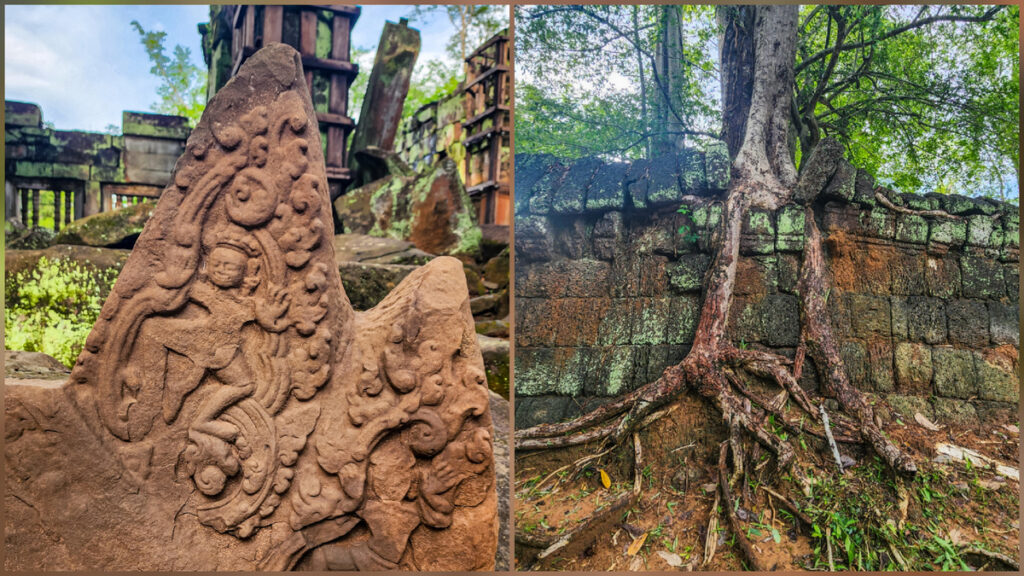
Their roots run across roofs, enter joints between stones, descend through ruined galleries and wrap around entire sections of masonry.
In some places they appear to hold walls together.
In others they have pushed stones apart.
That contradiction is part of what makes Ta Prohm so fascinating.
The forest has damaged the monument, but centuries of interaction between trees and stone have also become part of the monument’s identity.
When French conservation teams began systematic work at Angkor, Ta Prohm was treated differently from temples that were more extensively cleared and reconstructed.
More of its overgrown appearance was deliberately retained.
So the common description of Ta Prohm as an “unrestored temple” is not quite right.
Conservation teams have stabilised structures, cleared visitor routes, repaired damaged sections and protected vulnerable areas for decades.
That work continues today.
Cambodia’s APSARA National Authority and the Archaeological Survey of India have restored galleries, sections of the Hall of Dancers, walls and gateways while trying to preserve the distinctive relationship between architecture and vegetation.
The challenge is not simply to save the stones from the trees.
It is to conserve a monument whose most famous visual identity now depends partly on those trees being there.
The Famous Trees and What to Look For
The giant roots are still the reason most people recognise Ta Prohm instantly.
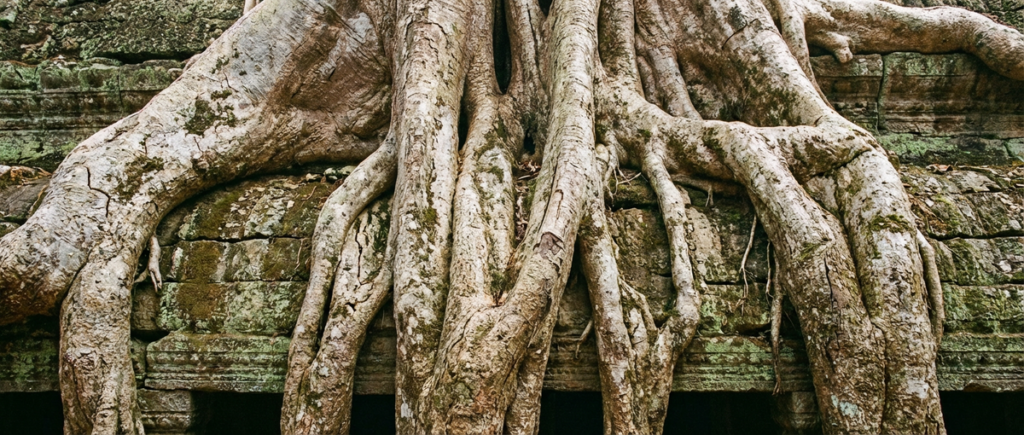
Some descend from high above the galleries before spreading across the sandstone like enormous fingers. Others disappear between blocks and emerge again several metres away.
Standing beside them changes your sense of scale.
A substantial stone doorway suddenly looks fragile underneath a trunk and root system that has been developing for generations.
But do not spend the entire visit looking only for the famous photo spots.
Ta Prohm is still a major Khmer temple complex.
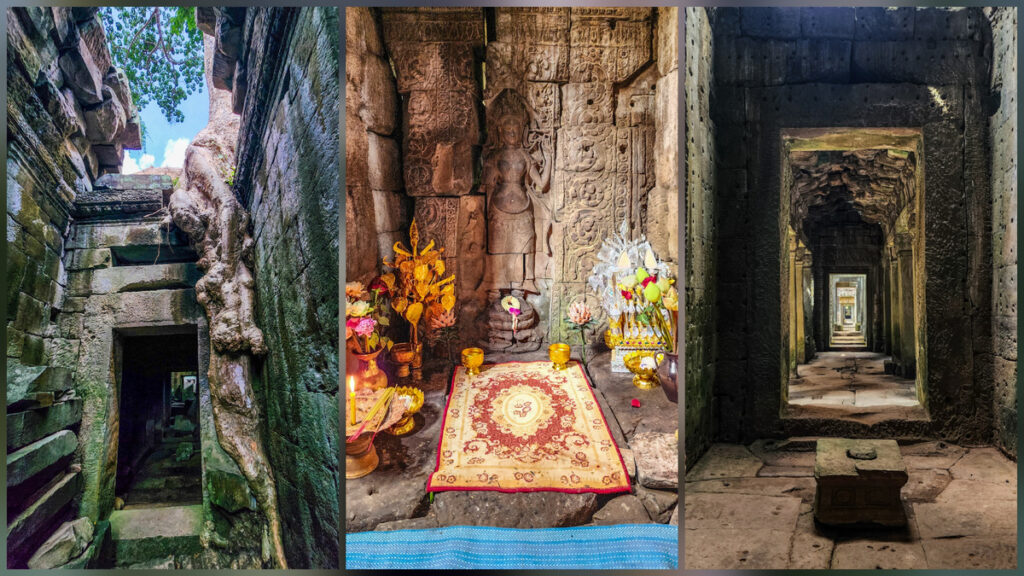
Look at the galleries, courtyards, doorways and surviving carved pediments. The Hall of Dancers is one of the important architectural spaces, while Buddhist and Hindu imagery survives throughout the complex.
Later religious changes at Angkor also left traces here. Many Buddhist images associated with the period of Jayavarman VII were altered or destroyed after his reign.
The jungle is the most dramatic layer of Ta Prohm, but it is only the most recent layer.
Ta Prohm and Tomb Raider
Ta Prohm became internationally famous after appearing in the 2001 film Lara Croft: Tomb Raider, starring Angelina Jolie.
Several scenes were filmed around the temple, and the association became so strong that you will still hear it called the Tomb Raider temple.
For many travellers, those scenes were their first introduction to Angkor beyond Angkor Wat.
The setting looked almost too cinematic to be genuine: roots covering doorways, collapsed galleries and stone disappearing beneath vegetation.
But the film did not create that atmosphere.
It simply showed a much larger audience what was already there.
The Tomb Raider connection is fun, but Ta Prohm would be one of Angkor’s essential temples without it.
How to Visit Ta Prohm
Opening Hours and Best Time
Ta Prohm is currently open from 7:30 AM to 5:30 PM.
If the temple is a priority, I would go close to opening time.
Ta Prohm is one of the most popular stops on the Small Circuit, and the famous root-covered sections can become crowded later in the morning.
Early light also works well inside the ruins, where galleries and trees create strong areas of shadow.
Late afternoon is another option, but I would not arrive too close to closing time.
Ta Prohm is much better when you can move slowly rather than rushing between the best-known trees.
Ta Prohm Tickets
There is no separate ticket for Ta Prohm.
It is included in the standard Angkor Pass:
| Pass | Price | Validity |
|---|---|---|
| 1-day | $37 | 1 day |
| 3-day | $62 | Any 3 days within 7 days |
| 7-day | $72 | Any 7 days within 30 days |
A 1-day pass works if you are concentrating on Angkor’s main temples.
If you want the Grand Circuit or several slower temple days, the 3-day pass gives you far more flexibility.
Find Angkor tours on GetYourGuide
Browse Siem Reap tours & activities on Trip.com
How Long to Spend at Ta Prohm
Allow around 1 to 1.5 hours.
You can technically walk through faster, but there is little reason to.
Some of the most interesting details are easy to miss if you are only moving from one famous tree to the next.
Photography also takes time because several of the best-known viewpoints attract queues.
If you are following the classic Angkor Small Circuit, Ta Prohm fits naturally after Angkor Thom.
That is how I include it in my Angkor one-day itinerary with Angkor Wat, Angkor Thom and Ta Prohm.
Ta Prohm or Beng Mealea?
Ta Prohm and Beng Mealea are often grouped together because both combine Khmer ruins with vegetation.
The experience is quite different.
Ta Prohm is one of Angkor’s major monuments, closely associated with Jayavarman VII and actively conserved. It is easily incorporated into the standard temple circuits from Siem Reap.
Beng Mealea is farther away and works better as a separate excursion. Its collapsed architecture spreads through a much larger field of stone and vegetation, giving it a different atmosphere.
I would not really choose between them.
Visit Ta Prohm as part of Angkor, then use Beng Mealea when you want to move beyond the classic circuit.
And if you want to go even farther beyond central Angkor, Koh Ker offers something completely different: a former Khmer capital dominated by its enormous stepped pyramid.

Is Ta Prohm Worth Visiting?
Absolutely.
But not simply because of Tomb Raider or because giant roots make good photographs.
Ta Prohm becomes much more interesting when you see it after temples such as Angkor Wat and Bayon.
Angkor Wat projects extraordinary order, geometry and permanence. Angkor Thom reflects royal power on a monumental urban scale.
Ta Prohm shows what happened after those systems stopped controlling the landscape.
Stone moved. Roofs collapsed. Trees entered galleries. Architecture that had been designed to survive generations became part of a living forest.
And then another chapter began.
Archaeologists and conservators decided that completely erasing those centuries of change would also erase something important.
That is why Ta Prohm looks the way it does today.
The temple was built by people, transformed by nature and is now being carefully maintained somewhere between those two forces.
It did not simply lose to the jungle.
The jungle became part of its history.
Useful Travel Resources
Flights
Compare flights to Cambodia and destinations around Southeast Asia.
Hotels
Compare accommodation in Siem Reap for your Angkor visit.
Find hotels in Siem Reap on Trip.com
Tours & Activities
Browse temple tours and other activities around Siem Reap.
Browse tours & activities on Trip.com
Tours & Experiences
Compare guided Angkor experiences and Small Circuit tours.
Find Angkor tours on GetYourGuide
Airport Transfers
Arrange your transfer between Siem Reap Angkor International Airport and the city.
Book an airport transfer on Trip.com
eSIM
Arrange mobile data before arriving in Cambodia.
Car Rental
Compare rental options for other parts of your Cambodia itinerary where self-driving is suitable.
Travel Insurance
Check travel insurance before your trip.
Check travel insurance with EKTA
This post contains affiliate links. If you book or purchase through one of these links, I may earn a commission at no extra cost to you.