Tonle Sap Lake: Floating Villages, Seasons & How to Visit
Tonle Sap Lake is often reduced to a “floating village tour” from Siem Reap. That makes it sound like a scenic boat ride past houses on water, when the reality is much bigger.
Tonle Sap is Southeast Asia’s largest freshwater lake, but its size changes dramatically with the season. It is part of a river system that reverses direction with the Mekong flood pulse, supports millions of people through fisheries and floodplain livelihoods, and helps explain the wider environment around Angkor beyond its monumental temples.
For travellers, however, the most useful question is simpler:
Which Tonle Sap experience should you actually choose?
Chong Kneas, Kampong Phluk and Kampong Khleang are not interchangeable. They differ in distance, atmosphere, seasonality, tourism intensity and what you actually see.
I did not visit Tonle Sap on this trip, so this is not a first-hand village review. It is the guide I built for my next visit after discussing the options with our local guide and researching how the villages and lake change through the year.
If you are still organising your main temple day first, start with my Angkor One-Day Itinerary.
Tonle Sap at a Glance
| Location | South of Siem Reap |
| Type | Seasonal freshwater lake and floodplain system |
| UNESCO status | Biosphere Reserve since 1997 |
| Main visitor areas | Chong Kneas, Kampong Phluk, Kampong Khleang |
| Best for | Village life, seasonal landscapes, boats, flooded forest |
| Typical trip | Half day to full day |
| Most convenient option | Chong Kneas |
| Best for flooded forest | Kampong Phluk |
| Best for a longer community-focused visit | Kampong Khleang |
| Best season | Depends on what you want to see |

Is Tonle Sap Worth Visiting from Siem Reap?
Yes, if you want to understand more of Cambodia than the temple circuit.
I would still prioritise Angkor if you have only one day in Siem Reap. With several days, Tonle Sap adds a completely different layer to the trip.
Angkor shows political power, religious ambition and monumental architecture. Tonle Sap helps explain part of the food system, transport network and seasonal environment that supported communities across the region.
The important part is choosing the right village and the right season rather than simply booking the first excursion labelled “floating village”.
Why Tonle Sap Matters to the Angkor Story
It is tempting to say that Angkor existed because of Tonle Sap.
That is too simple.
The Khmer capital depended on a much larger system that included rice agriculture, reservoirs, canals, seasonal wetlands, fisheries and regional trade. Tonle Sap was an important part of that system, not the single explanation for it.
The lake and its floodplain provided fish, fertile seasonal land and transport connections for communities across central Cambodia. Those resources formed part of the wider economic landscape supporting dense populations around Angkor.
Water management mattered at the monumental level too. If you want to understand how reservoirs, foundations and hydraulic engineering fitted into the built landscape, see How Angkor Wat Was Built: Foundations, Water & Stone.
The relationship also appears visually in Khmer art. Fish, markets, food preparation and ordinary people appear alongside royal and mythological scenes in Angkorian reliefs. My Angkor Wat Bas-Reliefs guide explains how to begin separating mythology from scenes of everyday life carved into the temple walls.

How the Tonle Sap River Reverses Direction
One of the most unusual things about Tonle Sap is that the connecting river changes direction during the year.
During the dry season, water generally flows out of Tonle Sap toward the Mekong.
When the Mekong rises during the wet season, the difference in water levels becomes large enough to reverse that flow. The Tonle Sap River begins carrying water from the Mekong back into the lake, which expands across its floodplain.
When Mekong levels fall again, the process reverses and Tonle Sap begins draining back toward the river system.
The sequence is roughly:
Mekong rises → Tonle Sap River reverses → lake expands → floodplain and forest inundate → fish habitat increases → Mekong falls → lake drains again.
The timing varies from year to year because it depends on the strength and timing of the Mekong flood pulse.
How Big Does Tonle Sap Get?
Tonle Sap does not have one fixed shoreline.
In the dry season, its surface area can shrink to roughly 2,500 square kilometres. At peak flood, it can expand to around 15,000 square kilometres.
That means the lake can become roughly six times larger over the course of the year.
Entire areas change character. Roads become waterways, forests flood, houses that seemed to stand high above dry ground suddenly sit beside boat traffic, and communities adapt to a landscape that changes vertically as much as horizontally.
This is why the same village can look almost unrecognisable in two different seasons.
Tonle Sap Is a UNESCO Biosphere Reserve
Tonle Sap was designated a UNESCO Biosphere Reserve in 1997 and formally established under Cambodian Royal Decree in 2001.
The protected landscape extends far beyond the open water tourists see from a boat. It includes floodplains, flooded forest, freshwater swamp, seasonally inundated grassland and agricultural areas.
That changing boundary between land and water is central to the ecosystem. Flooded forests become important habitat for fish, seasonal water carries nutrients across the floodplain, and communities change how they use the landscape as the water rises and retreats.
Millions of Cambodians depend directly or indirectly on the lake and its floodplain for food, income and livelihoods.
The annual reversal is therefore not just an unusual hydrological fact. It drives a huge living system.
Tonle Sap Lake vs Floating Village: What Are You Actually Visiting?
Many Tonle Sap tours combine two experiences: the community you travel through and a boat trip toward or onto the open lake.
The village determines much of what happens before you reach open water, which is why choosing the village matters so much.
A short trip through Chong Kneas can feel completely different from a slower visit to Kampong Khleang even though both connect with the same lake.
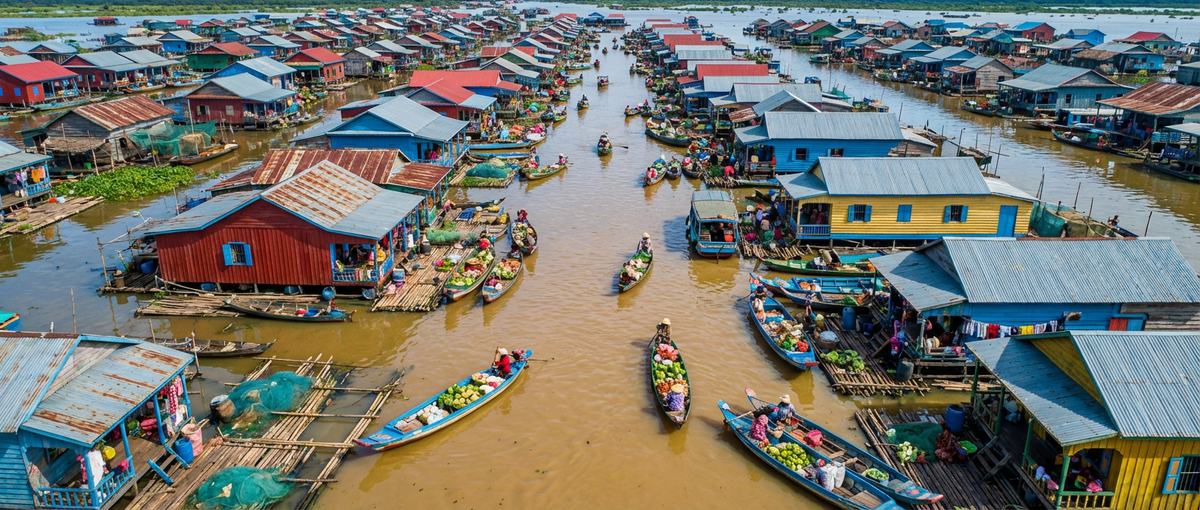
The phrase floating village also oversimplifies the architecture. Some structures genuinely float. Others stand on extremely high stilts and are surrounded by water only when the lake rises.
Which Tonle Sap Village Should You Choose?
The easiest way to decide is by priority.
| If you want… | Choose |
|---|---|
| Shortest and easiest trip from Siem Reap | Chong Kneas |
| Tall stilt houses and flooded forest | Kampong Phluk |
| Longer, more community-focused visit | Kampong Khleang |
| Half-day sunset trip | Kampong Phluk |
| More time observing fishing and village life | Kampong Khleang |
| Maximum convenience with limited time | Chong Kneas |
There is no universally best village. The right choice depends on what you want from the day.
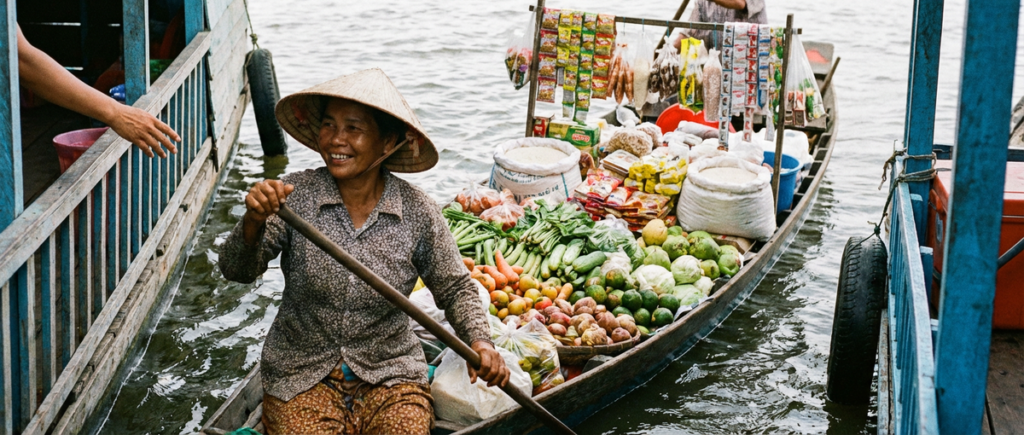
Chong Kneas: Closest and Most Tourism-Oriented
Chong Kneas is the closest major lake access point to Siem Reap.
Driving time is usually around 30–40 minutes, depending on traffic and your starting point. You can reach the harbour quickly, get onto a boat and see floating structures, schools, shops and other parts of life organised around the water.
That convenience is the main reason to choose it.
Chong Kneas is generally the most tourism-oriented of the three options and was also the one our guide was most cautious about. Operator choice matters because some itineraries may include commercial or donation stops that are not necessarily what you expected when booking a lake trip.
I would choose Chong Kneas if time is the priority, rather than because it offers the deepest introduction to Tonle Sap communities.
Kampong Phluk: Stilt Houses and Flooded Forest
Kampong Phluk is farther from Siem Reap, usually around 45–60 minutes by road depending on conditions and the exact departure point.
Its defining feature is not floating houses but extremely high stilt houses.
In the low-water season, the enormous wooden supports become fully visible and parts of the settlement can look almost suspended above the ground. When the lake rises, boats move between houses and the entire scale of the village changes.
Kampong Phluk is also known for its flooded forest, which can be explored by smaller boat when water levels are high enough.
Choose Kampong Phluk if the combination of dramatic stilt architecture, seasonal water and flooded forest is your priority. It also works particularly well as a half-day or sunset trip.
Kampong Khleang: Longer Trip, Stronger Community Focus
Kampong Khleang requires more travel time, usually around 1 to 1.5 hours from Siem Reap depending on road conditions and your starting point.
The community is much more complex than a simple cluster of floating houses. It includes stilted homes, land-based sections and floating areas closely connected with fishing and lake life.
Fishing, fish processing and other lake-based livelihoods remain important to the local economy.
Our guide specifically recommended Kampong Khleang if we were willing to travel farther in exchange for a slower, more community-focused experience. That also fits the development of local community-based tourism here, where guiding, boats, food and other services can be organised through community structures.
If I had enough time, this is the option I would be most interested in for a future visit.
Best Time to Visit Tonle Sap Depends on What You Want to See
There is no single best month for Tonle Sap.
The right season depends on what you want the landscape to look like.
High-Water Season
As a rough guide, September and October often produce the strongest high-water landscape, although exact conditions vary from year to year with the Mekong flood pulse.
This is when water surrounds stilt houses and flooded forests become more accessible.
Kampong Phluk is especially striking at high water because both the village and the forest become part of one continuous aquatic landscape.
Falling Water
As the wet season ends, the lake gradually retreats.
This can be a useful compromise if you still want plenty of water but also want to begin seeing the extraordinary height of the stilt houses.
Low-Water Season
By the later dry season, large sections of the stilts are exposed, shorelines shift and boat routes can look completely different from their high-water versions.
This is a good time if your main interest is understanding why the houses are built so high.
It is much less suitable if the flooded forest is the image you came specifically to see.
What Our Guide Recommended
Our local guide’s strongest advice was to choose the village deliberately rather than buying a generic Tonle Sap excursion.
She considered Chong Kneas the easiest but also the most commercial option. Kampong Phluk made sense for a shorter trip with strong visual impact, while Kampong Khleang was the option she preferred for travellers willing to spend more time on the road for a deeper look at village life.
That recommendation is why I would decide on Chong Kneas vs Kampong Phluk vs Kampong Khleang first, and only then compare tour companies and prices.
Tour or Independent Visit?
Both can work.
Organised Tour
A good organised tour removes most of the logistical decisions. You do not have to arrange road transport, negotiate boat prices or work out which harbour you need.
That can be especially useful if you are travelling alone.
But an organised tour is not automatically better simply because someone else planned it. Check which village is actually included, how much time is spent on the boat, whether flooded forest access is part of the itinerary, whether there are additional commercial stops, which fees are included and whether the trip is private or shared.
Independent Trip
Travelling with your own driver gives you more flexibility over timing and village choice.
For Kampong Khleang in particular, combining private road transport with a local or community-based boat arrangement can make sense if you want more control over the day.
The trade-off is that you need to organise more yourself.
For me, the useful distinction is not tour vs no tour. It is transparent itinerary vs vague itinerary.
How to Visit Without Turning the Village Into a Spectacle
Tonle Sap communities are places where people live and work, not open-air sets built for tourists.
Do not point a camera directly into someone’s face or photograph children closely without permission. Do not walk onto private platforms or into homes unless you have been invited.
I would also avoid handing out sweets or cash from a boat simply because children approach visitors. If you want to support a community, locally organised tourism, established projects or transparent long-term initiatives are generally more useful than spontaneous distribution.
Operator choice matters too. Be cautious if a trip unexpectedly turns into a sequence of pressured stops at schools, shops or donation points that were not clearly explained when you booked.
A community-based guide or operator with transparent pricing is usually a better sign than a tour built around emotional pressure.

Why Tonle Sap Is More Fragile Than It Looks
A huge seasonal lake can look almost indestructible.
It is not.
Tonle Sap depends on the timing and strength of the Mekong flood pulse. Changes in river flows, climate variability, pressure on fisheries, loss of flooded forest, pollution and land-use change can all affect the system.
That matters because the lake’s productivity depends on water reaching the floodplain at the right time and remaining there long enough to support fish breeding, vegetation and local livelihoods.
The current Tonle Sap Biosphere Reserve Strategic Plan 2026–2030 places particular emphasis on conservation, sustainable livelihoods, water management and climate resilience.
For visitors, the practical point is simple: Tonle Sap is a dynamic ecosystem under pressure, not an endlessly renewable backdrop for boat tours.
How Long Do You Need?
For Chong Kneas, a short half-day trip is enough for most visitors.
For Kampong Phluk, allow roughly half a day, especially if you want to combine the village, flooded forest and sunset.
For Kampong Khleang, I would allow most of the day rather than trying to squeeze it between other attractions. The journey is longer, and the reason to choose Khleang is to slow down rather than rush through it.
What to Bring
The practical list is short:
- light clothing that can handle spray or rain;
- sun protection;
- drinking water;
- a waterproof pouch or bag for electronics;
- some cash for small purchases or tips;
- sandals or shoes you do not mind getting dusty or wet.
In the wetter months, a lightweight rain layer is useful even if the sky looks clear when you leave Siem Reap.
Who Should Visit Tonle Sap?
Tonle Sap is worth adding if you have already reserved enough time for Angkor and want to understand more of the landscape and economy surrounding the temples.
For a sense of the wider water system, see Phnom Kulen National Park, the landscape where many of the rivers feeding the Angkor region begin.
It is particularly interesting if you enjoy everyday-life travel, seasonal environments, fishing communities or places where human settlement has adapted directly to water.
You can probably skip it on a very short trip if visiting the lake means sacrificing your only proper Angkor day.
Tonle Sap is most rewarding when you stop treating “floating village” as one attraction. Choose the village first, then choose the season. Those two decisions will shape your experience far more than the name of the tour company.
Useful Travel Resources
Flights
Compare flights to Cambodia and connections across Southeast Asia.
Hotels
Compare accommodation in Siem Reap by location, current price and guest reviews.
Tours & Activities
Browse Tonle Sap trips, attraction tickets and other organised sightseeing around Siem Reap.
Tours & Experiences
Compare guided lake trips and experiences around Siem Reap.
Airport Transfers
Arrange transport between Siem Reap Angkor International Airport and your accommodation.
eSIM
Set up mobile data before arriving in Cambodia.
Travel Insurance
Check travel insurance options before your trip.
Affiliate disclosure: This article contains affiliate links. If you book through them, I may earn a commission at no extra cost to you.