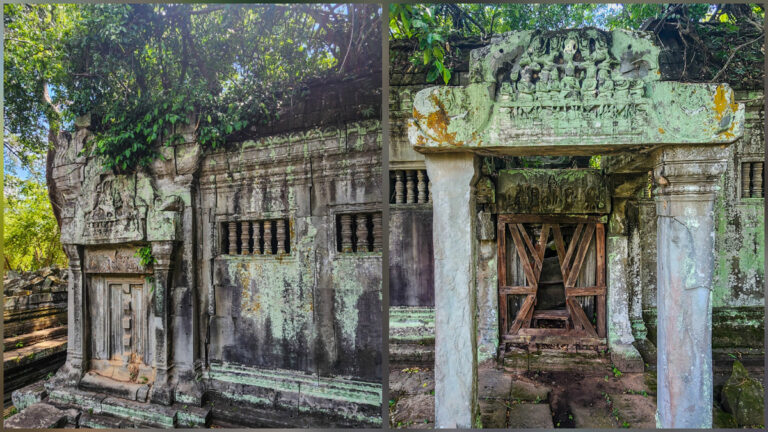
Phnom Penh to Phu Quoc via Sihanoukville, Kampot & Bokor
By the time I left Phnom Penh, this trip had stopped feeling anything like a simple visa run.
I had already crossed from Phu Quoc into Cambodia, spent three days around Angkor and squeezed an unreasonable amount of Phnom Penh into one full day.
The first part of the journey took me from Phu Quoc to Siem Reap overland, followed by three days around Angkor. Then came one day in Phnom Penh, from S-21 to the river and a very late finish around Bassac Lane.
Now I had to close the loop.
My Phnom Penh to Phu Quoc route was anything but direct:
Phnom Penh → Sihanoukville → Kampot → Bokor Mountain → Vietnam border → Ha Tien → Phu Quoc.
That was exactly why I chose it.
Instead of treating the return to Vietnam as dead travel time, I wanted to see what was between the capital and the border.
The result was the most varied section of the whole Cambodia trip.
Bus.
Train.
Scooter.
Minivan.
Ferry.
A coastal city that left me conflicted, one of my favorite transport days in Cambodia, a quiet town I immediately wanted more time in, a mountain disappearing into fog and a ride down in cold rain that permanently changed how I pack for tropical countries.
Then, finally, Phu Quoc again.
Phnom Penh to Phu Quoc: Route at a Glance
| Stage | How I travelled |
|---|---|
| Phnom Penh → Sihanoukville | Bus |
| Sihanoukville → Kampot | Train |
| Kampot → Bokor Mountain | Rental scooter |
| Kampot → Vietnam border | Minivan |
| Ha Tien → Phu Quoc | Ferry |
If your only goal is to get from Phnom Penh back toward Vietnam, there are faster ways to build the journey.
This route makes sense if you want the road itself to be part of the trip.
Phnom Penh to Sihanoukville
I left Phnom Penh early in the morning with Vireak Buntham, the same company I had used between Siem Reap and the capital.
The road started beautifully.
The expressway made the trip smoother than I had expected, and for long stretches there were green hills, palms and open countryside outside the window.
On my journey, we reached Sihanoukville in roughly four hours including a break.
For most of the ride, I was thinking:
Cambodia is beautiful.
Then the bus entered Sihanoukville.
And the visual language changed completely.

Sihanoukville: The Skyline and the Street Below
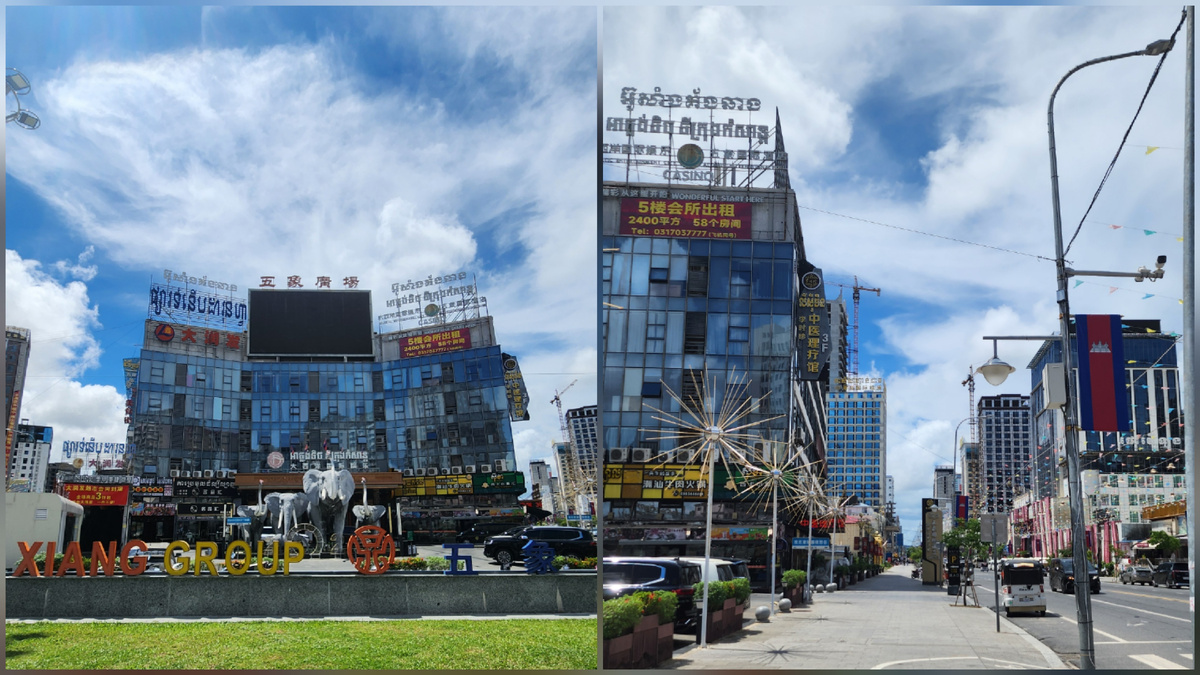
From a distance, Sihanoukville looked almost unreal.
Large glass towers.
Hotels.
Casinos.
Huge buildings rising near the coast.
Parts of the skyline looked closer to an ambitious casino city than the relaxed Cambodian beach town I had imagined years earlier.
Then I started moving through it at street level.
During my visit I saw large finished developments beside unfinished concrete structures, construction areas, heavy traffic, dusty roads and sections that felt surprisingly neglected underneath the glossy skyline.
At the beaches I visited, I also saw construction, litter in the water in places and views that included port infrastructure.
It was not a beach stop that made me want to swim.
That was the image of Sihanoukville I took away with me:
impressive when you look up, much rougher when you look around.

I had only a short visit, so I would not pretend that one day explains the whole city.
But it was one of the most visually contradictory places on this Cambodia route.
A Grab Problem I Ran Into More Than Once
I mostly used Grab to move around.
And the same annoying thing happened to me several times in Sihanoukville.
The ride ended.
I got out.
The driver left.
But the trip remained active in the app.
Then I tried to order another car and Grab still thought I was already travelling.
After the second time, I learned to check before walking away.
If the trip was still open, I asked the driver to finish it in the app.
Small problem.
Very irritating when you are standing in the heat and cannot book the next ride.
Stay Connected While Moving Around
This was another part of Cambodia where I was constantly using maps, Grab and transport information.
My Short Stop in Sihanoukville
I only had part of a day, so this was never meant to be a complete Sihanoukville guide.
I wanted to see enough of the city to understand whether I would come back for a longer stay or use it mainly as a gateway to the islands.

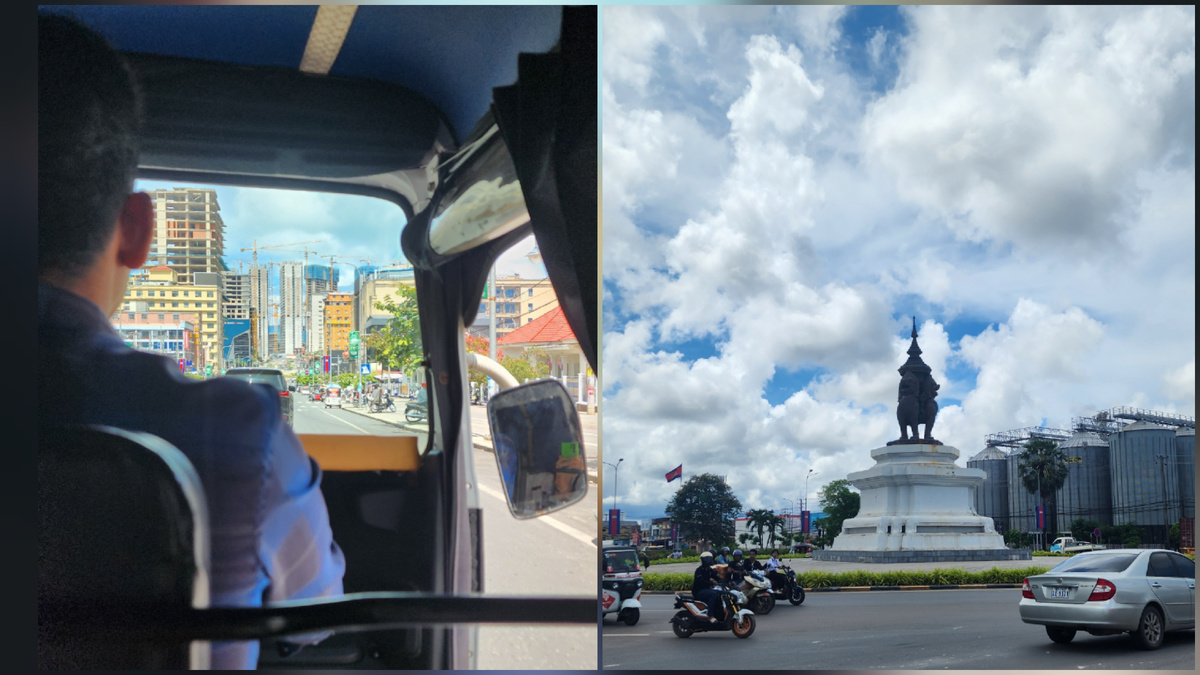
The Two Lions
The Two Lions were an obvious stop.
They are one of the city’s most recognizable symbols and look suitably dramatic in travel photos.
In midday traffic and heat, the experience was considerably less cinematic.
Still, if you are moving through central Sihanoukville, you are likely to pass them anyway.
Wat Leu: The View I Didn’t Get
I wanted to visit Wat Leu, partly for the elevated view.
My tuk-tuk driver reached the lower part of the hill and refused to go farther.
No long explanation.
Just no.
I could have walked.
In that heat, I decided I did not want the viewpoint quite badly enough.
So Wat Leu became one of those travel stops where the plan remained on the map.
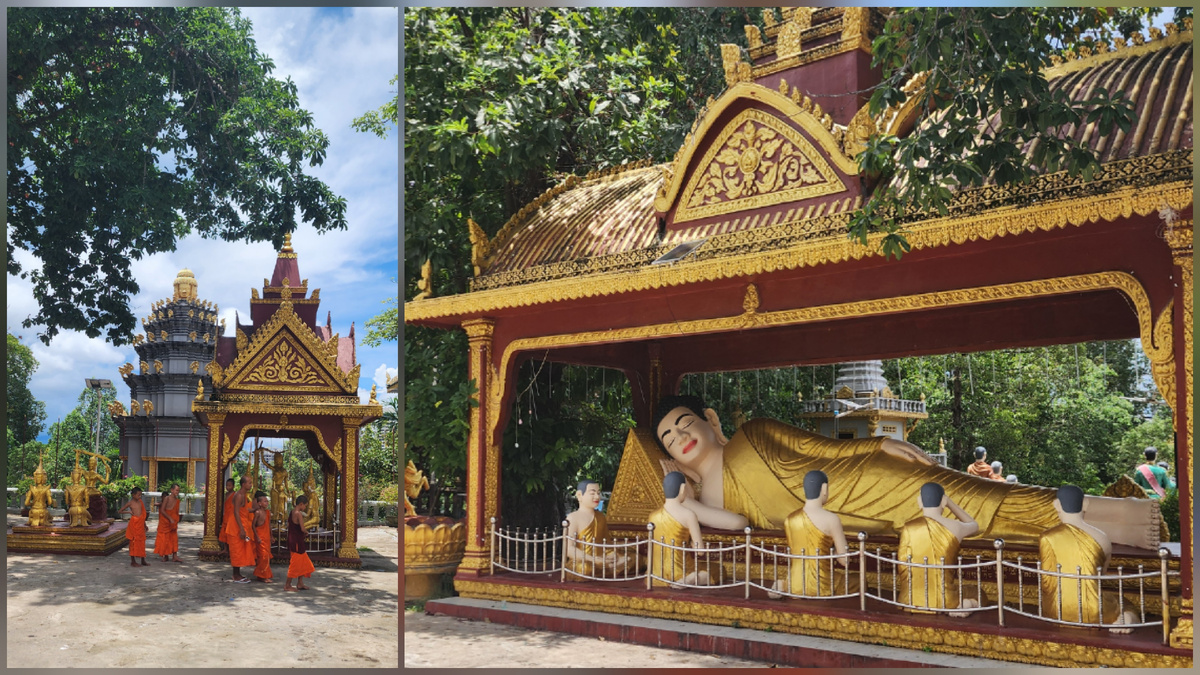
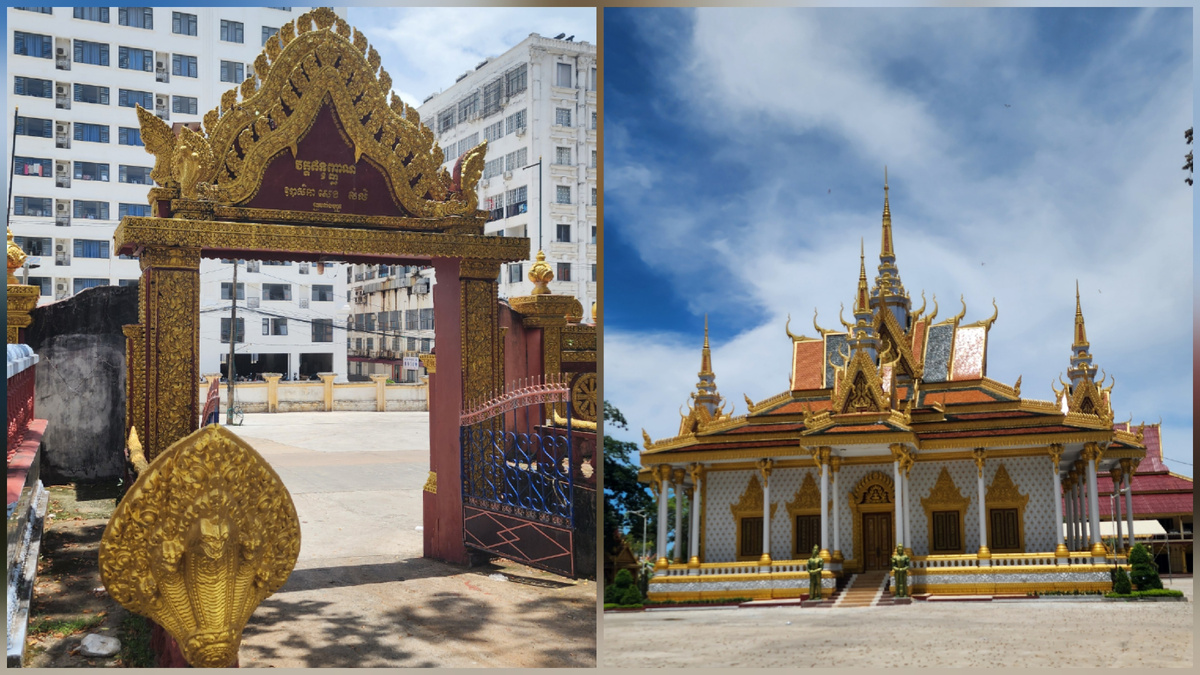
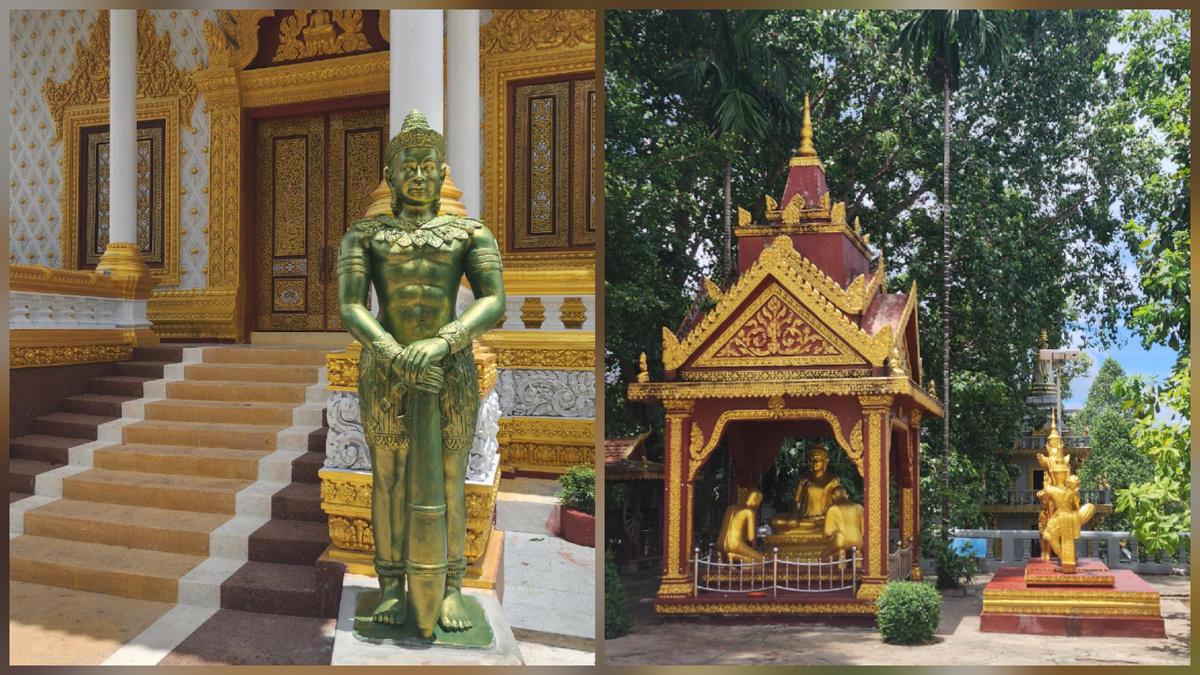
Wat Krom
I had better luck with Wat Krom.
Inside the temple grounds, the atmosphere shifted immediately.
Golden stupas.
Religious buildings.
Quiet.
Then I stepped back outside and the city returned.
I liked that change more than I expected.
U Mall: Air Conditioning Wins
At some point I stopped pretending I needed another cultural attraction and went to U Mall.
Mostly because it was cool.
Air conditioning.
Clean floors.
Food.
A supermarket.
A chair.
Sometimes that is exactly the attraction you need.
Serendipity and Independence Beach
I also went toward Serendipity and Independence Beach.
My visit did not give me the classic picture of a relaxed tropical resort.
There was construction around parts of the area.
I saw litter in the water in places.
Urban and port infrastructure remained part of the view.
I did not feel tempted to swim.


That does not mean the Sihanoukville coast has nothing to offer, especially if you are continuing toward the islands.
But the city itself did not convince me to stay another night.
The train to Kampot did.
Sihanoukville to Kampot by Train
I could have taken another bus.
Instead, I wanted to change the rhythm completely.
I booked the Sihanoukville to Kampot train through 12Go and took an afternoon departure.

The station was basic.
A small building.
Not much around it.
Very little reason to arrive dramatically early.
I was glad I had water and something to eat with me.
Then the train arrived.
And it turned out to be one of the nicest surprises of the trip.

Air conditioning.
A smooth enough ride.
A slower pace.
And a window that turned two and a half hours of transport into actual travel.
On my journey, seating was fairly relaxed rather than rigidly policed, so if getting a window or sitting together matters to you, I would not leave boarding until the final second.
Schedules and journey times can change, so I would still check the current service rather than plan around my exact departure time.
The View from the Train
The Phnom Penh to Phu Quoc journey became much more interesting once I stopped treating transport as something to get through as quickly as possible.
This train was the best example.
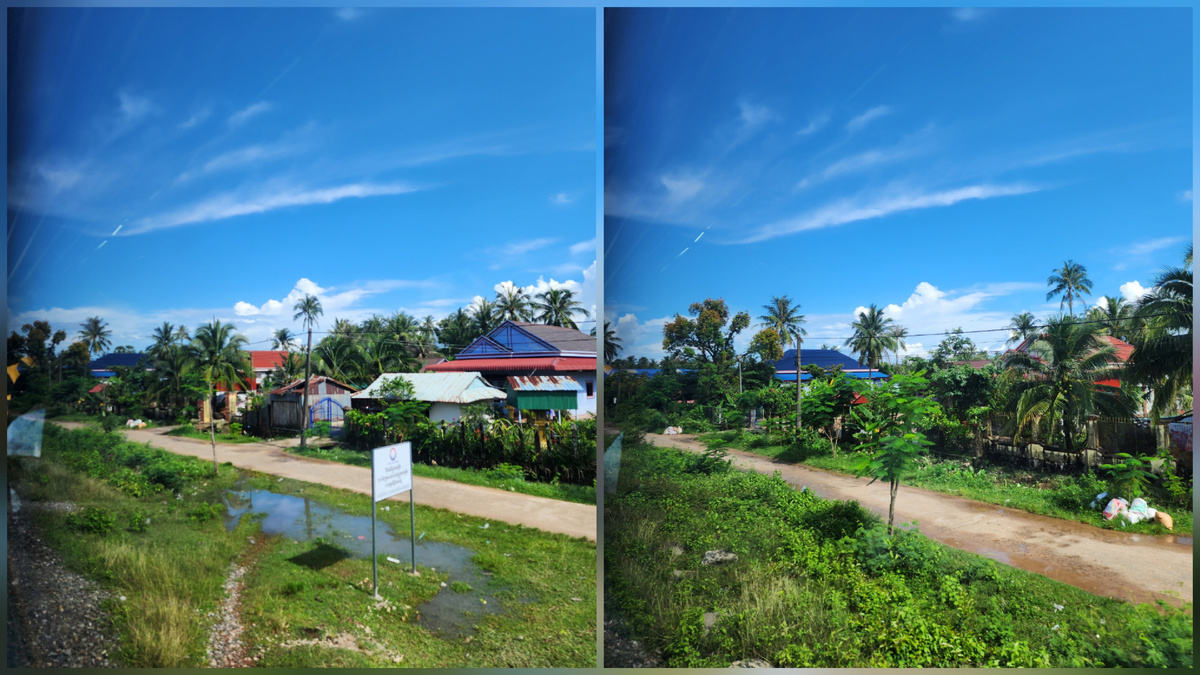
Outside the window:
green rice fields;
water across the paddies;
cattle and buffalo;
wooden houses on stilts;
hammocks hanging in the shade;
children appearing near the tracks;
tall sugar palms standing almost alone against the sky.
And gradually, closer to Kampot, the mountains started appearing ahead.
After Sihanoukville, the landscape felt almost therapeutic.
No towers.
No casino skyline.
No construction noise.
Just Cambodia moving slowly past the window.


First Evening in Kampot
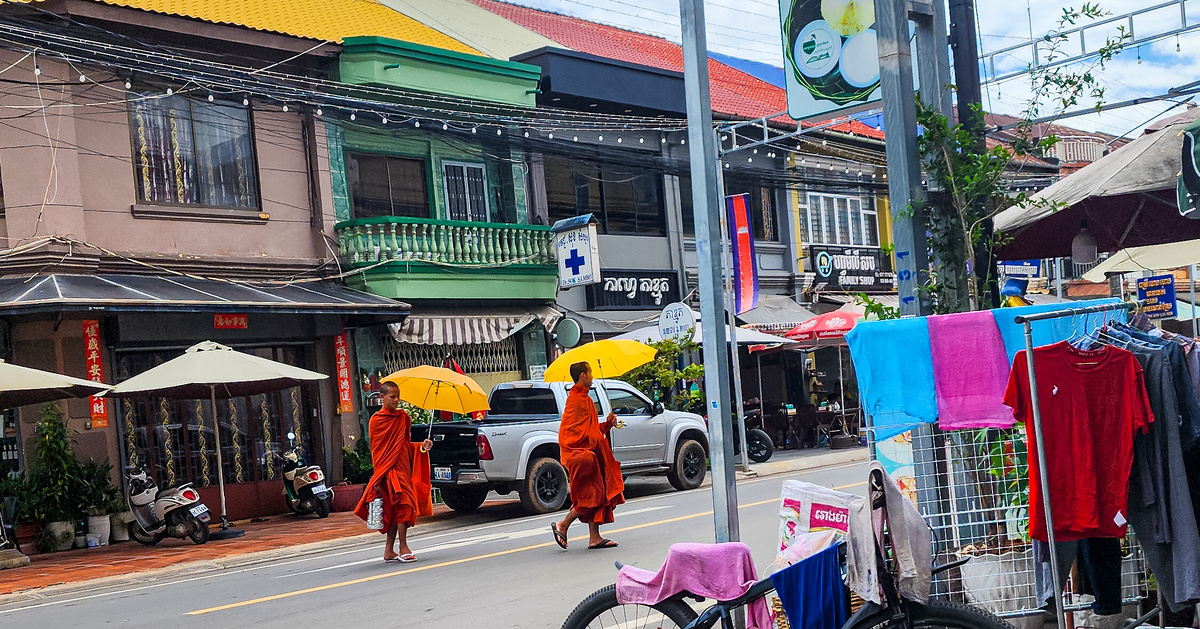
I reached Kampot toward evening.
And almost immediately, the whole trip slowed down.
Low buildings.
A proper riverfront.
Streets I actually wanted to walk.
No need to constantly plan the next Grab ride.
Kampot also made practical sense for this route because the Vietnam border near Ha Tien is relatively close compared with the distances I had been travelling elsewhere in Cambodia.
I was no longer moving deeper into the country.
From here, I was beginning to close the loop back toward Phu Quoc.
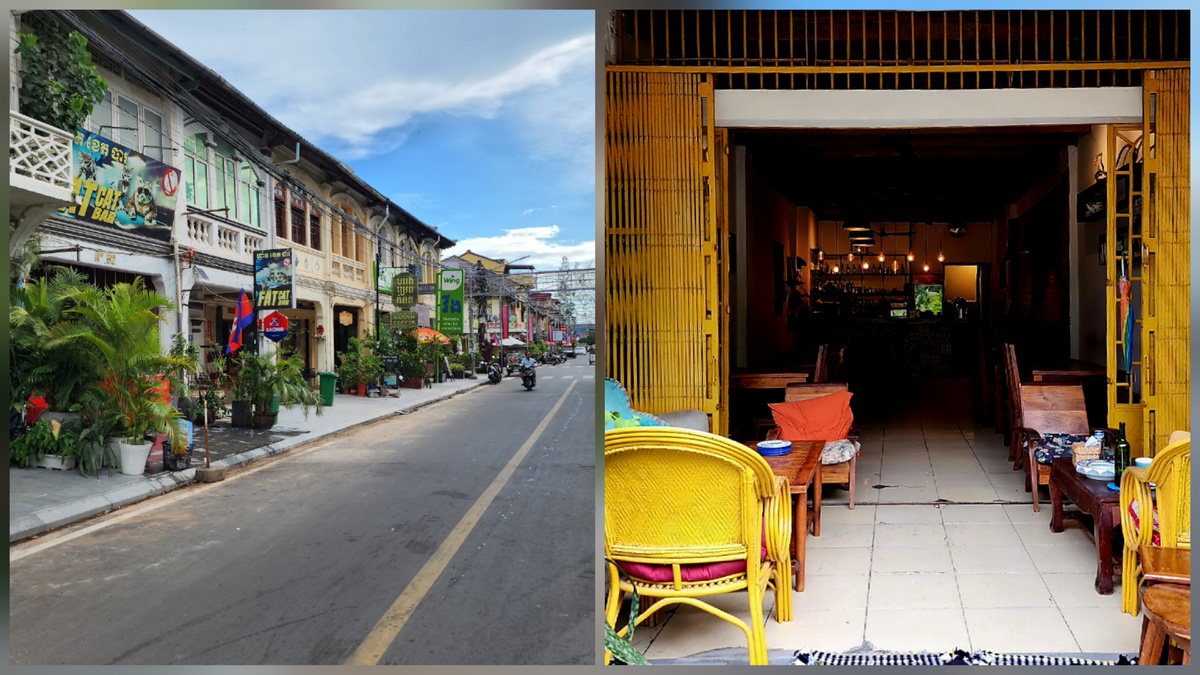

Simple Things and Epic Arts Café
I first stopped at Simple Things, a relaxed vegetarian café with bowls, desserts, drinks and exactly the atmosphere I wanted after Sihanoukville and the train.
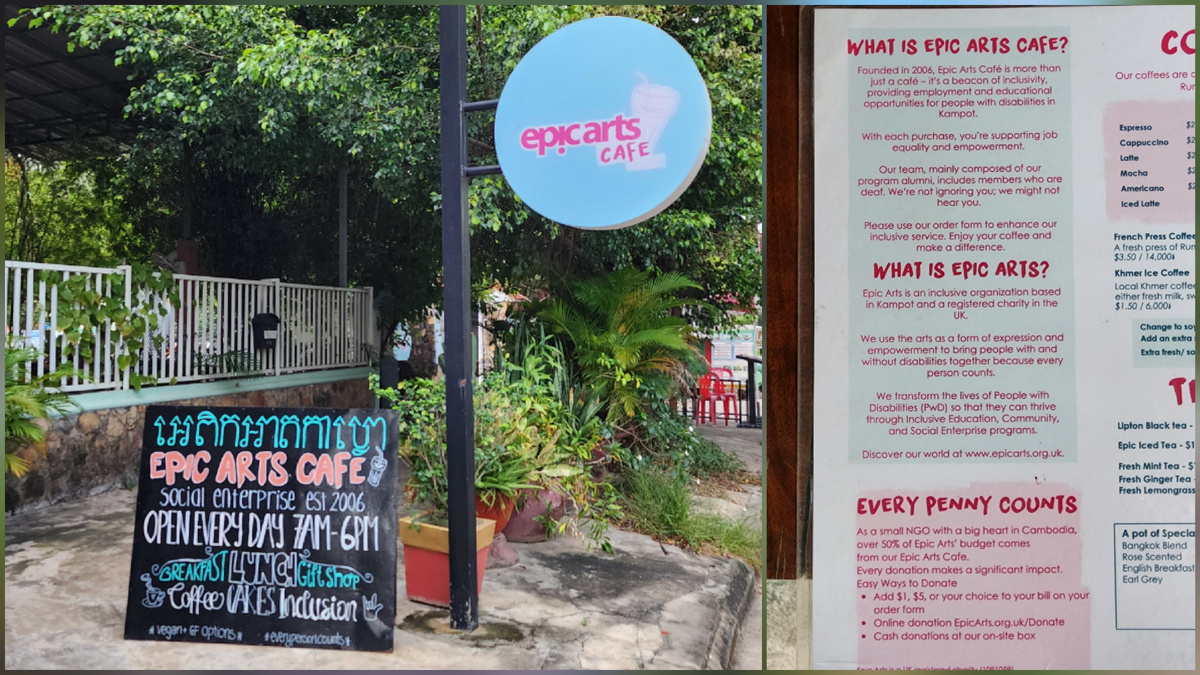
Later I went to Epic Arts Café, connected with an inclusive social enterprise supporting people with disabilities.
I had a snack and tea and sat there doing almost nothing.
That became one of the recurring lessons of this Cambodia trip:
the moments when I stopped trying to maximize the itinerary were often the moments I enjoyed most.

Durian Roundabout and the Riverfront
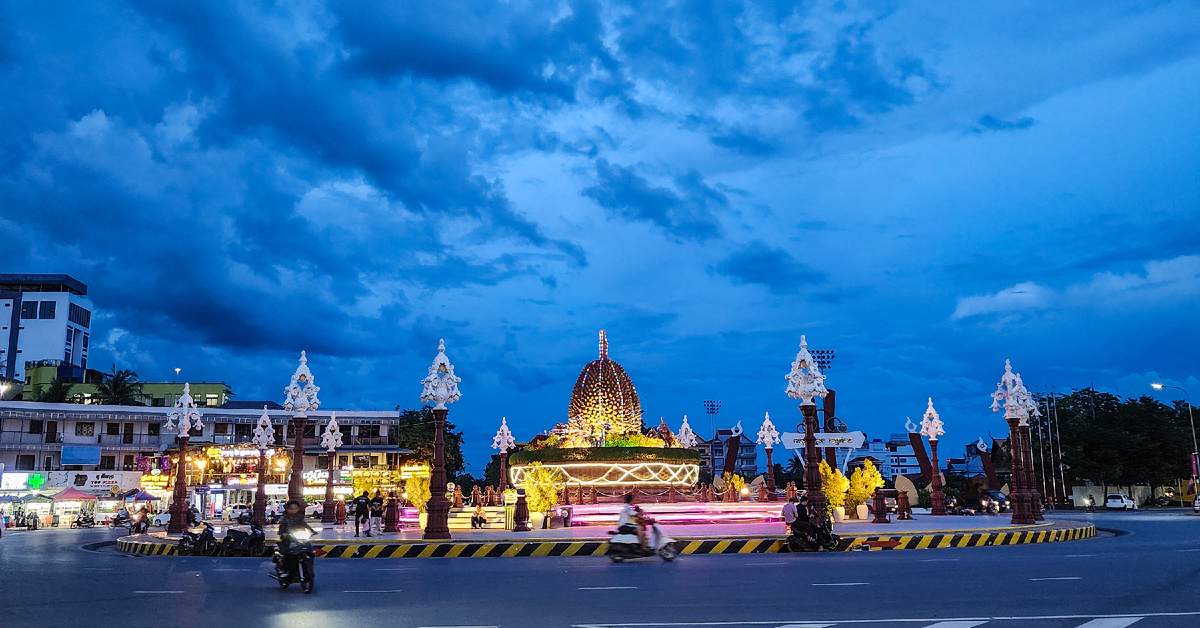
Then came the Durian Roundabout.
There is no mystery here.
It is a giant durian in the middle of a traffic circle.
You see it.
You understand it.
You move on.
From there, I continued toward the river, found a hotel, checked in and went straight back outside without the backpack.
That was one of the things I liked about Kampot immediately.
The evening did not require logistics.
Walk.
River.
Dinner.
Bar.
Walk back.
Dinner at Rikitikitavi
I ended up at Rikitikitavi, upstairs overlooking the river.
There was air coming off the water, the town moving below and absolutely nothing I needed to accomplish.
After several days of temples, buses and compressed city itineraries, that felt luxurious.


Kampot also gave me one slightly strange social flashback.
By day, parts of the café scene felt almost like a sleepy European retirement town.
Then some of the bar streets after dark gave me a very specific Pattaya feeling.
Not full-volume Walking Street.
Just enough to recognize the pattern.
Kampot clearly had more than one personality.
Bokor Mountain by Scooter
The next morning I had one clear plan:
Bokor Mountain.
I had booked a scooter and left Kampot at around 6:30 AM.
Going early was the right decision.
Down in Kampot, the day could already feel hot.
Up on Bokor, the weather seemed to belong to another climate.
Cooler.
Windier.
Cloudier.
And eventually very wet.
The road itself was part of the attraction.
From Kampot, it took me roughly 30–40 minutes on my trip to reach the national park area, and from there the climb really began.
Smooth asphalt.
Long bends.
Very little traffic early in the morning.
Occasional scooters and pickups.
Monkeys near the road.
And the higher I went, the less sensible my dress felt.
What I Wish I Had Taken to Bokor
My revised Bokor packing list is simple:
- light jacket or long sleeves;
- rain jacket;
- closed shoes;
- water.
When Kampot is hot, carrying layers feels unnecessary.
On a windy plateau inside cloud, it suddenly feels extremely intelligent.
I was wearing a dress.
I would regret that later.
Le Bokor Palace
One of the best-known stops is Le Bokor Palace.
The historic building has been restored and functions as a hotel again, so calling it an abandoned ghost hotel is outdated.
The weather still gives it plenty of atmosphere.
Large grey building.
Wind.
Fog.
Almost nothing visible beyond it.
Even restored, it looked like a film location.
Lok Yeay Mao Monument
The enormous Lok Yeay Mao monument was even more dramatic in cloud.
At times, the background disappeared almost completely and the figure seemed to rise straight out of white air.
Bokor is very good at making visibility feel optional.
The Old Catholic Church
The old Catholic church was another stop where the weather did half the work.
Brick.
Cross.
Grass.
Mist.
Wind.
A European religious building sitting on a Cambodian mountain plateau.
It was simple and strange enough without needing any ghost-story exaggeration.
Wat Sampov Pram
At Wat Sampov Pram, the setting changes again.
The complex sits high on the plateau, with stone formations traditionally compared to boats.
In clear weather, you can come for the view as much as for the temple.
I mostly got cloud.
I did not mind.
By then the fog had become part of the day rather than an inconvenience.
Historical Mushroom and the Viewpoint
Another roadside stop was marked as Historical Mushroom, with weathered rock formations and a natural viewpoint.
In photographs and clear weather, this makes sense as a scenic stop.
My experience was slightly different.
Walk to viewpoint.
Look outward.
See white.
A complete wall of fog.
Still worth stopping.
The Buddha Statue Detour
Then came the point where determination overruled common sense.
I had seen a place marked on the map for a Bokor Buddha Statue farther away and became fixed on reaching it.
The road itself was beautiful.
At times I was riding directly through cloud.
Then I hit a barrier.
A guard came out.
No English.
A lot of gestures.
The basic message seemed clear:
no entry.
But I had already come that far.
Could I buy a ticket?
Was the road actually closed?
Could I continue somehow?
Eventually the guard went into the booth and returned with a strange ticket.
I paid.
Then I noticed the date printed on it was not even the current date.
I had absolutely no idea what I had just paid for.
The barrier opened anyway.
So I continued.
Roughly twenty minutes later, I saw a sign for a 108-metre Buddha project.
Finally.
I turned.
And found a construction site.
Earth.
Machinery.
Foundations.
No enormous Buddha.
No grand reveal.
I had negotiated my way through a barrier to look at a building site.
Travel occasionally rewards persistence.
Not this time.
Rock Temple and Heaven Gate
On the return route, I noticed another place marked on the map as Rock Temple.
My mobile signal was poor and I had very little idea what I was walking toward.
Apparently that was not enough to stop me.
I spent around half an hour crossing hot rocks in the middle of the day.
The place felt like a natural stone maze with small religious altars hidden among the formations.
Interesting.
Also an excellent reminder that morning mountain weather and midday exposed rock are two very different things.
Farther down the road I saw a sign for Heaven Gate.
This stop was easier.
A natural arrangement of rock forms a kind of stone gateway.
Quick walk.
Photo.
Back to the scooter.
The Rainy Ride Down
My last major stop was back around Bokor Palace.
And then the weather stopped being atmospheric and became practical.
Rain.
Proper rain.
Cold and persistent rather than a quick tropical burst.
The plateau disappeared deeper into cloud.
Visibility dropped.
Waiting no longer looked useful.
So I started riding down.
In the dress.
Without a rain jacket.
For roughly an hour and a half.
Cold rain hitting my arms.
Wind in my face.
Hands going numb on the handlebars.
Sections of road disappearing into cloud.
It is one of those travel stories that becomes entertaining only after you have stopped shivering.
My main conclusion from Bokor:
a rain jacket is not optional just because Kampot is hot.
The Kind of Day That Makes Insurance Feel Less Abstract
Mountain roads, scooters and weather that changes completely between the bottom and the top are exactly the situations that remind me why I travel with insurance.
Back in Kampot: Changing the Plan
Closer to Kampot, the rain finally weakened.
I went straight to Blend House Café & Zen House Yoga to warm up, eat and stop shaking.
My original plan still contained one major item:
La Plantation.
Kampot pepper is one of the products most closely associated with the region, which was exactly why a pepper farm had been high on my list.
Before Bokor, I had treated it as something I absolutely had to fit into the day.
After riding down the mountain in cold rain, continuing onto wet rural roads simply to complete the itinerary sounded ridiculous.
So I changed the plan.
The pepper farm could wait.
An Extra Night in Kampot
I extended my stay by one night.
It immediately felt like the right decision.
Kampot is one of those places where the accommodation itself can become part of why you stay.
Old town buildings.
Riverfront rooms.
Bungalows.
Properties outside the centre.
Mountain stays closer to Bokor.
I had not planned the extra night.
By then I was very happy to have it.
Need Another Night in Kampot?
That evening was intentionally unambitious.
River.
Dinner.
A few bars.
Quiet streets.
My second evening in Kampot did not feel like repeating the first one.
It felt like finally being there without immediately planning the exit.
If You Don’t Want to Ride Bokor by Scooter
I liked having my own scooter because it gave me complete control over the day.
Stop when I wanted.
Turn off when something looked interesting.
Continue farther than was probably sensible.
But after the fog, cold rain and long descent, I completely understand choosing a driver or organized trip instead.
Independent riding makes sense if you are comfortable with scooters and mountain roads.
A guided or private option makes sense if you would rather look at Bokor than constantly think about weather, navigation and the road surface.
The Vietnam Visa Arrived
While I was in Kampot, I received confirmation for my Vietnam visa.
That changed everything again.
The loop could finally close.
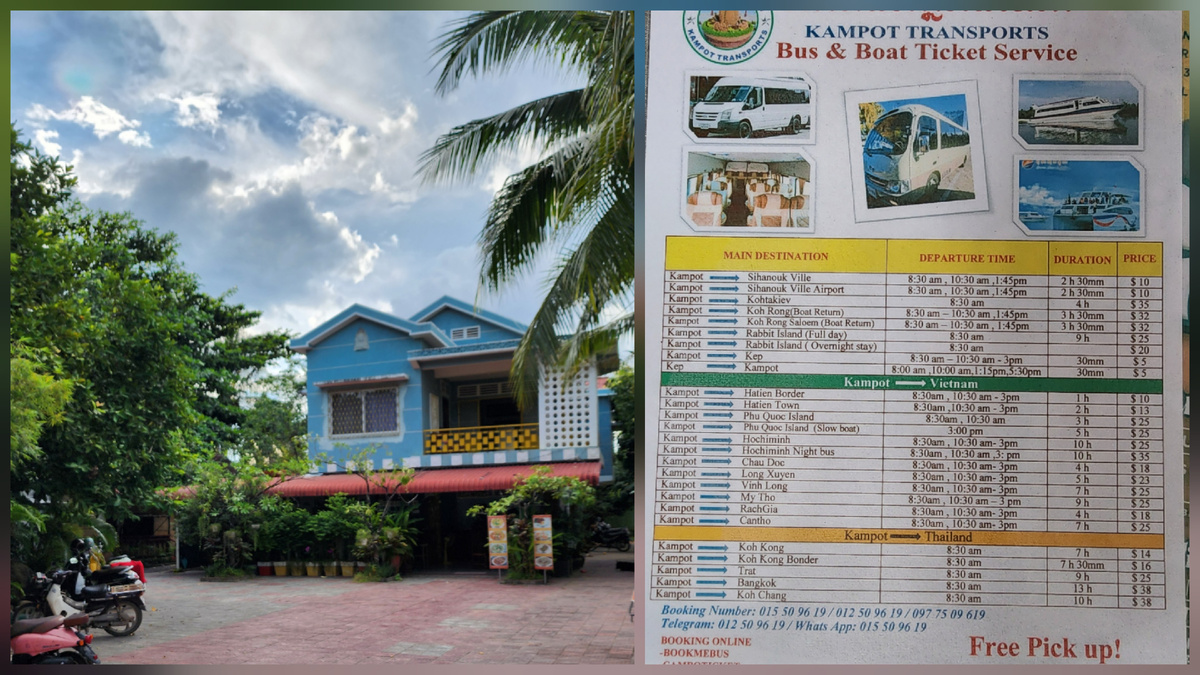
I arranged a minivan toward the Vietnamese border through the hotel reception.
This was one of the simplest transport bookings of the entire Cambodia trip.
Book at reception.
Get collected from the hotel.
Go.
Kampot to the Vietnam Border
The minivan arrived on time on my travel day.
Compared with the distances I had been covering elsewhere in Cambodia, the border near Ha Tien now felt almost close.
The crossing itself was straightforward for me.
One unusual thing happened.
There was a small health-control point where my temperature was checked and I was given a paper that was checked again later.
I paid a small fee at the time.
That is simply what happened on my crossing.
I would not assume the same procedure or fee still applies today.
Border procedures change.
Back to Ha Tien
Once immigration was finished, the geography suddenly became familiar again.
Ha Tien.
Port.
Waiting.
Ferry.
Phu Quoc.
After days of new cities, new roads and new transport systems, returning through somewhere I already recognized felt surprisingly easy.
What I Would Change Next Time
I would keep most of this route.
But I would change the pace.
I would give Koh Ker more time.
I would not try to fit quite so much into one day in Phnom Penh.
I would probably use Sihanoukville more as a transport stop or island gateway than as a city I needed to explore intensively.
I would stay longer in Kampot.
I would finally go to the pepper farm.
And I would take a rain jacket to Bokor.
That last one is no longer open for discussion.
Useful Travel Resources for Cambodia
Flights
Search flights
Hotels
Find hotels
Tours & Experiences
Browse Cambodia Tours & Experiences
eSIM
Get a Yesim eSIM
Transfers
Book a private transfer
Car Rental
Compare rental cars on Localrent
Travel Insurance
Check travel insurance with EKTA
The Cambodia Loop
By the time my Phnom Penh to Phu Quoc loop ended, the original visa run had turned into a journey through several completely different parts of Cambodia.
Part 1: the border, Siem Reap and Angkor.
Part 2: Phnom Penh, from S-21 to the river and nightlife.
Part 3: Sihanoukville, the train, Kampot, Bokor and the road back toward Vietnam.
A few days earlier I had left Phu Quoc because I needed to cross a border.
I came back after Angkor, Phnom Penh, Sihanoukville, Kampot, Bokor, buses, a train, mountain fog, cold rain and more changes of plan than I had expected.
Same island.
Completely different trip.
Some links in this article are affiliate links. If you book through them, I may earn a small commission at no extra cost to you.