Vietnam Spa Culture: Herbal Hair Washes, Massage & Everyday Care
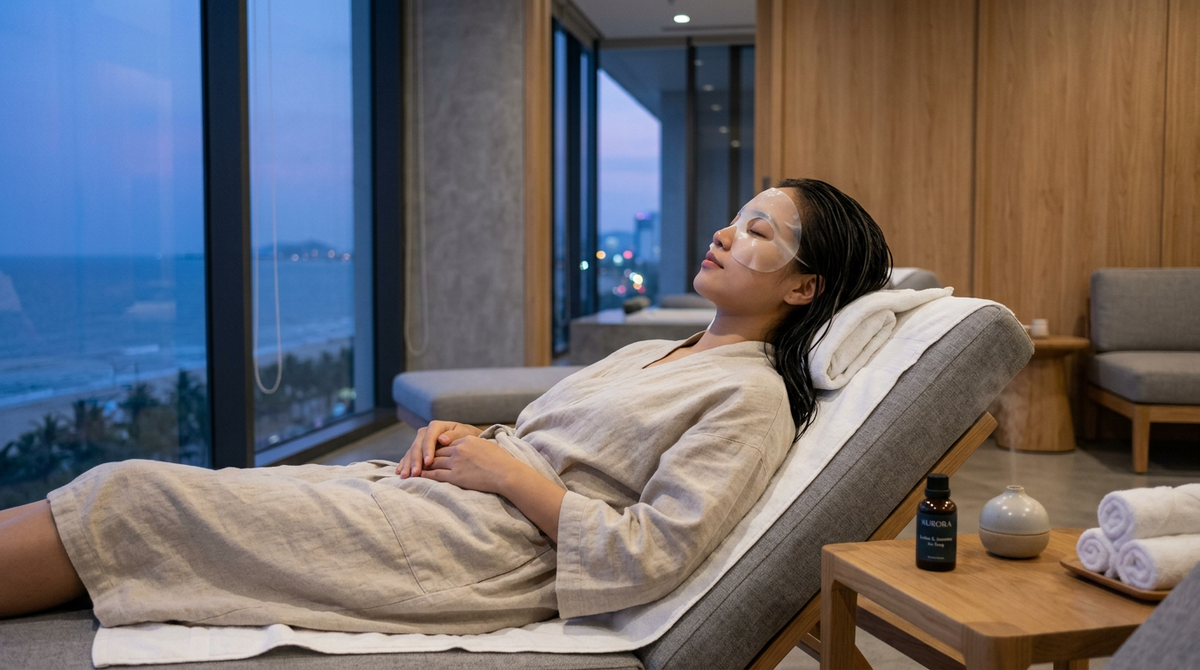
Outside, there are motorbikes, horns and the dust of another busy day. Behind a small Spa or Massage sign, there may be a reclining chair, a clean towel and someone asking how much pressure you prefer. That change of pace is what makes Vietnam spa culture so easy to appreciate as a traveller: a treatment can fit into an ordinary afternoon, without becoming the event around which the whole holiday revolves.
What struck me in Vietnam was how little ceremony a break could need. A hair wash or foot massage could feel like a normal part of the day after the heat, a long ride or hours at a laptop. That does not mean everyone visits a spa regularly, or that every salon delivers the same experience. It means you can approach the menu as something useful and approachable, even on a first visit.
This article contains affiliate links. I may earn a commission if you book through them, at no extra cost to you.
Herbs are part of the story, but there is no single origin
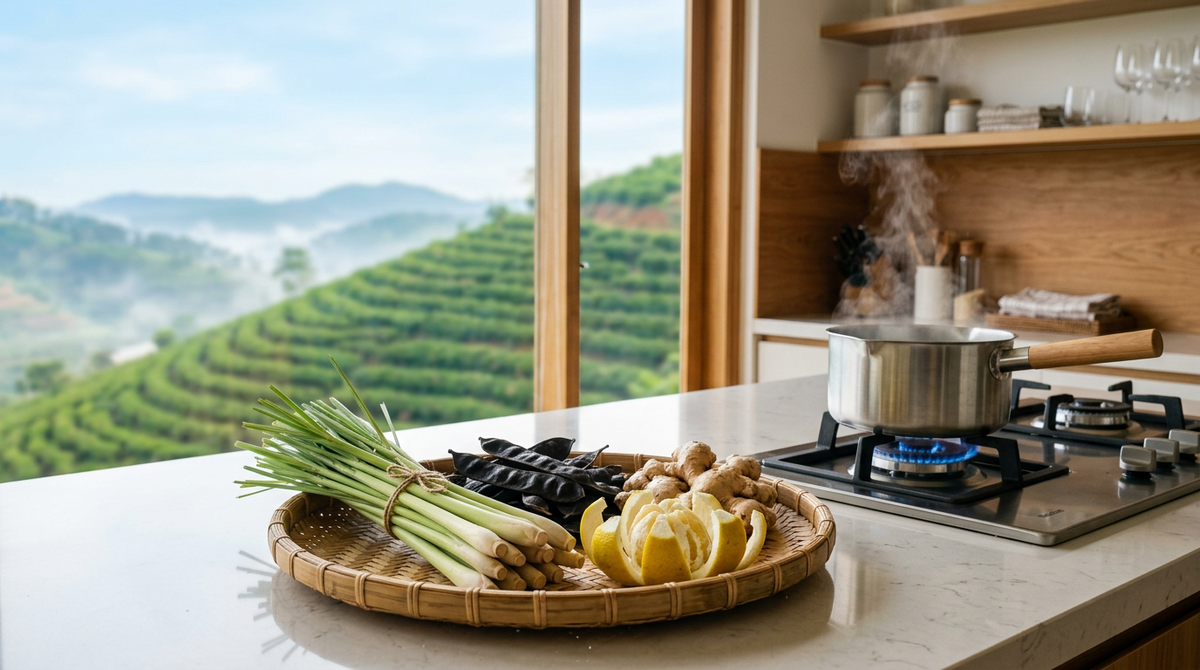
Lemongrass, ginger and citrus peel help explain the familiar aromas in Vietnamese wellness menus. The Vietnamese term thảo dược refers to medicinal herbs. Herbal baths and hair washes connect contemporary salons with older household and community practices, but it would be too simple to trace every modern spa to one village tradition.
Red Dao herbal bathing in the northern mountains is one distinct example. Families have their own plant recipes, passed between generations, and baths remain part of that community’s cultural knowledge. A city head-spa package with oils, a facial and a blow-dry has a different history and format. Both can appear under the broad label of wellness in Vietnam.
You may also hear traditional explanations about balancing the body, pressure points or removing “cold.” These describe how a treatment is understood or marketed; they are not proof that a massage repairs an organ or cures illness. The warmth, scent and time away from traffic can be enjoyable without those promises.
Gội đầu: why a hair wash can become the whole appointment
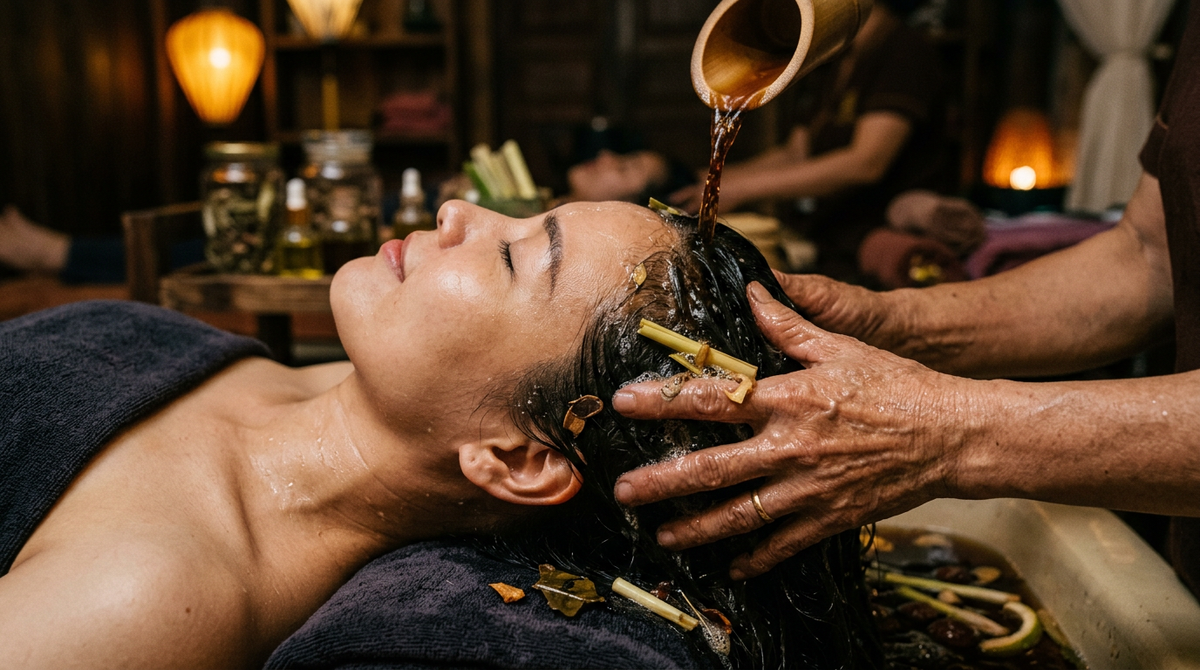
Gội đầu means washing the hair. On a spa menu, gội đầu dưỡng sinh usually signals a more elaborate wellness-style service. Depending on the package, it can combine washing with scalp massage, neck and shoulder work or facial care. The appealing part is the attention: you lie back while somebody else takes care of a task that is usually rushed.
The name alone does not tell you the length or the steps. One Hanoi salon, Nón Lá Healing Spa, lists herbal hair-wash options from 40 to 75 minutes on its current menu. That is an example of how packages vary, not a nationwide standard or a personal recommendation of that salon. Before choosing, ask what happens during your booked time and whether drying is included.
After a helmet and a day on the road, the idea is especially easy to understand. My Da Nang motorbike route is the kind of full day after which I would leave space for a quiet evening, instead of adding another attraction.
Foot massage, body massage and facials: read the actual steps
Foot massage may begin with a warm soak and continue with pressure on the feet and lower legs. It is the service I would look at after a walking-heavy day. Ask whether the listed session covers only the feet or also the calves; similar menu titles can describe different appointments.
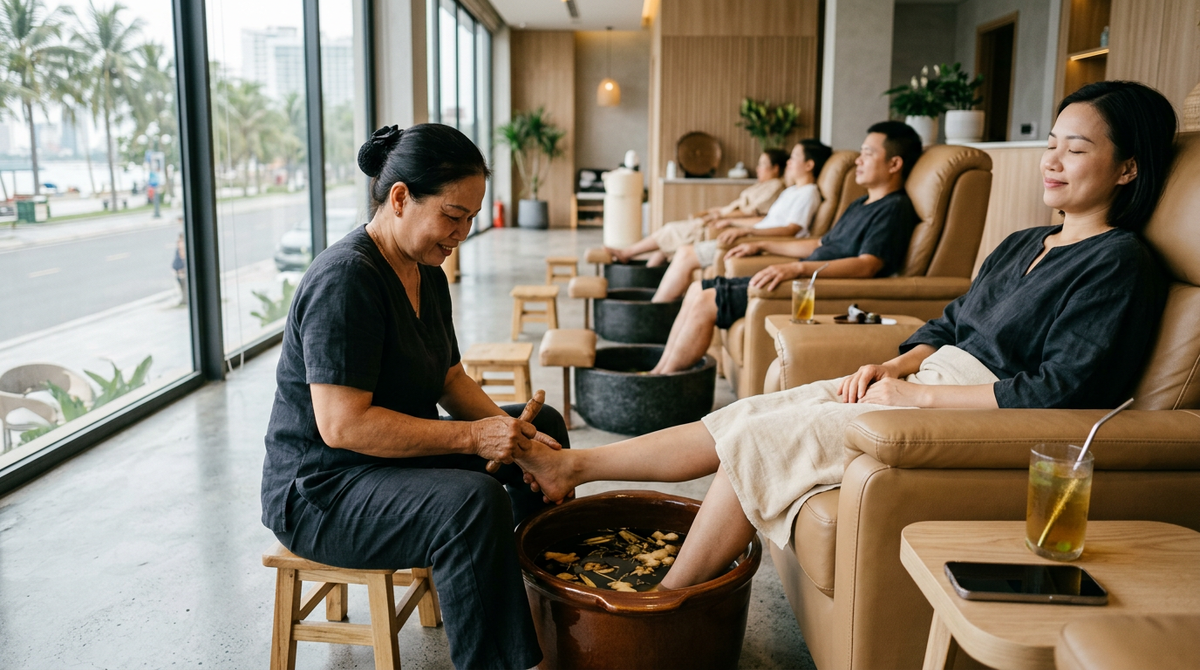
A body massage might use oil, focused pressure, hot stones or herbal compresses. “Vietnamese massage” is not one fixed sequence that every therapist performs, nor does a stronger treatment automatically mean a better one. Agree on pressure, mention areas you do not want worked on and speak up when something hurts or feels too hot.
A facial needs a closer look at the menu. A gentle cleanse and mask are a different choice from exfoliation or extractions. Ask which products and steps are included, especially when your skin is already irritated. “Natural” on the menu does not tell you whether a product suits your skin.
Lấy ráy tai: a familiar service that needs a different decision
Ear cleaning, lấy ráy tai, appears in some Vietnamese barber and spa services. You may see fine tools, brushes or an ear-cleaning add-on beside otherwise relaxing treatments. Its presence on the menu does not make it necessary routine care.
The ear canal normally cleans itself. Inserting instruments can cause injury, so I would skip salon ear cleaning rather than treat it as a way to sharpen hearing. Ear pain, discharge or a change in hearing belongs with a healthcare professional, not an extra service added to a massage.
Why a small salon can feel more useful than a special occasion
The attraction is partly the small commitment. You can choose one service, see its price and make room for it between the rest of your plans. A neighbourhood salon, a polished day spa and a luxury resort are different purchases; the modest sign outside does not tell you which experience is behind it.
For me, the useful luxury is the pause itself: being indoors, putting the phone aside and not having to negotiate the next junction or plan the next stop. In everyday life in Da Nang, those smaller breaks can matter as much as the big day trips. A coffee afterwards can be the whole evening; my Vietnamese coffee guide helps decode that menu too.
How to choose a treatment without buying the whole menu
Start with the part of the experience you actually want: somebody washing your hair, time in a reclining chair, a foot massage or a full-body session. Then ask about duration, pressure and the total price, including any service charge or expected tip. Check whether you are booking a private room or a shared space, and whether the treatment time includes changing and consultation.
Look for clean towels, a clear explanation of the steps and a therapist willing to adjust the treatment. Recent reviews about cleanliness and communication are more useful than a photograph of rose petals. Walk-in availability varies; reserve ahead when you need a particular time or are visiting as a pair.
Massage is a relaxation choice, not a substitute for assessing persistent or unexplained pain. Tell the therapist about relevant health conditions, recent injuries or pregnancy. When you are unsure whether massage, strong pressure or heat is appropriate, ask your healthcare professional first.
Booking during a Da Nang stay? Compare the treatment steps and duration, not just the package title. The selection below is for Da Nang; check each spa’s address, cancellation rules and what is included. For another Vietnamese city, search that city on Trip.com.
Search spa treatments for your cityA day-spa visit or a hotel built around wellness?
For a single treatment, you do not need to move your whole trip into a resort. Book a day spa near where you are already staying. A wellness-focused hotel makes more sense when the pool, setting and time at the property are part of the holiday you want.
Before paying extra for that idea, check whether any treatments are actually included in the room rate, which facilities you can use and whether spa appointments need a separate reservation. My Vietnam luxury hotel selection looks at the wider stay experience; the word “spa” in a hotel name is not a package inclusion.
Compare hotels in your destination for your dates, then read the room-rate inclusions and the spa terms separately.
Compare Vietnam hotels for your datesLeave room for an ordinary hour
You can spend a trip collecting places and still miss the rhythm of being somewhere. A simple hair wash or foot massage leaves room for a slower part of the day. Choose the service you are comfortable with, agree on it clearly and let the hour be about resting. It does not need to fix your whole body to have been time well spent.