Phnom Kulen National Park: Waterfalls, History & Day Trip Guide
Phnom Kulen is often sold as a waterfall day trip from Siem Reap. That description misses most of the reason the mountain matters.
Long before Angkor Wat, an early Khmer royal centre developed on this plateau. In later centuries, Hindu images and lingas were carved into riverbeds, rivers flowing from the massif fed the landscape below, and much of the sandstone used to build the temples of Angkor came from Kulen. The mountain remained sacred after the royal centre moved away, and today Cambodians still come here to pray, make offerings and spend the day with their families around the waterfalls.
Phnom Kulen is therefore several places at once: an archaeological landscape, a pilgrimage destination, a national park and one of the most popular swimming spots around Siem Reap.
I did not make it to Phnom Kulen on this trip, so this is not a disguised first-hand day-trip report. The route ideas below came from the local guide who planned our Angkor days, combined with current park information and archaeological research. I am keeping Kulen for another visit because the more I looked into it, the less it seemed like somewhere I wanted to rush through as an extra stop.
If you are still planning the classic monuments first, my Angkor One-Day Itinerary is the better starting point. If the kings, religions and iconography of Angkor are still a blur, the Angkor National Museum is also a useful introduction before or between temple days.
Phnom Kulen at a Glance
| Location | Around 50 km northeast of Siem Reap |
| Official name | Phnom Kulen National Park |
| Historic importance | Early Angkor-period royal centre at Mahendraparvata |
| Main sights | Preah Ang Thom, Thousand Lingas and waterfalls |
| Foreign visitor ticket | $20 at the time of writing |
| Angkor Pass | Not valid for Phnom Kulen |
| Typical trip | Full day from Siem Reap |
| Main uphill road | Approximately 7:00 AM–11:30 AM |
| Remote archaeological sites | Best explored with a local or community guide |
| Community treks | Paid separately from national park admission |
Is Phnom Kulen Worth a Full Day?
Yes, if you have enough time in Siem Reap to go beyond the main Angkor circuit.
I would not use your only day in the region for Phnom Kulen instead of Angkor Wat, Bayon and Ta Prohm. On a longer stay, however, it adds something those monuments cannot.
At Angkor, you mostly encounter the remains of royal cities through monumental architecture. At Phnom Kulen, the landscape itself is part of the story: forest, water, quarries, ruined settlements, active Buddhist shrines and modern villages all occupy the same mountain.
The waterfall alone is not enough reason for me to recommend the journey, but the combination of archaeology, living religion and nature is.
Why Phnom Kulen Is Called the Birthplace of the Khmer Empire
Phnom Kulen is traditionally associated with one of the foundational events of the Angkorian period.
According to later Khmer inscriptions, Jayavarman II established his authority at Mahendraparvata in 802 CE, an event traditionally treated as the beginning of the Angkorian imperial era and the assertion of independent Khmer kingship.
The distinction between history and evidence matters here. The royal founding story comes primarily from the later Sdok Kak Thom inscription, rather than a record written in 802 itself. Archaeology, meanwhile, independently shows that a substantial early royal and urban landscape really did exist on Phnom Kulen.
In other words, the inscription gives us the founding narrative. Archaeology gives us the city.
Mahendraparvata: The Lost City Under the Forest
For centuries, much of Mahendraparvata was difficult to understand because forest covered the plateau and many features were too subtle to recognise from ground level.
Modern archaeological surveys and airborne laser scanning changed that picture. LiDAR revealed an extensive planned landscape with roads, reservoirs, dams, temple sites, settlement areas and other traces of organised occupation across roughly 40–50 square kilometres.
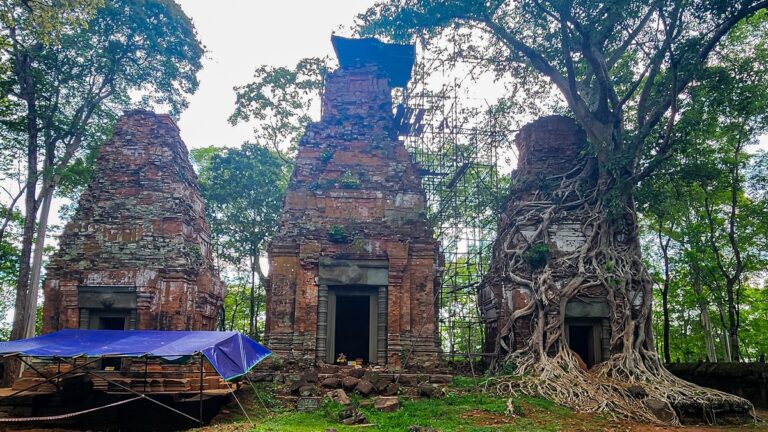
One of the major monuments associated with this early capital is Rong Chen, a stepped pyramid temple belonging to the early Angkor-period landscape.
This makes Phnom Kulen much more than a mountain associated with one royal ceremony. A large, organised settlement existed here before the political centre shifted toward the Angkor plain.
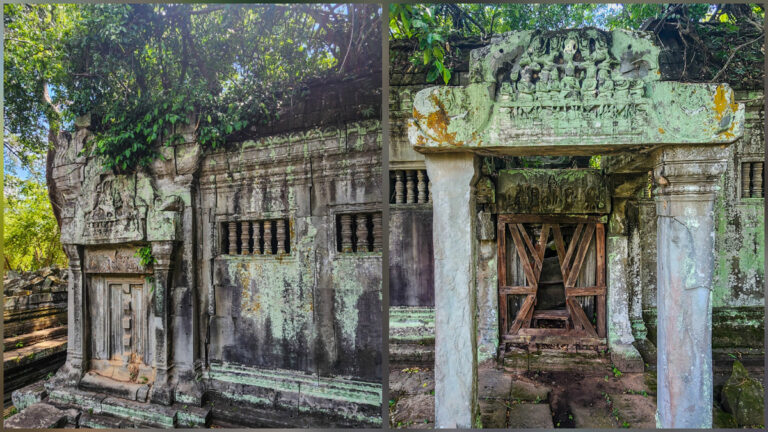
The remains are also very different from Angkor Wat. Much of Mahendraparvata is low, ruined, covered by vegetation or scattered through forest, which is why the deeper archaeological landscape requires more effort to explore and benefits enormously from a knowledgeable local guide.
Phnom Kulen Gave Angkor Water and Stone
The mountain remained important after the royal centre moved away.
Phnom Kulen supplied much of the sandstone used in the temples and sculpture of Angkor, and ancient quarry zones can still be found around the massif. Stone extracted here was transported toward the great construction projects on the plain below.
The connection was also hydrological. Rivers rising on the Kulen massif fed the wider landscape around Siem Reap and Angkor, where water was channelled through reservoirs, moats and canals.
If you want to understand how water management, foundations and sandstone transport fitted into Angkor’s construction on a much larger scale, see How Angkor Wat Was Built: Foundations, Water & Stone.
Phnom Kulen was therefore connected with Angkor in at least three ways: royal power, water and stone. Its role did not end when the court left Mahendraparvata.
Preah Ang Thom: A Later Buddhist Sacred Site
One of the main stops on the standard Phnom Kulen route is Preah Ang Thom, a Buddhist pilgrimage complex centred on a large reclining Buddha carved from a natural sandstone outcrop.
It is important not to mentally place this Buddha in the age of Jayavarman II. The exact date is debated, but current estimates generally place the reclining Buddha between the 14th and 16th centuries.
That later date makes the site more interesting, not less. It shows that Phnom Kulen continued to function as a sacred landscape long after the early Angkorian capital disappeared.
Today Preah Ang Thom remains an active place of worship. Visitors encounter monks, incense, offerings and Cambodian pilgrims coming to pray and seek blessings.
Dress accordingly. Shoulders and knees should be covered, and shoes are removed where required around sacred areas. Treat the people worshipping here as worshippers rather than part of the scenery for a travel photo.

The Thousand Lingas on Phnom Kulen
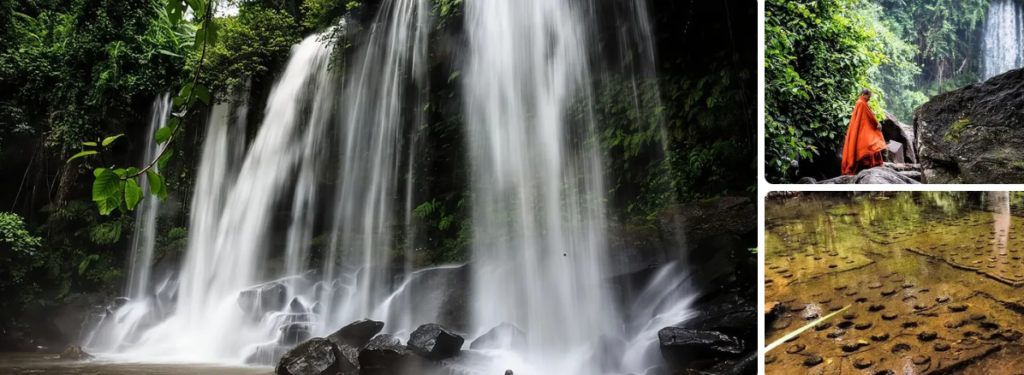
Another major stop is the carved riverbed commonly described as the River of a Thousand Lingas.
Lingas associated with Shiva were carved directly into sections of the stone riverbed, together with other Hindu imagery. Water flows across the carvings before continuing downstream through the sacred landscape.
The site is often reduced to the idea that the carvings “blessed” the water. A more useful way to understand it is that the river itself became part of the religious space, with moving water passing over sacred imagery before flowing toward the lowlands.
These carvings also do not belong directly to Jayavarman II’s founding period. The riverbed carving tradition on the Kulen massif developed mainly between the 10th and 12th centuries, showing that the mountain remained religiously important for generations after the capital moved elsewhere.
If names such as Shiva, linga, naga and Garuda keep appearing throughout your Angkor planning, my Angkor Mythology Guide explains the main divine and mythical figures you are likely to encounter in Khmer temple art.
That continuity is central to understanding Phnom Kulen. It is not a landscape belonging to one king or one century.
Kbal Spean and the Thousand Lingas on Phnom Kulen Are Not the Same Place
This is an easy planning mistake because both sites are famous for carvings in flowing water.
Kbal Spean and the Thousand Linga site visited on the standard Phnom Kulen plateau route are not the same attraction.
Kbal Spean lies on the separate northwestern plateau of the same mountain range and is normally approached from the direction of Banteay Srei via its own forest trail.
The standard Phnom Kulen day trip usually refers to the carved riverbed on the main southeastern plateau, combined with Preah Ang Thom and the waterfalls.
If a tour description simply says “1000 Lingas”, check exactly which site it means. The two places are related by landscape and religious tradition, but they are not interchangeable stops.

Phnom Kulen Waterfalls
The waterfalls are the recreational centre of the park and the reason many Cambodian families visit even without any interest in archaeology.
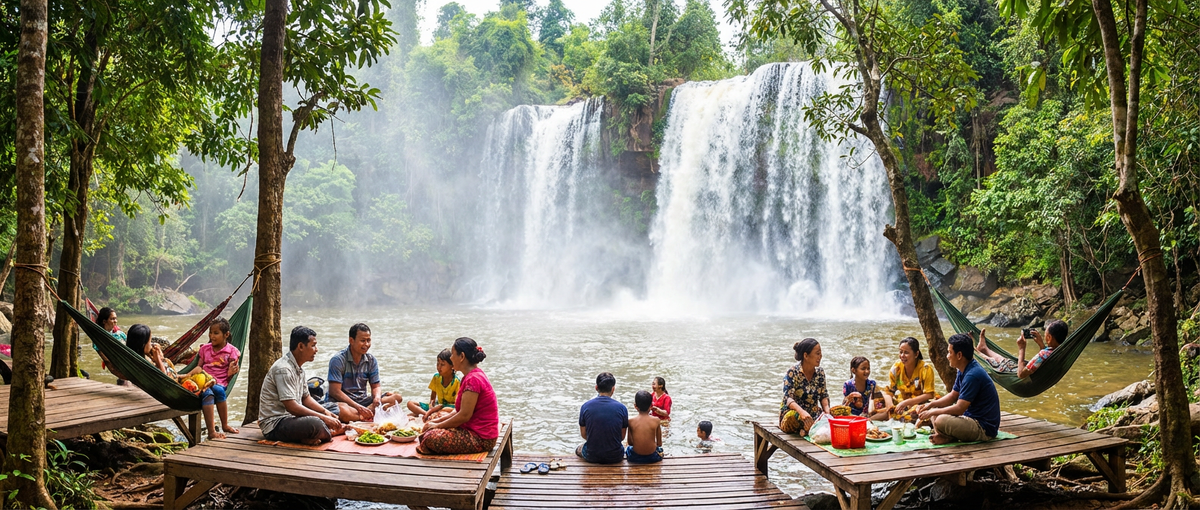
There are two main levels. The upper waterfall is smaller, with rocky pools and a quieter setting, while the lower waterfall is the dramatic one, with a broader curtain of water dropping into a large swimming area.
Around the waterfall zone, the atmosphere changes completely. You find food stalls, shaded areas, hammocks, picnic spaces and families spending hours beside the water.
That contrast is part of modern Phnom Kulen. You can spend the morning thinking about early Khmer kingship and sacred rivers, then end the afternoon swimming while families nearby unpack lunch.
When Is the Waterfall Best?
Water volume changes with the season.
The wetter part of the year generally brings a more powerful waterfall and greener forest, although paths and stone surfaces can become slippery. The drier season usually makes walking and road conditions easier, but the waterfall may be less dramatic.
Weekends and Cambodian public holidays can be significantly busier because Phnom Kulen is popular with local visitors as well as tourists.
If avoiding the largest crowds matters, a weekday is the safer choice.
Go Beyond the Standard Route
Most conventional day trips focus on three headline stops:
Preah Ang Thom → Thousand Lingas → waterfalls.
That route works well for a first visit, but it does not show the full archaeological landscape.
The plateau contains ruined temples, early settlement areas, old routes and sites connected with Mahendraparvata that are much less accessible than the standard attractions.
Community-based tourism centres at Anlong Thom and Popel now organise local guiding, motorbike transport and routes into parts of this deeper landscape. These experiences are booked and paid for separately from the standard national park ticket.
This is the version of Phnom Kulen I am most interested in for a future visit.
It also makes much more sense than taking a rented scooter and randomly following forest tracks. Some remote areas of the massif have a complicated modern history, including zones affected by landmines from Cambodia’s conflict period, and demining work has continued in parts of the mountain.
For deeper exploration, use established routes and people who know them.

Villages, Cashews and Local Life
My guide also suggested including smaller stops along the way rather than treating Kulen as a checklist of monuments.
Depending on the route, that can include small palm-sugar or rice-noodle workshops, agricultural villages and areas where cashews and mangoes are grown.
These are not major attractions with ticket offices and signs. They are simply part of life around the mountain.
Cashew cultivation in particular has become an important source of income for many families on the plateau, while also creating environmental pressure through forest clearance. That tension is another reminder that Phnom Kulen is not an archaeological site frozen in the past.
People live and work here.

Using community guides, drivers, cooks and locally organised routes is one way tourism can support livelihoods connected to the plateau rather than simply passing through it.
The Route Our Guide Recommended
Before our Angkor tour, our guide spent quite a lot of time explaining how she approaches Phnom Kulen differently from the standard group circuit.
Her main advice was not to assume that everyone must visit the major stops in the same order. Depending on the day, she prefers to use quieter or less conventional stops earlier, return to the religious sites after part of the morning traffic has moved on and leave the waterfall for later.
The exact crowd pattern will never be guaranteed because weekends, holidays, weather and group schedules all change it. The basic strategy still makes sense: decide which part of Kulen matters most to you rather than automatically following the standard sequence.
If swimming is the priority, reaching the waterfall earlier may be worth more than having a quiet shrine. If history and pilgrimage matter more, it can make sense to organise the route around those sites instead.
There is, however, one logistical rule that matters more than either strategy.
Important: The Main Road Up Has a Morning Cutoff
Phnom Kulen is not somewhere you can leave Siem Reap at lunchtime and casually drive up the mountain.
The main road up toward Preah Ang Thom operates with timed one-way traffic. At the time of writing, uphill access is approximately 7:00 AM to 11:30 AM. Once the uphill window closes, vehicles cannot simply begin the climb as normal.
The park also closes in the afternoon, at around 4:00 PM.
This means the road schedule controls your day more than the order of individual attractions. A relaxed itinerary is fine, but it still needs an early enough departure from Siem Reap.
If you are travelling independently with a driver, confirm the current uphill and downhill traffic schedule before leaving.
Phnom Kulen Tickets and Angkor Pass
No, Phnom Kulen is not included in the Angkor Pass.
Foreign visitors currently pay a separate national park entrance fee of $20.
That is easy to miss because Kulen is so closely connected with Angkor historically and geographically, but the ticketing system is separate.
Community-guided treks, motorbike routes and other locally organised experiences are also separate products and are not included in the $20 national park ticket.
Bring cash even if you normally pay by card in Siem Reap. ATM access on the plateau is limited, smaller businesses may not accept cards and mobile connectivity can become unreliable away from the main visitor areas.
For remote walks, closed shoes are also far more useful than sandals.
Tour, Private Driver or Community Route?
The best option depends on what you actually want from Phnom Kulen.
Shared Day Tour
A shared tour is the easiest choice if you are travelling alone or as a couple and mainly want the standard highlights without arranging transport yourself.
Most focus on some combination of Preah Ang Thom, the carved riverbed and the waterfalls.
Check the exact inclusions before booking. Do not assume park admission, lunch or every religious stop is automatically included.
Private Driver or Guide
This works better if you want control over the order and time spent at the standard sights.
It can also make sense if you want to apply a quieter route strategy, stay longer at the waterfall or combine Kulen with another destination without following a fixed group schedule.
Community-Guided Trek or Motorbike Route
Choose this if Mahendraparvata, jungle archaeology and the deeper plateau are the main reasons you are going.
For this type of visit, I would use an established community guide and driver rather than explore remote tracks independently.
Combined Day Tour
You will also find itineraries combining Phnom Kulen with places such as Beng Mealea.
These can make logistical sense if you have limited time in Siem Reap, but read the schedule carefully. Phnom Kulen already has enough to occupy most of a day, so adding another major archaeological site means accepting less time at each stop.
Who Should Visit Phnom Kulen?
Phnom Kulen makes the most sense if you have already allocated time for the main Angkor temples and want to understand the larger landscape around them.
It is particularly worth considering if you are interested in early Khmer history, sacred landscapes, archaeology beyond monumental temples or a day that mixes history with swimming and nature.
It also works well for travellers beginning to feel temple fatigue. The day still connects directly with Angkorian history, but visually and physically it feels completely different from moving through another sequence of stone galleries.
I would skip it on a very short first trip if reaching Kulen means sacrificing the major Angkor monuments. I would also think twice if your only reason for going is simply “I want to see a waterfall”.
Phnom Kulen becomes much more worthwhile once the mountain itself matters.
An early royal centre developed here. Rivers from the massif helped shape the landscape below, sandstone from Kulen went into the monuments of Angkor, later generations carved sacred imagery into flowing water and Buddhist pilgrims continued to use the mountain centuries after the royal capital disappeared.
Today people still pray, farm, guide visitors, picnic and swim here.
That continuity is what makes Phnom Kulen much more than a waterfall outside Siem Reap.
Useful Travel Resources
Flights
Compare flights to Cambodia and connections across Southeast Asia.
Hotels
Compare accommodation in Siem Reap by location, current price and guest reviews.
Tours & Activities
Browse day trips, attraction tickets and organised sightseeing around Siem Reap.
Tours & Experiences
Compare guided trips and experiences around Siem Reap and Angkor.
Airport Transfers
Arrange transport between Siem Reap Angkor International Airport and your accommodation.
eSIM
Set up mobile data before arriving in Cambodia.
Travel Insurance
Check travel insurance options before your trip.
Affiliate disclosure: This article contains affiliate links. If you book through them, I may earn a commission at no extra cost to you.