Phu Quoc to Siem Reap: Overland Border Route + 3 Days Around Angkor
What started as a practical trip out of Vietnam turned into a much bigger journey than I expected.
I was staying on Phu Quoc and needed to leave Vietnam. Instead of doing the quickest possible border run and coming straight back, I had a much better reason to keep going: a friend was already waiting for me in Siem Reap, and we wanted to see Angkor together.
So my route became:
Phu Quoc → Ha Tien → Cambodia border → Siem Reap → Angkor and the surrounding temples → Phnom Penh.
This first part covers the Phu Quoc to Siem Reap overland journey and the three very different days I spent exploring temples around Angkor.
It involved a ferry, a land border, several buses, three hotels, remote temples, a motorbike day, a sunrise at Angkor Wat and considerably more time on Cambodian roads than the timetable suggested.
It was definitely not a quick visa run anymore.
Phu Quoc to Siem Reap Route at a Glance
| Stage | My route |
|---|---|
| Start | Marina Phu Quoc |
| Ferry | Phu Quoc → Ha Tien |
| Transfer | Ha Tien port → Vietnam–Cambodia border |
| Cambodia | Border → Phnom Penh |
| Final bus | Phnom Penh → Siem Reap |
| Expected arrival | Around 9 PM |
| Actual arrival | Around 1 AM |
The last line matters.
My journey ran several hours later than planned, so I would not schedule a tour, non-refundable activity or anything important for the evening you expect to reach Siem Reap.
Getting from Phu Quoc to Ha Tien
I started early from Marina Phu Quoc and headed to the ferry port.
For this crossing I used Superdong to Ha Tien.
The trip took a little over an hour on my journey. Inside, there was air conditioning, while the upper deck gave me somewhere to stand outside, get some wind and watch Phu Quoc disappear behind the boat.
The ferry itself was the easy part.

Once you arrive in Ha Tien, the journey stops feeling like an island transfer and starts becoming a proper overland travel day.
Ha Tien Port to the Cambodia Border
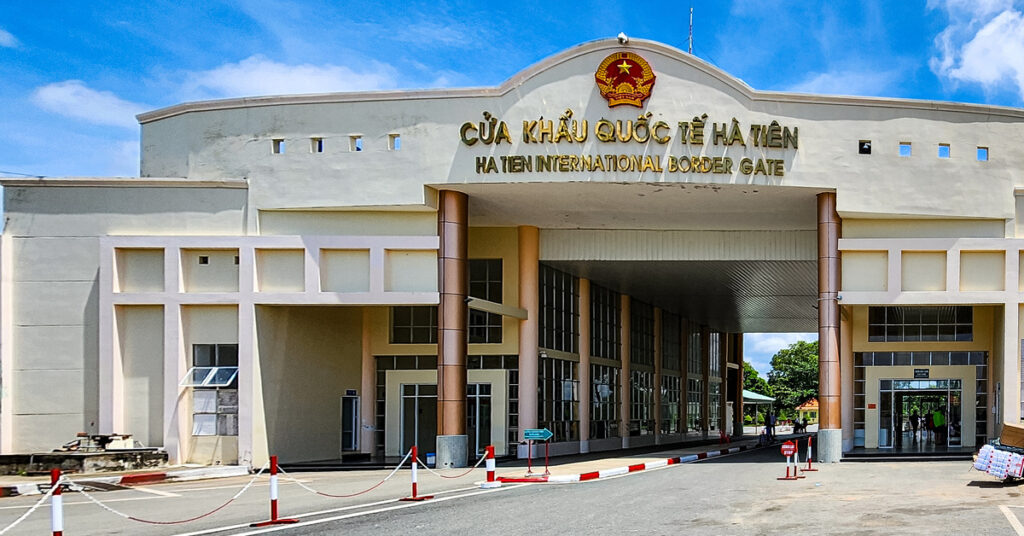
My onward bus collected passengers close to the port and drove toward the land border.
The drive to the checkpoint was short in my case, roughly 15–20 minutes.
Leaving Vietnam was straightforward: passport, exit formalities, done.
The more memorable part happened on the Cambodian side.
My Border Experience
During my trip, I arranged my Cambodian tourist visa at the border.
I paid $35 at the time of my journey, filled in the paperwork and expected the process to take around half an hour.
Instead, the system refused to read the photograph in my passport.
They tried different angles. They restarted the equipment. I waited.
At some point it stopped being mildly inconvenient and became genuinely stressful because there is always that thought in the back of your head: what if they simply cannot process it?
I spent roughly 40 minutes there.
Eventually they solved it in a wonderfully low-tech way: they photographed me and my passport with a phone, processed the visa manually and let me continue.
It worked.
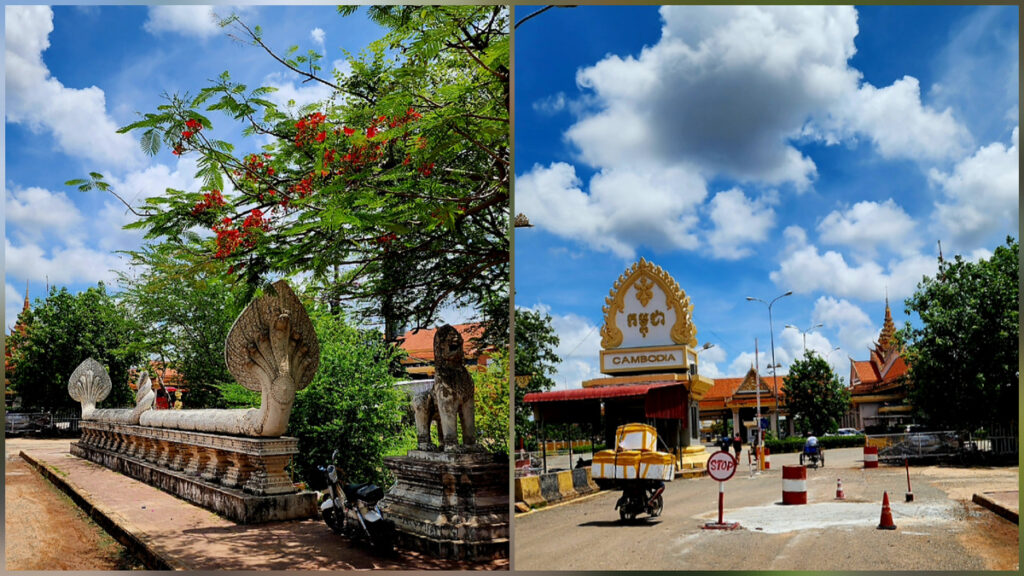
But that was my experience on that particular trip, not a guarantee of what will happen at the same border today.
Cambodia Entry Rules: Check the Exact Border
Cambodia’s visa and arrival systems have changed since my trip.
The important detail for this route is that you should check the rules for the specific land checkpoint you plan to use, not just Cambodia’s general eVisa information.
Do not assume that an electronic visa accepted at one Cambodian border crossing will automatically be accepted at the Ha Tien crossing.
Also complete any current Cambodia arrival formalities required for your travel dates before setting off.
Before You Cross
I would prepare:
- passport and entry documents;
- some cash;
- accommodation details saved offline;
- transport confirmations downloaded to your phone;
- mobile data or an eSIM;
- extra time for immigration and transfers.
After immigration, we had another long pause while passengers were collected and reorganized into onward transport.
We waited around an hour and a half before properly continuing.
Stay Connected Across the Border
This is exactly the kind of travel day when mobile data helps: ports, immigration, changing buses, maps and a potentially very late hotel arrival.
From the Cambodia Border to Siem Reap
The Cambodian section of the trip came in stages.
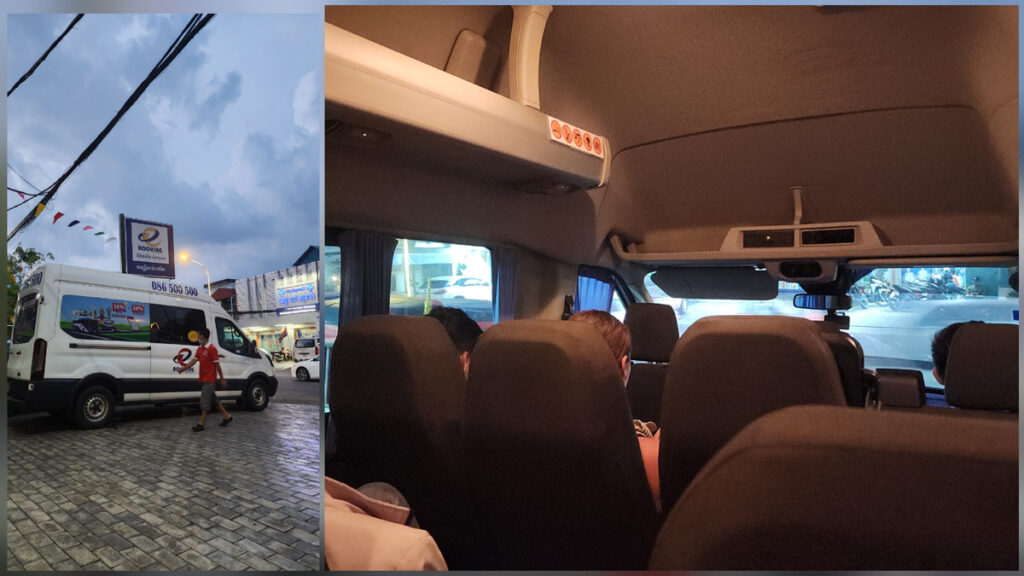
First came a small, tired-looking bus toward Phnom Penh. It was hot, bumpy and not particularly glamorous, but it was moving in the right direction.
In Phnom Penh, I changed to a much more comfortable intercity bus with air conditioning.
According to the timetable, I should have reached Siem Reap at around 9 PM.
I arrived closer to 1 AM.
By that point, the day looked like this:
ferry → transfer → border → bus → Phnom Penh transfer → another bus → Siem Reap.
Then rain.
Warm, humid, middle-of-the-night Siem Reap rain.
What I Would Do Differently
I would still travel Phu Quoc to Siem Reap overland if the journey itself was part of the trip.
But I would treat the scheduled arrival time as an estimate rather than a promise.
Next time I would:
- keep the arrival evening completely empty;
- download the hotel address;
- warn the hotel that I might arrive late;
- carry water and snacks;
- expect waiting time at transport changes;
- avoid an early temple departure the following morning.
There is a big difference between technically reaching Siem Reap in one day and arriving with enough energy to enjoy it.
Where We Stayed in Siem Reap
I travelled to Cambodia alone, but my friend Andrey was already in Siem Reap.
By accident more than design, we ended up trying three types of accommodation during the stay.
| Hotel | Best for | My experience |
|---|---|---|
| Le Vert Angkor Hotel | First night and easy access to the centre | Simple, convenient and walkable |
| The Embassy Angkor Resort & Spa | Quiet recovery between temple days | Green, spacious and resort-like |
| Siem Reap River View Residence | Being closer to central city life | Practical base near the river, cafés and nightlife |
Le Vert Angkor Hotel
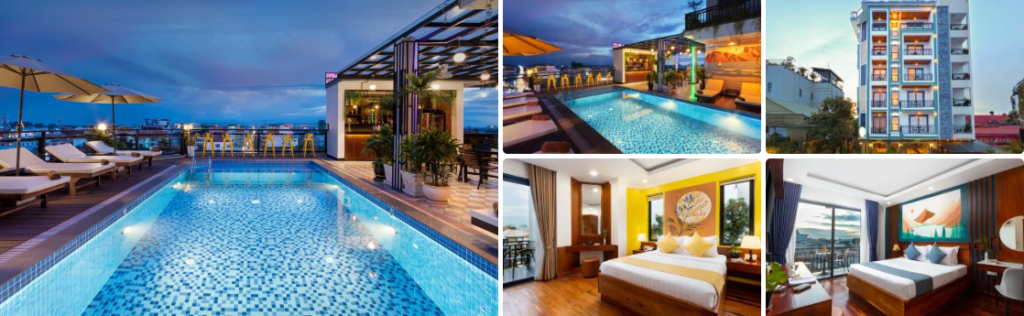
Our first night was at Le Vert Angkor Hotel, close to the Angkor Night Market area.
The room was simple but tidy and had what we needed after the journey.
My favorite detail was the balcony. We sat there late at night watching lightning over the city while Siem Reap welcomed me with rain.
There was also a small rooftop pool.
Location was the main advantage. From there it was easy to walk toward the Night Market, cafés, massages and the central evening area.
For a first night or two, it worked well: quiet enough to sleep, but still easy to get into town.
The Embassy Angkor Resort & Spa
The next move was completely different.
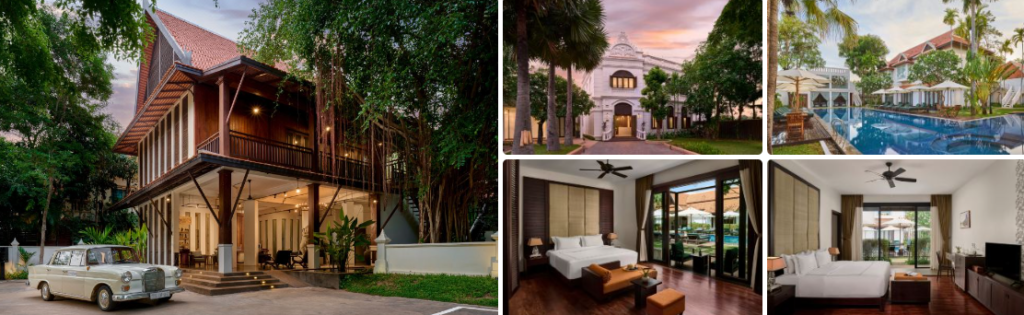
The Embassy Angkor Resort & Spa felt less like a city hotel and more like a small green retreat.
There were separate buildings, gardens and a large pool, and the atmosphere was much quieter.
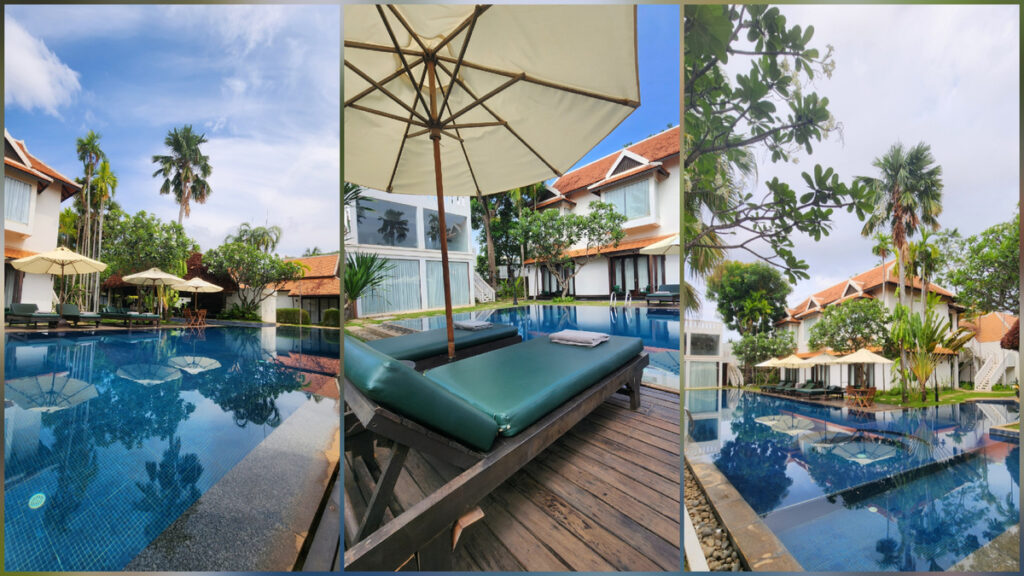
Our room was spacious, the air conditioning worked properly, the bed was comfortable and the whole place felt designed for recovering rather than simply sleeping between sightseeing days.
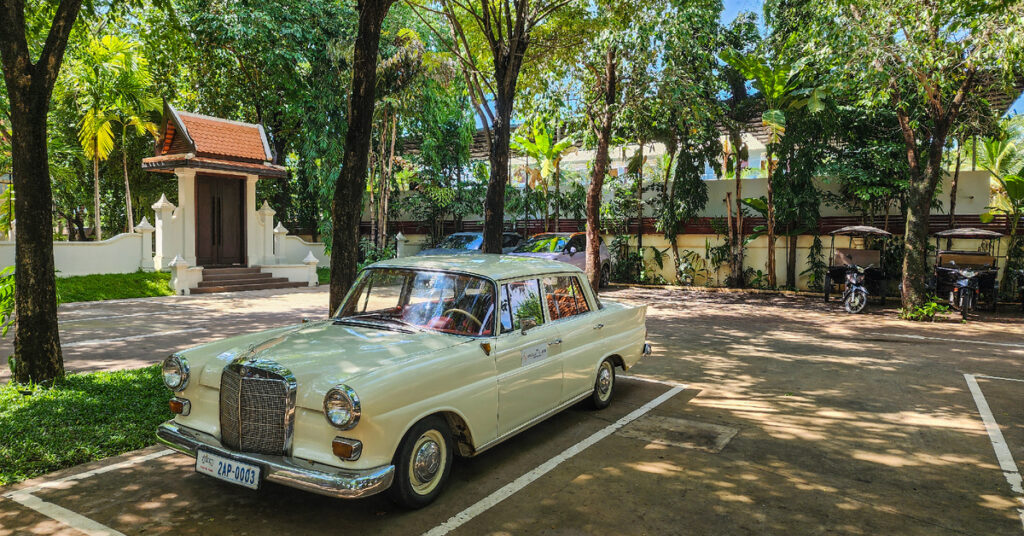
That became surprisingly valuable after long hours around temples.

The rhythm here was:
temples → hotel → pool → decide whether I still had enough energy for dinner.
Siem Reap River View Residence
Later we moved again, this time to Siem Reap River View Residence.
This was a much more urban base.
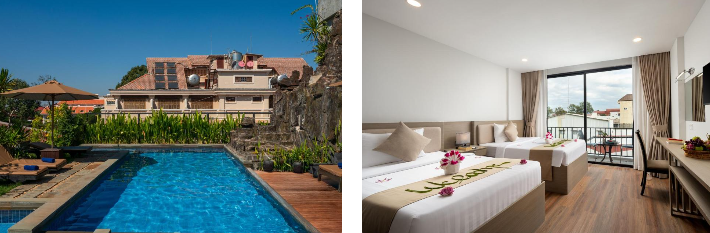
No resort atmosphere or large green grounds. Instead, we had a straightforward room and easier access on foot to the river, cafés, bars, massages and central Siem Reap.
After trying all three, I would choose based on how I planned to spend the evenings.
Central is convenient if you want to walk out for food and nightlife.
A quieter hotel with a pool is very welcome when your days involve temples, heat and long drives.
Find a Base in Siem Reap
Our 3 Days Around Angkor
We did not spend three days repeating the same classic circuit.
Each day had its own rhythm.
| Day | Route |
|---|---|
| Day 1 | Bakong → Angkor Wonder Garden stop → Beng Mealea → Koh Ker |
| Day 2 | Pre Rup → Banteay Samré → Banteay Srei → Phnom Krom |
| Day 3 | Angkor Wat sunrise → Angkor Thom → Bayon → terraces and smaller temples → Ta Prohm |
Day 1 was about distance and temples beyond the main circuit.
Day 2 was slower and more independent.
Day 3 was classic Angkor, this time with a guide.
That combination worked much better for me than doing three similar temple loops.
Angkor Tickets: What I Used and What Has Changed
During my trip, I bought a 3-day Angkor Pass for $62 from the official ticket office and paid by card.
That price still exists, but one important detail has changed compared with how I experienced the route.
For current planning, Beng Mealea and Koh Ker should be budgeted separately from the main Angkor pass.
So do not build your temple budget from an old trip report, including mine.
The main pass makes sense for the central Angkor days. The more distant sites may need their own tickets.
Day 1: Bakong, Beng Mealea and Koh Ker
The first temple day was the most ambitious geographically.
Before leaving, we moved into The Embassy Angkor Resort & Spa, dropped our bags and decided not to waste the morning.
A Café with Goats Before the Temples
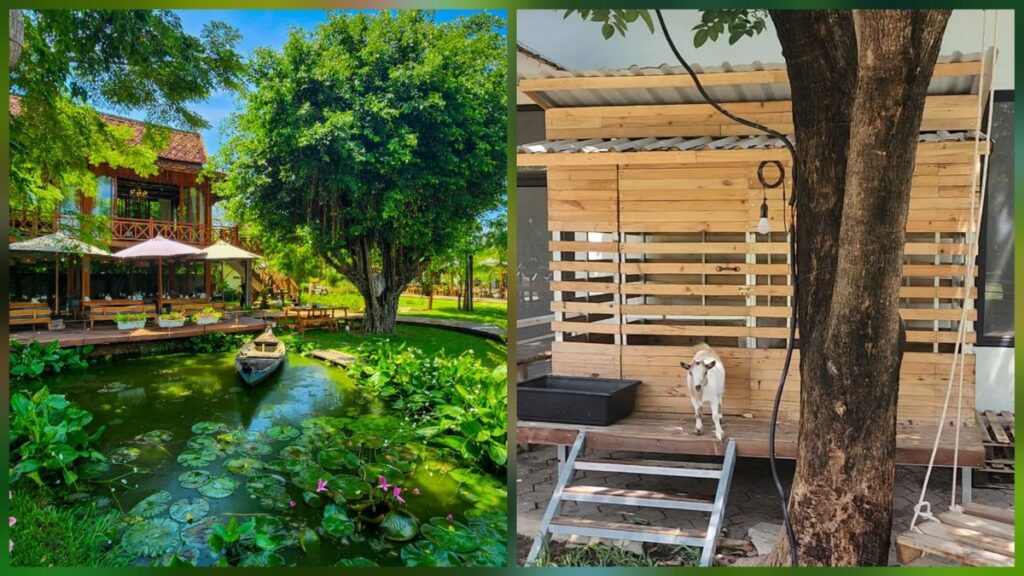
On the way out of town, we stopped at a small green café.
It had plants, a quiet terrace, simple food and drinks, and goats wandering around outside.
Not exactly an essential Cambodian landmark.
But it became part of the day because this was where we ate, slowed down after the previous journey and actually looked at the map together.
Our plan became:
Bakong → Angkor Wonder Garden → Beng Mealea → Koh Ker → Siem Reap.
One practical detail from my visit: the café was cash-only.
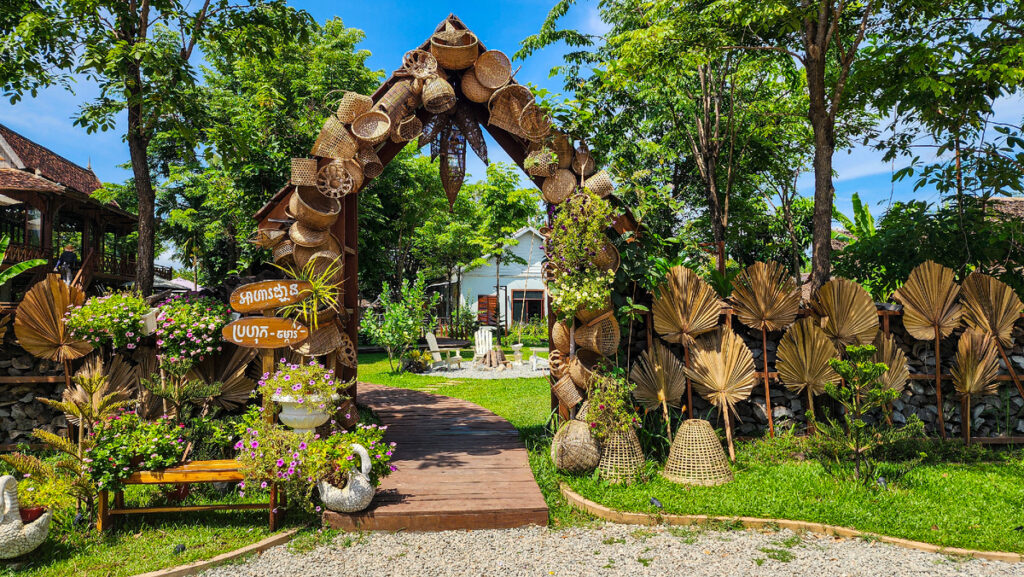
Bakong: A Quiet Start
Bakong was our first temple.
It belongs to the Roluos group and predates the later monumental centre most visitors associate with Angkor.
The stepped temple-mountain structure gives it immediate presence, but what I liked most was that it did not feel overwhelming as the first stop.
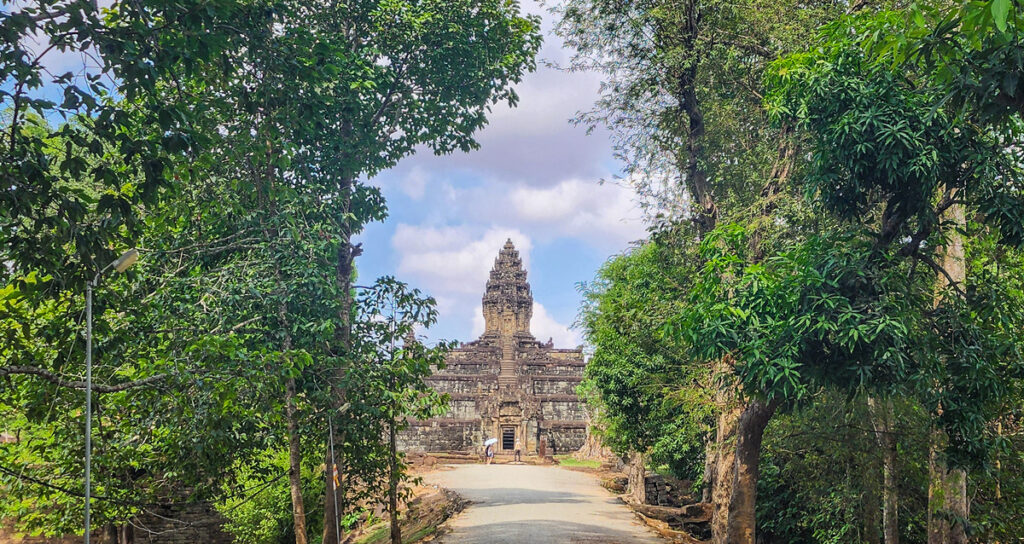
There were moats, smaller sanctuaries and active religious details inside, including statues and incense.

There were also far fewer people than I would see later at the major Angkor sites.
You could stop, look and photograph without constantly moving around tour groups.
Bakong worked very well as the opening temple of the day: enough scale to make the trip feel properly started, but without immediately exhausting me.

Angkor Wonder Garden: The Stop We Skipped
Angkor Wonder Garden was next in the plan.
We reached it.
We looked.
And we decided not to go inside.
It was hot, the day had barely started, and Beng Mealea and Koh Ker were still ahead of us.
This is something I became better at during longer trips: not every marked attraction needs to become an obligation.
We chose the temples.
I do not regret it.
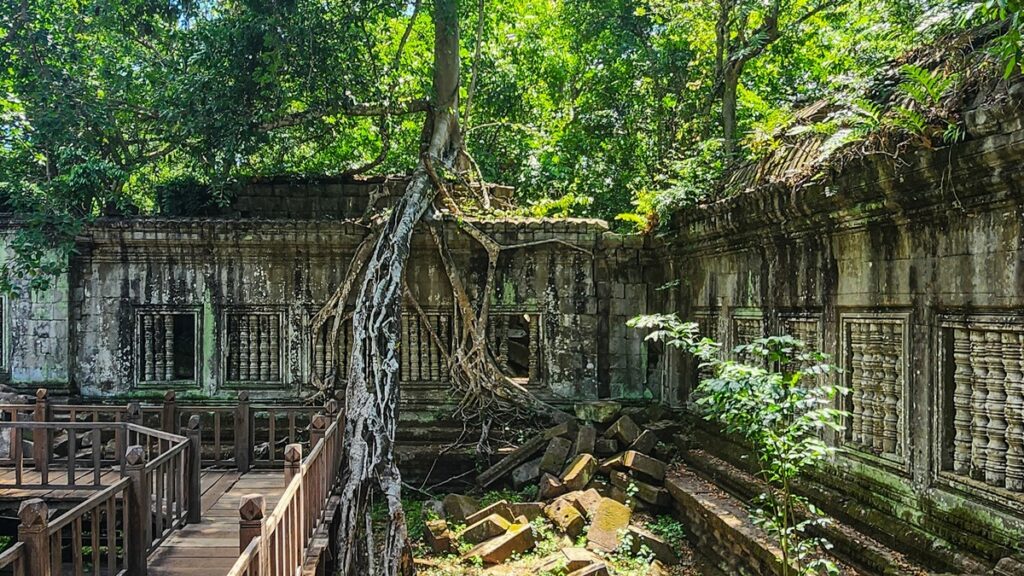
Beng Mealea: Ruins, Corridors and Jungle
Beng Mealea felt completely different.

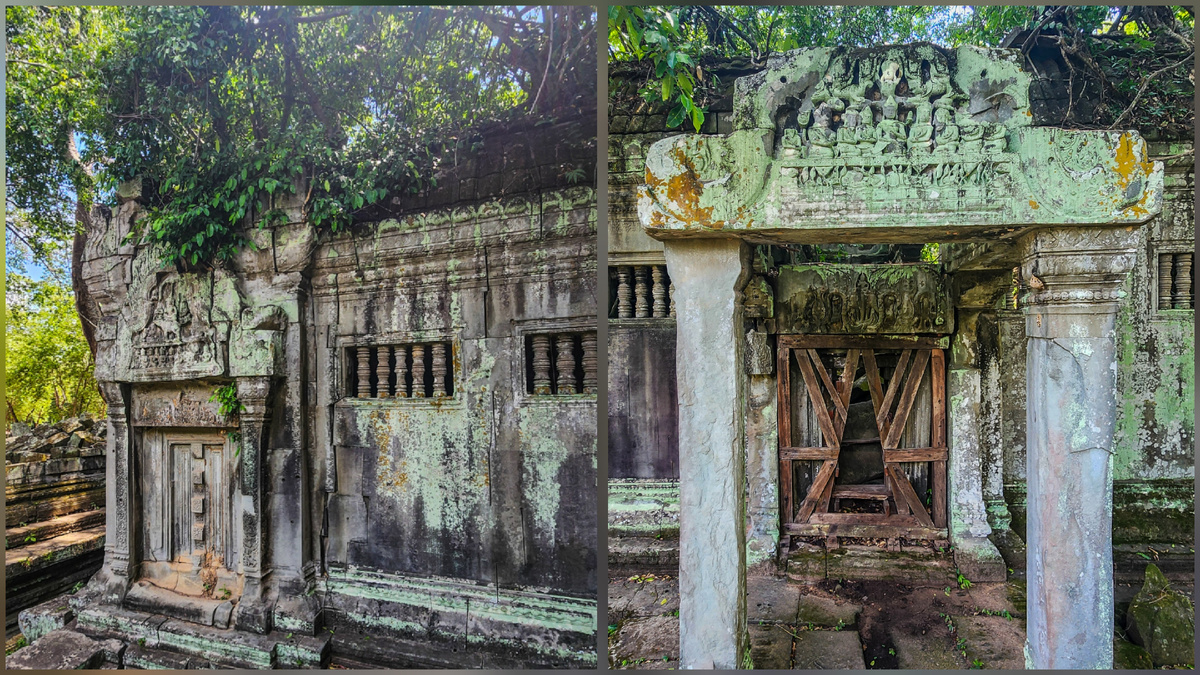
This was the aesthetic people often imagine when they think of temples being slowly absorbed by the landscape:
- broken galleries;
- fallen stone;
- trees pushing into the ruins;
- long corridors;
- light entering through irregular openings.
The experience felt much less polished than walking through a heavily restored monument.
That was exactly what I liked.
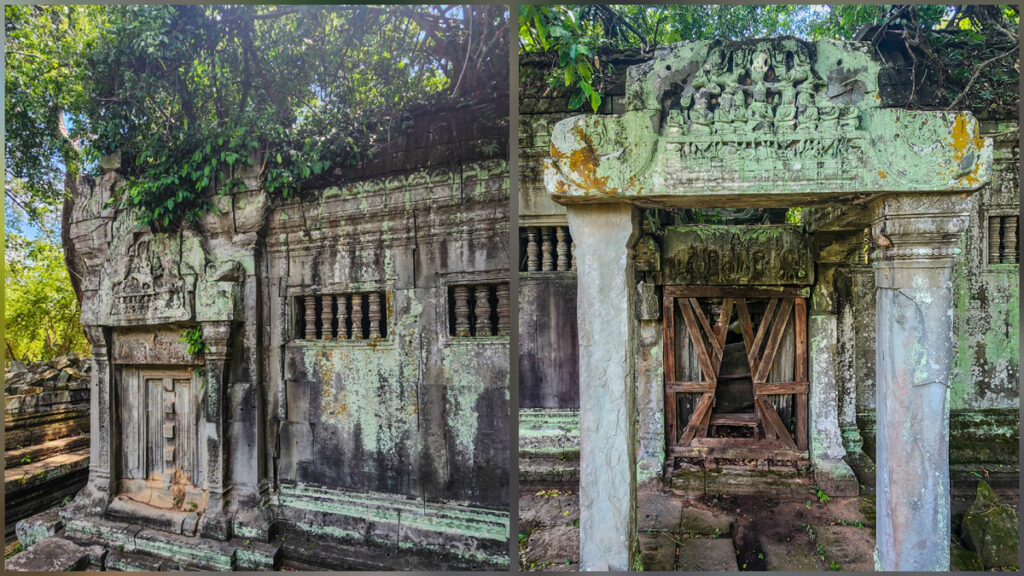
There were not many visitors during my trip, so I could stop in the darker sections, look through broken doorways and spend time with the structure rather than simply move along a prescribed photo route.
Beng Mealea is not about one perfect facade.
It is about moving through the remains.
Koh Ker: A Former Capital at the End of the Day
From Beng Mealea, we continued to Koh Ker.
This is where the scale of the day really started to show.
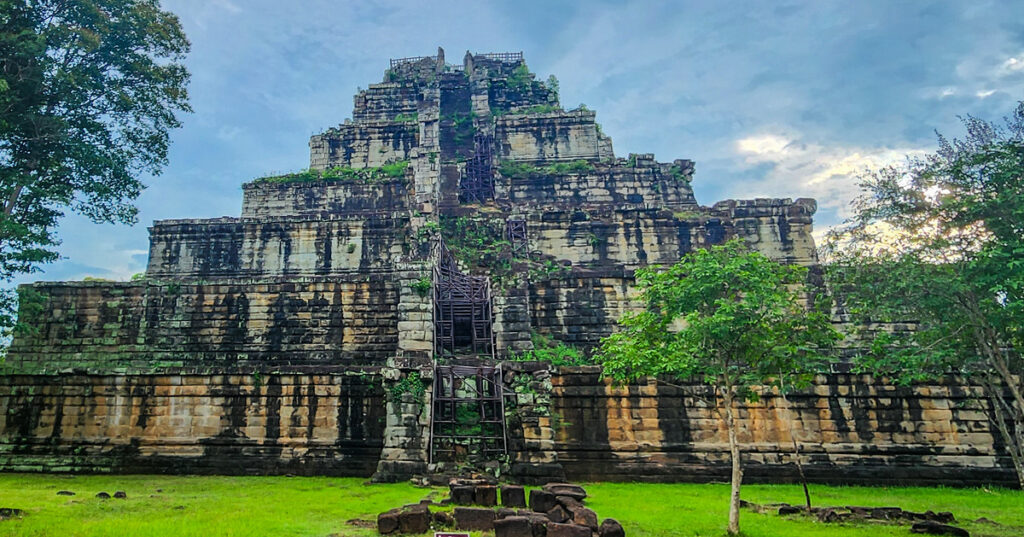
Koh Ker was once a royal capital of the Khmer Empire, and its archaeological area is spread across a much larger landscape than a single compact temple.
The landmark most people recognize is Prasat Thom, the stepped pyramid rising above the site.
But you do not simply arrive, look at one building and leave.
We moved between several stops, and some of the smaller temples were almost swallowed by vegetation.
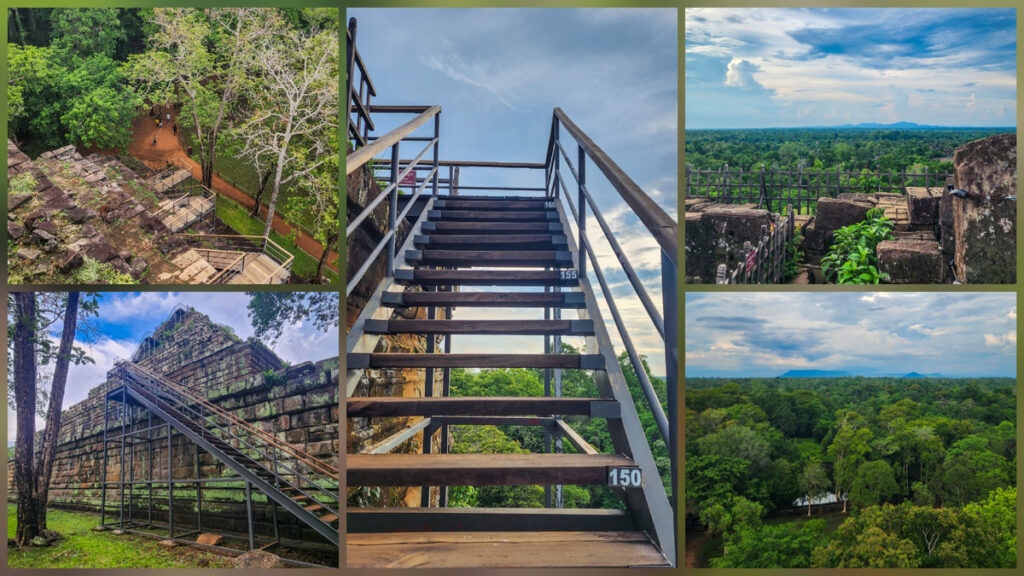
There were very few visitors during our visit.
By the time we reached the main parts of the complex, however, the sun was already dropping.
Our visit became increasingly tactical:
stop → get out → explore → photograph → back in the vehicle → next site.

Would I Do All Three in One Day Again?
Yes, it is physically possible.
But I would not call it relaxed.
The distances are substantial, and by late afternoon the clock begins deciding how long you spend at each site.
If I wanted a slower Koh Ker visit next time, I would either leave much earlier, reduce the number of stops or consider spending the night closer to Koh Ker.
Our journey back took roughly three hours.
It was dark.
Then the rain arrived.
At points it was pouring hard enough to reduce visibility, and by then the tiredness was no longer theoretical.
We eventually reached Siem Reap wet, cold and completely ready for a hot shower.
Prefer Someone Else to Handle the Long-Distance Temple Logistics?
Beng Mealea and Koh Ker involve much more road time than the central Angkor circuit.
Pub Street After the Temple Day
After changing into dry clothes, we went into central Siem Reap.
Pub Street is not subtle.

There are bars, music, restaurants, street food and plenty of tourist energy.
But after an entire day on roads and around temples, it felt different.
It was not the reason I had come to Cambodia.
It was simply an easy reward at the end of a long day: food, lights and no more temples until tomorrow.
Siem Reap also has a surprisingly large cooking-class scene if you want an activity connected to Cambodia without committing to another full temple day.
For us, that evening was mostly about recovering.

Day 2: A Slower Morning and the Eastern Temples
After the previous day, I did not need another heroic sunrise departure.
I needed a pool.
We spent the morning at The Embassy Angkor Resort & Spa with breakfast, some work and several hours doing very little.
Laptop.
Shade.
Green garden.
Pool.
That pause made the second temple day much better.
Closer to midday, we packed, moved to Siem Reap River View Residence, dropped our bags, had coffee and took the motorbike out.
The route was:
Pre Rup → Banteay Samré → Banteay Srei → Phnom Krom.
Pre Rup: Temple-Mountain Views
Pre Rup was the first stop.
From below, it does not look especially huge.
Then you start climbing.
The upper levels open onto broad views over trees and the surrounding countryside, and the height gives the temple much more presence than I expected from the approach.
I spent roughly 30–40 minutes there.
That was enough for me to climb to the upper level, walk around, look at the lion figures and architectural details, and still avoid turning the stop into a race.
Banteay Samré: A Quieter Walled Temple
Banteay Samré was one of those places where the atmosphere came partly from the absence of crowds.
The temple sits away from the heaviest visitor flow.
You move first through the outer enclosure and then deeper into a compact architectural space of walls, galleries, towers and carved stone.
It felt almost fortress-like.
After the exposed levels of Pre Rup, I liked wandering through the galleries, sitting on the stone for a while and looking at details without being pushed forward by the next group.
Banteay Srei: Come for the Details
Then came Banteay Srei.
This is not the temple I would choose for sheer scale.
It is the temple I would choose if I wanted to look closely.
The stone has a distinctive pinkish tone, and the carved surfaces are extraordinarily detailed.
Instead of trying to take in one massive monument, I kept stopping at individual lintels, figures, decorative patterns and scenes.
An hour can disappear surprisingly quickly here.
Not because Banteay Srei is enormous.
Because you keep looking closer.
Sunset Near Phnom Krom
On the way back toward Siem Reap, we stopped near Phnom Krom and the Tonle Sap area.
By the time we arrived, the temple itself was already closed.
And that turned out not to matter much.
The more interesting part for me was what was happening around the hill.
Local families were arriving for the evening.
There were motorbikes, mats, plastic chairs and tables, drinks and snacks. Children ran around while people sat looking toward the fields and water.
It felt less like an organized tourist viewpoint and more like somewhere people from the area actually came to spend the end of the day.
That was the reason I liked it.
Temple Sky Lounge Riverside
When it was dark, we returned to the hotel, changed and walked to Temple Sky Lounge Riverside.
It was an easy final stop: a low-key rooftop setting with views toward the river and the city lights.
That second day had everything the first one did not.
A slow morning.
Shorter distances.
Time to wander.
And a sunset where we were not racing another closing time.
Day 3: Angkor Wat Sunrise with a Guide
The third day was the one I had been waiting for.
Angkor Wat.
I had wanted to see it for years.
Laos and Vietnam had already happened in my travels, while Cambodia somehow kept being postponed.
I had studied French for around fifteen years through school and university, and that had fed a long-standing interest in the history of French Indochina and the wider region.
Angkor had been sitting in the mental category of:
one day.
This was finally that day.
Leaving Siem Reap Before Dawn
We had gone to bed late after the previous evening.
The alarm did not care.
We left Siem Reap at around 4 AM.
This time we were not navigating independently.
The day had been organized with:
- a Toyota Alphard;
- a local driver;
- a Russian-speaking guide who had lived in Cambodia for years.
Before the trip, my independent plan had been straightforward:
hire transport, open the map, follow the Small Circuit and stop at the obvious temples.
After the first part of the guided day, I understood what I would have missed.
Sunrise at Angkor Wat
We reached Angkor Wat while it was still dark.
Flashlights.
Footsteps.
Low voices.
Everyone moving toward essentially the same image.
The famous sunrise composition is simple: the dark silhouette of Angkor Wat, water in front and the sky slowly changing behind it.
At first I noticed the number of people.
Then I stopped noticing them.
The towers slowly separated from the darkness.
The water changed colour.
Stone that had looked almost black started showing detail.
And there was that very particular moment when the thing you have carried around as an image for years becomes a physical place around you.
For me, Angkor Wat did live up to the expectation.
Not because sunrise somehow turns it into a private mystical experience.
It does not.
But because I was finally standing there.
Why Having a Guide Changed the Day
The value of the guide became much clearer after sunrise.
Without context, many Angkor reliefs are easy to process as:
very long, very beautiful carved walls.
With someone explaining what you are looking at, the same walls become stories.
Our guide pointed out scenes in the galleries, connected them with mythology and Khmer history, and explained details I would have walked past alone.
There were practical advantages too.
He knew where groups were building up, which sections made sense to visit first, where it was worth climbing and what could be skipped when energy started dropping.
Angkor is physically tiring.
There is heat, stone, stairs, sun, shade and constant movement.
Having the route organized did not make the day easy, but it made it coherent.
Want More Context Than a Self-Guided Temple Loop?
Angkor Thom and Bayon
After Angkor Wat, we continued into Angkor Thom.
The scale shifts again here.
This is not one isolated temple but the remains of an enormous former city.
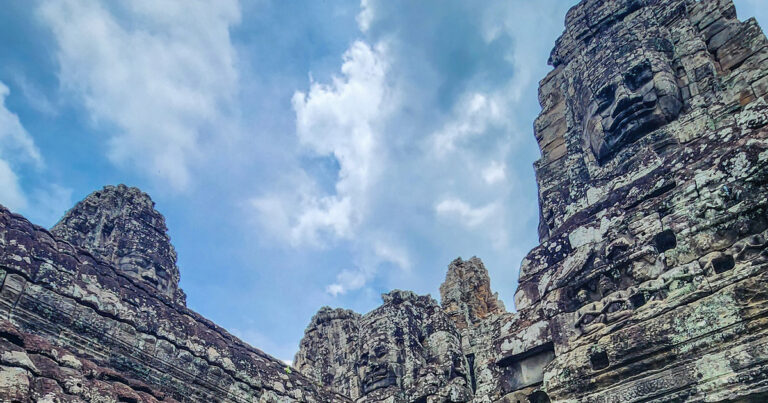
At Bayon, the experience changes from long galleries and monumental symmetry to stone faces looking down from the towers.
From one angle you see one face.
Move a few steps and another appears.
Then several.
It is one of those places where historical context makes a noticeable difference because there is much more happening architecturally and symbolically than the first visual impression suggests.
From there, our route continued through the terraces and smaller sites within Angkor Thom.
We did not try to turn every stop into an hour-long visit.
That would have been impossible.
Ta Prohm: Where the Trees Win
Later came Ta Prohm.
This is the temple many people know before they know its name: huge roots wrapped around stone walls, trees rising directly from the ruins and architecture that seems to be negotiating with the forest.
It is famous and heavily visited.
That does not make the relationship between the trees and the ruins less impressive when you actually stand next to it.
The contrast with Beng Mealea was interesting.
Both can create that “temple and jungle” feeling, but they did not feel like the same experience.
Beng Mealea felt looser and more exploratory to me.
Ta Prohm felt more iconic and composed, with specific tree-and-stone scenes everyone wanted to see.
I was glad we had done both.
Independent Angkor or Guided Tour?
After trying both styles during the same trip, I would decide based on what you want from the day rather than treating one as the correct way to see Angkor.
| Go independently if… | Consider a guide if… |
|---|---|
| You like changing plans as you go | You want historical and mythological context |
| You enjoy researching sites yourself | It is your first major Angkor visit |
| You want maximum control over pace | You have limited time |
| Keeping costs down matters | You want someone else to structure the route |
| You are comfortable arranging transport | You want help deciding where to spend your energy |
For me, the combination worked.
One day of independent riding gave me freedom.
The guided Angkor day gave me context.
I would not want to trade one for the other.
Was Three Days Around Angkor Too Much?
For me, no.
The important thing was that the three days did not feel interchangeable.
Day 1 was the hardest because of the distances to Beng Mealea and Koh Ker.
Day 2 was slower, with a late start, independent riding and more time to stop where we wanted.
Day 3 was physically full but easier to navigate because the route and historical context were handled by a guide.
Three days gave me something one classic Angkor circuit would not have done:
contrast.
Restored and ruined.
Busy and almost empty.
Independent and guided.
Central Angkor and sites much farther away.
That was what made the three days worthwhile.
Leaving Siem Reap for Phnom Penh
The Angkor tour ended in the afternoon.
Andrey went back to the hotel to recover.
I did not.
I was not heading straight back to Vietnam. I had decided to stay in Cambodia for a few more days and submit an application for a longer Vietnam visa, so Phnom Penh became the next stage of the route.
That evening I boarded a bus to the capital.
Siem Reap had been the reason I crossed into Cambodia in the first place, but it turned out to be only the beginning.
Next came a city that felt completely different: heavier traffic, difficult recent history, the Royal Palace area, the river and one extremely full day that I definitely would not organize the same way twice.
That is Part 2.
Planning the Rest of a Cambodia Trip
Flights
If Cambodia is part of a larger Southeast Asia itinerary rather than an overland trip from Phu Quoc:
Travel Insurance
For a trip involving ferries, border crossings, buses, motorbikes and several destinations:
Some links in this article are affiliate links. If you book through them, I may earn a small commission at no extra cost to you.