
Best Time to Visit Phu Quoc: Month-by-Month Guide by Coast and Activity (2026)
Most advice about the best time to visit Phu Quoc stops at “dry season good, rainy season bad”. That is a fair starting point, but it misses what actually decides your holiday: which side of the island you stay on and what you want to do there. A calm, glassy west coast in February and a wave-churned one in August are the same beaches on the same island; meanwhile, the sheltered south-east can still offer good swimming days in the middle of the wet season.
This guide helps you choose dates around your priorities — swimming, island-hopping, sunsets, theme parks, prices or avoiding crowds — and shows which coast to base yourself on for each part of the year.
Best Time to Visit Phu Quoc: Quick Answer by Priority
| Your priority | Best months | Notes |
|---|---|---|
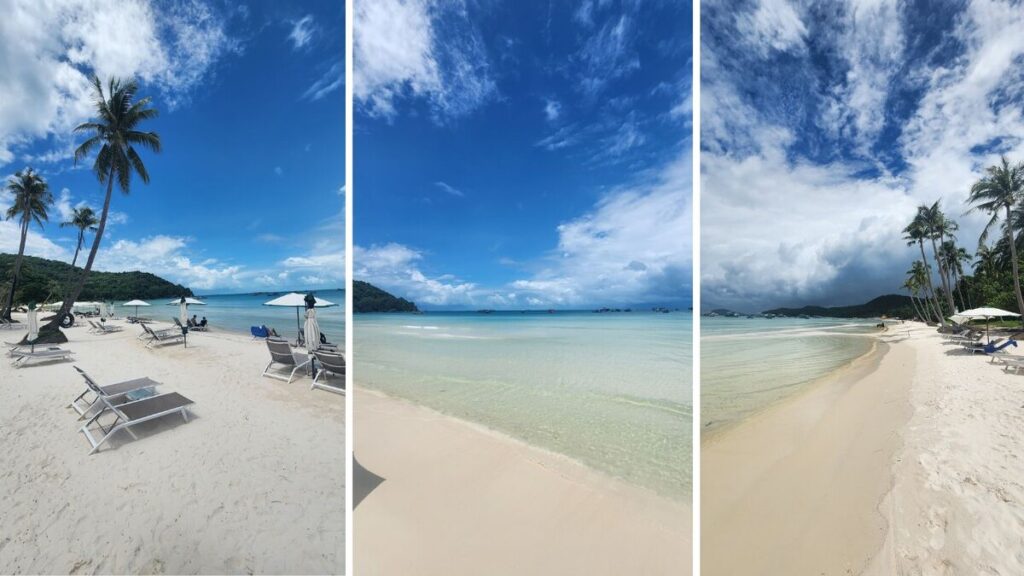
| Beach holiday on the west coast | December–March | Calm, clear water and the most reliable sunshine |
| Island-hopping and snorkelling | January–April | Calmest seas in the south; book ahead in peak weeks |
| Sunsets | November–April | Clear evening skies over the west coast |
| Lowest hotel prices | May–September | Expect rain showers and rougher water in the west |
| Good weather with fewer crowds | March, early April, late November | Shoulder months between peak and wet season |
| Theme parks and shows | Any month | Plan outdoor parks for the morning; keep indoor back-ups in the wet season |
| Family summer holidays | June–August | Possible, but choose a south or south-east base and keep the boat day flexible |
| Avoiding the hottest weather | December–February | April is usually the hottest month |
How Phu Quoc’s Seasons Really Work
Phu Quoc has a tropical climate with two main seasons rather than four, and the sea stays warm enough for swimming all year.
The dry season, roughly November or December to April, is shaped by the northeast monsoon. Rain is rare in January and February, skies are clear, and the west coast — where most hotels, beaches and sunset bars are — is at its calmest. This is peak season, so prices are highest around Christmas, New Year and Tet.
The rainy season, roughly May to October, comes with the southwest monsoon. It does not mean constant rain: showers often arrive as heavy downpours that last an hour or two, followed by sunshine. The bigger change is the sea. The southwest wind pushes waves onto the west coast, so beaches such as Long Beach can become rough and murky, and some boat trips are cancelled on windy days. The south-east coast, around Khem and Sao, is usually more sheltered.
That is the key insight to share with your travel companion: in the wet season, your choice of coast matters more than your choice of month. Staying in the south or south-east can make a July trip far more enjoyable than the same trip based on the west coast.
Phu Quoc Weather by Month
This is the typical seasonal pattern rather than a forecast; conditions vary from year to year, and the transition months can go either way.
| Month | Rain | West coast sea | Crowds and prices |
|---|---|---|---|
| January | Rare | Calm | Peak |
| February | Rare | Calm | Peak (Tet) |
| March | Occasional | Calm | High, easing |
| April | Occasional, increasing towards the end of the month | Mostly calm | Moderate; busy around 30 April–1 May |
| May | Showers become more frequent | Changing, more waves | Low |
| June | Frequent showers | Often rough | Low |
| July | Frequent, often heavy | Often rough | Low, with summer family travel |
| August | Frequent, often heavy | Often rough | Low, with summer family travel |
| September | Frequent | Often rough | Lowest |
| October | Frequent but easing | Improving | Low |
| November | Decreasing; varies from year to year | Calming | Rising |
| December | Occasional | Calm | Peak from mid-month |
Month-by-Month: What to Expect
December to February: peak season, best beach weather
This is the most reliable time for a classic beach holiday. Days are sunny, humidity is lower than at other times of year, the west coast is calm, and sunsets are usually clear. It is also the most popular and expensive period, especially from Christmas to early January and around Tet.
Tet, the Lunar New Year, falls on 6 February 2027, with a proposed national holiday from 4 to 10 February. Domestic travel peaks around this time, so book flights and hotels early, and expect some local shops and restaurants to close for a few days while big attractions stay open.
Choose this period if you want the best weather and can book ahead. Skip it if you are travelling on a tight budget or dislike busy beaches.

March and April: the sweet spot
March is, for many travellers, the best overall month: still dry and calm, but with fewer crowds than January. April is usually the hottest month, and the first showers can appear towards the end of the month. The Reunification Day and Labour Day holidays on 30 April and 1 May bring a short domestic travel peak.
Choose this period if you want good weather with a little more space. Plan around the heat by doing outdoor sights and the safari in the morning and keeping the afternoon for the pool or the sea.
May and June: green season begins
The southwest monsoon arrives, showers become more frequent, and the west coast starts to see waves. Hotel prices drop and the island feels quieter. Many days still have long sunny spells, especially in the mornings. Our Phu Quoc in June guide shows what this time of year actually looks like, including a road trip along the calmer east coast.
Choose this period if you want lower prices and do not mind some rain. Base yourself in the south or south-east for better swimming.

July to September: the wettest months
This is the heart of the rainy season, with the most rain and the roughest west coast. Island-hopping tours run on suitable days but are more likely to be cancelled or changed. On the other hand, prices are at their lowest, and theme parks, shows and indoor attractions keep the days full.
Choose this period if price matters more than beach conditions, or if your trip is built around attractions rather than the sea. Avoid it if island-hopping and snorkelling are the main reason for your trip.

October and November: the turn of the season
October is still wet but improving, and November is usually a transition month: some years it is already dry and calm by mid-month, others it stays showery. Prices begin to rise towards December.
Looking further ahead, Phu Quoc will host the APEC 2027 summit in November 2027, a week-long event expected to bring thousands of delegates and journalists. Exact dates had not been finalised at the time of writing; if you plan to visit in November 2027, check the dates before booking and expect higher demand and possible restrictions around the conference venues that week.
Choose late November if you want dry-season weather before the December price rise.
Which Coast to Choose in Each Season
Your base can make or break an off-season trip.
| Season | Best base | Why |
|---|---|---|
| Dry season (Dec–Apr) | West coast: Duong Dong, Long Beach, Ong Lang | Calm sea, sunsets over the water and the most choice |
| Rainy season (May–Oct) | South and south-east: Sunset Town, Khem Beach | Usually more sheltered from southwest waves |
| Shoulder months | Anywhere central, such as Long Beach | Flexible for both coasts depending on daily conditions |
Our guide on where to stay in Phu Quoc compares each area in detail. For beaches specifically, use our 10 best beaches in Phu Quoc, and for the south-east, our Khem Beach guide.
Once you have your dates, compare hotels in the right area for that season rather than across the whole island; a west-coast bargain in August may not be a bargain if you cannot swim outside it.
Planning a Rainy-Season Trip That Still Works
A wet-season visit can be very good value if you plan for flexibility:
- Keep the boat day movable. Schedule island-hopping or the Hon Thom cable car early in the trip, so you can move it if the sea is rough. Choose tours with clear cancellation terms; you can compare options on Trip.com and GetYourGuide.
- Have indoor back-ups. The aquarium at VinWonders, the Teddy Bear Museum and the evening show at Grand World are good choices for showery days.
- Do outdoor sights in the morning. Showers are more common later in the day, though not guaranteed.
- Expect taxis to be busier during downpours. Mobile data for Grab helps; you can compare Vietnam plans from Yesim or Trip.com eSIM before you fly.
- Think twice about scooters. Wet roads and sudden downpours make riding harder. If you do ride, check that your travel insurance covers it; EKTA is one option to compare.
When to Book
For December to February, and especially for Christmas, New Year and Tet, book flights and hotels well in advance; the best-located hotels fill first. You can compare flights to Phu Quoc on Trip.com to see how prices change across your dates. Popular island-hopping tours are also worth booking a few days ahead in peak weeks.
For the rainy season, you can usually book closer to the date, and prices are lower. A flexible booking is worth more than a small discount, since it lets you adapt to the weather.
If you arrive late at night in any season, a pre-booked airport transfer on Trip.com saves you sorting out transport in the dark or in the rain.
Final Verdict: When Should You Go?
If you want the best beach weather and calm seas, go between December and March, and book early.
If you want good weather with fewer crowds, choose March, early April or late November.
If you want the lowest prices, go between May and September, stay in the south or south-east, and build your plan around attractions with one flexible boat day.
Whatever month you choose, plan your days by zone so that bad weather on one day does not ruin the whole trip; our Phu Quoc itinerary shows how to do that for 3, 4, 5 or 7 days, and the Phu Quoc travel guide covers the essentials.
Useful Travel Resources
| What you need | Where to compare | Why it helps when choosing dates |
|---|---|---|
| Flights | Trip.com | Compare prices across peak and shoulder dates before you commit. |
| Hotels | Trip.com | Choose the coast that suits your season, then compare hotels there. |
| Tours & tickets | Trip.com · GetYourGuide | Check island-hopping tours and their cancellation terms, especially in the wet season. |
| Airport transfer | Trip.com | Useful for late arrivals and rainy evenings. |
| eSIM | Yesim · Trip.com eSIM | Mobile data for Grab, weather apps and changing plans on the go. |
| Car rental | Localrent | A car is more comfortable than a scooter in the rainy season. |
| Travel insurance | EKTA | Worth comparing for weather disruptions, boat trips and active days. |
Some links in this article are affiliate links. If you book through them, I may earn a small commission at no extra cost to you.