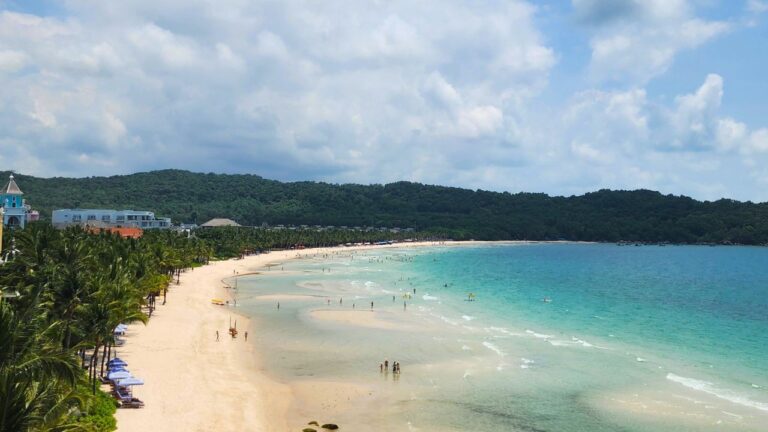
Phu Quoc in June: Weather, Beaches & My East Coast Road Trip
June 21, 2025 was my final full day on Phu Quoc.
My bags were almost packed, but leaving without one last loop around the places I still had not reached felt wrong.
By then, I had spent enough time on the island to know that Phu Quoc does not always behave the way a simple “high season / low season” calendar suggests.
I had already seen Khem Beach in March, during the supposed good season, when the sea was rough enough to push seaweed and debris onto the sand.
In June, I found almost the opposite.
So my farewell drive became an accidental experiment in what Phu Quoc in June actually looks like: which coast felt calmer, what the beaches were like, how much of the island seemed to empty out, and what happens when tropical weather suddenly decides your day is over.
This is the route I drove, plus what I learned from spending part of the rainy season on the island.
NARA ROUTE · PHU QUOC IN JUNE · FULL DAY
Khem Beach → My Happy Coffee → Bai Sao / Paradiso → Dinh Bà Lê Kim Định → Hang Yến → Anchor / An Yen → Agarwood Village
Start: morning · Best for: scooter or car · June rule: start early and keep the afternoon flexible
Is Phu Quoc Worth Visiting in June?
Yes, but I would plan a different Phu Quoc from the one you see in most dry-season itineraries.
June is not the month when I would book a trip expecting seven identical days of perfect beach weather.
Rain is part of the equation.
Conditions can change quickly.
And the beach that looked perfect in March may not be the beach that works best in June.
But there is another side to that.
I found quieter roads, far fewer people in some places, calm water on the southeast coast and accommodation deals that made longer stays much more attractive.
If you can start early, watch the weather and change your plans without treating every rain shower as a disaster, June can work surprisingly well.
Why Khem Beach Surprised Me in June
Khem Beach was my first stop.
I already knew it from March.
Back then, on some of my visits, the sea had been much rougher. Waves were pushing seaweed and rubbish onto the sand, which was not exactly the postcard version of Khem you see in hotel photos.
June looked completely different.
The water was smooth and emerald.
Boats anchored offshore looked almost suspended above the surface because the water was so clear.
And I saw none of the debris that had bothered me before.
That contrast became one of the biggest lessons of my time on Phu Quoc:
do not choose a beach only by its reputation. Check the conditions you actually have.
Khem faces the southeast side of the island, and its conditions can be very different from the west coast once southwest winds become more important.
For the full access guide, JW Marriott section and practical details, see my Khem Beach Phu Quoc and JW Marriott guide.
Stop 1. Khem Beach: The Calm Start I Was Not Expecting


If I were choosing where to swim on a June morning based on my own experience, Khem would be one of the first places I would check.
I would go early.
Not because I can promise you perfectly calm water every morning in June.
I cannot.
But because early starts give you more room to react if the weather changes later.
On this particular morning, Khem was exactly the beach I wanted for my final day.
Clear water.
Almost no waves.
Palm trees leaning toward the sand.
Very few reasons to leave.
But I still had a route to finish.
Stop 2. My Happy Coffee: A Hilltop Pause
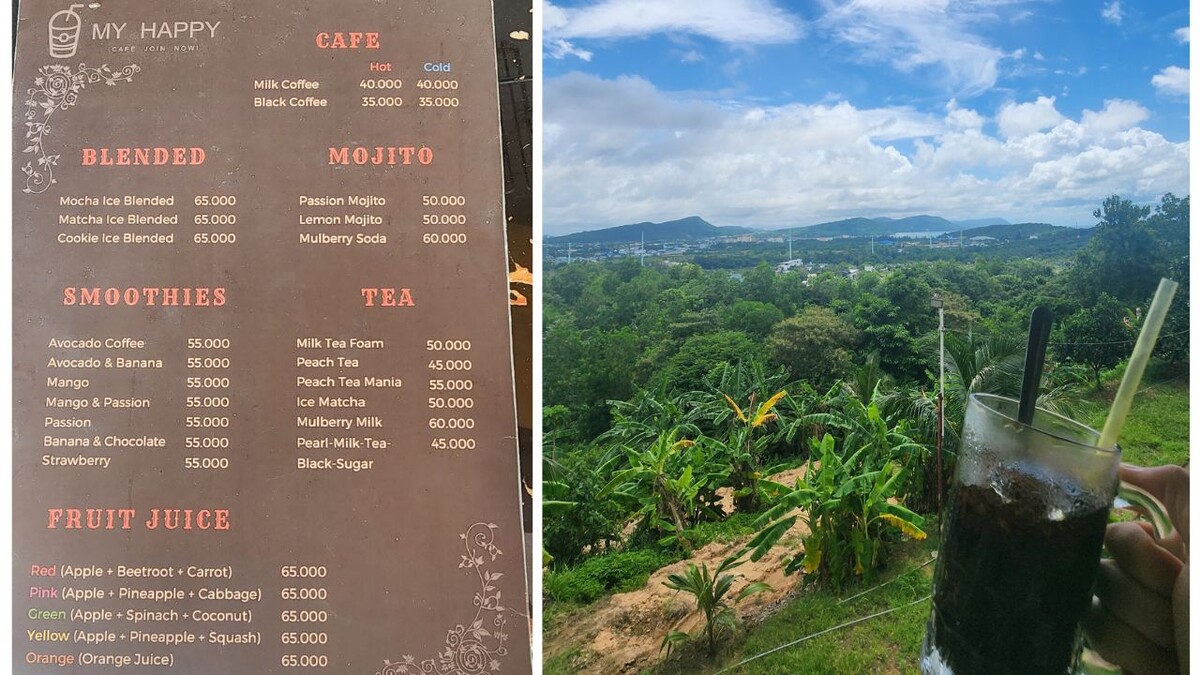
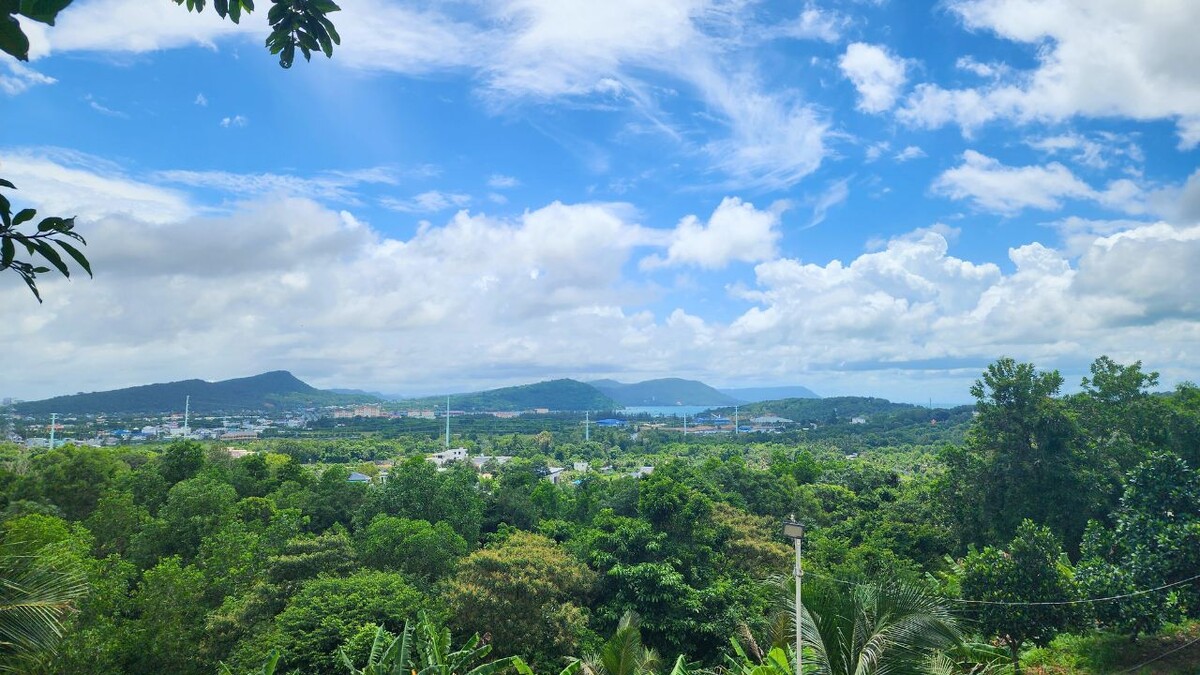

From the coast, I headed higher.
Near Hạnh Mai there is a small elevated café called My Happy Coffee.
It is easy to drive past if you are focused on reaching the next beach.
I am glad I stopped.
The breeze made it feel noticeably cooler than the road below, and the view opened out across the hills, greenery and a distant slice of the bay.
This was not a destination I had built the entire day around.
It was a pause.
And those often become the parts of a road trip I remember best.
Coffee was inexpensive on my visit, with basic drinks in roughly the 30,000–50,000 VND range.
I would treat that as a historical price, not a current menu.
The useful part is the stop itself:
cold drink, shade, breeze, view, continue.
Stop 3. Bai Sao: One Beach, Two Completely Different Impressions
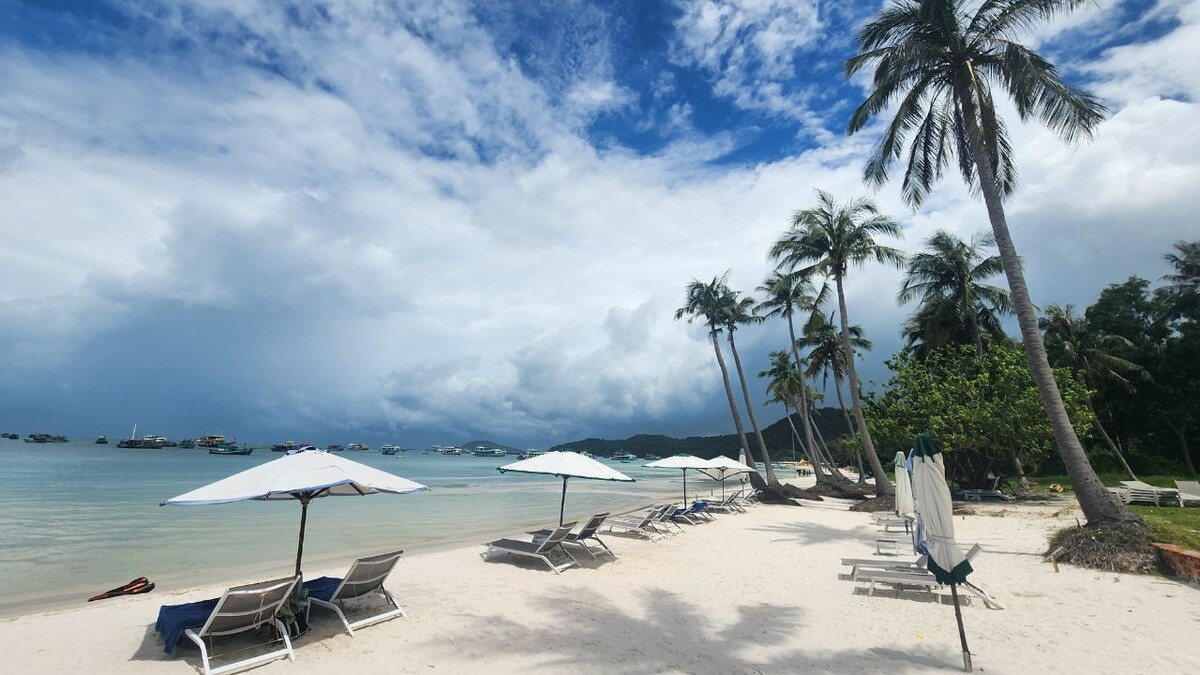
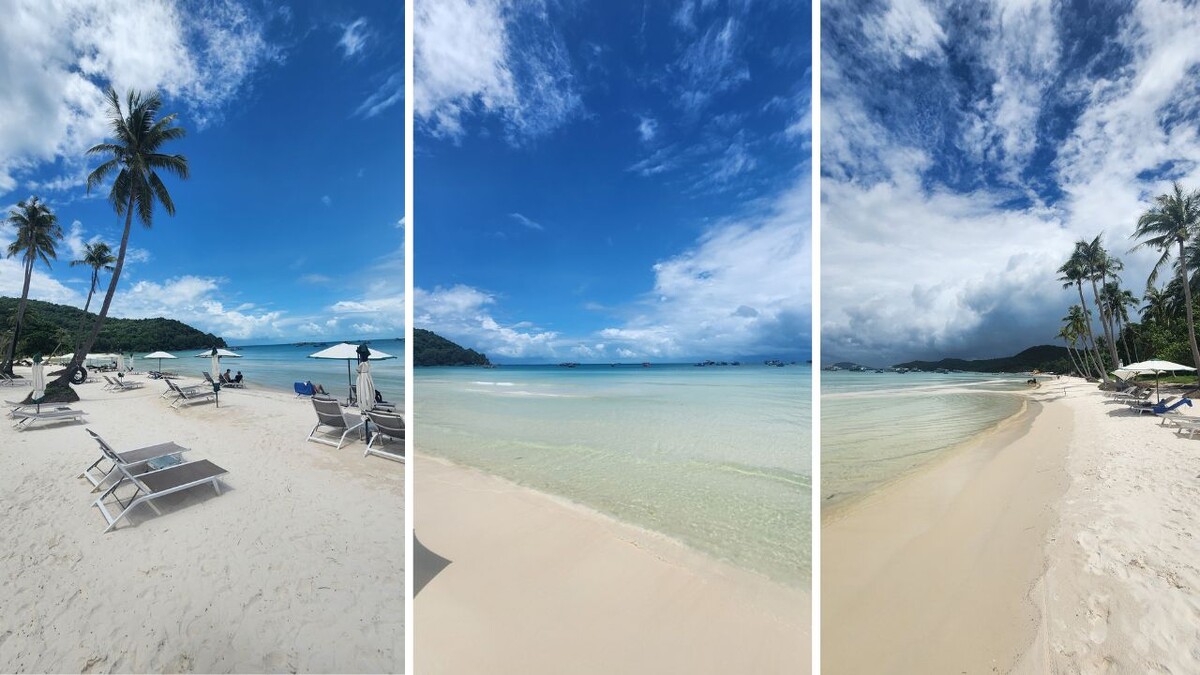
Next came Bai Sao.
And this was the most dramatic before-and-after of the day.
Before reaching the section near Paradiso, I stopped at a public-access stretch of beach.
It looked terrible that day.
The water was murky.
Plastic and debris had washed in.
The whole area felt neglected.
If I had turned around there, Bai Sao would have stayed in my memory as one of the biggest disappointments on Phu Quoc.
I did not turn around.
A little farther along, near Paradiso, the picture changed completely.
White sand.
Clear turquoise shallows.
A much cleaner beach.
The kind of scene people think they are booking when they imagine Sao Beach.
On my visit, a sunbed was around 100,000 VND and included access to a cleaner managed section and a shower.
Again, that is what I paid then, not a guaranteed current price.
The more useful lesson is this:
do not judge the entire beach by the first access point you reach.
On Phu Quoc, two sections of the same named beach can feel surprisingly different.
Stop 4. Dinh Bà Lê Kim Định: Five Minutes Was Enough
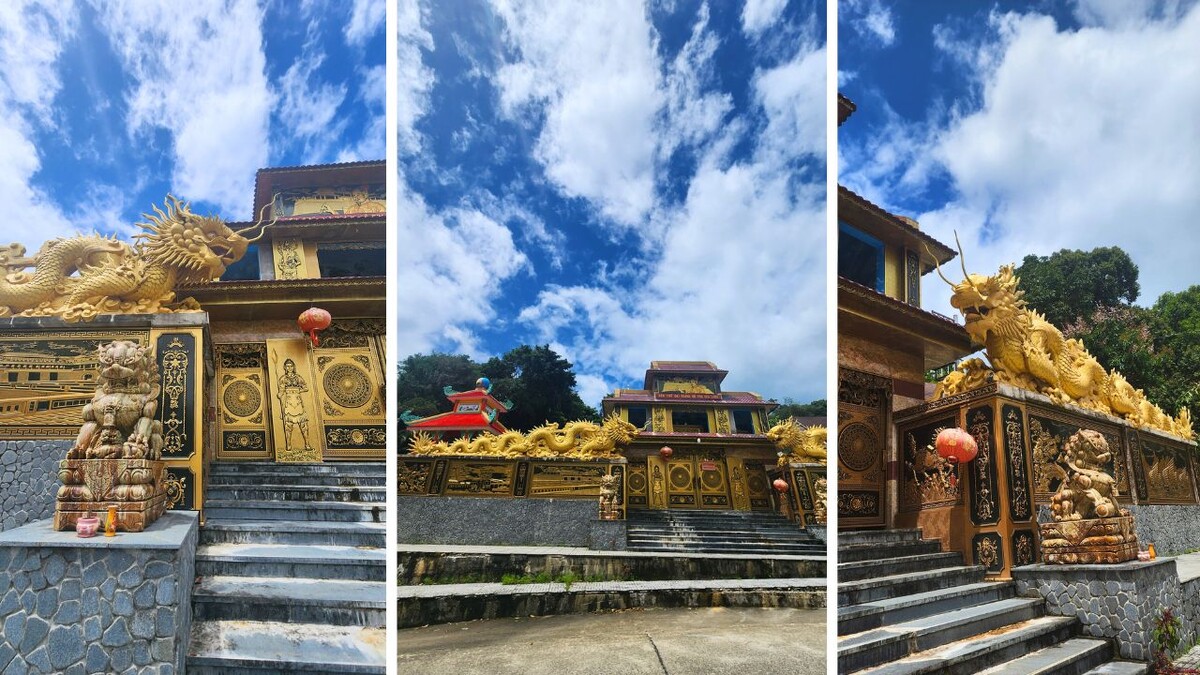
I made a short stop at Dinh Bà Lê Kim Định while continuing along the route.
The temple was closed when I arrived.
So I spent about five minutes looking around from outside and moved on.
That was enough.
The entrance, gilded dragon details and tree-lined surroundings made it worth slowing down when I was already passing.
But I would not build a special trip around it without checking first.
And I definitely would not take one closed temple on one June day and turn it into a rule that “small attractions close in low season.”
Sometimes a place is simply closed when you arrive.
That is why flexible routes are useful.
Stop 5. Hang Yến: Where the Tourist Polish Starts to Disappear
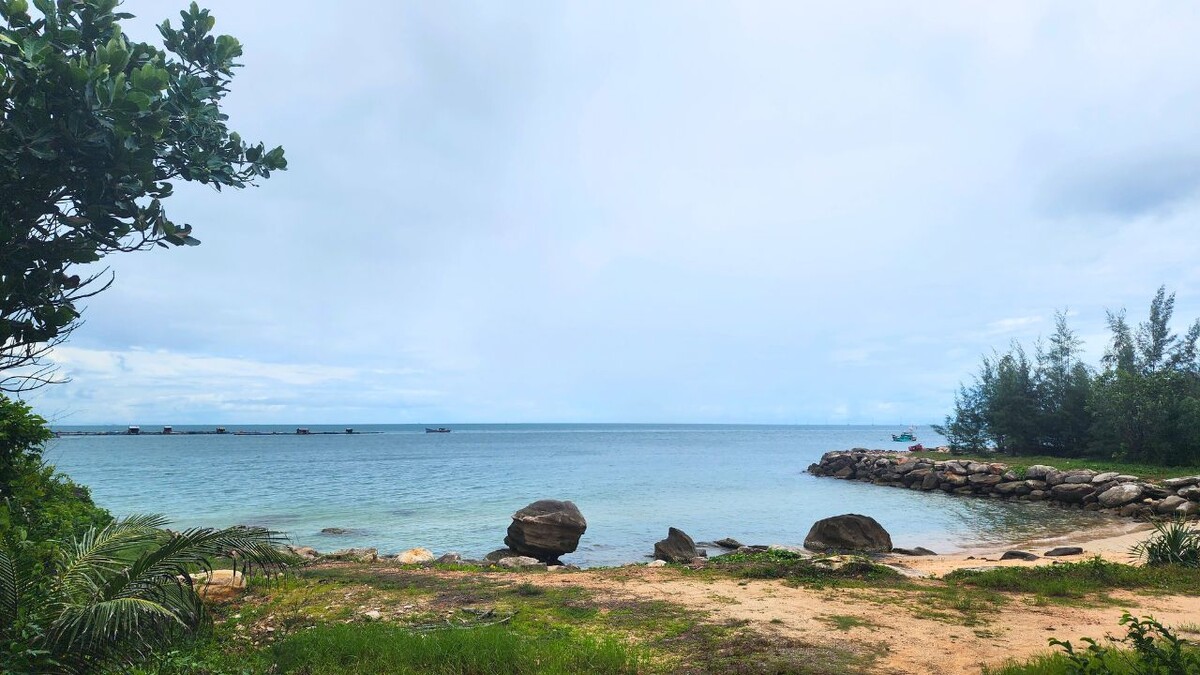
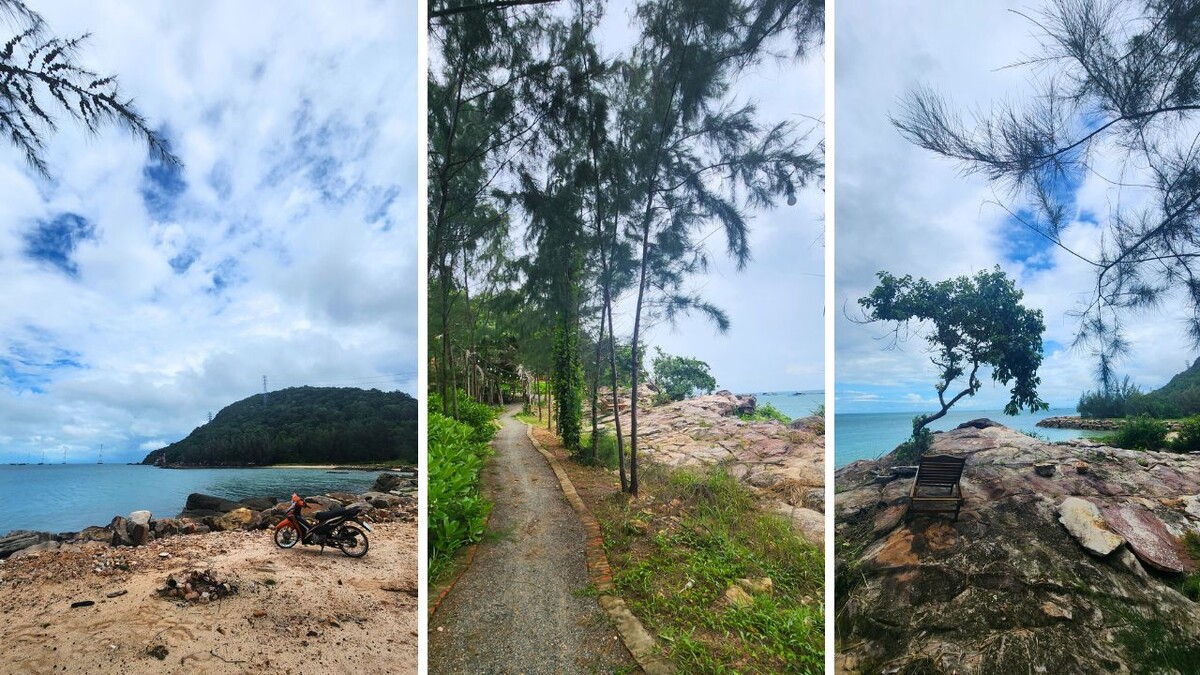

The farther I followed the coast, the less polished Phu Quoc became.
I was driving toward a point on the map marked Hang Yến.
There was no promenade waiting for me.
No long flat beach.
No row of cafés designed for visitors.
Just rocks, coastal vegetation and people using the shoreline in a much more ordinary way.
When I was there, I saw people picnicking on the rocks and sitting in the shade.
It felt much more like a local day by the water than a beach attraction.
I would be careful about romanticizing that.
This was simply what I saw that day.
But it was also the kind of scene I had wanted from my final drive.
After months on Phu Quoc, I was less interested in finding one more perfect photo spot and more interested in seeing what remained once the tourism layer became thinner.
Stop 6. Anchor Cocktail Bar and An Yen Resort

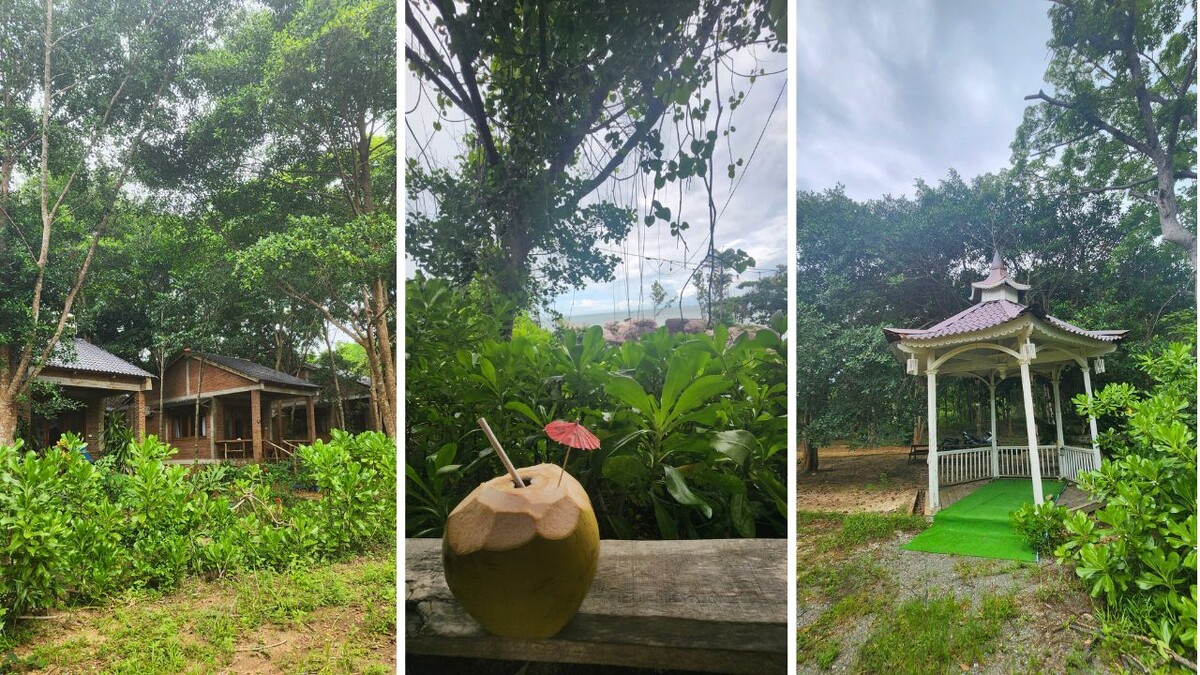
Walking around the area, I came across Anchor Cocktail Bar.
Thatched roof.
Wooden furniture.
A rocky path toward the sea.
An island-bar feeling without much ceremony.
It was the kind of place where you can order something cold, sit down and watch the coast instead of watching a crowd.
Right next door is An Yen Resort.
What interested me here was not luxury.
It was location.
If the quiet, rocky side of Phu Quoc appeals to you, staying here changes the entire experience.
Instead of treating this coastline as a long excursion from Duong Dong or Sunset Town, you wake up beside it.
The accommodation itself is simple, bungalow-style and much more suited to someone looking for quiet than someone expecting a giant resort complex.
STAY ON THE QUIET SIDE OF PHU QUOC
Want to wake up near this coastline instead of driving back across the island?
Stop 7. Agarwood Village: The Stop I Knew Least About

By lunchtime, I had reached Làng Trầm Hương Đảo Yến, the agarwood and swiftlet-nest complex.
This was probably the stop I understood least before arriving.
Most visitors know Phu Quoc for pepper, fish sauce and pearls.
Agarwood was completely different.
The visit explains how Aquilaria trees can develop the dark, fragrant resinous wood known as agarwood, or trầm hương in Vietnamese.
It is valued for fragrance, incense, carving and other traditional uses.
The interesting part for me was seeing the material as something that comes from a long process rather than simply another souvenir sitting on a shelf.
The complex also includes a swiftlet-nest section.
So the experience moves between agarwood, craft, edible bird’s nests and the businesses built around both.
I would go into this stop knowing one thing:
it is part educational attraction and part commercial showroom.
That does not make it bad.
It just helps set expectations correctly.
I would allow roughly an hour if you want to listen, walk around and see the products rather than rushing through.
And one correction that matters: the visitor complex itself is not “20 years old.” The current agarwood village began operating much more recently. The 20-year figure refers to trees in the agarwood-growing area, not the age of the attraction.
Then, at 3:30 PM, June Ended the Road Trip for Me

I left the village at around 3:30 PM.
The sky changed almost immediately.
One minute the day still felt usable.
Then everything darkened.
And the rain arrived like a wall.
Not a little tropical drizzle.
Heavy rain.
Visibility on the road collapsed.
On a scooter, continuing would have made no sense.
So I stopped and waited.
This is the part of June I would not try to turn into a precise timetable.
I cannot tell you:
“Go out from 8:00 AM to 2:00 PM because rain begins after 3:00.”
Weather does not work that neatly.
What I can tell you is that on my June days, starting early gave me a much better margin for outdoor plans.
And on this particular day, 3:30 PM was the moment nature closed the itinerary for me.
What June Taught Me About Phu Quoc
1. Start Outdoor Days Early
If I were planning another June scooter or road-trip day, I would begin in the morning.
An early start gives you more usable daylight and more flexibility if heavy rain arrives later.
2. Pick the Beach for the Conditions You Have
Do not assume that “best beach in Phu Quoc” means the same thing in every month.
My experience of Khem in March and June was dramatically different.
Check the sea.
Look at the sky.
Ask locally.
Then decide.
3. Keep the Afternoon Flexible
I would not schedule five non-refundable outdoor activities back to back on a June afternoon.
Leave room to stop.
Change direction.
Have coffee.
Wait out rain.
Or simply call the day earlier than planned.
4. Low Season Savings Are Not Everywhere
During my stay, the biggest low-season savings I noticed were in accommodation.
Hotels could become much more attractive in price.
I did not see cafés, restaurants, supermarkets and fuel suddenly become 30–50% cheaper just because it was June.
So if you are budgeting for low season, I would look for the strongest savings in where you stay rather than assuming every daily expense will fall.
5. Quiet Is Part of the Trade-Off
Some places felt almost empty.
For me, that was a benefit.
But low-season quiet can also mean fewer people around, changing business hours and a less polished experience at some stops.
If you need every café open, every attraction running perfectly and every beach looking like an advertisement, June probably asks for more flexibility than you want to give it.
Would I Visit Phu Quoc in June Again?
Yes.
I would just plan a different island.
I would not build the trip around a fantasy of uninterrupted beach weather.
I would start early.
Keep the afternoon loose.
Check beach conditions rather than trusting a January photo.
And I would use the quieter season to explore parts of Phu Quoc that are easy to ignore when everything revolves around the most famous resorts.
My final drive turned out to be a fitting goodbye.
Calm Khem Beach.
A hilltop coffee.
Two completely different versions of Bai Sao.
A closed temple.
A rocky local coastline.
A bar I had not planned to find.
Agarwood.
Then a wall of tropical rain.
Not a perfect postcard day.
A much better final memory.
FAQ: Phu Quoc in June
Is June a good time to visit Phu Quoc?
It can be, if you are comfortable with rain and flexible plans. I would not choose June for a trip that depends on perfect beach weather every day, but I enjoyed the quieter atmosphere, changing coastal conditions and lower accommodation prices.
Does it rain all day in Phu Quoc in June?
That was not my experience. I had usable sunny periods and very heavy rain on the same day. June weather can change quickly, so I would plan around flexibility rather than assuming either constant rain or constant sunshine.
Which side of Phu Quoc is better in June?
On my June visits, the southeast coast worked particularly well for me, especially Khem Beach. Conditions vary day to day, so I would still check the actual sea and weather before crossing the island.
Is Khem Beach good in June?
It was excellent on my June visit: calm, clear and dramatically better than some of my March experiences there. That is firsthand experience, not a guarantee for every June day.
Can you ride a scooter in Phu Quoc in June?
Yes, but weather matters. I would start early and avoid continuing through heavy tropical rain when visibility and road conditions deteriorate.
Is Phu Quoc cheaper in June?
Accommodation was where I noticed the biggest savings during my stay. I would not assume that restaurants, cafés, shops and transport become equally cheap.
How should I plan a June road trip on Phu Quoc?
Start in the morning, prioritize the outdoor stops first, keep backup cafés or indoor stops in mind, and leave the later part of the day flexible.
Some links in this article are affiliate links. If you book through them, I may earn a small commission at no extra cost to you.