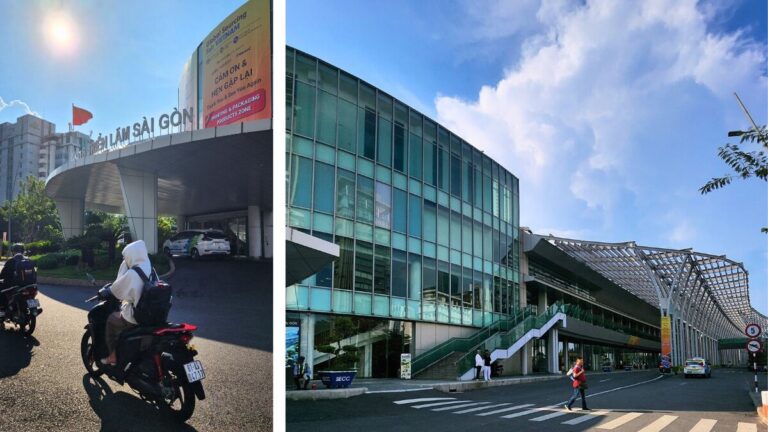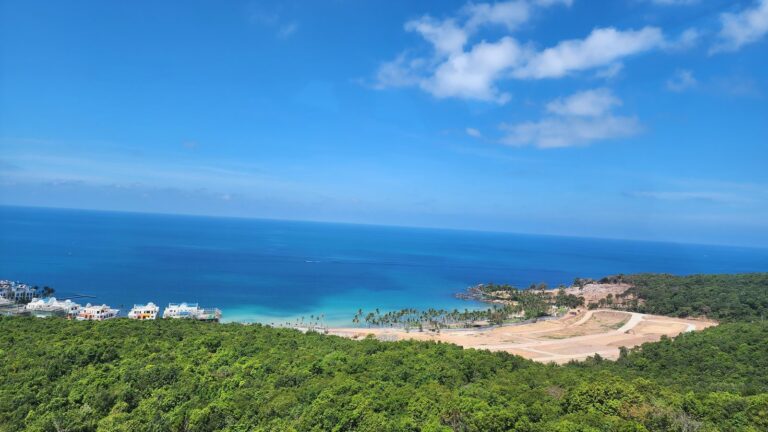
Vietnam vs Cambodia: Which Should You Visit First?
A first route through Vietnam tends to keep moving: several regions linked by overnight trains and short flights, with the scenery changing every few days. A first route through Cambodia can afford to slow down: fewer bases, temple days that start early, and recent history that frames what you see. Both countries can be travelled the other way, but these route shapes get the most from each.
In the Vietnam vs Cambodia choice, ten days suits one country, with Cambodia’s core fitting whole and Vietnam narrowed to one or two regions. With about two weeks or more, the two combine well overland, and finishing at Angkor gives the trip a strong last chapter; the same route also works in reverse.
What each trip feels like
The two countries share a border and, in the south, a dry season, but they ask for different travel styles, and that difference matters more than any single sight.
Vietnam: a route that keeps moving
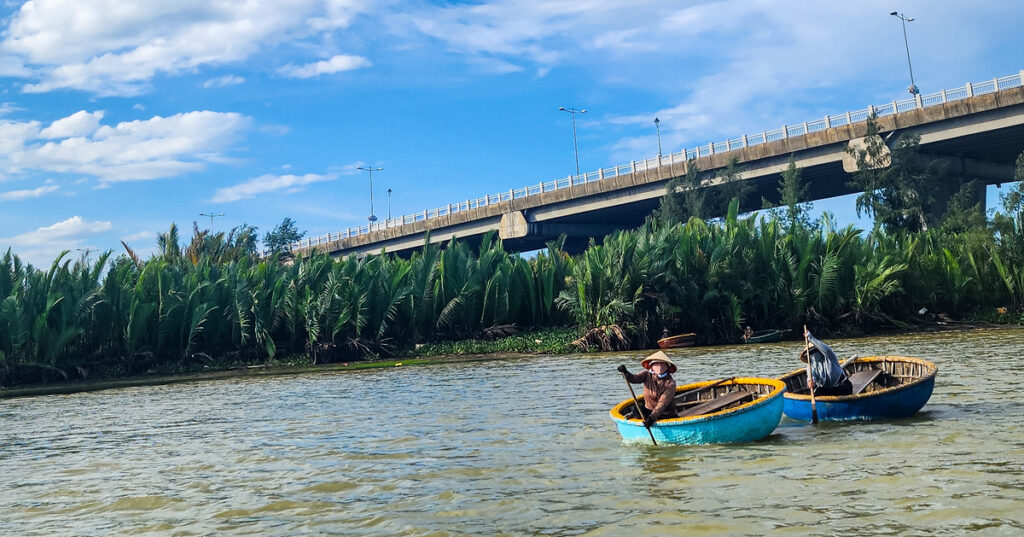
A first Vietnam route strings together several distinct holidays. In the north, Hanoi’s streets and food stalls give way to mountains and karst country: Sapa is an overnight train to Lao Cai followed by a short road transfer, and Ha Long Bay is seen from a cruise boat.
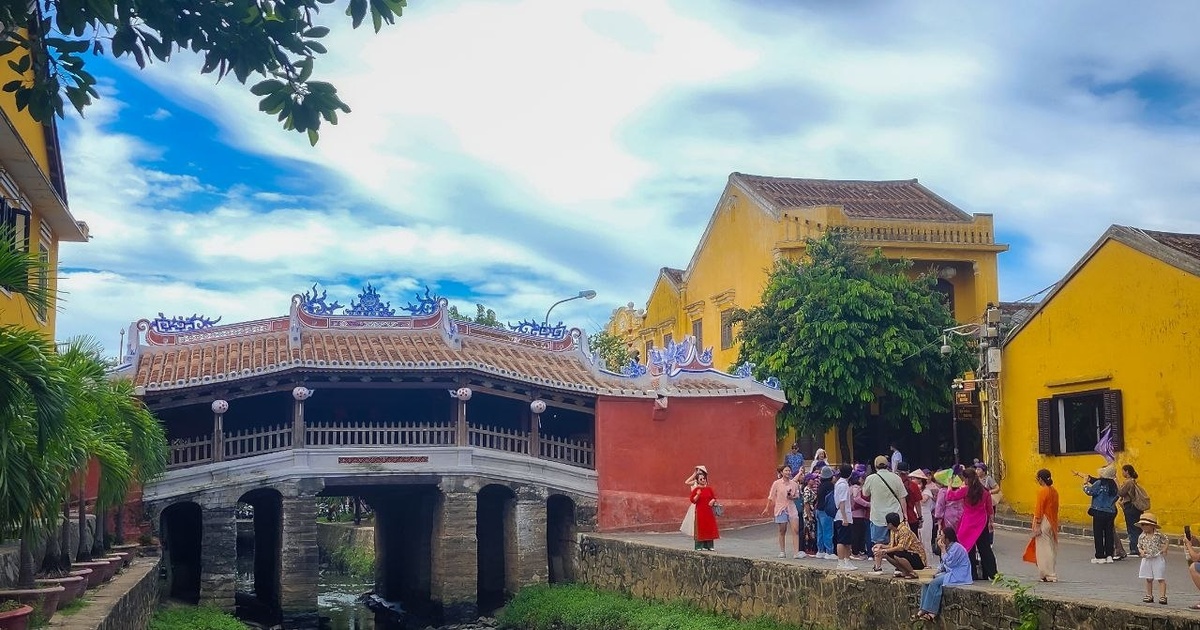
The centre slows down in Hue and Hoi An, heritage towns made for walking old streets over a few nights (the Hoi An travel guide covers where to base yourself), and the daytime train between Hue and Da Nang, about two and a half hours, runs along one of the line’s scenic stretches. In the south, Ho Chi Minh City (HCMC) is large and fast-moving, and the Mekong Delta turns the days over to boats, river towns and markets. Phu Quoc adds island time off the south coast.
The appeal is variety and momentum. The route itself becomes part of the holiday, and each region feels like a new start. The cost is transit: more packing, more transfers, and every region you add takes days from the others.
Cambodia: a route that can slow down
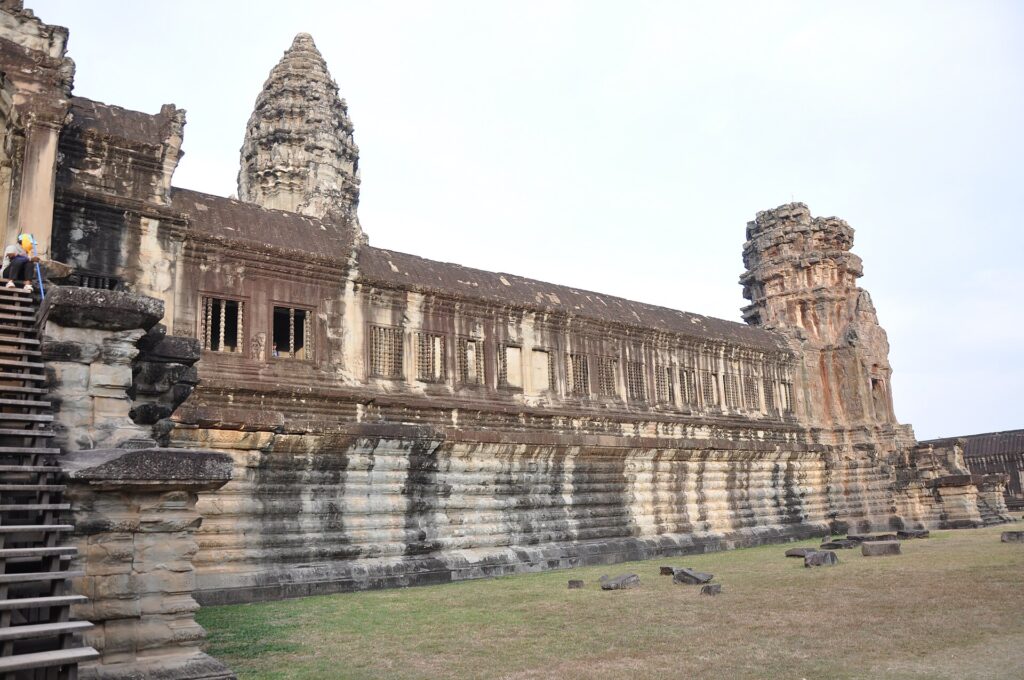
A Cambodia route can work the other way, with fewer bases and longer stays. Siem Reap is a three-day stay built around Angkor. The park opens at 05:00, so temple days begin early and leave the hottest hours for rest, a market or a cooking class. Getting around is by tuk-tuk or remorque, bookable through Grab in the main towns, which gives the days an open-air, unhurried rhythm.
Phnom Penh brings the country’s modern history into focus through its museums and the Khmer Rouge years, a more reflective stop, and a day in Phnom Penh fits the main sites into one visit. Battambang is rural and quiet, and the Tonle Sap lake adds a day on the water. In the south, Kampot and Kep close the trip with a river town, pepper country and a quieter coast; the Kampot travel guide shows what a few days there look like.
The appeal is depth: time for a place to sink in, history that gives the temples and the capital their weight, and room for slow days. The cost is fewer contrasts in scenery and day-long bus rides between bases.
This article contains affiliate links. If you book through one of them, I may earn a commission at no extra cost to you.
Compare guided Angkor temple tours from Siem Reap, including sunrise departures, and check the duration and inclusions for your dates:
Food on each side
Vietnam runs on street food: noodle soups, rice dishes and banh mi as a quick baguette meal, eaten at stalls and markets that make meals part of the sightseeing. Khmer cooking uses Kampot pepper, and a cooking class in Siem Reap is one way to learn it. In both countries, stalls and markets run on cash.
Vietnam vs Cambodia, row by row
| Vietnam | Cambodia | |
|---|---|---|
| Typical pace | Multi-region routes change base every few days; one region is slower | Fewer bases and longer stays suit the core; tuk-tuk days |
| Typical days | City streets, mountains, heritage towns or delta boats, by region | Early temple days, history in Phnom Penh, river and countryside in the south |
| Trip shape | Long north–south; Hanoi–HCMC about 2 h by air | Compact core; Siem Reap–Phnom Penh about 6 h by bus |
| First-visit length (planning estimate) | 2+ weeks end to end; less means picking regions | About a week for the core; 10 days adds the south |
| Visa | Visa-free 45 days (UK, much of Europe); e-visa for US, Canada, Australia | E-visa or visa on arrival, 30 days |
| Money | Vietnamese dong | US dollars widely used, riel as change |
| Dry-season fit | Varies by region; south dry about Dec–Apr | Nov–Apr; most comfortable Nov–Feb |
How many days each country needs
A week can cover Siem Reap and Phnom Penh; a Vietnam trip of the same length needs a narrower regional focus. The day counts below are planning estimates built on travel times.
Vietnam: a long country you sample
Hanoi and HCMC are about two hours apart by air, and the fastest train between them takes well over 30 hours. With less than about two weeks, choose one or two regions, such as the north plus the centre, or the centre plus the south, and give each a few unhurried nights. Covering the country end to end needs at least one internal flight and around two weeks or more, before Cambodia enters the plan.
Cambodia: a compact core that fits a week
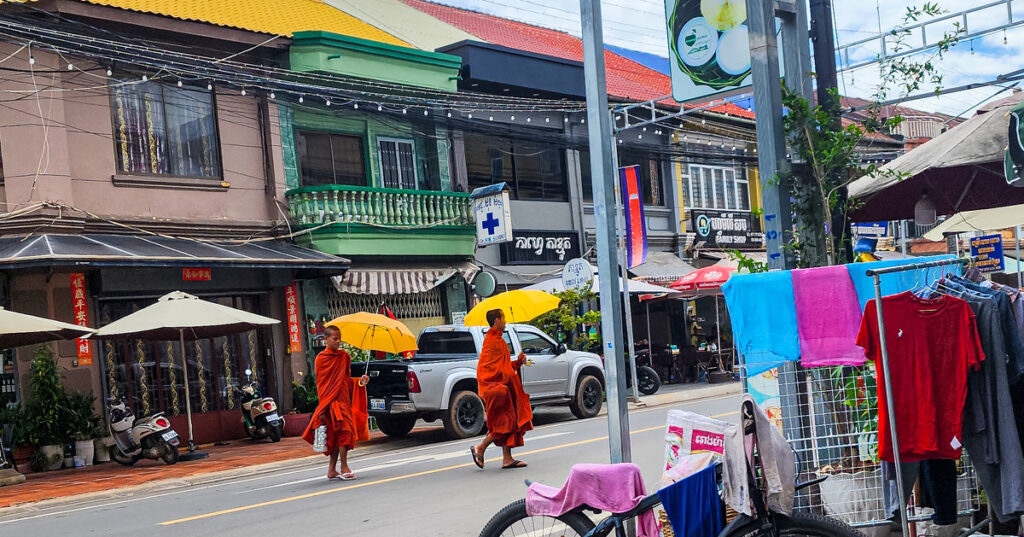
Siem Reap and Phnom Penh are about six hours apart by bus, a day’s travel. A direct flight of about 55 minutes exists, but both airports sit well outside town, which narrows the saving. Siem Reap needs about three days, which matches the three-day Angkor pass, the sensible default for a first visit; the Angkor Wat guide shows how a temple day is structured within that. About a week covers Siem Reap and Phnom Penh comfortably, and ten days adds Kampot and Kep, or Battambang. That is the key asymmetry for a short trip: ten days covers the whole of Cambodia’s core and only part of Vietnam.
Which is easier for a first trip or a solo traveller?
Both suit independent first-timers and solo travellers. In Vietnam’s cities, Grab and Xanh SM cover most short rides and are the safer choice over unlicensed taxis. In Cambodia, Grab offers cars, tuk-tuks and remorques in Phnom Penh, Siem Reap, Sihanoukville and Kampot, and PassApp also reaches Battambang and Kampong Cham; app fares remove the haggling. Favour daytime buses for the long legs in both countries, which, with app rides in town, keeps fare negotiations after dark to a minimum.
Cambodia’s airports add time. Phnom Penh is served by Techo International Airport (KTI), about 20–26 km from the centre, and Siem Reap Angkor International (SAI) is about 50 km from town, roughly 1 hour 15 minutes by road, with an airport bus at US$8.
As of October 2026, the US rates Vietnam at Level 1 and Cambodia at Level 2, with Level 4 for areas within 50 km of the Thai border; the UK advises against all but essential travel within 20 km of that border, and the usual Siem Reap, Phnom Penh and southern coast circuit sits outside that zone. In both countries, carry your bag on the side away from the road and use app-booked rides at night, especially as a solo woman.
Costs to plan for in each country
Budget for the Angkor pass separately, and allow for cash withdrawals and card charges. Cambodia’s currency is the riel, but US dollars are widely used, with change often in riel; carry clean, small dollar notes, since worn ones can be refused. ATMs charge per withdrawal, and city hotels and restaurants often add around 2% for cards. Vietnam prices everything in dong; change money only at official counters.
Cambodia’s big fixed cost is the Angkor pass: US$37 for one day, US$62 for three days and US$72 for seven days. The three-day pass must be used within 7 days, the seven-day pass within 30.
When the two countries line up
Cambodia is dry from November to April, most comfortable from November to February, and very hot inland in April, around 35–39 °C. Southern Vietnam, including HCMC and the Mekong, is dry roughly from December to April, so the overland combination is at its best from December to March.
Central Vietnam (Hue, Hoi An, Da Nang) is driest from about February to August; heavy rain, floods and storms peak from September to November, and showers can linger into December or January, so a route through Hoi An or Hue in those months needs spare days. Hanoi and the north turn cool from December to February, with the mountains dropping below 10 °C, so pack layers for a winter start there.
Combining them: order, borders and visas
With Thailand’s land crossings into Cambodia suspended, Vietnam is the practical land neighbour, and the order follows from the route you want. Starting in Vietnam and finishing at Angkor fits an open-jaw ticket into Hanoi or HCMC and out of Siem Reap, puts the overland leg in the south during the December to March window the two share, and ends the trip on the temples.
Starting in Cambodia makes as much sense when the better international fare lands in Phnom Penh or Siem Reap, or when you would rather finish in Hoi An or on a Vietnamese beach. Whichever way you go, Vietnam does not issue visas on arrival at land borders, so have the Vietnam visa or exemption sorted before the bus or boat; Cambodia sells visas on arrival at its crossings from Vietnam.
Two ticket shapes follow. The longer one flies into Hanoi, travels south, crosses overland and flies out of Siem Reap. The two-week version is a southern loop: HCMC and the Mekong, Phnom Penh, then Siem Reap, flying out from there or back via HCMC, since direct flights link Siem Reap with both HCMC and Hanoi. HCMC to Phnom Penh is about an hour in the air, landing at Techo, but door to door it saves little over the bus.
- Moc Bai–Bavet: the default, with buses from HCMC to Phnom Penh taking about 6–7 hours including the border.
- Chau Doc–Phnom Penh by Mekong boat: a daily boat of about 6.5 hours through the Vinh Xuong–Kaam Samnor crossing, costing much more than the bus (1.58–1.64 million dong on the operator’s current fare table) and in practice needing a night in Chau Doc first. It turns the border into a river journey.
- Ha Tien–Prek Chak: the link between Phu Quoc and Kampot, covered step by step in the routes from Phu Quoc to Siem Reap and from Phnom Penh to Phu Quoc.
Vietnam paperwork. Passports from the UK and much of Europe, plus Japan and South Korea, get 45 days visa-free under two schemes currently running to 2028. Most others, including US, Canadian and Australian travellers, need an e-visa: up to 90 days, US$25 single or US$50 multiple entry, about 3–5 working days, from the Immigration Department’s own portal ending in .gov.vn.
The e-visa fixes your entry and exit gates, and all three crossings above are e-visa gates (Moc Bai, Vinh Xuong, Ha Tien), so name the one you will use, choose multiple entry if the route returns to Vietnam, and print it, since operators such as Giant Ibis ask for a paper copy.
Phu Quoc has its own island-only exemption, set out in the rules for visiting Phu Quoc. Flying into Hanoi, Ho Chi Minh City, Da Nang, Nha Trang (Cam Ranh) or Phu Quoc, complete the free pre-arrival declaration at prearrival.immigration.gov.vn within the three days before you land, including on a visa-free passport or the Phu Quoc exemption, and keep the QR code for immigration.
Cambodia paperwork. Most visitors need a 30-day visa: US$30 in clean US dollar notes on arrival at airports and land borders, with a passport photo, or a US$36 e-visa from evisa.gov.kh, which is valid only at the entry points listed for it, so at any other crossing plan on the visa on arrival. Air arrivals fill in the free e-Arrival card at arrival.gov.kh within seven days before landing; land borders use a paper form. Both countries want six months’ passport validity.
With the direction and crossing fixed, look for flights into Hanoi or HCMC and out of Siem Reap (or out of Phnom Penh’s Techo), and keep the airports and land gate consistent with the gates on your e-visa.
Which to visit first: Vietnam vs Cambodia by trip length
Read the rows as rules of thumb: the days you have pick the row, and the travel times above set the cut-offs. Solo and budget travellers can follow any of them.
| Trip length | Plan | Route (start → finish) | Suits |
|---|---|---|---|
| About 10 days | One country | Cambodia: Siem Reap → Phnom Penh → Kampot/Kep or Battambang; or one or two Vietnamese regions | History and slower days: Cambodia. Variety and movement: Vietnam |
| About 2 weeks | Southern Vietnam + Cambodia’s core | HCMC and the Mekong → Phnom Penh → Siem Reap, fly out of Siem Reap; best Dec–Mar | First-timers who want both countries without internal flights in Vietnam |
| 3 weeks or more | Both at a comfortable pace | Hanoi → centre → south → overland → Angkor, fly out of SAI; the reverse works with the Vietnam visa or exemption in hand before the border | Travellers who want Vietnam’s changing regions and Cambodia’s slower depth in one trip |
| Already in Phu Quoc or on Vietnam’s south coast | Cambodia from the south | Ha Tien–Prek Chak → Kampot → Phnom Penh → Siem Reap | Island and south-coast travellers adding Cambodia on a visa on arrival |
Every row that includes Siem Reap needs the Angkor pass, and the three-day pass chosen earlier fits a first visit. Before buying through the Trip.com listing, check which pass it covers and compare the total with the official prices in the cost section.
Then book the first base your row starts in: Hanoi, HCMC, Siem Reap or Phnom Penh. On the Cambodian side, after a long transfer in from Techo or SAI, a central hotel with a clear check-in time makes the first evening easier; compare hotels by distance from the centre and read the cancellation terms before paying.
Questions that come up when planning both
Can you still travel overland from Bangkok to Siem Reap?
As of October 2026, land crossings between Thailand and Cambodia remain suspended. Flights between Bangkok and Siem Reap still run, so fly in or arrive overland from Vietnam.
Are landmines and unexploded ordnance a risk for visitors?
In rural Cambodia, unmarked mined areas remain, and Siem Reap province is among the provinces the US lists for unexploded ordnance; in Vietnam, ordnance remains in former battlefields, especially in central Vietnam. The main temples and town sites are on well-used paths, so keep to them and to marked roads in the countryside.
Can you re-enter Vietnam visa-free after a side trip to Cambodia?
Coming back into Vietnam counts as a new entry. E-visa holders need a multiple-entry e-visa with the return gate listed on it; visa-exempt travellers rely on the exemption being granted again at the border, and because published guidance on back-to-back exempt entries is inconsistent, anyone building a loop around it should confirm with a Vietnamese embassy first.