Beng Mealea Temple: Jungle Ruins, History & How to Visit
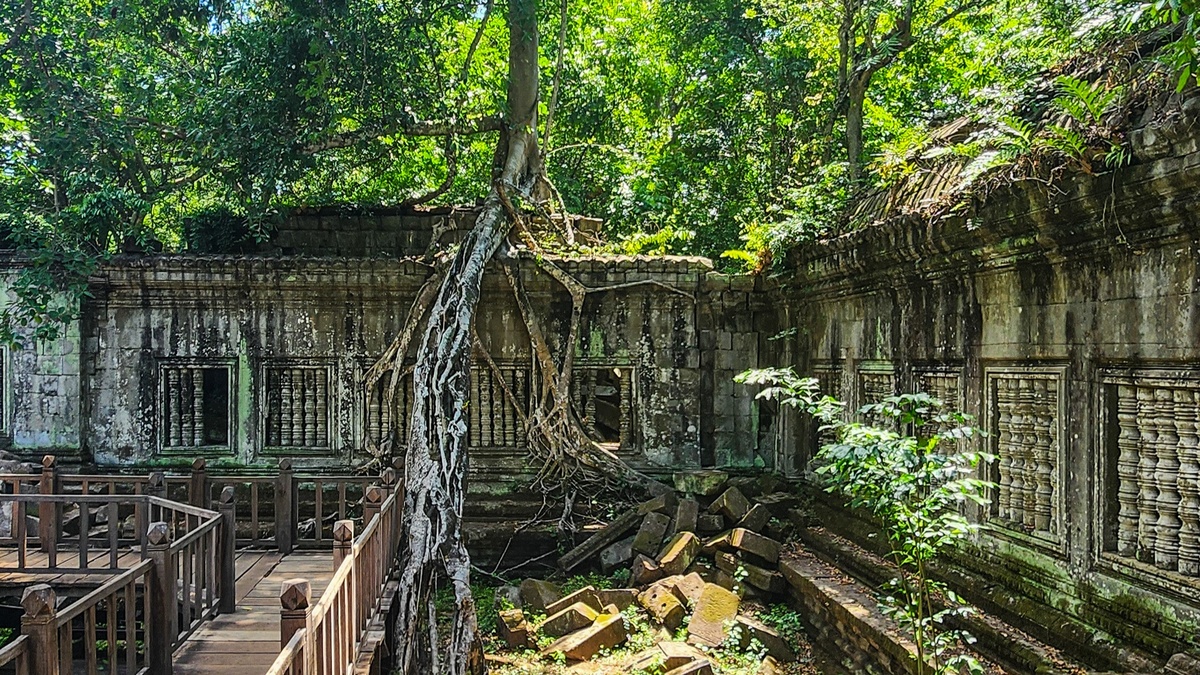
Beng Mealea is one of the most atmospheric temples you can visit from Siem Reap. Collapsed galleries disappear beneath enormous trees, sandstone blocks lie where roofs and walls once stood, and roots grow directly through sections of the ruins.
It feels very different from Angkor Wat. There is less symmetry to admire from a distance and much more time spent moving through the remains of the structure, trying to understand where galleries, courtyards and sanctuaries once connected.
Beng Mealea is also far enough from the main Angkor circuits to feel like a separate excursion. I visited it on the same day as Koh Ker, and I still think that is the most logical way to see both sites from Siem Reap.
If you have already visited Angkor Wat, Bayon and Ta Prohm and want to see another side of Khmer architecture, Beng Mealea is one of the best additions to a longer stay in Siem Reap.
Beng Mealea Quick Guide
| Location | Around 70 km from Siem Reap |
| Period | 12th century |
| King | Suryavarman II, with later modifications under Jayavarman VII |
| Religion | Primarily Hindu, with later Buddhist additions |
| Temple compound | Around 14 hectares |
| Ticket | $10 standalone Beng Mealea ticket |
| Opening hours | 6:00 AM to 6:30 PM |
| Time needed | Around 1.5 to 2 hours |
| Best time to visit | Morning |
| Best combination | Beng Mealea + Koh Ker |
| From Siem Reap | Best as a half-day or full-day trip |
Where to Stay in Siem Reap
There is little reason to change accommodation specifically for Beng Mealea. Staying in Siem Reap is much more convenient if you are also visiting Angkor Wat, Angkor Thom, Ta Prohm and the other main temples, and Beng Mealea can easily be visited as a day trip.
Where Is Beng Mealea?
Beng Mealea lies northeast of Siem Reap, near the southern side of Phnom Kulen and well beyond the standard Small and Grand Circuits around Angkor.
The road journey is roughly 70 kilometres depending on where you start in Siem Reap, so this is not a temple you casually add at the end of an Angkor Wat day. It works much better as a dedicated excursion.
Historically, however, Beng Mealea was not an isolated monument.
The temple stood along the Royal Road east of Angkor, an important route that continued toward Preah Khan Kompong Svay. Ancient bridges, temples and settlements along the road show how Beng Mealea was connected to the wider transport and political network of the Khmer Empire.
That context makes the location much easier to understand. Today it may feel remote from Siem Reap, but in the 12th century it occupied an important position within a much larger organised landscape.

Who Built Beng Mealea?
Beng Mealea was built in the 12th century during the reign of Suryavarman II, the king most closely associated with Angkor Wat.
The temple was later modified during the reign of Jayavarman VII.
Unlike some Khmer temples, Beng Mealea does not preserve a foundation inscription that gives us a neat account of its original name, construction date and religious function. Much of what historians know therefore comes from its architectural style, sculpture and comparison with other monuments from the same period.
Its strong similarities with Angkor Wat explain why the two temples are so often discussed together.
Both belong to one of the most important periods of monumental construction in Khmer history, although Beng Mealea presents that architecture in a completely different condition today.
Was Beng Mealea a Prototype for Angkor Wat?
One of the most repeated claims about Beng Mealea is that it was a prototype or practice version of Angkor Wat.
It is an attractive idea, but it is not something we can state with certainty.
The two temples share important architectural features, including concentric galleries, cruciform elements, extensive sandstone construction and a large surrounding moat. Beng Mealea clearly belongs to the same architectural tradition.
Earlier interpretations therefore suggested that builders may have tested ideas here before applying them on a much larger scale at Angkor Wat.
The problem is chronology. Without a decisive foundation inscription, scholars have disagreed over the exact sequence of construction. Some stylistic studies have even suggested that Beng Mealea may have been completed after parts of Angkor Wat.
It is more accurate to think of Beng Mealea as a close architectural relative of Angkor Wat rather than a confirmed prototype.
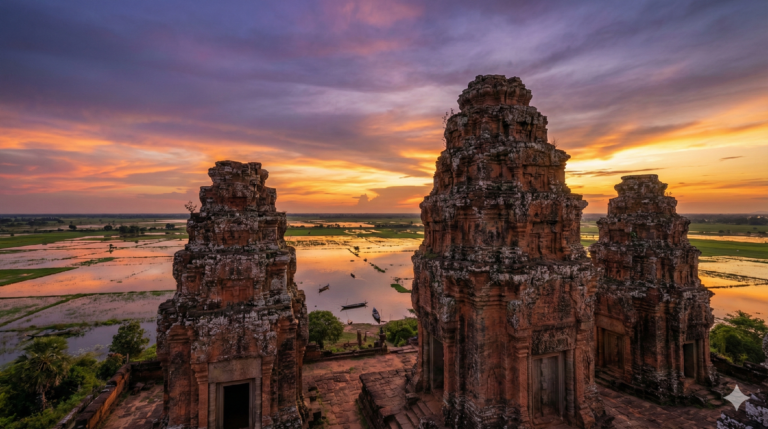
If you want to compare it with a more intact Angkorian temple from a different period, my guide to Pre Rup Temple in Siem Reap shows how different the temple-mountain tradition could look more than a century earlier.
What Makes Beng Mealea Different From the Main Angkor Temples?
Beng Mealea is not special simply because it is ruined. Many Khmer temples survive in damaged condition.
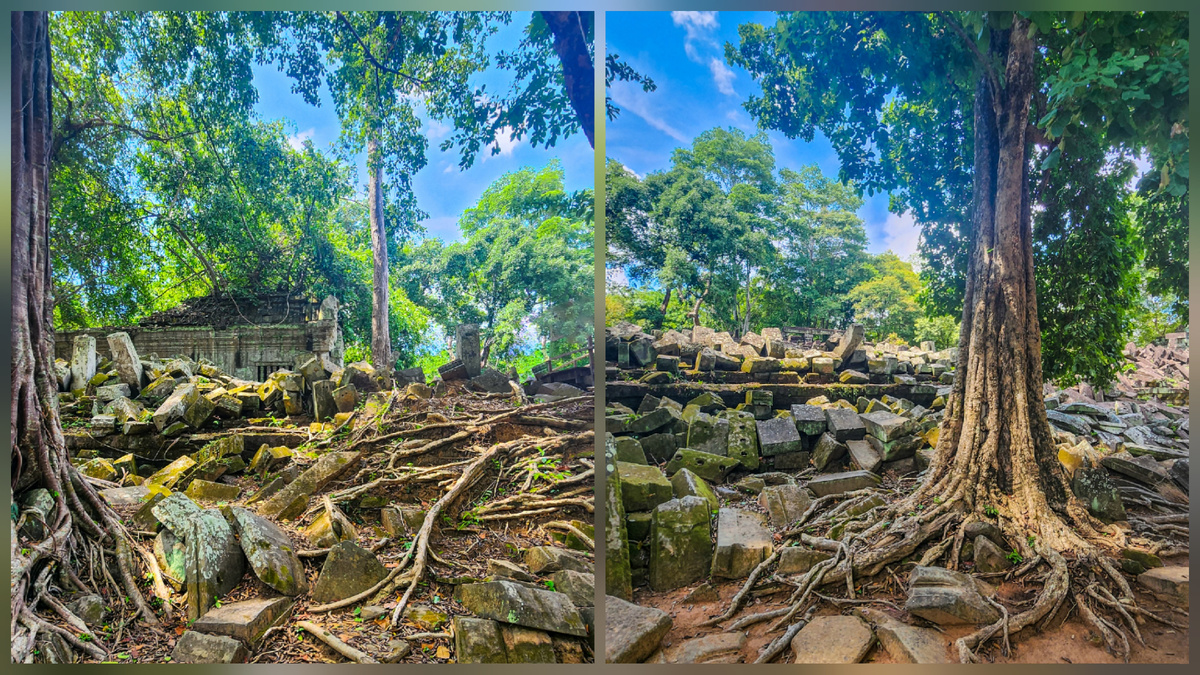
What changes the experience here is the scale of the collapse and the way the forest has become integrated into the structure.
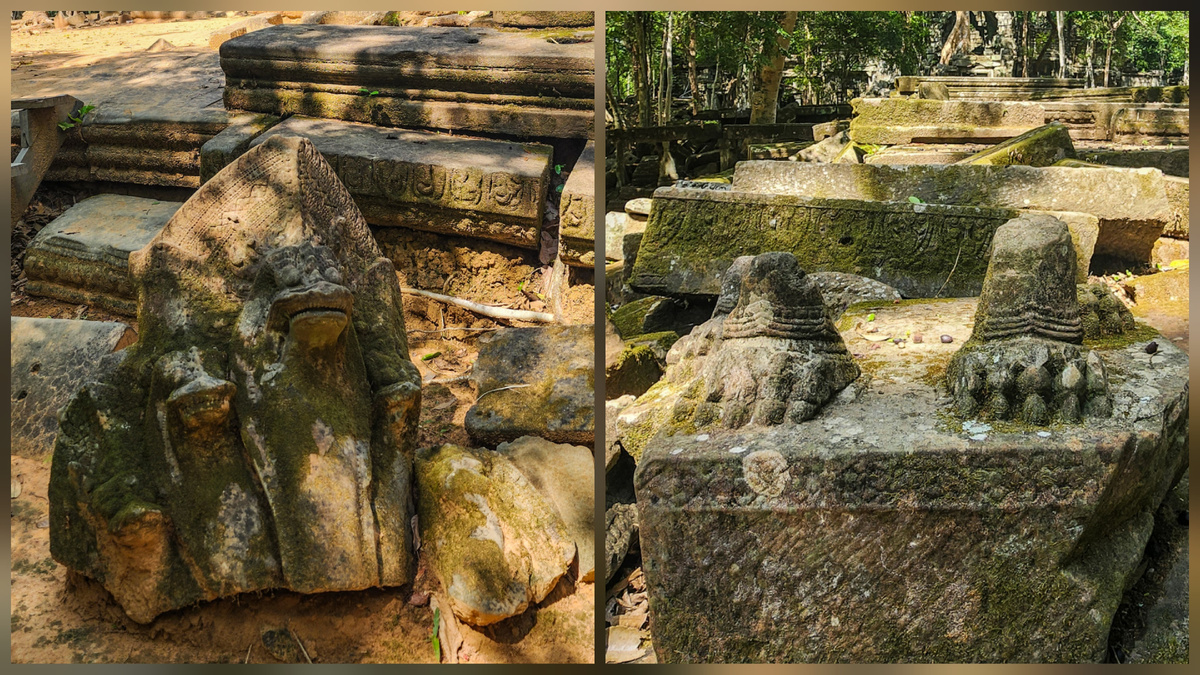
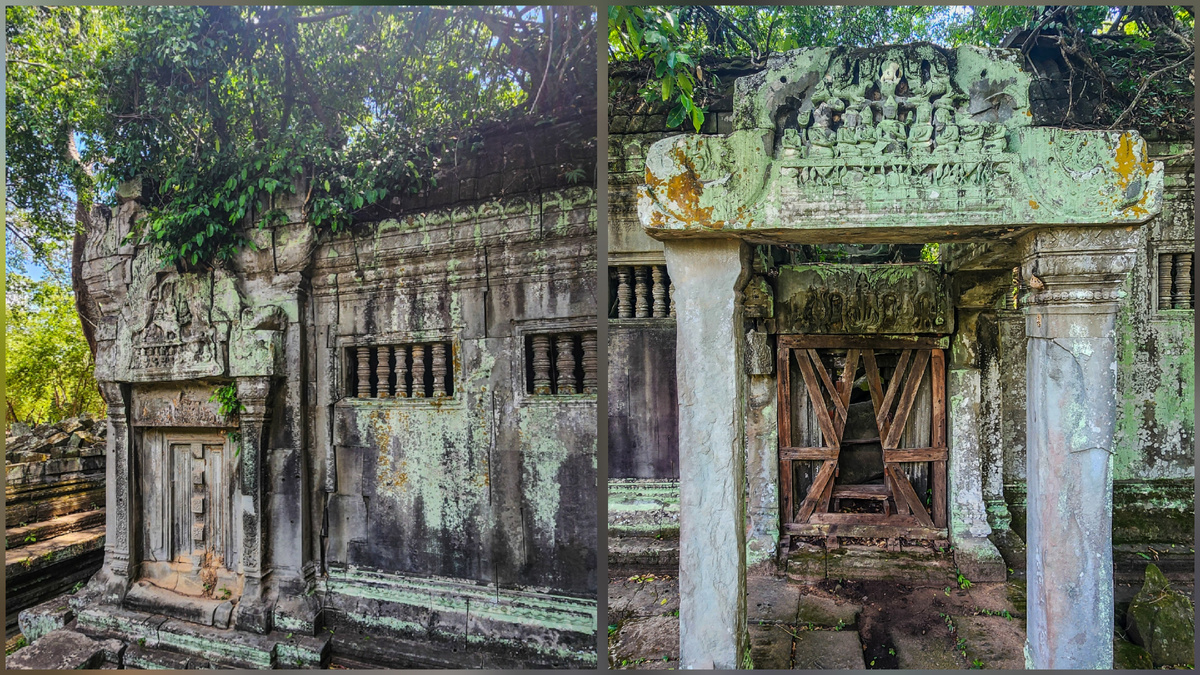
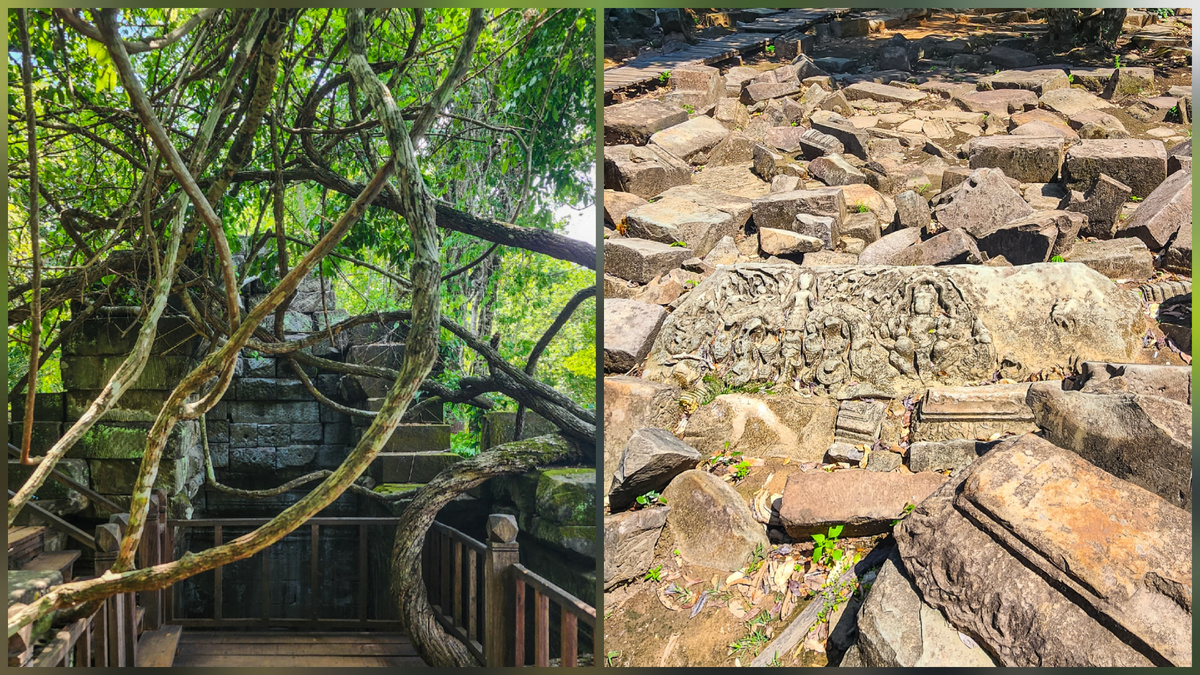
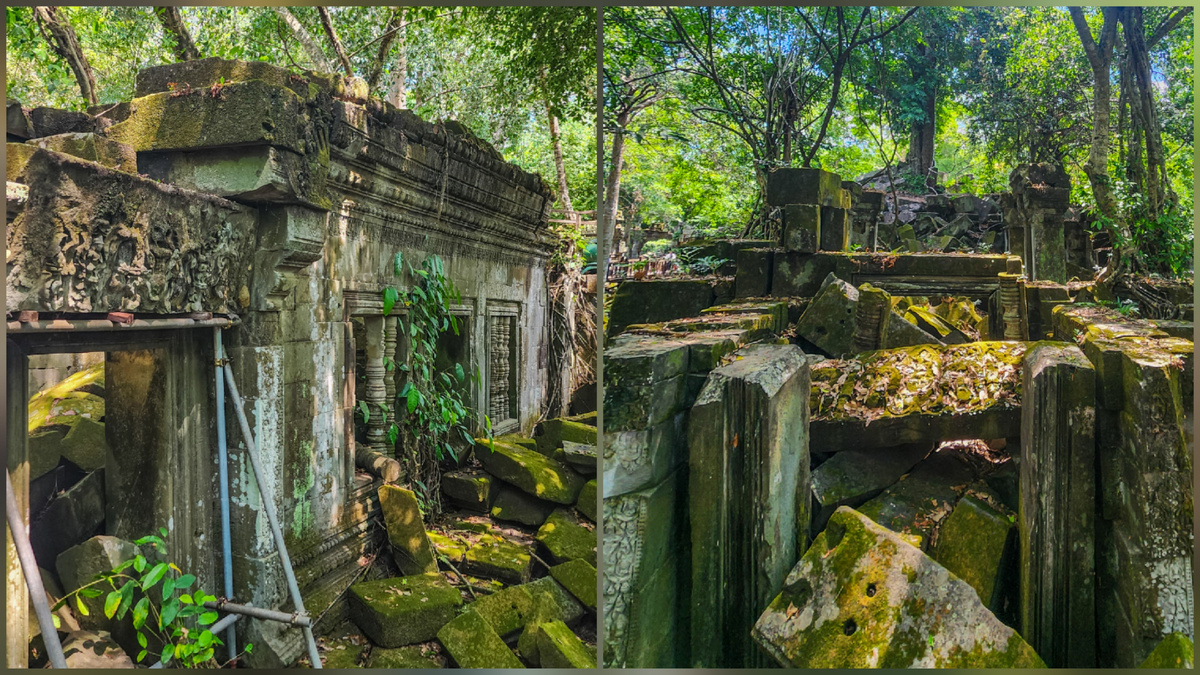
Large sections of galleries have fallen inward. Roof blocks lie in piles across former rooms and passageways. Trees rise through the architecture, roots cross walls and fragments of carved stone appear between vegetation and collapsed masonry.
At Angkor Wat, the layout is easy to read. Long galleries, towers, courtyards and axial approaches guide you through the complex.
At Beng Mealea, you spend much more time reconstructing the temple mentally as you walk.
That makes it feel less formal and much less predictable.
Beng Mealea Is Not an “Untouched” Ruin
Older descriptions often present Beng Mealea as a temple that was simply rediscovered in the forest and left exactly as it was.
That is no longer accurate.
Conservation work has been carried out at the site for years, and several recent projects have significantly improved access and stabilised vulnerable parts of the temple.
The eastern causeway, once badly damaged, underwent a major restoration completed in 2025. The project repaired its foundations, floor, structural stonework and naga balustrades.
In 2026, a new 189-metre wooden walkway was also completed inside the temple. It replaced an older structure and gives visitors a safer route through parts of the collapsed complex while reducing direct pressure on the archaeological remains.
Beng Mealea still feels dramatically ruined, but it is better described as a carefully managed archaeological site than an untouched jungle ruin.
For visitors, this is a good development. You still get the atmosphere of the collapsed temple without needing to climb randomly across unstable stone.


The Jungle Is Part of Beng Mealea
Ta Prohm is probably Cambodia’s most famous example of trees growing through ancient architecture, but Beng Mealea creates a different impression.
At Ta Prohm, individual trees have become famous photo spots. At Beng Mealea, the forest feels more continuous.
Vegetation surrounds entire sections of the complex. Moss and plants cover stone surfaces, tree roots pass between architectural blocks and the canopy keeps parts of the temple in deep shade even during the day.
The effect is particularly strong during and after the rainy season, when the vegetation becomes denser and greener.
Beng Mealea is therefore less about finding one famous tree or one iconic viewpoint. The atmosphere comes from the entire site.
If you enjoyed the relationship between stone and forest at Ta Prohm, Beng Mealea takes that idea much further.
Carvings to Look For
Because the ruined architecture gets so much attention, it is easy to overlook Beng Mealea’s surviving carvings.
The temple contains scenes and decorative elements connected with Hindu mythology, including imagery from the Ramayana and the Churning of the Ocean of Milk.
The Churning of the Ocean of Milk is one of the most important Hindu mythological scenes represented in Khmer art. Gods and demons use the serpent Vasuki to churn the cosmic ocean in search of the nectar of immortality.
If you have already visited Angkor Wat, you will recognise the subject from its enormous bas-relief galleries.
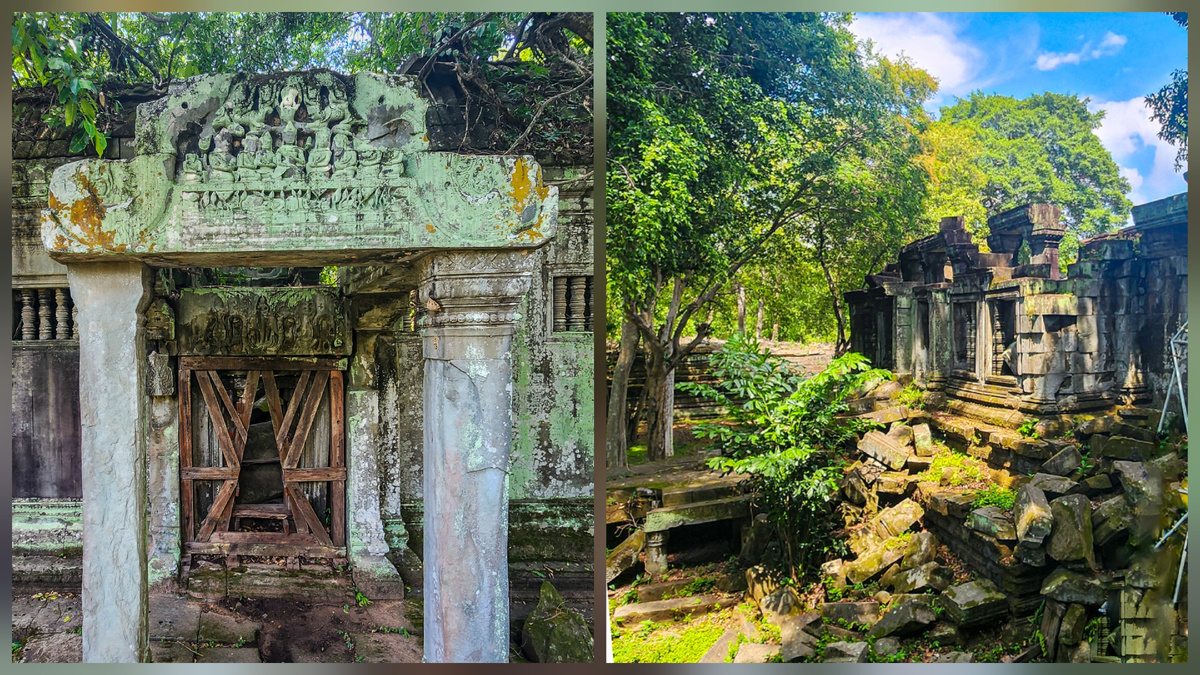
At Beng Mealea the carvings are more fragmented and appear among collapsed architecture rather than along a long preserved narrative wall. That makes them easier to miss, so it is worth slowing down and looking at lintels, pediments and blocks around the visitor route rather than concentrating only on the trees.
Landmines and Beng Mealea Today
The wider region around Beng Mealea was affected by Cambodia’s decades of conflict, and landmines were historically a serious issue in the area.
The tourist site and established visitor routes have since been cleared and managed for public access.
You do not need to treat an ordinary visit to Beng Mealea as dangerous because of landmines, but you should stay within recognised visitor areas and respect barriers.
There are other good reasons not to wander into the forest. The site contains unstable masonry, uneven ground, hidden drops and fragile archaeological remains.
The marked route gives you access to the main areas without needing to explore off-trail.
Indiana Jones, Lara Croft and Beng Mealea
Beng Mealea is frequently described as an “Indiana Jones temple” or compared with Lara Croft: Tomb Raider.
The comparison is easy to understand. Dark galleries, fallen blocks, huge roots and partially collapsed passages create exactly the sort of setting people associate with adventure films.
But Tomb Raider was not filmed at Beng Mealea. The Cambodian locations associated with the film were in the main Angkor area, particularly Ta Prohm.
Beng Mealea simply looks as though it could have been used.
Older travel stories also sometimes describe scrambling freely over collapsed stone and squeezing through almost inaccessible passages. The current visitor experience is more controlled, particularly after the installation of improved walkways.
That does not make the temple less interesting. It makes it safer to explore without treating a fragile archaeological site as an obstacle course.
Local Beliefs and the Sacred Landscape
Ancient temples in Cambodia are not always viewed only as archaeological remains.
Traditional beliefs may connect old trees, ruins and particular places with neak ta, protective spirits associated with the landscape and local communities.
You may see small shrines, incense or offerings around historic sites. These are not necessarily decorations created for visitors. They can be part of active local religious practice.
The easiest rule is simply to treat the site as both an archaeological monument and a place that may still hold spiritual importance for people living nearby.
Do not move offerings, climb onto restricted structures for photographs or disturb people who are praying.
How Long Do You Need at Beng Mealea?
Around 1.5 to 2 hours is comfortable for most visitors.
You can move through the principal route faster, but there is little reason to rush. Beng Mealea rewards time spent looking into collapsed galleries, examining carvings and understanding how the surviving structures fit together.
The drive from Siem Reap is significant anyway, so saving half an hour inside the temple does not make much difference to the overall day.
If you plan to continue to Koh Ker, the better strategy is to leave Siem Reap early rather than racing through Beng Mealea.
Beng Mealea Tickets and Opening Hours
As of October 2026, Angkor Enterprise lists a standalone Beng Mealea ticket for $10.
The official opening hours are currently 6:00 AM to 6:30 PM.
Ticket arrangements at Beng Mealea have changed in the past, which explains why older travel blogs often give conflicting information about whether the temple is included in an Angkor Pass.
For that reason, I would always check the current Angkor Enterprise ticket information shortly before visiting rather than relying on an article written several years ago.
Beng Mealea + Koh Ker: The Best Day Trip
If you also want to visit Koh Ker, combining the two archaeological sites in one day is the most practical option.
They are far enough from Siem Reap that making two separate day trips usually makes little sense.
The contrast between them also works very well.
Beng Mealea is low, enclosed and heavily affected by collapse and vegetation. Koh Ker is a much larger archaeological landscape and feels far more open. Its most famous monument, Prasat Thom, rises above the site as a seven-tiered stepped pyramid.
Koh Ker also has a very different history. It briefly served as a royal capital in the 10th century and was inscribed as a UNESCO World Heritage Site in 2023.
I would leave Siem Reap early, visit Beng Mealea first, continue to Koh Ker and return to the city later in the day.
I visited this area as part of my Phu Quoc to Siem Reap trip and three days around Angkor, where you can see how Beng Mealea and Koh Ker fit into the wider itinerary.
How to Get to Beng Mealea From Siem Reap
For most travellers, a private car or organised tour is the easiest option.
A tuk-tuk is technically possible, but this is a much longer road journey than the normal Angkor temple circuits. A car is considerably more comfortable, particularly if you are continuing to Koh Ker.
A private driver also gives you more flexibility over how long you spend at each site.
If you prefer not to arrange the route yourself, full-day Beng Mealea and Koh Ker tours are widely available from Siem Reap.
Best Time to Visit
Morning is the easiest time to visit Beng Mealea.
Temperatures are usually more comfortable, and starting early leaves enough time for Koh Ker without rushing.
The forest canopy provides shade inside parts of the temple, but Cambodia’s heat and humidity still make the middle of the day tiring.
During the wetter months, the vegetation can be particularly impressive, although stone and wooden surfaces may also become slippery.
Comfortable shoes with decent grip are more useful here than sandals.
Is Beng Mealea Crowded?
Beng Mealea is generally less crowded than Angkor Wat or Ta Prohm, but I would not visit expecting to have the entire temple to yourself.
Road access has improved, the site is well known, and the Beng Mealea + Koh Ker combination has become a standard day trip from Siem Reap.
Visitor levels depend on the season and time of day. Early morning is usually the best option if you prefer a quieter experience.
The temple is still worth visiting even when other people are there. Its scale and layout mean visitors tend to spread through different sections rather than concentrate around one central viewpoint.
Who Should Visit Beng Mealea?
Beng Mealea makes the most sense if you have enough time in Siem Reap to go beyond the essential Angkor sights.
It is particularly worth visiting if you enjoy archaeological sites where the ruined condition is part of the experience, want to see more of the Khmer Empire beyond the main capital, or plan to combine it with Koh Ker.
I would give the major Angkor temples priority on a short first trip.
If you only have one day in Siem Reap, Beng Mealea involves too much driving to replace Angkor Wat, Bayon, Ta Prohm and the central Angkor sites.
Mobility is also worth considering. The newer walkways have improved access, but this is still a ruined temple with stairs, uneven surfaces and changes in level.
Is Beng Mealea Worth Visiting?
Yes, especially if you combine it with Koh Ker.
Beng Mealea adds something genuinely different to a Siem Reap temple itinerary. Instead of another carefully preserved monumental complex, you see a large 12th-century temple where collapse, forest and modern conservation all remain visible.
It is no longer the completely untouched ruin described in older travel accounts, but I do not think that reduces its appeal. Recent restoration and new walkways make the temple easier to visit while preserving the atmosphere that makes it distinctive.
I would not drive this far simply because someone promises an empty “Lara Croft temple”. Beng Mealea is more interesting than that comparison. Its architecture links it directly with the age of Suryavarman II and Angkor Wat, its position shows how far the Khmer road network extended beyond the main capital, and its ruined state makes the construction of a Khmer temple unusually easy to see.
For another quieter temple outside the most famous Angkor stops, Phnom Krom offers a completely different experience, with early Angkorian history and wide views toward Tonle Sap.
Continue Planning Your Siem Reap Trip
If you are building a longer Cambodia itinerary, these guides connect naturally with Beng Mealea:
- Koh Ker Cambodia: Visiting the Ancient Khmer Capital from Siem Reap
- Phnom Krom Temple in Siem Reap: History, Sunset & How to Visit
- Pre Rup Temple in Siem Reap: History, Architecture & How to Visit
- Phu Quoc to Siem Reap: Overland Border Route + 3 Days Around Angkor
Useful Travel Resources
These are the services I use or check when planning trips and comparing travel options.
Flights
Compare flights to Cambodia and connections through Southeast Asia.
Hotels
Compare accommodation in Siem Reap by location, price and guest rating.
Tours & Activities
Search local attractions, transfers and organised sightseeing.
Tours & Experiences
Compare guided Angkor tours and day trips to Beng Mealea and Koh Ker.
Airport Transfers
Pre-book transport between Siem Reap Angkor International Airport and your accommodation.
eSIM
Arrange mobile data before arriving in Cambodia.
Car Rental
Compare local car rental options where self-driving suits your itinerary.
Travel Insurance
Check travel insurance options before your trip.
This post contains affiliate links. If you book or purchase through one of these links, I may earn a commission at no extra cost to you.