Tuol Sleng Genocide Museum (S-21): History, Terror & the Killing Fields
Tuol Sleng does not look like a place built for terror.
That is the first thing that makes it difficult.
It is not a fortress, an underground bunker or an isolated prison hidden somewhere outside Phnom Penh.
It was a school.
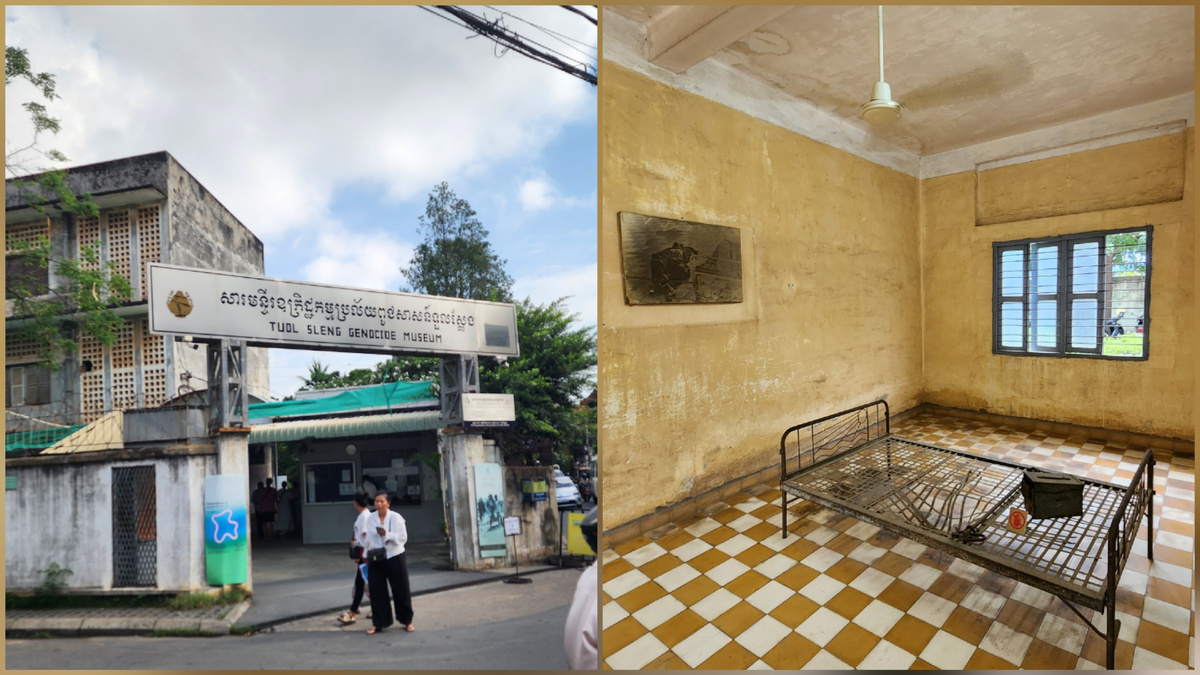
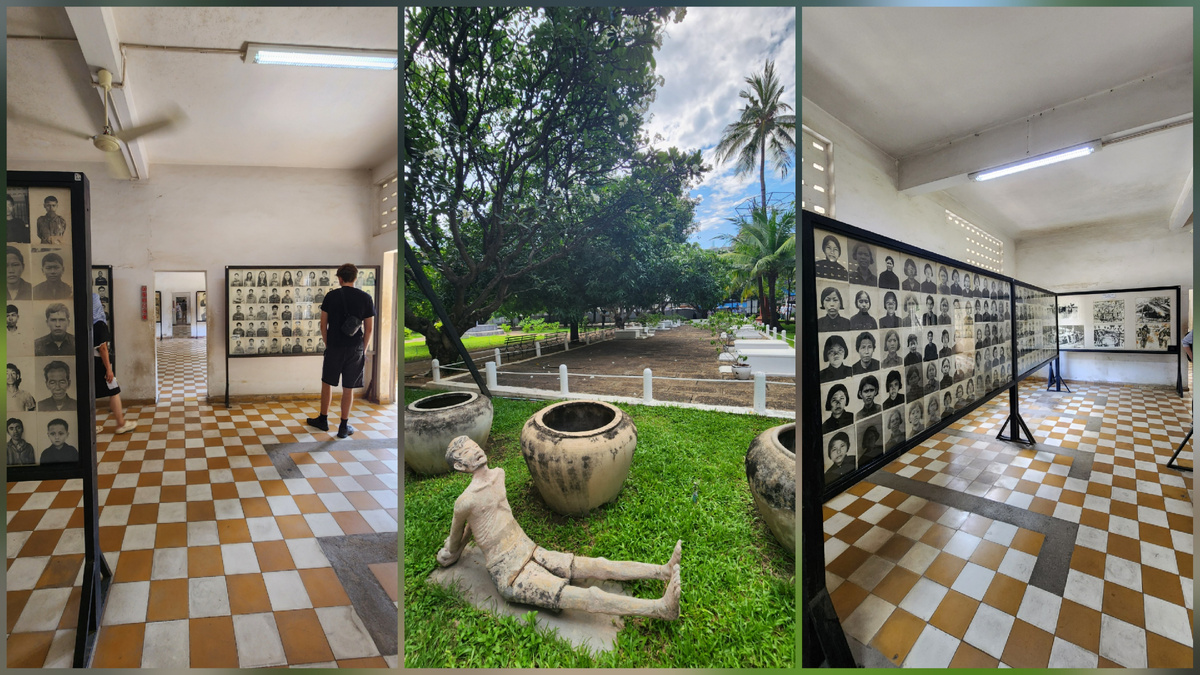
There is a courtyard with trees, several multi-storey buildings, balconies, staircases and former classrooms with windows looking out over the grounds.
If you arrived without knowing the history, parts of it could still look like an old educational complex waiting to be renovated.
That ordinary setting is what hit me first.
A school is supposed to represent children, knowledge and a future.
At Tuol Sleng, those same classrooms were turned into cells and interrogation rooms under the Khmer Rouge.
I arrived close to opening time, when the heat was still manageable and there were not many people inside.
I bought my ticket and took the English audio guide.
At that point, I thought I was visiting a museum.
A few buildings later, it became clear that Tuol Sleng Genocide Museum is something much more difficult to process.
What Was S-21?
Between 1975 and 1979, Cambodia was ruled by the Khmer Rouge under the state they called Democratic Kampuchea.
Tuol Sleng became Security Office 21, or S-21, one of the regime’s most notorious security centres.
It was used for:
- detention;
- interrogation;
- torture;
- forced confessions;
- documentation;
- and execution.
S-21 was not an ordinary prison where people served sentences and eventually went home.
People were brought there after the regime had already identified them as real or imagined enemies.
The purpose of interrogation was rarely to establish whether an accusation was true.
The system expected guilt.
The interrogators’ task was to produce a confession.
How Cambodia Reached S-21
It is difficult to understand Tuol Sleng by beginning with the prison itself.
The story starts earlier.
Cambodia entered the 1970s under enormous pressure.
War in neighbouring Vietnam had spilled across its borders. Cambodia experienced political upheaval, civil war, foreign military intervention and large-scale bombing. The government of Lon Nol faced corruption, instability and an increasingly powerful communist insurgency.
The Khmer Rouge did not rise because of one single event.
Their growth came from a combination of war, political collapse, foreign involvement, outside support, resentment toward the government and the ability of the movement to recruit in a country already being torn apart.
By the time Khmer Rouge forces entered Phnom Penh on 17 April 1975, years of conflict had already displaced huge numbers of people.
Some residents initially welcomed their arrival because they believed the war was finally ending.
It was not.
When Phnom Penh Was Emptied
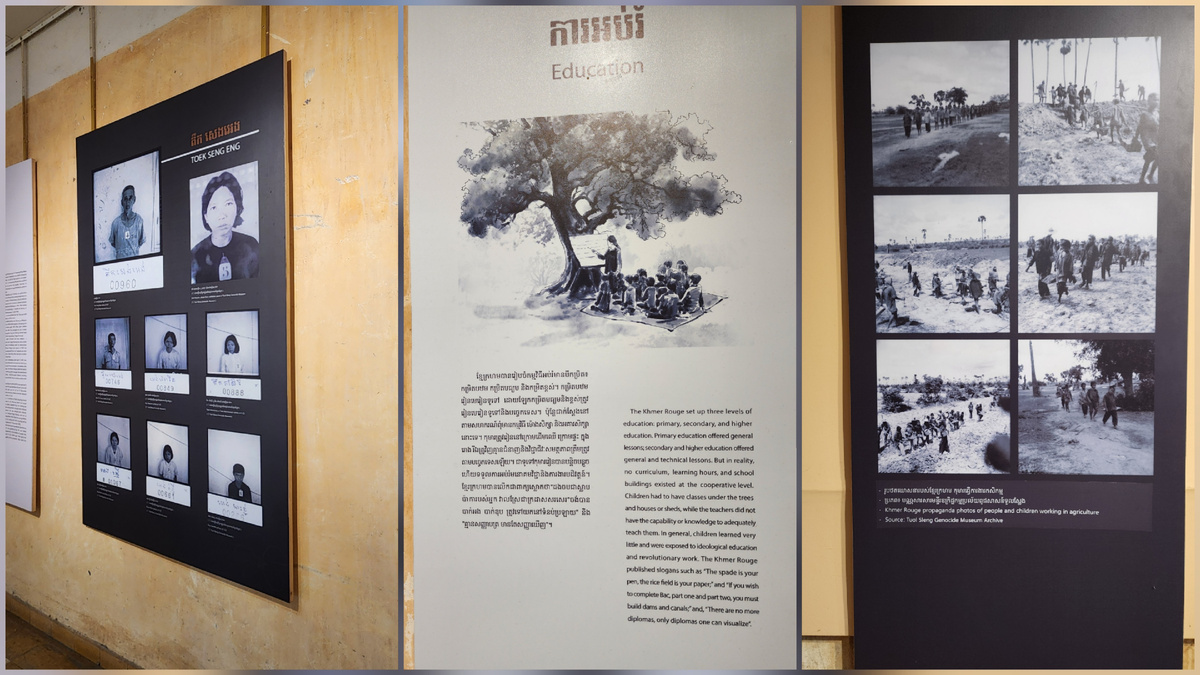
Within hours of taking the capital, Khmer Rouge forces began forcing people out.
Hospitals were emptied.
Homes were abandoned.
Families were pushed onto roads leading into the countryside.
Around two million people were expelled from Phnom Penh.
The Khmer Rouge presented the evacuation as temporary in some cases, but it became part of a much larger attempt to rebuild Cambodian society from the ground up.
Cities were treated as corrupt.
Private property and money were abolished.
Religion was suppressed.
People were reorganized into rural collectives and subjected to forced labour.
The regime sought an agrarian, self-sufficient society with virtually no space for independent institutions, dissent or individual autonomy.
This radical transformation is often summarized as “Year Zero.”
But the violence did not stop with people associated with the previous government.
Eventually, the revolution began turning on itself.
When the Khmer Rouge Began Arresting Their Own
As the regime became increasingly paranoid, perceived enemies appeared everywhere.
Former officials and soldiers were obvious targets.
So were people accused of disloyalty, espionage or connections to foreign governments.
But arrests increasingly reached inside the Khmer Rouge itself.
Cadres.
Soldiers.
Officials.
Regional commanders.
People who had served the revolution.
A name appearing in someone else’s confession could be enough to create another suspect.
That is one of the most important things to understand about S-21.
The prison did not simply process people who had opposed the Khmer Rouge from the beginning.
It became part of an internal system of purges in which the regime repeatedly found new enemies inside its own ranks.
Why S-21 Needed Confessions
The confessions produced at S-21 were not reliable records of actual conspiracies.
They were products of coercion.
Prisoners were forced to write biographies, explain supposed political connections and identify accomplices.
Interrogators demanded links to organizations and governments that prisoners may never have had anything to do with.
Under torture, people supplied names.
Those names could lead to further arrests.
Those arrests produced more confessions.
More names followed.
The logic fed itself.
S-21 was therefore more than a detention centre.
It was also a mechanism for expanding the purge.
Inside Tuol Sleng Genocide Museum
Once you understand that background, the buildings become harder to look at as simple museum exhibits.
They are still recognizably school buildings.
But their function had been transformed.
Some former classrooms were divided into tiny brick cells.
Others remained larger detention rooms.
There are metal beds.
Shackles.
Chains.
Barred windows.
Barbed wire.
And throughout the museum, photographs and surviving records connect the physical space to individual prisoners.
The architecture itself is not frightening.
That is precisely why it works so strongly.
Nothing about a classroom suggests that it should become part of a machinery of imprisonment.
Yet it did.
The Prisoner Photographs
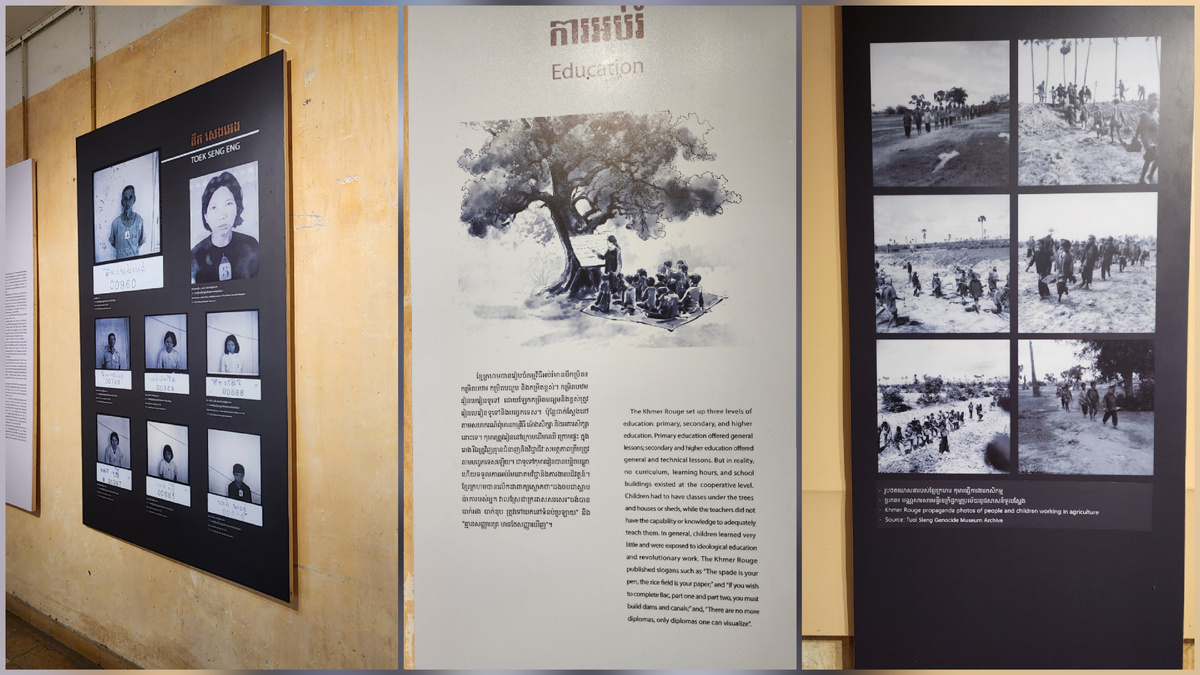
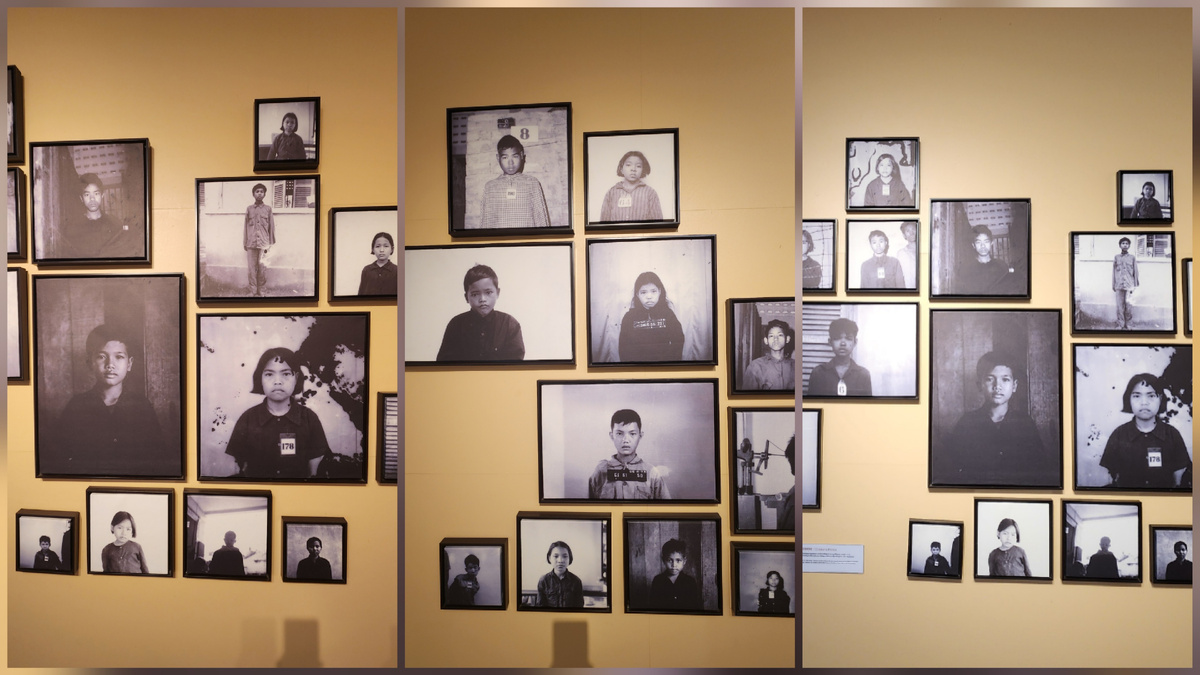
One of the hardest parts of Tuol Sleng is the photography.
Prisoners were photographed as part of the administrative process.
Today, rows of those portraits survive.
Men.
Women.
Young people.
Children.
Some stare directly into the camera.
Some look frightened.
Others look exhausted, confused or expressionless.
Knowing what happened after those photographs were taken changes the way you look at them.
They are not anonymous statistics.
For a moment, there is a face.
The Khmer Rouge documented its prisoners with extraordinary bureaucratic attention.
That documentation is one reason so much can now be reconstructed about S-21.
From a Name to a File
The bureaucracy continued after the photograph.
Prisoners were questioned about their backgrounds.
Biographies were recorded.
Confessions were written and rewritten.
Interrogators demanded more detail when an answer did not fit the story they expected.
The objective was not simply:
What did you do?
It became:
Who else was involved?
A confession could expand into an imaginary network of agents, conspirators and foreign connections.
On paper, the conspiracy grew.
In reality, the documents often reflected what prisoners had been forced to say.
This distinction matters.
Surviving confessions from S-21 are evidence of how the prison operated.
They are not reliable proof that the accusations inside them were true.
Torture as Part of the System
Torture at S-21 was not an accidental breakdown of discipline.
It was integrated into interrogation.
Prisoners were beaten and subjected to other forms of severe physical and psychological abuse in an attempt to force confessions.
Conditions inside the prison were themselves brutal.
People were shackled.
Food was scarce.
Movement was tightly controlled.
Illness and injury were common.
The violence was organized inside an administrative process that produced photographs, biographies, interrogation records and written confessions.
That combination is one of the most disturbing things about Tuol Sleng.
The terror was physical.
But it was also bureaucratic.
How Many People Passed Through S-21?
Exact totals remain difficult because surviving records are incomplete.
Evidence reviewed by the Khmer Rouge tribunal established at least 10,887 people detained at S-21, while also making clear that this is a conservative minimum.
Not every prisoner appears in the surviving records.
Children in particular were not always documented in the same way as adult prisoners.
Whatever final number is used, the central fact does not change:
very few people sent through S-21 survived.
When the prison was opened in January 1979, only 12 former inmates were found alive, including four children.
Why So Few Survived
S-21 was not designed around release.
After interrogation had finished and a confession had served its purpose, prisoners were generally marked for execution.
Some people were killed at or near S-21 itself.
But another site eventually became central to the process.
Choeung Ek.
Today it is the best-known of Cambodia’s Killing Fields.
From S-21 to Choeung Ek
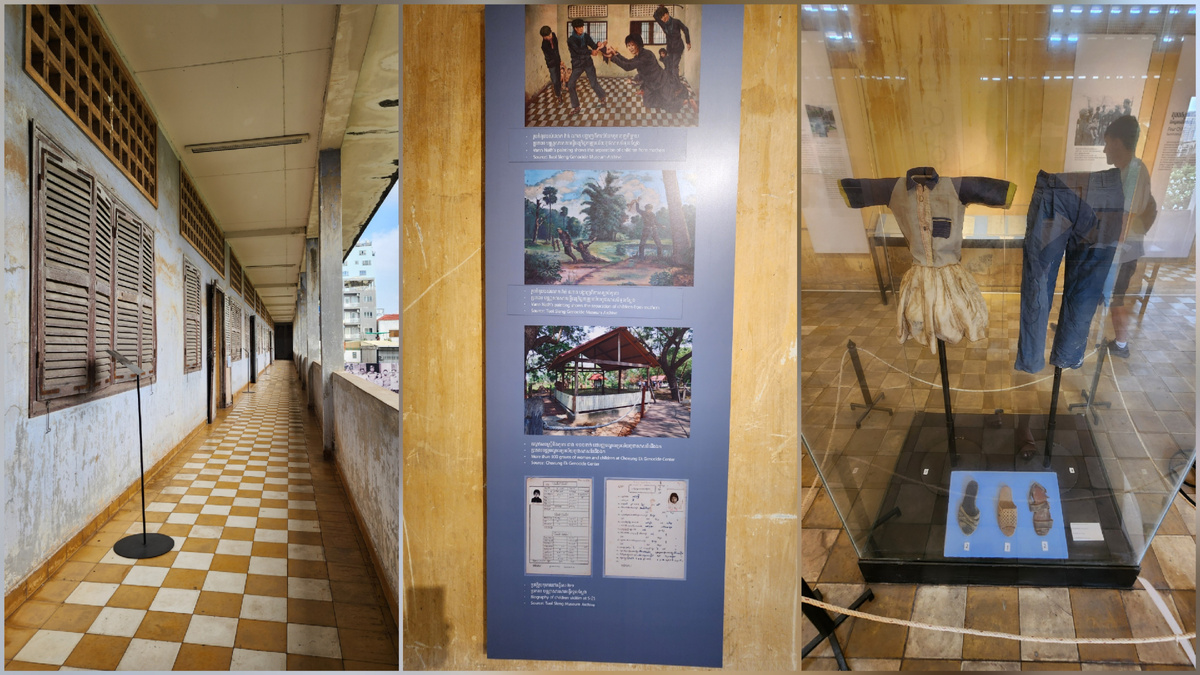
Choeung Ek lies roughly 15 kilometres southwest of central Phnom Penh.
Before the Khmer Rouge, the area had been an orchard and Chinese cemetery.
Under Democratic Kampuchea, it became an execution and burial site.
As the number of prisoners at S-21 grew, executions and burials near the prison created practical and secrecy problems.
Choeung Ek became the principal killing site associated with S-21.
Prisoners were transported there after interrogation.
Many were moved at night.
They were not told that they were being taken to be killed.
The bureaucratic process that had begun with photographs, files and forced confessions ended in mass graves.
The Killing Fields Were Not One Place
The phrase “Killing Fields” can make Choeung Ek sound like a single central extermination site.
It was not.
Execution sites and mass graves existed across Cambodia.
Choeung Ek is simply the best-known today, largely because of its close connection to S-21 and its location near Phnom Penh.
It is now a memorial.
Mass graves discovered there contained thousands of victims, many of whom had previously been imprisoned at Tuol Sleng.
A Buddhist memorial stupa contains thousands of human skulls recovered from the site.
Many show evidence of violent death.
Children were among the victims.
Why S-21 and Choeung Ek Belong to the Same Story
The connection between the two places is what makes the structure of the system easier to understand.
At S-21:
people were photographed;
registered;
interrogated;
tortured;
forced to confess;
and converted into files.
At Choeung Ek:
many of those same prisoners were killed.
One site produced the paperwork.
The other became one of the places where the process ended.
That is why talking about Tuol Sleng without explaining Choeung Ek leaves part of the system invisible.
I Did Not Visit Choeung Ek on This Trip
This is where my own experience stops and the historical context continues.
I visited Tuol Sleng Genocide Museum, but I did not go to Choeung Ek during this trip.
It was partly a question of time.
But after several hours at S-21, I also did not feel that I had much emotional capacity left for another site connected with mass killing.
I was trying to fit a great deal into one day in Phnom Penh, and I ultimately chose to continue through the city rather than add Choeung Ek.
If I return, I would plan the two sites very differently.
I would give them their own history-focused day instead of putting museums, temples, cafés and unrelated sightseeing around them.
The Audio Guide Changed My Visit
I took the English audio guide at Tuol Sleng.
For me, it was worth it.
The buildings contain photographs, written information and surviving objects, so you can visit without one.
But the audio guide changed the pace.
Instead of moving quickly from room to room, I stopped.
Listened.
Looked again.
Details that might otherwise have been just another photograph or empty classroom became connected to individual histories and to the structure of S-21.
It also allowed me to move at my own pace.
That mattered here more than it would in a normal sightseeing museum.
There were moments when I simply did not want to immediately start the next track.
Visiting Tuol Sleng Today
Tuol Sleng is in central Phnom Penh on Street 113, so it is relatively easy to incorporate into a city itinerary.
At the time of writing, the museum is open daily from 8:00 AM to 5:00 PM.
For international visitors, the current adult admission is $5, and the English-language audio guide is also $5.
The museum currently accepts cash in Cambodian riel or US dollars.
I would still check the museum’s current information before visiting because admission details can change.
How Much Time Should You Allow?
I would not plan this as a quick 30-minute stop.
You can physically move through the site quickly.
That is not the same as actually seeing it.
If you use the audio guide, read the exhibits and stop when you need to, allow at least a couple of hours rather than trying to fit Tuol Sleng between two tightly scheduled attractions.
And I would avoid planning something time-sensitive immediately afterwards.
Should You Visit S-21 and Choeung Ek on the Same Day?
Logistically, yes.
Historically, the combination makes sense because the two sites are directly connected.
Emotionally, that is a more personal question.
Some people prefer seeing both in sequence because it shows the entire process from detention and interrogation to execution.
Others may find one site enough for a single day.
If you do want to visit both, I would make them the main purpose of that part of the day rather than squeezing them into an overloaded Phnom Penh checklist.
Prefer to Visit with a Guide?
A guide can be useful here because the history is complex and individual rooms make much more sense when you understand the wider system around them.
How to Visit Tuol Sleng Respectfully
This is still a museum and memorial built around people who were imprisoned, tortured and killed.
You do not need a complicated code of behaviour.
Just treat it as what it is.
Read the signs.
Follow photography restrictions where they apply.
Do not treat cells or portraits as backdrops.
Give other visitors space.
And allow yourself to move slowly.
I took far fewer photographs here than I normally do while travelling.
Not because there was nothing to photograph.
Because eventually I stopped wanting to experience the place through a camera.
What Stayed With Me Most
Tuol Sleng is not frightening because it looks extraordinary.
It is frightening because so much of it looks ordinary.
School buildings.
Classrooms.
Desks.
Paperwork.
Photographs.
Administrative records.
People created a system around them.
That, for me, was more disturbing than any single object in the museum.
The Khmer Rouge did not need a fantasy-world machine of evil.
They used offices, forms, cameras, chains, interrogation rooms and people following orders inside an institution.
The violence became organized.
Recorded.
Repeated.
Angkor and S-21 Tell Two Very Different Stories
Earlier on this Cambodia trip, I had spent days around Angkor.
There, Cambodia’s history appeared through temples, stone carvings, kings and monumental architecture.
S-21 belongs to another Cambodia entirely.
It is much closer in time.
There are still photographs.
Documents.
Testimony.
Survivors.
The distance between those two histories is enormous, but both are part of understanding the country.
Angkor shows what Cambodia built.
Tuol Sleng shows what can happen when a political system begins treating human beings as material to be classified, controlled and removed.
Seeing one does not cancel out the other.
It makes the picture less flat.
After Phnom Penh, I continued south through Sihanoukville, Kampot and Bokor before returning to Phu Quoc.
Is Tuol Sleng Genocide Museum Worth Visiting?
Yes.
But not because it is a place you need to “tick off” in Phnom Penh.
And not because the most disturbing museum automatically becomes the most meaningful.
Tuol Sleng matters because the physical place makes an abstract historical system tangible.
You can read the numbers anywhere.
Inside S-21, those numbers acquire faces.
Rooms.
Files.
Handwriting.
Photographs.
And that is what stayed with me after I left.
The details of individual buildings will eventually blur.
Some names will be harder to remember.
But it becomes much harder to think of Khmer Rouge history as something distant and theoretical.
You have stood inside the school where part of that system operated.
And once you understand what S-21 was, Choeung Ek is no longer simply another dark attraction outside Phnom Penh.
It is the continuation of the same story.
Useful Travel Resources for Cambodia
Flights
Search flights
Hotels
Find hotels
Tours & Experiences
Browse Cambodia Tours & Experiences
eSIM
Get a Yesim eSIM
Transfers
Book a private transfer
Car Rental
Compare rental cars on Localrent
Travel Insurance
Check travel insurance with EKTA
Some links in this article are affiliate links. If you book through them, I may earn a small commission at no extra cost to you.