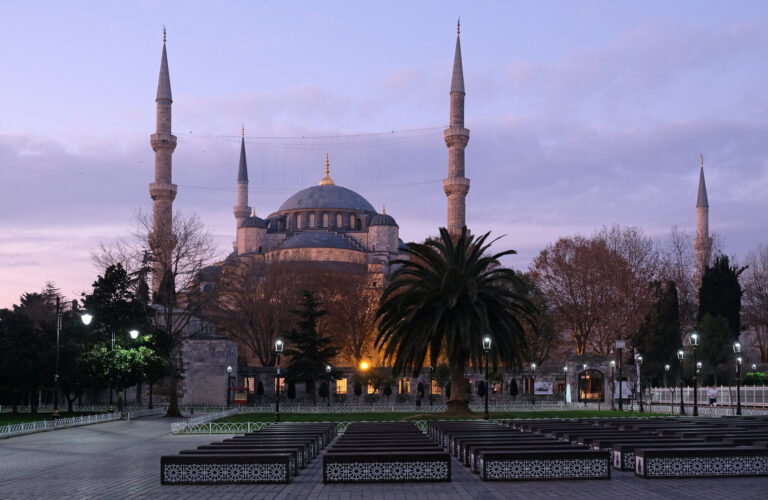
National Museum of Cambodia: Khmer Art, History & Visiting Guide
The National Museum of Cambodia made much more sense to me because I had already been to Angkor.
A few days earlier, I had been walking through temples filled with apsaras, Hindu deities, Buddha images, lintels and carved stone. At the temples, however, there was always a lot competing for my attention: the architecture, reliefs, towers, courtyards, heat, other visitors and the simple fact that another temple was usually still ahead.
In Phnom Penh, the same visual world appeared in a completely different setting. Without an entire temple surrounding each object, I could finally stop in front of one sculpture and look properly at the face, posture, jewellery, hairstyle and attributes that helped identify the figure.
That was when Khmer art began to feel less like a collection of beautiful things I had seen around Angkor and more like a visual tradition developing over centuries.
I visited the museum during my one day in Phnom Penh, after spending three days around Angkor during my Phu Quoc to Siem Reap overland trip.
If I had to choose the order again, I would still visit the National Museum after Angkor, not before.

National Museum of Cambodia: Quick Visit
| Best for | Understanding Khmer art after visiting Angkor |
| Allow | Around 1–1.5 hours |
| Opening hours | 8:00 AM–5:00 PM |
| Last admission | 4:30 PM |
| Adult international ticket | $10 |
| Photography | Not permitted inside the galleries |
| Easy to combine with | Royal Palace and central Phnom Penh |
Why I Would Visit the Museum After Angkor
Visiting before Siem Reap can give you useful background, but visiting afterwards gave me something I found more valuable: recognition.
I already had visual references in my head. When I saw a crown, a hairstyle, a religious figure or a particular treatment of the human body, I could connect it to something I had encountered at a temple only a few days earlier.
That recognition changed the experience. Instead of walking through rooms full of unfamiliar sculpture and trying to memorize names and dates, I kept finding details that felt familiar and then looking more closely to understand why.
The museum did not replace what I had seen around Angkor. It helped organize it.
A Museum Designed Around Khmer Art
The National Museum itself is part of the experience.
Its foundation stone was laid in 1917, while Cambodia was under the French protectorate, and the completed museum was inaugurated on 13 April 1920.
The building was designed by George Groslier, a French artist, historian and curator who played an important role in the study and preservation of Cambodian art.
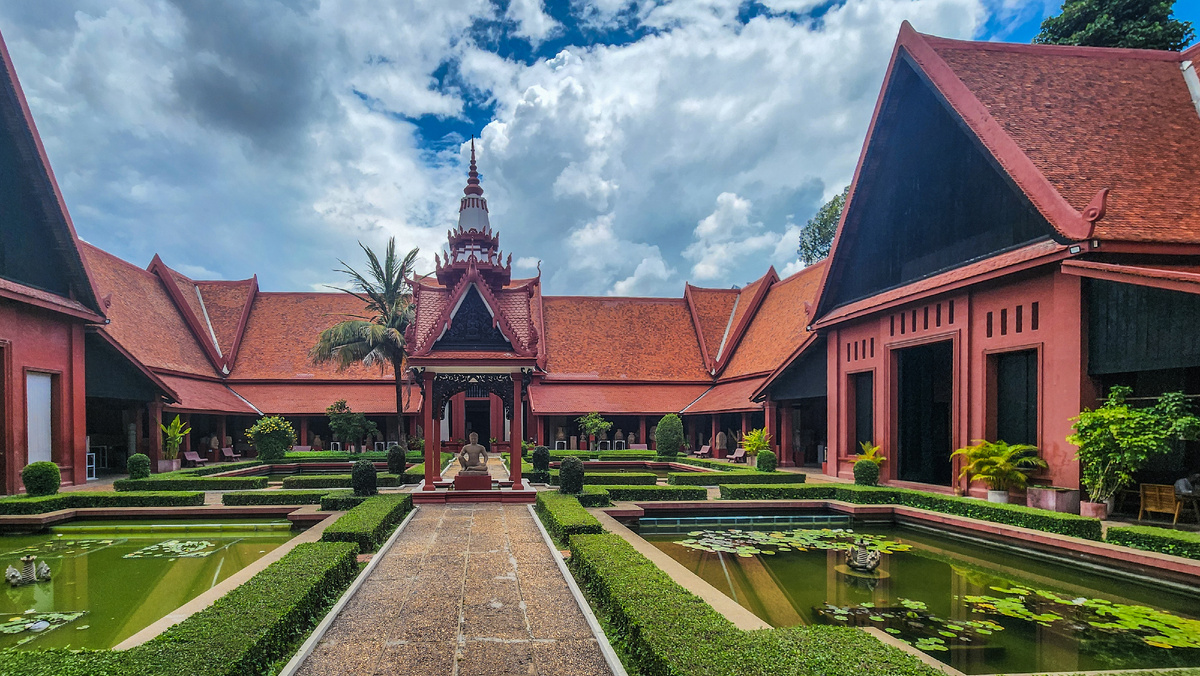
Rather than creating a conventional European museum and filling it with Cambodian objects, Groslier drew on traditional Khmer architectural forms and adapted them for a museum.
The red walls, layered roofs and central courtyard give the building a strong local identity. Inside, relatively dark galleries open onto a garden with greenery and water, which creates a welcome pause between sections of the collection.
I liked that rhythm. The museum never felt overwhelmingly large, and there was always somewhere to stop before moving on.
What Is Inside the National Museum of Cambodia?
The collection covers a much longer period than Angkor alone.
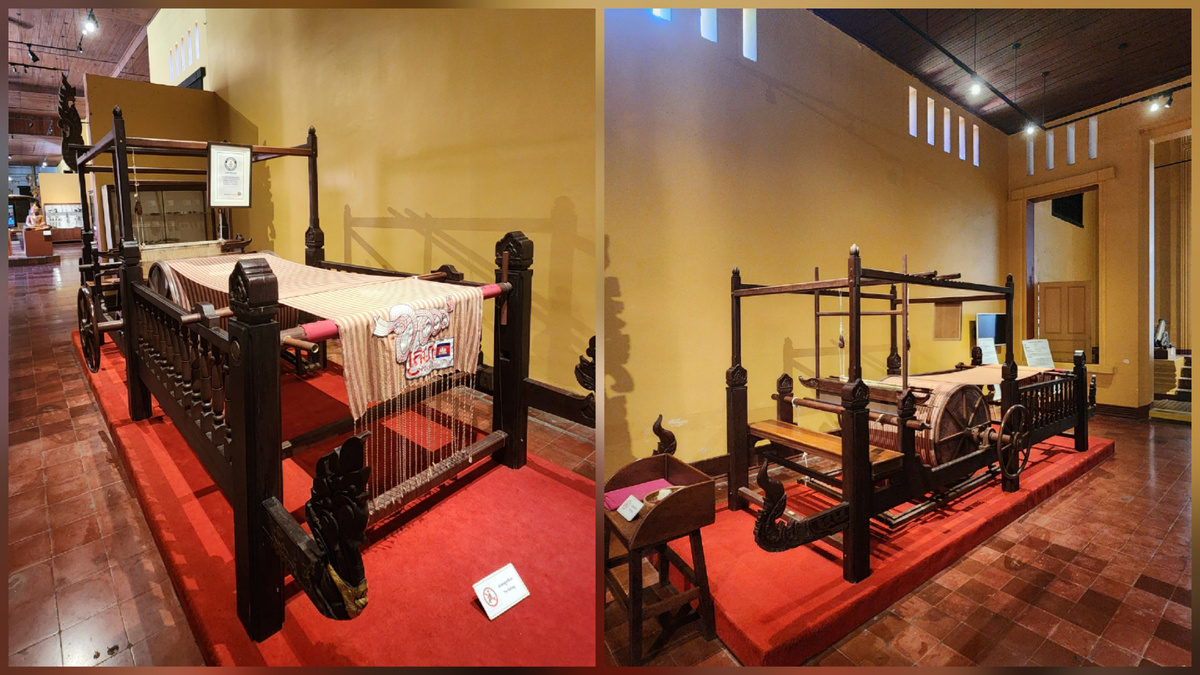
It includes Cambodian cultural material from prehistoric, pre-Angkorian, Angkorian and post-Angkorian periods, with stone sculpture forming one of the museum’s major strengths. There are also bronzes, ceramics and religious objects.
That wider chronology is important because it prevents Angkor from looking like an isolated moment of artistic brilliance. The temples belong to a much longer cultural development.
Pre-Angkorian Art
Some of the most useful objects for understanding that longer history come from the centuries before the great Angkorian monuments.
Earlier sculpture can look very different from the forms travellers associate with Angkor Wat or Bayon. Seeing those works helps establish what artistic traditions already existed before the period most visitors know best.
Once that progression becomes visible, Angkor starts to look less like a sudden miracle and more like one extraordinary stage in a much longer history.
Angkorian Sculpture
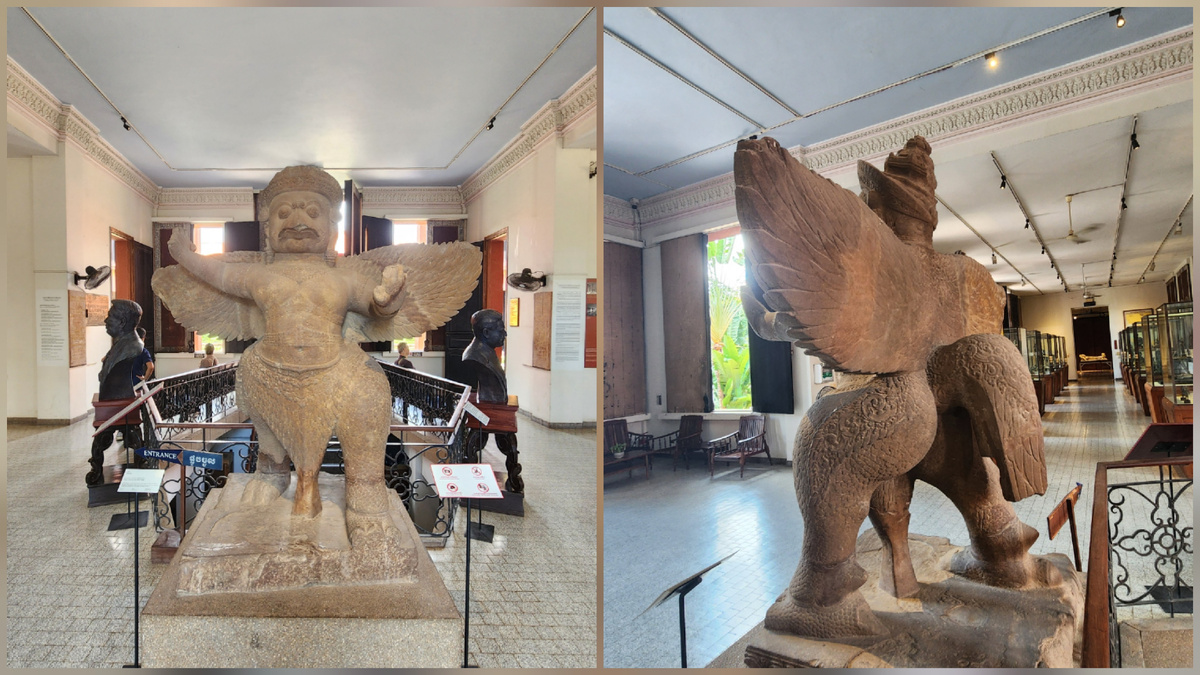
This was the part of the museum I connected with most immediately.
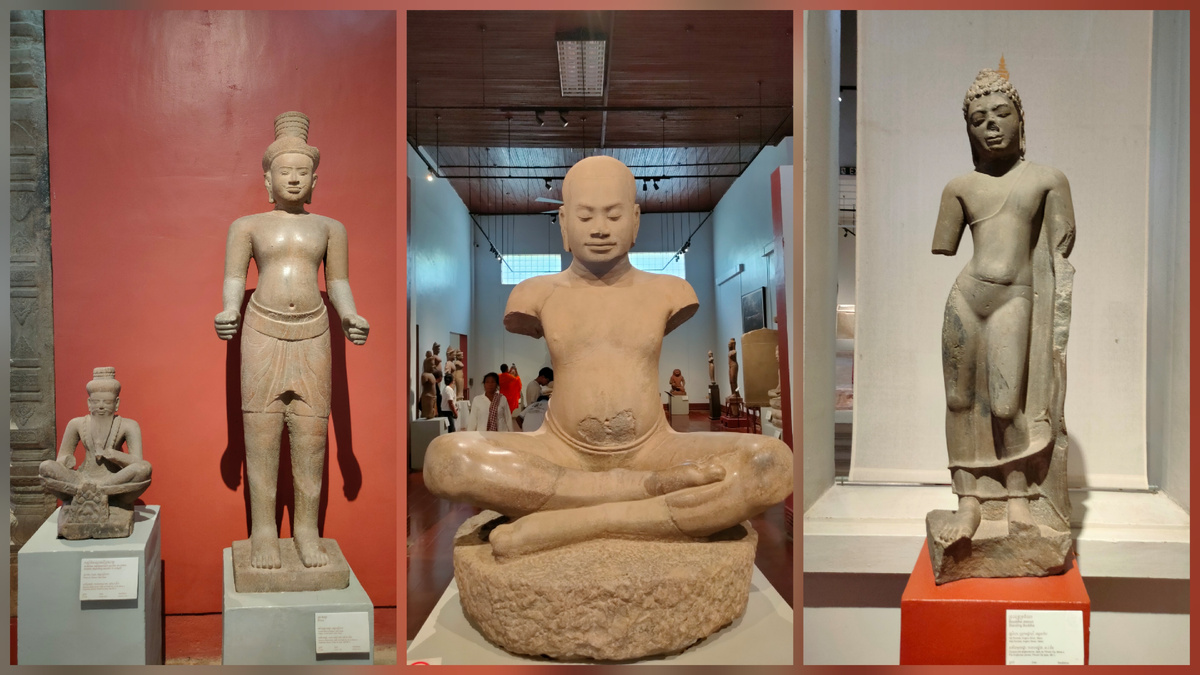
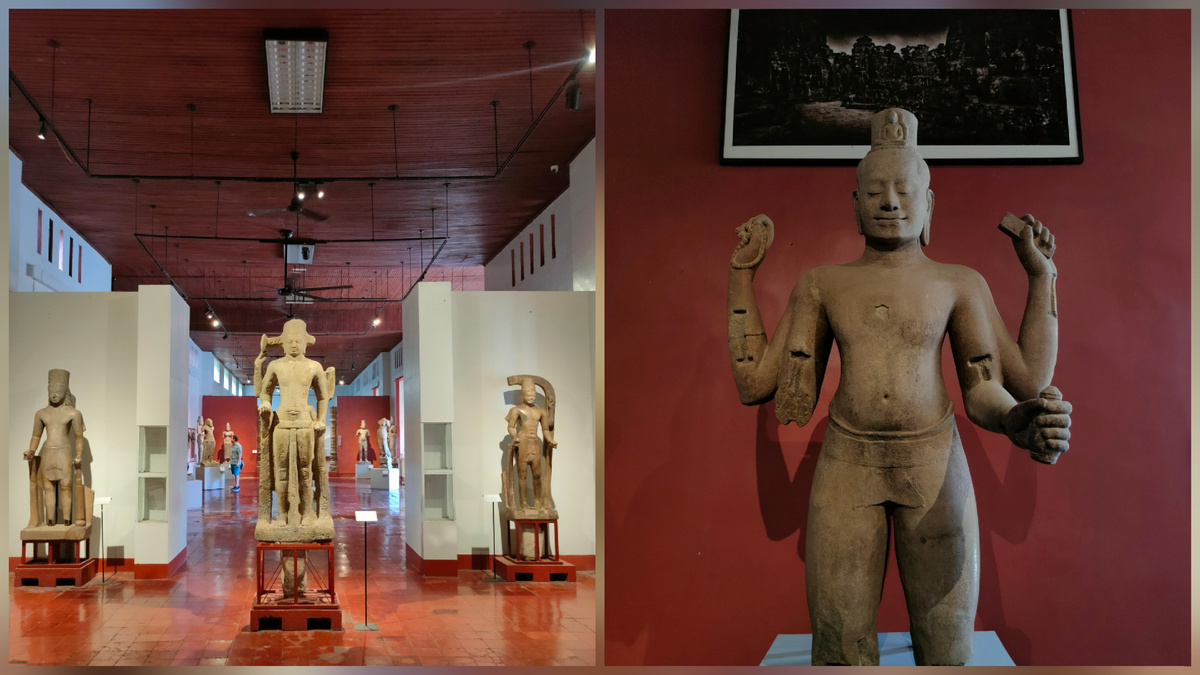
After several days around Angkor, Hindu deities, Buddha images, bodhisattvas, guardian figures and fragments of architectural decoration no longer felt completely unfamiliar.
The difference was that the museum allowed me to concentrate on one object at a time. At a temple, I might have looked at an entire doorway or wall. Here, I could focus on how a single face was carved, how jewellery was represented or how the proportions of a figure changed from one period to another.
That change in scale made details much easier to notice.


Hindu and Buddhist Imagery
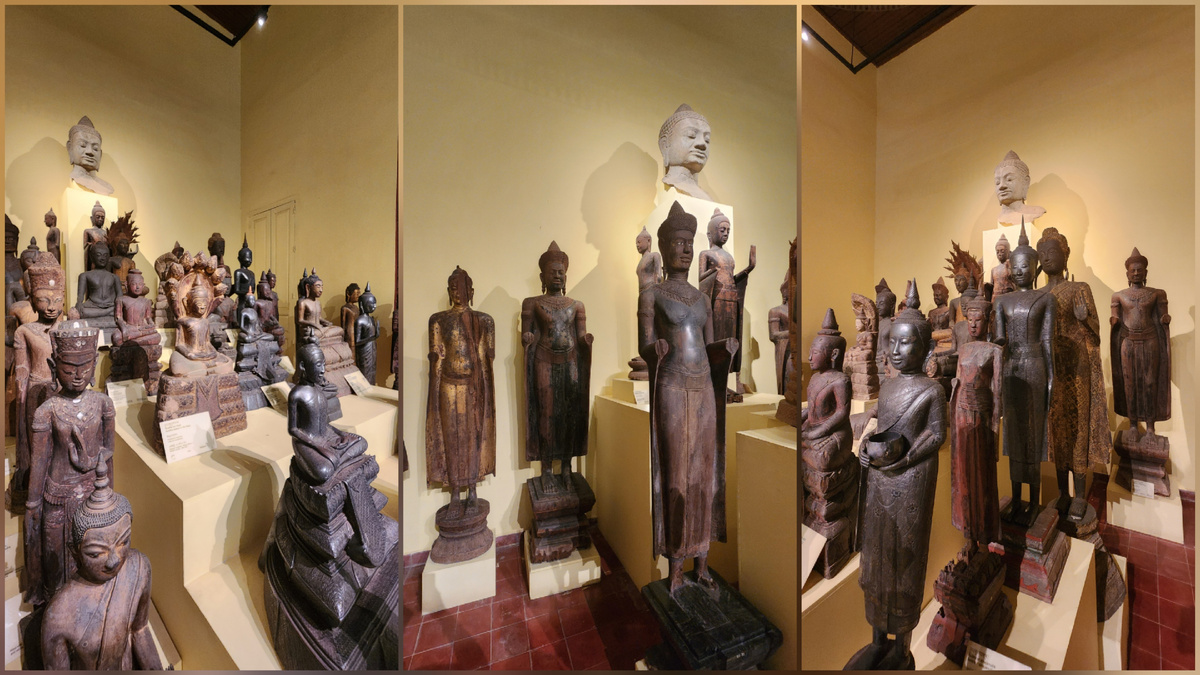
The collection also makes it easier to see that Khmer religious art cannot be reduced to a simple division between Hindu and Buddhist periods.
Around Angkor, temples changed use over time. Images were adapted, replaced or reinterpreted, and different religious traditions overlapped across centuries.
Inside the museum, those transitions become easier to follow because objects from different periods and traditions can be compared within one collection.
You do not need to identify every deity or artistic school to benefit from this. Simply recognizing recurring forms already changes the way you look at the temples.
What to Look For After Visiting Angkor
Rather than trying to memorize every label, I found it more useful to look for details I had already encountered outdoors.
Pay attention to:
- hairstyles, crowns and jewellery;
- facial treatment and body proportions;
- attributes that help identify Hindu deities;
- different representations of Buddha;
- naga imagery and other recurring figures;
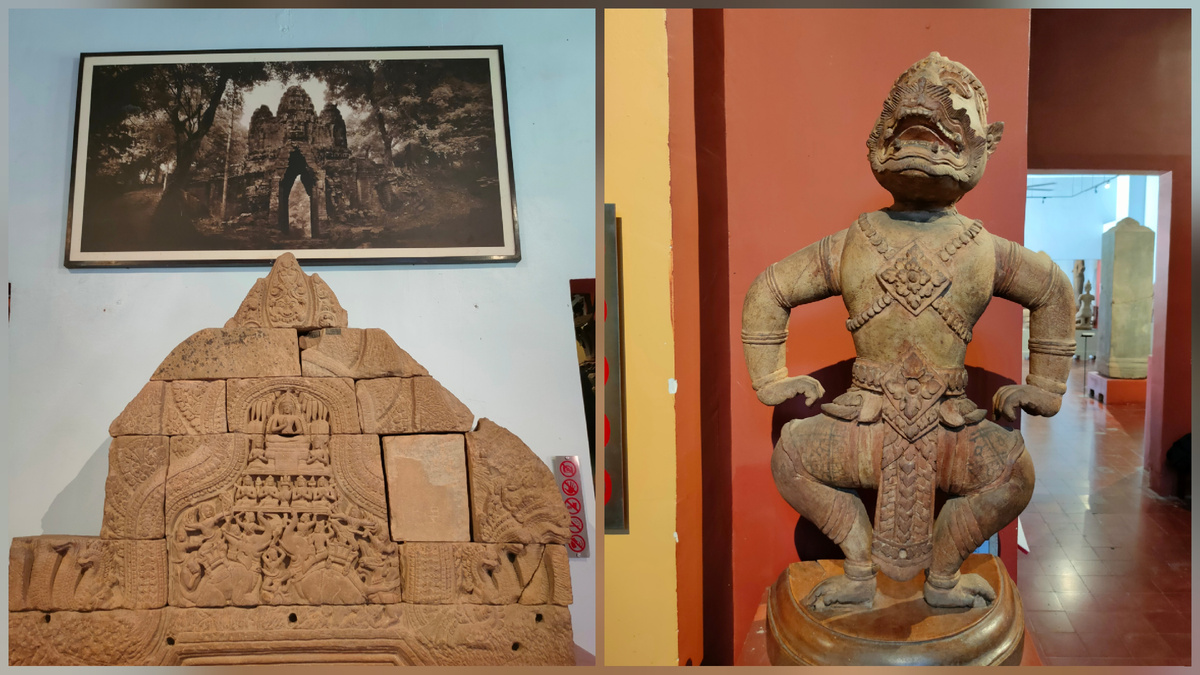
- architectural fragments such as lintels and decorative carving.
Once I started doing that, the museum became much more engaging.
The sculptures stopped feeling like isolated antiquities. They became part of the same visual language I had already seen in temples, only now I had enough time and distance to read that language more carefully.
Why Khmer Art Becomes Easier to Understand Here
At Angkor, it is easy to treat carving mainly as decoration because there is so much of it.
The museum makes it clearer that details such as posture, clothing, jewellery, religious attributes and changes in style were not random aesthetic choices. They communicated identity, belief and political or religious ideas to people who understood those conventions.
You do not need an art-history background before travelling through Cambodia. I certainly did not.
But once you realize that these details carry meaning, you begin looking at temple sculpture differently.
That was one of the most useful things I took away from the National Museum.
The Museum and the Khmer Rouge Period
The National Museum also has its own twentieth-century history.
It was closed from 1975 to 1979 during Khmer Rouge rule and reopened on 13 April 1979.
That interruption matters because a museum is not simply a building containing objects. It depends on curators, conservators, researchers, craftspeople and accumulated knowledge passed between generations.
Cambodia’s cultural institutions had to rebuild after a period in which educated professionals, artists, religious figures and many others were killed, displaced or prevented from continuing their work.
The museum’s role today therefore goes beyond displaying ancient objects. Preservation, conservation and the rebuilding of knowledge around Cambodian cultural heritage remain part of its significance.

Visiting After Tuol Sleng
I had also visited Tuol Sleng Genocide Museum during my time in Phnom Penh.
I would not reduce the National Museum to a companion piece to S-21 because the cultural history represented here is much larger than the Khmer Rouge period.
Still, visiting both added very different layers to the same city.
At Tuol Sleng, twentieth-century history becomes intensely personal through photographs, records, cells and evidence of persecution and forced confessions.
At the National Museum, the time scale expands again. You see traditions that developed over centuries and cultural institutions that had to survive and rebuild after the upheavals of the twentieth century.
For me, seeing both made Cambodia feel much less reducible either to Angkor’s grandeur or to the trauma of the 1970s.
The Courtyard Is Worth Slowing Down For
The central courtyard is not just somewhere to cross between galleries.
After spending time looking closely at sculpture indoors, the garden gives the museum a natural pause. The red walls, traditional rooflines, plants and water make the space feel surprisingly calm despite the museum’s central Phnom Penh location.
I would not rush through it simply to reach the next room.
The museum is compact enough that there is no need to treat the visit as a race.
Practical Information for Visiting the National Museum of Cambodia
The museum is in central Phnom Penh, close to the Royal Palace, which makes it easy to include in a day exploring the historic centre.
It is currently open daily from 8:00 AM to 5:00 PM, with the last admission at 4:30 PM.
Current admission for international visitors is:
- $10 for adults aged 18 and over
- $5 for visitors aged 10–17
Guided visits can be arranged at the museum entrance, including tours in English.
One rule is especially useful to know before you arrive: photography is not permitted inside the galleries. You can photograph the museum exterior and courtyard.
I did not mind the restriction. Without constantly thinking about photographs, I spent more time actually looking at the objects.
Is a Guide Worth It?
A guide can be useful if the part you find most difficult is distinguishing periods, identifying deities or understanding how religious imagery changed over time.
If you would rather explore Phnom Penh and Cambodia with more historical context instead of piecing everything together independently, you can also compare current guided experiences.
How Long Do You Need?
I would allow around 1 to 1.5 hours.
You can walk through faster, but I would not recommend rushing if Angkor is still fresh in your memory. Much of the value comes from stopping when something looks familiar and working out what you are recognizing.
If Khmer art is a particular interest, you could easily stay longer.
For a general Phnom Penh itinerary, however, 1 to 1.5 hours felt comfortable to me.
How to Fit the Museum Into a Phnom Penh Day
Its central location makes the museum easy to combine with nearby sights.
On my route, it fitted naturally into the middle of the day before continuing toward the Royal Palace area.
A simple sequence is:
National Museum → Royal Palace area → riverfront
I would not build an entire day around the museum unless Khmer art is a major interest, but I also would not squeeze it into the final half hour before closing.
Its value comes from having enough time to stop, compare and recognize things rather than simply moving past them.
Is the National Museum of Cambodia Worth Visiting?
Yes, particularly if Angkor is already part of your Cambodia trip.
I would not recommend it because of one famous object that everyone needs to photograph. That is not really the point, especially since photography is prohibited inside the galleries.
Its strength is cumulative.
The collection connects periods that can feel unrelated when you encounter them across different archaeological sites. It gives individual sculptures enough space to be understood and makes the development of Khmer art easier to follow.
For me, that was much more useful than simply seeing another collection of antiquities.
Final Thoughts
Before visiting, I thought of the National Museum mainly as somewhere to learn more about Khmer art.
What I did not expect was how much it would change the way I thought about places I had already seen.
At Angkor, individual sculptures had often been part of something much larger. In the museum, I could finally give them my full attention and begin noticing connections between periods, religions and artistic styles.
That is why I would still choose to visit the National Museum of Cambodia after Angkor.
Going beforehand gives you context.
Going afterwards gives you recognition, and for me that was far more memorable.
Useful Travel Resources for Cambodia
Flights
Search flights
Hotels
Find hotels
Tours & Experiences
Browse Cambodia Tours & Experiences
eSIM
Get a Yesim eSIM
Transfers
Book a private transfer
Car Rental
Compare rental cars on Localrent
Travel Insurance
Check travel insurance with EKTA
Some links in this article are affiliate links. If you book through them, I may earn a small commission at no extra cost to you.