One Day in Phnom Penh: S-21, Royal Palace & Mekong Sunset
After three days around Angkor, Phnom Penh felt like a different Cambodia almost immediately.
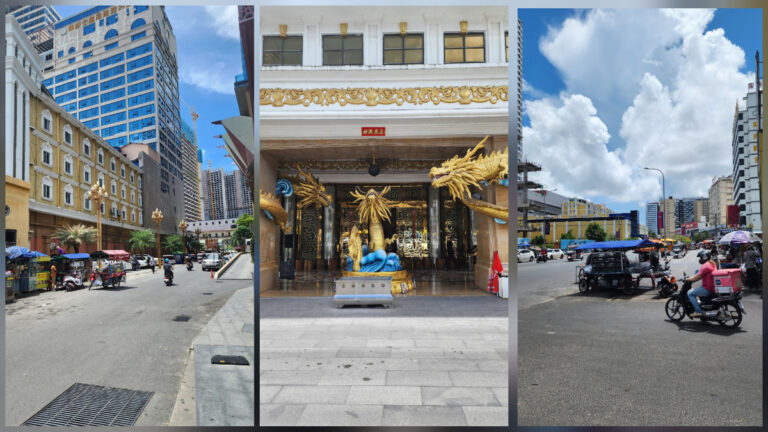
More traffic. More motorbikes. Wider roads. French-era facades mixed with modern signs, tuk-tuks constantly moving around them and a much denser rhythm than Siem Reap.
I technically had one day in Phnom Penh, but that needs one clarification: I arrived from Siem Reap the evening before, so I had an arrival evening plus one extremely full sightseeing day.
And I used almost all of it.
This was Part 2 of my overland Cambodia route from Phu Quoc. The first part took me across the border to Siem Reap and through three days around Angkor. Phnom Penh brought a completely different mix: Khmer Rouge history, Buddhism, Khmer art, royal architecture, modern city life, the river and a final evening that lasted much longer than it probably should have.
From Siem Reap to Phnom Penh
I booked my bus directly with Vireak Buntham, although the same route can also be booked through transport platforms or local agencies in Siem Reap.
I left in the afternoon and reached Phnom Penh at around 8 PM.
From the bus station, I called a tuk-tuk through Grab, checked into my hotel, dropped my backpack and went straight back outside.
Grab was useful throughout Phnom Penh because I could enter the destination in the app, see the fare in advance and avoid explaining every address.
That became especially valuable later, when I was tired enough that negotiating transport in the street had absolutely no appeal.
Stay Connected in Phnom Penh
Mobile data was useful for Grab, maps and moving between places that were not always practical to connect on foot.
My First Evening: Sisowath Quay
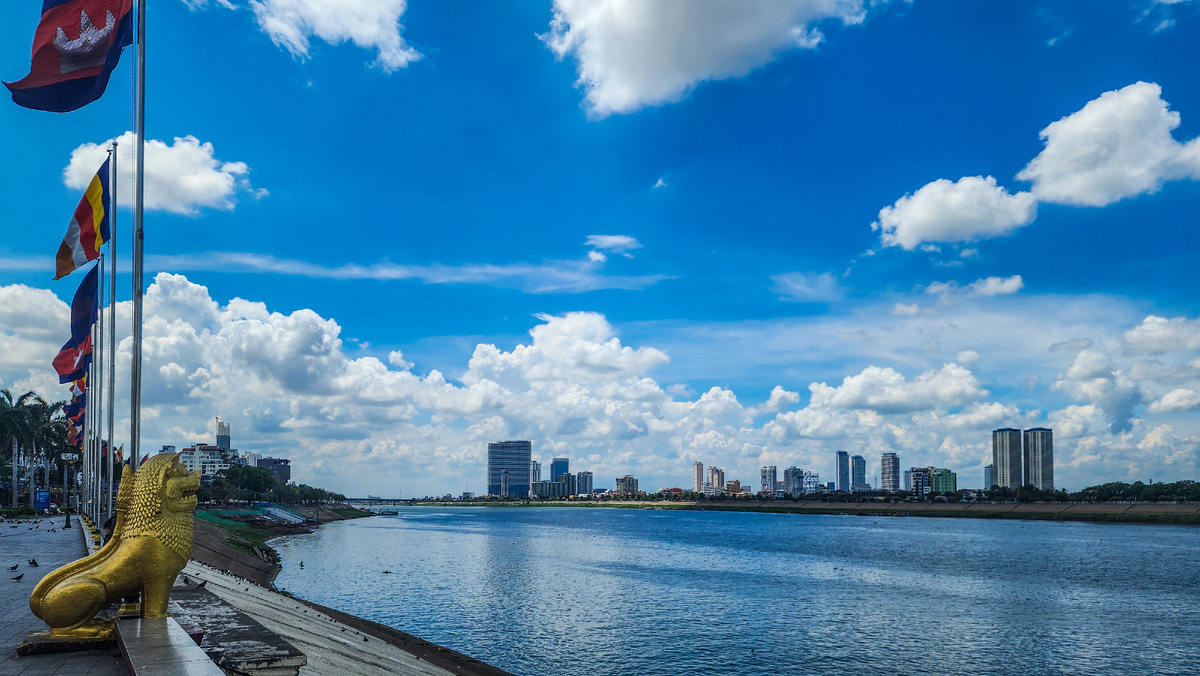
My first stop was Sisowath Quay.
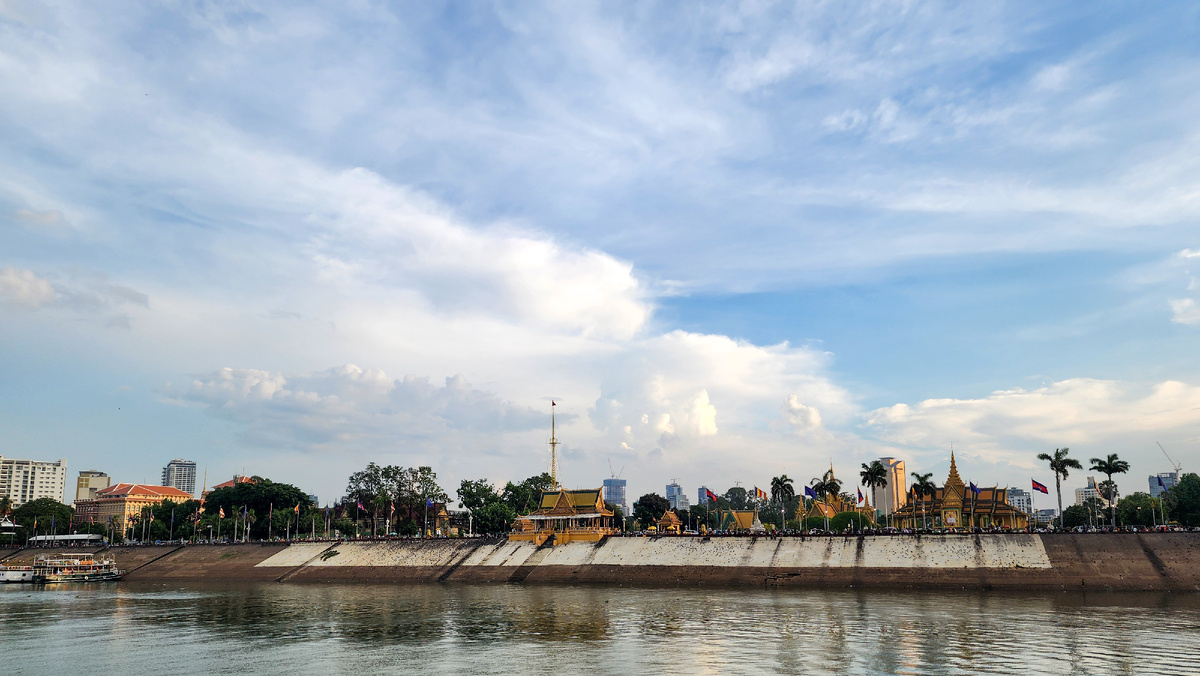
In the evening, the riverfront felt less like a tourist attraction and more like a giant shared outdoor living room.
People were exercising.
Children were playing.
Families sat along the river with food.
Street vendors moved between them selling snacks and drinks.
Across the road, cafés and bars faced the water around the meeting point of Phnom Penh’s rivers.
After a long journey from Siem Reap, this was an easy introduction to the capital because I did not need a plan.
I could simply walk.
Russian Market and a Very Unexpected Dinner
Later I went toward Tuol Tom Poung, widely known to visitors as the Russian Market area.
I was not really there to shop.
I wanted to walk through another part of the city.
The streets around the market felt very different from the riverfront: narrower roads, small businesses, workshops, coffee shops and restaurants packed into the surrounding blocks.
And then, in the middle of all that, I found Irina, a Russian restaurant.
Around me were Khmer and Asian restaurants, cafés and pizza places.
Inside: familiar food and a menu that felt unexpectedly close to home.
I ordered something hot, sat down and had one of those strange travel moments where the geography outside the window and the food on the table seem to belong to completely different countries.
Cambodia outside.
A familiar taste from home inside.
That was enough for the first evening.
Staying in Phnom Penh
If you are planning a similar overnight stop before a full sightseeing day, it is worth comparing where you stay rather than choosing only by price. Phnom Penh is spread out enough that location affects how much time you spend in tuk-tuks.
One Day in Phnom Penh: My Route at a Glance
The next morning began the part I would actually call my one day in Phnom Penh.
| Part of the day | My route |
|---|---|
| Morning | Tuol Sleng Genocide Museum (S-21) |
| Late morning | Wat Ounalom |
| Midday | Friends the Restaurant → National Museum |
| Afternoon | Royal Palace area → Wat Botum → Independence Monument |
| Heat break | AEON Mall |
| Late afternoon | Wat Phnom |
| Sunset | River cruise |
| Evening | PH Euro Park |
| Late evening | Bassac Lane |
Looking at that table now, I understand why I was exhausted.
Tuol Sleng Genocide Museum: Starting with the Hardest Part
I went to Tuol Sleng Genocide Museum, also known as S-21, near opening time.
The site had originally been a school before the Khmer Rouge converted it into a detention, interrogation and torture centre.
That contrast is one of the first things that hits you.
Parts of the complex still look recognizably like a school: buildings around a courtyard, balconies, former classrooms.

Then you walk inside.
Cells.
Brick partitions dividing rooms.
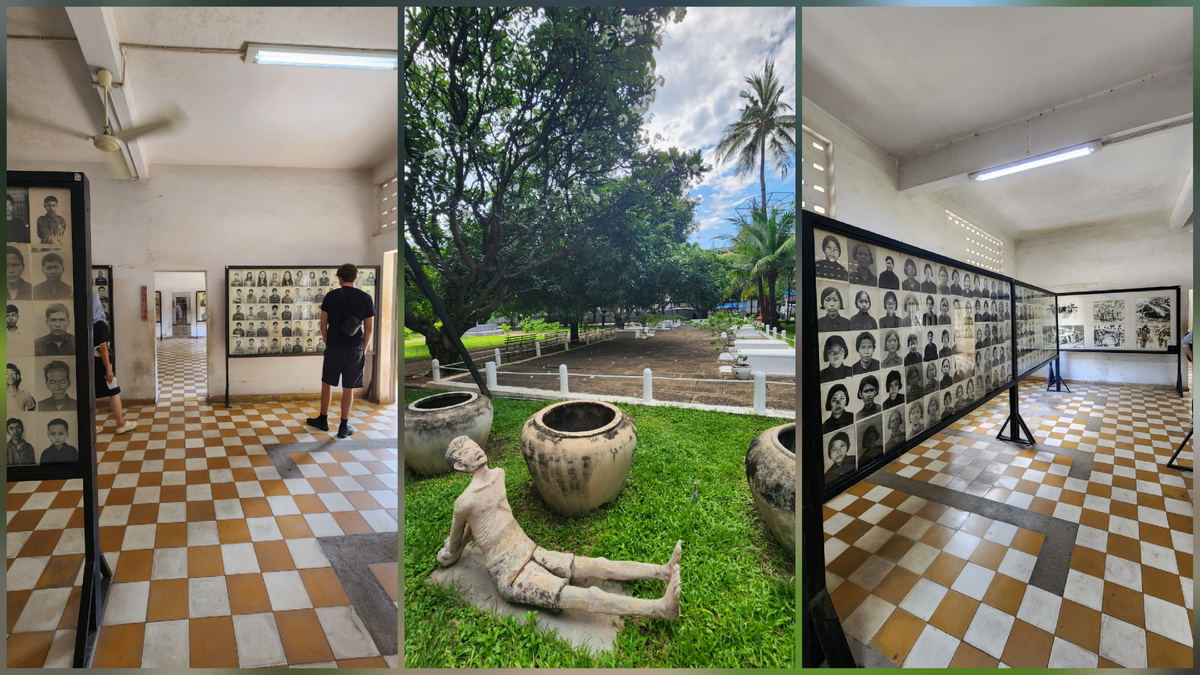
Photographs of prisoners.
Metal beds.
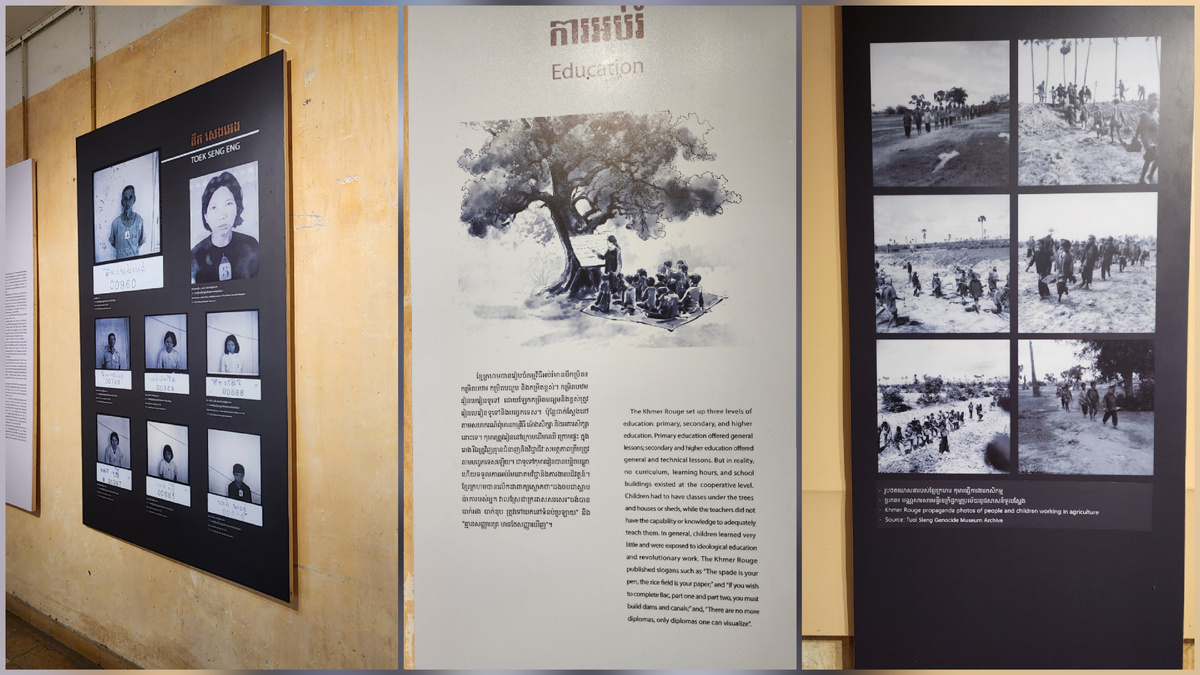
Shackles and other physical evidence of what happened there.
The setting makes the history much harder to keep at an abstract distance.
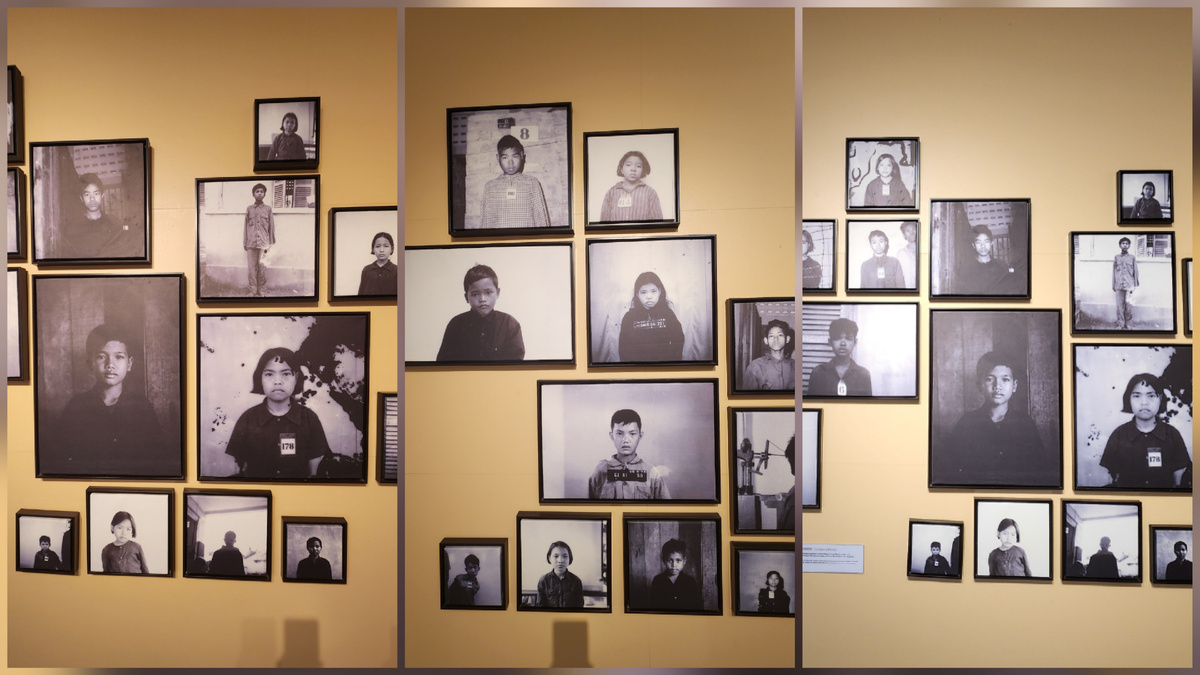
I Took the Audio Guide
For me, the audio guide made a major difference.
Without context, you can walk through the rooms and understand that something terrible happened there.
With testimony and explanations, the system behind those rooms becomes much clearer.
It was also one of the few places on this trip where I found myself taking fewer photographs.
I wanted to listen.
Read.
Look.
After several days around Angkor, where Cambodia had been a story of empires, kings, temples and monumental architecture, S-21 forced the timeline forward into the twentieth century.
Those are very different chapters of the same country.
What I Skipped: Choeung Ek Killing Fields
The historical continuation from S-21 is Choeung Ek, outside central Phnom Penh.
Prisoners from S-21 were among those taken there and killed.
I did not visit it on this trip.
Partly because of time.
Partly because, after Tuol Sleng, I simply did not have much emotional capacity left for another site connected with mass killing.
If I were planning Phnom Penh more slowly, I would consider putting Tuol Sleng and Choeung Ek together on the same history-focused day rather than squeezing them between unrelated city attractions.
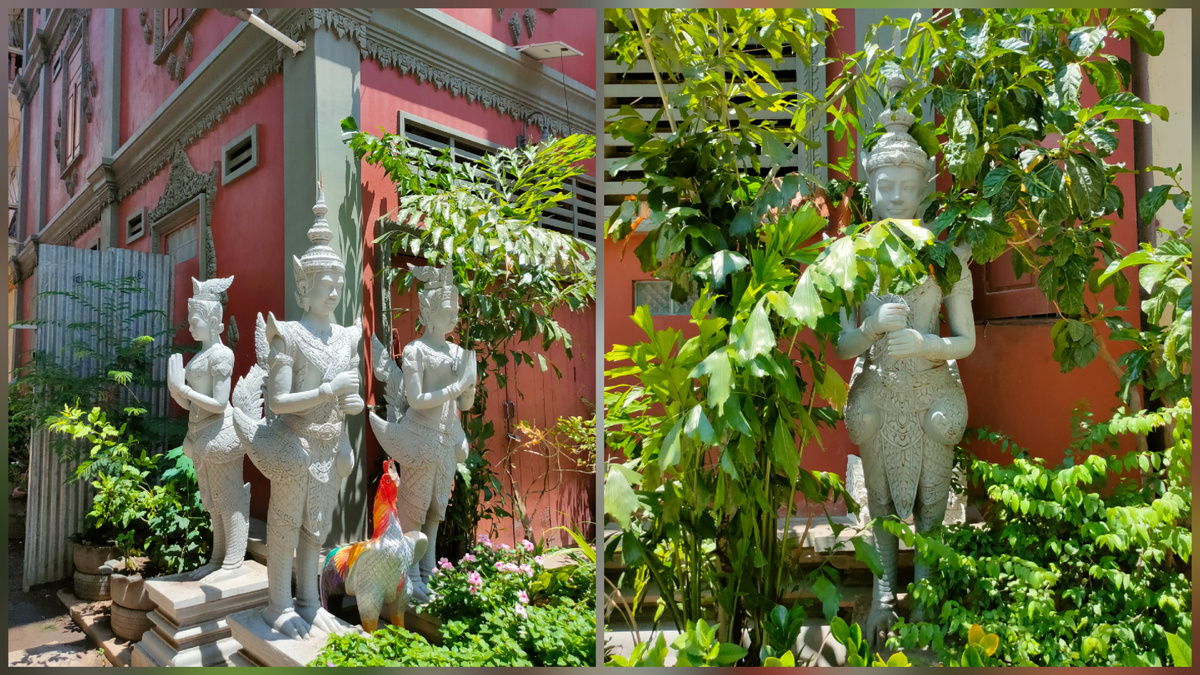
Prefer More Historical Context?
If you would rather explore Phnom Penh and Cambodia with a guide instead of piecing every part of the route together independently, you can compare current tours and experiences.
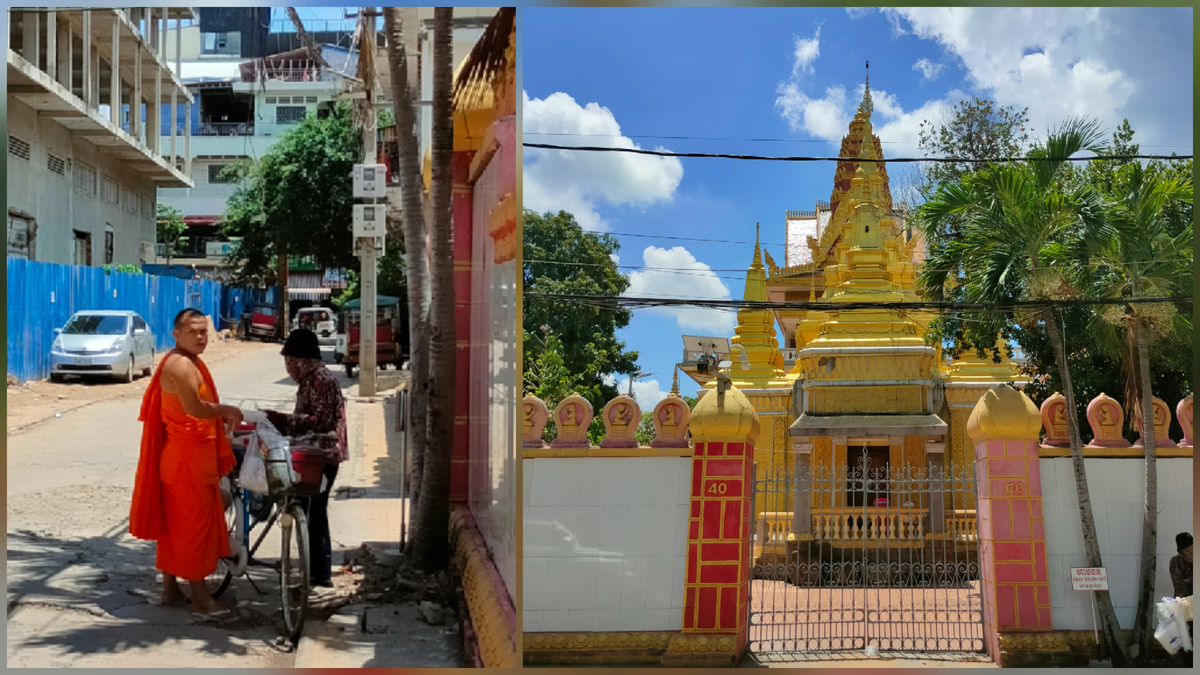
Wat Ounalom: From S-21 to a Living Monastery
From Tuol Sleng, I took a tuk-tuk toward Wat Ounalom on the riverfront.
The change of atmosphere was immediate.
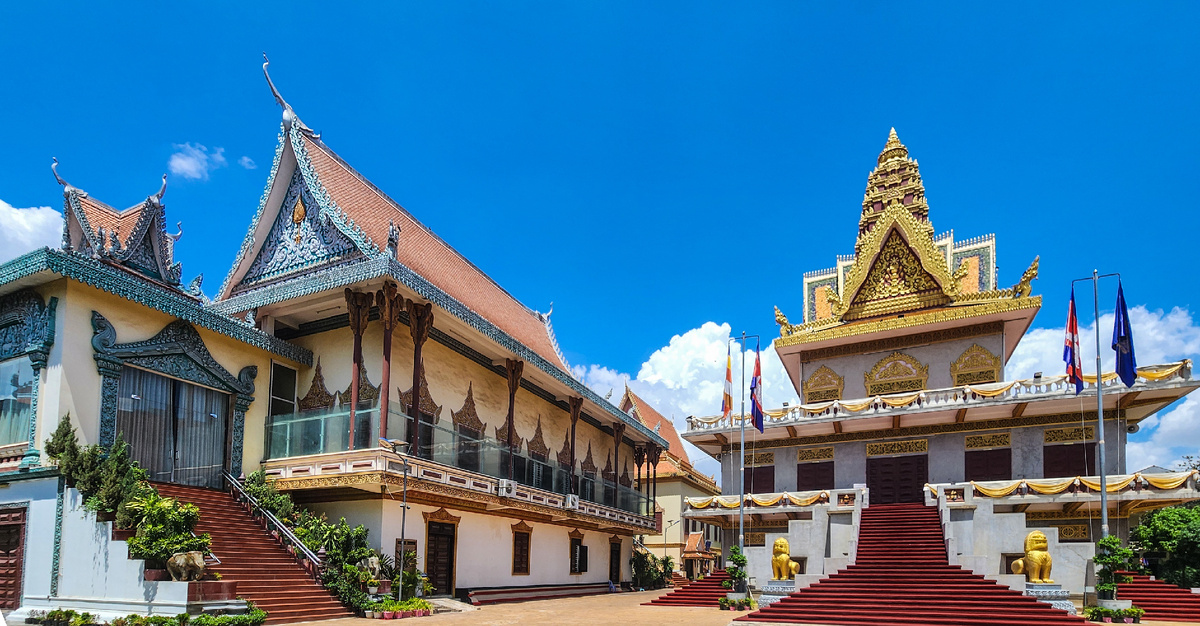
Wat Ounalom dates back to the fifteenth century and is one of Phnom Penh’s most important Buddhist monasteries. The complex is closely connected with the Cambodian Buddhist patriarchate and includes religious buildings, monastic living quarters and stupas.
One of its best-known traditions concerns a relic kept in the complex that is believed to be a hair from the Buddha’s eyebrow.
But those facts were not actually what interested me most while I was there.
What stayed with me was that the monastery felt alive.
Monks moved between buildings.
People prayed.
Daily life continued around the religious spaces.
This was not religion displayed inside a museum case.
It was being used.
After the emotional weight of S-21, walking slowly around the monastery for 30–40 minutes was a very welcome change of pace.
Friends the Restaurant: A Useful Pause
From Wat Ounalom, I started walking toward the National Museum.
On the way, I stopped at Friends the Restaurant.
The restaurant is connected with vocational training and social-support work, but for me at that moment the immediate value was simpler.
Shade.
A drink.
Food.
A chance to stop moving.
There was also a small shop with handmade products.
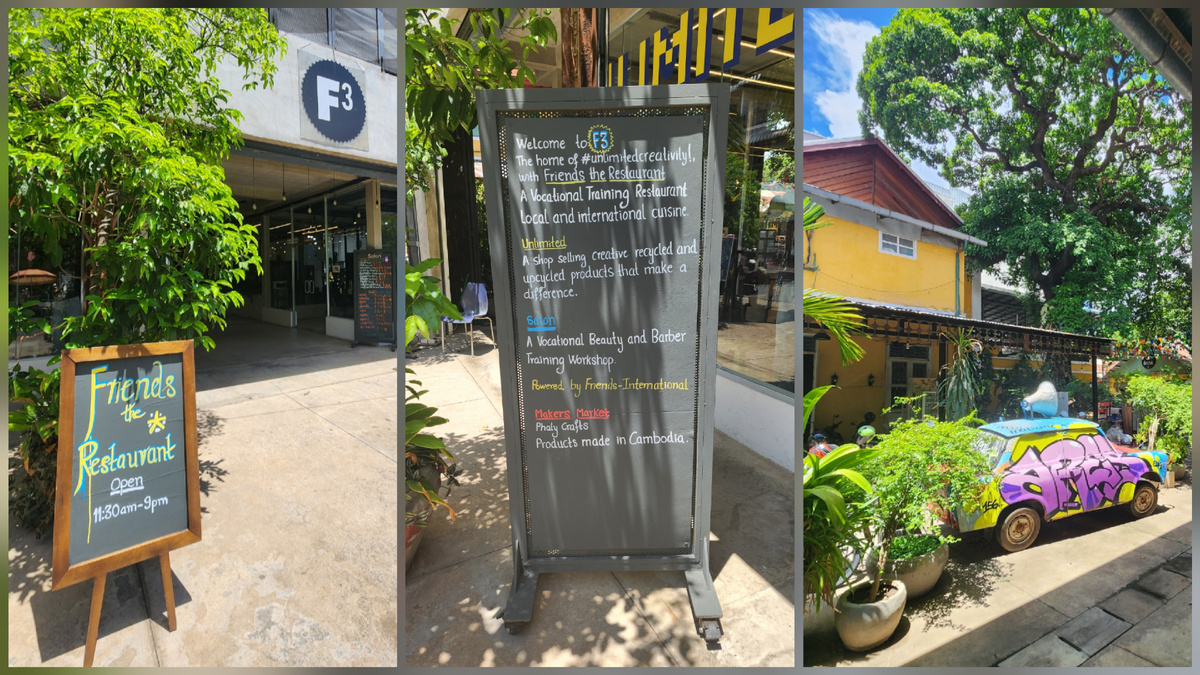
One mistake I repeatedly make on short city visits is treating every pause as wasted sightseeing time.
In Phnom Penh’s heat, the pauses were part of what made the rest of the route possible.
National Museum of Cambodia: Angkor Made More Sense Afterwards
I spent much longer than expected inside the National Museum of Cambodia.
And I think I appreciated it more because I had just come from Siem Reap.
After several days walking through Angkorian temples, I started recognizing forms, figures and styles rather than looking at every sculpture as an isolated museum object.
Buddhas.
Hindu deities.
Stone sculpture.
Bronzes.
Ceramics.
Objects from different periods of Khmer history.
The museum’s collection spans prehistoric, pre-Angkorian, Angkorian and post-Angkorian material.
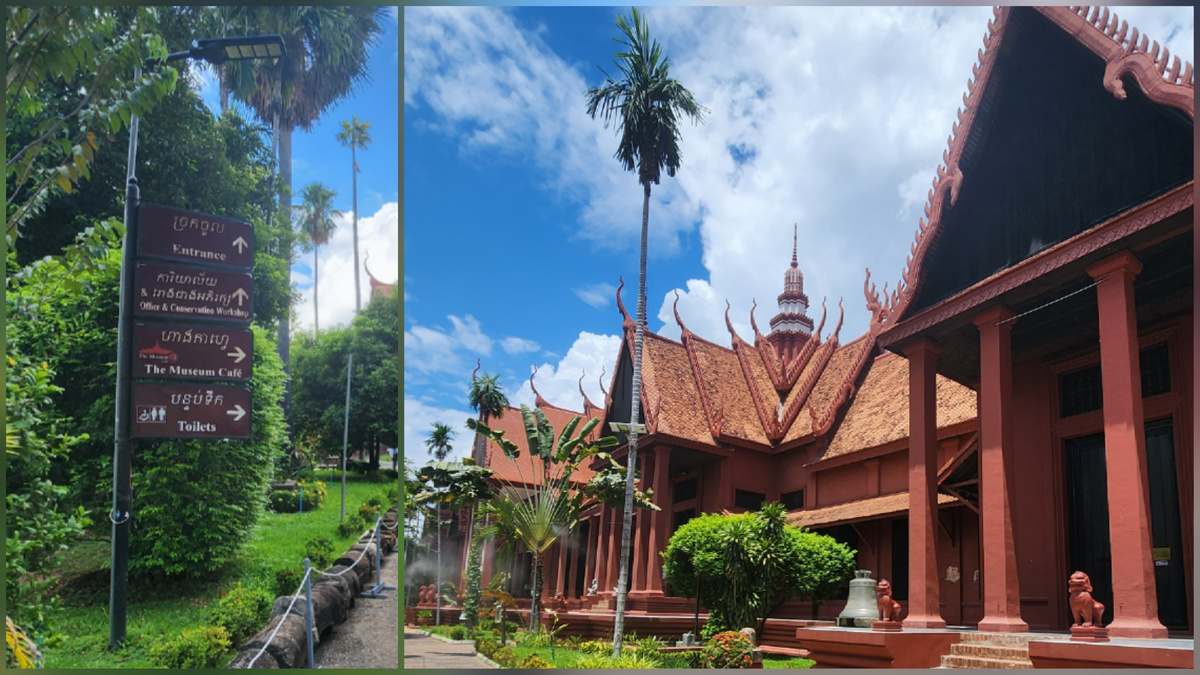

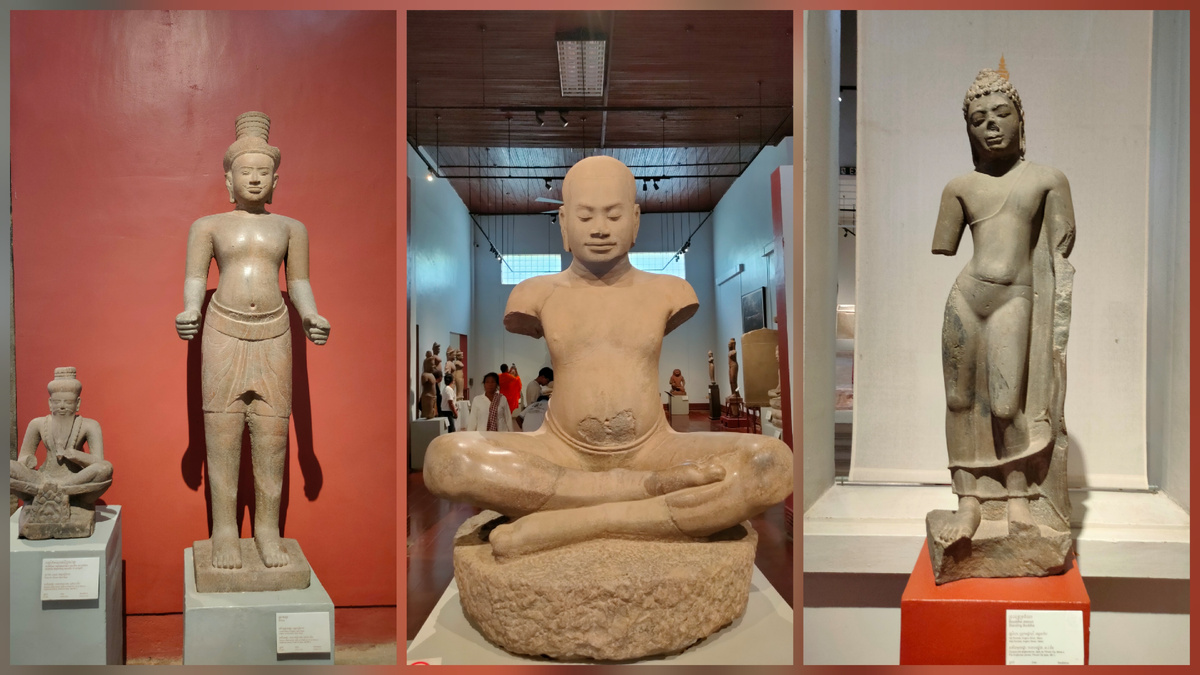
For me, this was where some of what I had seen around Angkor began to form a timeline.
The temples stopped being a collection of beautiful ruins and started connecting more clearly to a longer cultural history.
If I were rebuilding this trip from scratch, I would still put the museum after Siem Reap rather than before it.
I had more reference points in my head.
Walking Through Phnom Penh’s Royal Centre
From the museum, I continued through the area around the Royal Palace.
I was not doing an in-depth palace visit that day.
This part of the route was more about walking through the ceremonial centre of the capital and seeing how the major spaces fit together.
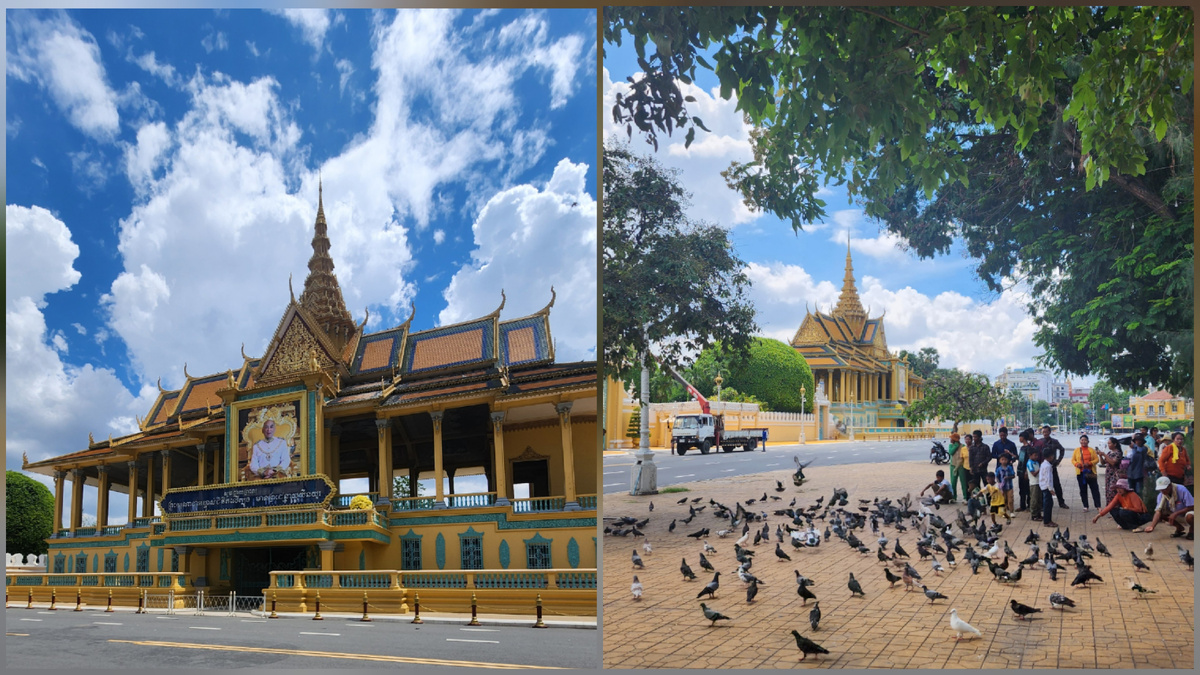
The Royal Palace remains the residence of Cambodia’s monarch, while its ceremonial areas and the adjoining Silver Pagoda form one of the city’s most recognizable historic complexes.
From the surrounding streets and park, you get a much more formal version of Phnom Penh:
yellow walls;
Khmer-style roofs;
carefully maintained grounds;
ceremonial architecture;
open spaces that feel completely different from the dense commercial streets nearby.
The Moonlight Pavilion is one of the recognizable structures along the edge of the complex.
I did not try to turn every building into a separate sightseeing mission.
At this point, walking through the area was enough.
Wat Botum to Independence Monument
From the palace area, I continued toward Wat Botum Park.
This section works better as one walk than as a list of separate attractions.
I passed:
- Wat Botum;
- the park around it;
- Botum Fountain;
- naga-themed fountains;
- the memorial to King Norodom Sihanouk;
- and finally the Independence Monument.
The park spaces felt more everyday than ceremonial.
People sat under the trees.
Families spent time outside.
Others exercised or simply crossed the park on the way somewhere else.
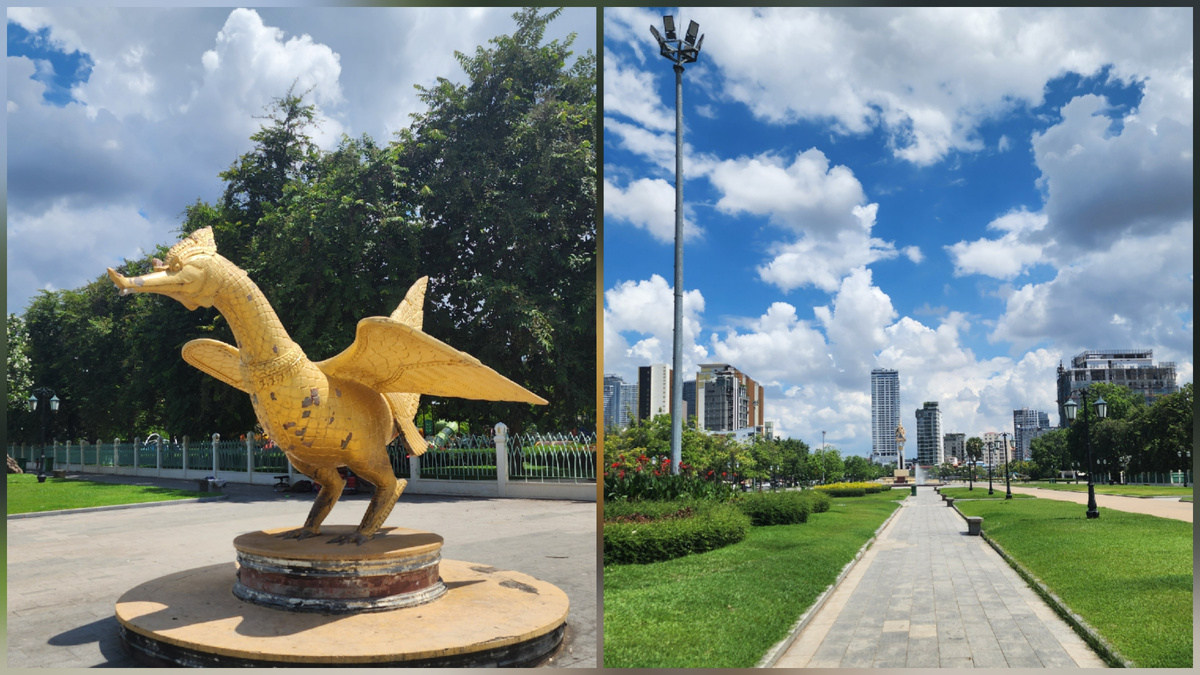
The Norodom Sihanouk Memorial and Independence Monument then shift the atmosphere back toward national symbolism.
The Independence Monument commemorates Cambodia’s independence from French colonial rule.
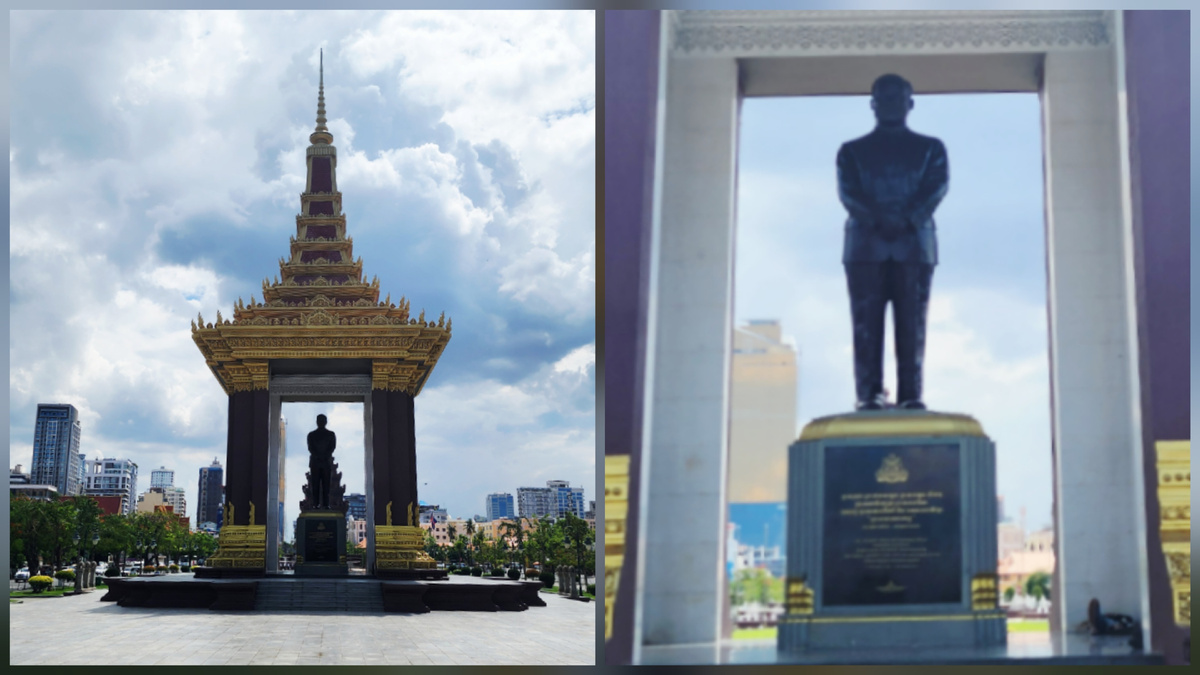
By then, however, my ability to appreciate symbolism was declining quickly.
It was hot.
I had already walked a lot.
My next stop was chosen for purely practical reasons.
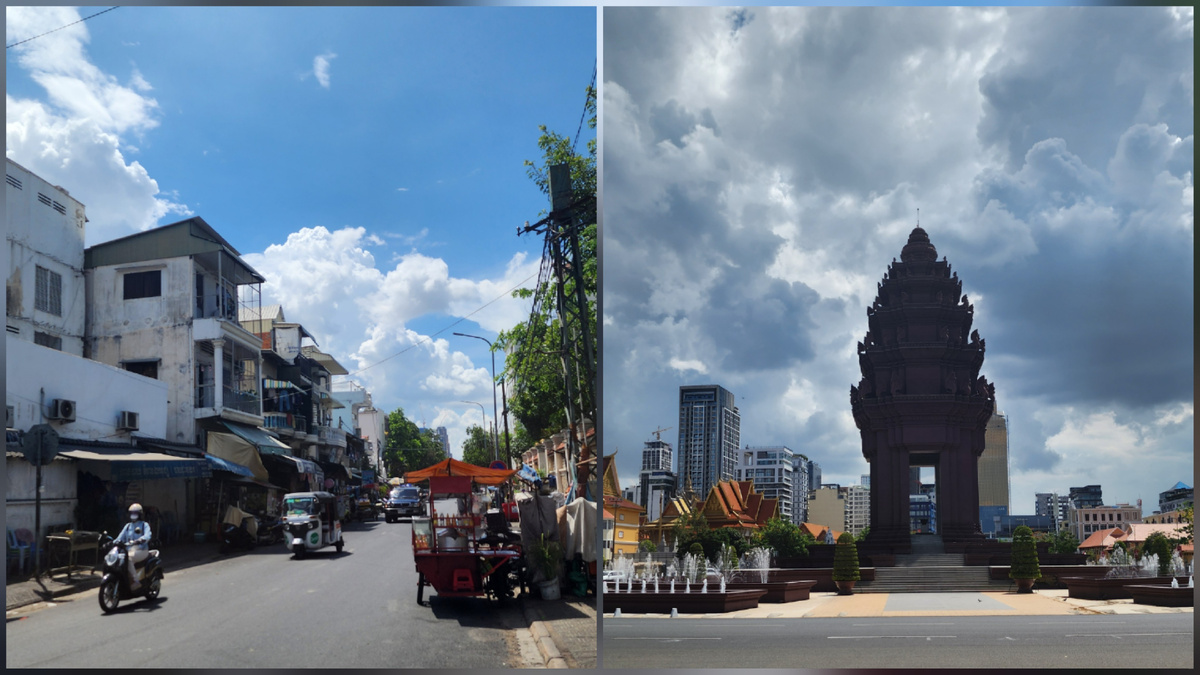
AEON Mall: The Air-Conditioned Reset
I took a tuk-tuk to AEON Mall.
Not because it was an essential Phnom Penh landmark.
Because it had air conditioning.
After museums, temples, parks and streets in the heat, walking into a modern shopping centre felt almost therapeutic.
Clean floors.
Cold air.
Food.
Shops.
Ordinary city life.
It also gave me another version of Phnom Penh.
A short city trip can easily become a sequence of palaces, temples, museums and markets. A mall is useful partly because it shows the city doing something much less photogenic and much more normal.
Koh Pich: The Stop I Didn’t Have Time For
From AEON, Koh Pich, or Diamond Island, would have been a logical addition.
I did not make it there.
It is one of Phnom Penh’s newer urban areas, with riverfront development, residential and commercial buildings, cafés and wider modern streets.
It would have fitted nicely with something I was already noticing throughout the day:
Phnom Penh does not have one visual identity.
Older religious spaces, colonial-era streets, royal architecture and new developments sit surprisingly close together.
But by this point I had to choose.
Koh Pich stayed on the list for another visit.
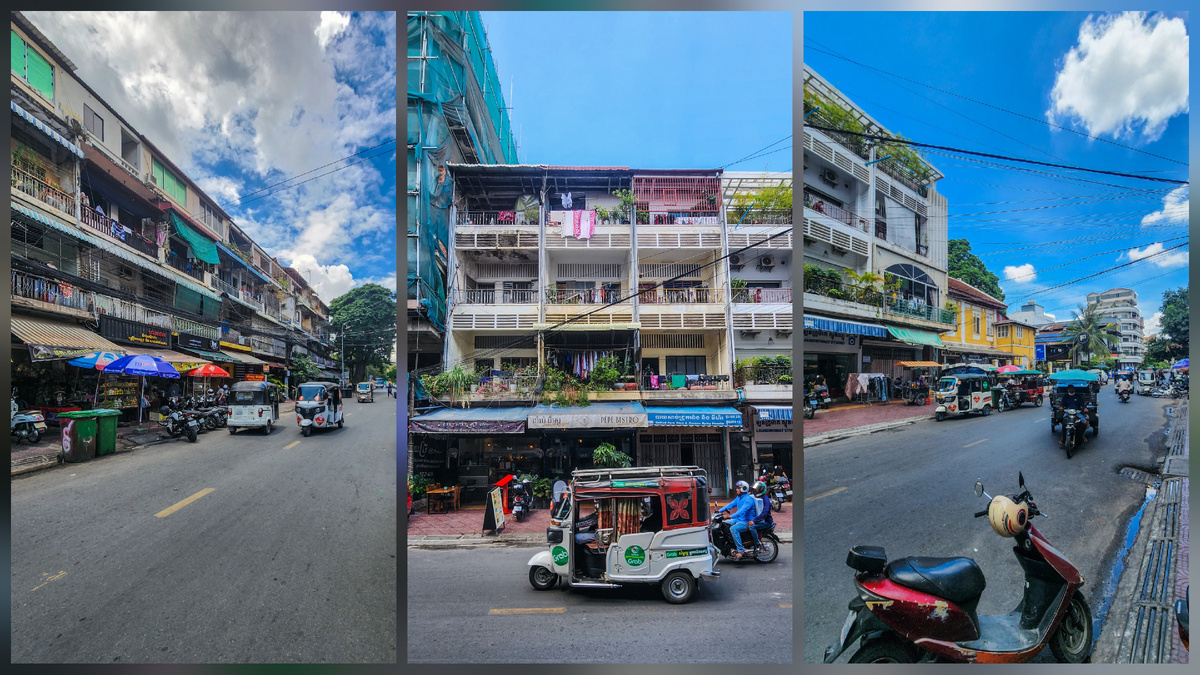
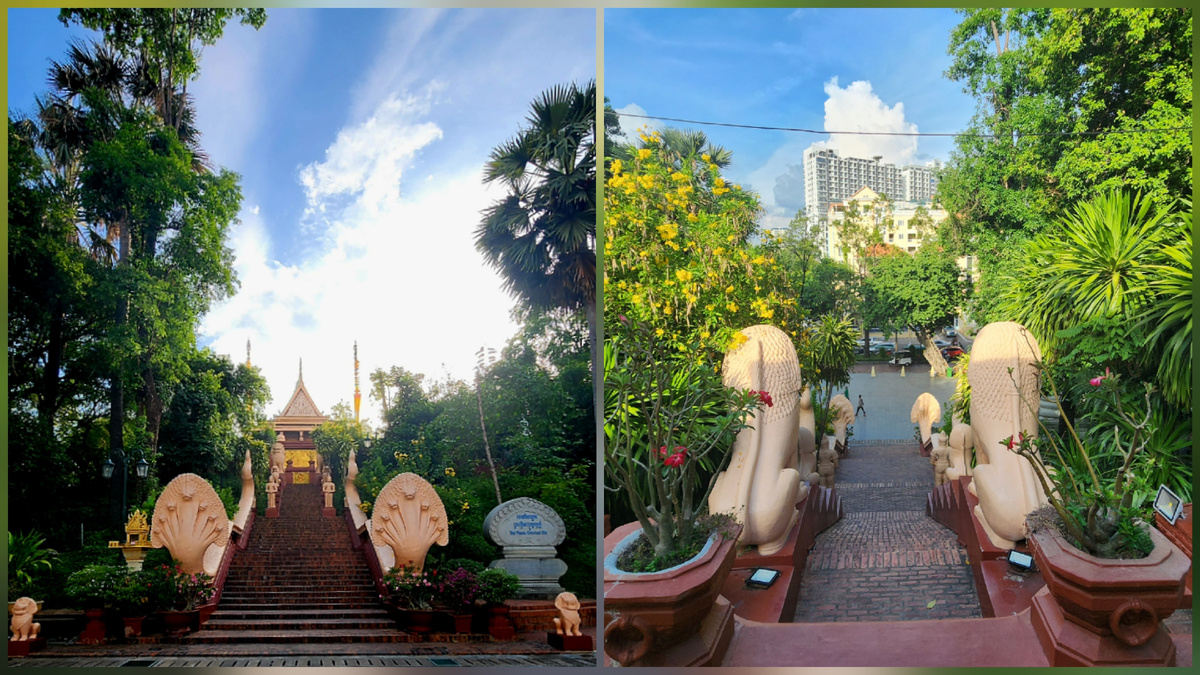
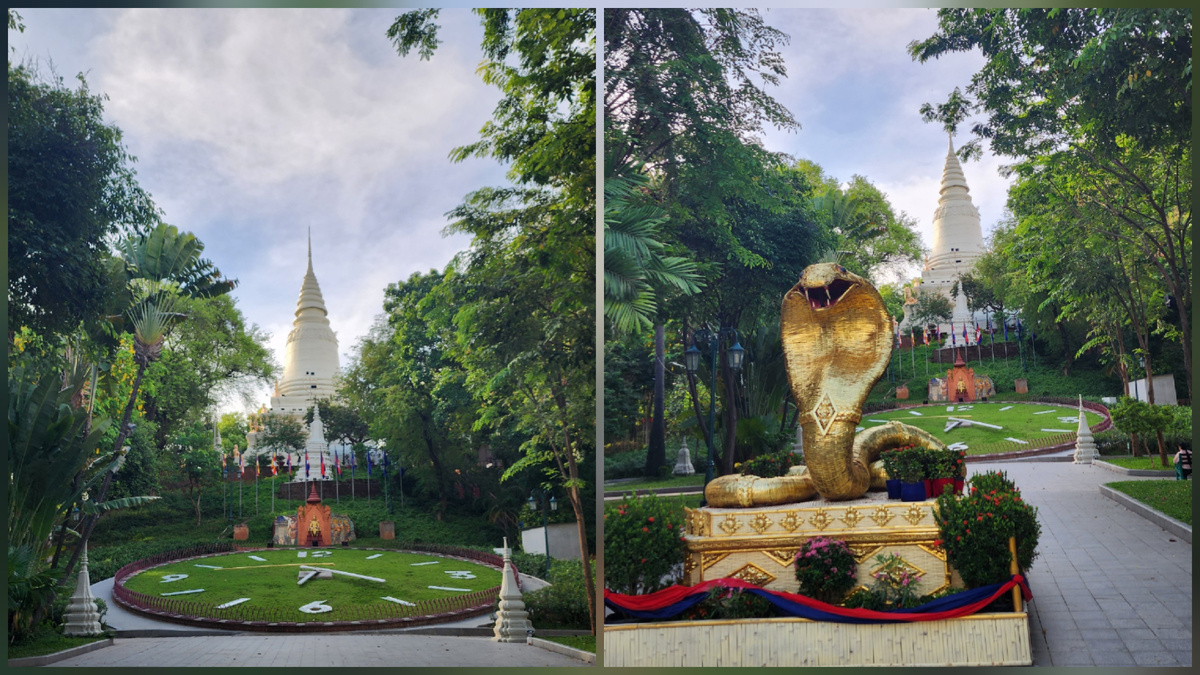
Wat Phnom: The Hill Behind the City’s Name
Instead, I went to Wat Phnom.
The hill is only around 27 metres high, but in flat Phnom Penh that is enough to make it a distinctive landmark.
More importantly, it sits at the centre of the city’s founding legend.
According to tradition, a woman known as Daun Penh found Buddha statues in a tree carried by the river and had a hill raised to house them.
The place became associated with Phnom Penh: Penh’s Hill.
You climb through trees toward the pagoda, passing naga and lion figures along the way.
Local visitors come to pray and make offerings, so again it does not feel like a religious building maintained only for tourists.
Late afternoon suited it well.
The heat was easing.
The light was softer.
And after an extremely full day, the small climb gave me somewhere to slow down before sunset.

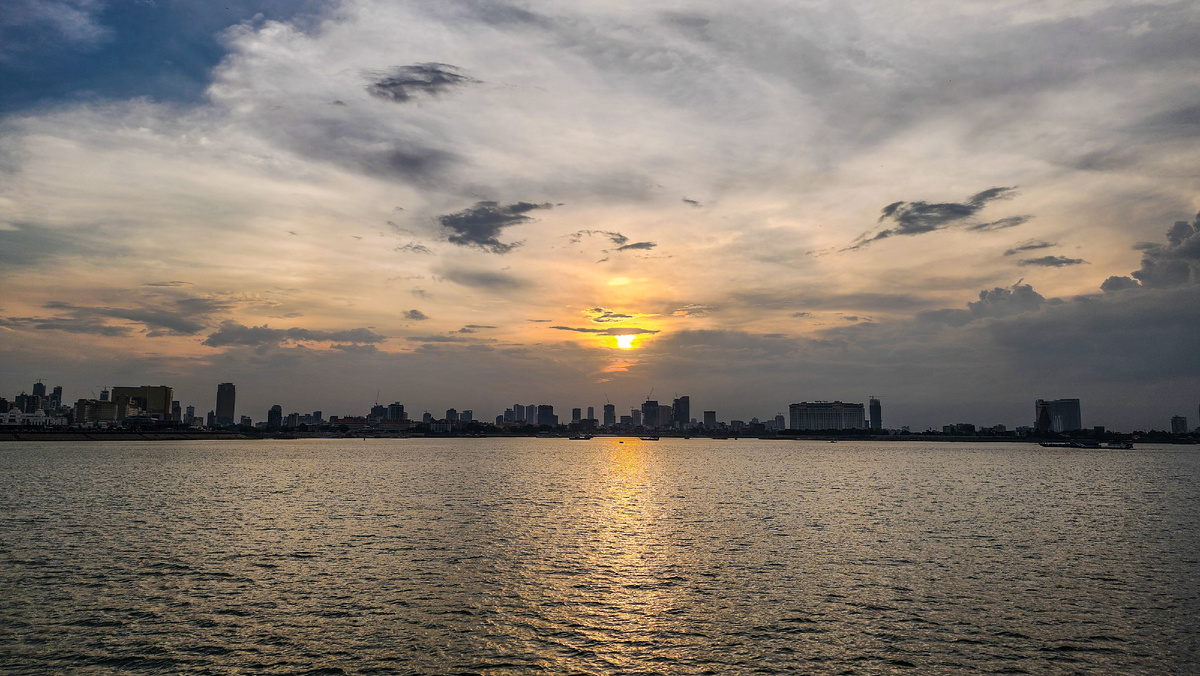
Sunset Cruise: Phnom Penh from the River
For sunset, I had booked a river cruise through Trip.com.
My particular cruise cost around $9 at the time of my trip, which made it one of the cheapest organized activities I did in Phnom Penh.
The boat itself was simple.
Chairs.
Drinks.
A local English-speaking guide.
No floating nightclub.
No attempt to turn sunset into a party.
That suited me perfectly.
At first we saw the Phnom Penh most visitors recognize:
the riverfront;
temples;
hotels;
modern buildings;
city lights beginning to appear as the sun dropped.
Then the perspective changed.
What Our Guide Told Us About the River Communities
As the boat moved farther along the river, we passed areas where families were living in boats and homes close to the water.
Our guide explained that some of the communities included ethnic Vietnamese and Cham families, and he talked about difficulties some residents face around documentation, legal status, housing and access to services.
I would be careful about turning one guide’s explanation into a universal description of everyone living along the river.
But seeing the physical contrast was enough.
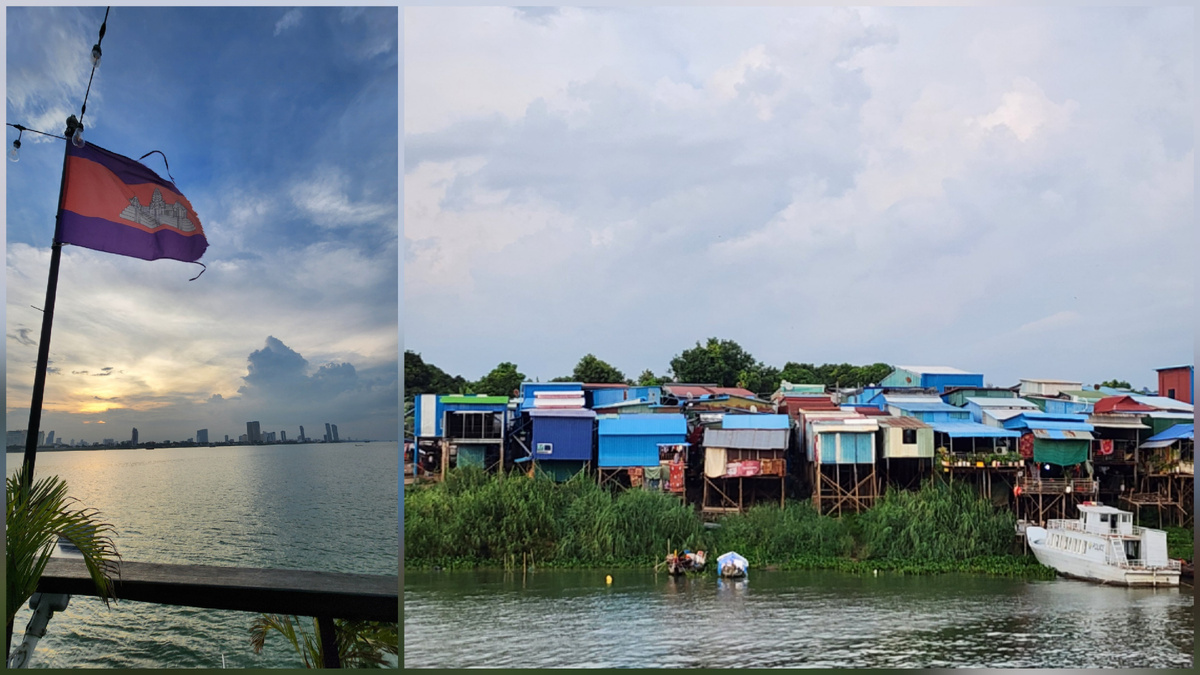
On one side:
new buildings, hotels and the formal riverfront.
On the other:
small boats and homes sitting directly on the water.
Children waved.
Laundry hung above the river.
The city skyline remained visible behind them.
The contrast was much more memorable to me than the sunset itself.
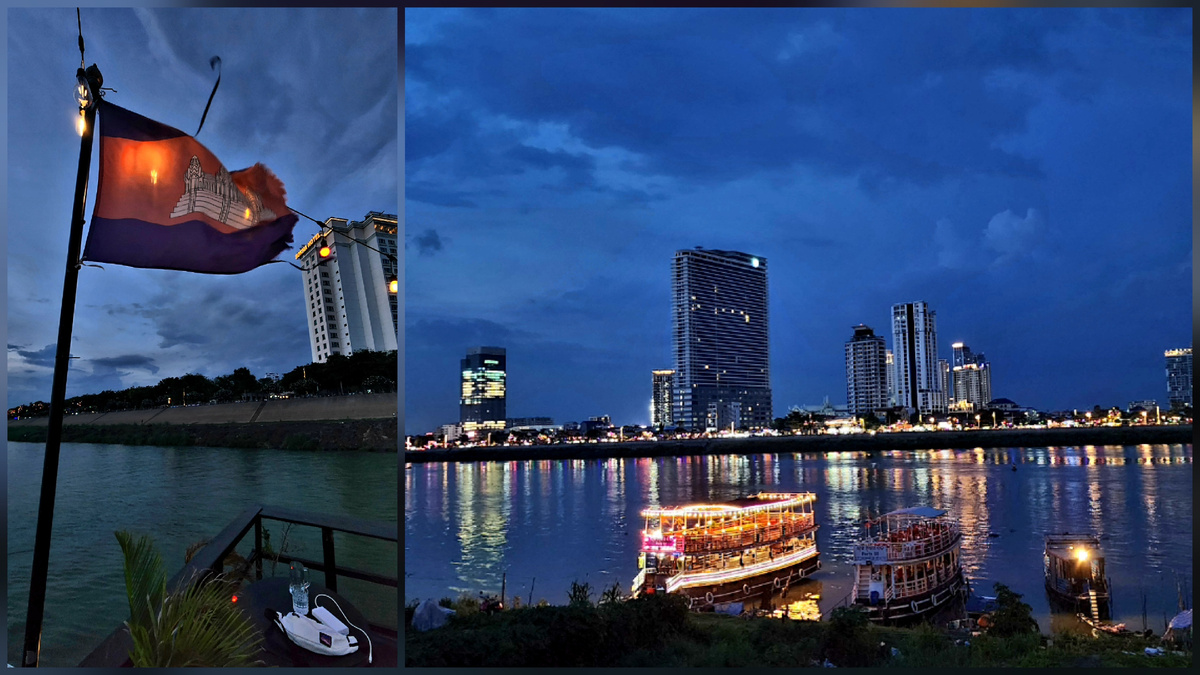
As darkness came, the river communities became harder to see while the modern city grew brighter.
The cruise became less about taking a sunset photo and more about seeing very different versions of Phnom Penh occupying the same stretch of water.
It was one of the strongest parts of the day.
PH Euro Park: A Completely Different Register
After the cruise, I could easily have gone back to the hotel.
Instead, curiosity won again.
I had kept seeing photos and videos of PH Euro Park, and I wanted to see why parts of it looked so unlike the Cambodia I had spent the previous few days exploring.
The ride from central Phnom Penh took roughly half an hour in my case.
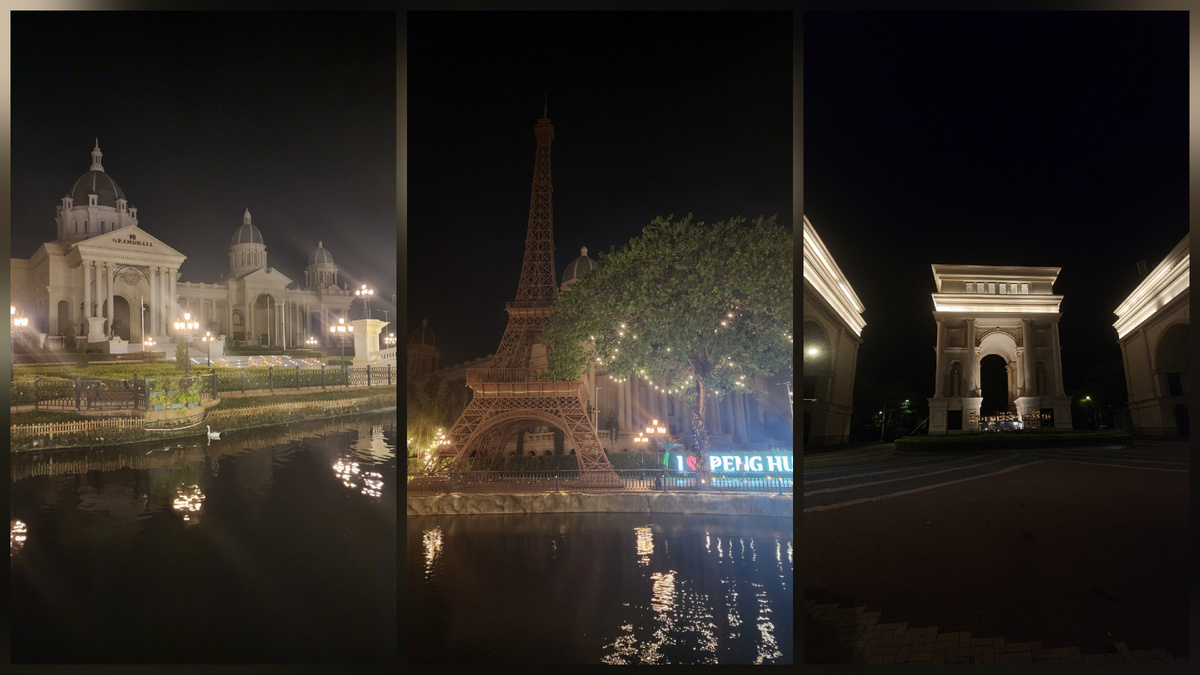
Then came Euro Park.
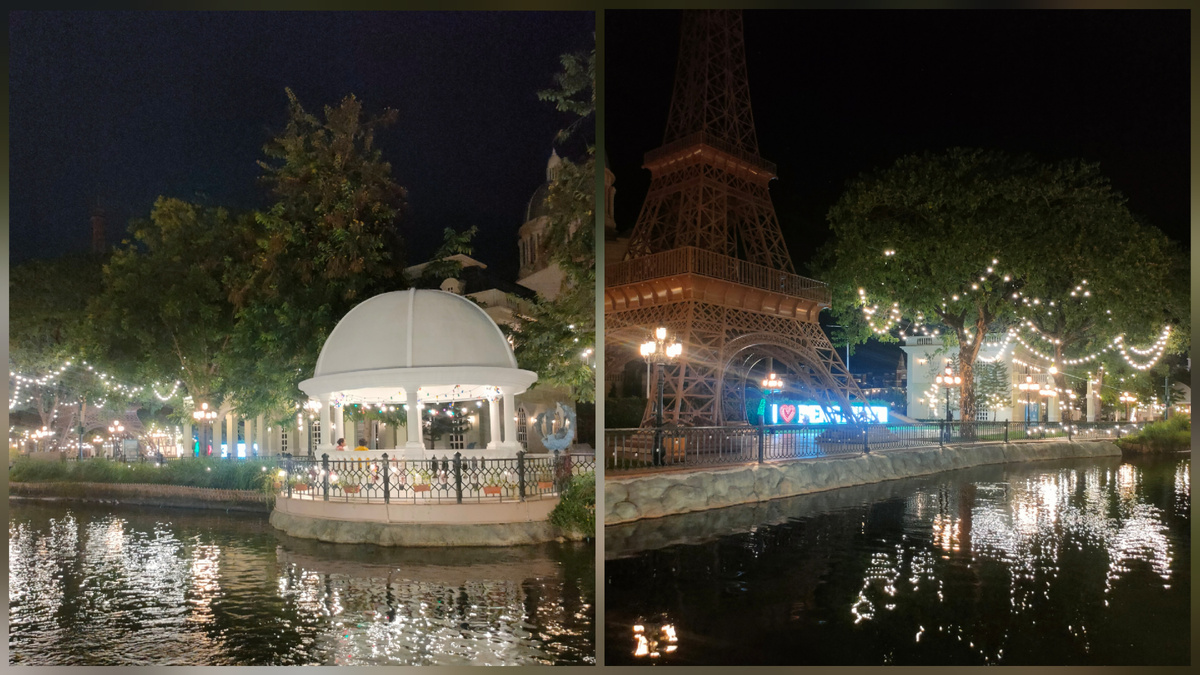
Pastel facades.
Bridges.
Canals.
Decorative arches.
Cafés.
Restaurants.
Carefully designed lighting.
People taking photos.
Couples and families walking around.
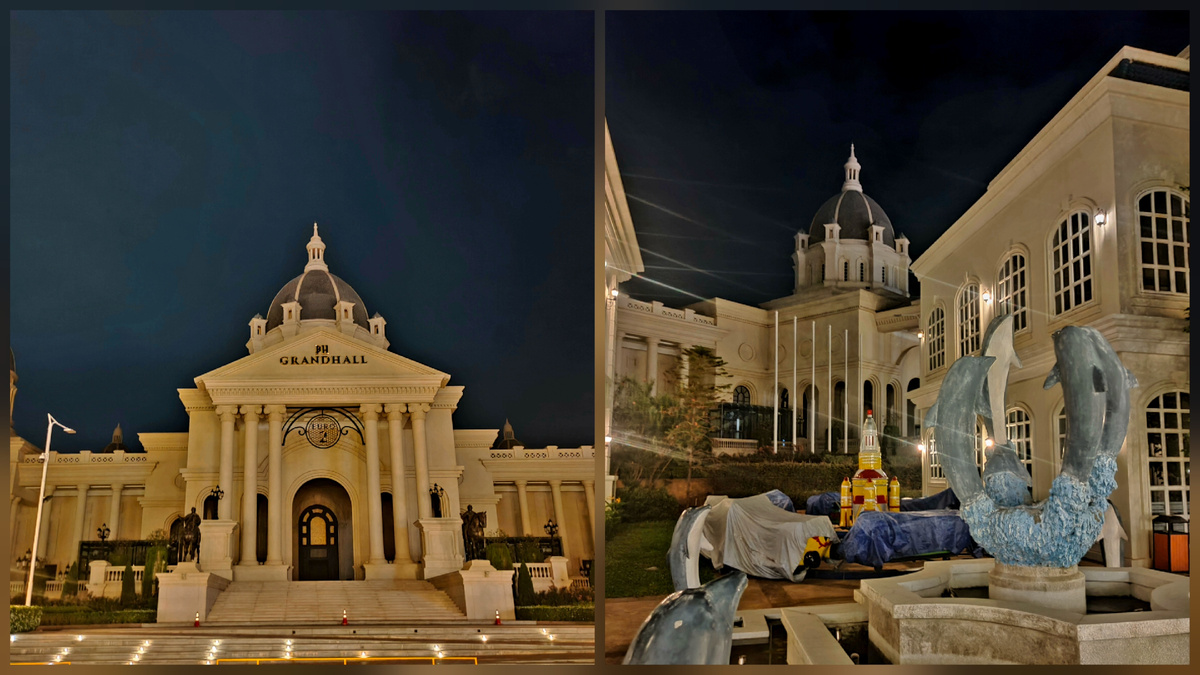
After Angkor, S-21, older city streets and the river communities I had just seen from the boat, the place felt almost like a film set.
That was precisely why I found it interesting.
Not because it was more authentic than anything else.
Quite the opposite.
It was another version of contemporary Phnom Penh: controlled, polished and designed around leisure.
I walked there after dark, when lights reflected in the water and music came from the cafés.
The contrast with the rest of my day was almost ridiculous.
Which meant, of course, that I still wasn’t finished.


Bassac Lane: The Last Stop I Definitely Didn’t Need
There is a part of me that always wants to know where a city’s evening bar scene actually happens.
In Phnom Penh, that took me to Bassac Lane and the streets around Street 308.
By that point I was exhausted.
Still, I wanted to see it once.
The area is compact.
Small lanes.
Two-storey buildings.
Cocktail bars.
Wine bars.
Bistros.
Tables outside.
Motorbikes and tuk-tuks coming and going.
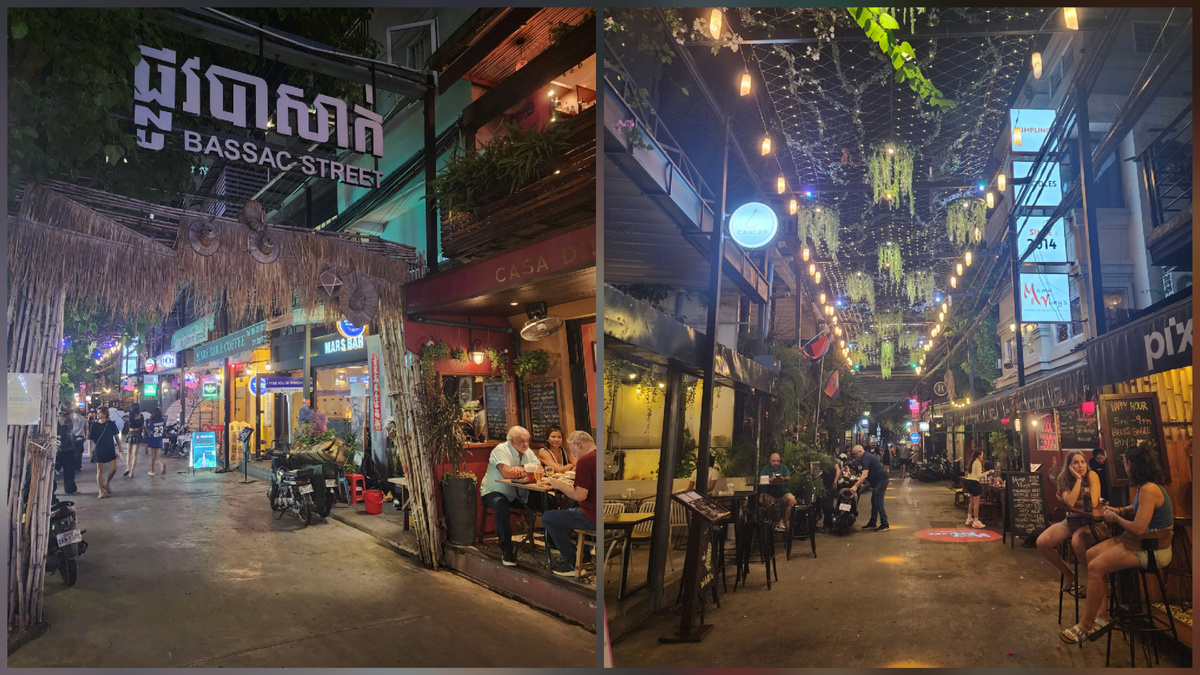
It felt different from a giant, noisy party street.
The music at the places I passed was generally background rather than overwhelming.
People could actually talk.
The crowd during my visit was mixed: travellers, expats and Cambodians out for the evening.
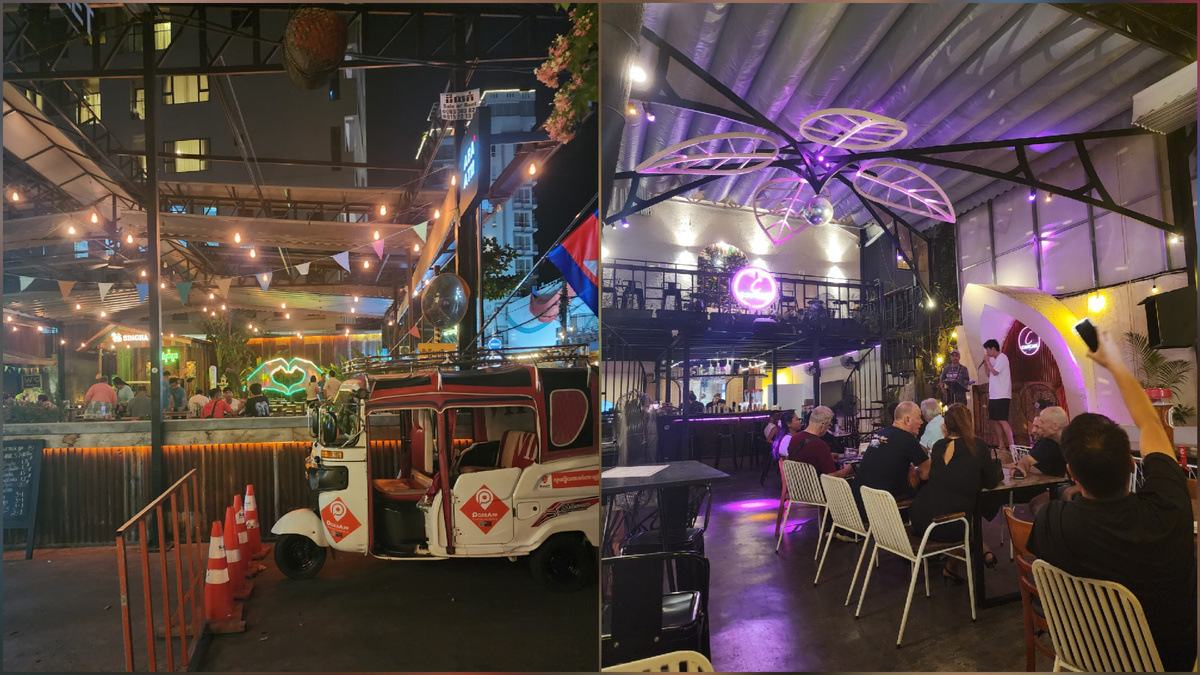
I did not attempt a heroic bar crawl after the day I had already had.
I chose a couple of places, sat down, watched the street and finally accepted that Phnom Penh had shown me enough for one day.
Would I Recommend Doing All of This in One Day?
No.
At least, not exactly like I did.
I had only one full sightseeing day in Phnom Penh, so I deliberately tried to extract as much from it as possible.
That proved something useful:
you can see an enormous amount of Phnom Penh in one day.
It did not prove that you should.
By the evening I had moved from a former Khmer Rouge prison to a monastery, a museum, the royal centre, parks, a shopping mall, Wat Phnom, a river cruise, a polished modern development and finally a bar district.
That is a lot of completely different material to process.
My Actual Route vs a Better 2-Day Phnom Penh Plan
If I had two full days instead, I would separate the city much more clearly.
| My actual compressed day | A more comfortable 2-day version |
|---|---|
| S-21 → Wat Ounalom → Friends → National Museum → Royal centre → Wat Botum → Independence Monument → AEON → Wat Phnom → cruise → Euro Park → Bassac Lane | Day 1: Tuol Sleng + Choeung Ek + National Museum, with proper breaks |
| Everything else squeezed around it | Day 2: Royal Palace area → Wat Ounalom / Wat Phnom → riverfront → sunset cruise → evening Phnom Penh |
That version gives the difficult history its own space instead of sandwiching it between unrelated attractions.
And it lets the more relaxed parts of Phnom Penh actually feel relaxed.
If you genuinely have only one day in Phnom Penh, my route proves that you can cover a lot.
I would simply choose the parts that matter most to you rather than trying to reproduce the whole thing.
Leaving Phnom Penh
My one day in Phnom Penh ended up being one of the most compressed and contradictory days of the whole Cambodia trip.
Ancient Buddhism.
Genocide history.
Khmer art.
Royal symbolism.
Air-conditioned malls.
Life along the river.
New developments.
Cocktails in a narrow lane at the end of the night.
The next stage took me away from the capital again.
I still had to see Sihanoukville, take the train toward Kampot, ride into the mist on Bokor Mountain and eventually close the loop back toward Vietnam and Phu Quoc.
Useful Travel Resources for Cambodia
Flights
Search flights on Trip.com
Hotels
Find hotels on Trip.com
Tours & Experiences
Browse Cambodia Tours & Experiences
eSIM
Get a Yesim eSIM
Transfers
Book a private transfer
Car Rental
Compare rental cars on Localrent
Travel Insurance
Check travel insurance with EKTA
Some links in this article are affiliate links. If you book through them, I may earn a small commission at no extra cost to you.