Kampot Salt Fields: Best Time to Visit & What to Expect
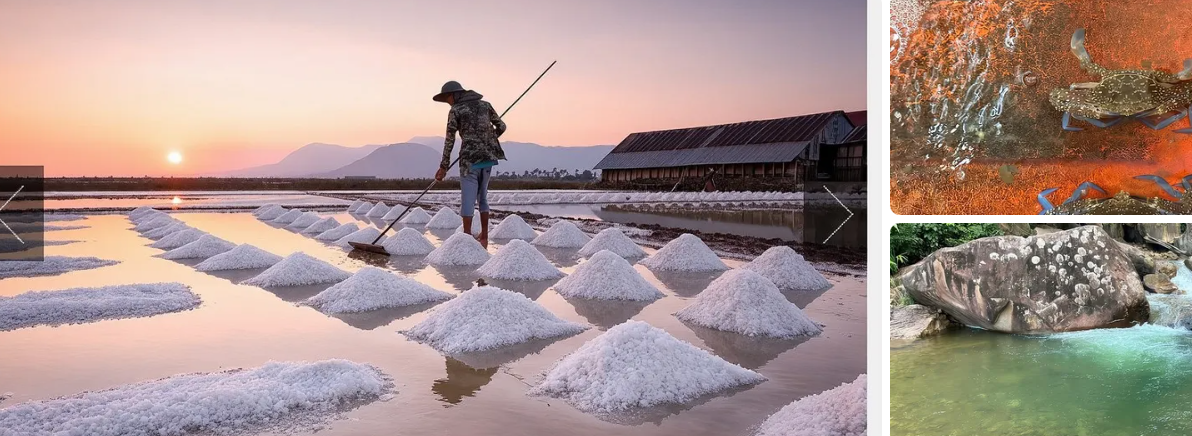
The Kampot Salt Fields are one of the easiest stops to add to a countryside trip in southern Cambodia, but timing makes all the difference. Visit during the dry season and you may see workers gathering white sea salt into piles. Come during the rains and you’ll find reflective ponds instead.
You don’t need to dedicate an entire day to the salt fields. They’re best combined with a Kampot pepper plantation, a countryside drive or a trip to Kep.
But there’s more to this landscape than a few photogenic pools. These shallow ponds are part of a traditional salt-producing industry that has shaped the local economy and food culture for generations.

Here’s what makes the fields interesting, when to visit and how to include them in your Kampot itinerary.
Kampot Salt Fields: Quick Facts
| Location | Coastal countryside around Kampot and Kep, Cambodia |
| Best season | December to April, depending on weather |
| Best time of day | Early morning for possible harvesting activity; late afternoon for photography |
| Time needed | Around 30–60 minutes for a short stop |
| Entrance fee | Generally free to view from public roads |
| Getting there | Scooter, tuk-tuk, bicycle or guided countryside tour |
| Best combined with | Kampot pepper farms and Kep |
Good to know: The salt fields are working agricultural areas, not a single tourist attraction with an entrance gate. Harvesting activity varies with the weather and production schedule.
What Are the Kampot Salt Fields?
Despite sometimes being called the Kampot Salt Lakes, these aren’t natural lakes.
They’re artificial evaporation ponds, also known as salt pans, designed to turn seawater into salt using sunshine and wind.
The fields consist of shallow rectangular basins separated by narrow earthen paths. Water is channelled into the ponds, where it gradually evaporates until salt crystals form.
From a distance, the landscape looks like a geometric mosaic. Some ponds reflect the sky like mirrors, while others appear almost white when salt begins to accumulate.
The main salt-producing areas are located in the coastal lowlands around Kampot and neighbouring Kep Province, with accessible areas around Chum Kriel and Fish Island near Kampot town.
Why is salt produced here?
Kampot has several natural advantages for traditional sea salt production:
- The Gulf of Thailand provides access to seawater.
- Flat coastal land makes it possible to create large, shallow ponds.
- Clay-rich soil helps retain water in the prepared basins.
- Hot, dry weather allows seawater to evaporate naturally.
Unlike industrial salt production, this method depends heavily on the seasons. Sunshine is essential, and unexpected rainfall can interrupt the process.
Salt, pepper and the history of Kampot
Salt has been important to Cambodia for centuries, particularly for preserving fish and preparing fermented foods.
During the French colonial period, salt was also an important regulated commodity. Despite the political upheavals and economic disruptions of the twentieth century, traditional production continued in southern Cambodia.
Today, the salt fields remain part of Kampot’s agricultural identity.
Kampot pepper may receive more international attention, but sea salt has its own place in the region’s kitchens and markets. Salt is essential to food preservation, while the familiar combination of pepper, salt and lime connects directly to southern Cambodia’s seafood culture.
Seeing the salt fields alongside a pepper plantation provides an interesting contrast between two very different agricultural products from the same region.
How Is Sea Salt Made in Kampot?
The process sounds simple: fill shallow ponds with seawater, let the water evaporate and collect the salt.
In practice, it requires careful preparation, suitable weather and a considerable amount of manual labour.
1. Preparing the ponds
Before the dry-season production cycle, farmers prepare the fields by repairing boundaries, levelling the pond beds and compacting the clay surface.
The ponds need to hold shallow layers of water while allowing workers to collect the salt later.
2. Bringing in seawater
Seawater enters the system through channels and controlled inlets.
As water moves through the evaporation ponds, its salt concentration increases.
3. Evaporation and crystallisation
Sunshine and wind gradually remove moisture from the water.
Once the brine becomes concentrated enough, salt crystals start forming on the pond floor.
This is the stage when the fields begin to develop their distinctive white appearance.
4. Harvesting the salt
Workers gather the crystals using long-handled rakes and other simple tools.
The salt is collected into piles, moved from the harvesting surface and prepared for storage.
Those white mounds seen in photographs aren’t decorative. They’re the result of repeated, physically demanding work under the tropical sun.
5. Drying and storage
The harvested salt is allowed to drain and dry before being moved to storage facilities for further handling and distribution.
The entire process depends on favourable conditions. A spell of heavy rain can delay harvesting or damage salt that hasn’t yet been collected.
The people behind the landscape
Salt farming is demanding work, especially during Cambodia’s hottest months.
Workers spend hours on exposed fields with little shade, handling saltwater and moving heavy quantities of salt. Their income is also vulnerable to changes in rainfall and the length of the production season.
It’s worth remembering this when visiting: the fields are not a demonstration arranged for tourists. They’re workplaces that support local families.
When Is the Best Time to Visit the Kampot Salt Fields?
The best time to see salt production is during Cambodia’s dry season, generally from December to April.
The exact start and end of harvesting depend on rainfall, so visiting during these months improves your chances but doesn’t guarantee that workers will be active.
| Season | What you’ll likely see |
|---|---|
| December–February | Pond preparation and active salt production as dry conditions develop |
| March–April | Hot weather and often intensive salt harvesting |
| May | Possible late harvesting, depending on the arrival of the rains |
| June–October | Rain-filled ponds and little or no active harvesting |
Morning or sunset?
For observing the harvesting process, early morning is usually the better choice.
Workers often begin early to avoid the strongest heat. By the time you arrive in the afternoon, the day’s work may already be finished.
For photography, late afternoon can be beautiful. The lower sun highlights the geometry of the ponds, and still water creates reflections across the landscape.
If you visit during the rainy season, don’t expect white salt piles or an active harvest. The fields may still be scenic, but the experience will be different.
My recommendation: If you want to understand how salt is produced, prioritise the dry season and visit in the morning. If you’re mainly interested in the landscape, the quality of the light may matter more than the harvesting schedule.
Where Are the Kampot Salt Fields and How Do You Get There?
The salt fields are spread across the countryside around Kampot and Kep, rather than concentrated in one location.
Some of the more accessible areas are found around Chum Kriel and Fish Island, close to Kampot town.
You can explore the surrounding roads by scooter, arrange a tuk-tuk or visit as part of an organised countryside tour.
By scooter
Renting a scooter offers the most flexibility. You can stop at viewpoints, explore different sections of the landscape and continue towards other countryside attractions.
Be prepared for dusty or uneven roads away from the main routes.
By tuk-tuk
A tuk-tuk is a convenient option if you don’t want to drive.
Ask your driver to include the salt fields as part of a countryside route and agree on the stops and price before leaving.
By bicycle
Cycling is possible, particularly if you’re staying in Kampot and enjoy exploring rural roads.
However, the landscape is exposed, and the heat can make even a relatively short ride uncomfortable in the middle of the day.
With a guided tour
If you’d rather not organise transportation yourself, a countryside tour can combine the salt fields with pepper plantations and caves.
Prefer not to rent a scooter?
The Kampot Countryside Tour: Pepper Farm, Salt Lake, Caves, and More is a convenient option to investigate. Its advertised route includes several of the area’s attractions, allowing you to explore more than just the salt fields on one trip.
Check the current itinerary and inclusions before booking.
Is there an entrance fee?
Viewing the salt fields from public roads is generally free.
However, the ponds themselves are working agricultural areas, and some sections are privately managed. Do not assume that you can walk across the fields or enter harvesting areas without permission.
If you arrange a guided visit involving access to a working salt farm, additional charges may apply.
For a casual sightseeing stop, 30–60 minutes is usually enough.
How to Combine the Salt Fields, Pepper Farms and Kep
The salt fields are interesting, but I wouldn’t plan an entire day around them.
The better option is to combine them with other attractions that reveal different sides of southern Cambodia.
One particularly logical route connects the salt fields, Kampot’s pepper-growing countryside and Kep.
A suggested one-day itinerary
Morning: Kampot Salt Fields
Start early and head towards the salt-producing areas outside Kampot.
If you’re visiting during the dry season, this is your best opportunity to see harvesting activity before the heat becomes too intense.
Spend around 30–60 minutes observing the landscape and production process from permitted areas.
Late morning: Kampot pepper plantation
Continue to a pepper farm where you can learn how Kampot pepper is cultivated, harvested and processed.
Some plantations offer guided visits and tastings, making this a useful contrast with the salt fields.
Afternoon: Kep and the crab market
Finish the trip in Kep, the small coastal town famous for its seafood.
The crab market is a natural final stop, especially if you want to try the local combination of crab and fresh green Kampot pepper.
This itinerary brings together three products closely associated with southern Cambodia: salt, pepper and seafood.
It’s a more rewarding way to explore the region than visiting the salt fields as an isolated photo stop.
Prefer a guided day trip?
For travellers who don’t want to coordinate their own transport, the Full-Day Countryside, Pepper Farm & Kep Crab Market Tour is another option worth comparing.
Its advertised focus includes the countryside, pepper farming and Kep’s crab market. If visiting the salt fields is essential to your plans, confirm that stop with the operator before booking.
The best choice depends on your priorities: choose a tour specifically listing the salt fields if you want to see salt production, or a broader Kampot–Kep itinerary if food and countryside sightseeing interest you more.
Tips for Visiting the Kampot Salt Fields
A little preparation makes the visit more comfortable and respectful.
- Stay on permitted paths. Don’t walk across the ponds or damage the earthen boundaries.
- Ask before photographing workers up close. People are working, not posing for tourists.
- Bring plenty of water. The fields are open and exposed, with very little shade.
- Wear a hat and sunscreen. The heat can be intense, particularly from March to April.
- Don’t expect tourist facilities. These are working fields, not a developed attraction with cafés and visitor centres.
- Check the weather. Rain can change the appearance of the fields and interrupt harvesting.
And if the ponds are empty or no one is working when you arrive, remember that salt production follows its own schedule rather than a tourist timetable.
Are the Kampot Salt Fields Worth Visiting?
Yes, if you’re already exploring Kampot’s countryside. But I wouldn’t travel to Kampot just for the salt fields.
They’re not a major attraction with elaborate facilities or an experience that takes hours to explore.
What makes them worthwhile is the chance to see something closely connected to everyday life in southern Cambodia.
During harvesting season, the white salt piles and workers gathering crystals offer a glimpse into an industry that most travellers know very little about.
Outside the harvesting season, the landscape can still be attractive, particularly for photography, but there’s less to observe.
If you only have a few hours in Kampot and need to choose between attractions, I’d prioritise what interests you most. The salt fields are particularly rewarding for travellers who enjoy rural landscapes, traditional industries and seeing how local products are made.
And if you’re planning a day trip to a pepper farm or Kep anyway, they’re an easy and worthwhile addition.
Frequently Asked Questions
Are the Kampot Salt Fields natural lakes?
No. They’re artificial shallow ponds used to evaporate seawater and produce sea salt. The term salt lakes is sometimes used by travellers, but salt fields or salt pans is more accurate.
Can you see salt harvesting all year?
No. Harvesting generally takes place during the dry season, approximately December to April, depending on weather conditions. Rainy-season visits usually won’t include active salt production.
Can you visit the Kampot Salt Fields independently?
Yes. Accessible viewpoints can be reached independently by scooter, bicycle or tuk-tuk. However, you should not enter private production areas without permission.
How long should you spend at the salt fields?
Allow around 30–60 minutes for a short visit. If you’re taking a guided tour that explains the production process or includes other countryside attractions, plan for longer.
Some links in this article are affiliate links. If you book through them, I may earn a small commission at no extra cost to you.