Phu Quoc Prison (Coconut Tree Prison): History, What to See & Visiting Guide
Phu Quoc is usually associated with beaches, palm trees and sunsets. It is harder to imagine that the same island now filled with resorts, beach clubs and cafes was once home to one of the largest prisoner-of-war camps operated by South Vietnam during the war.
Phu Quoc Prison, also known as Coconut Tree Prison or Cay Dua Prison, is now a historical memorial site in the south of the island, near An Thoi. The visit is very different from most things people come to Phu Quoc for: barracks, watchtowers, layers of barbed wire, narrow cells, reconstructed tiger cages and life-size scenes showing the conditions prisoners endured.
I would not call it a must-see for every visitor. But if you want to understand more than the resort side of Phu Quoc, this is one of the most important historical places on the island.
Is Phu Quoc Prison Worth Visiting?
Yes, if you are interested in Vietnamese history or want to see a different side of Phu Quoc.
This is not the kind of attraction you visit for a beautiful photo or a “wow” moment. The value of the place is in understanding what happened here and seeing the contrast between the island as it exists today and a much darker period of its history.
I spent around 40 minutes at Phu Quoc Prison. That was enough to walk through the main reconstructed areas without rushing. If you want to stop at every display and read the information in detail, allow closer to an hour.
The visit can also be emotionally heavy. Some of the reconstructed scenes show torture and severe detention conditions, so this is worth knowing before coming with children or if you are sensitive to this kind of display.
What You See at Phu Quoc Prison
The site does not feel like a conventional indoor museum.
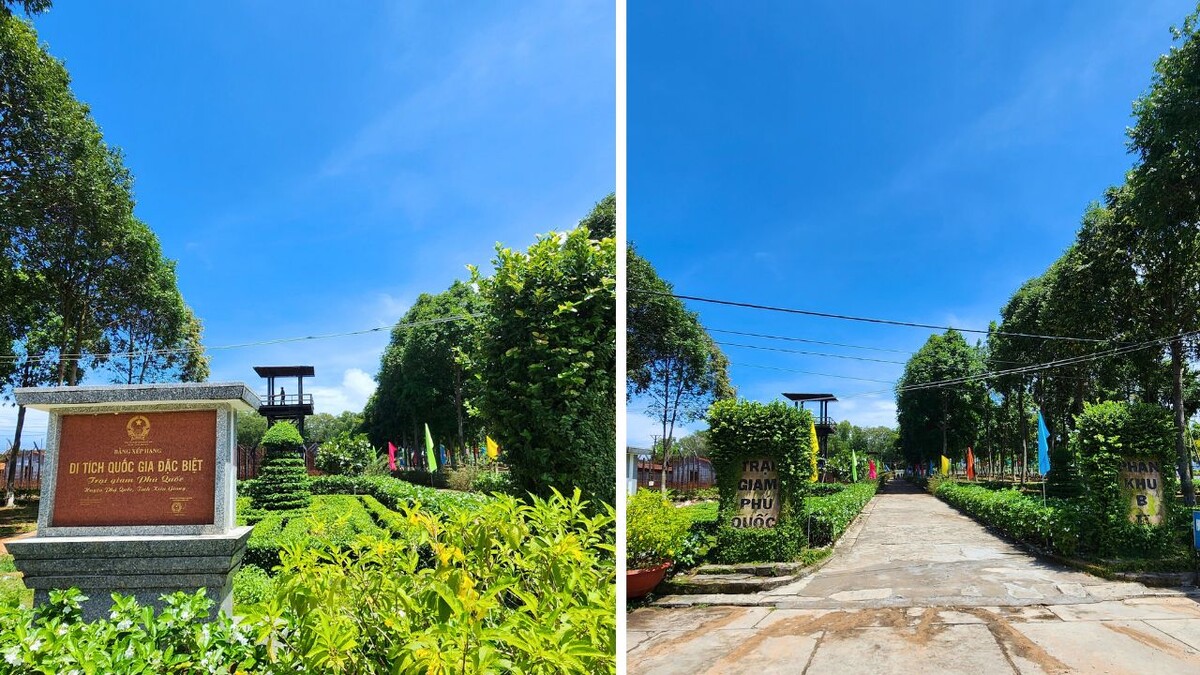
Much of the experience happens outside. You walk between watchtowers, fences and long barrack buildings while the open tropical landscape remains visible around you.
That contrast is one of the things that stayed with me: you are still on Phu Quoc, with the same heat and bright sky you experience on the beaches, but inside the fences the atmosphere changes completely.
Barracks and Prison Compounds
Several parts of the former camp have been reconstructed to show how prisoners were kept.
Inside the barracks you can see narrow spaces, simple sleeping areas and life-size figures representing prisoners. Other sections recreate guards, confinement and scenes from daily life inside the camp.
These are reconstructions rather than an untouched prison frozen exactly as it was in the 1960s and 1970s. The present historical site combines reconstructed structures with documentary material, artifacts and memorial areas.
That distinction matters because some of the most photographed scenes at Phu Quoc Prison are modern interpretations designed to explain what happened here.
Tiger Cages
The tiger cages are among the most memorable parts of the visit.
They were small punishment enclosures made from barbed wire, leaving prisoners exposed to the tropical heat and with extremely limited room to move.
Today you see reconstructed cages containing life-size figures. Even without graphic photographs, the physical scale of the cages makes their purpose immediately understandable.
Detention and Punishment Reconstructions
Other sections recreate different forms of confinement and punishment.
Some displays are much more confronting than others. Life-size figures are used to illustrate what prisoners experienced, and several scenes are deliberately difficult to look at.
This is where Phu Quoc Prison feels least like a tourist attraction and most like a memorial.
You do not need to study every individual reconstruction to understand the point. The combination of the physical camp layout, fences, barracks and displays already gives a strong sense of how controlled and isolated the environment was.

A Short History of Phu Quoc Prison
The history of the site begins before the Vietnam War.
During the French colonial period, a detention camp was established in the Cay Dua area of Phu Quoc.
The prison complex was substantially expanded in 1966. By 1972 it had grown into a system of 14 prison zones.
Between 1967 and 1973, more than 40,000 prisoners of war were held at Phu Quoc.
The scale of the camp is easier to understand when you know those numbers before walking through the reconstructed section. What survives for visitors today represents only part of a much larger wartime complex.
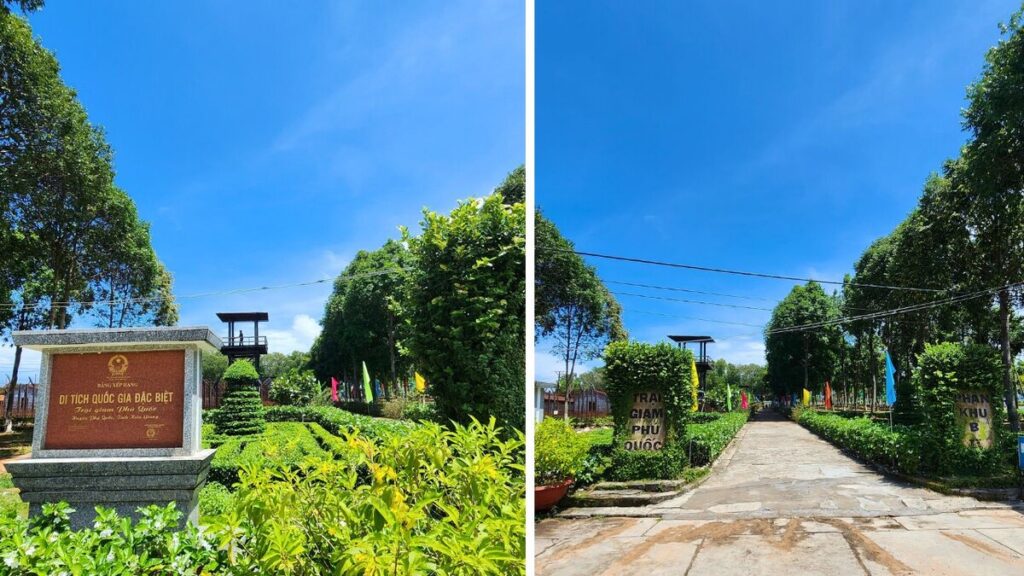
In 1996, Phu Quoc Prison was designated a National Historical Relic.
In March 2015, it received the higher designation of Special National Relic.
Today the historical site includes exhibition areas, outdoor reconstructions, historical objects and memorial elements dedicated to those imprisoned here.
This Is a Memorial, Not a “Dark Tourism” Attraction
It is easy to describe Phu Quoc Prison using dramatic language because some of the displays are disturbing.
I do not think that is the most useful way to approach it.
The site works better when you see it as a place of historical memory rather than somewhere to collect shocking photographs.
People stop to read, walk through the reconstructed barracks and look at the memorial areas. Some visitors move quickly through the site; others spend considerably longer.
Either way, it is worth treating the surroundings with the same respect you would give any war memorial.
That also means thinking about photography. Taking photos of the site is one thing. Posing for playful selfies beside torture reconstructions is something very different.
How Long Do You Need at Phu Quoc Prison?
For me, around 40 minutes was enough to see the main areas at a comfortable pace.
I would plan:
- 40-60 minutes for the main route
- 60-90 minutes if you want to read more of the displays and documentary material
You can technically move through faster, but this is one place where rushing from reconstruction to reconstruction removes much of the context.
Entrance Fee and Opening Hours
Phu Quoc Prison is generally listed as a free-entry historical site.
Opening hours can change, and published listings are not always completely consistent, so check the current opening status before travelling to the site.
A morning visit is a good option because much of the historical site is outdoors and exposed to the sun.
How to Get to Phu Quoc Prison
Phu Quoc Prison is located in the An Thoi area in southern Phu Quoc, along Nguyen Van Cu Road.
From the central part of the island, you can reach it by motorbike, taxi, private car or as part of a South Phu Quoc route.
It works particularly well as one stop in a wider southern itinerary rather than as a separate trip.
I visited it after Ho Quoc Pagoda, which is an easy combination for the same day.
From here you can continue toward places such as:
- Bai Sao
- Khem Beach
- An Thoi
- Sunset Town
- Hon Thom cable car
That makes it easy to give part of the day to history and then continue toward the coast.
How to Combine Phu Quoc Prison With a South Island Day
A simple route could look like this:
- Morning: Ho Quoc Pagoda → Phu Quoc Prison
- Midday: Bai Sao or Khem Beach
- Afternoon: An Thoi / Sunset Town / Hon Thom
- Evening: dinner or sunset in the south
You do not need to follow that exact order, but I prefer visiting the prison earlier rather than squeezing it between beach stops when you are already tired.
Staying in South Phu Quoc
If you are staying in southern Phu Quoc, especially around An Thoi, Khem Beach or Sunset Town, Phu Quoc Prison is particularly easy to add to your itinerary.
Hotels and accommodation in this part of the island also put you close to the Hon Thom cable car, southern beaches and several other attractions, so staying here can make sense if most of your plans are concentrated in South Phu Quoc.
Visiting With Children
I would think about this before bringing young children.
The site is educational, but some reconstructed scenes depict torture and harsh treatment using life-size figures. They are not subtle.
Older children and teenagers who are learning about twentieth-century history may get a lot from the visit, especially if an adult explains the context.
For younger children, it depends very much on the child.
You can also choose to skip some of the more graphic reconstructed areas while still seeing the camp layout, barracks, towers and fences.
Practical Tips Before You Visit
- Go earlier in the day. The outdoor sections can become very hot.
- Bring water and sun protection. There is much more outdoor walking than you might expect from a museum visit.
- Allow at least 40 minutes. It is possible to walk through faster, but you lose much of the point.
- Expect difficult displays. Some reconstructed scenes show torture and physical abuse.
- Keep photography respectful. Remember that this is a memorial site connected to people who were imprisoned and died here.
- Check opening hours the same day. Visitor arrangements can change.
Do You Need to Visit Phu Quoc Prison?
No.
You can have an excellent trip to Phu Quoc without ever coming here, and I would not tell someone that they have “not seen the real island” because they skipped the prison.
But there is another reason to visit.
Most people experience modern Phu Quoc through beaches, hotels, restaurants, boats and resort developments. Phu Quoc Prison interrupts that version of the island.
For less than an hour, you see a place connected to a period when people arrived on Phu Quoc for reasons completely different from tourism.
Then you walk back through the gate and continue toward the sea.
That contrast is probably what makes the visit stay with you.
FAQ About Phu Quoc Prison
What is Phu Quoc Prison?
Phu Quoc Prison, also known as Coconut Tree Prison or Cay Dua Prison, is a former detention and prisoner-of-war camp in southern Phu Quoc. Today it is a historical memorial site and Special National Relic.
Is Phu Quoc Prison worth visiting?
It is worth visiting if you are interested in Vietnamese history or want to understand a side of Phu Quoc beyond its beaches and resorts. It is not an essential stop for every holidaymaker.
How long should I spend at Phu Quoc Prison?
I spent around 40 minutes there. For most visitors, around 40-60 minutes should be enough for the main areas, while those reading the displays in detail may want longer.
Is Phu Quoc Prison free?
It is generally listed as a free-entry historical site. Visitor arrangements can change, so check the current information before travelling there.
Is Phu Quoc Prison suitable for children?
Some sections use life-size figures to depict torture and harsh imprisonment conditions. Older children and teenagers may find the historical context valuable, but the displays may be too disturbing for younger children.
Is everything at Phu Quoc Prison original?
No. The visitor site includes reconstructed barracks, tiger cages and detention scenes alongside historical objects, exhibition material and memorial elements.
What can I combine with Phu Quoc Prison?
Ho Quoc Pagoda, Bai Sao, Khem Beach, An Thoi, Sunset Town and the Hon Thom cable car all fit naturally into a South Phu Quoc itinerary.
Some links on this page are affiliate links. If you make a booking or purchase through one of them, I may earn a small commission at no extra cost to you.