My Son Sanctuary from Da Nang: One-Day Champa Route + Cham Museum
My Son Sanctuary from Da Nang is much more interesting when you pair it with the Museum of Cham Sculpture in the city.
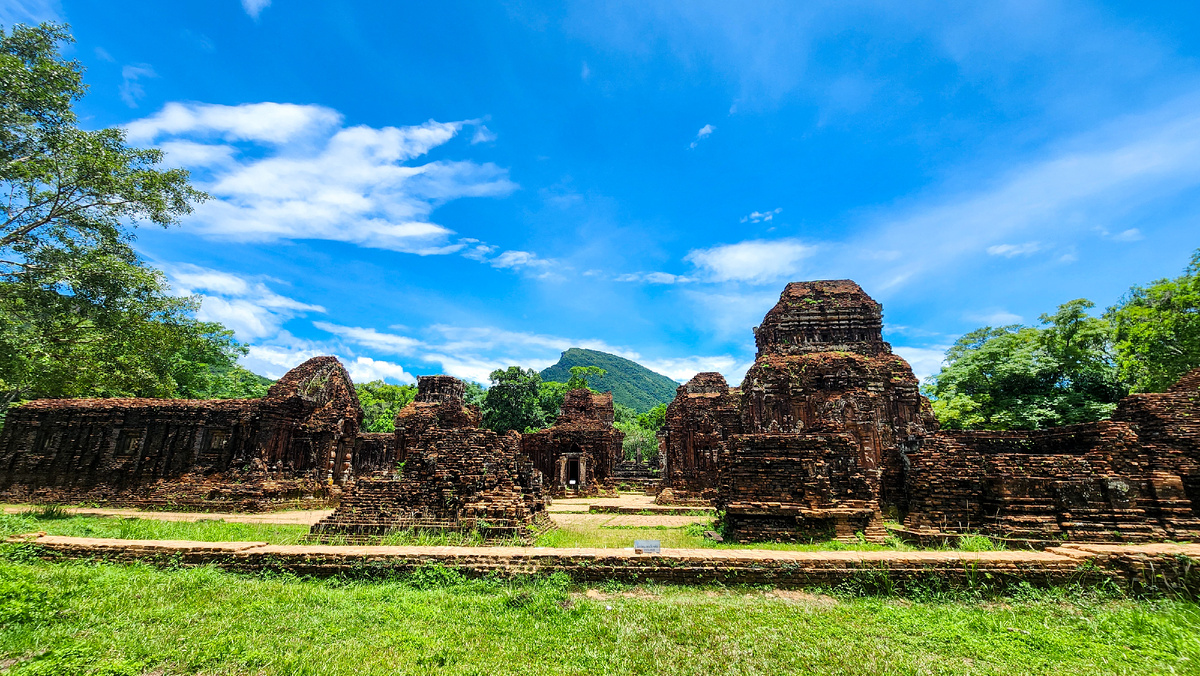
At My Son, you see the temples where they were built: red-brick towers surrounded by hills, jungle and the remains of a sacred complex that developed over centuries.
At the museum, the details suddenly become easier to read. You can stand close to the sculptures, faces, religious symbols and architectural fragments that are much harder to understand among weathered ruins.
If you have one full day and want to do more than photograph old temples, I would visit My Son first and the Cham Museum afterwards.
The museum is not simply another attraction after My Son. It is the key that helps explain what you have just seen.
My Son and the Cham Museum in One Day

This is the order I would use:
| Time | Stop | Why |
|---|---|---|
| 06:30 | Leave Da Nang | Cooler ride or drive |
| Around 07:45 | Arrive at My Son | Explore before the worst heat |
| 08:00–09:30 | Main temple groups | Best time for walking |
| 09:45 or 10:30 | Cham cultural performance | Fits naturally into the morning |
| Late morning | Remaining ruins + My Son Museum | Finish the archaeological site |
| Around 12:00 | Leave My Son | Avoid the hottest part of the day |
| Around 14:30 | Museum of Cham Sculpture | Indoor visit after lunch |
| Before 17:00 | Finish in central Da Nang | Museum closes at 17:00 |
You do not need to follow every minute exactly. The important part is the order: outdoor archaeological site early, indoor museum later.
30-Second Champa Context Before You Go

Champa was a distinct civilization, not simply an earlier version of Vietnam.
It developed along parts of what are now Central and Southern Vietnam and absorbed strong cultural and religious influence from India. Hinduism played an important role, especially the worship of Shiva.
My Son became one of Champa’s major religious and political centers, with temples built and rebuilt over many centuries.
That is enough context for a first visit.
Once you know it, the linga-yoni, temple towers and carved deities stop looking like random archaeological fragments.
For the wider history behind this part of Central Vietnam, see my Da Nang History guide.
My Son Sanctuary Tickets, Hours & What’s Included
For international visitors, admission to My Son Sanctuary is 150,000 VND.
The ticket includes:
- entrance to the archaeological site;
- electric shuttle transportation;
- access to the My Son Museum;
- traditional cultural performances.
Current 2026 visitor information:
| Item | Details |
|---|---|
| Admission | 150,000 VND |
| Site visiting hours | 06:00–18:00 |
| Ticket sales | 06:00–17:00 |
| My Son Museum | 06:00–17:00 |
Opening hours and performance schedules can change, so check again shortly before your visit.
If you prefer to arrange admission in advance:
Check My Son Sanctuary tickets on Trip.com
Getting to My Son from Da Nang
My Son lies roughly 45–50 km from central Da Nang.
You can get there by:
- motorbike;
- private car or taxi;
- organized tour.
I went by motorbike, and for me the journey became part of the experience.
The road gradually leaves the urban coast behind and moves through smaller villages and countryside. As you get closer to My Son, the mountains begin to close around the route.
The setting starts making sense before you even reach the temples.
My Motorbike Lesson: Do Not Underestimate the Sun
The moving air fooled me into thinking the sun was not that strong.
It was.
After an hour on the road, you can discover that your shoulders, hands or legs have been burning while the ride itself still felt comfortable.
If you go by bike, cover exposed skin and use sunscreen.
If you want the longer version of this ride, my 2-Day Motorbike Trip from Da Nang combines My Son with VinWonders Nam Hoi An and Dong Giang Heaven’s Gate.
The Electric Shuttle Into My Son
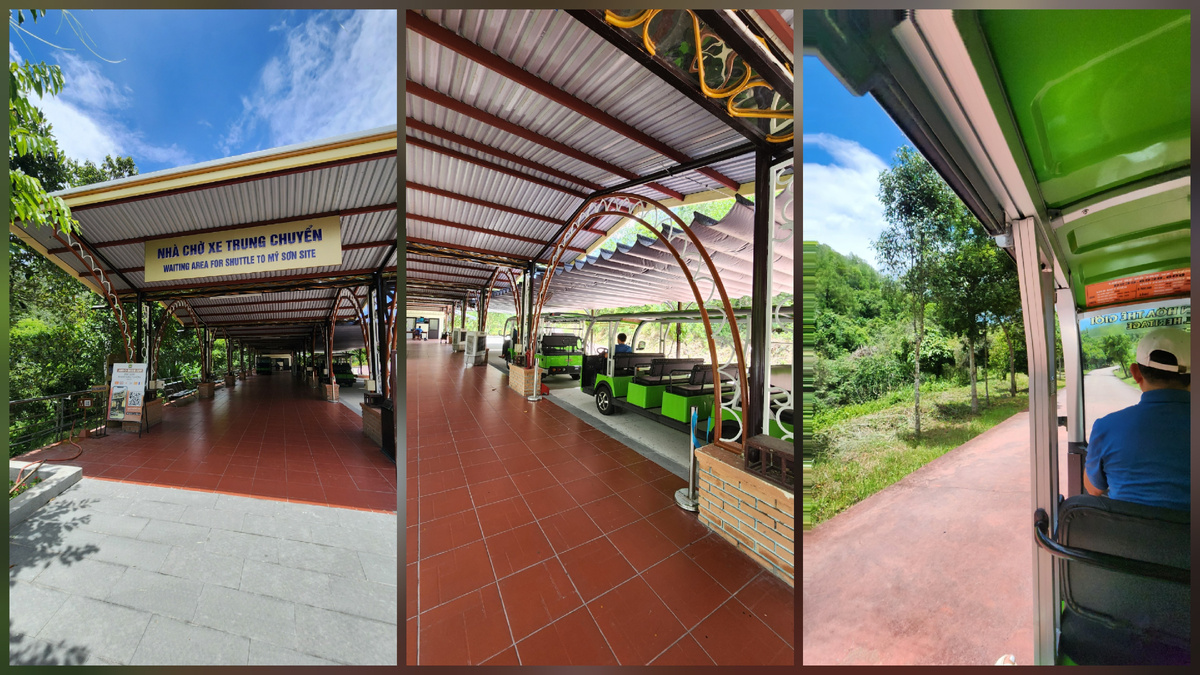
After your ticket is checked, an electric shuttle takes you roughly 2 km toward the main archaeological area.
It is already included in the ticket.
Unless you specifically want to walk the access road, I see little reason to skip it, particularly in the heat.
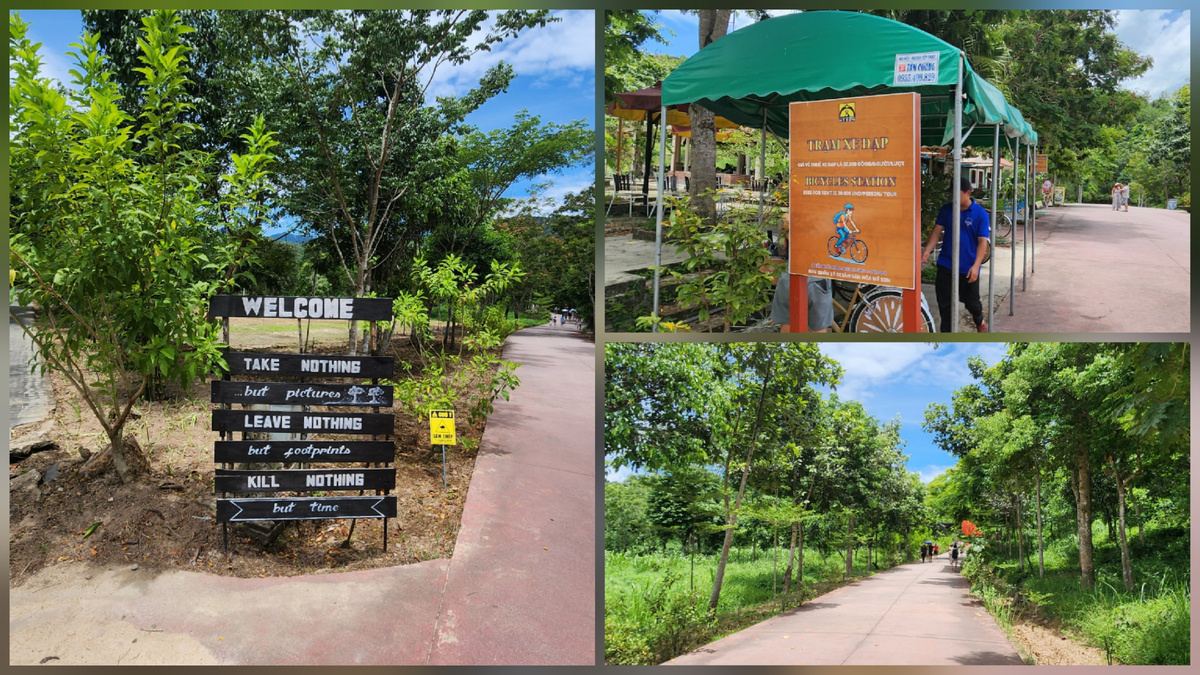
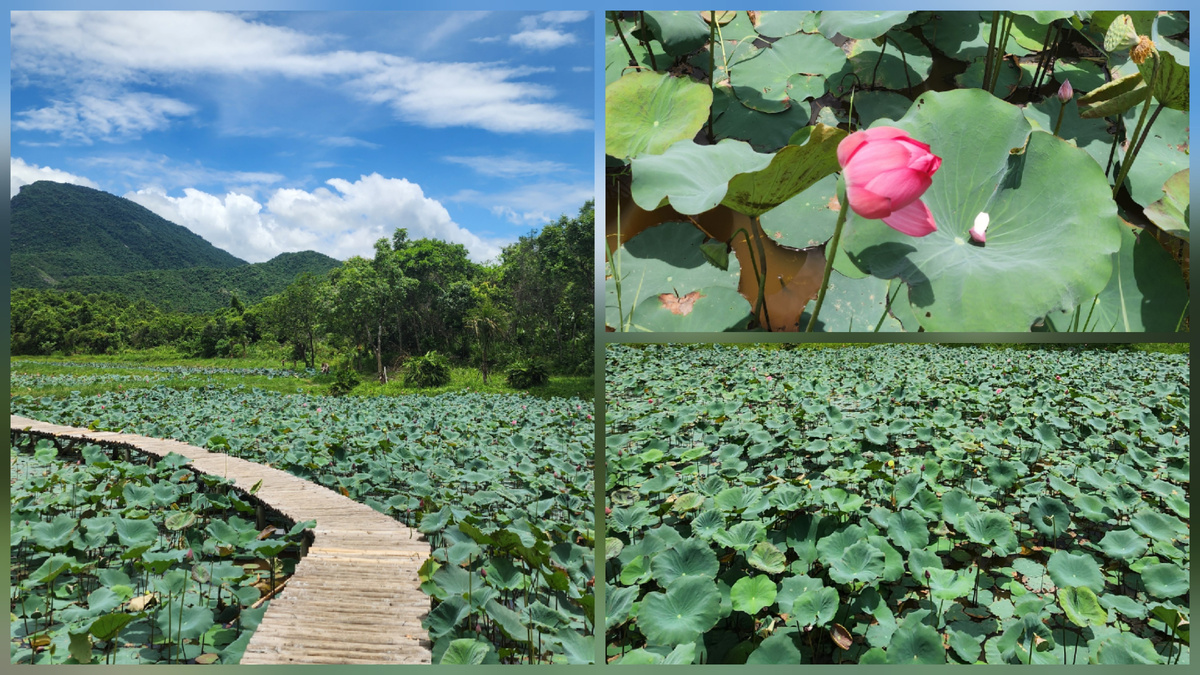
Near the drop-off point there is a rest area with a lotus lake and wooden walkways.
This was one of the prettiest spots to pause before the temples, and a practical place to pick up water or a cold coconut.
Then the ruins begin.
What to Look for at My Son

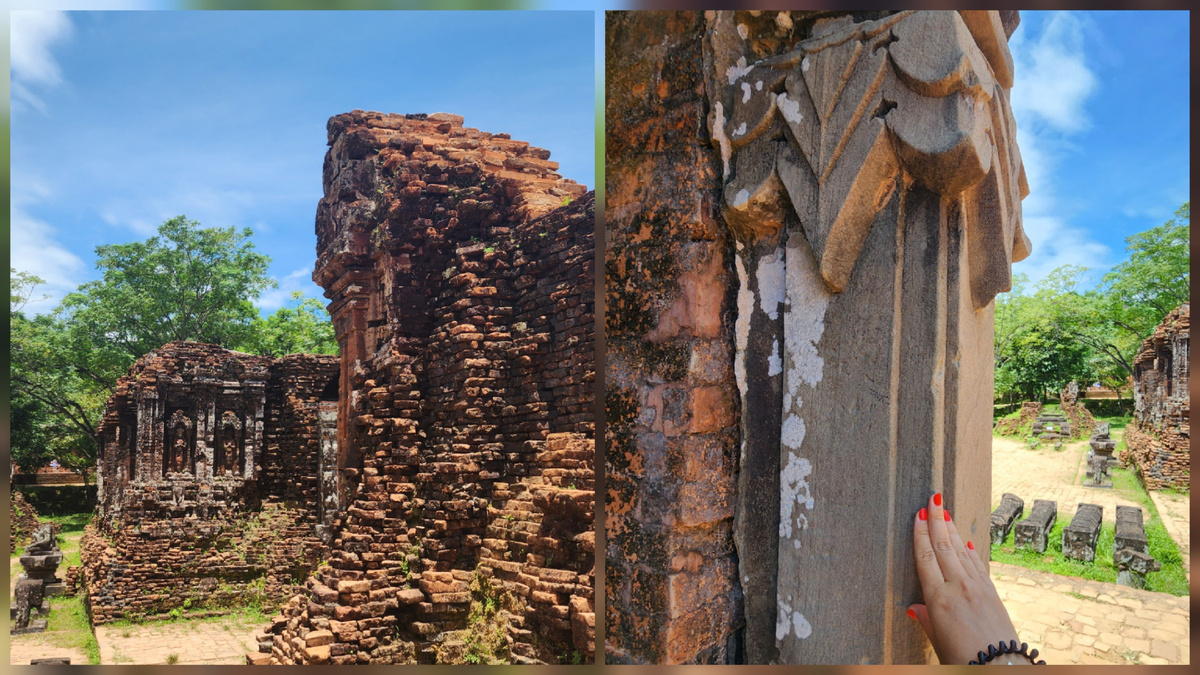
You do not need to memorize every temple group or architectural date before visiting.
For a first trip, focus mainly on Groups B, C and D, where you find one of the strongest concentrations of surviving structures and religious features.
More importantly, know what to look for.
| Look for | Why it matters |
|---|---|
| Linga-yoni | Connected with Shiva and creative energy |
| False doors | Symbolic elements of Cham temple architecture |
| Kala faces | Fierce decorative motifs linked with time and destruction |
| Tight brickwork | One of the defining features of Cham construction |
That small amount of preparation changes the way you see the site.
Linga and Yoni
One of the most important recurring symbols is the linga-yoni.
The linga is associated with Shiva, while the yoni represents feminine creative energy.
You may see stone bases with channels connected with ritual offerings and purification.
Before understanding what they were, they can easily look like random carved stone.
Once you know what the channel and shape mean, you start noticing them throughout the sanctuary.
False Doors
Look carefully at the façades of the towers.
Some entrances appear to be doors but do not actually open.
These false doors had symbolic importance rather than a practical function.
I barely paid attention to them until I knew to look for them. After that, they suddenly seemed to be everywhere.
Kala Motifs
You may also notice fierce faces above entrances or incorporated into decorative elements.
These are Kala motifs, associated with time, destruction and protection.
They are much easier to study later in the museum, where the carving has survived in better condition.
The Brickwork
The brick construction itself is worth looking at closely.
In some surviving sections, the bricks fit together extremely tightly with very little obvious separation between them.
The construction and finishing techniques used by Cham builders have been studied for decades and remain an important part of conservation work at My Son.
The real craftsmanship is interesting enough without turning it into a story about a completely lost magical formula.
The War Damage Is Still Visible
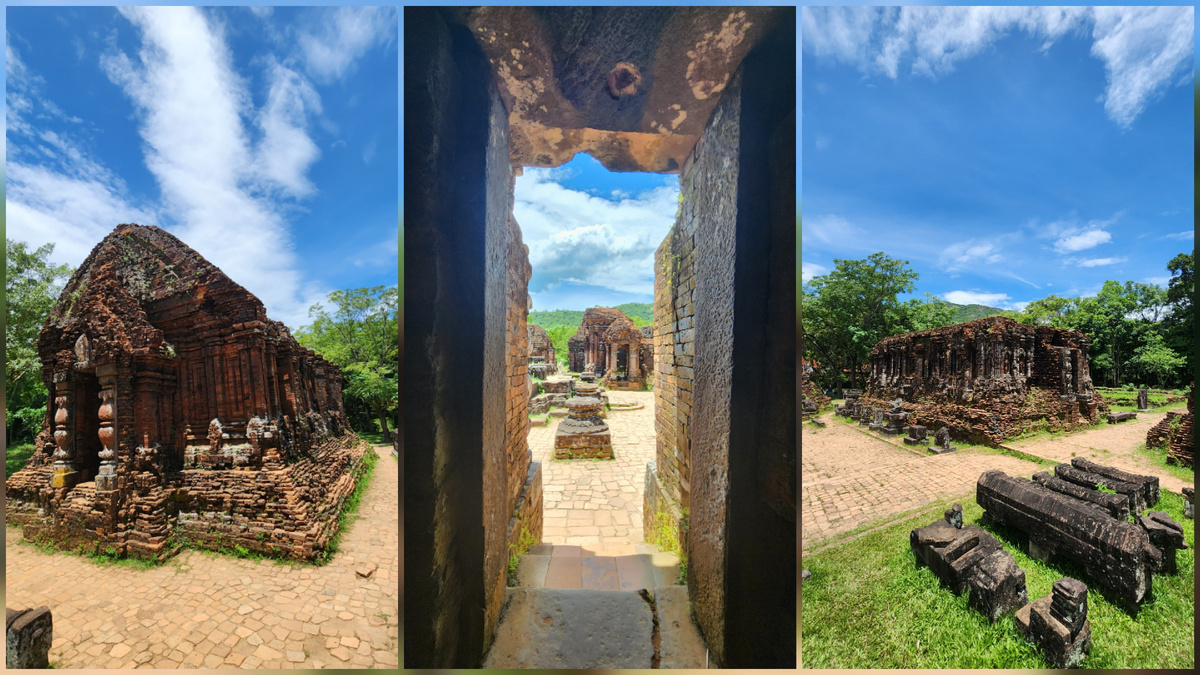
My Son was not damaged only by age and weather.
The sanctuary suffered heavily during the Vietnam War, and large bomb craters are still visible among the archaeological remains.
Ancient brick foundations sit beside scars left by modern warfare.
Some parts of the complex survived far better than others. In the more damaged areas, the ruins feel less monumental but, for me, no less important.
The destruction becomes part of what you are looking at.
Cham Cultural Performances

Traditional Cham cultural performances are included with the entrance ticket.
Current 2026 performance times are:
09:00, 09:45, 10:30, 11:15, 14:00, 14:45 and 16:00.
Some take place at the Performance House and some at Group G.
For this one-day route, the 09:45 or 10:30 performance is the easiest fit.
The most interesting part is seeing gestures and poses that echo figures you have already noticed in Cham sculpture.
You first see them frozen in stone and brick.
Then you see similar visual language translated into movement.
A Quick Stop at the My Son Museum
The small on-site My Son Museum is worth a short visit before leaving.
It helps explain the archaeological site you have just walked through, but I would save most of your museum time for the much larger Museum of Cham Sculpture in Da Nang.
That is where the morning starts coming together.
Da Nang Museum of Cham Sculpture
Back in the city, head to the Museum of Cham Sculpture, close to the Dragon Bridge.
Current 2026 visitor information:
| Item | Details |
|---|---|
| Admission | 60,000 VND |
| Opening hours | 07:30–17:00 |
| Location | Central Da Nang, near Dragon Bridge |
The museum preserves important Cham sculptures and architectural fragments from My Son and other archaeological sites across Central Vietnam.
It also offers an English web audio guide that you can use on your phone.
I would use it.
After walking through My Son, this is where the symbols become much easier to read.
If You Only Have 45 Minutes in the Museum
You could spend much longer here, but if your energy is fading after a full morning at My Son, I would concentrate on three objects.
1. My Son E1 Altar
Start with the My Son E1 Altar.
Because you have just returned from the sanctuary, it creates the clearest connection between the museum and the place you saw in the morning.
Up close, the carving is easier to study than anything exposed outdoors.
This is where the museum stops feeling like a separate collection and starts feeling like a continuation of My Son.
2. Tra Kieu Altar
The Tra Kieu Altar is one of the museum’s major works.
The amount of surviving detail is striking.
Instead of walking around it once and moving on, spend a few minutes looking closely at the figures and ornament.
This is exactly the kind of craftsmanship that is harder to appreciate among heavily weathered ruins.
3. Laksmindra-Lokeshvara, Often Called Tara
The large bronze figure associated with Laksmindra-Lokeshvara, often referred to as Tara, looks completely different from the brick and sandstone imagery you have spent most of the day seeing.
Its expression, proportions and metalwork make it immediately stand out.
It is also a useful reminder that Cham religious art was not limited to one material or one religious tradition.
Is It Worth Visiting Both My Son and the Cham Museum?
Yes, especially if history is one of the reasons you travel.
If I could visit only one, I would choose My Son.
The landscape is too important to replace.
You need the valley, the towers, the heat, the damaged brick and the relationship between the temples and the surrounding hills.
But the museum gives you something My Son cannot.
At the sanctuary, many of the details have been softened by time, weather and destruction.
At the museum, you can slow down and see the faces, carved ornaments, deities and religious symbols properly.
My Son gives you the place. The museum gives you the details.
Together, they make Champa feel much less like an abstract “ancient civilization” and much more like a culture whose art and religious world you can begin to recognize.
Planning Your My Son Day Trip
My Son Tickets
If you want to arrange admission before going:
Check My Son Sanctuary tickets on Trip.com
Tours & Activities
A guided visit can be especially useful at My Son because much of what makes the site interesting is easy to miss without context.
Browse My Son and Da Nang tours and experiences
Hotels
Da Nang works well as a base for My Son and the surrounding region.
Compare Da Nang hotels on Trip.com
Flights
Da Nang International Airport is the main gateway for this part of Central Vietnam.
Find flights to Da Nang on Trip.com
Some links in this article are affiliate links. If you book through them, I may earn a small commission at no extra cost to you.