Apsara Dance Siem Reap: Is the Dinner Show Worth It?
After two days exploring Angkor Wat, Bayon and the surrounding temples, I turned down an invitation to an Apsara Dance dinner show in Siem Reap. We’d already seen hundreds of celestial dancers carved into temple walls, and another cultural activity after two exhausting days didn’t sound particularly appealing.
Only later did I discover what I’d overlooked. Khmer classical dance isn’t simply a tourist performance inspired by Angkor’s sculptures. It’s part of a living artistic tradition that survived Cambodia’s most devastating years.
If you’re deciding whether to spend an evening at an Apsara show, here’s what makes it special, how different performances compare and what I’d look for before booking.
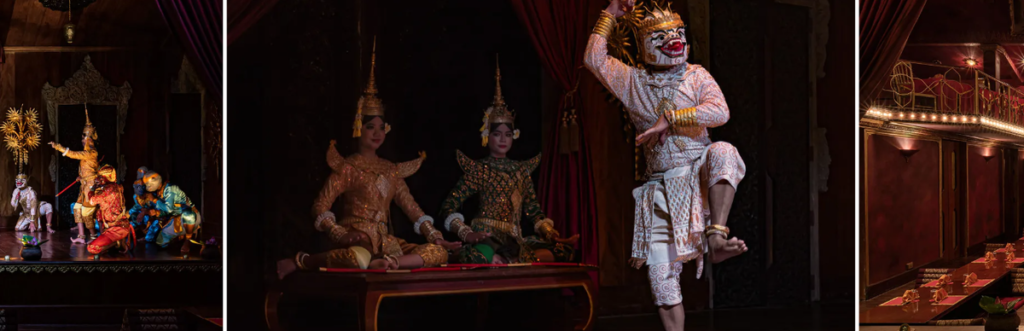
Apsara Dance in Siem Reap at a Glance
| What is it? | A traditional Khmer dance performance associated with Cambodia’s classical court-dance heritage |
| Where to watch | Dinner-show restaurants, cultural venues and theatres in Siem Reap |
| Typical format | Dance performance, sometimes combined with dinner |
| Performance length | Often around one hour, with additional time for dinner |
| What you’ll see | Apsara-inspired choreography and sometimes other Khmer traditional dances |
| Transport | Independent tuk-tuk or a package offering hotel transfers |
| Best for | Travellers interested in Khmer culture, Angkor’s imagery and traditional performing arts |
My recommendation: If you’re interested in the history and symbolism of Angkor, a dance performance can be a worthwhile addition to your visit. But choose the format carefully. A busy buffet restaurant and a smaller theatre can offer very different experiences.

Why Apsara Dance Matters Beyond the Temples
If you’ve walked through Angkor Wat, you’ve probably noticed the beautifully carved female figures decorating its walls.
Their elaborate hairstyles, jewellery and graceful poses are among the temple’s most memorable details.
These figures are frequently described as apsaras, although many of the standing figures are more precisely known as devatas. Apsaras are celestial dancers associated with Hindu and Buddhist traditions, while devatas represent divine female figures.
But the relationship between the temple carvings and modern Apsara Dance is more interesting than simply watching ancient sculptures come to life.
The Royal Ballet and the Birth of Modern Apsara Dance
Khmer classical dance has been associated with Cambodia’s royal court for centuries.
Historically, dancers performed at royal ceremonies and religious occasions, using stylised movements to express characters, emotions and stories.
The familiar modern Apsara Dance, however, has a specific twentieth-century history.
In 1962, Queen Sisowath Kossamak developed a new Apsara dance inspired by the ancient temple imagery.
Her granddaughter, Princess Norodom Buppha Devi, became its most famous early performer.
The production combined elements of Cambodia’s longstanding classical-dance tradition with the visual inspiration of Angkor’s carved celestial figures.
This is an important distinction.
The dance you may see on stage today isn’t an unchanged performance preserved since the twelfth century. It’s part of a living tradition that has evolved while maintaining a close connection to Cambodia’s cultural heritage.
An Art Form That Survived the Khmer Rouge
The history becomes even more remarkable when you consider what happened in the 1970s.
During the Khmer Rouge regime, many Cambodian artists, musicians and dance teachers were killed. The Royal Ballet came close to disappearing.
After the regime fell in 1979, surviving masters began teaching younger generations and rebuilding the repertoire.
Their knowledge was essential to preserving the art.
In 2003, UNESCO proclaimed the Royal Ballet of Cambodia a Masterpiece of the Oral and Intangible Heritage of Humanity. It was incorporated into the Representative List of the Intangible Cultural Heritage of Humanity in 2008.
That recognition applies to the wider Royal Ballet tradition, not automatically to every tourist dinner show advertised as Apsara Dance.
Still, understanding the history changes how you look at a performance.
The temples preserve the visual world of Angkor. Classical dance shows how elements of Cambodian artistic heritage continue through living performers.
What to Watch During an Apsara Performance
Khmer classical dance can seem unusually slow if you’re accustomed to modern stage shows.
The movements are deliberate, controlled and highly expressive.
Instead of dramatic jumps or rapid choreography, the dancers rely on intricate gestures, precise posture and subtle changes in movement.
Three details are especially worth watching.
The Hands: A Language of Gestures
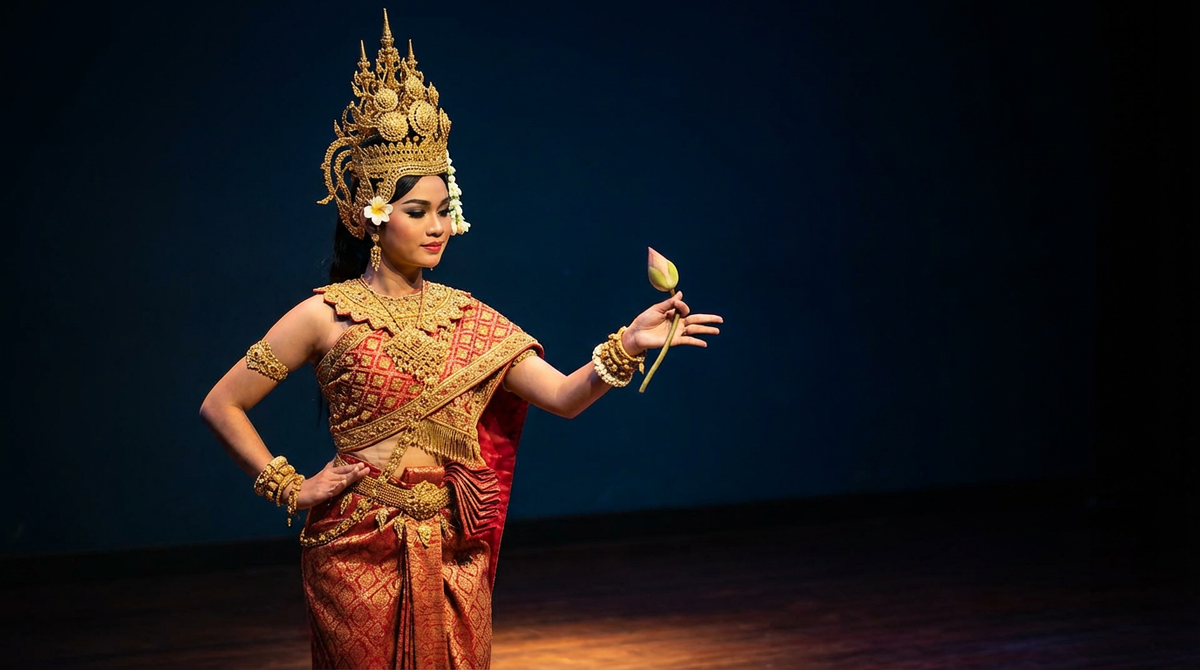
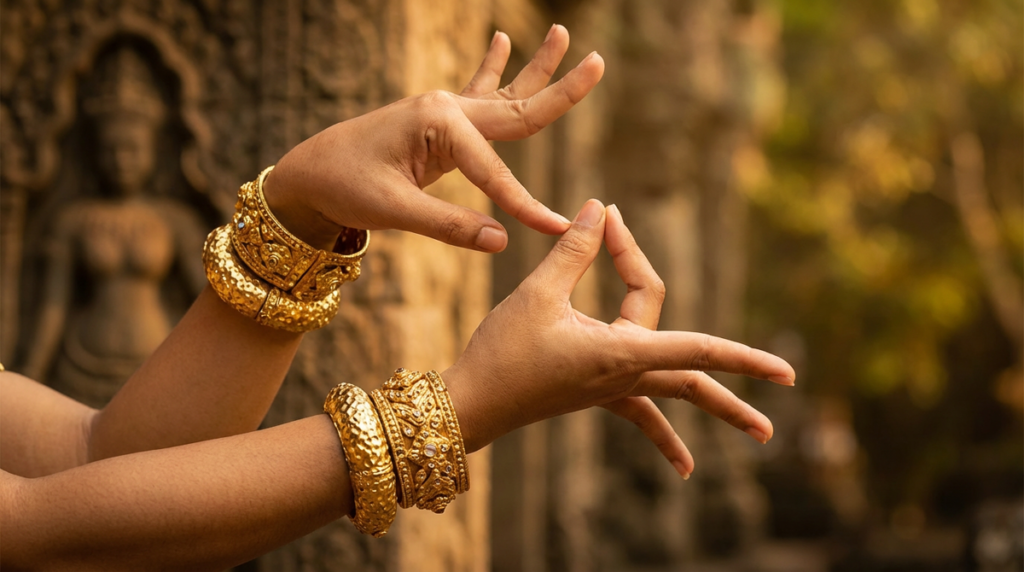
The curved fingers are one of the most recognisable features of Khmer classical dance.
Dancers spend years developing the flexibility and control needed to form these positions.
Different gestures can evoke natural forms, emotions or actions within a story.
Some are associated with stages of plant growth, from a young shoot to a leaf, flower or fruit.
You don’t need to understand the entire vocabulary to appreciate the technique.
Watch how smoothly one hand position flows into another and how the gestures connect with the dancer’s arms, posture and expression.
The Costumes: Moving Sculptures
Traditional dance costumes feature richly decorated fabrics, elaborate jewellery and tall ceremonial headdresses known as mokot.
Some classical costumes are carefully fitted and traditionally sewn into place around the performer.
The visual effect is striking.
With their ornate clothing, jewellery and carefully controlled poses, the dancers can resemble the carved figures of Angkor Wat.
After visiting the temples, this connection becomes much easier to recognise.

The Music: More Than Background Sound
Traditional Khmer classical dance is accompanied by music that helps communicate rhythm, mood and dramatic meaning.
A pinpeat ensemble may include gongs, drums, xylophones and wind instruments.
In the Royal Ballet tradition, a vocal chorus can also help tell the story and convey the characters’ emotions.
Not every Siem Reap dinner show features the same instruments, musicians or programme.
If live traditional music matters to you, check the performance details before booking.
One useful expectation: Apsara Dance is about precision and controlled expression rather than constant excitement. Appreciating that difference makes the performance easier to enjoy.
Where to Watch Apsara Dance in Siem Reap
Siem Reap offers different ways to experience Khmer traditional dance.
The two main formats to compare are large buffet dinner shows and smaller theatre-style performances.
Hotel pickup or tuk-tuk transfers may be available with either type, depending on the ticket package.
Buffet Dinner Shows: An Easy Introduction
Large restaurants such as Amazon Angkor combine dinner with an evening performance.
The format is simple: arrive, enjoy the buffet and watch the dancers.
Amazon Angkor offers Cambodian cuisine alongside a range of Asian and Western dishes, which can be convenient for families or groups with different food preferences.
The main advantage is having dinner and entertainment in one place.
The potential downside is the atmosphere.
A large dining room may be busy, and movement around the buffet can make the performance feel less intimate.
That doesn’t mean the dancers are less skilled, but it can affect how closely you follow the choreography.
Theatre-Style Performances: More Focus on the Dance
If you’re particularly interested in Khmer classical dance, a smaller theatre-style setting may be more appealing.
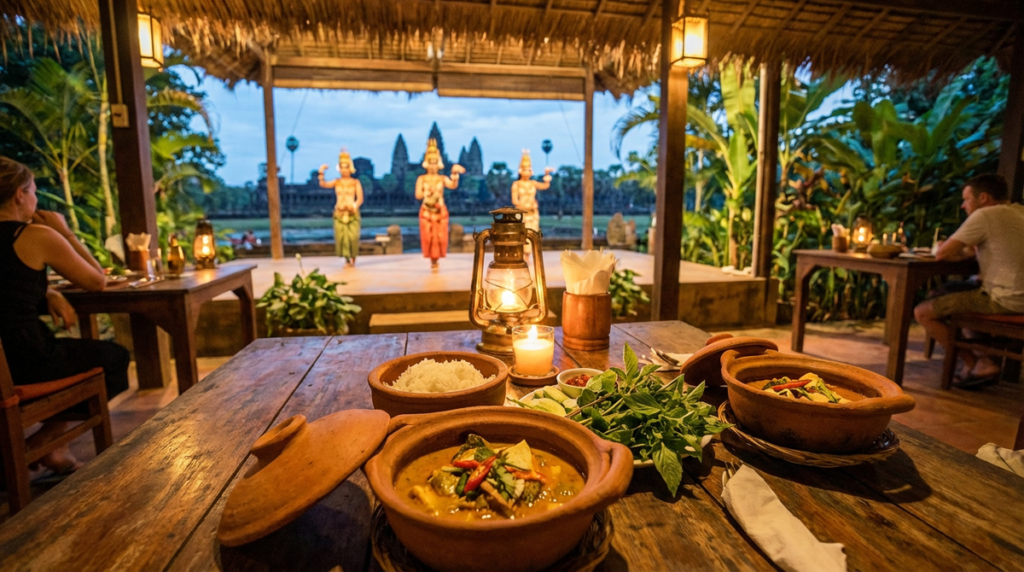
Apsara Theatre at Angkor Village is an example of a venue associated with a more intimate cultural dinner-show format.
The appeal is having a more focused environment in which to watch the performers, rather than a large self-service dining room.
Some theatre-style packages offer set-menu dining, while others may have different arrangements.
Because venues and programmes can change, check current performance dates, dinner inclusions and seating arrangements before choosing.
Buffet or Theatre: Which Is Better?
| Buffet dinner show | Theatre-style performance | |
| Main appeal | Dinner and cultural entertainment together | Greater focus on the performance |
| Atmosphere | Larger, livelier dining room | Usually more intimate |
| Food | Commonly buffet-style | Often set-menu or venue-specific |
| Best for | Families, groups and casual introductions | Travellers especially interested in dance |
| Check before booking | Visibility of the stage, dinner options | Current programme, seating and meal inclusions |
Neither format is automatically better.
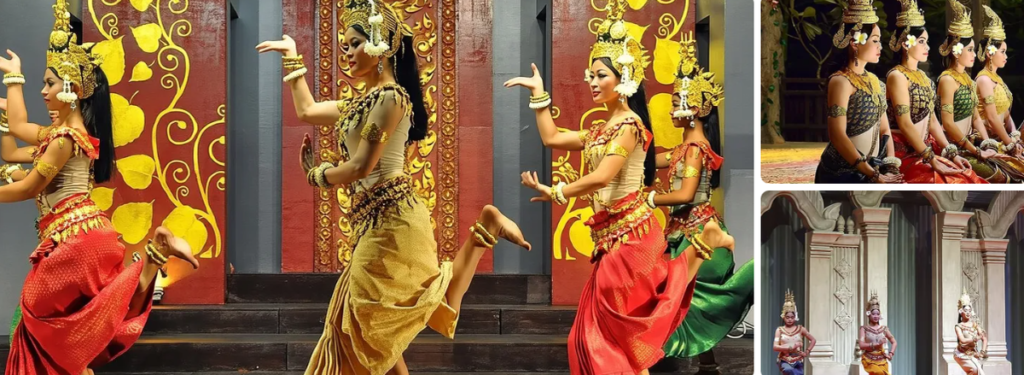
If you mainly want an enjoyable evening after visiting Angkor, a buffet dinner show may be enough.
If costumes, choreography and traditional music are your main interests, I’d look more closely at the theatre-style options.
How to Choose an Apsara Dinner Show Ticket
Before booking, there’s one detail worth understanding: the duration of the entire experience isn’t necessarily the duration of the dance performance.
An evening package may last two hours or longer because it includes dinner, waiting time and transfers, while the actual dancing may occupy only part of that schedule.
Also, some shows include a combination of classical-inspired Apsara Dance and other traditional Khmer performances.
That can be a bonus, but it’s worth knowing what you’re buying.
I’d check five things before paying:
- Venue: Where will the performance take place?
- Programme: Is it mainly Apsara Dance or a mix of traditional dances?
- Dinner: Is food included, and is it a buffet or set menu?
- Transport: Does hotel pickup also include the return journey?
- Timing: How long is the performance, and when does the evening finish?
Want Dinner and Transport Arranged for You?
After spending an entire day exploring Angkor, I’d prefer to have the evening logistics organised rather than arrange another tuk-tuk separately.
These two Trip.com options are worth comparing, particularly if convenience matters more to you than finding the cheapest possible ticket.
Option 1: Siem Reap Apsara Dinner Show & Hotel Pick Up
A package to investigate if you want dinner, a cultural performance and hotel pickup arranged together. Confirm the venue and return-transfer conditions before booking.
Option 2: Apsara Dance Show & Dinner with Tuk-Tuk Transfers
An alternative advertised with tuk-tuk transport. Compare the venue, performance programme and transfer inclusions with the first option.
I wouldn’t choose based on the package name alone.
The venue, actual performance and included services matter more than a small difference in price.
Is an Apsara Dance Show in Siem Reap Worth It?
Yes, if you’re interested in Cambodia’s cultural heritage and enjoy traditional performing arts.
But I wouldn’t describe it as an essential activity for every visitor.
After twelve hours in Angkor’s temples, you might be too exhausted to appreciate another scheduled experience. And if slow, stylised performances aren’t your thing, the show may not be the highlight of your trip.
For travellers who are curious about the imagery of Angkor, though, the dance offers another perspective.
I still had an unforgettable time at Angkor without seeing an Apsara performance.
But now I understand that a temple visit and a classical dance show reveal two different sides of Cambodia’s cultural heritage.
Next time I’m in Siem Reap, I’d make room for both.
Useful Travel Resources
Planning your time in Siem Reap? These resources can help you find accommodation, arrange transport and organise your visit to Angkor without wasting time on separate bookings.
Where to Stay
If you’re planning evening activities, staying somewhere convenient for central Siem Reap can make getting around easier. Alternatively, look for tours that include hotel pickup.
Flights to Cambodia
Compare flight routes and dates when organising your journey to Siem Reap or combining Angkor with other destinations in Cambodia.
Tours & Activities
From Angkor temple visits to countryside excursions and cultural performances, tours can simplify your itinerary when time is limited.
Airport Transfers
Arranging a transfer in advance can be useful if you’re arriving late, travelling with luggage or heading directly to your hotel.
eSIM & Mobile Internet
Mobile data is useful for navigation, contacting tuk-tuk drivers and checking bookings while travelling around Siem Reap.
Car Rental
If you’re planning a longer mainland road trip, compare available vehicles, rental conditions and insurance requirements before booking.
Some links on this page are affiliate links. If you make a booking or purchase through one of them, I may earn a small commission at no extra cost to you.