Best Time to Visit Cappadocia: Weather, Balloons & Crowds by Month
The best time to visit Cappadocia depends on what matters most to you: comfortable hiking weather, favourable balloon conditions, long sightseeing days, snowy landscapes or fewer visitors.
For most first-time visitors, September is the strongest all-round choice. Days are still warm, rainfall is relatively low, nights are cooler and the weather works well for hiking, sightseeing and outdoor activities.
But September is not the only good option.
Late May and June are excellent for warmer weather and long days. October is particularly comfortable for walking and hiking. January and February can transform Cappadocia with snow and quieter streets, but winter requires more flexibility.
Cappadocia is a genuine year-round destination. The experience simply changes dramatically with the season.
Best Time to Visit Cappadocia at a Glance
| Your Priority | Best Time |
|---|---|
| Best overall balance | September |
| Hiking and valleys | April–May, September–October |
| Hot air balloons | Spring and autumn |
| Warm, dry weather | June–September |
| Longest sightseeing days | June–July |
| Snowy landscapes | January–February |
| Generally quieter travel | Late November–early March, outside holidays |
| ATV and outdoor activities | May–June, September–October |
| Cool sightseeing weather | April, October |
| Underground cities and museums | Year-round |
Hot air balloon flights operate throughout the year, but spring and autumn generally combine milder temperatures with more favourable flying conditions.
That does not make winter or summer bad balloon seasons. Weather on the actual morning matters more than the month printed on your booking.
Cappadocia Weather by Month
Cappadocia sits in Central Anatolia, so do not plan it like a Mediterranean destination.
Days and nights can feel surprisingly different, and even warm months can have cool early mornings — particularly important when balloon pickups happen before sunrise.
The figures below use long-term climate statistics for Nevşehir, the provincial centre, as a consistent official reference for the wider Cappadocia region.
| Month | Avg High | Avg Low | Avg Rainy Days |
|---|---|---|---|
| January | 4.0°C | -3.6°C | 12.3 |
| February | 5.5°C | -2.6°C | 12.1 |
| March | 10.3°C | 0.7°C | 13.1 |
| April | 16.0°C | 5.1°C | 12.5 |
| May | 20.6°C | 8.9°C | 12.9 |
| June | 24.9°C | 11.7°C | 8.1 |
| July | 28.5°C | 13.7°C | 2.3 |
| August | 28.7°C | 13.6°C | 1.7 |
| September | 24.5°C | 10.5°C | 3.4 |
| October | 18.3°C | 6.8°C | 7.0 |
| November | 11.8°C | 2.5°C | 8.5 |
| December | 6.2°C | -1.3°C | 12.3 |
A “rainy day” in these climate statistics means a day with recorded precipitation, not necessarily a full day of rain.
Crowd levels are less precise than weather averages. Spring and autumn are typically popular because they combine comfortable temperatures with hiking, balloons and outdoor sightseeing, while winter is generally quieter outside major holiday periods.
Cappadocia in January
January is one of the coldest times to visit.
Average daytime highs are around 4°C, while nights regularly fall below freezing. Snow is possible, and when it settles across the fairy chimneys the landscape looks completely different from the familiar dry summer version.
January makes sense if you prioritise:
- Winter photography.
- A quieter atmosphere.
- Cave-hotel stays.
- Museums and underground cities.
- The possibility of snowy balloon views.
The main requirement is flexibility.
Balloon flights can operate in winter, but every flight depends on safe conditions on the day. Do not build a January trip around one irreplaceable balloon morning.
Cappadocia in February
February remains firmly winter.
Temperatures are slightly higher than January, but freezing mornings and snow are still realistic possibilities.
It can be a good choice if you want winter scenery without the main spring and autumn travel periods and are happy to mix outdoor sightseeing with museums, cave churches and underground cities.
Proper shoes matter if snow or ice is forecast.
Cappadocia in March
March is a transition month.
Average daytime highs rise to around 10°C, but nights remain cold and conditions can change quickly.
Hiking becomes more realistic, although rain, mud and colder spells can still affect valley trails.
March suits travellers who value lower seasonal visitor pressure more than predictable spring weather.
Cappadocia in April
April is when active sightseeing becomes considerably easier.
Average daytime highs reach around 16°C, which is comfortable for walking between outdoor sights without midsummer heat.
It works particularly well for:
- Valley hikes.
- Göreme Open Air Museum.
- Çavuşin and surrounding trails.
- Uçhisar.
- Long sightseeing days.
Spring is still changeable, so layers and some rain protection are more useful than packing only for sunshine.
For a trail-focused day, see my Rose Valley Cappadocia hiking route from Çavuşin.
Cappadocia in May
May combines mild days with cool nights.
Average daytime highs are around 21°C, making it very comfortable for hiking, viewpoints and open-air attractions.
However, May is not automatically a dry month. Long-term Nevşehir statistics show considerably more precipitation days in spring than in midsummer.
Treat May as mild and outdoor-friendly, but pack a light rain jacket rather than assuming guaranteed sunshine.
The combination of hiking weather, favourable balloon conditions and comfortable temperatures also makes it a popular time to visit, so important accommodation and balloon bookings are better arranged in advance.
Cappadocia in June
June is one of the easiest months for a busy first-time itinerary.
Average daytime highs are around 25°C, rainfall decreases compared with spring and long daylight hours make it easier to combine several places in one day.
During my trip in the second half of June 2026, I comfortably combined Göreme, Çavuşin, Avanos, valley walks and evening activities within a short itinerary.
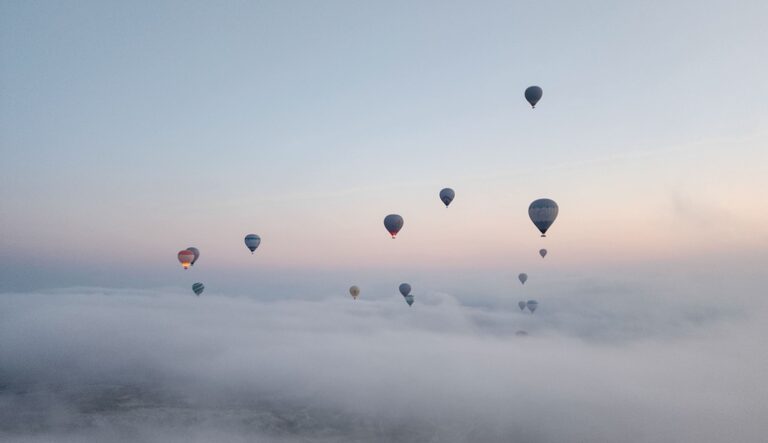
My hot air balloon pickup from Göreme was at approximately 03:45. Despite warm daytime weather, the pre-dawn air was cool, and it felt colder again once the balloon was airborne.
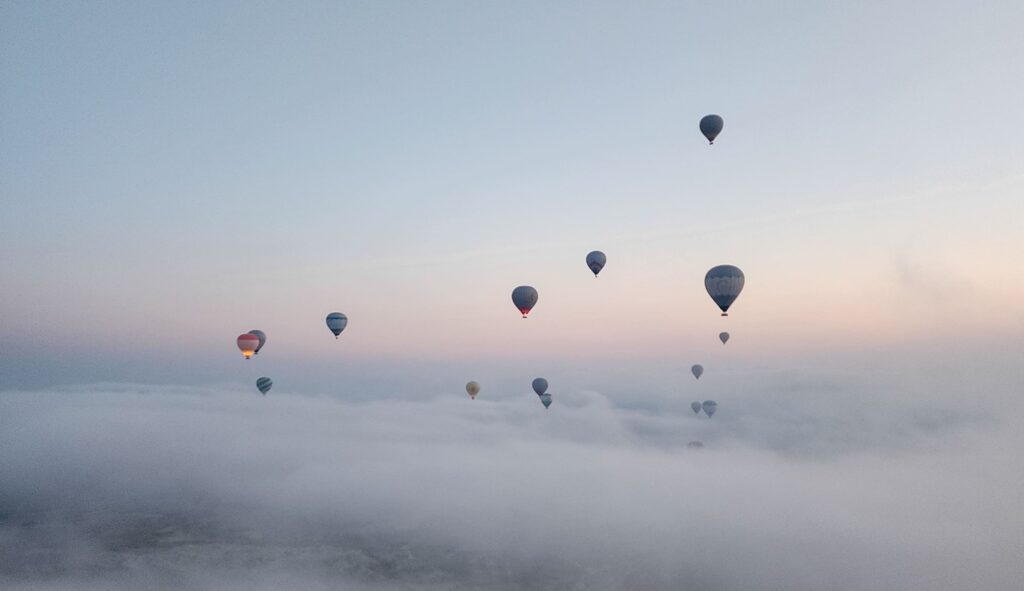
There was also thin cloud and mist during the flight — a useful reminder that even a statistically good month does not produce identical conditions every morning.
If you are planning a first trip, see my 3 Days in Cappadocia itinerary.
Cappadocia in July
July is hot, sunny and very dry.
Average highs are around 28.5°C, while recorded precipitation becomes much less frequent.
The smartest strategy is to tackle exposed outdoor sights early and move underground or indoors during peak afternoon heat.
An underground city such as Kaymaklı fits particularly well into a hot-weather itinerary.
Early starts also become more valuable, whether you are hiking, sightseeing or heading out to watch the balloons.
Cappadocia in August
August is statistically the hottest month by average daytime maximum, at around 28.7°C, and one of the driest.
Cappadocia is still completely visitable in August, but long exposed walks in strong afternoon sun can be uncomfortable.
A more practical rhythm is:
early outdoor sightseeing → midday museum or underground city → break → late-afternoon or sunset activity
This rhythm lets you capture the main experiences without enduring peak heat on exposed valley trails.
Cappadocia in September
September keeps much of the warmth of summer without the same level of afternoon heat.
Average daytime highs are around 24.5°C, while nights cool to roughly 10–11°C on average and rainfall remains relatively low.
That combination works particularly well for:
- Balloon flights.
- Hiking.
- ATV tours.
- Open-air museums.
- Full sightseeing days.
- Outdoor terraces and viewpoints.
The trade-off is demand. September commonly attracts travellers looking for exactly this combination of conditions, so popular cave hotels and activities can book up earlier than in quieter periods.

Cappadocia in October
October is one of the strongest months for travellers who prioritise walking and sightseeing comfort.
Average daytime highs are around 18°C, while nights become significantly cooler.
That makes exposed valleys easier during the day but also means proper layers are useful for pre-dawn balloon departures and sunset activities.
October is particularly attractive if you prefer crisp hiking weather over summer heat.
Cappadocia in November
November brings a noticeable shift toward winter.
Average highs drop to around 12°C, nights become cold and daylight hours shorten.
The reward is a noticeably quieter atmosphere after the busier autumn travel period.
November works well for travellers interested in:
- Museums.
- Underground cities.
- Cave hotels.
- Short walks.
- Food and town sightseeing.
- A flexible itinerary rather than long hiking days.
Layers work especially well because sunny and shaded areas can feel very different.
Cappadocia in December
December is cold, with average daytime highs of around 6°C and average nighttime temperatures below freezing.
Snow is possible, but never something to assume for specific travel dates.
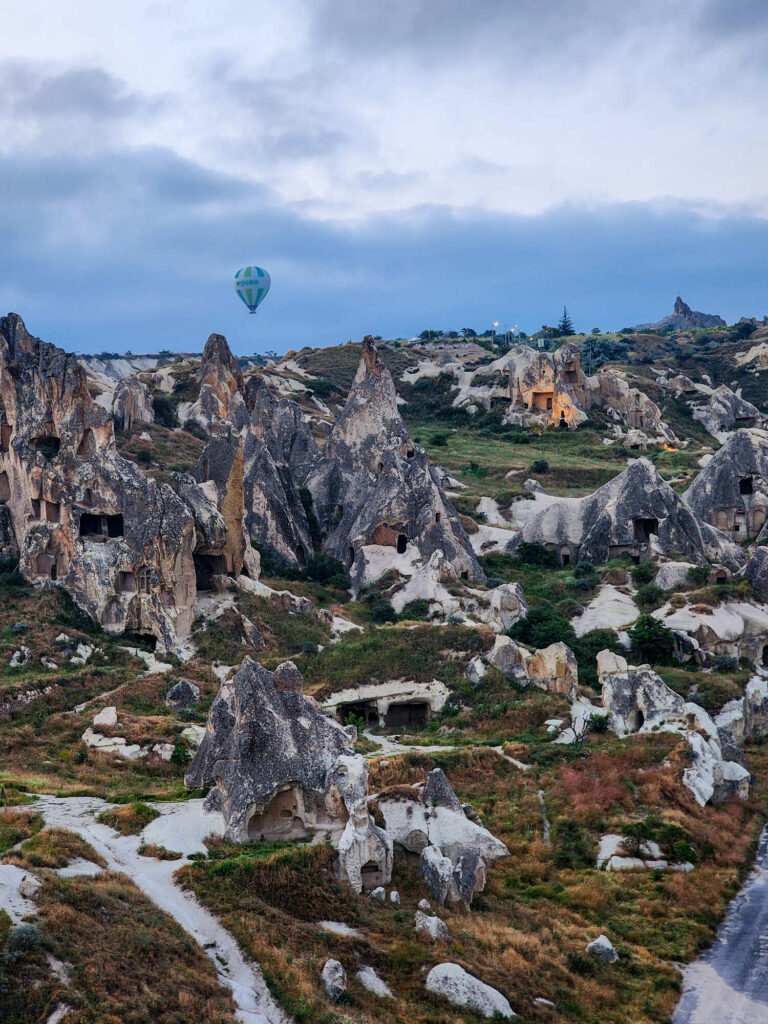
When it does arrive, Cappadocia can look spectacular around Göreme, Uçhisar and the surrounding fairy chimneys.
A December itinerary works best as a loose framework rather than a fixed timetable, with outdoor plans adjusted daily to the actual weather.
What Is the Best Month for a Cappadocia Hot Air Balloon?
There is no month when a balloon flight is guaranteed.
Flights operate throughout the year, while spring and autumn generally offer a useful combination of mild temperatures and favourable flying conditions.
But that does not mean:
September = balloons always fly
or:
January = balloons rarely fly.
Practical strategy matters more than picking the “perfect” month. Book your flight for the first available morning of your stay to maximise backup opportunities if weather cancels the flight.
This is especially important on a short itinerary.
For booking, pickup timing and my own experience from the second half of June 2026, see Cappadocia Hot Air Balloon: Prices, Booking & What to Expect.
→ Check current Cappadocia hot air balloon options on Trip.com
Best Months for Hiking in Cappadocia
For valley hiking, the most comfortable periods are generally:
April–May and September–October.
Temperatures are milder than midsummer and daylight is still long enough for substantial walks.
June can also work very well, particularly early or late in the day.
July and August are possible, but exposed trails become much hotter around midday.
Cappadocia valleys often include:
- Very little shade.
- Dust.
- Loose gravel.
- Exposed rock.
- Uneven surfaces.
During my own late-June hike through Rose Valley toward Çavuşin, I encountered dust, polished rock, loose gravel and exposed sections. The conditions were manageable around sunset, but the same terrain would feel considerably different in peak afternoon heat.
Best Time for a Cappadocia ATV Tour
May–June and September–October offer a particularly useful combination of comfortable temperatures and evening light for ATV tours.
Summer sunset rides are also popular, but dry conditions mean dust can become a major part of the experience.
My summer sunset ATV ride lasted roughly two hours, and the dust was easily the biggest practical issue.
See the full experience in Cappadocia ATV Tour: Is It Worth It? My Sunset Experience.

When Is Cappadocia Least Crowded?
Cappadocia is generally quieter from late November through winter and into early March, outside holiday periods.
That comes with clear trade-offs:
- Colder weather.
- Shorter days.
- More variable outdoor conditions.
- Greater need for flexibility.
Spring and autumn are typically busier because they combine comfortable temperatures with the activities many visitors prioritise: hiking, balloons and outdoor sightseeing.
Summer also remains popular, especially around major attractions, sunrise activities and sunset viewpoints, even though midday temperatures are higher.
Turkish public and religious holidays can override normal seasonal patterns and create sharp temporary crowd spikes, so always check the local holiday calendar before booking.
When Should You Book Hotels?
For May, June, September and October, book ahead if you care about a specific cave room, terrace, location or hotel rather than simply finding any available accommodation.
Göreme has the largest concentration of tourism infrastructure and is the most practical base for many first-time visitors.
See Where to Stay in Göreme: Best Areas & Hotels for First-Time Visitors for a closer look at the town.
For a wider comparison of Göreme, Uçhisar, Çavuşin, Avanos and other bases, see Where to Stay in Cappadocia: Best Towns & Areas Compared.
→ Compare Cappadocia hotels and current prices on Trip.com
So, When Should You Visit Cappadocia?
For the best all-round balance: September.
For comfortable hiking: April–May or October.
For warm, long sightseeing days: June.
For the driest summer conditions: July or August — but plan around the afternoon heat.
For snow and a quieter winter atmosphere: January or February, with a flexible itinerary.
For hot air balloons: spring and autumn generally offer attractive conditions, but book the flight for your first available morning regardless of season.
There is no single perfect month for every traveller.
The best choice is the month that matches the version of Cappadocia you actually want to experience.
Plan Your Cappadocia Trip
🏨 Where to Stay
Compare hotels and cave stays across Cappadocia.
→ Trip.com
🎒 Tours & Activities
Compare guided tours, balloon rides and outdoor experiences.
✈️ Flights to Cappadocia
Search flights to Kayseri and Nevşehir.
→ Trip.com
🚗 Rent a Car in Cappadocia
Compare rental options if you want more flexibility.
📱 eSIM for Turkey
Get mobile data before arrival.
→ Yesim
🛡 Travel Insurance
Check travel insurance options.
→ EKTA
Some links on this page are affiliate links. If you make a purchase or booking through one of them, I may earn a small commission at no extra cost to you.