
Battambang Cambodia: Things to Do & 2-Day Itinerary
Battambang was the stop I planned in detail and then never reached.
I had worked out how to get there from Siem Reap, which part of the old town I wanted to explore, which Bamboo Train actually made sense, how to combine Phnom Banan with the countryside, and where to be before sunset for the famous stream of bats from Phnom Sampeau.
Then I ran out of days and continued to Phnom Penh instead.
So this is not a first-hand Battambang review. It is the itinerary I built for my own Cambodia trip, now updated with current transport, schedules and practical details.
And after researching it again, I would no longer treat Battambang as a quick stop between Cambodia’s bigger destinations. The city works best with two nights: one day for its architecture, food and arts, and another for the Bamboo Train, an Angkorian-era hill temple, Khmer Rouge history and one of Cambodia’s most unusual sunset spectacles.

Battambang at a Glance
Best for | Heritage, food, countryside, arts, slow travel |
Ideal stay | 2 nights |
From Siem Reap | Bus/van or seasonal boat |
From Battambang to Phnom Penh | Bus/van or train |
Main city sights | Psar Nat, old shophouses, Governor’s Residence |
Main countryside sights | Bamboo Train, Phnom Banan, Phnom Sampeau |
Best sunset experience | Bat Cave at Phnom Sampeau |
Evening culture | Phare Ponleu Selpak on show nights |
UNESCO | Creative City of Gastronomy since 2023 |
Is Battambang Worth Visiting?
Yes, but not if you expect another Angkor.
Battambang does not have one overwhelming attraction that justifies the journey by itself. Its appeal comes from how several different layers fit together: old urban architecture, contemporary arts, agricultural countryside, local food traditions, the Bamboo Train, ancient temples and the darker history of Phnom Sampeau.
That is also why I would not squeeze it into a rushed day trip.
Two nights is the sweet spot.
You get enough time to understand the city rather than arriving only to leave again the next morning.
How Many Days Do You Need in Battambang?
For a first visit, I would plan:
Day 1: arrive, explore old Battambang, eat locally and see Phare if a performance is scheduled.
Day 2: Bamboo Train, Phnom Banan, countryside, Phnom Sampeau and Bat Cave at sunset.
Then leave for Phnom Penh the following morning, or take a later train if the timetable suits your trip.
That gives Battambang space to work as a destination rather than a checklist.
Getting from Siem Reap to Battambang
There are two very different ways to make the journey.
Bus or Van: The Practical Option
This is the simplest choice.
Buses and minivans operate throughout the day, and the trip generally takes around 3–4 hours, depending on traffic and operator.
For most travellers, this is the obvious option: faster, cheaper and much easier to plan around.
Boat: The Journey Becomes Part of the Trip
The more unusual option is travelling from Siem Reap toward Battambang by boat through the Tonle Sap and connected waterways.
This is not a fast ferry.
Depending on water levels, conditions and the season, the journey can take roughly 6–8 hours, sometimes longer. Boats are relatively basic, and low water can affect how much of the route is actually navigable.
But if you have the time, the appeal is obvious: instead of losing half a day to a road transfer, the transfer itself becomes part of the Cambodia experience.
I would only choose it after checking the current operating conditions for my exact travel date.
Don’t Try to Fly to Battambang
You may see Battambang Airport (BBM) on a map or in airport databases.
Do not build your itinerary around it.
Battambang currently has no scheduled commercial passenger flights, so for normal travellers it remains an overland destination.
That makes bus, boat and rail much more relevant than the airport code suggests.
Day 1: Old Battambang, Food & Phare
Why Battambang Looks Different from Siem Reap
Battambang’s old centre reflects a complicated political history rather than a single “French colonial” identity.
The region was under Siamese administration from 1795 until 1907. After it returned to Cambodian territory under French colonial administration, the town was rapidly reorganised and expanded.
Those layers are still visible.
You can see them in the street grid, riverfront, old commercial shophouses and civic buildings that developed through the early 20th century.
Rather than thinking of Battambang as a piece of “France in Cambodia”, it makes more sense to read it as a city shaped by Siamese rule, Khmer society, Chinese commerce and French urban planning.
Psar Nat: The Landmark of Central Battambang
One of the easiest landmarks to recognise is Psar Nat, Battambang’s Central Market.
The current market dates from 1936 and is one of the strongest visual reminders of the city’s French-era urban development.
Its architecture is far more formal than the improvised market streets surrounding many Cambodian town centres, which makes it a useful starting point for exploring central Battambang on foot.
I would use the market not just as a photo stop but as the beginning of a slow walk through the surrounding streets.
The Governor’s Residence
Another building I would not skip is the former Governor’s Residence.
The mansion was commissioned in 1905 by Chhum Aphaiwong, the last Siamese governor of Battambang, and designed by an Italian architect working in Bangkok.
The timing makes the building particularly interesting.
By the time it was completed, political control of Battambang had changed. In 1907 the territory was transferred from Siamese administration, effectively ending the world for which the residence had been commissioned.
It is one of those buildings where the architecture itself is less interesting than the historical moment trapped inside it.

Battambang Is Cambodia’s UNESCO City of Gastronomy
This is one of the strongest reasons to stop treating Battambang only as a place for the Bamboo Train.
In 2023, Battambang became Cambodia’s first member of the UNESCO Creative Cities Network, in the category of Gastronomy.
The designation reflects much more than restaurants.
Battambang province has long been one of Cambodia’s major agricultural regions, and its food culture is tied closely to rice production, fish preservation, local markets and village-scale food industries.
That means food should be part of the itinerary rather than something you deal with between attractions.
What to Eat in Battambang
Look for regional products and dishes rather than searching only for Western-style cafés.
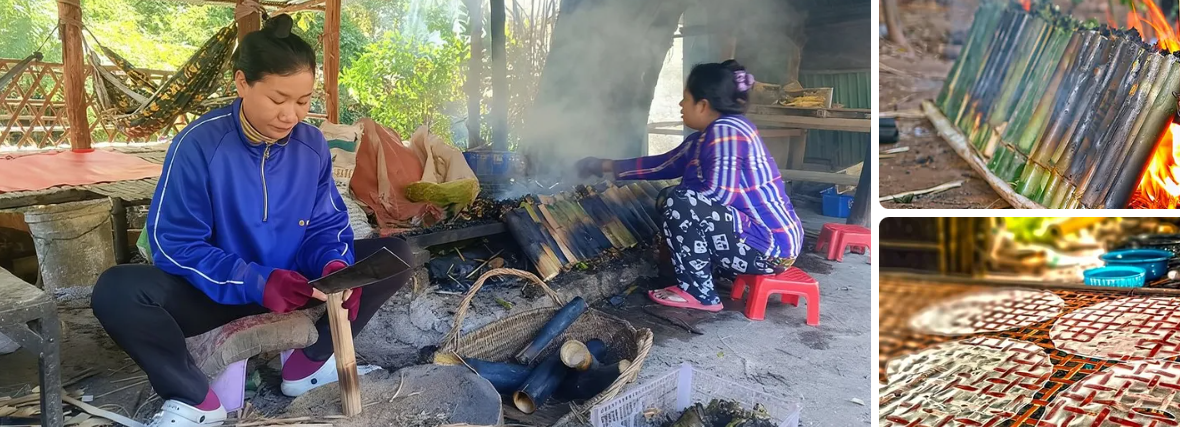
Battambang is particularly associated with foods such as nem Battambang, fermented fish products including prahok, rice paper, sticky rice cooked in bamboo and other foods connected with the agricultural villages around the city.
The exact places serving them change, so I would treat the market and local food tours as better starting points than a fixed restaurant checklist.
This is also why a countryside tour can be more interesting than simply moving between temples. Many routes include stops where local families produce rice paper, rice noodles, dried bananas or other foods on a small scale.
Phare Ponleu Selpak: More Than a Circus
If your first night matches the performance schedule, I would build the evening around Phare Ponleu Selpak.
The organisation’s story began in 1986 at Site 2 refugee camp on the Thai border, where art classes were used with Cambodian refugee children. After returning to Battambang, Véronique Decrop and former students established an arts centre in 1994.
Today the organisation works across circus, theatre, visual arts and education.
The performances are not traditional animal circus shows. They combine acrobatics, theatre, music and Cambodian storytelling.
Show nights are limited rather than daily, so check the calendar before planning your evening. Current performances generally begin around 19:00.
If you are also visiting Siem Reap, see my Phare Cambodian Circus guide for more background on the wider Phare project.
I would not try to combine the Phnom Sampeau bat cave and Phare on the same evening unless timing is unusually favourable. Both deserve more breathing room.
Day 2: Bamboo Train, Phnom Banan & Phnom Sampeau
This is the day I would give to the countryside.
A tuk-tuk or private driver makes the logistics much easier because the main stops are spread out rather than clustered around one walkable area.
Which Battambang Bamboo Train Should You Ride?
This is more confusing than it first appears because Battambang effectively has two Bamboo Train experiences.
The Original Bamboo Railway
The original experience is closer to Battambang and uses part of the historic railway environment.
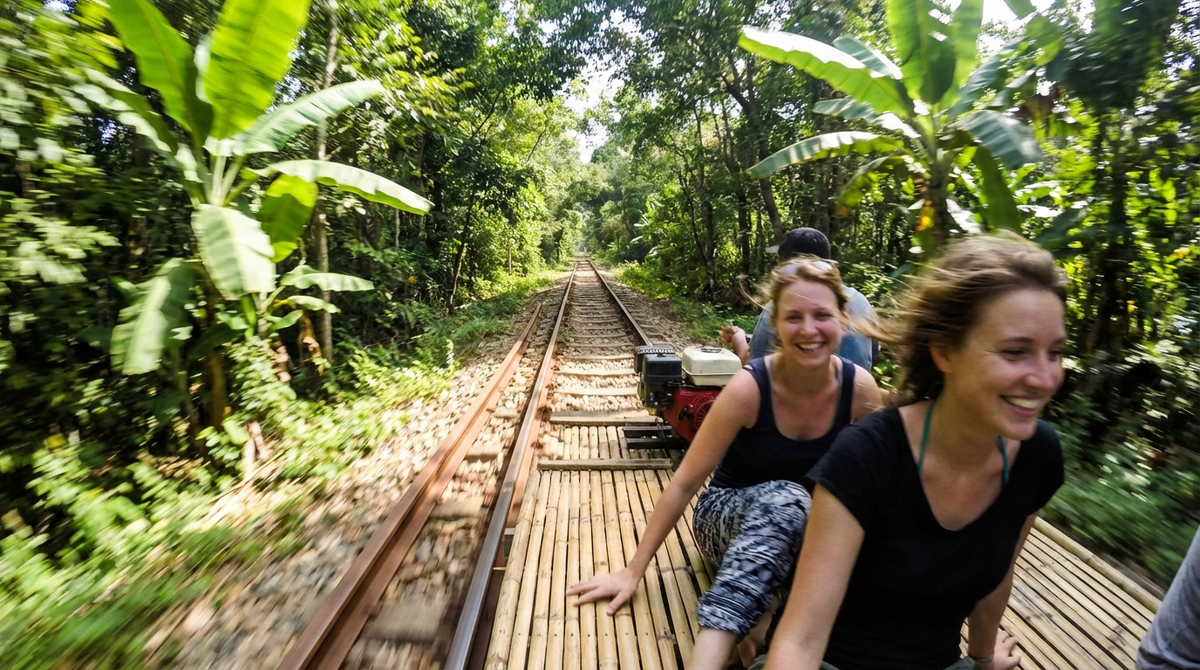
The famous norry developed as an improvised form of transport on Cambodia’s damaged rail network. Simple platforms could carry people, agricultural goods and other cargo using lightweight engines and removable wheel assemblies.
It was transportation before it became tourism.
Today the experience is primarily for visitors, but this is the option I would choose if the history of the Bamboo Train is what interests you.
The Newer Banan Bamboo Train
A separate tourist-oriented Bamboo Train operates in the Banan area, farther from Battambang and convenient if you are already heading toward Phnom Banan.
This version is more purpose-built as an attraction.
That does not automatically make it worse. It simply means you should know which experience you are booking.
My decision would be:
You want… | Choose |
|---|---|
Closer connection to the historic norry story | Original Bamboo Railway |
An attraction that fits easily with Phnom Banan | Banan Bamboo Train |
Do not assume every tour advertising “Bamboo Train” is taking you to the same place.
Phnom Banan Temple
From there, continue toward Phnom Banan, one of the most important ancient sites around Battambang.
The temple is mainly associated with the 11th century and the reign of Udayadityavarman II.
To reach it, you climb 358 steps.
At the top are five principal towers and wide views across the surrounding countryside.
You will sometimes see Phnom Banan marketed as “Mini Angkor Wat.” The nickname is understandable because of its five-tower arrangement, but claims that Phnom Banan directly served as a prototype for Angkor Wat should be treated much more cautiously.
It is better to appreciate the site for what it is: an Angkorian-period hill temple in a very different landscape and on a much smaller scale.
Countryside Stops
Between the major attractions, many Battambang day tours include small agricultural and craft stops.
This is where the UNESCO gastronomy story starts to make more sense.
Depending on the route, you may see rice paper production, rice noodles, fermented foods, dried fruit or other small-scale processing connected with village life.
But I would no longer build a modern Battambang itinerary around it.
Current listings conflict over whether the original winery is operating normally, and information online is inconsistent.
So if drinking Cambodian wine in the tropics sounds irresistible, confirm locally before making a special detour.
It is an interesting part of Battambang’s tourism history, but not a stop I would currently treat as guaranteed.
Phnom Sampeau
For the second half of the afternoon, head toward Phnom Sampeau.
This limestone mountain combines Buddhist religious sites, viewpoints, Khmer Rouge history and the famous bat cave at its base.
But these elements should not be treated as if they are simply several attractions in the same amusement-park itinerary.
The Killing Caves in particular require a very different tone.
The Killing Caves
During the Khmer Rouge period, Phnom Sampeau became a site of imprisonment and killing.
The caves contain memorials and human remains connected with that history.
This is not a quick sightseeing stop to squeeze in before sunset.
If you visit, allow enough time to understand what the site represents and treat it with the same respect you would give any memorial connected with mass violence.
After visiting the upper part of Phnom Sampeau, you can return toward the base of the mountain for a completely different experience.
Bat Cave at Sunset
Around sunset, an enormous colony of bats begins emerging from a cave in the limestone cliff.
Not hundreds.
Millions.
The stream can continue for 30 minutes or more, forming a dark ribbon across the evening sky as the bats leave the mountain to feed.
The exact start time changes through the year, so do not build the evening around one fixed clock time.
I would aim to arrive at the viewing area 30–45 minutes before sunset.
That gives you time to find a seat, order a drink if you want one and wait without worrying that the bats will start while your tuk-tuk is still on the road.
This is the natural finish to the countryside day.


Where to Stay in Battambang
Because I never made the trip, I would not pretend to rank hotels from personal experience.
These were the kinds of properties I had shortlisted, depending on the type of stay.
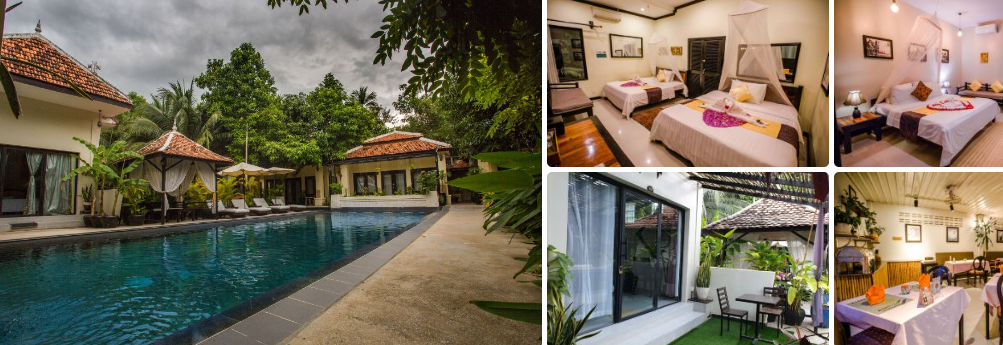
Maisons Wat Kor
This was the option that interested me most for atmosphere.
The property is built around traditional Khmer wooden houses and gardens outside the busiest part of the centre. I would choose it if the accommodation itself were part of the Battambang experience rather than just somewhere to sleep.


Au Cabaret Vert
A smaller garden-style property that makes more sense for travellers who prefer a quiet resort atmosphere to a large city hotel.


Battambang Resort
Another option outside the central streets, better suited to travellers prioritising space, greenery and a slower setting over being able to walk everywhere.
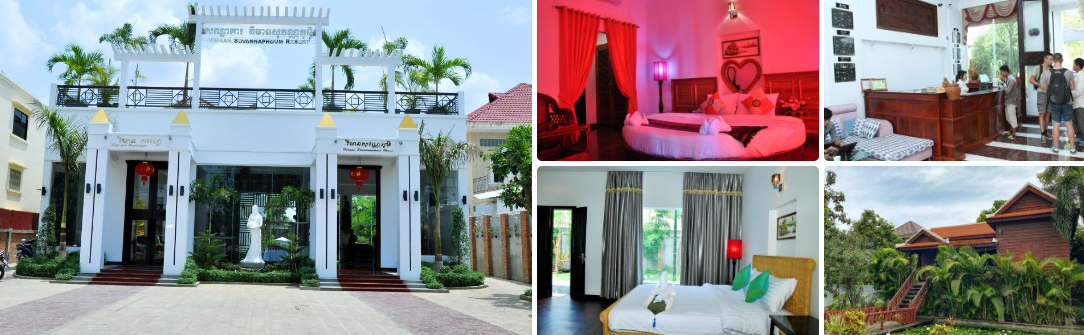
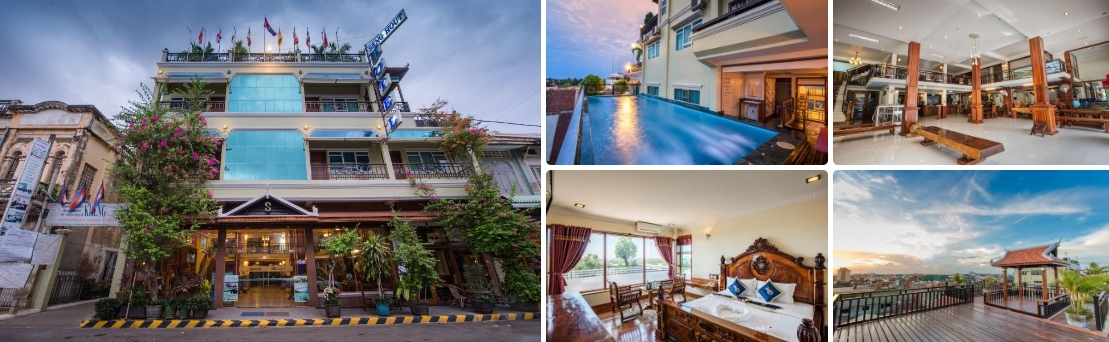
Classy Hotel & Spa
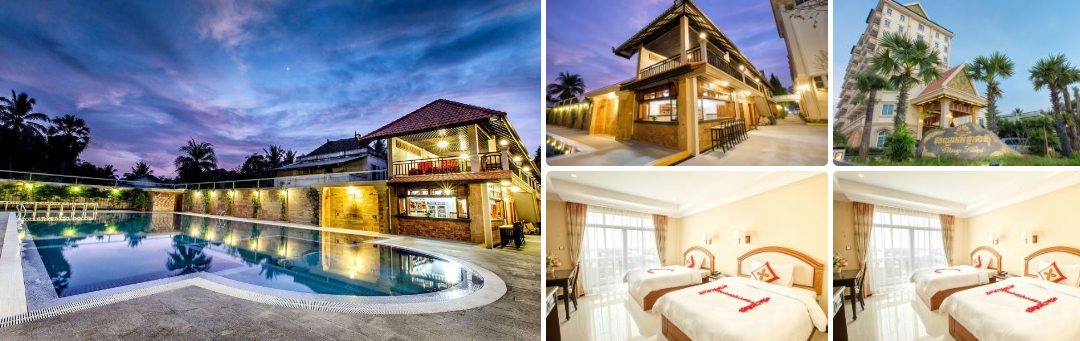
A more conventional choice close to the central area and river.
This is the one I would look at if I wanted practical city access and standard hotel facilities rather than a boutique or countryside atmosphere.
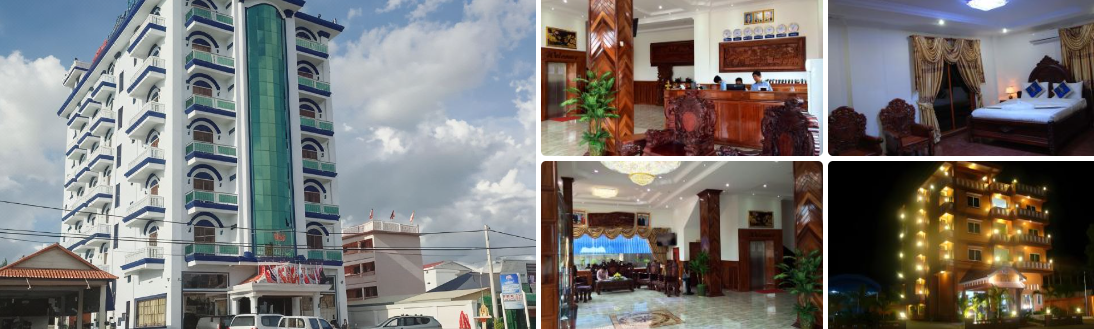
Emerald BB Battambang Hotel
A simpler option for travellers watching the budget but still wanting a location close to central Battambang.

Hotel prices and quality can change substantially, so I would compare current rates and recent reviews for the actual travel dates rather than choosing from an old fixed price list.
Battambang to Phnom Penh: Bus or Train?
This is where Battambang becomes especially useful in a longer Cambodia itinerary.
You do not have to return to Siem Reap.
You can continue south toward Phnom Penh.
Bus or Van
This is the faster and more flexible option.
Journey times are generally around 4–5 hours, with multiple operators and departures.
Choose this if efficiency matters most.
Train
Cambodia’s northern railway also connects Battambang with Phnom Penh.
The train is considerably slower than the bus, but that is not necessarily a disadvantage if you enjoy overland travel and want to see another side of the country.
Schedules are limited and can change, so check the current timetable before relying on the train for a flight connection or other fixed appointment.
For me, this creates a particularly good route through Cambodia:
Siem Reap → Battambang → Phnom Penh
not because Battambang sits literally halfway between them, but because it adds a completely different type of destination between Angkor and the capital.
Is Two Nights in Battambang Enough?
For most first-time visitors, yes.
Two nights give you:
- one urban day or half-day;
- one full countryside day;
- one cultural evening if Phare is performing;
- one separate sunset for the bats.
A third night would make sense if you want a slower trip, more cycling, more food-focused experiences or simply do not want every day organised around sightseeing.
I originally treated Battambang as a place I could squeeze into the route.
After rebuilding the itinerary, I would do the opposite.
Give it two nights or leave it for another trip.
The appeal is not that Battambang has Cambodia’s next Angkor Wat. It is that the city, countryside, food, railway history, ancient temples, contemporary arts and difficult modern history all sit surprisingly close together.
That combination is what makes Battambang worth the detour.
Useful Travel Resources
Flights
Compare flights to Cambodia and connections across Southeast Asia.
Hotels
Compare accommodation in Battambang and elsewhere in Cambodia.
Tours & Activities
Browse sightseeing, countryside tours and other activities around Cambodia.
Tours & Experiences
Compare guided tours and experiences.
Airport Transfers
Arrange private transport for your Cambodia itinerary.
eSIM
Set up mobile data before arriving in Cambodia.
Travel Insurance
Check travel insurance options before your trip.
*Affiliate disclosure: This article contains affiliate links. If you book through them, I may earn a commission at no extra cost to you.*