Phuket vs Krabi vs Koh Samui: Which Is Best for You?
Phuket vs Krabi vs Koh Samui is a choice between three different beach holidays. Phuket is the big, busy island: a long run of sandy bays, a late-night strip in Patong and calmer beaches in the north. Krabi is limestone country on the mainland, where Ao Nang and Railay sit among karst cliffs and the best days start on a longtail boat. Koh Samui, across the peninsula in the Gulf of Thailand, is the compact resort island of villas, short drives and evenings split between Chaweng’s bars and the shophouse lanes of Bophut’s Fisherman’s Village.
The month decides which one works: between roughly December and March, Phuket and Krabi on the Andaman Sea; for June to September dates, Samui, whose own weak month is November.
Three different holidays: beach days, scenery and evenings on each base
Phuket: the big island, with a mood for every beach
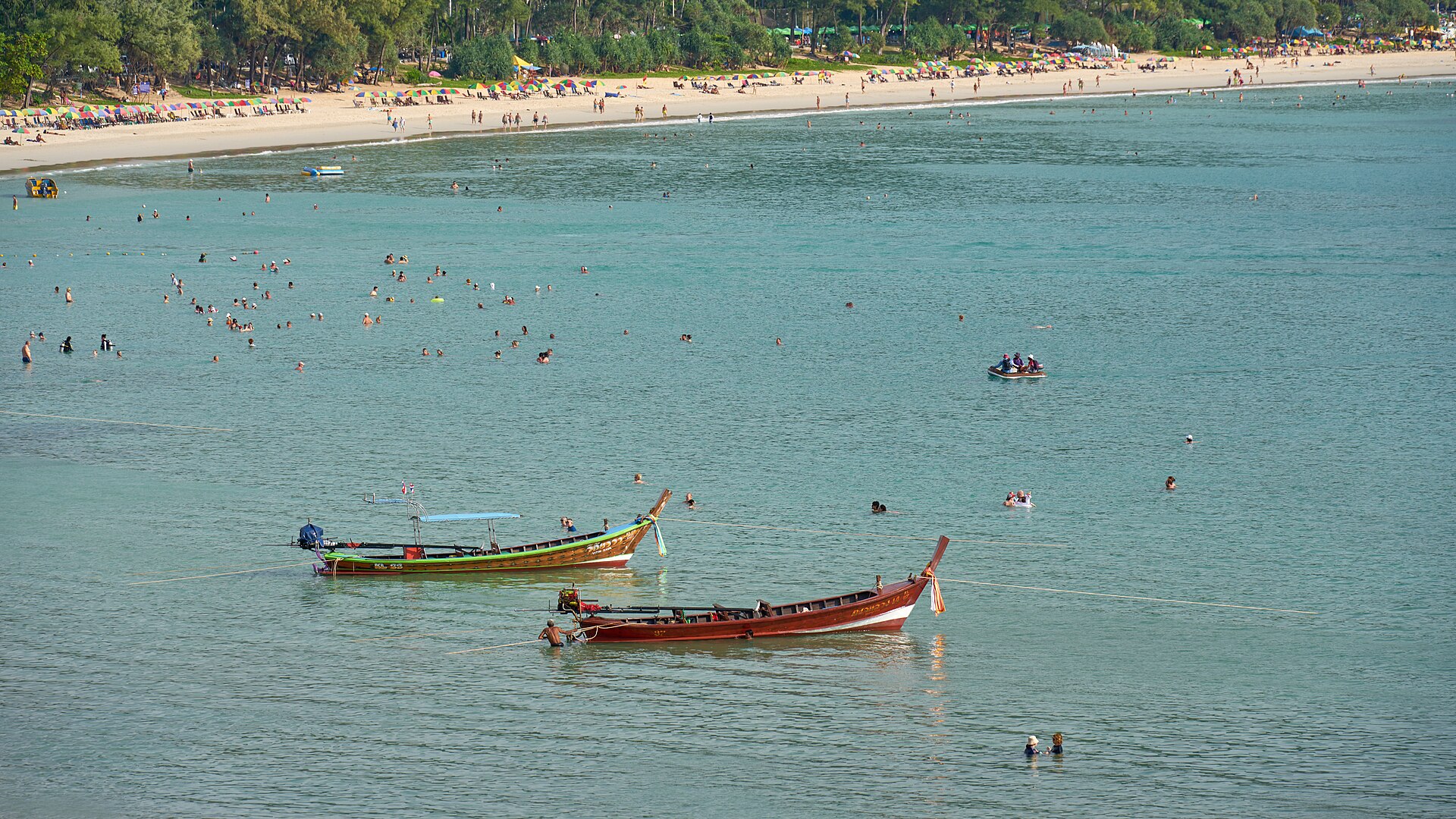
Phuket is Thailand’s largest island, and the holiday it gives depends on which beach you wake up on. The south is the busy end. Patong is almost a small town in its own right, with the beach on one side and shops, restaurants and Bangla Road behind it; Kata and Karon are wide bays with water sports, a step down in pace. The north is far more tranquil, closer to the airport and suited to long resort days by the sea. Phuket has the widest spread of hotels of the three, at every budget, so the choice of beach matters more than the choice of island.
Evenings range further here than anywhere else in this comparison. Bangla Road in Patong runs about 400 metres and becomes a pedestrian zone when the barriers go up around 18:00, with around 200 clubs, beer bars and cabaret shows; places holding the extended licence can trade until 04:00, and plenty shut sooner. A different Phuket shows up in the Old Town, where Thalang Road fills with the Lard Yai Sunday market roughly 16:00–22:00, and in the local bars of Kata, Karon and Rawai or the beach clubs at Bang Tao.
The signature day out is Phang Nga Bay, paddling a sea canoe among karst towers around James Bond Island, with Phi Phi as the other classic boat trip. The trade-off for all this choice is distance: trying a different beach means paying for a taxi or Grab each way.
This article contains affiliate links. If you book through one of them, I may earn a commission at no extra cost to you.
If Phang Nga Bay is the day out that draws you to Phuket, compare current sea-canoe and boat tours:
Krabi: Ao Nang and Railay among the limestone
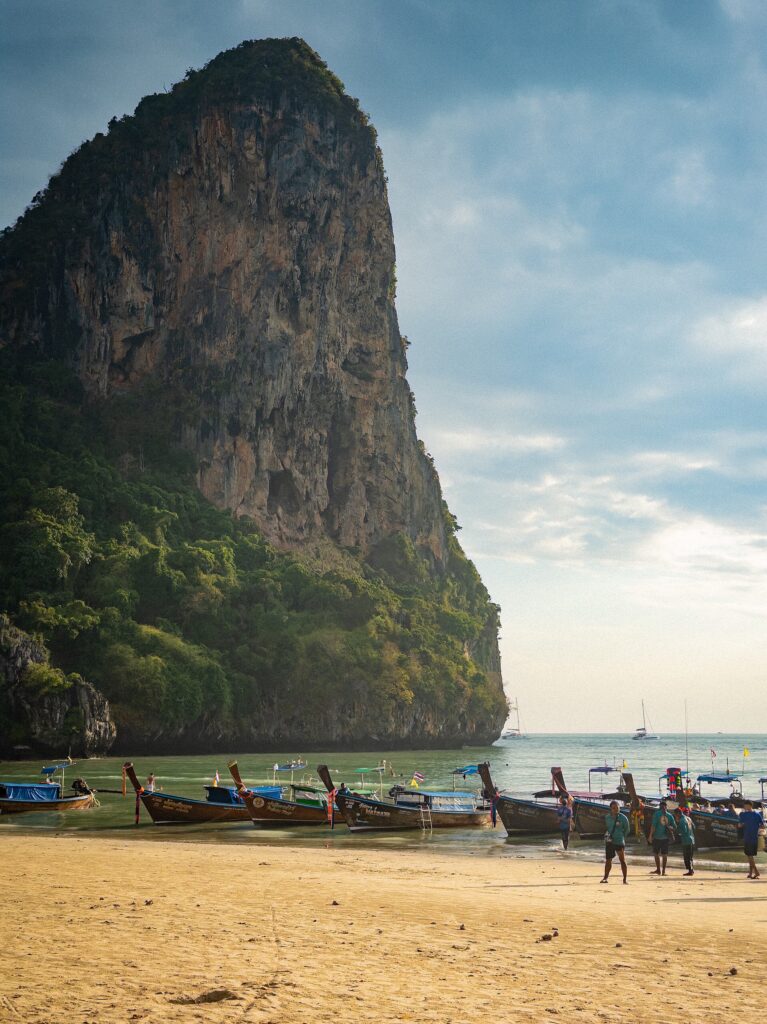
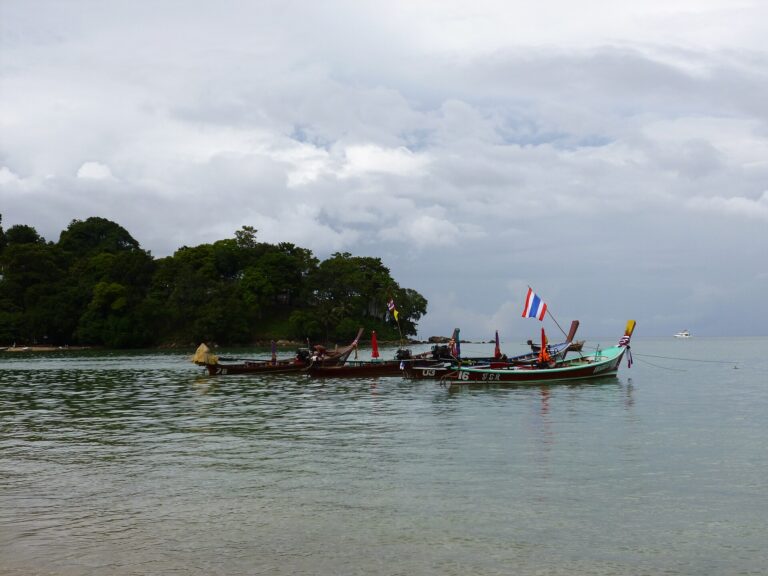
Krabi is a mainland province, and its draw is scenery: karst cliffs over the sea and beaches reached by boat. Ao Nang is the practical base, a beach town that doubles as the boat hub. From there the boats go to Railay and Phra Nang Cape, to the four islands of Tup, Chicken, Poda and Phra Nang on a half-day trip, and to the Hong Islands. A Krabi day tends to be outdoors and boat-led, with the sea views doing the work a long resort strand does elsewhere.
Evenings are smaller and earlier: bars along Ao Nang’s main road mostly close around 1am, a louder club pocket sits around Center Point and Soi RCA, and Ton Sai has beach parties.
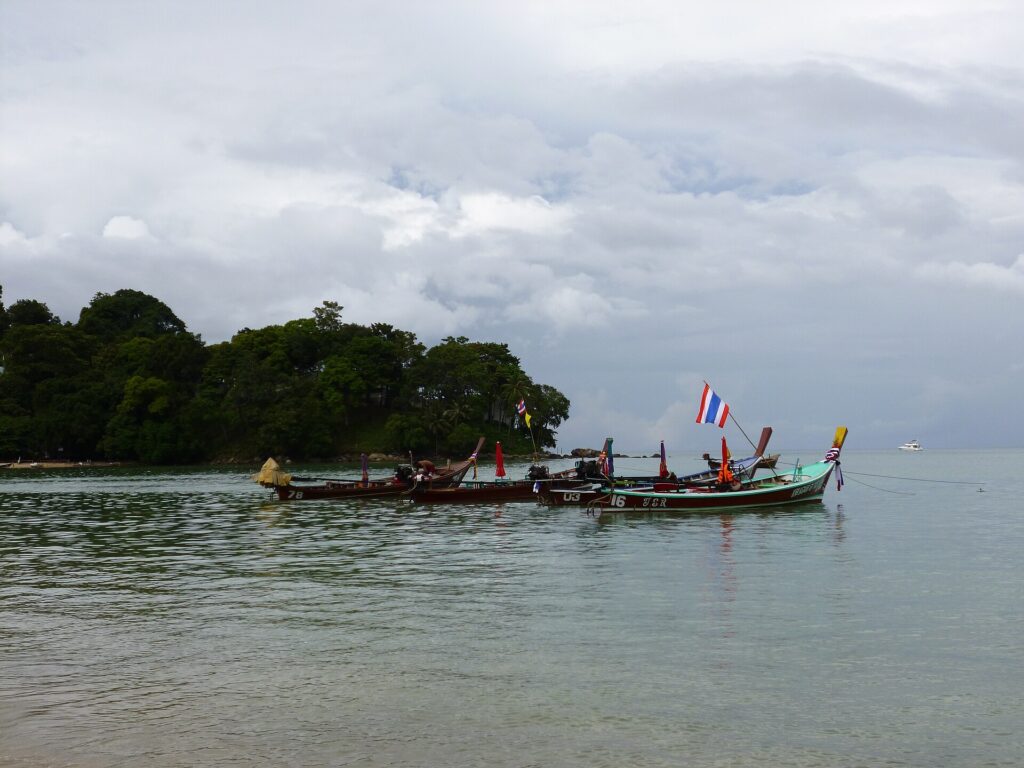
Railay is the same holiday with the cliffs closer. No road reaches the cliff-bound peninsula, so arrival is by longtail, and the boats from Ao Nang run roughly 08:00–18:00, which means evenings are spent on Railay itself. That suits travellers who want the scenery around them all day and are happy to live by the boat timetable. Krabi Town is the cheaper, less beachy option for travellers who rank price above a sea view, and resorts at Klong Muang and Tubkaek are quieter still but need a car or a hired driver for most outings. Rooms in Krabi span a broad range of budgets, with Ao Nang the main place to look.
Koh Samui: a compact resort island with gentler bays
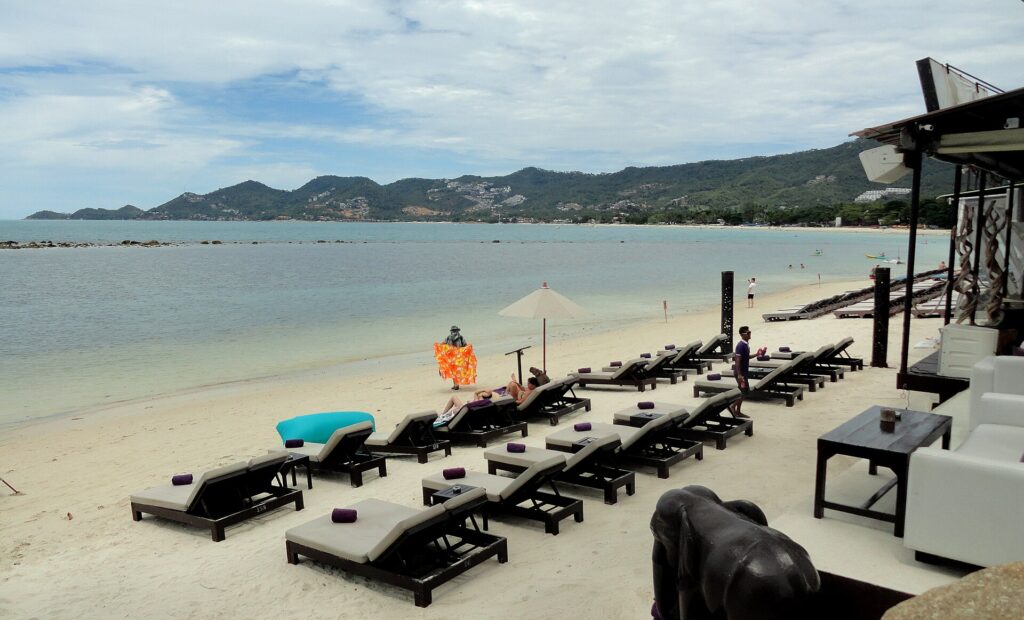
Flown into directly, Samui is the quickest arrival of the three: its own airport is 5–10 minutes from Chaweng and 15–20 from Bophut, with Lamai closer to half an hour, and the whole island can be circled in a couple of hours. The cheaper route via Surat Thani and the ferry takes about half a day instead. Once there, the stay leans towards resorts and villas: the quieter beaches hold some of the island’s top five-star resorts, and the market has long been shaped by small luxury villa developments. The bays are gentler than Phuket’s open west coast in Samui’s good months, and the island has no Krabi-style cliffs of its own.
Each main beach area has its own evening. Chaweng is the island’s liveliest district, with the bars; Lamai is lively but relaxed; and Bophut’s Fisherman’s Village, with its old Chinese shophouses, is the dinner-and-stroll option, with a walking street on Friday evenings, 5–11pm. Days out go by boat. Ang Thong Marine National Park supplies the limestone Samui lacks, with 42 islands of cliffs, caves and an inland marine lake, on tours that combine kayaking and snorkelling. Koh Phangan and Koh Tao are both within a boat ride. The overall mood is comfort and short distances on the island, with evenings that sit between Patong’s noise and Ao Nang’s early nights.
Andaman or Gulf: how your travel month picks the coast
Phuket and Krabi share the Andaman coast, so they share a season. The southwest monsoon brings their wet months, roughly May to October, with September and October the heaviest. Samui lies across the peninsula in the Gulf, stays comparatively dry through those months and takes its heaviest rain from about mid-October to December, peaking in November; January can still be changeable. In September, long-term averages put Samui’s coast at roughly 140–180 mm of rain against about 325 mm in Phuket. That is why one “Thailand rainy season” fails as a planning tool for a beach trip: the same week can be ideal on one coast and among the worst of the year on the other.
What “rainy season” changes on the beach
The water stays warm all year, around 28.5–30 °C off Phuket, so the real change is the sea state. During the southwest monsoon, the west-facing beaches of Phuket, including Patong, Karon, Kata, Surin and Nai Harn, get dangerous surf and red flags, and the waves can be unpredictable even where the water looks shallow. Swim only at patrolled spots and follow the flags; lifeguards cover the main west-coast beaches roughly 8am–6pm. On rough days, east-facing Ao Yon near Cape Panwa is often the more sheltered swim, and Nai Yang is often calmer inside its reef.
Boat days are hit first: open-sea crossings are the earliest to be cancelled, and boat accidents in Thailand tend to involve overloaded or poorly maintained boats in rough water, so a cancelled trip is the right call. A spare day in the plan protects any boat trip that matters to you.
On the Gulf side, rough-sea days cluster in November, when small boats can be told to stay ashore and ferries to the neighbouring islands are sometimes suspended. Calmer seas return with the dry months, though a cold-surge wind can still raise red flags on Samui’s beaches, even in February.
Month by month across both coasts
Month cut-offs are drawn roughly, because wind and sea state shift from year to year; find your dates in the left column.
| Months | Phuket and Krabi (Andaman) | Koh Samui (Gulf) | Who tends to be disappointed |
|---|---|---|---|
| Dec | Best season begins; Krabi peaks late Dec–early Jan, book early | Still wet; rough days possible | Samui visitors expecting a calm sea |
| Jan | Best season | Changeable; leftover rain possible | Samui visitors expecting guaranteed dry days |
| Feb–Mar | Best season | Driest stretch begins; rare windy red-flag days | Few |
| Apr | Shoulder; rain building | Dry | Few |
| May | Monsoon starts; west-coast surf | Good | Andaman swimmers wanting a calm sea daily |
| Jun–Sep | Wet; red-flag beaches, boat cancellations; Sep worst | Good; far drier than the Andaman side | Andaman visitors wanting calm swimming and sure boat days |
| Oct | Among the wettest months | Wet season sets in; changeable | Both coasts: book flexible rates |
| Nov | Shoulder, improving | Wettest, roughest month | Samui visitors wanting a calm sea and boat days |
Phuket vs Krabi vs Koh Samui at a glance
Once the month has picked the coast, the three bases differ on these practical points.
| Phuket | Krabi | Koh Samui | |
|---|---|---|---|
| Overall mood | Big and varied; busy south, calm north | Scenery-first, boat-led days, earlier nights | Compact resort island, middle-weight evenings |
| Sea and coast | Andaman Sea, island | Andaman Sea, mainland coast | Gulf of Thailand, island |
| Airport to main beach area | HKT: about 1 hour to Patong or Kata | KBV: 25–35 minutes to Ao Nang | USM: 5–10 minutes to Chaweng |
| Beach style | Sandy bays; busy south, quieter north | Limestone cliffs, boat-access beaches | Gentler bays, resort and villa coast |
| Without a car | Grab or taxis between beaches | Ao Nang on foot, songthaew, longtail | East coast by songthaew and Grab |
| Evenings | Biggest late scene on Bangla Road; easy to avoid | Smaller and earlier, Ao Nang bars | Chaweng bars; quieter Bophut and Lamai |
| Signature boat days | Phang Nga Bay, Phi Phi | Four islands, Hong Islands, Phi Phi | Ang Thong, Koh Phangan, Koh Tao |
| Accommodation lean | Widest range at every budget | Broad range; Ao Nang the main base | Villas and upscale resorts |
Landing and getting to your beach
Phuket: an hour south from the airport
Of the three airports, Phuket International Airport (HKT) leaves the longest drive to the beach. The terminal is on the north coast, and Patong lies roughly 38–40 km down the west side: count on about an hour by car to Patong, Karon or Kata, and longer if you land into the 4–7pm traffic. A stay on the north-coast beaches cuts that drive considerably.
The 100-baht Smart Bus boards at Exit 3 on Floor 1 and stops along the west-coast beaches as far as Rawai; allow about an hour for Patong and up to two hours for Kata and Rawai. Grab collects from its designated zones at the terminal. Taxis to Patong run roughly 700–900 baht, and the Grab fare at the airport is not reliably lower.
Krabi: a short run to Ao Nang, then a boat for Railay
Krabi International Airport (KBV) is about 25–35 minutes by car from Ao Nang, the gentlest arrival on the Andaman side. A 150-baht airport bus runs to Ao Nang via Krabi Town in roughly 45–90 minutes. For Railay, the last leg is a longtail: from Ao Nang (about 100 baht, 15–30 minutes, leaving when full) or from Ao Nam Mao, the calmer pier in low season, with a floating pier at Railay East. Boats from Ao Nang land on the beach, and passengers wade ashore with their bags, which is the part to plan for with heavy luggage or small children.
For Phuket and Krabi arrivals, a pre-booked private car is the alternative to the bus, Grab or the taxi counter. On Phuket, it swaps a bus ride of up to two hours to the southern beaches, and app fares that rise with demand at the terminal, for a price fixed before the flight. On Krabi’s shorter run, the gain is a door-to-door drop with the fare agreed in advance.
Koh Samui: minutes from the terminal, or half a day via Surat Thani
Samui International Airport (USM) is in Bo Phut, about 2–3 km from Chaweng. Chaweng is 5–10 minutes away by car, Bophut 15–20 and Lamai 25–35, the shortest landing-to-beach run of the three. The catch is the flight. Bangkok Airways owns and operates the airport and daily flights are capped, so fares into Samui tend to run higher than into Phuket or Krabi. Thai Airways flight numbers between Bangkok and Samui are Bangkok Airways codeshares.
The budget alternative is Surat Thani (URT) on the mainland, served from Bangkok’s Don Mueang by Thai AirAsia, Nok Air, Thai Lion Air and Thai Vietjet. A combined bus and car-ferry ticket via Don Sak pier takes about 3.5 hours airport to island and usually costs 400–600 baht. The ferries land at Nathon or Lipa Noi on Samui’s west coast, so add a road transfer across to Chaweng or Bophut. The trade is plain: money saved against roughly half a day.
Getting around without your own wheels
Ao Nang and Samui’s east coast both work without a car; Phuket takes more planning because the island is large and its public transport runs like spokes from Phuket Town. Blue songthaews leave town for the beaches roughly 6am–6pm for 30–50 baht, and they do not run between beaches, so beach-hopping means Grab, a taxi or your own wheels.
In Ao Nang, most of the day happens on foot, songthaews link the beach with Krabi Town and the piers for about 20–60 baht, and longtails cover the coast.
On Samui, songthaews run the ring road for about 30–80 baht and thin out after about 8pm, and taxis are unmetered, so the fare is agreed before getting in. Grab operates in all three places and is widely available in Chaweng, Bophut and Lamai, with patchier cover on Samui’s west coast, where a villa stay is a car-based stay.
Scooters look like the easy fix, and they carry the most paperwork risk: hire bikes are often unregistered and cannot be ridden legally, helmets are compulsory, and riding without a valid licence can invalidate travel insurance.
For a west-coast Samui villa or a quieter Krabi resort, where the stay is car-based, compare rental cars from local suppliers; set the pick-up point in the search to your own airport or resort area:
Boat trips: what leaves from each base, and when it doesn’t run
Phuket and Krabi: Phang Nga Bay, Phi Phi and the four islands
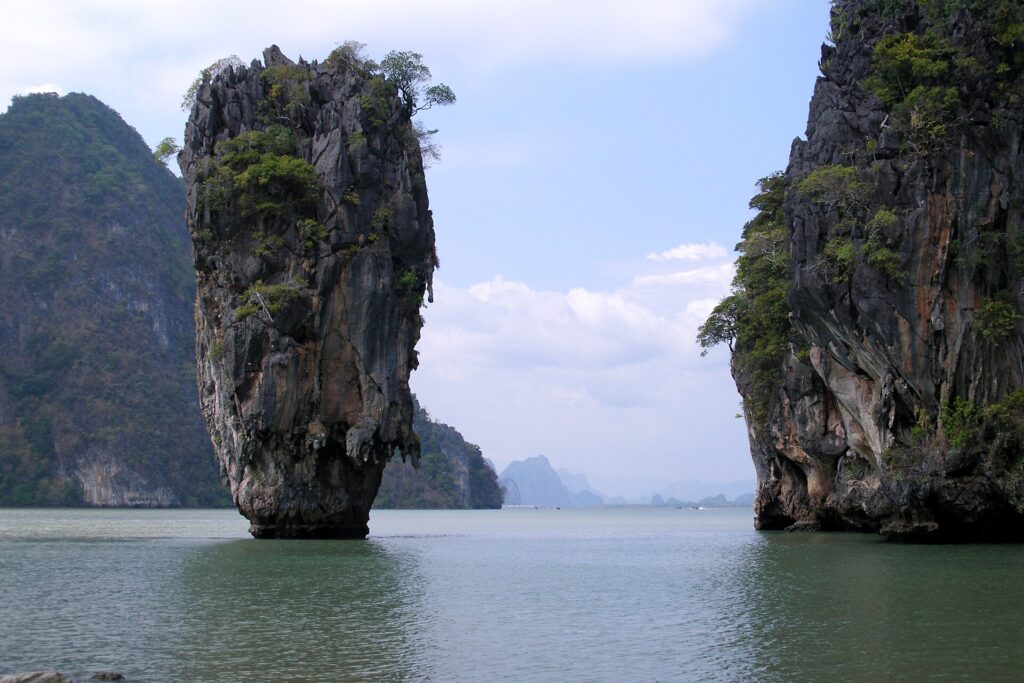
Phang Nga Bay is a long day from Phuket: about nine hours door to door, with hotel pickups often starting an hour or more before the boat leaves. Phi Phi belongs to Krabi province, and day trips run from both Phuket and Krabi, so it gives no reason to pick one base over the other. Krabi’s advantage is the short trips that leave from the beach: four-island half days by longtail or speedboat, and Hong Islands trips of about 4–6 hours. In the wet months, these in-bay trips tend to keep running when open-sea Phi Phi speedboats are cancelled.
Phi Phi has one fixed closure. Landings at Maya Bay stop each year between 1 August and 30 September, and swimming in the bay is banned at all times. Phi Phi tours carry on during the closure without the Maya Bay landing.
Koh Samui: Ang Thong, Koh Phangan and Koh Tao
Ang Thong lies about 30 km offshore and is visited by tour only, on full days of about 7–8.5 hours. The park is usually closed from early November to mid-December, so a Samui trip in those weeks should not hinge on it. Koh Phangan is 30–60 minutes away depending on the boat and pier, and Koh Tao about 1 hour 30 to 1 hour 45 minutes by catamaran, longer with stops; morning seas tend to be calmer. November is when these boat days are most often disrupted, with ferry suspensions on record.
Whichever base you pick, four checks save trouble on any boat day: whether the national park fee is included (it is often extra, a few hundred baht, usually paid in cash), where the pickup runs from and how far that is from the pier, whether the boat is a speedboat or a longtail, and what happens if weather cancels the trip. With those answered, compare trips for your base and month.
One base or two
Phuket and Krabi pair easily: same coast, same season and a half-day move, about 2.5–3 hours by car or 3.5–4.5 hours by bus between Phuket and Ao Nang, with seasonal boats as another option, often via Phi Phi. The pairing also mixes the two holidays well, with Phuket’s beaches and evenings followed by Krabi’s limestone and boat days. Adding Samui means crossing the peninsula. Short Bangkok Airways hops link Samui with Krabi (about 50 minutes in the air) and with Phuket, and the schedule is worth checking before you plan around it. Overland, a bus-and-catamaran ticket from Krabi takes about 4–5 hours to Nathon, and hotel pickup covers only certain areas.
On those transfer times, a trip of under about a week is better spent at one base, which saves a travel day. Phuket plus Krabi starts to make sense from about 10 nights. A crossing to Samui pays off on longer trips, or to hedge a shoulder month such as April, when the Andaman side is past its best and Samui is dry.
Where the money goes at each base
No base is cheapest across the board; the costs land in different places. On Samui, the flight in tends to cost more, the Surat Thani route trades that saving for about half a day, and stays lean towards villas and upscale resorts. Phuket and Ao Nang have the broadest spread of budgets, which makes the room price easiest to control there. Phuket adds a daily cost of its own, because getting between beaches means Grab or taxis. On all three, boat days can carry a park fee on top of the tour price.
Which base to book: three profiles
Each base suits a different kind of trip.
Phuket
Book it for: a holiday with the most choice: different beaches, the most flight options, and nightlife that is close at hand or easy to avoid.
Skip it if: a short airport run to the south-west beaches matters most, or you want quiet evenings without researching the area first.
Where to base yourself: Kata or Karon for beach days with less late noise; Patong for Bangla Road; the north coast for calm and a short airport transfer.
Timing: December to March is the core season; November and April sit either side as shoulder months.
Krabi
Book it for: a scenery-led holiday of limestone views, boat days that start from the beach, and a short airport transfer to Ao Nang.
Skip it if: the goal is one big resort beach or late nightlife.
Where to base yourself: Ao Nang for convenience; Railay for cliffs all around and evenings on the peninsula, if boat-only access suits you.
Timing: the same Andaman months as Phuket; book early for the Christmas and New Year peak.
Koh Samui
Book it for: a comfortable resort or villa holiday with short drives on the island and, if you fly direct to Samui, a short airport transfer, a combination that suits families.
Skip it if: flight cost matters more than transfer time.
Where to base yourself: Bophut or Lamai for quieter evenings; Chaweng for bars.
Timing: the strongest of the three for June to September dates; avoid November.
Travellers planning two bases will find the pairings and transfer days under “One base or two” above. For everyone else, the next step is the room: check hotels near the beach or pier you picked and weigh the distances (Kata against Patong, Ao Nang against Railay, Bophut against Chaweng), and confirm whether a west-coast Samui villa or a remote Krabi resort will need a car. Booked that way, arrival day stays short and predictable: the transfer is arranged, dinner is a walk from the room, and the first boat trip waits for the next calm morning.
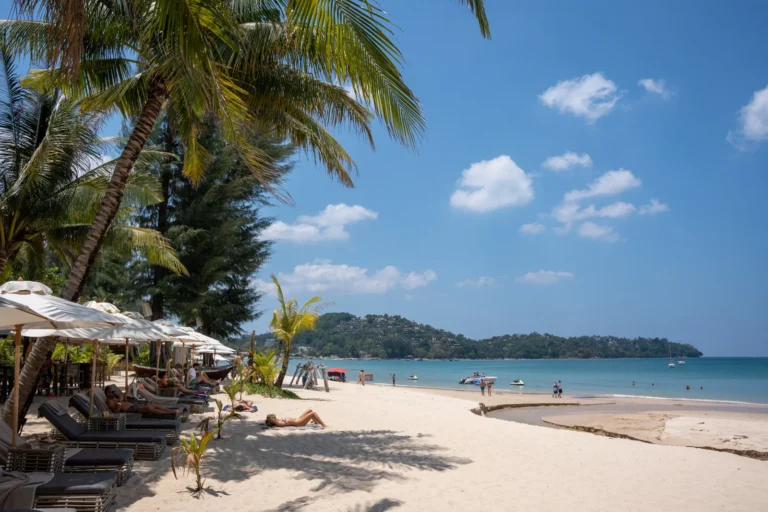
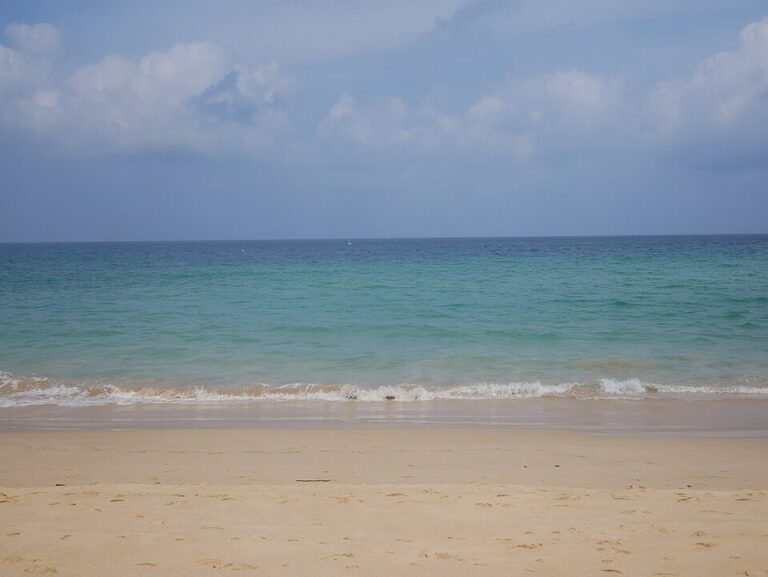
Cover photo: Kata Beach, Phuket. Photo: Radek Kucharski, CC BY 2.0, via Wikimedia Commons.