Bánh Bao in Vietnam: Steamed Buns, Fillings & Street Vendors
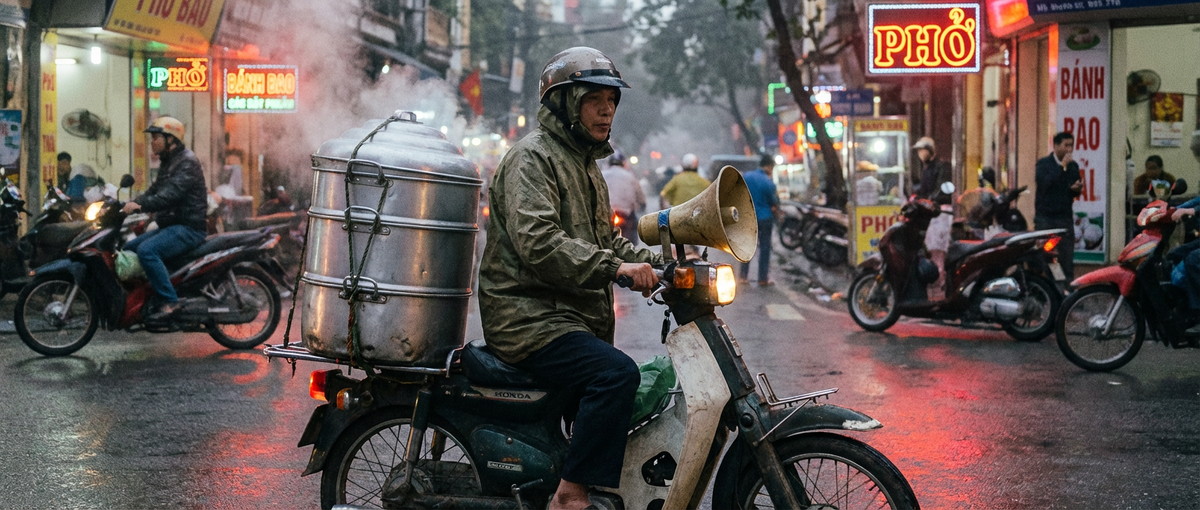
Sometimes you hear bánh bao in Vietnam before you see it.
A recorded voice drifts down the street:
“Bánh bao nóng đâyyy… bánh bao đây…”
Then a motorbike appears with a large metal steamer, carrying hot white buns through the neighborhood.
Stay in the same area for a few days and that stretched-out call starts becoming part of the background soundtrack. You may even recognize the vendor before the bike turns the corner.
Inside the bun might be pork, mushrooms, egg, Chinese sausage or something you were not expecting at all.
That is part of the fun.
What Is Bánh Bao?
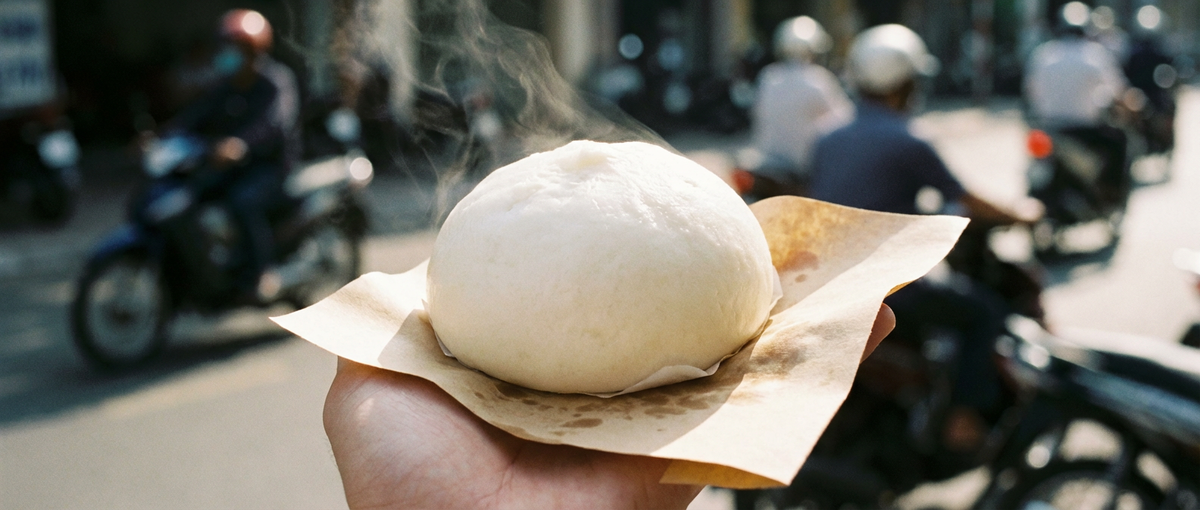
Bánh bao is the Vietnamese version of a filled steamed bun.
It belongs to the wider family of Chinese steamed buns, but Vietnamese bánh bao developed its own common fillings and its own place in everyday food culture.
The dough is usually made from wheat flour and steamed until soft and fluffy.
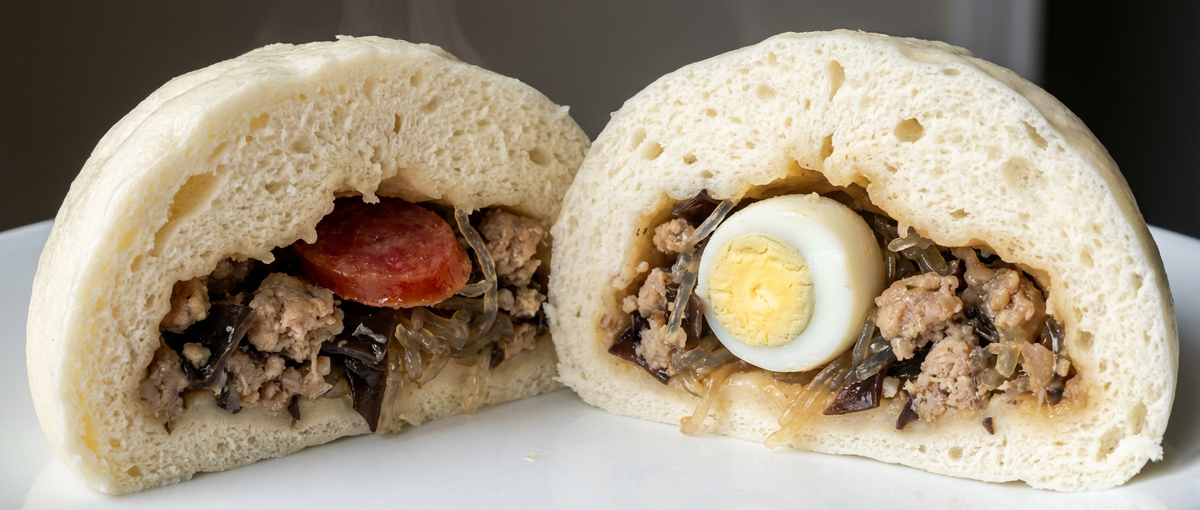
A savory bánh bao may contain:
- seasoned minced pork;
- wood-ear mushrooms;
- onion or shallot;
- a quail egg or part of a chicken egg;
- lạp xưởng, Chinese-style sausage;
- sometimes glass noodles or other additions.
Not every bun contains all of these.
There are also vegetarian and sweet versions, so that smooth white exterior does not always tell you what is waiting inside.
Where Does Bánh Bao Come From?
The roots of bánh bao are Chinese.
Vietnamese bánh bao belongs to the broader Chinese steamed-bun tradition and is often connected with large filled buns that were adapted locally over time.
The basic idea remained recognizable: soft steamed dough wrapped around a filling.
The Vietnamese version developed around ingredients and eating habits that became familiar locally, including pork, mushrooms, egg, lạp xưởng and Vietnamese seasonings.
The result is clearly related to baozi, but bánh bao now belongs comfortably to everyday Vietnamese food culture.
The name reflects that connection too.
Bánh is a broad Vietnamese food word used for many cakes, breads, pastries, dumplings and similar foods.
Bao is connected with the idea of wrapping or enclosing.
For a traveler, the useful translation is much simpler:
bánh bao = steamed bun.
Bánh Bao vs Baozi: Is It the Same Thing?
They belong to the same family, but they are not always identical in size, filling or context.
| Vietnamese bánh bao | Chinese baozi | |
|---|---|---|
| Dough | Soft steamed wheat dough | Soft steamed dough with many regional styles |
| Shape | Often large and fully enclosed | Size and shape vary widely |
| Common savory filling | Pork, mushrooms, egg, sometimes lạp xưởng | Huge variety depending on region |
| Egg inside | Common in many Vietnamese versions | Not a universal feature |
| How you encounter it | Breakfast, snack, bakery food, mobile street vendors | Depends heavily on region and style |
There is no single standard recipe on either side.
The easiest way to think about bánh bao is as a Vietnamese branch of a much larger steamed-bun family.
What Is Usually Inside Bánh Bao?
The most recognizable savory versions combine soft dough with several different textures.
Pork
Seasoned minced pork is one of the most common fillings.
It may be mixed with onion, pepper, mushrooms and other seasonings rather than sitting inside as one solid piece of meat.
Egg
Finding a quail egg inside is completely normal.
Larger buns may contain part of a chicken egg instead.
The egg is characteristic of many Vietnamese bánh bao, but it is not mandatory in every version.
Wood-Ear Mushrooms
Wood-ear mushrooms add a little crunch to the softer meat filling.
You may barely notice them until you bite through the center.
Lạp Xưởng
Some bánh bao contain a slice of lạp xưởng, a Chinese-style sausage used widely in Vietnamese cooking.
It adds a sweeter, richer flavor to the filling.
Other Fillings
Depending on the vendor, you may also find:
- glass noodles;
- vegetables;
- tofu;
- extra mushrooms;
- sweet bean paste;
- custard-style fillings.
Which brings us to the best part.
Which Bánh Bao Should You Try?
Use this as a quick ordering guide rather than a rigid list of recipes.
| If you want… | Look for |
|---|---|
| A classic savory bun | Bánh bao thịt |
| Meat + egg | Bánh bao thịt trứng |
| A more loaded filling | Pork + egg + lạp xưởng |
| No meat | Bánh bao chay |
| Something sweet | Sweet bean, custard or other sweet versions where available |
If it is your first time and you eat meat, bánh bao thịt is the easiest place to start.
What’s Inside Your Bánh Bao?
The outside gives almost nothing away.
Open or bite into your first one and see what you find:
- ☐ minced pork
- ☐ quail egg
- ☐ lạp xưởng
- ☐ wood-ear mushroom
- ☐ glass noodles
- ☐ something unexpected
Then try one from another vendor.
You may discover that two nearly identical white buns have completely different fillings inside.
That is much more interesting than assuming there is one definitive bánh bao recipe.
Street Vendors and the Sound of Bánh Bao
The way bánh bao is sold can be as memorable as the bun itself.
In some Vietnamese neighborhoods, mobile vendors travel around with hot buns kept inside large metal steamers.
And they advertise them with a recorded voice.
You hear:
“Bánh bao nóng đây!”
before the vendor appears.
The call becomes surprisingly easy to recognize.
Stay somewhere long enough and you may start looking toward the street automatically as soon as you hear it.
What Does “Bánh Bao Nóng Đây” Mean?
Broken down:
Bánh bao
Steamed buns.
Nóng
Hot.
Đây
Here.
A natural translation is:
“Hot bánh bao here!”
You may also hear the final word stretched into something closer to:
“Bánh bao đâyyy…”
Once you have heard it enough times, it becomes much easier to recognize than to reproduce from a phrasebook.
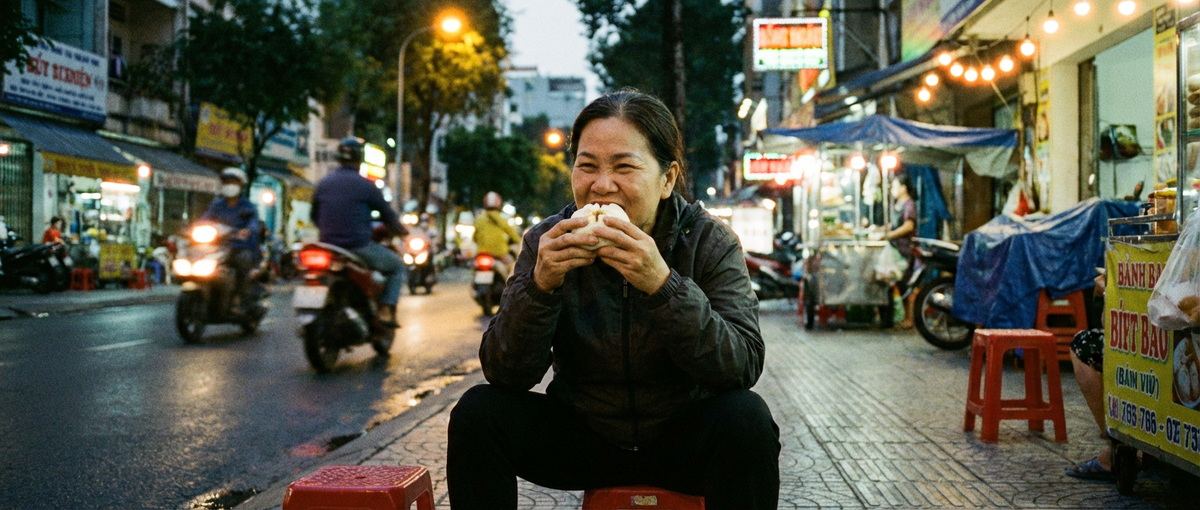
When and How Do People Eat Bánh Bao?
Bánh bao works particularly well as:
- breakfast on the way to work or school;
- a quick snack;
- something more substantial between meals;
- an easy takeaway when you do not want to sit down.
Depending on the city and neighborhood, you may also see mobile sellers later in the evening.
There is no complicated eating ritual.
The bun comes out of the steamer, usually in paper or a bag, and you eat it with your hands.
One practical rule matters:
Give it a minute before the first big bite.
The outside can feel comfortably warm while the meat and egg in the center are still extremely hot.
Some vendors offer chilli or another sauce, but a good bánh bao is already seasoned inside.
How to Choose Bánh Bao from a Street Vendor
Look for Turnover
A vendor who is regularly opening the steamer and selling buns is more appealing than one where the same batch appears to have been sitting around for a long time.
Get It Hot
Bánh bao is best fresh from the steamer.
The dough should be soft and warm rather than dry.
Ask About the Filling
Do not assume every white bun contains the same thing.
The two easiest names to recognize are:
Bánh bao thịt
Meat bánh bao.
Bánh bao chay
Vegetarian bánh bao.
If several versions are available, pointing works perfectly well.
Do Not Judge It by Perfect Whiteness
Different dough recipes can produce slightly different shades.
Freshness, temperature and turnover tell you more than whether the bun is perfectly snow-white.
How to Order Bánh Bao in Vietnam
You do not need a long Vietnamese sentence.
Start with:
Một bánh bao thịt.
One meat bánh bao.
For a vegetarian bun:
Một bánh bao chay.
One vegetarian bánh bao.
And if your Vietnamese disappears the second the vendor answers at normal speed, just point.
You still get the bun.
Want to Try More Vietnamese Street Food?
Bánh bao is easy to buy independently, but a food tour becomes useful when you want someone to explain the dishes, ingredients and places you might otherwise walk straight past.
Why Bánh Bao Sticks in Your Memory
Bánh bao rarely gets the international attention that phở or bánh mì does.
Bánh bao rarely gets the international attention that phở or bánh mì does.
That is part of its appeal.
It belongs to ordinary streets, quick breakfasts, bakery counters and vendors passing somewhere outside.
You do not need to plan your day around finding one.
Sometimes you simply hear the sound and realize dinner, breakfast or a snack has just driven past your window.
You may eventually forget exactly what was inside the first bánh bao you tried.
The sound is harder to forget.
“Bánh bao nóng đâyyy…”
Vietnam Travel Essentials
If bánh bao is one small part of a longer Vietnam trip, these are the travel tools I use across the site.
Stay Connected
Having mobile data makes street-food wandering much easier when you need maps, translations or reviews.
Airport Transfers
If you would rather have a pre-booked ride waiting after your flight:
Rent a Car
A car is not necessary for hunting bánh bao around a city, but it can be useful for a wider Vietnam road trip.
Travel Insurance
For a longer Vietnam trip:
Hotels
Flights
Some links in this article are affiliate links. If you book through them, I may earn a small commission at no extra cost to you.