Marble Mountains Da Nang: Caves, Tickets & Best Route
Marble Mountains Da Nang looks simple on a map and becomes much more complicated once you arrive.
There are caves, pagodas, viewpoints, multiple entrances, a separate ticket for Âm Phủ Cave and an elevator that saves only part of the climbing. Some routes are easy; others involve steep stone steps and narrow passages.
For a first visit, focus on Thủy Sơn, the main mountain with the best concentration of caves, temples and viewpoints, then decide whether to add Âm Phủ Cave separately.
Planned properly, Marble Mountains is one of the most rewarding places to spend a few hours in Da Nang.
Marble Mountains Da Nang at a Glance
| Main mountain to visit | Thủy Sơn / Water Mountain |
| Thủy Sơn ticket | 40,000 VND |
| Âm Phủ Cave ticket | 20,000 VND |
| Elevator | 15,000 VND one way |
| Opening hours | 07:00–17:00 |
| Time needed | Around 3–4 hours for a comfortable first visit |
| Best time | Early morning |
| Shoes | Shoes with good grip |
| Hardest section | Upper Heaven Gate / summit routes |
| Must-see cave | Huyền Không |
Prices and opening hours checked for 2026. They can change, so verify locally if your trip is much later.
Which Marble Mountain Do You Actually Visit?
The Marble Mountains, or Ngũ Hành Sơn, are named after the five elements:
- Metal;
- Wood;
- Water;
- Fire;
- Earth.
You will often see the complex described as five mountains, although physically there are six peaks because Fire Mountain is divided into two parts.
For sightseeing, however, the distinction is much simpler.
Most first-time visitors go to Thủy Sơn, or Water Mountain.
This is where you will find the main concentration of:
- Huyền Không Cave;
- Tàng Chơn Cave;
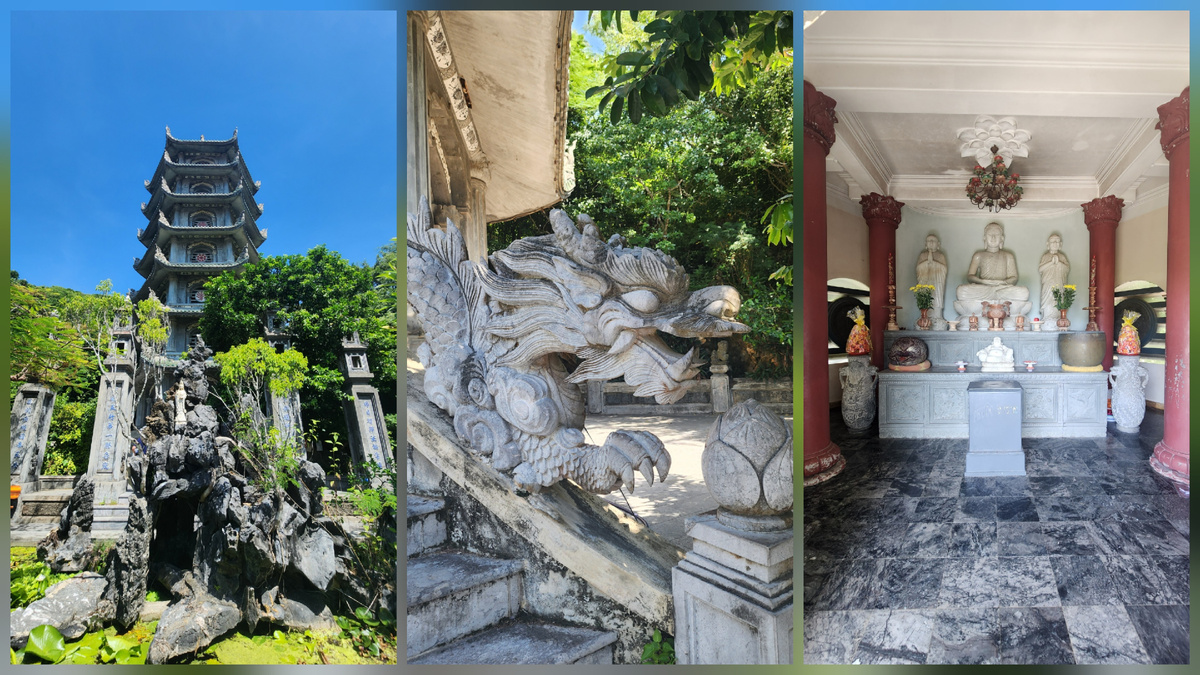
- Linh Ứng Pagoda;
- Tam Thai Pagoda;
- Xa Loi Tower;
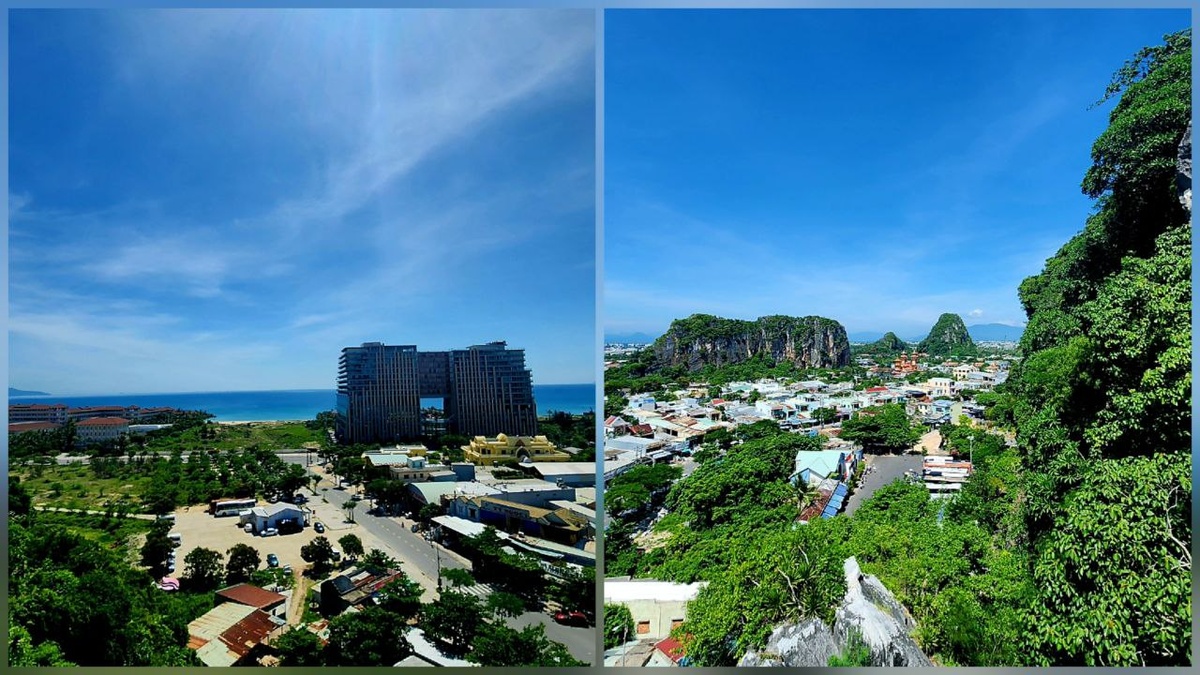
- upper viewpoints;
- routes toward Heaven Gate.
When people casually say they are “visiting the Marble Mountains,” Thủy Sơn is usually what they mean.
Marble Mountains Tickets
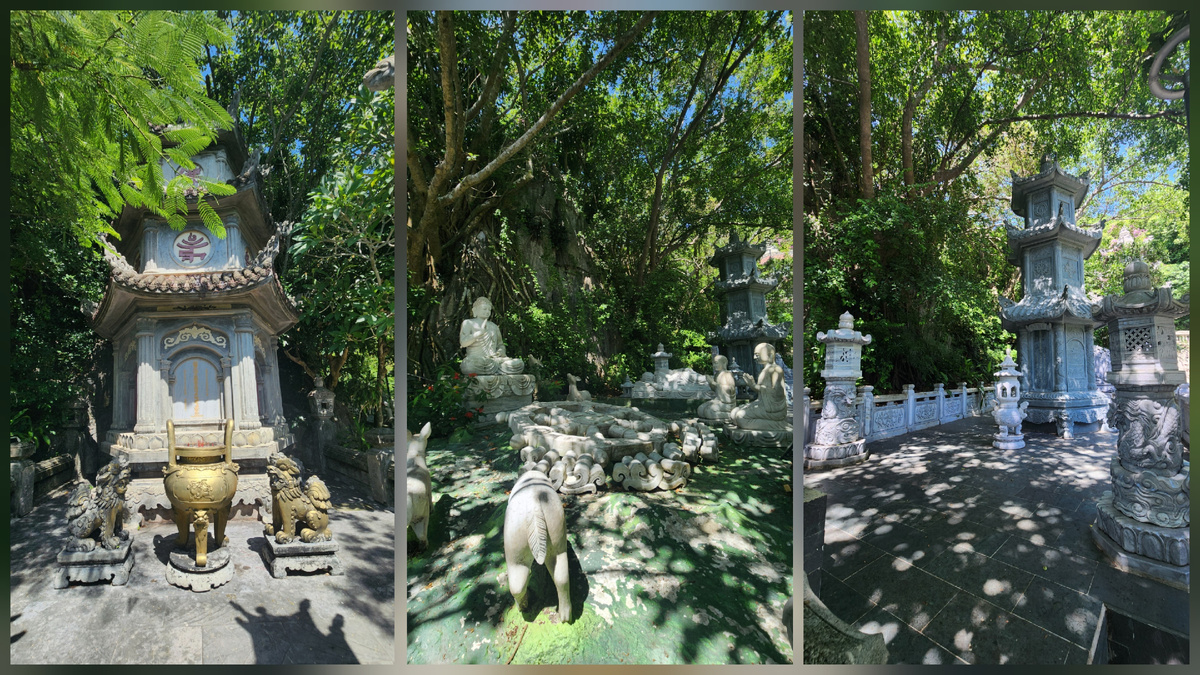
The ticket system is straightforward once you know that Âm Phủ Cave is separate.
| Ticket | Price |
| Thủy Sơn | 40,000 VND |
| Âm Phủ Cave | 20,000 VND |
| Elevator | 15,000 VND one way |
| Elevator return | 30,000 VND |
Important: the main Thủy Sơn ticket does not include Âm Phủ Cave.
If you want both, budget for two separate entrance tickets.
Elevator, Stairs & Footwear
You can begin Thủy Sơn on foot or use the elevator at Gate 2.
The elevator is useful, especially in hot weather.
It does not make Marble Mountains step-free.
Once you are on the mountain, you will still encounter:
- stairs;
- uneven stone;
- cave entrances;
- narrow passages;
- steep optional climbs.
The polished stone can also be slippery, even when it looks dry.
Proper shoes with grip are a much better choice than flip-flops, particularly if you want to explore the caves or upper viewpoints.
If the weather is hot, I would happily use the elevator to save energy for the parts of the mountain that actually matter.
My Suggested Marble Mountains Route

For a first visit, I would keep the route simple:
Gate 2 → Elevator → Xa Loi Tower → Linh Ứng Pagoda → Tàng Chơn Cave → Huyền Không Cave → Tam Thai Pagoda → optional Heaven Gate / upper viewpoints → descend
Then visit Âm Phủ Cave separately, either before or after the main Thủy Sơn route.
That order gives you a good mix of architecture, caves and viewpoints without turning the visit into a hunt for every numbered point on the map.
Start at Gate 2
If you want to save energy, take the elevator up.
You can always walk down later if your legs still feel cooperative.
Xa Loi Tower and Linh Ứng Pagoda
These make a good introduction to the religious side of the mountain before the deeper cave sections.
Tàng Chơn Cave
Smaller and quieter than Huyền Không, and easy to combine with Linh Ứng Pagoda.
Huyền Không Cave
This is the cave I would prioritize.
Tam Thai Pagoda
Continue through the upper temple area before deciding whether you want the harder climb.
Heaven Gate and Upper Viewpoints
Treat this as optional.
You do not need the hardest section to have a worthwhile visit.
Huyền Không Cave: The Highlight
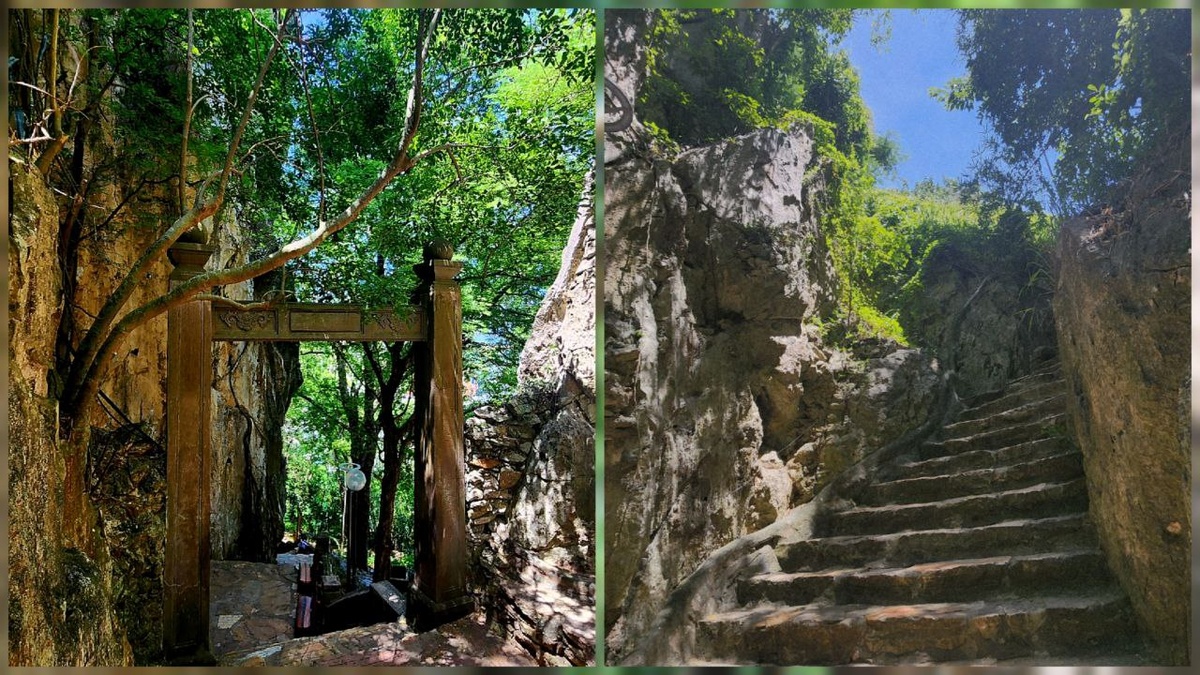
If you visit only one major cave on Thủy Sơn, make it Huyền Không.
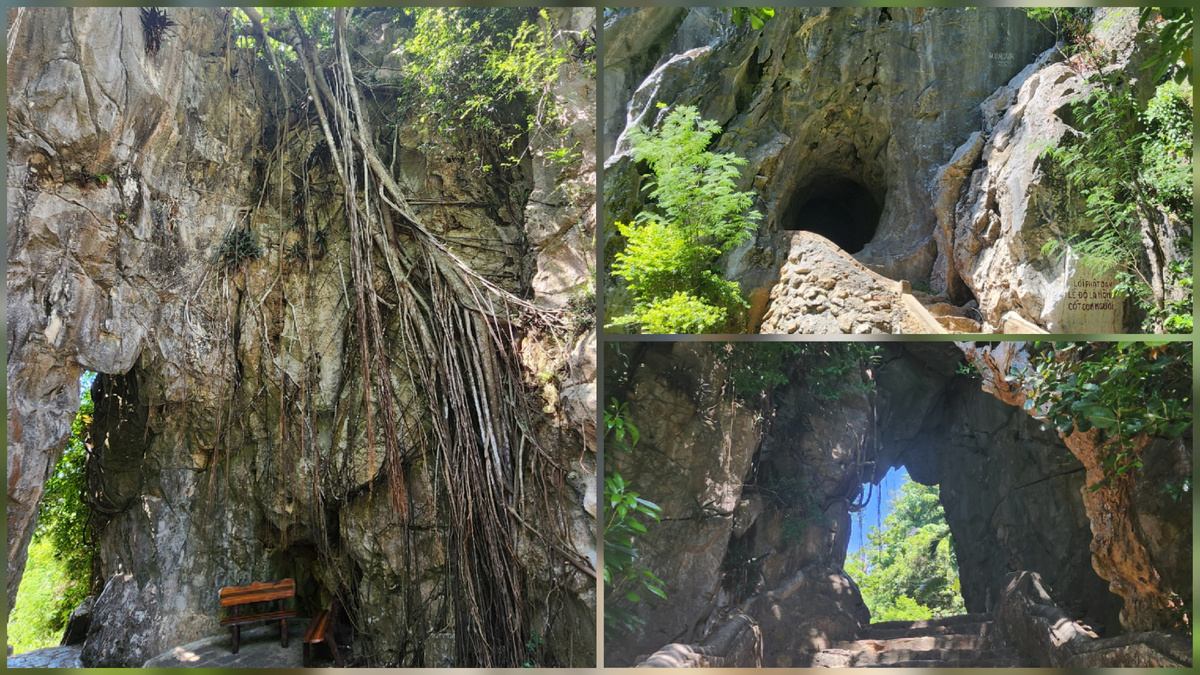
It is large, dramatic and naturally lit from openings high in the cave.
On a clear day, sunlight can fall into the chamber in visible shafts, particularly when incense smoke catches the light.
The exact effect depends on weather, season and the angle of the sun, so I would not build the entire itinerary around arriving at one supposedly perfect minute.
The cave works without it.
The scale of the chamber, Buddhist shrines and contrast between cool stone and light from above make Huyền Không feel completely different from the narrower passages elsewhere on the mountain.
Huyền Không and the War
The cave also has a wartime history and was used as a refuge and field hospital.
You may see descriptions claiming that the openings in the roof were created directly by American bombing.
The wartime use is documented, but I would not assume every opening above was created by bombing.
The cave is impressive without needing to make that part of the story more dramatic than the evidence supports.
Tàng Chơn Cave

Tàng Chơn Cave is smaller and quieter than Huyền Không.
It sits near Linh Ứng Pagoda and works well as part of the natural route through Thủy Sơn.
I would not travel to Marble Mountains for this cave alone, but it is worth entering while you are already nearby.
Its smaller scale also makes a nice contrast before the much larger Huyền Không chamber.
Pagodas on Thủy Sơn

The caves get most of the attention, but the pagodas are part of what makes Marble Mountains feel different from a normal viewpoint attraction.
The temples, caves and mountain landscape are intertwined rather than separated into independent sights.
Linh Ứng Pagoda
Linh Ứng Pagoda sits on the eastern side of Thủy Sơn.
Its history goes back centuries, with major rebuilding during the Nguyễn dynasty.
The setting is one of the reasons to stop: temple architecture, rock faces and cave entrances all sit within the same landscape.
Tam Thai Pagoda
Tam Thai Pagoda is another major religious site on the mountain, with roots going back to the 17th century.
Like many old religious complexes in Vietnam, it has been repaired and rebuilt over time.
Together, Linh Ứng and Tam Thai make it clear that Thủy Sơn has long functioned as a spiritual landscape, not merely a geological attraction.
Âm Phủ Cave: A Different Experience
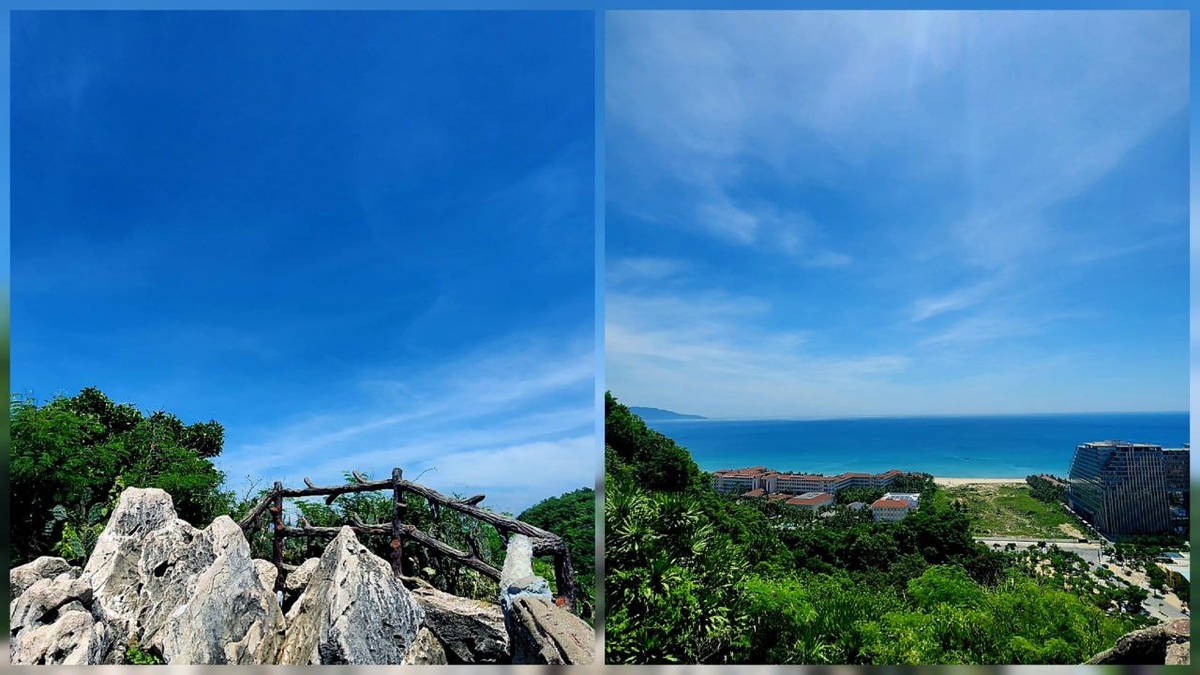
Âm Phủ Cave sits near the base of Thủy Sơn and feels completely different from Huyền Không.
Its name is associated with the underworld.
Inside, Buddhist and Vietnamese religious imagery creates a symbolic journey through judgment, punishment and eventual movement toward light.
It is darker, more theatrical and sometimes more unsettling than the caves on the main route.
If Huyền Không is memorable for scale and natural light, Âm Phủ is memorable for symbolism.
Is Âm Phủ Cave Worth the Extra Ticket?
I would add it if:
- you enjoy caves;
- religious symbolism interests you;
- you have enough time;
- you do not mind more stairs.
If you are already tired after Thủy Sơn or mainly came for the pagodas and viewpoints, skipping it will not ruin the visit.
Heaven Gate and the Upper Viewpoints
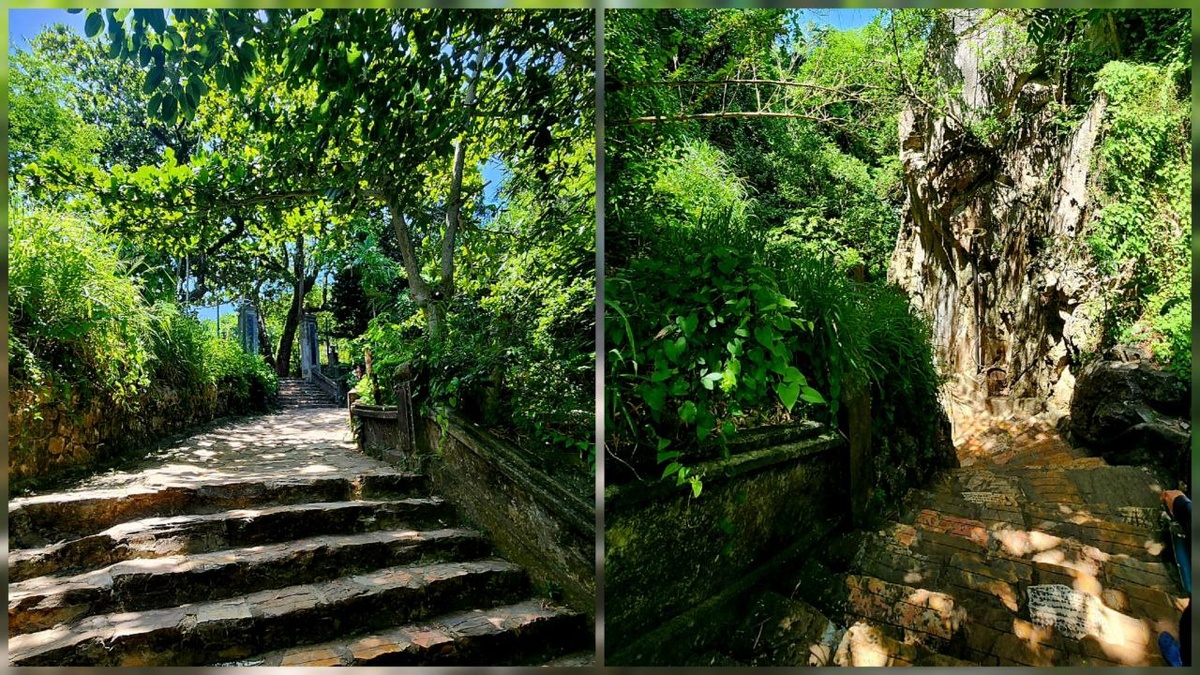
Descriptions of Marble Mountains sometimes make Heaven Gate sound like one simple staircase from Âm Phủ to the summit.
That can be confusing.
Âm Phủ Cave is a separate attraction at the base, while the main Thủy Sơn route has its own higher paths, caves and viewpoints.
The upper sections are where the visit becomes noticeably more physical.
Is the Heaven Gate Climb Difficult?
Parts of it can be.
Expect:
- steep steps;
- narrow passages;
- uneven rock;
- heat;
- places where using your hands for balance can help.
If the surface is wet, be especially careful.
Do You Need to Climb It?
No.
You can see Huyền Không, the pagodas, Tàng Chơn and easier viewpoints without completing the hardest summit section.
Skip the upper climb if you have knee problems, limited mobility, poor balance or unsuitable footwear.
There is no reason to turn sightseeing into an injury just because one viewpoint is popular online.
The Dragon Egg Legend
The Marble Mountains also have a much more imaginative origin story.
According to local legend, a giant dragon came from the sea and laid an egg on the shore.
A magical golden turtle protected it until a beautiful girl emerged.
The shell then broke into pieces, and the fragments became the mountains.
It is folklore, not geology.
But it reflects the fact that these mountains have long been treated as more than pieces of rock.
Non Nuoc Stone Carving Village
At the foot of Marble Mountains, the stone-working tradition continues in Non Nuoc Stone Carving Village.
Local craftsmen have spent generations producing everything from small decorative objects to enormous religious statues and architectural pieces.
Stone is no longer supposed to be quarried directly from Marble Mountains themselves. Local extraction was stopped to protect the site, so workshops now bring material from other parts of Vietnam.
The craft tradition, however, remains very visible.
You can see workshops filled with finished and unfinished pieces, sometimes on a scale that makes the tiny souvenir shops look almost incidental.
A Note About Parking
Some stone shops around the entrances may offer parking and then encourage visitors to come inside.
If you enjoy browsing, that may not bother you.
If you simply want to park and start the visit without a sales conversation, use clearly marked official parking.
Practical Tips for Visiting Marble Mountains
Best Time to Visit
I would arrive around 07:30–08:00.
Early morning means:
- lower temperatures;
- less intense sun;
- fewer large tour groups;
- quieter caves;
- a much more comfortable climb.
Late afternoon can also work, but the site currently closes at 17:00, so do not arrive so late that the closing time controls the whole visit.
How Long Do You Need?
About 2 hours: enough for a faster Thủy Sơn visit if you use the elevator and stick to the main highlights.
3–4 hours: a much better first visit, with enough time for caves, pagodas, viewpoints and Âm Phủ if you want it.
You only need longer if you move slowly, take a lot of photos or explore more side paths.
What to Bring
Modest clothing: these are active religious sites. Covering shoulders and knees is the more respectful choice around pagodas and shrines.
Water: bring some rather than assuming you will find a shop exactly when you need one.
Sun protection: a hat and sunscreen are useful for the exposed sections between caves and temples.
Good footwear: this matters more here than almost anything else.
Getting to Marble Mountains From Da Nang
Marble Mountains lies south of central Da Nang and is easy to reach by:
- taxi;
- ride-hailing;
- scooter or motorbike;
- organized tour.
It works particularly well as a dedicated half-day outing rather than something squeezed between several distant attractions.
For more background on how this older spiritual landscape sits beside modern Da Nang, see my Da Nang History guide.
Visiting Marble Mountains From Hoi An
Marble Mountains also sits conveniently between Hoi An and Da Nang.
That makes it easy to visit if you are:
- staying in Hoi An;
- moving between Hoi An and Da Nang;
- building a wider Central Vietnam itinerary.
If Hoi An is part of the same trip, my Hoi An Travel Guide covers the Ancient Town, tickets, food, accommodation and how much time to stay.
Planning Your Marble Mountains Da Nang Visit
Tours & Activities
If you prefer to visit with transport and a guide rather than navigate the mountain independently:
Hotels
If Marble Mountains is part of a longer stay in the city:
Flights
Da Nang International Airport is the main arrival point for this part of Central Vietnam:
Are the Marble Mountains Worth Visiting?
Yes, if caves, temples and unusual landscapes interest you.
Marble Mountains is not one monument waiting at the end of a path.
What makes it memorable is the movement between things:
a pagoda, then a staircase;
a bright courtyard, then a dark cave;
incense, cool stone and suddenly another view of the sea.
The route itself is the attraction.
Some links in this article are affiliate links. If you book through them, I may earn a small commission at no extra cost to you.