Basket Boats in Vietnam: History, Rides & the Tax Legend
They look like oversized baskets that someone has decided to paddle away in. Basket boats in Vietnam are small, round craft used for fishing, reaching larger boats and, increasingly, taking visitors through palm-lined waterways. The famous story that fishermen invented them to avoid French taxes is a legend, not an established account of their origin.
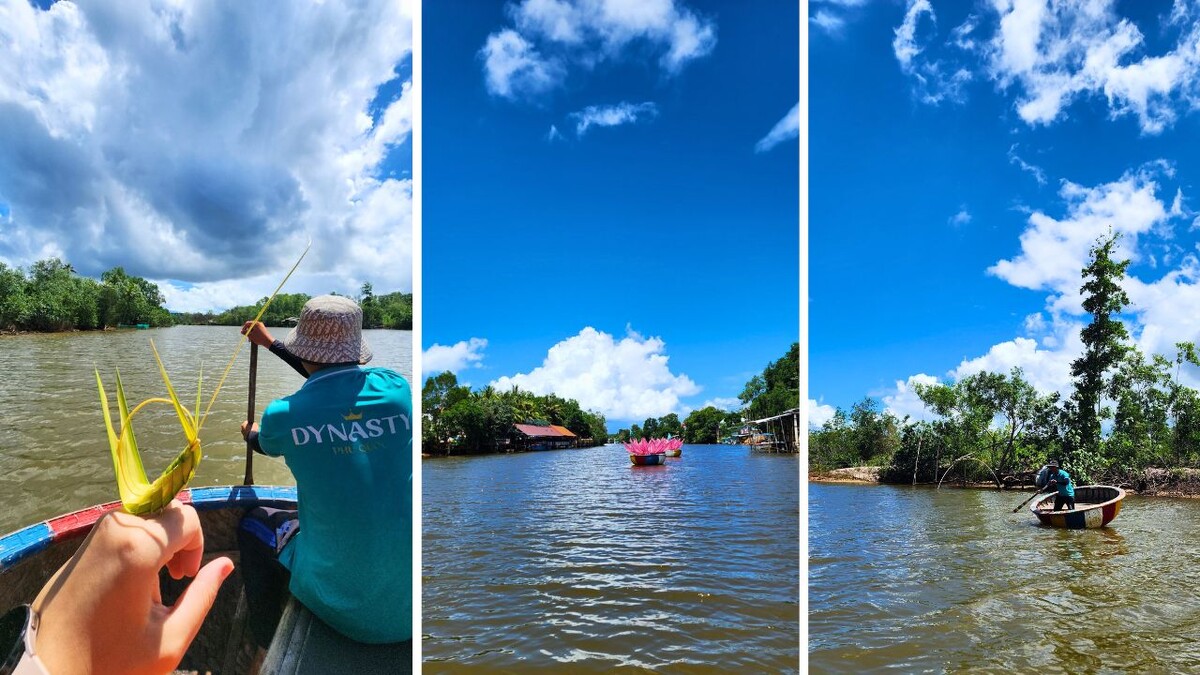
I tried one on Phu Quoc, around Kayaking Dynasty on the Cua Can River, and later rode through the coconut palms near Hoi An. What first looked like a curious tourist attraction began to feel like a different way of seeing the coast: a working object, a craft tradition and a visitor experience sharing the same round hull.
1. What are Vietnamese basket boats called?
Two names appear often: thuyen thung, written thuyền thúng, and thung chai, or thúng chai. In English, you will hear “basket boat”, “round boat” and sometimes “coconut boat”. The last name comes from the setting of tourist rides near Hoi An, not from the material of the hull.
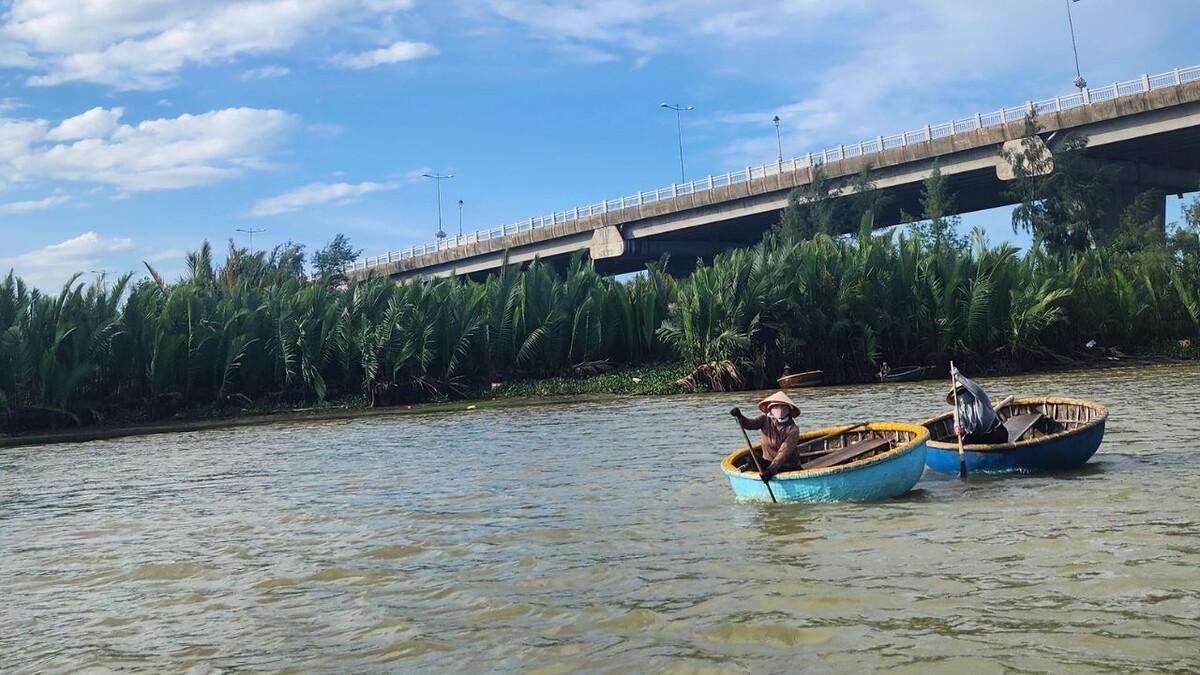
The familiar round form is especially associated with central Vietnam. You can see it working along the coast as well as carrying visitors. My own rides were in two very different settings: the river around Cua Can on Phu Quoc and the water-coconut forest near Hoi An.
2. Did a basket really escape the boat tax?
The story is irresistible. French colonial officials tax boats; fishermen weave giant waterproof baskets and argue that a basket cannot be taxed as a boat. Practical ingenuity wins against the administration.
It is a memorable explanation to hear beside the water. It is also one of several competing origin stories. The Hoi An World Cultural Heritage Conservation Center says that no documentary source has definitively established where this type of boat originated. Its account discusses the colonial-tax version alongside other possibilities.
So I would keep the story, but introduce it with “legend has it”. Repetition in travel guides does not turn it into a confirmed tax loophole. The boat’s continuing use is easier to establish than the circumstances of its invention.
3. Why make a boat round?
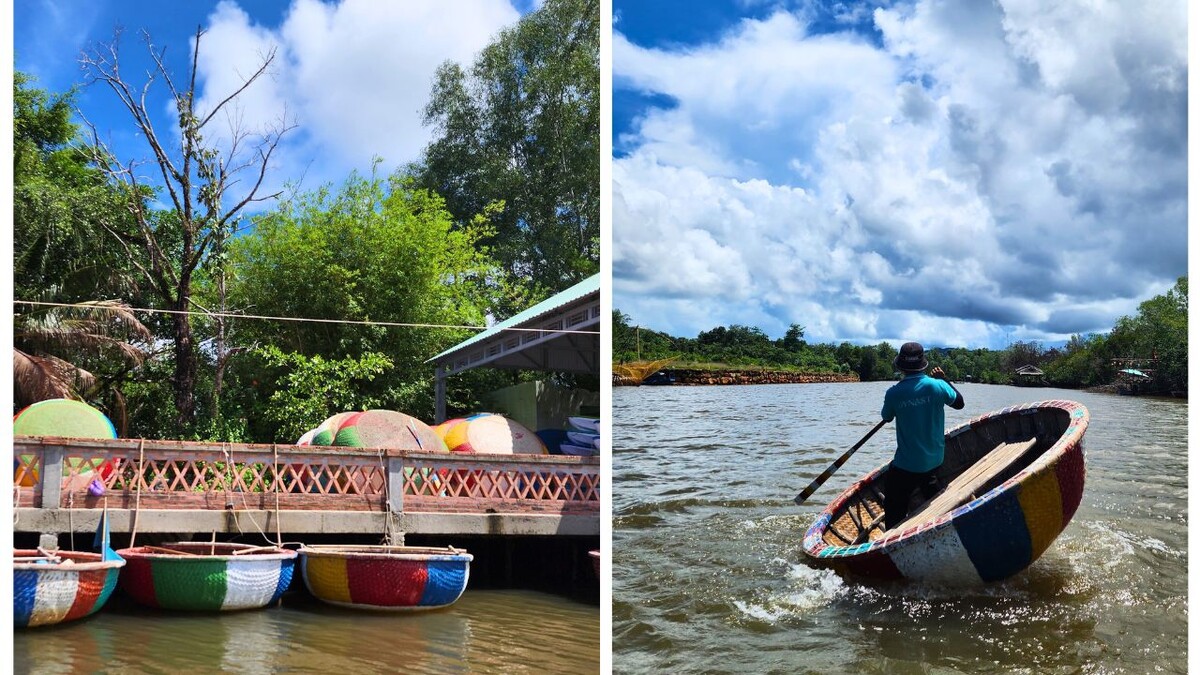
The woven bowl gives a small fishing craft a compact working space. It can turn within its own length, carry gear and move between the shore and a larger vessel. A basket boat is also small enough to bring ashore or carry aboard another boat.
That shape comes with a trade-off. Without the long, pointed hull you expect from a rowing boat, a careless paddle stroke can turn the basket instead of sending it where you intended. Watching an experienced rower keep a straight course makes the skill much clearer than watching from the bank.
Traditional versions are woven from split bamboo, strengthened around the rim and sealed to keep water out. Modern plastic versions also exist, so the outline alone does not tell you that a particular boat is handwoven bamboo.
Inside, the arrangement is simple: seating, room for passengers or fishing equipment, and a paddle. The round shape is not a safety guarantee. Loading, water conditions and the person handling the boat still matter.

4. Where to ride basket boats in Vietnam
Hoi An: coconut palms and a lively visitor attraction
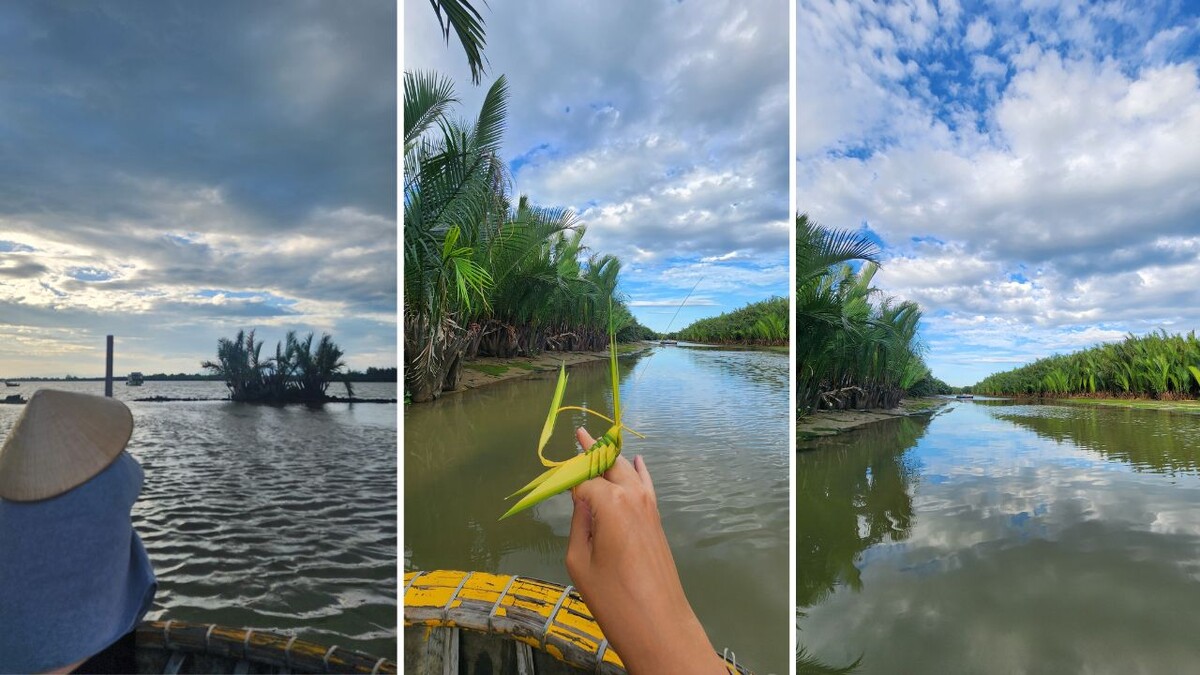
The Bay Mau Coconut Forest in Cam Thanh, near Hoi An, is the setting most closely associated with tourist basket-boat rides. Boats pass through waterways bordered by water-coconut palms, with activities that may include net-casting demonstrations, crab fishing and spinning performances.
This can be a lively outing. Music and performances are part of the attraction for some visitors; someone expecting only quiet water and leaves may find the atmosphere very different from the photograph that prompted the booking.
Choose the experience as carefully as the location. Ask about the route, time on the water and spinning before paying. A transfer, cooking class or extra performance can change what is included in a package.
One bookable example below advertises a 60-minute ride with hotel transfers. At the time of checking on 18 October 2026, its description distinguished watching the spinning performance from joining the specialist spinning ride, which cost an extra 100,000 VND per person. Check your selected option and pickup coverage before booking.
For the rest of the day, my Hoi An travel guide covers the town itself. The Hoi An day trip from Da Nang helps place the coconut-forest stop within a wider outing.
Phu Quoc: my ride around Cua Can
On Phu Quoc, I rode around Kayaking Dynasty on the Cua Can River, in the northern part of the island. It was another place to encounter the round boat away from Hoi An’s familiar coconut-forest setting.
When arranging a river activity here, check the actual craft. A kayaking excursion and a basket-boat ride are different bookings, even when they use the same river or appear together in a tour description. The name of a riverside venue does not establish what is included today.
The widget below opens the broader Phu Quoc activity selection. Read each itinerary for the river, craft and pickup details; it is not a direct booking for my Kayaking Dynasty ride.

A river stop needs to fit the island route. My Phu Quoc itinerary groups days by zone, while my drive around Phu Quoc gives the context for combining outings. For independent driving, select the pickup location and dates before comparing rental conditions.
Compare Vietnam car rentals on Localrent
5. A gentle ride or a spinning performance?
Getting into something that resembles a giant washing bowl takes a moment of adjustment. You sit low, notice the movement of the water and watch the rower turn short paddle strokes into forward motion.
The spinning performance is a separate expectation. A boat rotating quickly while people film and laugh can be exactly what you came for, or the opposite of the slow ride you imagined.
Say “no spinning, please” before boarding if that is your preference. Confirm that the rower has understood. Declining to spin does not necessarily remove nearby music or other boats’ performances, particularly on a shared tourist route.
6. How the boats reached the stage
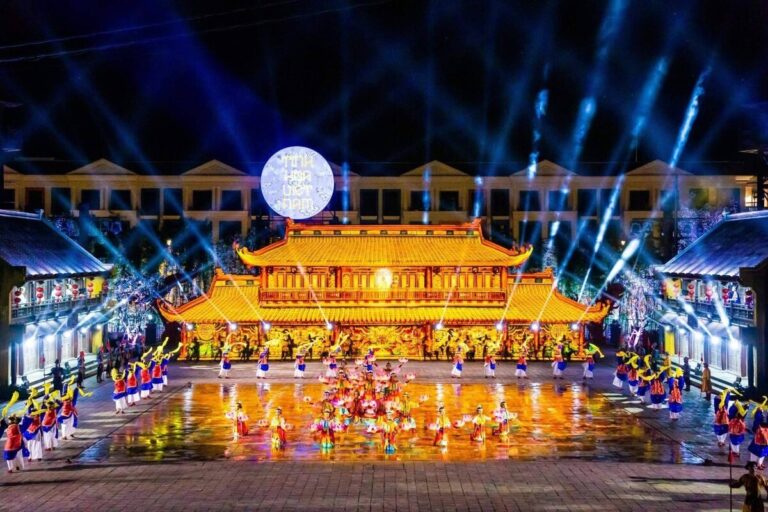
Basket boats also appear in A O Show, the bamboo-circus production associated with the Saigon Opera House in Ho Chi Minh City. Bamboo, baskets and boat-shaped props become part of acrobatics and scenes inspired by Vietnamese life.
That is another way to notice the object: something made for work on the water can be instantly recognisable on a stage. Seeing it in a performance does not replace meeting the craft beside the river, but the connection is part of its cultural story. Check the production’s current programme before arranging an evening around a performance.
7. What to check before booking a ride
The most useful questions are simple: how long will you spend on the water, how many passengers share the boat, where do you meet, and what costs extra? Clarify whether transport, entrance fees and any spinning experience are included. A low headline price may cover a different arrangement from a hotel-pickup package.
Ask for a life jacket that fits, follow the rower’s boarding instructions and keep your phone secure. For children or anyone uncomfortable with quick movement, discuss seating and the route before getting in. There is no need to agree to a performance simply because it appears in other visitors’ videos.
For a wider trip linking central Vietnam and Phu Quoc, compare your arrival points and flight times before fixing activity dates.
For me, riding in both places made the round boat easier to understand. The shape that looks improbable from the bank becomes ordinary once someone who knows it starts paddling. Decide whether you want the quiet ride, the performance or a little of each, then make that request part of the booking.
This article contains affiliate links. I may earn a commission if you book through them, at no extra cost to you.