Dong Giang Heaven’s Gate: Tickets, Glass Bridge & How to Visit from Da Nang
Dong Giang Heaven’s Gate is not the kind of place you add to a Da Nang itinerary for an hour between other attractions.
It sits roughly 100 kilometers from the coast, deep in the mountains west of the city, and combines waterfalls, caves, forest, bridges, Co Tu cultural elements, a cable car and the huge Ngọc Rồng dragon complex with its glass bridge.
The distance is part of the experience. Getting here takes enough time that Dong Giang works best as either a full-day trip from Da Nang or an overnight mountain escape.
I visited independently by motorbike and found a place that felt much bigger, quieter and stranger than I expected. At one point I had an entire cable-car cabin to myself.
But there is one important expectation to set before you go: this is not untouched wilderness. Dong Giang mixes genuine mountain scenery, caves and waterfalls with heavily designed attractions, themed architecture and large-scale tourism infrastructure.
That combination is exactly what makes it interesting.

Dong Giang Heaven’s Gate at a Glance
| Best for | Mountains, waterfalls, unusual architecture, glass bridge, full-day trips |
| Distance from central Da Nang | Roughly 100 km |
| Time needed | Full day; overnight is more relaxed |
| Main highlights | Heaven’s Gate, waterfalls, caves, cable car, dragon complex, Ngọc Rồng Glass Bridge |
| Best transport | Organized tour, shuttle/private car, or motorbike for experienced riders |
| Good for a quick stop? | No |
| Stay overnight? | Worth considering, especially if travelling independently |
Older maps and travel articles may still list Dong Giang under Quang Nam Province. Following the 2025 administrative merger, the attraction is now officially within the expanded Da Nang municipality.
Is Dong Giang Worth the Trip From Da Nang?
It can be, but not for everyone.
Dong Giang makes sense if you want a day that feels completely different from:
- My Khe Beach;
- Marble Mountains;
- Hoi An;
- Son Tra;
- central Da Nang.
The journey is long enough that I would not come simply for one glass-bridge photo.
The attraction works because several experiences are combined into the same day:
- mountain road;
- forest;
- river;
- waterfalls;
- caves;
- cable car;
- viewpoints;
- Co Tu cultural elements;
- heavily designed fantasy-style attractions.
If you only have two days in Da Nang and have not seen the main city sights yet, I would not make Dong Giang a priority.
If you have more time and want to get well beyond the coast, it becomes much more interesting.
Dong Giang Tickets and Combos
Ticket structures have changed over time, so old blog posts can be misleading.
The current structure separates basic admission from the upper cable-car and glass-bridge experience.
| Ticket option | Adult price |
|---|---|
| Entrance only | 300,000 VND |
| Cable car + glass bridge | 200,000 VND |
| Entrance + cable car + glass bridge | 450,000 VND |
| Entrance + cable car + glass bridge + lunch | 650,000 VND |
| Daily Fivigo shuttle combo | 1,050,000 VND |
If Ngọc Rồng Glass Bridge is one of your main reasons for coming, make sure your ticket includes the cable-car and glass-bridge section.
Prices and inclusions can change, so check the current product before paying.
How to Get to Dong Giang From Da Nang
There are four realistic options.
1. Organized Tour
This is the easiest option if you want to see Dong Giang without dealing with mountain navigation, parking or the long drive back.
It makes particular sense if:
- you do not ride scooters;
- you are travelling alone and do not want to drive;
- you want transport included;
- you do not want to worry about returning after dark.
If you book a tour, check whether it includes:
- hotel pickup;
- admission;
- cable car;
- glass bridge;
- lunch;
- return transport.
Not every product will include every section of the park.
2. Fivigo Shuttle Combo
The park also offers shuttle-based packages from Da Nang.
A current Daily Fivigo package combines transport with admission, cable-car/glass-bridge access and lunch.
This is a useful middle ground between a fully guided tour and arranging a private vehicle.
Pickup details and departure times can change, so confirm them when booking rather than relying on an old timetable.
3. Private Car
A private car gives you the most flexibility.
It is especially useful for:
- couples;
- families;
- small groups;
- anyone who wants to stop on the way;
- travellers considering an overnight stay.
It also removes the main problem of an independent day trip: having to concentrate on a long mountain return after several hours walking inside the park.
4. Motorbike
I rode to Dong Giang myself.
It is possible, but this is not the route I would recommend to someone who has just learned to ride in Vietnam.
The distance alone makes it very different from a quick scooter trip around Da Nang.
If going independently:
- start early;
- compare route options before leaving;
- download offline maps;
- fill the tank before the mountain section;
- carry water;
- take a light warm layer;
- leave enough daylight for the return.
Do not blindly trust every shortcut suggested by navigation apps.
Mountain roads, roadworks and route conditions can change.
Mobile data is useful, but download the area offline as well.
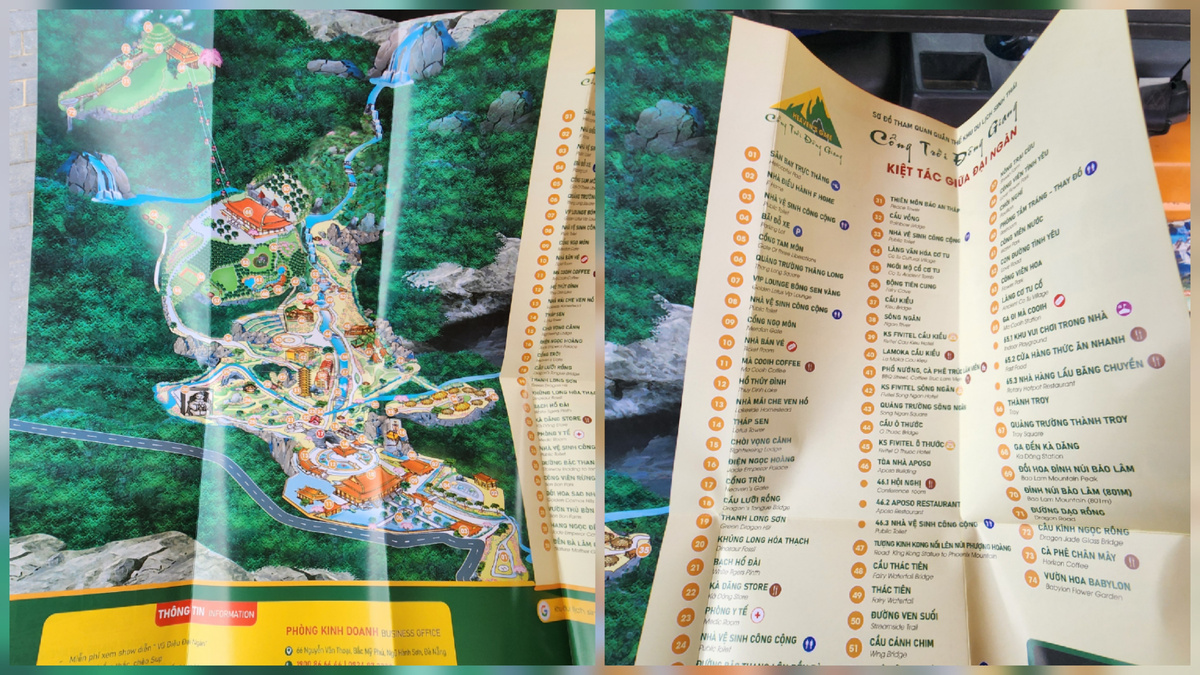
How Dong Giang Is Laid Out
The map can look overwhelming because the complex contains a lot of named attractions.
In practice, it is easier to think of Dong Giang as several broad zones:
- lower river and Heaven’s Gate area;
- bridges and waterfalls;
- cave system;
- cable car and upper mountain section;
- dragon complex and glass bridge;
- Co Tu cultural area;
- hotel and resort zone.
You do not need to treat every named attraction as a separate mission.
The main experience is moving gradually from the lower river area into the mountains.

The Natural Heaven’s Gate
The attraction takes its name from a large natural rock formation created around the river.
This is the part that gives the whole project its identity.
The river, cliffs and forest create a much more natural setting than the heavily designed upper attractions.
Around this section you also find bridges and walking routes linking different parts of the lower complex.
It is worth slowing down here rather than rushing immediately toward the cable car.

The Seven Bridges
Several bridges cross the river through the lower area, each with a different design.
The wooden Kieu Bridge is one of the quieter and more photogenic.
This part of the park works best when you are not treating it as a race from attraction to attraction.
The forest, river and changing viewpoints are part of the reason to come this far into the mountains.
25 Natural Waterfalls
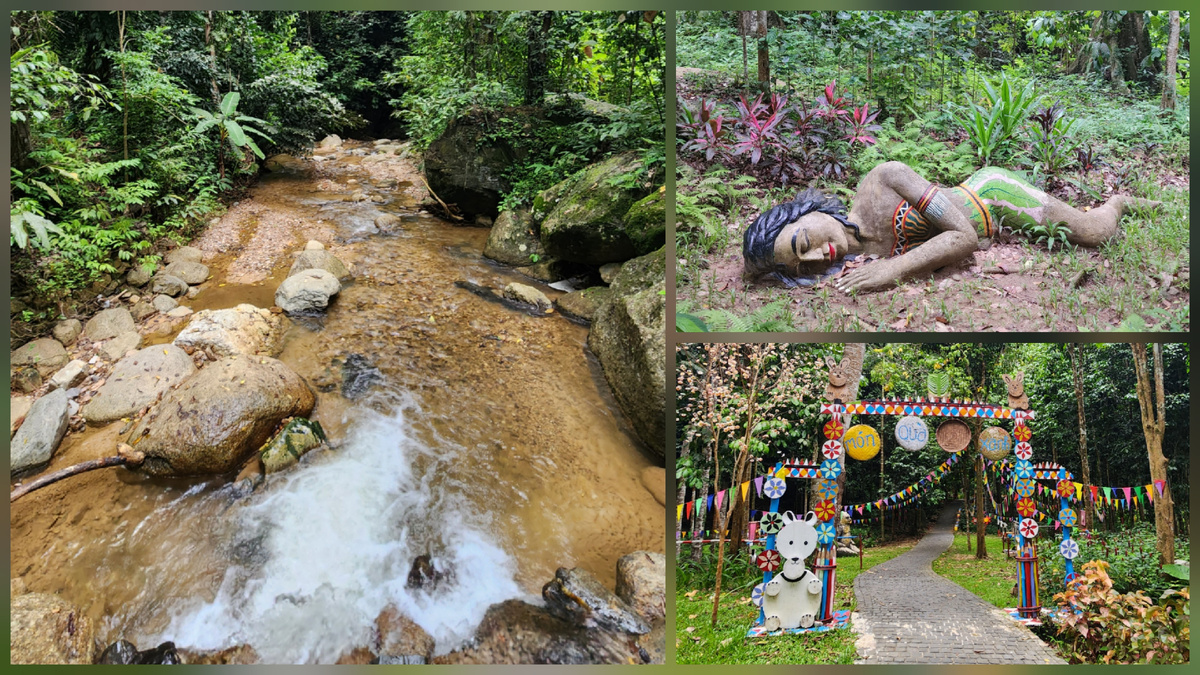
Water is one of Dong Giang’s strongest features.
The complex is associated with 25 natural waterfalls, giving the lower sections a very different atmosphere from the cable-car and dragon areas above.
This is one reason I would allow a full day rather than arriving late and trying to reach only the glass bridge.
Some of the most appealing parts of Dong Giang are not the headline attractions.
They are the places where you stop beside the water and temporarily forget that there is a giant dragon waiting farther up the mountain.

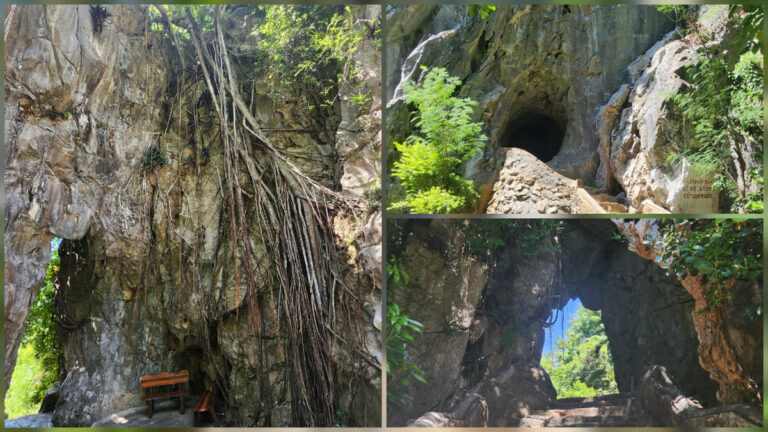
Tiên Cung Cave
Tiên Cung Cave adds another layer to the visit.
The cave system includes several chambers with stalactite and stalagmite formations.
It also gives you a useful break from the heat.
I entered one of the cave areas during my visit and very quickly discovered that caves were not going to be the part of Dong Giang where I spent the most time.
If caves are a major interest for you, allow more time than I did.
If they are not, there is plenty outside to fill the day.


Cable Car to the Upper Area
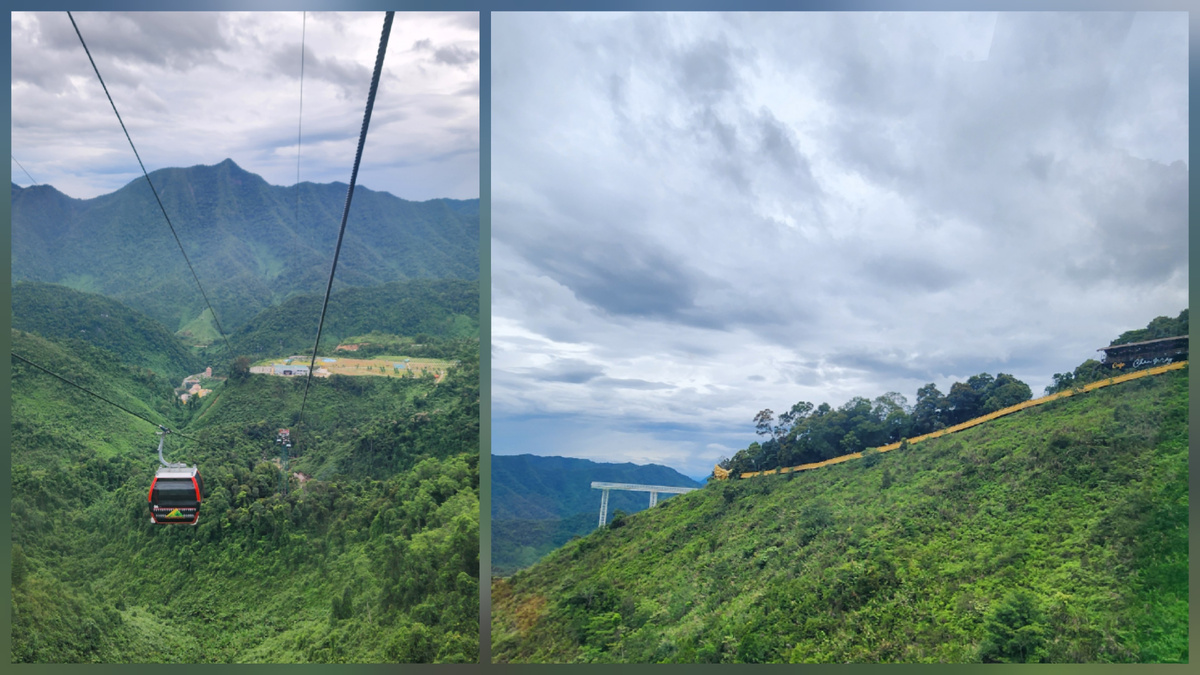
The cable car is the transition between the lower landscape and Dong Giang’s most dramatic engineered section.
On my visit, the park was so quiet that I had an entire cabin to myself.
That is not something I would promise on another day, but it completely changed how the journey felt.
The mountains opened below the cabin, with dense forest stretching in every direction.
There is one practical reason not to schedule everything too tightly: technical interruptions happen.
My return journey was delayed for around 40 minutes while the cable car was being worked on.
Build some spare time into the day.
The Ngọc Rồng Dragon Complex
This is where Dong Giang becomes much more theatrical.
The upper complex is built around a giant dragon concept.
One frequently confused detail is its size.
The dragon-shaped covered corridor is around 460 meters long.
The glass bridge itself is around 39 meters long, not 460 meters.
That difference matters because many descriptions online blur the two together.
The dragon route takes you through a long architectural sequence before you reach the glass section and viewpoints.
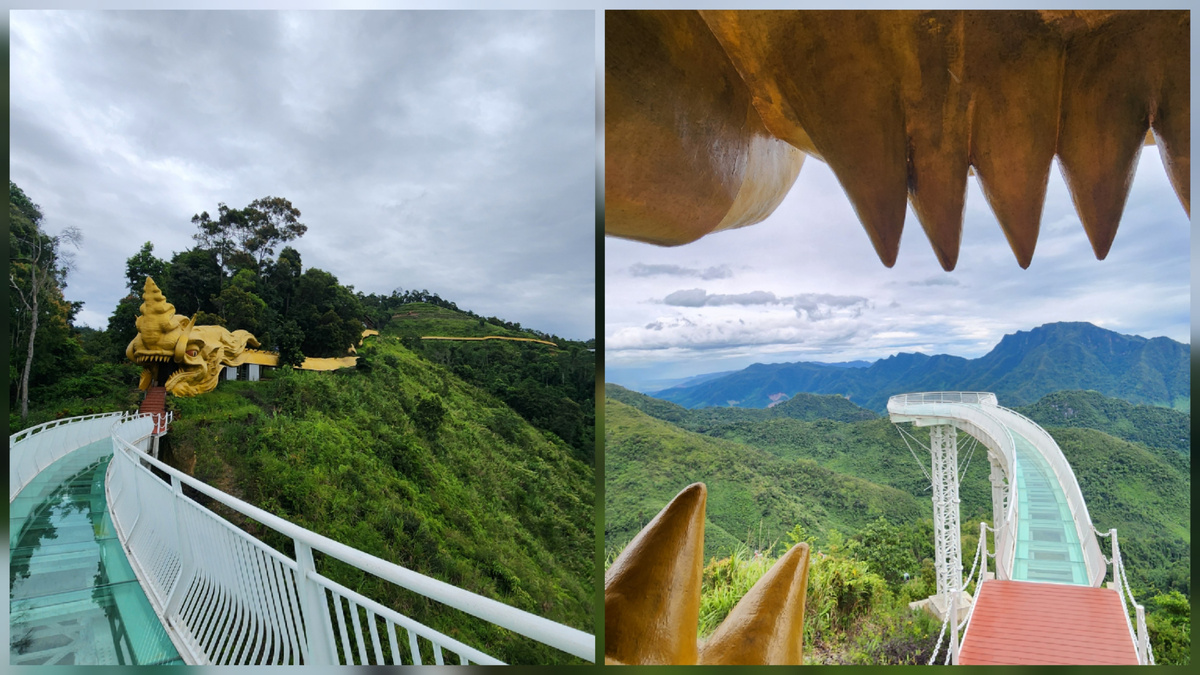
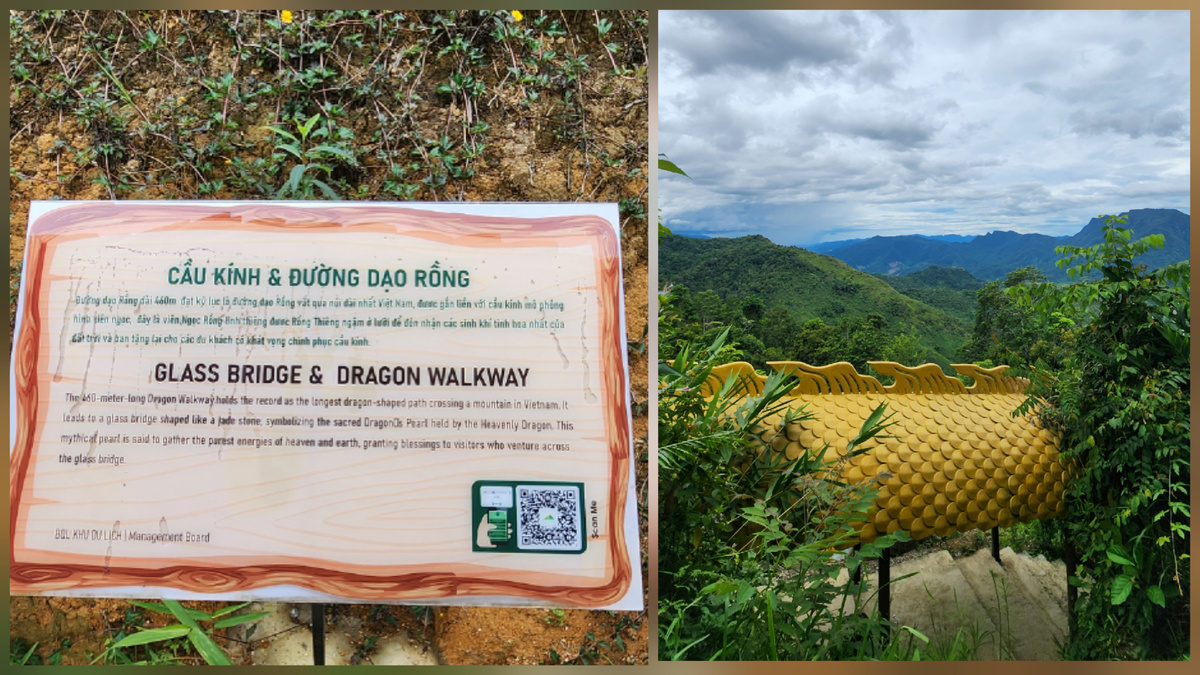
For me, that made the bridge more interesting than if it had simply been built as an isolated platform.
Ngọc Rồng Glass Bridge
The glass bridge is only one element of the larger dragon complex.
It sits high in the mountains, at roughly 800 meters above sea level.
That does not mean there is an 800-meter vertical drop directly beneath the glass.
Visitors are given protective shoe covers before stepping onto the transparent section.
The bridge itself is relatively short.
What makes it memorable is the setting:
- mountain views;
- dragon structure;
- elevation;
- surrounding forest;
- open panorama.
When I visited, there were so few people around that I could take my time without competing for space.
Be Ready for Stairs
Dong Giang is not a flat attraction.
Some sections involve substantial climbing.
One of the routes toward the higher themed areas involves roughly 487 steps.
That matters if you are:
- travelling with small children;
- visiting in strong heat;
- dealing with knee problems;
- expecting a relaxed cable-car-only day.
Wear proper shoes.
This is not a place where I would choose slippery sandals.
Chân Mây Café
One of my favorite small stops was Chân Mây Café in the upper area.
After the long ride from Da Nang and the climb through the dragon route, I stopped for a cold drink and sat looking over the mountains.
The park was so quiet that the staff seemed slightly surprised to see a customer.
It was one of the simplest moments of the day, and one of the ones I remember best.
Co Tu Culture at Dong Giang
Dong Giang also incorporates elements of Co Tu culture, reflecting the Indigenous community associated with this mountain region.
You can see traditional-style architecture, food and cultural programming within the complex.
The Guol communal house is an important architectural symbol in Co Tu culture and appears as part of this section.
You may also encounter scheduled cultural performances.
It is better to think of this as a tourism presentation of Co Tu heritage rather than an untouched village experience.


What to Try
One of the characteristic foods is cơm lam, sticky rice cooked inside bamboo.
It is simple, filling and particularly well suited to a mountain setting.
If you choose a ticket package with lunch, check what is actually included before buying.
King Kong, Dinosaurs and Troy
Dong Giang can shift very quickly from waterfalls and cultural architecture into something much stranger.
You may encounter:
- King Kong;
- dinosaur-themed areas;
- European-style façades;
- Troy-inspired architecture;
- giant decorative structures.
Whether you like this part depends on what you expected.
If you arrive imagining a pure nature reserve, some sections may feel artificial.
If you accept Dong Giang for what it actually is, a hybrid of ecotourism, mountain resort and themed attraction, it makes much more sense.
I think this distinction is important before travelling 100 kilometers to get here.
Day Trip or Overnight?
This is the most important planning decision.
Choose a Day Trip If:
- you leave Da Nang early;
- you mainly want the highlights;
- you use a tour, shuttle or private driver;
- you are comfortable with a long day;
- you do not need to see every section.
A day trip works.
But it will be a proper full day, not a casual side excursion.
Stay Overnight If:
- you want a slower visit;
- you are travelling independently;
- you want to avoid a long return after sunset;
- you want to see more waterfalls and caves;
- you want time in the mountains without checking the clock constantly.
After doing the trip independently, this is the option I would seriously consider next time.
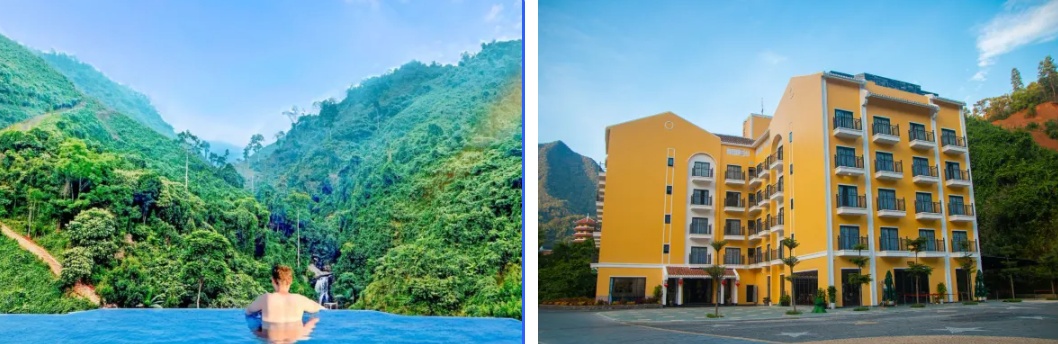
Fivitel Cong Troi Dong Giang
Fivitel Cong Troi Dong Giang is the obvious place to stay if you want to turn the visit into an overnight trip.
The advantage is not simply the room.
It removes the biggest logistical pressure from Dong Giang: needing to complete a long mountain visit and still return all the way to Da Nang the same evening.
An overnight stay gives you more room for:
- late-afternoon mountain views;
- pool time;
- a slower dinner;
- early morning;
- seeing more of the attraction without rushing.
For an independent motorbike trip, this is the change I would make before trying to squeeze additional attractions into the day.
How Much Time Do You Need?
I would allow at least 6 to 7 hours inside or around the complex if you want to explore properly.
Add the journey from Da Nang and this becomes a very long day.
If you only have a few hours available, choose somewhere closer to the city.
Dong Giang makes more sense when the journey itself is part of the plan.
What to Wear
Shoes
Wear proper walking shoes or trainers.
You may encounter:
- wet surfaces;
- stairs;
- uneven paths;
- cave areas;
- waterfall zones.
Clothing
The mountains can feel cooler than coastal Da Nang, particularly later in the day.
Bring:
- lightweight layers;
- sun protection;
- a thin jacket or windbreaker;
- rain protection if the forecast is uncertain.
If travelling by motorbike, I would bring the extra layer even if Da Nang feels hot when you leave.
What to Bring
For a full-day Dong Giang trip:
- water;
- sunscreen;
- good shoes;
- light jacket;
- phone charger or power bank;
- mobile data;
- downloaded offline maps;
- small amount of cash;
- basic rain protection.
If travelling independently, start with a full phone battery and enough fuel.
What Surprised Me Most
The biggest surprise was not the glass bridge.
It was how empty the place felt during my visit.
Dong Giang is a large project with serious infrastructure, yet at times I felt as though I had whole sections to myself.
That created a strange contrast.
One minute I was looking across quiet mountains.
The next I was walking through a giant dragon.
Then I was beside a waterfall.
Then a cable car.
Then King Kong.
It should not really fit together.
Somehow, that oddness becomes part of the experience.

Who Should Skip Dong Giang?
I would skip it if:
- you only have a very short stay in Da Nang;
- you dislike long road journeys;
- you want mainly historic sights;
- stairs and walking are difficult;
- you expect untouched wilderness;
- you do not want to devote most of a day to one attraction.
There are many easier excursions from Da Nang.
Dong Giang is for the day when going far into the mountains is itself the point.
Planning Dong Giang From Da Nang
If you are building the trip from scratch, I would make these decisions in this order:
1. Decide How You Will Get There
Prefer not to drive?
2. Decide Which Ticket You Need
If the glass bridge matters, do not accidentally buy only basic admission.
3. Decide Whether You Really Want to Return the Same Day
If not:
4. Set Up Navigation
If you are travelling independently:
Download an offline map too.
5. Get to Da Nang
For background on how the city developed into the transport and tourism hub you are using as your base, see my Da Nang History: From Champa and Tourane to the Modern City.
Is Dong Giang Heaven’s Gate Worth Visiting?
Dong Giang is not worth travelling 100 kilometers for one bridge.
It can be worth travelling 100 kilometers for the whole day.
The road into the mountains, waterfalls, caves, forest, cable car, strange dragon architecture and huge scale combine into something that feels completely separate from coastal Da Nang.
I would come if I had already explored the city and wanted one ambitious trip into the mountains.
I would start early.
I would wear proper shoes.
And if I were travelling independently again, I would seriously consider staying overnight instead of treating the return to Da Nang as something that had to happen before the day was over.
That is when Dong Giang makes the most sense: not as another pin on the map, but as the destination for the day.
Ticket prices, transport arrangements and attraction access can change. Check current details shortly before travelling.
Some links in this article are affiliate links. If you book through them, I may earn a small commission at no extra cost to you.