Vietnam Souvenirs: What to Buy, Pack & Leave Behind
The most useful Vietnam souvenirs are often the ones that disappear: coffee brewed on a slow morning, pepper ground over dinner, coconut sweets opened with friends. A small object can last longer, but only when it suits the person receiving it. A beautiful bowl that nobody can carry home intact is an expensive packing problem.
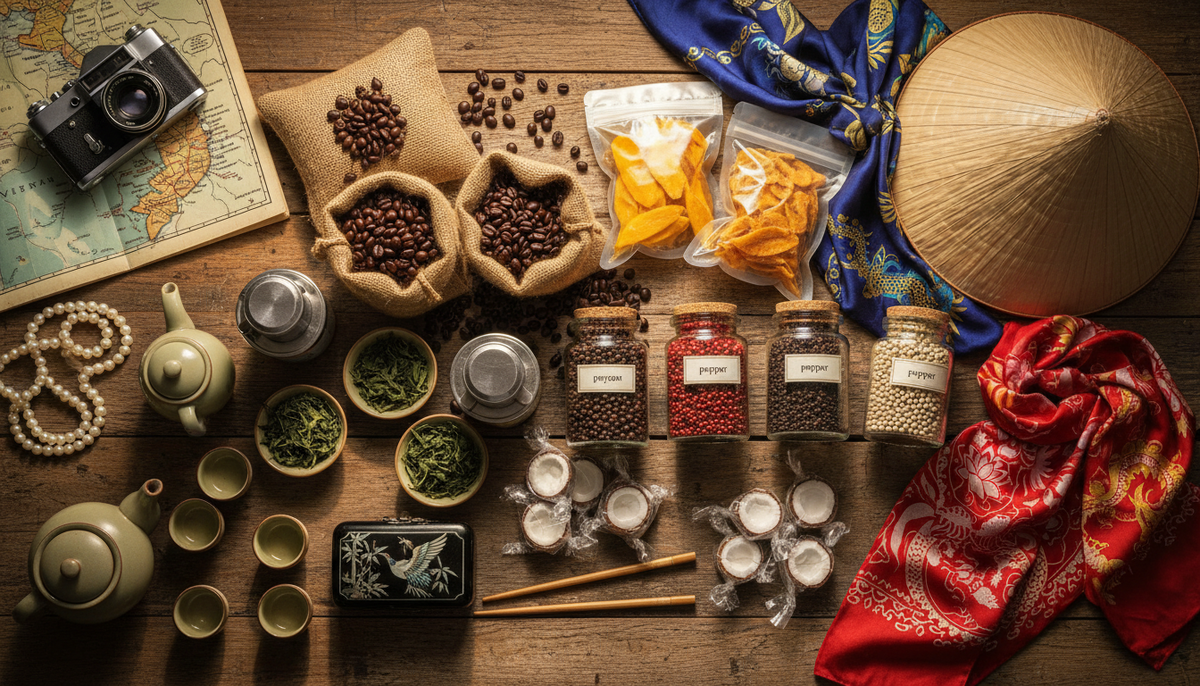
Start with coffee, tea, whole peppercorns and sealed sweets for food gifts; consider a scarf, a small lacquer box or a folding lantern for something to keep. Below is how to choose between them, where to shop and which purchases need extra thought before they go into your suitcase.
Vietnam souvenirs: what to buy for each person
| Buying for | Start with | The deciding detail |
|---|---|---|
| Coffee drinker | Coffee plus a metal phin filter | Match the grind to their brewing method |
| Someone who cooks | Whole Phu Quoc peppercorns | Look for origin, packing date and a sealed pack |
| Office or shared household | Individually wrapped coconut or sesame sweets | Check nuts, dairy and other allergens |
| Tea drinker | Lotus-scented or jasmine tea | Buy a small pack after tasting |
| Chocolate lover | Vietnamese cacao chocolate | Keep it away from heat during the trip |
| Someone who prefers lasting gifts | A scarf, small lacquer box or folding lantern | Check material, finish and packed dimensions |
For several small gifts, divide the budget before entering the shop. One food category bought in different flavours is easier to distribute than a bag of unrelated objects. Save the larger purchase for someone whose taste you actually know.
Coffee and a phin: bring home the morning ritual
Coffee has an advantage over a decorative souvenir: the recipient already knows what to do with it. The exception is a bag ground for a brewing method they never use. Ask whether they have an espresso machine, a filter brewer, a grinder or none of those before choosing beans or ground coffee.
Robusta, arabica and blends all appear on Vietnamese shelves. Robusta is not automatically a low-quality purchase, and an expensive tin is not proof of a better roast. Read the ingredients, roast information and packing date. Some products are flavoured or contain added ingredients; buy those deliberately rather than assuming every bag contains only coffee.
A small metal phin, the drip filter used for Vietnamese coffee, makes the gift more complete. Check that the press and lid fit, and ask for coffee ground for that filter. Drip bags make more sense for someone who wants a cup without another piece of equipment. The Vietnamese coffee guide explains the drinks and brewing styles before you decide what to take home.
Taste before buying a whole suitcase of coffee
A class can help when the café menu makes more sense to you than the shop shelf. In Ho Chi Minh City, the workshop below covers condensed-milk, egg, salt and coconut coffee. It teaches preparation as well as tasting; check the current session details and tell the provider about dietary restrictions. You may leave knowing which drink you actually want to recreate.
Tea and pepper: small gifts with a clear flavour
Lotus, jasmine and herbal infusions
Lotus-scented tea brings a different part of Vietnam home from coffee. Traditional Hanoi lotus tea uses the flower to scent tea leaves, but packages sold under a lotus label can differ. Read whether you are buying scented green tea, a blend or a flavoured product. Ask to taste it when a sample is available; an elaborate gift box tells you little about the cup.
Jasmine tea suits someone who already likes fragrant tea. Artichoke products are another possibility, but check whether the box contains an infusion, an extract or a sweetened instant drink. Treat it as a food gift, without expecting the medical benefits sometimes promised on souvenir shelves.
Whole Phu Quoc peppercorns
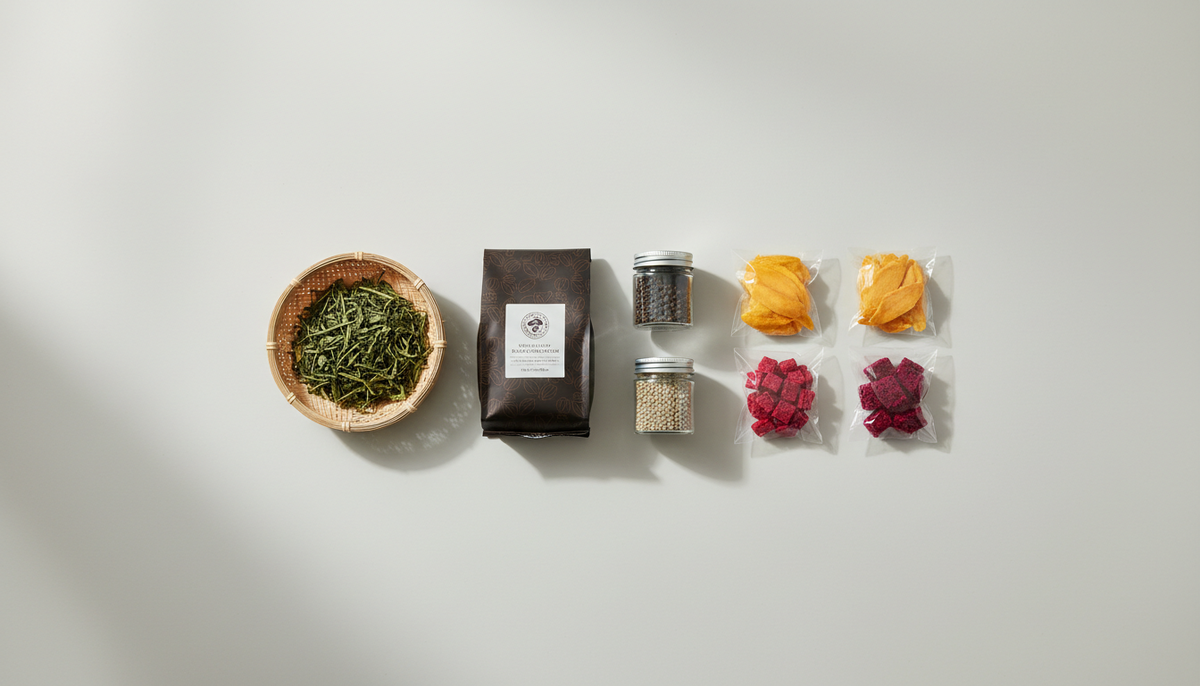
For someone who cooks, pepper is easier to use regularly than a novelty sauce. Whole peppercorns let the recipient grind what they need. Compare the stated origin, black or white pepper variety, sealed packaging and date; a picture of Phu Quoc on the front is not the same as a clear origin statement.
Avoid buying a large quantity before smelling or tasting a sample where offered. Several smaller sealed packs also split neatly between recipients. The Phu Quoc pepper guide goes further into varieties and farm visits, so this can be a purchase connected to a place rather than an anonymous bag of spice.
Sweets, dried fruit and Vietnamese chocolate
Ben Tre coconut candy works for sharing because it comes in small portions. Sesame sweets and peanut snacks offer another route, with an obvious caution for anyone with nut allergies. Check the actual ingredients rather than using the flavour name as an allergen guide.
With dried mango, jackfruit or banana, decide whether you want chewy fruit, sweetened fruit or crisp chips. They are different snacks, even when the front of the pack looks similar. Check added sugar and ingredients, then buy one small pack before committing to gifts for everyone. Crisp chips also need protection from being crushed.
Marou chocolate is a more deliberate gift for a chocolate enthusiast: the brand works with Vietnamese-grown cacao and sells origin-specific bars. Read the cacao percentage and flavour before choosing. The practical drawback is heat. Buy close to departure when possible, keep it out of a hot vehicle and avoid leaving it in a bag during a long afternoon outside.
Souvenirs that last: textiles, lacquer and small craft pieces
For a lasting gift, start with how it will be used at home. A flat scarf needs little storage; a tray needs a suitable surface; a lamp needs space in both a suitcase and a room. Those questions matter more than collecting every recognisable Vietnamese motif.
Silk scarves, embroidery and clothing
A scarf avoids most sizing problems. Check the fibre composition, edges and stitching, and ask whether the fabric is pure silk or a blend. Price and softness alone cannot settle that question. An embroidered pouch or cushion cover is easier to pack than a bulky furnishing.
An ao dai is a more personal purchase. For tailoring, allow time for fittings and corrections before departure. For a gift, measurements and the recipient’s willingness to wear it matter; do not assume a beautiful garment on a hanger will fit someone you are shopping for from memory.
Lacquer, ceramics and folding lanterns
Small lacquer boxes and trays make sense when you can inspect the finish and see how the lid or base sits. With ceramics, look at the rim, handle and foot, then ask the seller to pack the piece before you judge whether it will travel. One carefully chosen cup can be more useful than a fragile matching set.
A folding Hoi An-style lantern takes less luggage space than a rigid shade, but confirm how it folds and what is included. For bowls, cups and chopsticks intended for meals, ask about food use and care. Decorative appearance alone does not establish food-contact suitability.
Bamboo, rattan and coconut-shell objects deserve the same practical scrutiny: smooth edges, a finish you understand and no visible dirt or insect damage. Destination biosecurity rules may still apply to plant materials, even when an item is sold as a souvenir.
Pearls and cosmetics need a more specific recipient
Pearls deserve more time than a last-minute market decision. Ask the seller to describe in writing whether the item is cultured pearl or imitation, the metal used and the return terms. A certificate or price tag alone is not independent authentication. For an expensive purchase, use a seller you can identify and contact afterwards.
Balms, skincare and massage oils are better bought for someone who already uses that type of product. Keep the ingredients and directions intact, and avoid treating an unfamiliar balm as a remedy for a friend’s medical problem. These are optional purchases, not essentials for every gift bag.
Where to buy souvenirs in Vietnam
Use supermarkets for comparing labelled food gifts at displayed prices. WinMart, Lotte Mart, GO! and AEON are names to look for, depending on your city. Compare pack sizes as well as shelf prices, and check that expiry dates leave enough time after you return.
On Phu Quoc, KingKong Mart is a practical stop for combining coffee, pepper and snacks in one visit. For coffee or chocolate you particularly enjoyed, buying from the producer’s shop or café can give you a clearer conversation about the product. For crafts, ask who made the item and what materials it contains; a market stall is not automatically the workshop that produced it.
A cooking session can also help you recognise the ingredients you want to keep using. The Ho Chi Minh City cooking-class comparison explains the different formats. Pick the experience for what you want to learn, rather than expecting every class to include souvenir shopping.
Packing Vietnam souvenirs: check before you pay
There are separate questions here: will the airline carry it, will security allow it in that bag, and will your destination admit it? A sealed supermarket package does not answer all three. Check the destination’s customs and biosecurity guidance for food, seeds, plant materials and animal products, and declare items where required.
For international hand baggage, Vietnam Airlines publishes limits of 100 ml per liquid container and 1 litre in total. Check your actual carrier, departure airport and any connection too. Sauces, oils and liquid cosmetics need attention before you put them in cabin luggage.
Fish sauce and fresh durian are not subject to one universal airline ban. Vietnam Airlines has specific conditions for strong-smelling foods, while another carrier may apply different restrictions. Unless you have checked acceptance and packaging beforehand, these add more trouble than a sealed dry food gift. A leak can ruin the rest of the suitcase.
Leave wildlife souvenirs out of casual shopping: snake wine, coral, turtle products and exotic skins can involve protected species and permit requirements. A shop receipt does not replace an export or import permit. The CITES guidance on exemptions also makes clear why personal-souvenir rules cannot be assumed to apply to every item or journey.
Before buying a heavy set of gifts, check the checked-baggage allowance on every flight in your route. Compare the total fare including the bag you will use; the flight search below lets you begin with your dates and route.
Keep food in its labelled packaging, protect breakable pieces separately and put purchases intended for different people into small groups before packing. Leave a little space for the final thing you genuinely like. Coming home with fewer gifts that people use beats carrying a suitcase full of things bought only because the flight was tomorrow.
This article contains affiliate links. I may earn a commission if you book through them, at no extra cost to you.