Grand Bazaar Istanbul: What to Buy, Hours & Shopping Tips
The Grand Bazaar in Istanbul is not a single souvenir hall. It is a working commercial district under a roof, with historic bedestens, specialized shopping streets, workshops, jewelry stores, carpet dealers, cafés and gates that lead into another maze of shops outside.
You do not need to buy anything to enjoy it, but having a simple plan makes a big difference. The bazaar is large enough to become tiring if you wander without direction, and the busiest tourist streets are not always the most interesting.
This guide covers current Grand Bazaar opening hours, the most useful entrances, what is worth buying, how bargaining works and a simple route through the market.
If this is your first Istanbul trip, see my 22 Best Things to Do in Istanbul for help fitting the bazaar into the rest of your sightseeing.
Opening hours were checked in September 2026. Individual shops and holiday schedules can differ, so confirm current arrangements before making a special trip.
Grand Bazaar Istanbul at a Glance
| Turkish name | Kapalıçarşı |
| Entry | Free |
| Open | Monday to Saturday |
| Hours | Approximately 08:30 to 19:00 |
| Closed | Sunday; holiday schedules can differ |
| Allow | Around 1.5 to 3 hours |
| Nearest tram | Beyazıt-Kapalıçarşı on T1 |
| Best for | Historic atmosphere, jewelry, carpets, textiles and browsing |
Who Will Enjoy the Grand Bazaar Most?
The Grand Bazaar is especially worth adding to your route if you enjoy:
- historic commercial architecture;
- markets and everyday city life;
- jewelry and decorative arts;
- carpets and textiles;
- browsing without a fixed shopping list;
- photographing interiors and shopfronts;
- seeing a part of Istanbul that still functions as a major trading district.
You do not need to be a serious shopper.
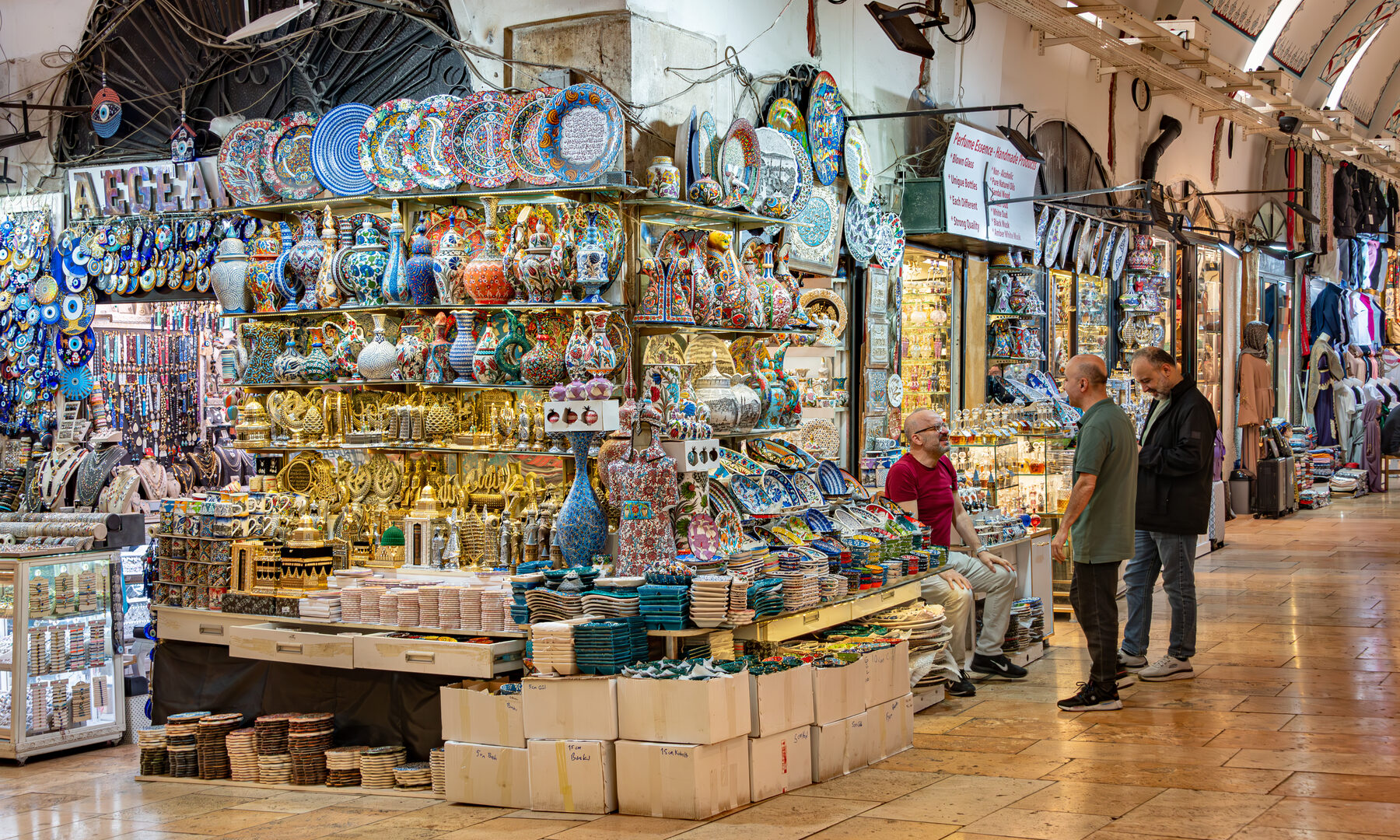
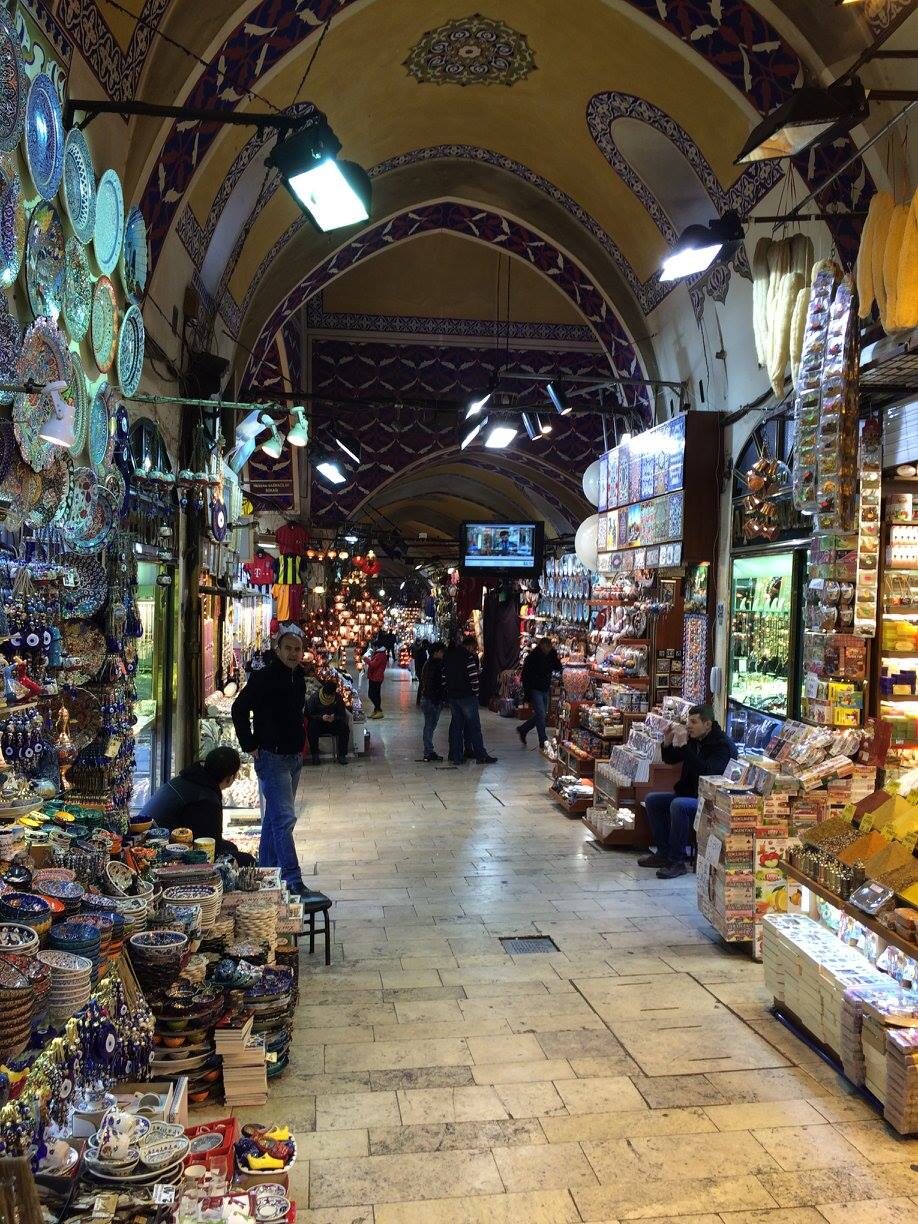
The vaulted lanes, painted signs, old trading halls and constant movement are part of the attraction.
If you dislike crowded shopping areas or persistent sales conversations, keep the visit shorter and concentrate on the historic core rather than trying to cover the entire bazaar.
Think of it as a neighborhood to explore, not a checklist of thousands of shops.
Grand Bazaar Opening Hours
The covered Grand Bazaar normally operates:
Monday to Saturday, approximately 08:30 to 19:00.
It is closed on Sunday.
Individual merchants do not all work to exactly the same schedule. Some shops open a little later, and merchants may begin packing up before the official closing time.
Holiday arrangements can also differ, particularly around major religious holidays.
Best Time to Visit
Weekday morning: best for quieter lanes once shops are fully open.
Late morning to early afternoon: livelier and better if you want the full market atmosphere.
Late afternoon: still atmospheric, but less useful if you want to compare several expensive purchases.
Sunday: the covered Grand Bazaar is closed, although surrounding commercial streets may still have activity.
If shopping is the priority, avoid arriving shortly before closing.
If architecture and photography matter more, earlier in the day is easier.
A Short History of the Grand Bazaar
The Grand Bazaar began to develop after the Ottoman conquest of Constantinople in the fifteenth century.
Its historic core grew around covered trading buildings known as bedestens, where valuable goods were stored and sold.
Over time, specialized streets, workshops and commercial inns called hans developed around this center.
Different trades traditionally concentrated in different areas, creating something closer to a commercial district than a single market building.
That structure is still visible today.
The Grand Bazaar contains dozens of covered streets and numerous gates, but the commercial world does not stop at those gates. Streets leading toward Mahmutpaşa, Eminönü and other surrounding areas continue the same trading landscape.
This is why the bazaar makes more sense when you treat it as part of the Historic Peninsula rather than an isolated indoor attraction.
How to Get to the Grand Bazaar
The easiest public transport option is usually the T1 tram.
Get off at:
Beyazıt-Kapalıçarşı
From there, follow signs toward the Beyazıt side of the bazaar.
From Sultanahmet
You can:
- walk uphill for around 15 to 20 minutes; or
- take the T1 tram to Beyazıt-Kapalıçarşı.
Walking works well if you are already exploring Sultanahmet and want to continue gradually west through the Historic Peninsula.
From Eminönü
Take the T1 tram toward Bağcılar and get off at Beyazıt-Kapalıçarşı.
You can also walk uphill through the commercial streets, which makes more sense if you plan to explore the area rather than simply reach the bazaar quickly.
From Taksim
Take the F1 funicular to Kabataş, then change to the T1 tram.
From Kadıköy
Take a ferry to Eminönü, then continue by tram.
For more detail on metro, tram and ferry connections, see my Istanbul Travel Guide.
Which Grand Bazaar Entrance Should You Use?
There are many gates, and there is no single correct entrance.
Choose one based on where you are coming from and where you want to go afterward.
| Entrance area | Best for |
|---|---|
| Beyazıt | Easy access from the T1 tram and a straightforward first visit |
| Nuruosmaniye | Combining the bazaar with Nuruosmaniye Mosque and Sultanahmet |
| Mahmutpaşa side | Continuing downhill toward Eminönü and the Spice Bazaar area |
For a first visit, Beyazıt or Nuruosmaniye are the easiest starting points.
One practical trick: take a photo of the gate name when you enter.
Do not rely on remembering a sequence of left and right turns. Many covered lanes look similar once you are several streets inside.
Google Maps can help with the general area, but do not expect indoor navigation to behave like it does on normal city streets.
Keep one final destination in mind instead.
A Simple Grand Bazaar Route
You do not need a detailed map of every lane.
A basic direction is enough.
- Enter from Beyazıt or Nuruosmaniye.
- Walk toward the historic central bedesten area.
- Explore one jewelry street.
- Continue through a textile, carpet or leather section.
- Stop for tea, coffee or lunch away from the busiest central corridor.
- Leave toward the Mahmutpaşa side.
- Continue downhill toward Eminönü if you still have energy.
This gives the visit some structure without turning it into a rigid itinerary.
The point is still to wander.
Just keep a final gate or neighborhood in mind so you do not spend an hour circling the same central lanes.
What to Buy at the Grand Bazaar
Quality varies enormously.
You will find everything from inexpensive mass-produced souvenirs to high-value jewelry, textiles and carpets.
The more expensive the purchase, the less useful it is to make a decision based only on atmosphere or a persuasive sales conversation.
Jewelry and Gold
Jewelry remains one of the Grand Bazaar’s major traditional trades.
For an expensive purchase, ask about:
- karat or purity;
- weight;
- workmanship charge;
- stones and their specifications;
- final currency;
- taxes;
- written receipt or invoice.
Gold itself has a market value, so bargaining is not simply about cutting a price in half.
The room for negotiation may be more closely related to workmanship, design and retailer markup.
Compare several established shops before buying something valuable.
Make sure the receipt identifies what you actually purchased rather than showing only a total amount.
Carpets and Kilims
A serious carpet purchase should never be rushed.
Ask:
- where the piece was made;
- whether it is hand-knotted;
- what fibers were used;
- whether dyes are natural or synthetic;
- how old it is, if age is part of the sales claim;
- what shipping includes;
- whether export documentation is required.
Take photos of the carpet and any labels or written specifications before making a decision.
Do not make an expensive purchase simply because someone says the offer exists “only today.”
If you are uncertain, leave and think about it.
A genuine purchase does not need to depend on panic.
Textiles and Leather
Quality ranges from basic tourist merchandise to very well-made pieces.
Check:
- stitching;
- seams;
- lining;
- zippers;
- leather finish;
- fabric composition.
Do not assume that a higher opening price automatically means higher quality.
Compare similar products in several shops.
Ceramics
Inspect ceramics for:
- glaze quality;
- cracks;
- uneven finishing;
- painted detail;
- marks from the maker or workshop if provenance matters to you.
Decorative pieces sold in tourist areas vary widely in origin and production method.
Ask direct questions if handmade production matters.
Spices and Turkish Delight
You can buy spices, tea, dried fruit and Turkish delight inside and around the Grand Bazaar, but food is not the market’s strongest specialty.
If food shopping is your main goal, the Spice Bazaar and surrounding Eminönü streets offer a more concentrated selection.
That does not automatically mean better or cheaper.
Wherever you buy:
- check freshness;
- confirm the price by weight;
- ask what is inside mixed products;
- inspect packaging if you are flying;
- confirm the final total before paying.
Do not buy only because someone gave you a sample.
Souvenirs
For smaller souvenirs, compare a few shops before buying.
The same-looking product can appear repeatedly at very different prices.
That is particularly common with:
- lamps;
- tea sets;
- small ceramics;
- scarves;
- decorative objects;
- magnets;
- inexpensive jewelry.
If the item is clearly mass-produced, there is little reason to treat the first shop as your only opportunity.
How Bargaining Works at the Grand Bazaar
Bargaining is common for:
- carpets;
- jewelry;
- leather;
- textiles;
- decorative objects;
- many souvenir items.
It is not mandatory everywhere.
Some shops and products have clear fixed prices, particularly food, books and smaller everyday goods.
A sensible approach is:
- Look at the item carefully.
- Ask the price.
- Compare similar quality elsewhere if the purchase matters.
- Decide the maximum you are comfortable paying.
- Make a counteroffer only if you are genuinely interested.
- Stay polite.
- Walk away if the price does not suit you.
You do not need to turn bargaining into a performance.
There is no universal rule that you should always offer half.
Different products have very different margins.
A good deal is a price you understand and accept for something you actually want.
And one useful rule:
Tea does not create an obligation to buy.
Accepting tea, coffee or a conversation does not mean you owe the shopkeeper a purchase.
Cash, Cards and Payment
Many established Grand Bazaar shops accept cards.
Cash is still useful for:
- smaller purchases;
- cafés;
- inexpensive souvenirs;
- situations where you have already agreed a cash price.
Before paying:
- confirm the final amount;
- confirm the currency;
- check the amount shown on the card terminal;
- understand any card conversion offered to you.
If a terminal offers payment in your home currency rather than Turkish lira, check the exchange rate before accepting the conversion.
For expensive purchases, ask for proper written documentation.
This matters particularly for:
- jewelry;
- carpets;
- shipping arrangements;
- resizing;
- returns;
- customs questions.
Shopping Safety
The Grand Bazaar is a busy commercial environment, so basic city precautions are enough.
- Keep your phone and wallet secure in crowded lanes.
- Do not carry unnecessary amounts of cash.
- Keep your passport somewhere safe rather than constantly taking it out.
- Use official exchange offices.
- Check displayed exchange rates before changing money.
- Get expensive purchase terms in writing.
- Clarify shipping and customs responsibility before paying.
- Do not hand valuable items or money to unofficial strangers offering assistance.
The biggest financial risk for most visitors is not dramatic crime. It is agreeing to an expensive purchase before understanding exactly what is being sold.
Is a Grand Bazaar Tour Worth It?
You do not need a guide simply to browse the Grand Bazaar.
A tour becomes useful when you want to understand:
- the bedestens;
- hans;
- guild and trading history;
- Ottoman commercial organization;
- architecture;
- traditional crafts;
- how the market connects with surrounding neighborhoods.
A good walking tour can also make the route from Sultanahmet through the bazaar toward Eminönü much more meaningful.
Avoid tours where most of the itinerary appears to consist of extended sales stops unless shopping is specifically what you want.
For a wider comparison, see my 9 Best Istanbul Tours & Experiences.
How to Combine the Grand Bazaar With Other Sights
The bazaar fits naturally into a Historic Peninsula day because it does not require a timed ticket.
One easy sequence is:
- Sultanahmet sightseeing.
- Walk or take the T1 to Beyazıt.
- Enter the Grand Bazaar.
- Cross through the market.
- Exit toward Mahmutpaşa.
- Continue downhill toward Eminönü.
- Finish near the Spice Bazaar, Galata Bridge or ferry piers.
This works particularly well because much of the second half is downhill.
Do not combine the bazaar with too many major museums if shopping is important to you.
Browsing while watching the clock becomes tiring quickly.
For realistic combinations by trip length, see my Istanbul itinerary for 1, 2, 3, 4, 5 or 7 days.
Grand Bazaar Accessibility and Practical Comfort
The main covered streets are generally straightforward to walk, but the Grand Bazaar should not be treated as a completely step-free environment.
Depending on your route, expect:
- uneven historic surfaces;
- slopes;
- occasional steps;
- narrow passages;
- crowded lanes.
If mobility is limited, keep the route simple and use one of the major entrances rather than trying to explore peripheral hans and smaller passages.
Comfort also matters.
Wear shoes suitable for several hours of walking.
The bazaar is covered, but it can still feel warm and crowded in summer.
Avoid carrying heavy shopping bags through the entire market if you plan to continue sightseeing afterward.
Staying Near the Grand Bazaar
The Grand Bazaar sits in the Historic Peninsula, so several nearby areas work well for sightseeing.
Beyazıt
Best if you want to be particularly close to:
- Grand Bazaar;
- university area;
- T1 tram;
- western Historic Peninsula sights.
Sultanahmet
Better for a classic first trip centered on:
- Blue Mosque;
- Hagia Sophia;
- Basilica Cistern;
- Topkapı area.
You can still reach the Grand Bazaar easily by tram or on foot.
Sirkeci
Sirkeci gives you stronger transport connections and easy access to:
- Eminönü;
- ferries;
- Marmaray;
- T1 tram;
- Spice Bazaar;
- Historic Peninsula sights.
For a complete neighborhood comparison, read Where to Stay in Istanbul.
Common Grand Bazaar Mistakes
- Trying to see everything.
The bazaar contains thousands of shops. You do not need to cover every lane.
- Stopping at the first souvenir shop.
Compare before buying if price or quality matters.
- Following Google Maps turn by turn inside.
Use major streets, gates and a final destination instead.
- Assuming every price must be negotiated.
Some products have fixed prices.
- Using a fixed “offer half” rule.
Different products have different margins and underlying values.
- Making an expensive purchase under time pressure.
Leave and think if you are uncertain.
- Thinking tea means you must buy.
It does not.
- Arriving just before closing to shop seriously.
Give yourself enough time to compare stores.
- Planning the visit for Sunday.
The main covered Grand Bazaar is normally closed.
- Treating it only as a souvenir market. The historic commercial structure is a major part of the experience.
Grand Bazaar Istanbul FAQ
Is the Grand Bazaar Free?
Yes.
There is no admission ticket to enter the covered Grand Bazaar.
What Are the Grand Bazaar Opening Hours?
The bazaar normally operates approximately 08:30 to 19:00 from Monday to Saturday.
Individual shops and holiday schedules can vary.
Is the Grand Bazaar Open on Sunday?
No.
The main covered Grand Bazaar is normally closed on Sundays.
Some businesses in surrounding streets may still operate.
How Long Do You Need at the Grand Bazaar?
Allow around 1.5 to 2 hours for a first visit.
Allow 2 to 3 hours or more if you want to shop seriously, eat, explore side streets or continue into surrounding commercial areas.
What Is the Best Entrance to the Grand Bazaar?
Beyazıt is convenient if you are arriving by T1 tram.
Nuruosmaniye works particularly well if you are approaching from Sultanahmet.
The Mahmutpaşa side is useful when leaving toward Eminönü.
Do You Have to Bargain at the Grand Bazaar?
No.
Bargaining is common for carpets, jewelry, leather, textiles and souvenirs, but not every shop or product is negotiable.
Is the Grand Bazaar Good for Buying Gold?
The bazaar has a long-established jewelry trade, but expensive purchases should still be compared carefully.
Check purity, weight, workmanship costs, currency and written documentation before paying.
Can You Visit the Grand Bazaar Without Shopping?
Absolutely.
The historic streets, trading halls and commercial atmosphere are enough reason to visit.
Just remember that shops are working businesses, so avoid blocking entrances or occupying sales areas for long photography sessions.
Should You Take a Grand Bazaar Tour?
A tour is not necessary for basic browsing.
It is most useful if you want historical context, architecture and an explanation of the market’s trading traditions.
Last checked: September 2026. Opening hours and holiday schedules can change.
Some links in this article are affiliate links. If you book through them, I may earn a small commission at no extra cost to you.