Spice Bazaar Istanbul: What to Buy, Hours & Food Tips
The Spice Bazaar in Istanbul is compact, colorful and much easier to fit into a sightseeing day than the enormous Grand Bazaar.
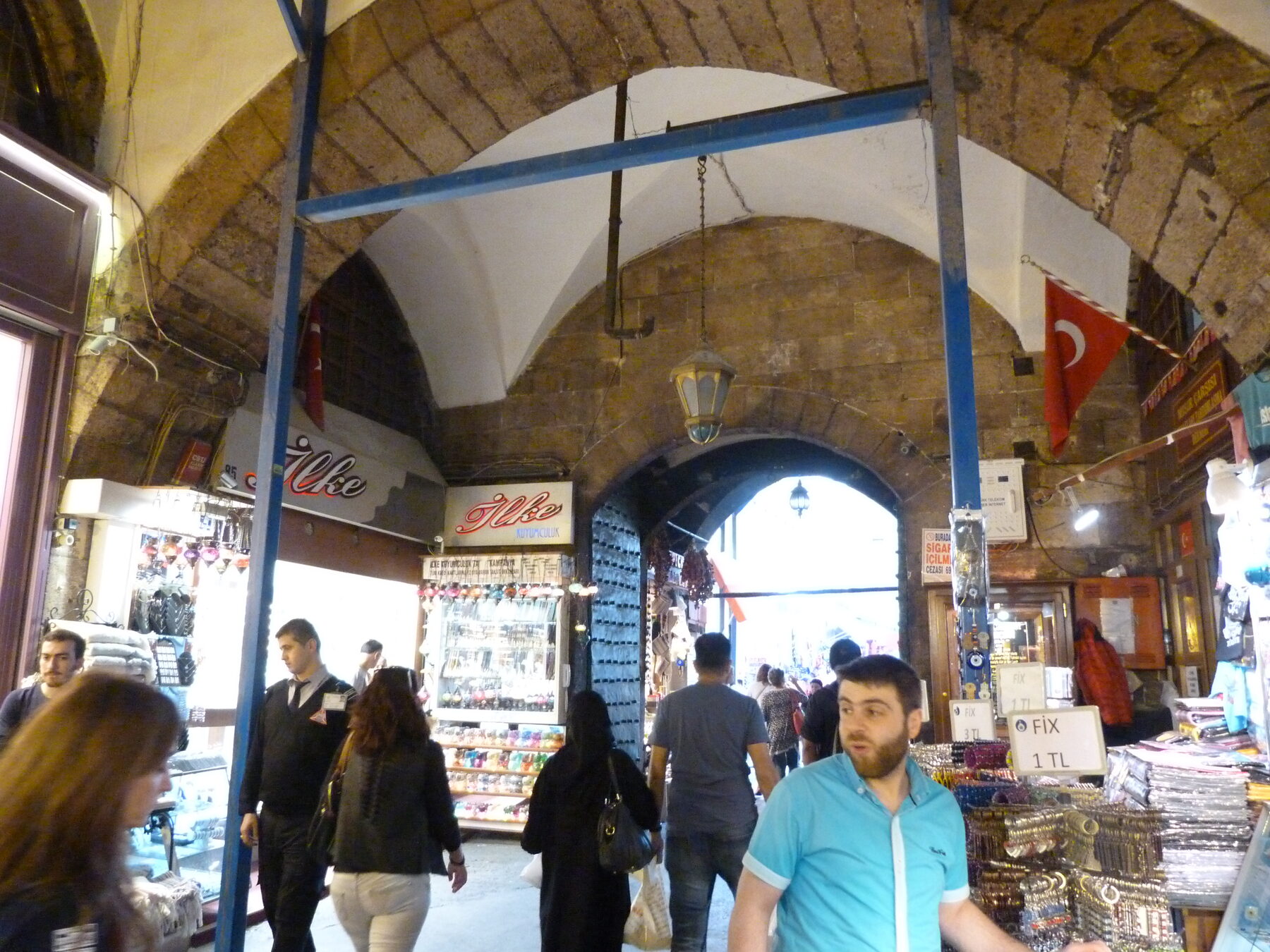
Beneath its vaulted Ottoman arcade, shops display spices, Turkish delight, dried fruit, nuts, tea and coffee. But the covered market is only part of the experience. Step outside into the surrounding Eminönü streets and you find cheese counters, coffee sellers, olives, pickles, kitchen goods and everyday food shopping mixed with the tourist trade.
A little preparation helps. Prices and quality vary, packages are not always what they first appear to be, and the most photogenic gift box is not necessarily the best thing to take home.
This guide covers Spice Bazaar opening hours, what is worth buying, how to check quality and prices, and a simple route through Eminönü.
If this is your first trip, see my 22 Best Things to Do in Istanbul for help fitting the market into the rest of your sightseeing.
Shop hours and holiday schedules can change. The practical information below was checked in September 2026.
Spice Bazaar Istanbul at a Glance
| Turkish name | Mısır Çarşısı, also called the Egyptian Bazaar |
| Area | Eminönü, beside the New Mosque |
| Entry | Free |
| Typical shop hours | Roughly 09:00 to 19:00 daily |
| Sunday | Generally open |
| Allow | 30–45 minutes inside; 1.5–3 hours with surrounding streets |
| Nearest tram | Eminönü on T1 |
| Nearest ferries | Eminönü ferry piers |
| Best for | Spices, Turkish delight, tea, coffee, nuts and edible gifts |
Individual shops do not all follow exactly the same schedule, and religious or national holidays can affect opening hours.
Who Will Enjoy the Spice Bazaar Most?
The Spice Bazaar works particularly well for:
- food lovers;
- first-time visitors;
- travelers already exploring Eminönü;
- anyone looking for edible souvenirs;
- people who want a market experience without spending half a day shopping;
- visitors who find the Grand Bazaar too large or overwhelming.
The covered arcade itself is relatively small.
You can walk through it in half an hour if you do not shop.
The more interesting visit combines the historic market with the surrounding food streets.
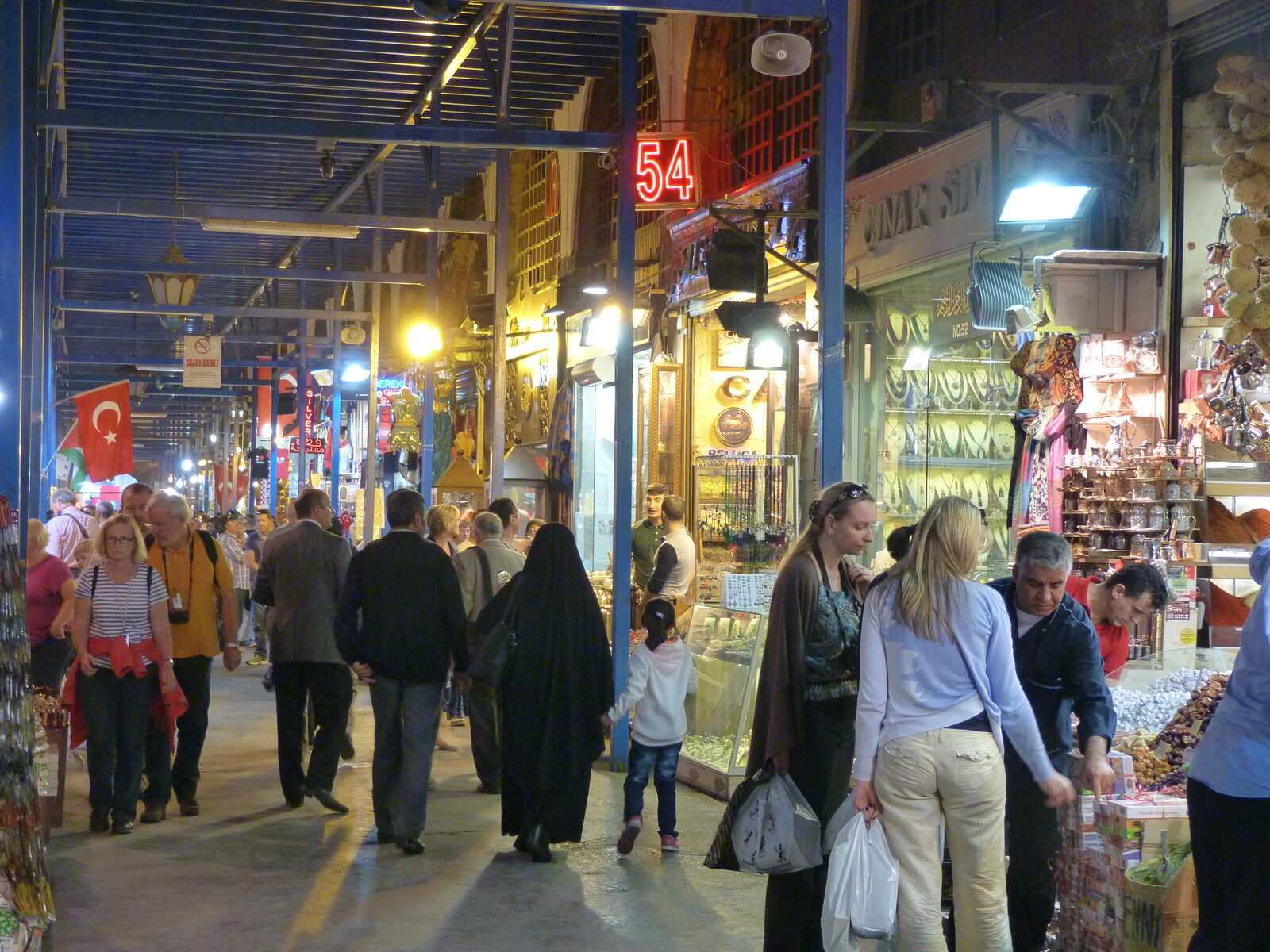
If you expect a quiet local market untouched by tourism, the main corridor may disappoint you. Central shops actively sell gift boxes, souvenir spice mixes and products designed for visitors.
Step outside, however, and the area becomes much more mixed.
Locals and visitors shop for:
- cheese;
- olives;
- coffee;
- sweets;
- nuts;
- kitchen goods;
- everyday food products.
That contrast is what makes Eminönü more interesting than simply walking from one end of the covered market to the other.
Spice Bazaar Opening Hours
A practical planning window is approximately:
09:00 to 19:00 daily
including Sunday.
Do not treat this as a rigid official schedule for every shop.
Individual merchants may open later or close earlier, and holiday hours can differ.
Best Time to Visit
Weekday morning: best for easier browsing and comparing products.
Late morning: livelier, but usually busier.
Afternoon: good atmosphere, although narrow lanes can become crowded.
Late in the day: less useful if you want to compare several shops carefully.
Organized groups can quickly fill the main corridor, so an earlier visit gives you more space around shop counters.
A Short History of the Spice Bazaar
The Spice Bazaar dates to the seventeenth century and forms part of the historic complex around the New Mosque in Eminönü.
The current market building was developed during the 1660s.
It was historically known by names including the New Bazaar and Valide Bazaar before becoming widely associated with the name Mısır Çarşısı, or Egyptian Bazaar.
The Egyptian connection reflects the trading networks and revenues associated with Egypt during the Ottoman period.
The building has a distinctive L-shaped plan with several entrances.
Although spices gave the market its international reputation, its role was always broader than a modern specialty spice store.
Food merchants, traders and surrounding commercial streets formed part of the same larger marketplace.
That pattern continues today.
How to Get to the Spice Bazaar
The bazaar sits in Eminönü, immediately beside the New Mosque and close to Galata Bridge.
Public transport is much easier than driving.
By Tram
Take the T1 tram to Eminönü.
The Spice Bazaar is only a short walk from the stop.
By Ferry
Eminönü is one of Istanbul’s major ferry hubs.
Services from the Asian side make the market particularly convenient from neighborhoods such as Kadıköy and Üsküdar.
A ferry arrival also gives you one of the best introductions to the Historic Peninsula.
From Sultanahmet
Take the T1 tram to Eminönü.
You can also walk downhill through the Historic Peninsula if you are comfortable with busy streets and want to turn the journey into part of the sightseeing.
From Galata or Karaköy
Walk across Galata Bridge.
This is often more enjoyable than taking transport for such a short distance.
You can also use the T1 tram.
For more information on getting around, see my Istanbul Travel Guide.
A Simple Spice Bazaar and Eminönü Route
You do not need to make the bazaar a standalone destination.
A simple route is:
- Start beside the New Mosque.
- Enter the Spice Bazaar and walk through one full arm before buying.
- Compare several shops.
- Buy only after checking price, freshness and how clearly the seller explains the product.
- Exit into the surrounding food streets.
- Browse coffee, cheese, olives and everyday food shops.
- Continue uphill toward Rüstem Paşa Mosque if it is open to visitors.
- Finish at Galata Bridge or take a ferry from Eminönü.
Without a long meal, allow around 90 minutes for this route.
Add another hour if you want to eat, shop slowly or spend time around the waterfront.
What to Buy at the Spice Bazaar
The market is at its best when you buy things you will actually use rather than assembling a suitcase of decorative tourist products.
Spices for Turkish Cooking
Useful ingredients include:
Sumac
Sumac adds tart, citrus-like acidity.
It works well with salads, onions, grilled meat and vegetables.
Pul Biber
Pul biber is Turkish red pepper flakes.
Heat and flavor vary depending on the pepper and preparation, so ask to smell or taste it when possible.
Isot
Isot has a darker, earthy and slightly smoky flavor.
It is particularly associated with southeastern Turkish cooking.
Dried Mint
A practical ingredient for:
- soups;
- yogurt dishes;
- sauces;
- vegetables.
Cumin
Another useful spice if you actually cook Turkish or Middle Eastern dishes at home.
Fresh spices should have a clear aroma.
Do not judge only by bright color.
Be Careful With Saffron
Be suspicious of extremely cheap products sold as saffron.
Real saffron is expensive and normally appears as fine crimson threads.
A large mound of bright yellow or orange powder is not automatically high-quality saffron simply because a seller uses the word.
Ask exactly what the product is.
Compare several shops before buying.
Turkish Delight
Turkish delight, or lokum, is one of the easiest gifts to take home.
When possible, choose from an open counter rather than automatically buying a decorative pre-packed box.
Ask for a sample.
Good lokum should generally feel soft and springy rather than dry or tough.
Common choices include:
- pistachio;
- pomegranate;
- rose;
- citrus;
- nut-filled varieties.
Rolled and heavily decorated versions are often sweeter and more expensive.
If you are flying home, ask:
- when it was packed;
- how long it should keep;
- how it should be stored.
A beautiful box is less important than freshness.
Tea and Herbal Blends
Traditional everyday Turkish tea is primarily black tea, much of it associated with the Rize region on the Black Sea coast.
Many brightly colored products sold as:
- apple tea;
- love tea;
- winter tea;
- mixed herbal tea
are largely tourist-oriented products rather than standard everyday Turkish tea.
That does not make them bad.
Buy them if you enjoy the flavor.
Just ask for the ingredient list and do not assume every colorful mixture represents a traditional tea blend.
Treat health claims made for herbal mixtures as sales claims unless you have reliable information about the ingredients.
Nuts and Dried Fruit
The bazaar and surrounding streets sell:
- pistachios;
- hazelnuts;
- almonds;
- dried apricots;
- figs;
- dates;
- mixed nuts.
These travel well and are often more practical than fragile souvenirs.
Before buying:
- check whether the price is per 100 grams or kilogram;
- look at the actual product that will be packed;
- compare freshness;
- request sealed packaging if you are traveling.
Do not assume the attractive sample at the front of a tray is automatically identical to what will be placed in your bag.
Turkish Coffee
Freshly ground Turkish coffee is one of the most practical edible souvenirs.
You do not have to buy it inside the covered bazaar itself.
The streets around the Spice Bazaar include specialist coffee sellers, so compare:
- freshness;
- grind;
- packaging;
- quantity.
Buy an amount you can reasonably use while it is still fresh.
Store it airtight after opening.
How to Check Quality and Price
This is more important than memorizing the supposedly “best” shop.
Confirm the Unit
A large printed number may represent:
- 100 grams;
- 250 grams;
- 500 grams;
- one kilogram.
Ask before ordering.
Compare Before Buying
Walk through several shops before making a large purchase.
This gives you a better idea of:
- typical prices;
- presentation;
- product quality;
- how clearly merchants explain what they are selling.
Ask Before Mixing Products
Do not allow multiple products to be weighed and mixed into bags before you understand each price.
Taste When Offered
For sweets, dried fruit and some nuts, texture and flavor are more useful than packaging.
Check What Is Actually Packed
If quality matters, watch what goes into the bag.
The product you tasted should match the product you receive.
Ask for an Itemized Total
Check:
- weight;
- unit price;
- total;
- currency.
This is especially useful when buying several products at once.
Think About Customs
Your destination may restrict:
- seeds;
- fresh produce;
- meat;
- dairy;
- plant products;
- some unpackaged foods.
Check destination rules before buying anything that may create problems at the airport.
Do You Need to Bargain?
Sometimes.
Bargaining can be possible for:
- larger quantities;
- several gift boxes;
- higher-value purchases;
- multiple products from the same merchant.
It is less relevant for clearly priced everyday products.
A practical approach is:
- Ask the price.
- Confirm the quantity and unit.
- Compare if the purchase is substantial.
- Ask whether there is a better price for several items.
- Decide whether the final total works for you.
There is no need to turn a small food purchase into a prolonged negotiation.
If the price seems unreasonable, walk away.
Another sample or cup of tea does not create an obligation to buy.
Cash, Cards and Currency Conversion
Carry some Turkish lira for smaller purchases.
Many visitor-oriented shops accept cards, but smaller merchants may:
- prefer cash;
- set a minimum card amount;
- offer a different cash price.
Always check the amount shown on the terminal before approving payment.
If the terminal offers to convert the purchase into your home currency, check the conversion before accepting it.
Paying in Turkish lira avoids the merchant’s dynamic currency conversion rate, although your own card issuer may still apply foreign-exchange or transaction fees.
Spice Bazaar vs Grand Bazaar
The two markets are not interchangeable.
| Spice Bazaar | Grand Bazaar | |
|---|---|---|
| Best for | Food gifts, spices, sweets and a short market stop | Jewelry, carpets, leather, ceramics and broader shopping |
| Time needed | 30–45 minutes inside | Around 1.5–3 hours |
| Location | Eminönü beside the New Mosque | Beyazıt in the Historic Peninsula |
| Opening pattern | Generally daily, including Sunday | Usually Monday–Saturday; closed Sunday |
| Atmosphere | Compact and food-focused | Vast, maze-like and much more varied |
If you have time, visit both.
They serve different purposes.
Choose the Spice Bazaar if:
- edible gifts are the priority;
- you want a short market visit;
- you are already exploring Eminönü;
- you want to combine shopping with ferries and the waterfront.
Choose the Grand Bazaar if:
- shopping itself is a major part of the day;
- you want carpets, jewelry, leather or decorative goods;
- you enjoy wandering through a much larger historic commercial district.
When a Food or Market Tour Helps
You do not need a guide simply to walk through the Spice Bazaar.
A tour becomes more useful if you want help with:
- identifying regional ingredients;
- understanding Turkish food traditions;
- ordering in the surrounding streets;
- tasting products you might otherwise ignore;
- connecting the market with Eminönü’s wider history.
Check what is actually included.
Some food tours include substantial tastings, while others simply pass through the market as one stop.
For a broader comparison of guided experiences, see my 9 Best Istanbul Tours & Experiences.
How to Combine the Spice Bazaar With Other Sights
The market’s biggest advantage is its location.
You can easily combine it with:
New Mosque
Immediately beside the market.
Rüstem Paşa Mosque
A useful addition if it is open to visitors and you want another historic interior without traveling across the city.
Galata Bridge
Walk toward Karaköy or simply spend some time watching ferries and fishing activity.
Eminönü Waterfront
One of Istanbul’s busiest transport areas and a good place to continue by ferry.
Sultanahmet
Use the T1 tram or walk uphill if you want to continue deeper into the Historic Peninsula.
For realistic combinations by trip length, see my Istanbul itinerary for 1, 2, 3, 4, 5 or 7 days.
Accessibility and Practical Comfort
The main covered arcade is paved and relatively straightforward to walk.
That does not mean the entire surrounding market area is perfectly step-free.
Expect:
- crowds;
- uneven streets outside;
- narrow passages;
- occasional changes in level;
- busy tram and pedestrian crossings around Eminönü.
A compact bag is easier than a large backpack.
Wear comfortable shoes if you plan to combine the market with the surrounding streets.
Other useful tips:
- keep your phone and wallet secure in dense crowds;
- ask before photographing products at very close range;
- do not feel obliged to accept food samples;
- bring a reusable tote if buying several products;
- ask for sealed packaging for food you are taking home.
Staying Near the Spice Bazaar
Sirkeci is one of the most convenient bases for this part of Istanbul.
It puts you close to:
- Spice Bazaar;
- Eminönü;
- T1 tram;
- Marmaray;
- ferry piers;
- Historic Peninsula sights.
It also works well if you want good transport connections without staying directly in the busiest part of Sultanahmet.
Sultanahmet is another logical choice if major historic sights are your main priority.
For a full neighborhood comparison, read Where to Stay in Istanbul.
Common Spice Bazaar Mistakes
- Buying from the first shop you enter. Compare several sellers first.
- Ignoring the price unit. Always check whether the displayed price is per 100 grams or kilogram.
- Buying spices only because the color is bright. Aroma and freshness matter more.
- Assuming every tea blend is traditional Turkish tea. Many colorful blends are primarily tourist products.
- Buying suspiciously cheap “saffron.” Ask exactly what it is.
- Letting multiple products be packed before confirming the prices. Agree on quantities first.
- Staying only inside the covered arcade. The surrounding Eminönü food streets are part of the experience.
- Assuming you need hours. The covered bazaar itself is compact.
- Forgetting customs restrictions. Not every food product can legally enter every country.
- Accepting card conversion without checking it.
Review the currency and final amount before paying.
Spice Bazaar Istanbul FAQ
Is the Spice Bazaar Free?
Yes.
There is no admission fee to enter and browse the covered market.
What Are the Spice Bazaar Opening Hours?
A practical planning window is approximately 09:00 to 19:00 daily.
Individual shop hours and holiday schedules can differ.
Is the Spice Bazaar Open on Sunday?
It is generally open on Sunday, unlike the Grand Bazaar.
Holiday arrangements can still affect opening hours.
How Long Should You Spend at the Spice Bazaar?
Allow around 30 to 45 minutes for the covered bazaar alone.
Plan 1.5 to 3 hours if you also want to explore surrounding food streets, visit nearby mosques, stop for coffee or eat.
What Is Worth Buying at the Spice Bazaar?
Useful purchases include:
- sumac;
- pul biber;
- isot;
- dried mint;
- Turkish delight;
- nuts;
- dried fruit;
- Turkish coffee;
- tea.
Buy things you will actually use rather than assuming every colorful product is uniquely Turkish.
Can You Pay by Card?
Many central shops accept cards.
Smaller merchants may prefer cash or set a minimum card amount.
Carry some Turkish lira and always confirm the total before paying.
Do You Need to Bargain?
Not always.
Negotiation is more common for larger purchases or several items than for clearly labeled everyday products.
Is the Spice Bazaar Better Than the Grand Bazaar?
Neither is universally better.
The Spice Bazaar is smaller and more food-focused.
The Grand Bazaar is much larger and better suited to jewelry, carpets, textiles, leather and extended shopping.
Should You Visit the Surrounding Eminönü Streets?
Yes.
The surrounding streets add coffee, cheese, olives, sweets and everyday food shopping that make the area more varied than the covered Spice Bazaar alone.
Last checked: September 2026. Shop hours and holiday schedules can change.
Some links in this article are affiliate links. If you book through them, I may earn a small commission at no extra cost to you.