Dolmabahçe Palace Istanbul: Tickets, Highlights & Visiting Tips
Dolmabahçe Palace in Istanbul is where the Ottoman story shifts from tiled courtyards and pavilions to crystal staircases, ceremonial halls and formal rooms facing the Bosphorus.
It feels completely different from Topkapı Palace. Dolmabahçe belongs to the nineteenth-century Ottoman world, when the court adopted new architectural styles, diplomatic rituals and ways of presenting imperial power.
The visit is also substantial. This is not a palace to squeeze into an hour between other attractions. Selamlık, the Harem, gardens and Painting Museum can easily take most of a morning or afternoon.
If you are deciding which major sights deserve space in a first trip, start with my 22 Best Things to Do in Istanbul.
Visitor information and ticket prices were checked in September 2026. Prices, access and holiday arrangements can change, so confirm current information before a time-sensitive visit.
Dolmabahçe Palace Istanbul at a Glance
| Location | Beşiktaş waterfront, near Kabataş |
| Closed | Monday |
| Ticket office | 09:00 to 17:00 |
| Current foreign ticket | 2000 TL |
| Ticket includes | Selamlık + Harem + Painting Museum |
| Allow | Around 2.5 to 4 hours |
| Nearest transport | Kabataş T1 tram, F1 funicular or nearby ferry connections |
| Best for | Palace interiors, late Ottoman history and Bosphorus architecture |
| Interior photography | Not permitted under current National Palaces visitor rules |
The current official foreign-visitor ticket costs 2000 TL and covers the Selamlık, Harem and Painting Museum. Dolmabahçe is closed on Mondays, and the official ticket office currently operates from 09:00 to 17:00. (Millisaraylar)
Who Will Enjoy Dolmabahçe Palace Most?
Dolmabahçe is particularly rewarding if you are interested in:
- nineteenth-century Ottoman history;
- ceremonial interiors;
- palace furniture and decorative arts;
- imperial architecture;
- Bosphorus waterfront buildings;
- Atatürk’s connection with Istanbul.
The palace feels very different from Topkapı.
Topkapı explains an earlier Ottoman world through courtyards, access, government and collections. Dolmabahçe presents a later imperial court through formal reception spaces, European-influenced interiors and an enormous waterfront residence.
If you only have one short day in Istanbul and have not yet explored Sultanahmet, several hours at Dolmabahçe may be difficult to justify.
With three or more days, it becomes much easier to fit into the trip.
Dolmabahçe Palace Tickets in 2026
The current official ticket for foreign visitors is straightforward:
2000 TL for Selamlık + Harem + Painting Museum.
That is the standard combined foreign-visitor admission currently listed by National Palaces.
Prices can change, so treat 2000 TL as the September 2026 price, not a permanent tariff.
If you buy through a third-party platform, check what the product actually includes.
Look for:
- palace admission;
- Selamlık access;
- Harem access;
- Painting Museum access;
- guide or audio-guide services;
- meeting point;
- cancellation policy.
Do not assume a product called “Dolmabahçe Palace tour” automatically matches the official combined ticket.
Is Museum Pass Valid at Dolmabahçe Palace?
Do not assume that a museum pass covers the complete Dolmabahçe visit.
Under the current National Palaces rules, Müzekart is not valid for the Selamlık section of Dolmabahçe Palace.
If you have a pass, check its exact current terms before relying on it for admission.
This is particularly important because different passes and ticket products can have different rules.
What to See Inside Dolmabahçe Palace
The palace is large enough that it helps to understand the main sections before entering.
Selamlık
The Selamlık contains the palace’s formal and administrative spaces.
This is where imperial ceremonies, government business and official receptions took place.
Expect some of the most elaborate interiors of the visit, including monumental staircases, reception rooms and ceremonial spaces.
For most visitors, this is the visual centerpiece of Dolmabahçe.
The Crystal Staircase
The Crystal Staircase is one of the palace’s signature interiors.
Its double horseshoe form, glass roof, brass details and crystal elements turn something as functional as a staircase into a display of imperial status.
It also captures what makes Dolmabahçe so different from the older Ottoman palace tradition.
The Ceremonial Hall
The enormous Ceremonial Hall is the climax of the main palace route.
Its scale was designed for official occasions rather than domestic life.
Instead of immediately focusing on individual decorative details, stop and look at the proportions of the room as a whole.
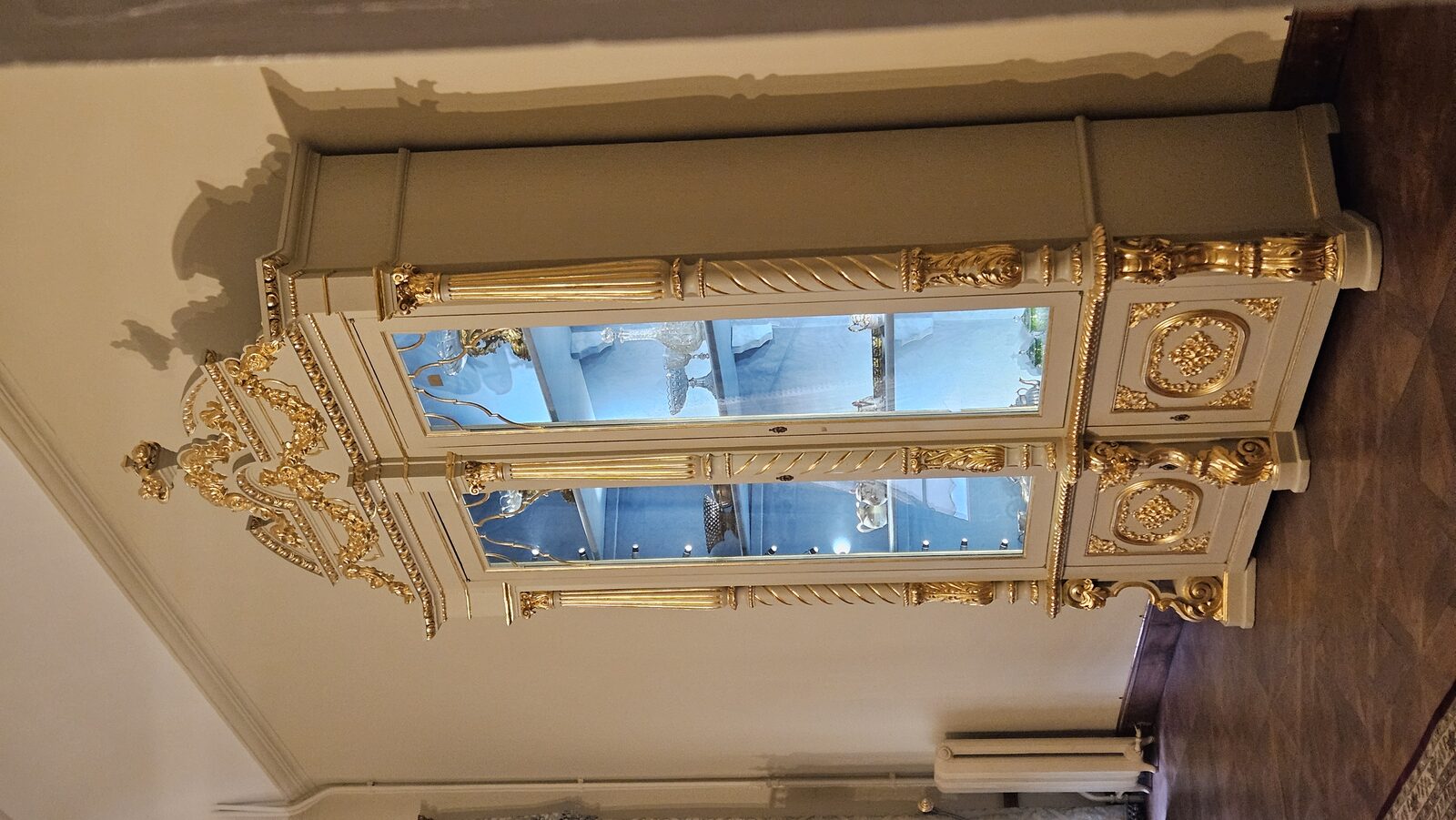
Dolmabahçe Palace Harem
The Harem is not simply an extra decorative wing.
It adds the residential side of palace life and helps distinguish official state spaces from the private world of the imperial family.
If you have paid for the current combined foreign ticket, the Harem is already included.
Do not leave it until the final ten minutes of your visit.
The Harem also has an important connection with the history of modern Turkey.
Mustafa Kemal Atatürk used Dolmabahçe Palace during periods of work in Istanbul between 1927 and 1938 and died here on 10 November 1938.
One of the rooms associated with him forms part of the palace’s modern historical significance.
Painting Museum
The National Palaces Painting Museum occupies the Crown Prince’s Residence within the broader Dolmabahçe complex.
It is included in the current 2000 TL foreign-visitor ticket.
That does not mean you have to force yourself through another museum after several hours inside the palace.
Add the Painting Museum if:
- Ottoman-era painting interests you;
- you still have energy;
- you have at least another hour;
- you want to get full value from the combined ticket.
Skip or shorten it if you are already exhausted after Selamlık and the Harem.
The current official visitor information lists the museum as closed Monday, with ticket-office hours from 09:00 to 17:00.
Gardens and Bosphorus Waterfront
Do not rush directly from the last interior to the exit.
The palace grounds are part of the experience.
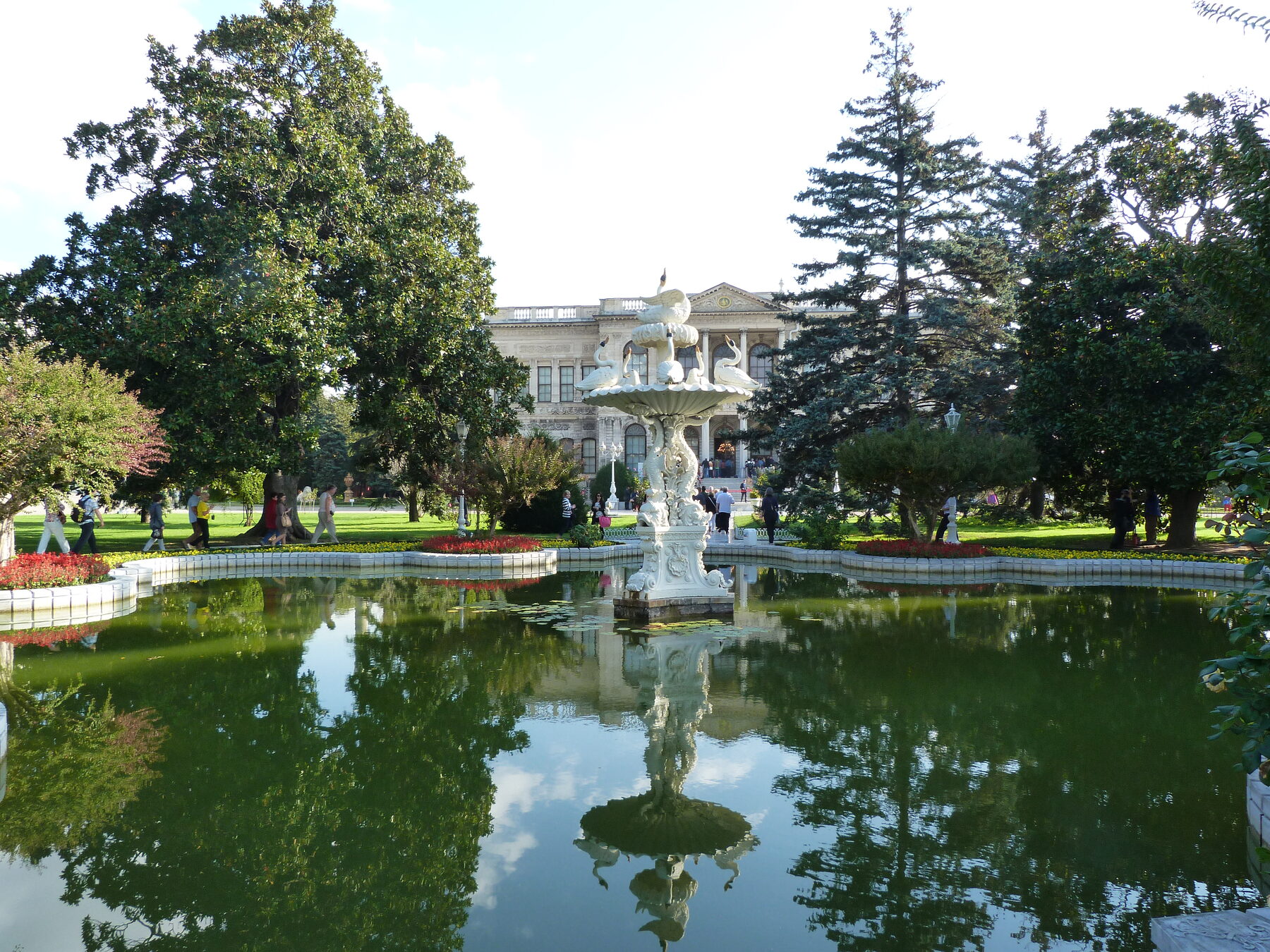
Walk through the gardens and look back at the waterfront facade.
From here, Dolmabahçe makes much more architectural sense. The palace was designed not just as an interior world, but as an imperial residence facing one of Istanbul’s most important waterways.
The waterfront gates are also among the most recognizable exterior details.
A Practical Route Through Dolmabahçe Palace
A straightforward first visit is:
- Arrive close to opening.
- Enter the Selamlık first.
- Continue through the main ceremonial spaces.
- Visit the Harem while you still have energy.
- Take time outside in the gardens.
- Decide whether to continue to the Painting Museum.
- Finish with the Bosphorus-facing exterior and surrounding waterfront.
You do not need to give every room equal attention.
The visit becomes tiring if you try to absorb every decorative object, name and piece of furniture at the same pace.
How Long Do You Need at Dolmabahçe Palace?
For planning purposes:
2 hours: very selective visit, likely rushed.
2.5 to 3 hours: reasonable for the main palace and Harem.
3 to 4 hours: comfortable if you also want gardens and the Painting Museum.
If you enjoy decorative interiors, art and Ottoman history, you can stay longer.
Do not schedule the palace as a quick stop before another timed attraction.
Security, queues and the length of the interior route can all affect your timing.
Best Time to Visit Dolmabahçe Palace
Arrive near opening if the palace is one of your priorities.
This gives you more time to move through the interiors before the busiest groups overlap.
Morning
Best for:
- a less rushed route;
- enjoying the interiors before fatigue sets in;
- leaving enough time for the Harem and Painting Museum.
Midday
The palace may become busier as organized groups arrive.
On hot summer days, however, spending several hours indoors can be more comfortable than outdoor sightseeing.
Late Afternoon
Riskier.
The official ticket office currently closes at 17:00, and the palace route is too substantial to begin shortly before admissions end.
If you arrive late, you may pay for sections you do not have enough time to enjoy.
Dolmabahçe Palace Opening Days
Dolmabahçe Palace is closed on Mondays under the current National Palaces schedule.
Holiday rules are more complicated.
Some national holidays are open, while New Year’s Day and the first days of certain religious holidays may have different arrangements.
If your visit falls on a Turkish public or religious holiday, check the official schedule again shortly before going.
How to Get to Dolmabahçe Palace
Dolmabahçe sits on the European shore of the Bosphorus between Kabataş and Beşiktaş.
Public transport is usually easier than driving or taking a taxi.
From Sultanahmet
Take the T1 tram to Kabataş.
From Kabataş, walk along the waterfront toward the palace.
Allow roughly 10 minutes for the walk, depending on your route and pace.
From Taksim
Take the F1 funicular from Taksim to Kabataş, then walk to the palace.
You can also walk downhill through Gümüşsuyu, but remember that the return journey is uphill.
From Kadıköy or Üsküdar
Use a ferry connection toward Kabataş or Beşiktaş, depending on the current schedule, then continue on foot.
From Beşiktaş
Walk south along the waterfront.
This is an easy way to combine the palace with time in Beşiktaş or nearby Bosphorus neighborhoods.
Traffic around Beşiktaş and the stadium can become heavy, especially around major events, so public transport is generally more predictable than a taxi.
For the wider transport network, see my Istanbul Travel Guide.
Photography Rules at Dolmabahçe Palace
This is one area where the rule is clearer than many travel posts suggest.
Photography and video are not permitted inside National Palaces visitor interiors under the current official rules.
Outdoor areas such as gardens and waterfront spaces can be photographed for ordinary non-professional purposes, provided visitors are not using professional equipment, lighting or other restricted setups.
So do not assume that taking a quick phone photo is acceptable simply because another visitor is doing it.
Follow staff instructions.
For the interiors, concentrate on looking rather than trying to capture every room.
Bags and Visitor Rules
National Palaces rules also restrict some items inside historic interiors.
Large backpacks, suitcases, umbrellas and similar bulky items may need to be left at designated storage points or with staff.
A few practical points:
- leave large luggage at your hotel;
- wear comfortable shoes;
- allow time for security;
- do not touch furniture or historic surfaces;
- follow the designated visitor route;
- carry as little as possible.
Closed water may be allowed under current rules, but food and other drinks are not permitted inside visitor interiors.
Guided Tour or Independent Visit?
Dolmabahçe can be visited independently.
The visitor route is organized enough that you do not need a private guide simply to find your way through the palace.
A guide becomes useful if you want to understand:
- nineteenth-century Ottoman reforms;
- why the court moved away from Topkapı;
- diplomatic and ceremonial functions;
- how Selamlık and Harem differed;
- the palace’s relationship with European architectural styles;
- Dolmabahçe during the early Turkish Republic.
The interiors contain so much decoration that it is easy to move from room to room without understanding why each space mattered.
For a wider look at which paid experiences genuinely add value, see my 9 Best Istanbul Tours & Experiences.
Dolmabahçe Palace or Topkapı Palace?
They are not substitutes for the same experience.
Choose Dolmabahçe If You Prefer:
- grand interiors;
- nineteenth-century history;
- furniture and decorative arts;
- formal European-influenced palace design;
- Bosphorus architecture;
- Atatürk history.
Choose Topkapı If You Prefer:
- earlier Ottoman history;
- imperial courtyards;
- treasury collections;
- older palace organization;
- a larger historic complex.
If you have enough time, the two palaces complement each other extremely well because they show very different periods of Ottoman rule.
If you only have one or two days in Istanbul, visiting both may consume too much of the trip.
What to Combine With Dolmabahçe Palace
Because Dolmabahçe takes several hours, pair it with something lighter rather than another enormous museum.
Good combinations include:
Beşiktaş
Walk north after the palace for:
- local streets;
- food;
- cafés;
- ferries;
- waterfront atmosphere.
Kabataş
Useful for continuing by:
- T1 tram;
- F1 funicular;
- ferry.
Ortaköy
Continue farther along the Bosphorus if you still have energy.
The waterfront and mosque work better as a later-day stop than another major interior.
Bosphorus Time
Dolmabahçe’s location also makes it easy to combine the palace with a ferry ride or time beside the water.
For help placing the palace within a realistic city route, see my Istanbul itinerary for 1, 2, 3, 4, 5 or 7 days.
Staying Near Dolmabahçe Palace
Beşiktaş is a practical base if you want:
- Bosphorus access;
- ferries;
- restaurants and local life;
- easy access to Dolmabahçe;
- transport toward Ortaköy and other waterfront areas.
Kabataş is particularly convenient for transport because it connects with the T1 tram and F1 funicular.
These areas make an early Dolmabahçe visit much easier than crossing the city from farther away.
For a full neighborhood comparison, read Where to Stay in Istanbul.
Dolmabahçe Palace Accessibility and Comfort
The palace visit involves substantial walking.
Expect:
- long interior routes;
- periods of standing;
- historic surfaces;
- stairs in parts of the complex;
- walking between buildings and gardens.
If step-free access is essential, confirm the current accessible route directly with National Palaces before visiting.
Visitor routing can change, and a general accessibility description does not guarantee that every section will be accessible on your date.
Also consider the overall length of the visit.
Someone comfortable with a one-hour museum may still find three or four hours inside a palace complex tiring.
Common Dolmabahçe Palace Mistakes
- Arriving on Monday.
Dolmabahçe is currently closed on Mondays.
- Using an old ticket price.
The current foreign ticket is 2000 TL, but tariffs can change.
- Assuming the ticket covers only the main palace.
The current foreign ticket includes Selamlık, Harem and Painting Museum.
- Skipping the Harem because it sounds optional.
It adds the residential side of palace life and is already included in the current foreign ticket.
- Trying to photograph the interiors.
Current National Palaces rules prohibit photography and video inside visitor interiors.
- Assuming Müzekart covers the full visit.
It is not valid for the Selamlık section under current rules.
- Arriving late and expecting to see everything.
The palace needs several hours.
- Forcing yourself through the Painting Museum when exhausted.
It is included, but your time and energy still matter.
- Booking another major palace immediately afterward.
Dolmabahçe is already a substantial museum day.
Dolmabahçe Palace FAQ
How Much Is Dolmabahçe Palace?
As of September 2026, the official foreign-visitor ticket is 2000 TL.
It includes the Selamlık, Harem and Painting Museum.
Check the official tariff again before visiting because prices can change.
How Long Do You Need at Dolmabahçe Palace?
Allow at least 2.5 to 3 hours for the main palace and Harem.
Allow 3 to 4 hours if you also want the gardens and Painting Museum without rushing.
Is Dolmabahçe Palace Closed on Monday?
Yes.
The official National Palaces schedule currently lists Monday as the weekly closing day.
Is the Harem Included in the Ticket?
Yes.
The current 2000 TL foreign-visitor ticket includes Selamlık, Harem and Painting Museum.
Can You Take Photos Inside Dolmabahçe Palace?
No, under the current National Palaces visitor rules, photography and video are prohibited inside visitor interiors.
Ordinary non-professional photography is permitted in outdoor areas subject to the current rules and staff instructions.
Is Dolmabahçe Palace Included in Müzekart?
Do not assume the entire palace is covered.
Current National Palaces rules specifically state that Müzekart is not valid in the Selamlık section of Dolmabahçe Palace.
Is Dolmabahçe Palace or Topkapı Palace Better?
They offer very different experiences.
Dolmabahçe is stronger for nineteenth-century ceremonial interiors, furniture and Bosphorus architecture.
Topkapı is stronger for earlier Ottoman history, imperial organization, courtyards and historic collections.
Can You Visit Dolmabahçe Palace Without a Tour?
Yes.
You can visit independently.
A guided experience is most useful if you want deeper historical context rather than simply seeing the rooms.
Should You Book Dolmabahçe Palace in Advance?
Advance booking can be useful during busy travel periods or when you want a specific guided tour.
If using a third-party product, check exactly which ticket and sections are included.
Last checked: September 2026. Ticket prices, opening arrangements, pass conditions and visitor rules can change.
Some links in this article are affiliate links. If you book through them, I may earn a small commission at no extra cost to you.