War Remnants Museum: What to Expect, Tickets & Visit Tips
The War Remnants Museum in Ho Chi Minh City focuses on what war did to people: civilians, prisoners, families and those who recorded it. The aircraft in the courtyard are the most visible exhibits, but the photographs and testimony inside give the visit its weight. Make time to read, and leave room afterwards for something quieter.
This is a worthwhile stop for understanding Vietnam’s account of the conflict and its aftermath. It can also be deeply upsetting. Some galleries contain graphic images of injury and death; you can skip a room or take a break without treating the visit as unfinished.
War Remnants Museum: tickets, hours and location
| Planning detail | What to know |
|---|---|
| Address | 28 Vo Van Tan Street, Xuan Hoa Ward, Ho Chi Minh City; the area is also known as District 3 |
| Opening hours | Daily, 7:30 am–5:30 pm; check museum notices before visiting on a special date |
| Standard admission | 60,000 VND, effective 1 October 2026 |
| Audio guide | A separate paid service; check the language and current hire price |
| Time to allow | Plan around two hours, with more time for detailed reading and breaks |
Older guides still quote 40,000 VND. The museum’s current standard admission is 60,000 VND. Reduced and free admission depend on eligibility and supporting documents, so do not assume that a child or student automatically qualifies under a particular reseller’s booking rules.
You can buy at the counter or through the museum’s online system. For a reseller booking, compare the complete package: admission alone, audio-guide hire and a guided tour are different purchases. The lowest-looking headline price may describe a different option.
Check the available ticket or package and its inclusions before paying.
A museum with a clear point of view
The museum opened on 4 September 1975 and took its present name in 1995. Its stated mission centres on documenting wars of aggression in Vietnam and promoting peace. That framing is part of the visit: it tells you which experiences the institution places at the centre of its account.
Read the exhibition labels with that perspective in mind. The emphasis falls on civilian suffering, destruction, imprisonment and the continuing consequences of wartime violence. This is not a comprehensive military history giving equal space to every government, army or political interpretation.
Recognising the curatorial viewpoint does not mean dismissing the photographs or personal stories. It means paying attention to what an exhibit documents, who created the material and how the museum interprets it. Those are useful questions in any history museum.
The courtyard: aircraft, armour and scale
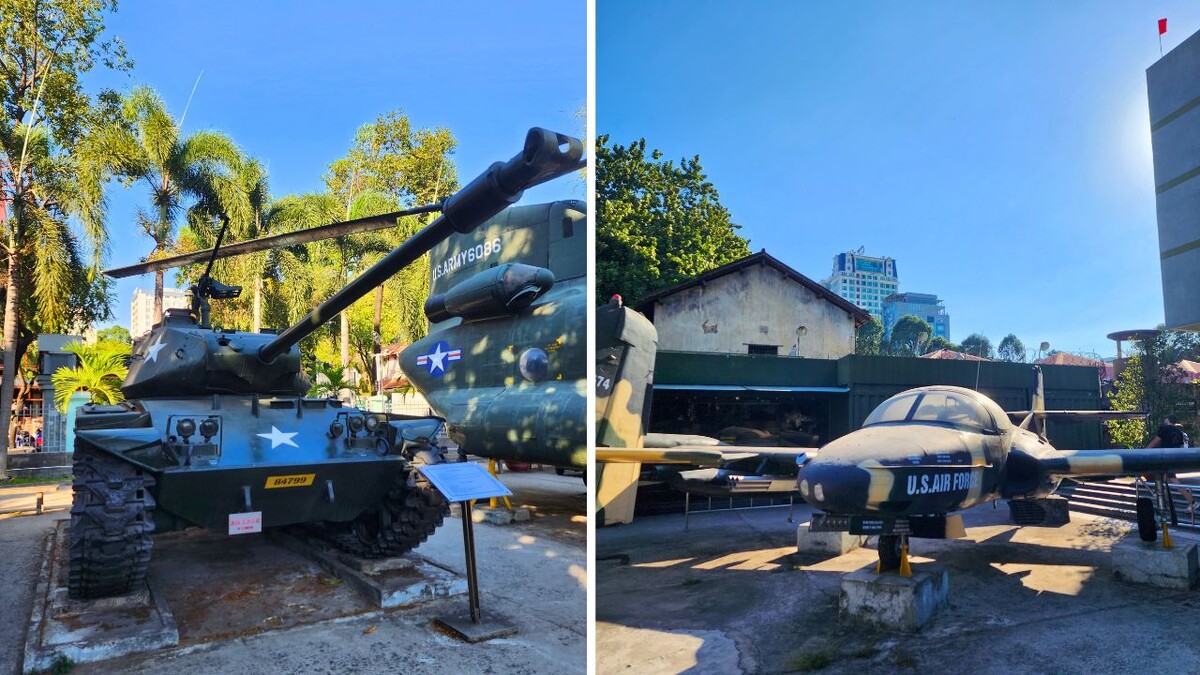
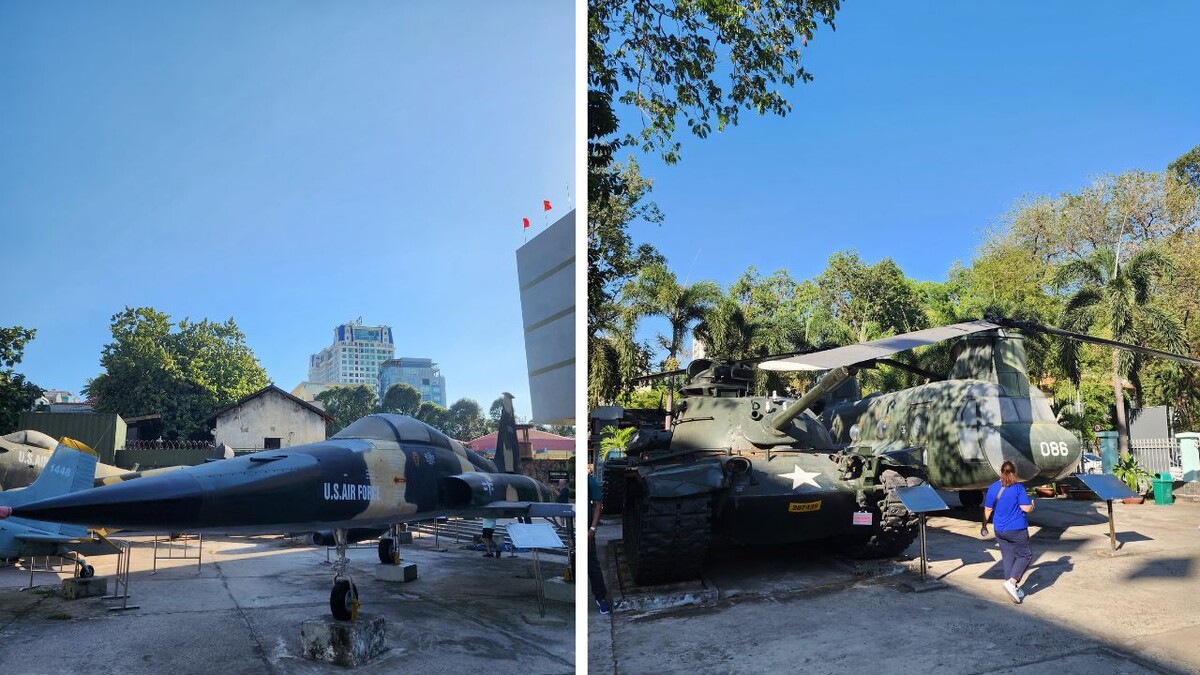
Outside, the military aircraft, helicopters and armoured vehicles give a physical sense of the machinery used in the conflict. This is the part of the museum that can look most familiar in travel photographs. Indoors, the emphasis changes from the equipment to its human consequences.
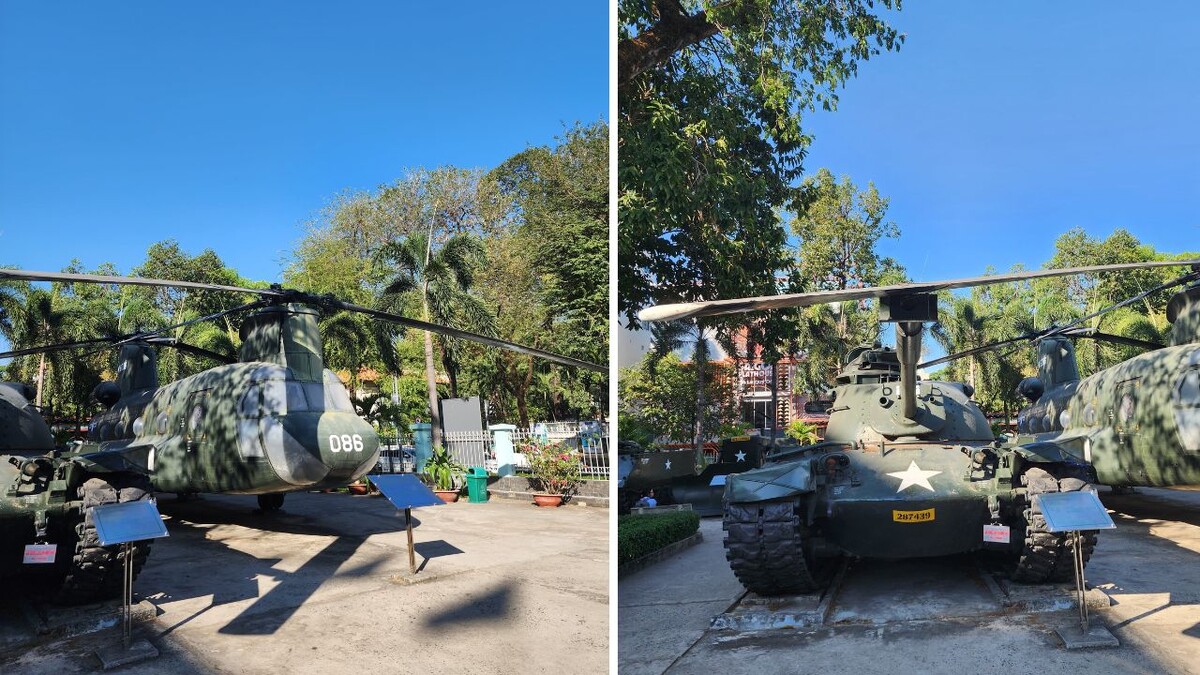
Read the identification panels beside the objects rather than treating the courtyard as a collection of interchangeable war machines. The surrounding space also gives you somewhere to pause between galleries. Follow the signs about access and do not climb on exhibits.
Anti-war movements and international solidarity
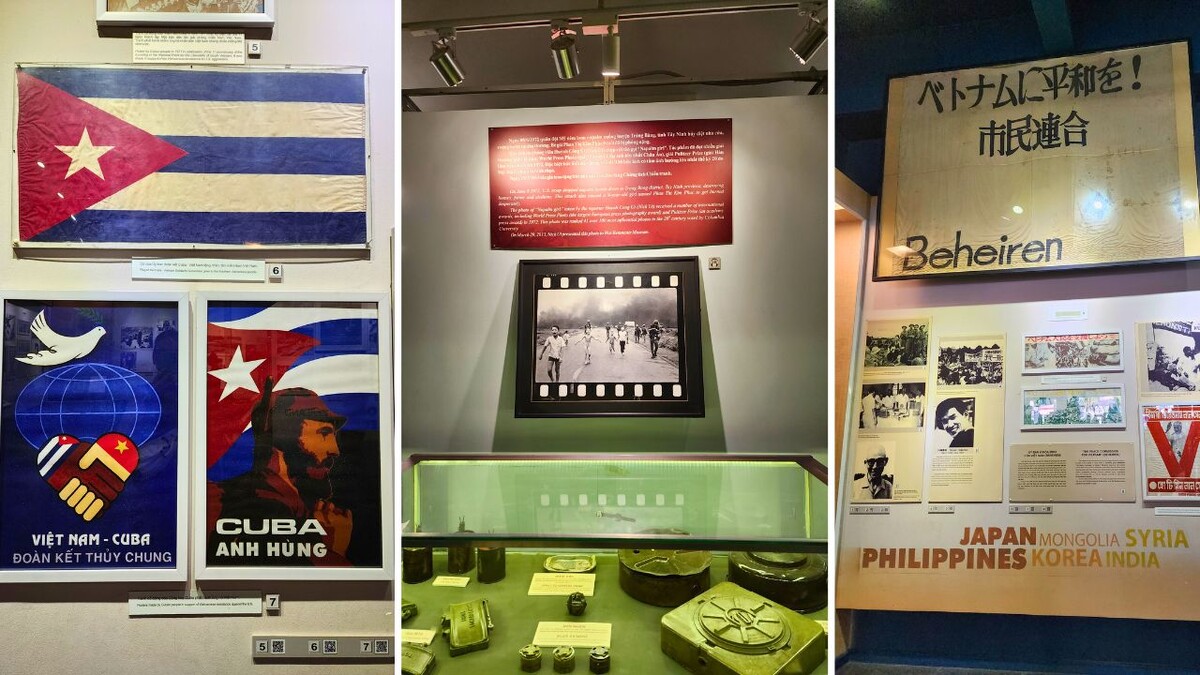
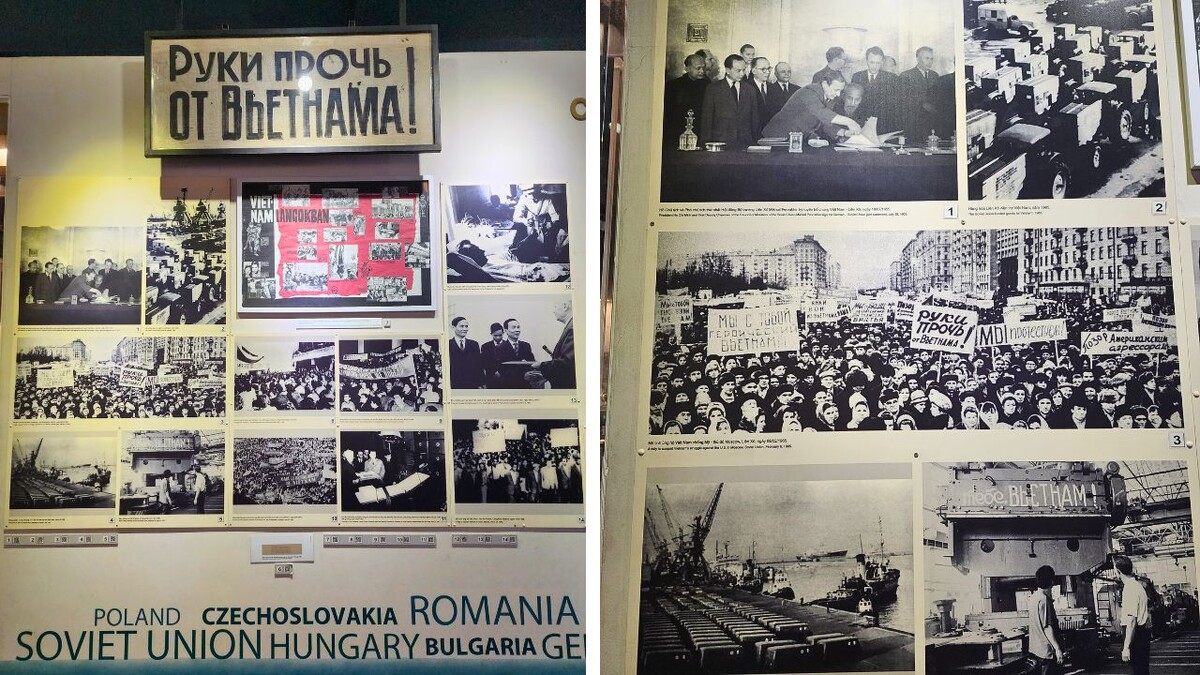
The displays about international opposition to the war are an important part of the museum’s account. Posters, photographs and documents show demonstrations and solidarity campaigns beyond Vietnam. They make clear that the museum distinguishes foreign military intervention from the people abroad who opposed it.
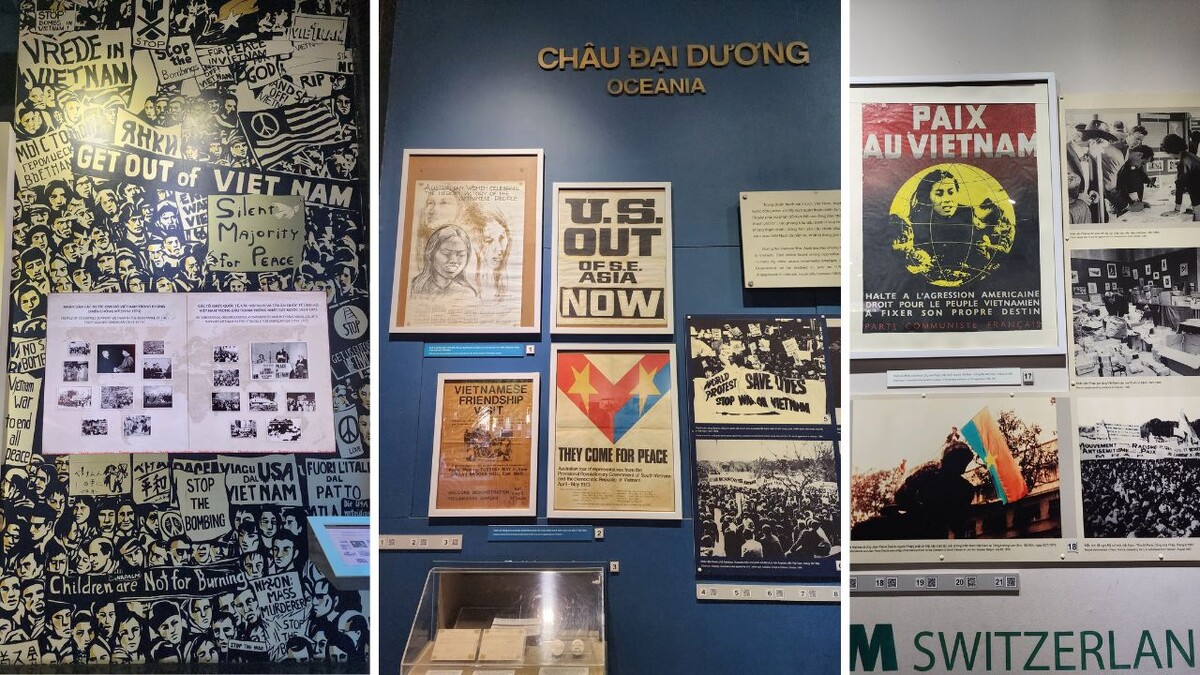
Look closely at the different languages and visual styles of the posters. In this section, public protest and the circulation of images become part of the history, alongside decisions made by governments and armies.
Agent Orange and the long aftermath of war
The Agent Orange galleries are among the most difficult sections. They present photographs, documents and family accounts concerning wartime herbicide use and its aftermath. The museum connects environmental destruction with the experiences of people living with illness and disability.
Approach the people in those photographs as individuals, not as shocking illustrations. Read the captions that explain the circumstances and distinguish the museum’s account from assumptions drawn from an image alone. You do not have to look at every photograph to take the subject seriously.
For families, decide together how to approach these rooms. An adult can check a gallery first, and children can leave with another adult when the material becomes too much. The outdoor exhibits do not indicate the intensity of everything inside.
Requiem: photographs and the people behind the cameras
The collection commonly known as Requiem is listed on the museum’s current English website as Reminiscence. Created by photojournalists Tim Page and Horst Faas with assistance from the Vietnam News Agency, it honours photographers who died covering the conflicts in Indochina.
Allow time for the biographies as well as the images. A photograph records an event; the accompanying account reminds you that someone had to be present to make it. This section rewards a slower visit, particularly for anyone interested in documentary photography or journalism.
Prison displays and reconstructed spaces
The museum also presents imprisonment and detention, including reconstructions associated with the “tiger cages”. These are interpretive displays at the museum, not original prison cells preserved in their original location. Keep that distinction in mind when looking at objects, models and reconstructed settings.
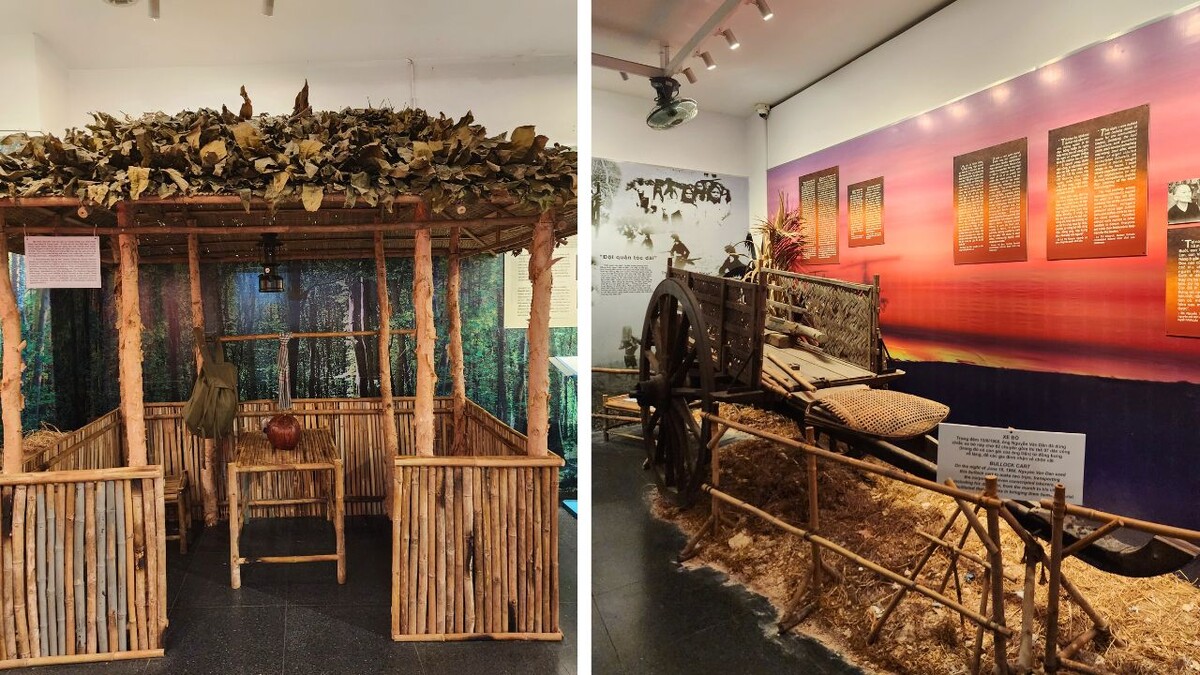
Graphic material appears beyond a single room, so plan your own pace rather than following other visitors automatically. Taking a break, returning to a quieter section or leaving earlier are all reasonable responses.
Audio guide or a walking tour?
I recommend considering the audio guide if you are visiting independently. Check your preferred language, current price and collection arrangements before beginning the galleries. It is charged separately from standard admission; a booking described as a ticket does not necessarily include it.
A live guide changes the visit in another way: you can ask questions and connect the museum with other historical sites. The walking tour below pairs the War Remnants Museum with Independence Palace. The current listing advertises about two hours across the two sites, so this is a structured introduction rather than a leisurely reading of every museum panel.
Check the selected option for entrance fees, guide language and meeting point. Also confirm how the museum portion is guided and how much independent time you receive. Compare that pace with visiting alone before booking.
How to plan the rest of the day
Allow around two hours as a planning starting point, not a deadline. Reading the captions, listening to commentary and stopping between rooms can take longer. Arrive well before closing rather than counting on a last-minute entry to see everything.
Independence Palace adds political and governmental context to the museum’s focus on consequences. The Cu Chi Tunnels give another perspective through underground spaces and accounts of survival. You can see both during a stay without forcing them into one emotionally and physically crowded day.
Afterwards, leave yourself the choice of a quiet coffee or a walk. My Vietnamese coffee guide explains the drinks you are likely to find. The Ho Chi Minh City sightseeing bus is another way to see the central streets on a separate outing; it does not replace time inside the museum.
Planning your stay in Ho Chi Minh City
Choose accommodation around the journeys you expect to make, rather than one attraction alone. My Ho Chi Minh City hotels with rooftop pools comparison looks at places to stay between city visits.
Once your dates and preferred area are clear, compare Ho Chi Minh City hotel prices on Trip.com. Check the exact room and cancellation conditions before booking.
For flights, compare the full fare including baggage and the arrival time. Keep your first day flexible after a long journey; this museum deserves more attention than a rushed stop between airport transfers.
Is the War Remnants Museum worth visiting?
Make time for it when your interest is in Vietnam’s modern history, documentary photography or the way a country remembers war. Expect a strongly framed account and difficult material. For young children or anyone who finds graphic imagery overwhelming, a selective visit may be more appropriate than trying to cover every gallery.
The most important preparation is to leave yourself time. Read beyond the first image, pay attention to the person whose story it records, and let the visit end when you have taken in enough. The rest of Saigon will still be there outside.
This article contains affiliate links. I may earn a commission if you book through them, at no extra cost to you.