Getting Around Phuket: Buses, Taxis, Motorbike Taxis & Rentals
Getting around Phuket can be surprisingly expensive, especially if you rely on taxis for every short journey. But renting a scooter isn’t your only alternative.
During my time living in Phuket, I used practically every type of transport available on the island: Grab, Bolt, inDrive, motorbike taxis, Phuket Smart Bus, traditional blue songthaews, the old pink buses and scooter sharing.
Sometimes I needed a quick ride to the supermarket. Other times, I wanted to visit another beach, travel across Phuket Town or spend the day running errands.
And I certainly didn’t need to rent a motorbike for an entire week just to make those trips.
The trick is knowing which transport option makes sense for which journey.
This Phuket transportation guide explains how to get around the island without renting a scooter, which buses connect the beaches, where to catch local transport and when a rental vehicle is actually worth the money.
You’ll also find information about Phuket’s two main bus terminals, motorbike-sharing services, transport apps and current public bus fares.
Last checked: October 2026. Public transport fares and routes may change. Always confirm the latest timetable before travelling.
This article may contain affiliate links. I may earn a commission if you make a booking through them, at no extra cost to you.
Getting Around Phuket: Which Transport Should You Choose?
If you’re staying in a busy tourist area and only occasionally travelling to another beach, you probably don’t need your own vehicle.
For longer trips, several stops in one day or accommodation far from public transport, the calculation changes.
Here’s a practical comparison.
| Transport | Best for | Price or fare | Main limitation |
|---|---|---|---|
| inDrive | Everyday taxi journeys | Live app quote or driver offer | Availability varies |
| Grab | Convenient app-based rides | Live app fare | Can cost more than alternatives |
| Bolt | Comparing taxi prices | Live app fare | Driver availability varies |
| Motorbike taxi | One person, short journeys | App quote or local fare | Not suitable for large luggage |
| Phuket Smart Bus, coastal route | Travelling between west-coast beaches | 100 THB flat fare | Fixed route and stops |
| Smart Bus, Bus Terminal–Patong | Patong to Phuket Town and bus terminals | 50 THB | Fixed timetable |
| Blue songthaew | Phuket Town to beaches | Typically 30–50 THB | Slow and limited evening service |
| City EV bus | Local trips around Phuket Town | Published fare: 15 THB | Limited routes |
| Gekkon scooter sharing | Short or flexible self-drive trips | In-app minute, hour or day pricing | Motorcycle licence required |
| Traditional scooter rental | Multiple days of riding | Depends on model and rental period | Licence, safety and rental responsibilities |
| Car rental | Families and multi-stop itineraries | Supplier quote | Parking, traffic and driving requirements |
| Tuk-tuk | Short local trips and groups | Confirm before boarding | Often expensive compared with buses |
My recommendation: Install more than one taxi app, learn the Smart Bus route if you’re staying on the west coast, and only consider renting a vehicle when you know you’ll use it.
Grab, Bolt and inDrive in Phuket: Which Is Cheaper?
All three apps are useful to have in Phuket, but I wouldn’t automatically assume one is cheapest every time.
In my experience, inDrive has often been the cheapest option. I used it regularly and found it particularly useful when comparing the cost of longer journeys.
That doesn’t mean it will always have the lowest price or that a driver will necessarily accept your request immediately.
inDrive: My preferred option for comparing prices
inDrive uses a fare-offer model in which passengers and drivers can agree on the price of a journey, subject to the options available in the app.
The useful part is that you can see whether a driver is willing to take your trip at a price that works for you.
I prefer checking inDrive before booking more expensive journeys, but I don’t depend on it exclusively.
If I need to leave immediately and another app has a driver nearby, waiting for a slightly cheaper offer may not be worth it.
Grab: Convenient and familiar
Grab is one of Thailand’s established ride-hailing apps.
Depending on the area and current availability, you may see different vehicle categories, including cars and motorcycle taxis.
Grab is particularly convenient when you want a straightforward booking process, an upfront fare and trip tracking in the app.
However, convenience doesn’t necessarily mean the lowest price.
Bolt: Another option worth checking
Bolt provides another useful price comparison.
Like Grab and inDrive, its fares depend on factors such as your location, the distance, demand and the drivers currently available.
If several people are travelling together, a car can be better value than separate motorbike rides.
My tip: Enter the same pickup point and destination in different apps before making a decision. Compare the final fare, vehicle category and estimated arrival time, not just the starting price.
What about cash and card payments?
Check the payment methods offered for your selected service and trip.
Depending on the app and category, you may be able to pay by card or cash. Don’t assume your preferred method will be accepted for every booking.
Having some smaller Thai baht notes is useful, especially for local transport outside the apps.
For booking rides and checking bus locations on the go, compare Thailand eSIM plans and check coverage, data allowance and activation rules before buying.
Motorbike Taxis in Phuket: Ideal for Short Solo Trips
One of the most useful transport options in Thailand is also one of the easiest for tourists to overlook.
Motorbike taxis are an ordinary part of everyday life in Phuket. They’re not a new tourist service.
If you’re travelling alone, without a suitcase, a motorbike taxi can be considerably more practical than booking an entire car.
You can look for motorcycle passenger services in ride-hailing apps, including Grab, Bolt and inDrive, where the category is available for your particular pickup location.
Traditional motorcycle taxi stands are another option.
My experience: Nai Yang to Nai Thon Beach
When I lived in Nai Yang, I sometimes took a motorbike taxi to Nai Thon Beach.
It’s a relatively short coastal journey, around 15 minutes in my experience. I remember paying approximately 100 baht, although that was the price at the time, not a guaranteed current fare.
I also used motorbike taxis for everyday errands, including trips to Makro or Tesco Lotus, now known as Lotus’s.
For journeys like these, renting a scooter would have been unnecessary.
I simply needed to get somewhere.
When a motorbike taxi makes sense
I would consider it for:
- Travelling alone to a nearby beach.
- Going to a supermarket or shopping centre.
- Getting to a cafe or restaurant.
- Short journeys where renting a scooter doesn’t make sense.
For longer journeys, heavy rain, several passengers or a lot of shopping, I would choose a car.
You don’t need a motorcycle licence to ride as a passenger, but you do need a properly fitting helmet. Don’t accept a ride without one.
One important distinction: a motorcycle taxi carries you with a driver. A rental scooter is a vehicle you operate yourself, with completely different licensing responsibilities.
Phuket Smart Bus: The Best Public Transport for Beach Hopping
The Phuket Smart Bus is genuinely useful, particularly if you’re staying along the island’s west coast.
I’ve used it myself and found it convenient for travelling between beaches without paying for a private taxi each time.
The key advantage is its route.
Phuket Smart Bus: Airport to Rawai
The main coastal service runs between Phuket International Airport and Rawai, stopping in popular west-coast areas.
These include:
- Bang Tao and Cherng Talay.
- Surin.
- Kamala.
- Patong.
- Karon.
- Kata.
- Rawai.
The published fare is 100 baht per single journey, even when you’re not travelling the entire route.
This means you can take the Smart Bus from Patong toward Karon or Kata, rather than travelling all the way through Phuket Town.
That is an important difference from the older blue songthaew system.
Smart Bus: Bus Terminal 2 to Patong
There is also a separate Smart Bus service connecting the area around Phuket Bus Terminal 2 and Phuket Town with Patong.
The published single fare is 50 baht.
This can be particularly useful when arriving at Phuket’s long-distance bus terminal and continuing toward Patong.
Make sure you check the correct route. It is a different service from the coastal Airport–Rawai bus.
How to pay for Phuket Smart Bus
According to the operator’s published payment information, passengers can pay using:
- Cash.
- Contactless Visa, Mastercard or JCB cards.
- Supported mobile wallets.
- Thai bank QR payments.
You don’t need to buy a Rabbit Card just to take an ordinary single ride.
Check the official Phuket Smart Bus fares and payment information before boarding.
Where to find the timetable
Use the Phuket Smart Bus timetable for route-specific departure information.
The company also provides live bus tracking, which can help reduce time spent standing at a stop.
Allow extra time for traffic, especially around Patong and other busy tourist areas.
My tip: The Smart Bus is excellent when both your departure point and destination are near its route. If your hotel is a long walk uphill from the nearest stop, the money saved may not be worth the inconvenience.
Blue Songthaews in Phuket: The Traditional Local Buses
This is one of my favourite forms of local transport on the island.
The blue songthaews are open-sided vehicles with bench seating, and travelling in one feels completely different from sitting in an air-conditioned taxi.
The Thai word songthaew (สองแถว) means two rows, referring to the benches running along the sides of the passenger compartment.
You sit in the back, the warm air blows through your hair and you watch everyday life pass by.
I remember taking a blue songthaew from Phuket Town to Patong. It’s not the quickest way to make the journey, but I enjoyed it.
How do blue songthaews work?
These buses mainly operate between Phuket Town and individual beaches or groups of nearby destinations.
The destination is normally displayed on the vehicle.
To board, go to the appropriate starting point or flag down the bus at a suitable place along its route.
When you’re ready to get off, use the bell, cord or buzzer fitted in the vehicle to signal the driver.
I remember the little bell you could pull. It’s one of those small details that makes the experience memorable.
After getting off, you usually pay the driver. Carry small notes and coins rather than expecting card payment.
Where do blue songthaews leave from?
The main departure area is near Ranong Road and the Central Market in Phuket Town.
This is not the same as Phuket Bus Terminal 1 or Terminal 2.
Blue songthaews serve destinations such as Patong, Kata, Karon, Chalong, Rawai and some other areas, depending on the route.
Published fares are generally around 30–50 baht, with many services operating mainly during daylight hours.
There isn’t always a precise, reliable departure time for every vehicle, and frequent stops make journeys slower than a direct taxi.
Phuket Town to Patong by blue songthaew
This is one of the routes I personally used.
You board in Phuket Town, follow the route toward Patong and signal when you need to get off.
Expect the journey to take longer than a direct car ride, especially with traffic and frequent stops.
For a casual daytime outing, it’s a perfectly reasonable option.
For a late dinner or a journey when time matters, I would usually choose another form of transport.
Important: The blue songthaew network is primarily organized around routes radiating from Phuket Town. The coastal Smart Bus is usually more straightforward for travelling directly between western beaches.
Phuket Town Buses: What Happened to the Pink Songthaews?
If you’ve visited Phuket before, you might remember the old pink buses.
I used them around Phuket Town, including for journeys toward the bus terminal.
They were open-air vehicles with bench seating, similar in spirit to the blue songthaews.
But those pink buses are now part of Phuket’s transport history.
The pink buses were replaced in 2025
The old pink Pho Thong buses were replaced by a fleet of air-conditioned electric buses, with the transition completed in June 2025.
The newer vehicles offer a more conventional bus experience, including air conditioning and improved accessibility.
The network initially launched with three principal routes:
| City EV bus line | Main route |
|---|---|
| Yellow Line | Saphan Hin – Central Phuket |
| Red Line | Chalong Pier – SuperCheap, Samkong |
| Green Line | Ratsada Pier – the inland Phuket Town/Andamanda area |
The published fare in 2026 has been 15 baht per journey, although passengers should confirm the current fare and route before boarding.
These buses are particularly useful for local trips within and around Phuket Town, shopping centres and certain piers.
They are not a substitute for every beach route.
If you’re relying on an old blog describing the pink bus network, check whether its route information has been updated for the replacement services.
Phuket Bus Terminal 1 vs Terminal 2: What’s the Difference?
Phuket has two main bus terminals, plus a separate local bus departure area.
It’s easy to confuse them, especially if you’re arriving from another province or trying to get to a beach.
Here’s what you need to know.
| Station | Location | Main purpose |
|---|---|---|
| Phuket Bus Terminal 1 | Phang Nga Road, near Phuket Old Town | Airport Bus 8411 and selected regional/minivan services |
| Phuket Bus Terminal 2 | Thepkasattri Road, Ratsada | Main long-distance coach terminal |
| Ranong Road local bus station | Near Central Market, Phuket Town | Blue songthaews to beaches and local destinations |
Phuket Bus Terminal 1
Terminal 1 is closer to Phuket Old Town.
It’s particularly useful for the orange Airport Bus 8411 and certain regional transport connections.
Don’t assume every long-distance bus departs from here. Always check the departure terminal shown on your ticket.
Phuket Bus Terminal 2
Terminal 2 is the main terminal for long-distance coaches.
Services connect Phuket with destinations such as Bangkok, Krabi, Phang Nga, Surat Thani and other provinces, although the exact operator and departure point depend on the journey.
The terminal is farther from the historic centre.
The Smart Bus Terminal–Patong service is one option for continuing toward the west coast, subject to its operating timetable.
Ranong Road local bus station
This is where you should look for many of the familiar blue songthaews.
It’s a very different atmosphere from a large intercity bus terminal, with local market activity nearby.
If you’re in Phuket Town and want an inexpensive daytime ride to Patong, Kata or another served beach, this is a useful place to start.
Travelling beyond Phuket
If you’re leaving the island by bus, check:
- Your exact departure terminal.
- The operating company.
- The destination and departure time.
- Whether the service is a large coach, minivan or another type of vehicle.
Arriving at Terminal 1 when your bus actually leaves from Terminal 2 is a mistake you can avoid with a quick ticket check.
Gekkon Moto Sharing: Rent a Scooter for an Hour or a Day
One of the most practical transport services I used on Phuket was Gekkon Moto Sharing.
Think of it as car sharing, but with scooters.
Instead of visiting a rental shop and taking a bike for several days, you locate an available vehicle through the app and rent it for the period you need.
The service offers minute-based, hourly and daily rental options.
Which scooters are available?
Gekkon has listed several popular Honda models:
- Honda Scoopy.
- Honda Click.
- Honda PCX.
- Honda ADV.
The exact scooter available depends on your location and the current fleet.
The app also allows you to check vehicle information, including the fuel level, before selecting a bike.
How I used Gekkon in Phuket
I used Gekkon in two particularly convenient ways.
For a full day of errands: Sometimes I had several things to do in different parts of the island. Renting a scooter for the day made more sense than ordering separate taxis for every stop.
For a one-way trip: Other times, I needed to get somewhere farther away, but had no reason to keep the scooter afterward.
I could rent a bike for about an hour, reach my destination, finish the rental where permitted and later return by taxi.
That flexibility is what made the service so useful.
How Gekkon works
The general process is straightforward:
- Install the Gekkon app and complete registration.
- Submit the required documents.
- Find a scooter on the map.
- Check the available vehicle and rental conditions.
- Start your rental through the app.
- Finish the rental in an area permitted by the service.
Gekkon’s published description includes fuel, parking and insurance among the service features.
However, included insurance does not mean unlimited protection, and it certainly does not eliminate the need for a legal motorcycle licence.
Check the current terms, excesses, restrictions and permitted operating area before renting.
Can you park anywhere?
You don’t have to assume that a scooter must be returned to the exact spot where you picked it up.
However, there’s a difference between legally parking during an active rental and ending the rental in an authorized drop-off zone.
Check the app’s map before starting a one-way trip.
I would also confirm any geographical restrictions, including whether the scooter can be taken beyond Phuket Island, directly in the current rental terms.
Official website: Gekkon Moto Sharing.
Renting a Motorbike in Phuket: Licences and Insurance
Renting a scooter is common in Phuket, but that doesn’t make it a sensible option for everybody.
Traffic can be heavy, roads are often steep or winding, rain can make surfaces slippery and unfamiliar intersections require attention.
Most importantly, you need a valid licence for the type of vehicle you’re riding.
Do you need a motorcycle licence in Thailand?
Yes.
A car licence alone does not automatically authorize you to ride a scooter or motorcycle.
Depending on your country and legal status, you generally need a valid motorcycle-category licence together with an appropriate International Driving Permit recognized in Thailand, or valid Thai motorcycle driving privileges.
Visitors should verify the requirements for their own documents before travelling.
A shop agreeing to rent you a scooter does not mean you’re legally entitled to ride it.
What happens if you have an accident without a licence?
This is where tourists sometimes make a very expensive mistake.
A travel insurance policy may refuse to cover injuries resulting from riding without the required licence or in breach of the policy conditions.
Even with valid documents, you must check whether motorcycle riding is included and whether there are restrictions on engine capacity or other activities.
Medical treatment after a serious accident can be costly. Don’t assume that basic vehicle insurance, if any, will cover your hospital bills or the cost of returning home.
For a detailed explanation of driving requirements, see the UK government’s Thailand travel advice.
Gekkon or traditional scooter rental?
For occasional journeys, Gekkon’s short-term model may be more convenient.
For several consecutive days, a traditional rental can sometimes work out cheaper, depending on the daily rate and conditions.
Before signing a rental agreement, check the scooter’s condition, brakes, tyres, lights, existing damage, deposit rules and insurance exclusions.
Avoid leaving your original passport as collateral if an alternative is available.
And whether you’re riding a rented scooter or travelling as a motorbike-taxi passenger, wear a properly fitted helmet.
No valid motorcycle licence? Use a motorbike taxi, Smart Bus or car instead.
Renting a Car or Hiring a Driver in Phuket
If you’re travelling with children, carrying luggage or planning multiple stops around the island, a car may be a better option.
It also provides air conditioning, protection from rain and more room for belongings.
However, a rental car doesn’t automatically save money.
You still need to consider parking, fuel, insurance, traffic and the driving requirements.
When a rental car makes sense
I would consider a car for:
- Families travelling with children.
- A group sharing transport costs.
- Travellers staying in a more remote villa.
- Several days of sightseeing across different parts of Phuket.
- Trips where carrying bags or equipment is unavoidable.
For a holiday spent mostly walking between a hotel, the beach and nearby restaurants, renting a car every day may be unnecessary.
Compare available cars below, checking the full price, deposit, insurance, driving requirements and pickup arrangements.
What about a private driver?
For a single sightseeing day, hiring a driver can be an alternative to driving yourself.
It is particularly useful when you want to visit several places but don’t want to navigate, find parking or manage a scooter.
Before booking, clarify the number of hours, the route, waiting time, any additional charges and whether the quoted price covers the entire vehicle.
Check dates and group availability for a private car with driver on GetYourGuide.
Phuket Tuk-Tuks: When Are They Worth Using?
Phuket’s tuk-tuks are different from the narrow three-wheeled vehicles you might associate with Bangkok.
They’re typically small, colourful four-wheeled vehicles used for local passenger transport.
You’ll see them around Patong and other tourist areas.
They can be convenient when you’re already outside, want a direct ride and don’t want to spend time ordering a car.
However, they’re not usually my first choice for economical transport.
Should you bargain with tuk-tuk drivers?
I wouldn’t build a Phuket transport strategy around exaggerated bargaining tricks.
There’s no need to tell tourists to quote half the asking price or dramatically walk away.
The practical advice is much simpler: ask the total fare before you get in.
Make sure the driver understands your destination and whether the price is for the vehicle rather than per person.
If the price doesn’t suit you, compare another transport option.
Phuket operates at its own pace. There’s no reason to turn an ordinary ride into a negotiation performance.
How to Travel Between Popular Areas in Phuket
Here are some practical examples of which transport to consider for common journeys.
These are route suggestions, not guaranteed departure times or taxi quotations.
| Journey | Transport to consider | Why |
|---|---|---|
| Patong → Karon or Kata | Smart Bus, motorbike taxi or car | Direct coastal route; choose based on passengers and timing |
| Kata → Karon | Smart Bus, local taxi or motorbike taxi | Nearby areas with different convenience options |
| Phuket Town → Patong | Blue songthaew, 50-baht Smart Bus or taxi app | Several choices for different budgets |
| Phuket Town → Kata | Blue songthaew or app taxi | Daytime budget option from Ranong Road |
| Nai Yang → Nai Thon | Motorbike taxi or car | Convenient short journey for one person |
| Bus Terminal 2 → Patong | Smart Bus or app taxi | Dedicated bus connection |
| Airport → west-coast beaches | Coastal Smart Bus or airport transfer | Depends on luggage and hotel location |
| Airport → Phuket Town | Orange Airport Bus 8411 or taxi | Different route from the coastal Smart Bus |
| Phuket Town → Bang Rong Pier | Blue songthaew where available or taxi | Relevant for Koh Yao boat connections |
| Remote accommodation → several attractions | Rental car or private driver | More flexible for multiple stops |
Getting around Patong, Kata and Karon
If you’re staying near restaurants and shops, you may be able to do many everyday activities on foot.
For trips between beaches, check the Smart Bus first if your locations are near the route.
A motorbike taxi may be useful when travelling alone. A car is more practical for a family or group.
Getting around Phuket Town
Phuket Town is one of the more interesting places to explore on foot, especially around the historic streets.
For longer local journeys, look into the electric city buses, songthaews and taxi apps.
You don’t need to rent a scooter simply to visit the Old Town.
Getting around Rawai and Nai Harn
These areas can be more complicated without transport, especially if you’re staying away from the main roads.
The Smart Bus serves Rawai, while other journeys may require taxis or another local connection.
Check the precise location of your accommodation before relying on public transport.
Getting around Nai Yang, Nai Thon and northern Phuket
This is another area where a single transport recommendation doesn’t work for everyone.
When I lived in Nai Yang, motorbike taxis were useful for quick trips to Nai Thon or nearby shops.
For a full day of errands, having a scooter available was more convenient.
And if you’re staying farther north, don’t assume the coastal bus will take you directly to every beach, restaurant or resort.
The right solution depends on exactly where you’re starting.
Phuket Airport Transportation
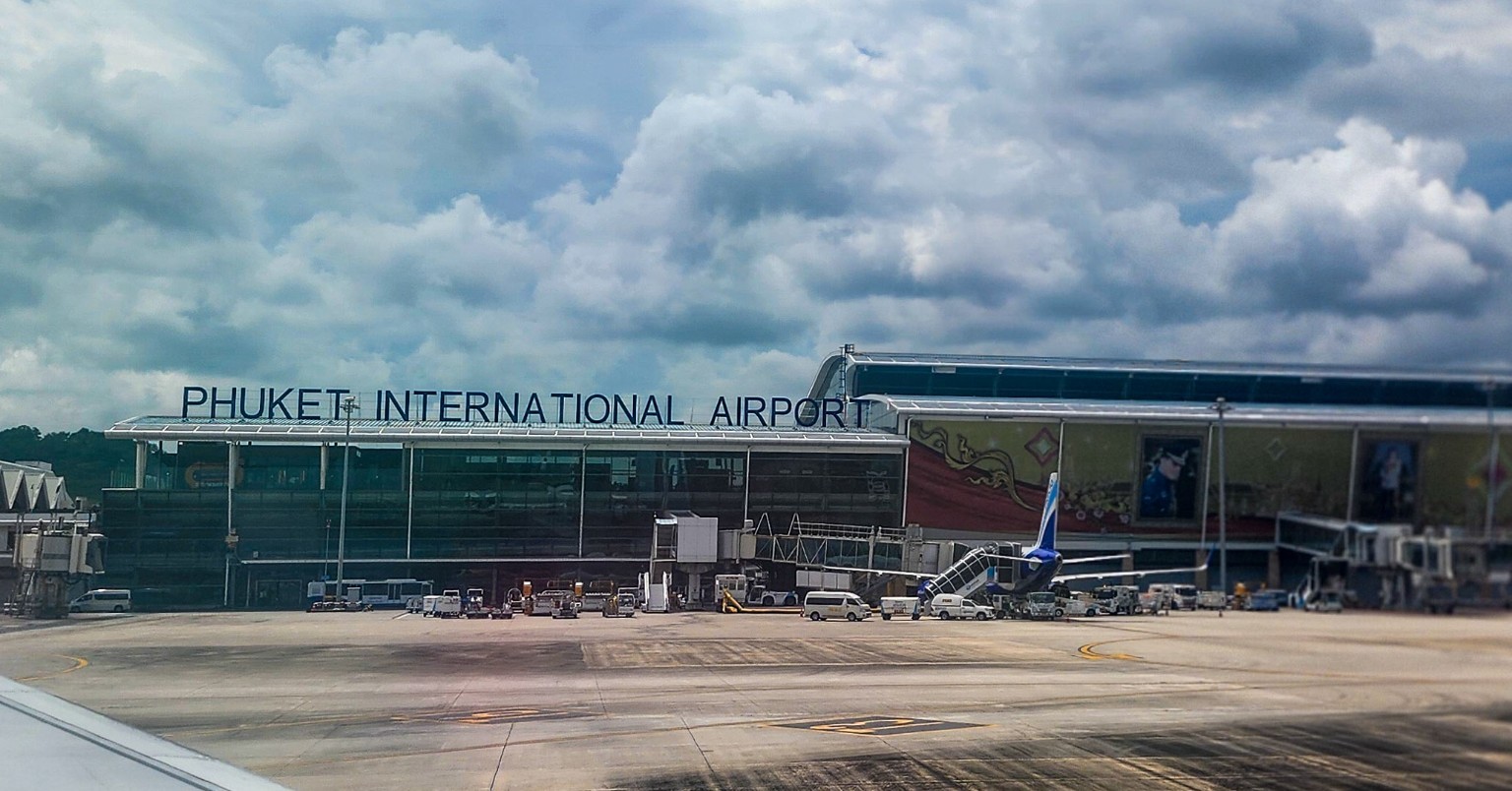
Phuket Airport has several transport options, but two bus services are especially easy to confuse.
Phuket Smart Bus: travels from the airport along the western coast toward Patong, Karon, Kata and Rawai.
Orange Airport Bus 8411: travels between the airport and Phuket Town, ending at Bus Terminal 1.
The orange bus is not the same service as the coastal Smart Bus.
The Airport Bus 8411 operator publishes distance-based fares from 30 to 100 baht, depending on the journey.
Check its official fare table and timetable before travelling.
For airport transfers, the pickup location can be just as important as the price. Different operators and transport categories may use different designated areas.
On an inDrive trip to Phuket Airport in 2024, my driver did not want to enter the airport area and dropped me at the entrance instead.
That’s why I recommend confirming the exact pickup or drop-off point through the app rather than assuming every service uses the same place.
For a detailed comparison of taxis, buses and private transfers, read my Phuket Airport Transfers guide.
Prefer to arrange your airport ride before landing? Compare transfer options for your arrival time, passengers and luggage.
Ferries, Speedboats and Phuket’s Main Piers
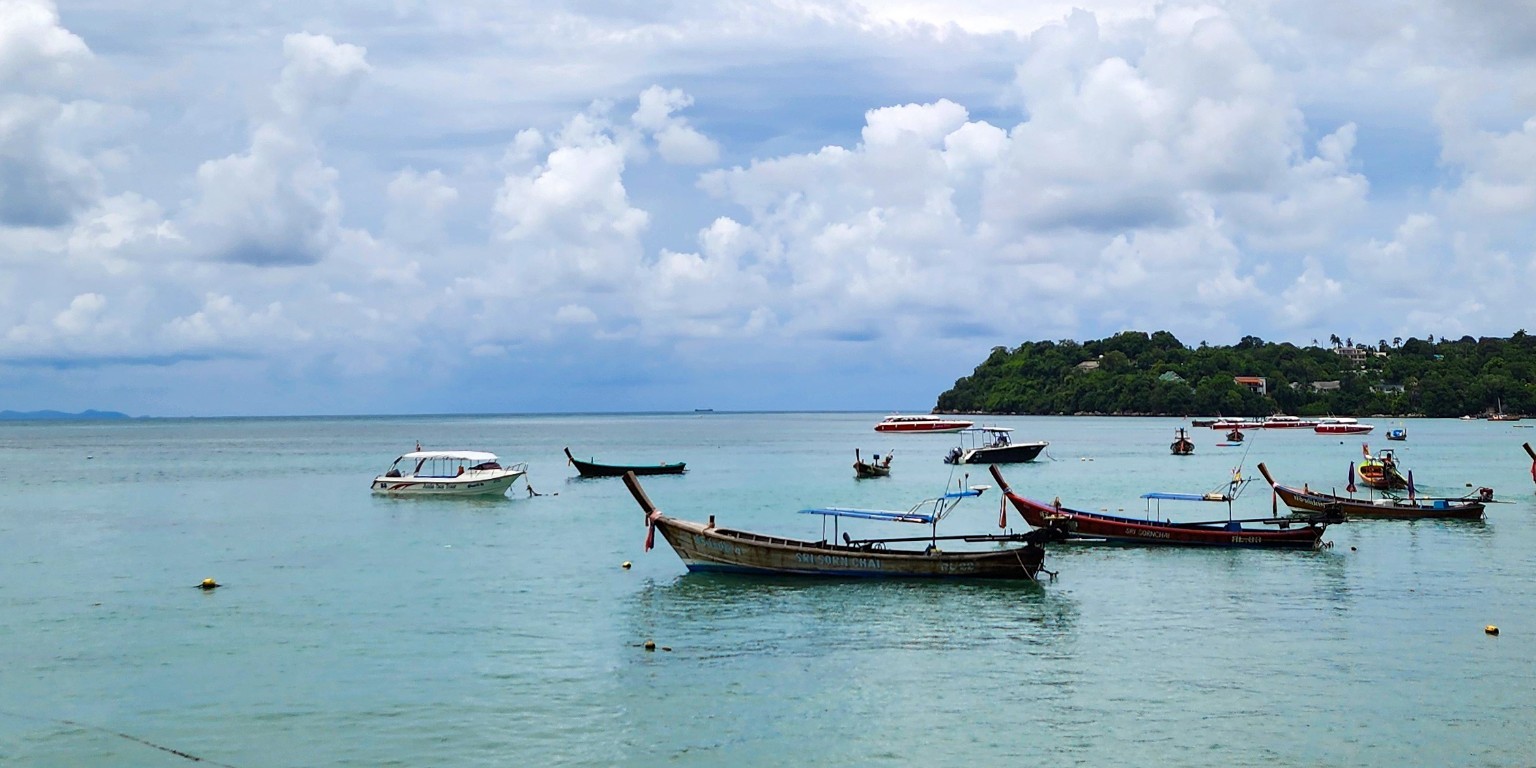
Phuket is connected to several nearby islands by ferry, speedboat and longtail boat.
But there is no single pier serving every destination.
These are some of the locations worth knowing:
Rassada Pier: a major departure point for ferries and speedboats to destinations such as Phi Phi and Krabi, depending on the operator.
Bang Rong Pier: useful for services toward Koh Yao Noi and Koh Yao Yai.
Chalong Pier: commonly associated with boat excursions and trips toward southern offshore islands.
Rawai Beach: used for local longtail boat trips to nearby islands, with destinations and operating conditions varying.
Always check the exact pier on your ticket. Some tour operators depart from private marinas or other locations.
Also check whether hotel pickup is included. Paying for a separate taxi to the pier is unnecessary if your booking already includes transport.
Sea conditions matter, particularly during the southwest monsoon. A scheduled boat service may be changed or cancelled in unsafe weather.
Getting Around Phuket at Night or During Rainy Season
Transport choices that work well in the daytime aren’t always the most practical after dark.
Many traditional local buses operate mainly during daylight hours, and their timetables shouldn’t be treated like those of a city metro system.
The Smart Bus may have later services, depending on the route, but you should check the actual last departure.
At night
For late-night journeys, I prefer knowing how I’m getting back before leaving.
An app-based car or a prearranged transfer is often more predictable than relying on a bus that has already finished operating.
If you’re heading somewhere remote, check the return journey as well as the outward trip.
During heavy rain
I would generally choose a car over a motorcycle during heavy rain.
Road surfaces can become slippery, visibility can deteriorate and water may collect in low-lying sections.
The difference in price is not worth an unnecessary risk.
Also allow more time to cross the island when traffic is heavy.
For waterproof bags, rain layers and other essentials, see my Phuket packing list.
Where You Stay in Phuket Changes Your Transport Budget
A cheap hotel isn’t necessarily a cheap holiday if you need expensive transport every day.
This is something I’d consider before booking accommodation.
For example, if you want to spend most of your time around Patong, staying within walking distance of the places you’ll actually visit can save a considerable amount of travel.
If your plans involve several west-coast beaches, being near the Smart Bus route is useful.
But if you rent a secluded villa and want to visit restaurants, beaches and shops every day, you’ll need a realistic transport budget.
Think about:
- Walking distance to the beach.
- Nearby shops and restaurants.
- Access to public transport.
- Whether the property is up a steep hill.
- How often you plan to visit other parts of the island.
- Your preferred way of travelling at night.
The best location isn’t automatically the cheapest or the most famous one. It’s the one that works for your itinerary.
Use the Phuket hotel map to compare locations, then check walking routes and nearby bus stops before booking.
Common Phuket Transportation Mistakes
Assuming every bus goes between beaches
Traditional blue songthaews are mainly organized around Phuket Town.
For many journeys along the west coast, the Smart Bus is a more practical direct option.
Confusing Bus Terminal 1 and Terminal 2
Always check your ticket before leaving for an intercity bus.
Renting a scooter without the required licence
This can have serious legal and insurance consequences. A rental shop handing you the keys is not proof that you’re legally allowed to ride.
Checking only one taxi app
A quick comparison between available services can make a noticeable difference in price.
Forgetting the return journey
It’s easy to find a ride to a remote beach during the day and much less convenient to arrange transport back later.
Paying for an entire car when travelling alone
For short trips without luggage, check whether a motorbike taxi is available.
Booking a hotel without considering transport
Accommodation that looks inexpensive can become less appealing if every outing requires a long taxi journey.
Frequently Asked Questions About Getting Around Phuket
Can you get around Phuket without renting a scooter?
Yes. You can use taxi apps, motorbike taxis, the Phuket Smart Bus, local songthaews and city buses. The convenience depends on where you’re staying and which places you want to visit.
Is inDrive cheaper than Grab in Phuket?
In my experience, inDrive has often been cheaper. However, there’s no guaranteed winner for every journey. Compare live prices and driver availability in different apps.
Is there a bus between Patong and Kata?
Yes. The coastal Phuket Smart Bus links Patong, Karon and Kata along its Airport–Rawai route. The published single fare is 100 baht.
How much does Phuket Smart Bus cost?
As of October 2026, the operator lists 100 baht for the coastal Airport–Rawai service, 50 baht for the Bus Terminal–Patong service and free travel on the Dragon Line.
How do you pay on Phuket’s blue songthaews?
Generally, you pay the driver in cash, often after leaving the vehicle. Carry small denominations and confirm the fare when necessary.
Are the old pink buses still running in Phuket Town?
No. The old pink Pho Thong buses were replaced by modern electric buses in 2025.
What is Gekkon Moto Sharing?
It’s a scooter-sharing service in Phuket that allows customers to rent participating motorcycles through an app for minutes, hours or days. A valid motorcycle licence and compliance with the rental terms are required.
Do I need a licence for a motorbike taxi?
Not when you’re travelling as a passenger. The driver operates the motorcycle, but you should still wear a properly fitting helmet.
Which bus terminal should I use to leave Phuket?
Terminal 2 handles many long-distance services, while Terminal 1 serves other connections. The correct departure point depends on your operator and ticket.
Is renting a car worth it in Phuket?
It can be worthwhile for families, remote accommodation or several days of sightseeing. For travellers staying near the beach and making occasional trips, taxis and buses may be more economical.
Final Thoughts: The Best Way to Get Around Phuket
After living in Phuket and trying practically every type of transport on the island, I don’t think there’s one perfect option.
For a quick solo trip, I like the convenience of a motorbike taxi.
For comparing car journeys, I usually check inDrive alongside Grab and Bolt.
For travelling between beaches, the Phuket Smart Bus is surprisingly useful.
And I still have a soft spot for the blue songthaews, with their open sides, bench seats and little bell that tells the driver when you want to get off.
When I had a full day of errands, Gekkon made sense. Other times, hiring a vehicle would have been unnecessary.
My advice is simple: don’t rent a scooter just because everyone says you need one in Phuket.
Start with where you’re staying, decide how often you’ll actually travel, and choose the transport that fits each journey.
Phuket is much easier to explore when you understand the options instead of relying on just one.