Phuket Travel Checklist: 30 Things to Do Before Your Trip
Planning a holiday in Phuket involves more than booking a flight, choosing a hotel and throwing a swimsuit into your suitcase.
There are entry requirements to check, documents to prepare, transport decisions to make and a few Thailand-specific rules that are easy to overlook.
One of the biggest mistakes is leaving everything until the week before departure. Another is organizing things too early, such as trying to submit Thailand’s Digital Arrival Card a month before flying.
And then there are the decisions that can affect your entire holiday.
When I lived in Phuket, I learned how much your location changes everyday life. Staying near a beach, supermarket and local transport is very different from booking a beautiful but isolated villa where every outing requires a taxi.
That’s why this Phuket travel checklist focuses on practical decisions, not just paperwork.
I’ve organized it into 30 things to do before and during your arrival in Phuket, from your first travel plans to getting settled on the island.
You don’t need to do everything months in advance. Just follow the timeline and complete each task when it makes sense.
Last updated: October 23, 2026. Thai entry rules, airline policies and local prices may change. Always confirm official requirements for your nationality and travel dates.
This article contains affiliate links. If you book through them, I may earn a commission at no extra cost to you.
Phuket Travel Checklist: What to Do and When
Here’s the complete preparation timeline at a glance.
| When | What to focus on | Tasks |
|---|---|---|
| 2–6 months before | Entry rules, dates, flights, accommodation, health | 1–7 |
| 4–8 weeks before | Insurance, driving, money, excursions, medication | 8–14 |
| 1–2 weeks before | Airport transport, apps, internet, luggage, documents | 15–22 |
| Final 3 days | TDAC, confirmations, weather, check-in | 23–27 |
| On arrival | Immigration, money, internet, hotel transfer | 28–30 |
These periods are guidelines rather than deadlines for every task. If your trip is next week, start with entry requirements and work through the essential steps first.
2–6 Months Before Phuket: Get the Big Decisions Right
These tasks affect whether you can enter Thailand, how much your holiday costs and where you’ll spend most of your time.
1. Check Your Passport Validity
Before booking anything non-refundable, check your passport.
For many travellers, Thailand’s entry requirements include having a passport valid for at least six months from arrival. The exact rules may depend on your nationality, visa category and travel document.
A six-month validity buffer is the sensible standard to aim for.
Also check:
- Your passport is in good condition.
- Your name matches your flight reservation.
- You have any blank pages required for your visa.
- You have enough time for a replacement if needed.
Don’t assume that because your passport is valid on the day of your flight, it automatically meets Thailand’s immigration requirements.
2. Check Thailand’s Current Visa Rules for Your Nationality
This is one of the most important tasks on the entire list.
Thailand changed its visa-exemption system on September 15, 2026.
The former broad 60-day exemption was replaced by revised arrangements, including a 30-day tourist visa-exemption category for 60 countries and territories.
However, Thailand also has bilateral agreements and other entry categories, so the same stay allowance doesn’t apply to every passport.
Check your exact nationality and intended length of stay.
Don’t rely on an old article saying everyone gets 60 days without a visa.
Also verify whether you need:
- A visa arranged before departure.
- Proof of onward or return travel.
- Evidence of accommodation.
- Sufficient funds for your stay.
- Additional documentation for your specific entry category.
If you need an e-Visa, use the official Thailand e-Visa website.
For updated exemption rules, check the Thai government’s September 2026 announcement.
One more point: visa-free entry for tourism does not automatically authorize employment or other activities that require a different visa.
3. Choose the Right Month for Phuket
Phuket isn’t equally convenient for every activity throughout the year.
The island’s southwest monsoon generally affects the weather from around May to October, with especially wet conditions possible in September and October.
The drier season usually offers more favourable conditions for swimming and many boat excursions, although the weather is never guaranteed.
During the monsoon, you may encounter:
- Heavy or prolonged rain.
- Rough seas on exposed west-coast beaches.
- Rip currents and swimming restrictions.
- Delayed or cancelled marine excursions.
- Changes to seasonal island access.
That doesn’t mean Phuket is off-limits in the rainy season.
But if your main goal is to swim every day, snorkel around offshore islands or take several boat trips, the season matters.
For example, Similan Islands National Park closes seasonally during the monsoon. The islands reopened on October 15 for the 2026–2027 season.
My advice: choose your travel dates around what you want to do, not just the cheapest airline ticket.
4. Decide Which Part of Phuket to Stay In

This is one of the most underestimated parts of planning a Phuket holiday.
The island is large enough that choosing the wrong location can mean expensive and time-consuming taxi journeys every day.
Here is a simple comparison.
| Area | Best suited to | Consider before booking |
|---|---|---|
| Patong | Nightlife, restaurants, shopping, active resort atmosphere | Traffic, crowds, noise |
| Kata and Karon | Classic beach holidays with tourist facilities | Hotel distance from the beach and hills |
| Kamala | Relaxed resort stays with restaurants nearby | Transport to other areas |
| Bang Tao | Resorts, beach clubs, longer stays | Distances between properties and amenities |
| Nai Yang | Quieter atmosphere, airport proximity | Fewer direct connections to some southern areas |
| Rawai and Nai Harn | Longer stays, restaurants, access to southern Phuket | Transport often needed |
| Phuket Town | Old Town, markets, local life and cafes | No main swimming beach in the town centre |
| Cape Panwa | Secluded resorts and coastal scenery | Greater dependence on private transport |
When I lived around Nai Yang, even a simple trip to Nai Thon Beach or a larger supermarket involved choosing transport.
That’s why I would always check the actual hotel location on a map.
A property described as “near the beach” may still involve an unpleasant walk along a busy road or a steep hill.
Before booking, check the distance to restaurants, convenience stores and transport stops.
5. Compare Flights and Check Your Connections
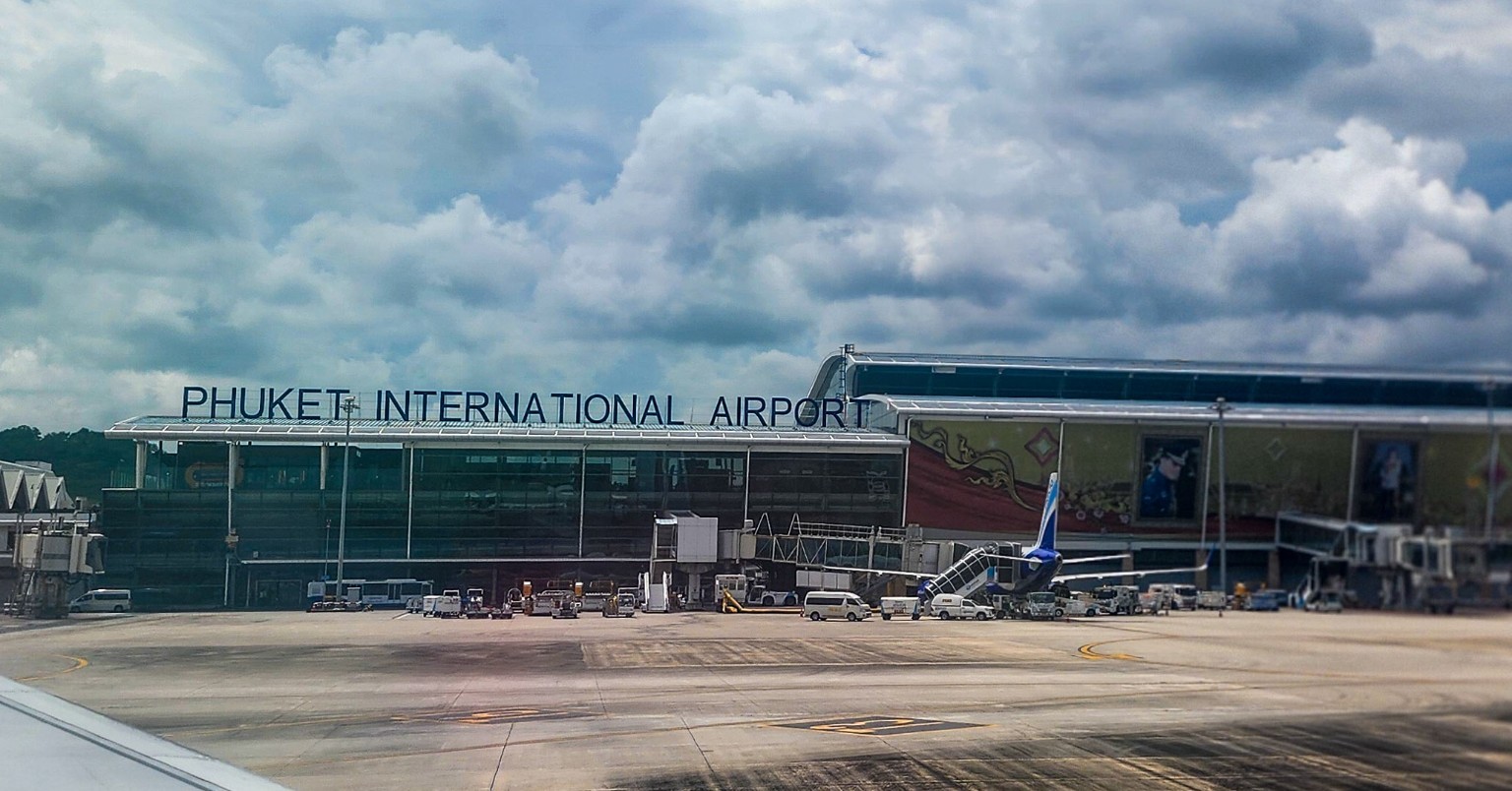
Phuket International Airport uses the airport code HKT.
You can reach it on international flights or via other Thai airports, including Bangkok.
If you’re connecting in Bangkok, pay attention to one very important detail.
Bangkok has two major airports:
- Suvarnabhumi Airport (BKK).
- Don Mueang Airport (DMK).
A flight itinerary involving both may require an airport transfer across the city.
Check whether your flights are on one ticket or separate bookings, whether baggage is transferred automatically and where you’ll pass immigration.
A very short connection can be risky when you need to collect luggage, clear immigration and check in again.
Also compare fares with baggage included. A cheap ticket can become less attractive when you add checked luggage, seat selection and other charges.
6. Book Accommodation With Transport Costs in Mind
Don’t choose a hotel based only on its nightly price.
Look at the whole stay.
A property costing slightly more but located within walking distance of restaurants, shops and the beach may save money compared with an isolated villa that requires several taxi journeys a day.
Before paying, check:
- The exact map location.
- Cancellation conditions.
- Whether breakfast is included.
- Whether the price includes taxes and fees.
- Access to nearby transport.
- Whether the hotel offers airport pickup.
- Recent guest reviews about the surrounding area.
For Phuket, the location often matters more than a long list of hotel facilities.
Compare accommodation locations on the map, then check the walk to the beach and access to transport before booking.
7. Review Vaccinations and Travel Health Advice
You don’t need to assume that every visitor to Phuket requires the same vaccinations.
What is appropriate depends on your medical history, previous immunizations, planned activities and the length of your stay.
Check routine vaccinations and arrange a travel-health consultation with enough time for anything that needs several doses.
The CDC recommends hepatitis A vaccination for unvaccinated travellers to Thailand and provides additional advice about hepatitis B, typhoid, rabies and other risks according to the traveller’s circumstances.
Travellers planning extended rural stays, animal-related activities or other higher-risk experiences may need different advice from someone spending a week in a beach resort.
Use the CDC Thailand travel-health guide as a starting point.
This is also a good time to discuss any ongoing health needs that could affect your journey.
4–8 Weeks Before Phuket: Money, Insurance and Important Bookings
Once the main reservations are arranged, concentrate on the things that could become expensive or difficult to fix at the last minute.
8. Buy Travel Insurance and Read the Exclusions
Travel insurance isn’t just a box to tick before departure.
Check what the policy actually covers.
At a minimum, review:
- Emergency medical treatment.
- Hospitalization.
- Medical evacuation and repatriation.
- Trip cancellation or interruption, if important to you.
- Planned activities such as diving or riding a motorcycle.
- Relevant pre-existing medical conditions.
- Policy limits, deductibles and exclusions.
One particularly important Phuket consideration is scooter riding.
If you’re planning to rent a motorbike, make sure you hold the required licence and that your policy covers the activity and engine capacity.
A policy advertising “motorcycle coverage” doesn’t necessarily cover someone riding illegally.
And don’t assume that insurance provided by a scooter rental company is a substitute for comprehensive medical travel insurance.
Keep your insurer’s emergency assistance number accessible offline.
Check which policies are offered for your residence and itinerary, then read the cover and exclusions before buying.
9. Check Your Driving Licence Before Planning Scooter Rental
Scooters are everywhere on Phuket, but renting one isn’t automatically the best way to get around.
You need the correct legal entitlement to drive the vehicle.
For tourists, this generally means the required motorcycle category on your national licence together with a recognized International Driving Permit, or valid Thai driving privileges.
An ordinary car licence alone does not give every visitor the right to ride a motorcycle in Thailand.
If you’re licensed and insured, you can compare traditional scooter rental with options such as Gekkon Moto Sharing.
I’ve used Gekkon for short rentals and full days of errands. Being able to rent only when I needed a scooter was convenient.
But if you don’t have the required licence, don’t build your travel plans around renting a bike.
Phuket has buses, car taxis and ordinary motorbike taxis with drivers.
You do not need to ride a scooter yourself to explore the island.
Prefer a rental car? Compare the full price, deposit, insurance and driving requirements before deciding.
10. Work Out Your Real Phuket Budget
Phuket can be affordable, but transport and activities add up quickly.
Instead of relying on an unrealistic daily budget from a random travel blog, divide your expected spending into categories.
| Expense | Questions to answer |
|---|---|
| Accommodation | Is it prepaid? Are any charges due at check-in? |
| Transport | Will you walk, use buses, order taxis or rent a vehicle? |
| Food | Mostly local restaurants, tourist cafes or hotel dining? |
| Excursions | How many paid boat trips or attractions? |
| Cash | How much will you need for markets, buses and small businesses? |
| Unexpected costs | Do you have a separate reserve? |
Remember to include airport transfers and transport between different areas of the island.
ATM withdrawals can also be expensive.
For example, Krungsri’s published March 2026 tariff charges 250 baht for a foreign Visa withdrawal and 350 baht for a foreign Mastercard withdrawal. Your own bank may charge additional fees.
Other banks and card types may differ, so check the actual ATM screen rather than relying on old articles quoting 220 baht everywhere.
11. Check Your Bank Cards and Backup Payment Options
Before travelling, make sure your cards can be used in Thailand.
Check your bank’s international payment restrictions, ATM limits, foreign transaction charges and authentication requirements.
Not every bank needs a travel notification, but it’s worth checking whether international transactions are enabled.
If possible, have more than one way to access money.
Don’t keep every bank card in the same bag.
Also remember that some local merchants accept only cash or Thai banking QR payments.
A card that works in a large shopping mall won’t necessarily solve every payment situation on a small island or at a local market.
12. Reserve Only the Excursions That Need Advance Planning
You don’t need to book every activity before arriving in Phuket.
In fact, leaving some days flexible can be useful, especially during the rainy season.
But certain experiences are worth organizing ahead of time:
- Popular Similan Islands excursions during the open season.
- Diving trips with limited spaces.
- Specialist boat charters.
- Experiences requiring advance permits or special arrangements.
- Activities you absolutely don’t want to miss on a short holiday.
For ordinary beach days, local markets and many flexible sightseeing plans, advance reservations aren’t necessary.
Read the cancellation policy carefully, particularly for sea excursions affected by weather.
My advice: book the difficult-to-arrange experiences, but don’t schedule every morning and afternoon before you’ve even arrived.
For a planned Phi Phi day trip, check dates and party size below, then review pickup coverage, inclusions and the weather cancellation terms.
13. Plan Any Overnight Island Transfers
A trip to Phi Phi for several nights requires different planning from a Phi Phi sightseeing excursion.
Similarly, getting to Koh Yao Noi, Koh Lanta or Railay means understanding where the boat leaves, where it arrives and how you’ll reach your accommodation afterward.
Phuket has several separate passenger piers and marinas.
For example:
- Rassada is a major departure point for Phi Phi and Koh Lanta.
- Bang Rong is useful for Koh Yao Noi and Koh Yao Yai.
- Chalong and Rawai are associated with many local boat trips and private charters.
The details matter because the piers are in different parts of Phuket.
If you’re booking a ferry, also check whether the arrival pier is convenient for your hotel and whether your ticket includes transfers.
Don’t forget that some routes operate seasonally.
14. Check Whether Your Medication Needs Thai FDA Permission
This deserves its own task because discovering a problem at the airport is too late.
Some prescription medicines are controlled in Thailand, even if they’re routinely prescribed elsewhere.
Rules depend on the active ingredient, its classification, the quantity and the documents you’re carrying.
Certain controlled medicines require a permit obtained in advance.
Do not assume that a prescription alone makes every medicine legal to import.
Before departure:
- Check the active ingredient, not only the brand name.
- Confirm whether Thailand permits the medicine.
- Apply for any necessary permit within the required timeframe.
- Keep medicine in its original labelled packaging.
- Bring supporting medical documents.
Use the Thai FDA’s official permit and medication verification portal.
You can buy many ordinary medicines in Phuket, but don’t rely on finding an exact replacement for essential prescribed treatment.
1–2 Weeks Before Phuket: Organize the Practical Details
Now it’s time to make arrival easy rather than spending your first holiday hours solving avoidable problems.
15. Decide How You’ll Leave Phuket Airport
Phuket Airport is in the north of the island.
Depending on where your hotel is, getting there may involve a substantial journey.
There are several options:
- Prebooked private transfer.
- Hotel-arranged pickup.
- Grab, Bolt or inDrive where available.
- Official airport taxi services.
- Phuket Smart Bus toward west-coast areas.
- Airport Bus 8411 toward Phuket Town.
There is no single best option for everyone.
For a solo traveller with light luggage staying near a bus route, public transport may be perfectly convenient.
For a family with children, several suitcases and a hotel in a remote area, a prebooked vehicle may make more sense.
Check the exact pickup location before arriving.
I’ve experienced situations with inDrive where an airport pickup required a different meeting arrangement from what I initially expected.
For a more detailed comparison, read my Phuket Airport Transfers guide.
For a prebooked pickup, compare vehicles for your group and luggage and confirm the meeting instructions.
16. Install Grab, Bolt and inDrive
Don’t wait until you’re standing outside the airport with no mobile data to download transport apps.
I would install all three:
| App | Why install it? |
|---|---|
| inDrive | Often competitive pricing in my experience |
| Bolt | Another option to compare fares and availability |
| Grab | Car rides, eligible motorbike-taxi services and other local services |
Compare the live prices before booking rather than assuming any one app is always cheapest.
And if you’re travelling alone over a short distance, check the motorcycle passenger category where it is offered.
Motorbike taxis have long been an ordinary part of transport in Phuket.
When I lived in Nai Yang, I used them for short trips, including getting to Nai Thon Beach or going shopping.
You don’t need to rent a scooter for every errand.
17. Set Up a Thailand SIM or eSIM
Mobile data is useful from the moment you land.
You’ll probably use your phone for navigation, ride-hailing, translations, hotel communication and booking confirmations.
If your phone supports eSIM, you can arrange a plan before travelling.
Check:
- Thailand coverage.
- Your phone’s eSIM compatibility.
- Data allowance.
- Validity period.
- Activation instructions.
- Whether the plan begins when installed or when it first connects.
If you prefer a physical SIM card, tourist SIM services are available at the airport and through mobile operators elsewhere in Phuket.
Whichever option you choose, have a backup plan for the first few minutes after landing.
18. Download Maps and Save Important Addresses Offline
A working internet connection is convenient, but don’t make your entire trip dependent on it.
Download a map of Phuket and save your hotel location.
Also save the addresses of:
- Your hotel.
- Your airport pickup location.
- Any ferry pier you’re using.
- Important meeting points for prebooked excursions.
- Your nearest suitable medical facility, if relevant.
Google Translate can be useful, and LINE is widely used for communication in Thailand.
If a driver or hotel receptionist can’t immediately understand the name of a place, showing the address written in Thai can make communication easier.
19. Pack for Your Actual Plans, Not Every Possible Activity
You don’t need half your wardrobe for a tropical holiday.
Most travellers will be fine with light, breathable clothes, comfortable footwear, swimwear, sun protection and a few practical extras.
But specific plans may change your packing list.
For example:
- Temples require respectful clothing.
- Boat excursions make a waterproof bag useful.
- Longer walking trips call for supportive shoes.
- Rainy-season travel benefits from quick-drying clothes.
- Snorkeling and diving may require specific equipment.
And don’t overlook insect repellent.
During my time in Phuket, I experienced extremely unpleasant bites from what appeared to be tiny beach insects. The itching and inflammation were intense, some bites began oozing fluid, and my skin took almost a month to recover fully.
That experience made me take insect protection seriously, not just mosquito protection after sunset.
A complete packing list deserves its own guide; here, your task is simply to make sure you’ve covered the essentials.
Use my Phuket packing list to work through clothes, beach essentials and items to leave at home.
20. Check Your Airline Baggage and Power Bank Rules
Don’t assume your baggage allowance will be the same on every flight.
Check the fare you’ve purchased and pay particular attention if different airlines operate different legs of the journey.
This matters for cabin baggage, checked luggage and lithium batteries.
Thailand updated its aviation rules for power banks in 2026.
Under the published CAAT requirements:
- Power banks must be carried in cabin baggage.
- A passenger may carry a maximum of two.
- Units up to 100Wh are generally permitted.
- Units above 100Wh and up to 160Wh require airline approval.
- Charging or using power banks during a flight is prohibited under the Thai rules.
- Power banks must remain accessible rather than stored in overhead compartments.
Check both your airline’s requirements and the battery specifications before packing.
21. Check Thailand’s Restricted and Prohibited Items
Thailand has rules about what you can bring through customs.
A few items deserve particular attention.
Vapes and e-cigarettes: Their importation into Thailand is prohibited. Don’t pack them.
Controlled medication: Check the relevant Thai FDA requirements.
Drones: Registration, permits and local flight restrictions may apply.
Alcohol and tobacco: There are customs allowances and limits; verify these against current Customs Department guidance if you’re bringing any.
Avoid relying on assumptions based on what is legal in your home country.
Check the Thai Customs Department before travelling if you’re unsure about an item.
22. Save Documents and Emergency Contacts
Keep copies of your most important travel documents in a secure location that you can access if your phone is lost.
This includes:
- Passport identification page.
- Visa or visa confirmation, if applicable.
- Flight reservations.
- Accommodation confirmation.
- Travel insurance details.
- Emergency assistance contacts.
- Driver’s licence and International Driving Permit, if relevant.
- Ferry or activity bookings already arranged.
Use secure storage and avoid leaving sensitive documents in an openly shared folder.
Also save Thailand’s emergency numbers:
| Service | Number |
|---|---|
| Tourist Police | 1155 |
| Medical emergency | 1669 |
| Police emergency | 191 |
| Tourism Authority of Thailand information | 1672 |
For the first few days, it’s also useful to have your hotel name, address and phone number accessible offline.
Final 3 Days Before Departure: Don’t Miss These Tasks
This is the stage where timing really matters.
23. Complete the Thailand Digital Arrival Card (TDAC)
The Thailand Digital Arrival Card is mandatory for most foreign travellers entering Thailand.
It must be submitted within the three-day window before arrival, including your arrival date.
Not three weeks before your flight. Not as soon as you book a hotel.
And the form is free.
Use only the official Thailand Digital Arrival Card website.
You’ll need information such as:
- Passport details.
- Arrival date and travel information.
- Accommodation details in Thailand.
- Purpose of visit.
- Health declaration information.
- Email address.
After submitting, save the confirmation so you can access it even without internet.
Important: TDAC is not a visa and does not replace any visa you may need.
A new TDAC is generally required for each separate entry into Thailand. Travellers connecting through Thailand without passing immigration are among the exceptions.
24. Do a Final Entry-Document Check
Before leaving, make sure the documents all tell the same story.
Your passport, airline ticket, visa if required, TDAC and accommodation details should be accurate and consistent.
Also have access to any onward ticket or proof of sufficient funds relevant to your entry category.
Some Thai embassy guidance explicitly refers to financial evidence for visa-exempt visitors. Don’t assume a screenshot of a bank balance will necessarily satisfy a requirement to demonstrate available cash.
Check the exact conditions applicable to your nationality.
You should be able to find every required document quickly rather than searching through multiple email inboxes at the check-in counter.
25. Check the Weather and Your Marine Bookings
A few days before arrival, look at the actual forecast rather than relying entirely on average monthly weather descriptions.
This is particularly important when you’ve booked:
- Phi Phi speedboats.
- Similan Islands excursions.
- Diving trips.
- Private longtail charters.
- Other marine activities.
Sea conditions can change a tour’s departure time, route or operating status.
Also review any relevant national park restrictions.
Don’t build your entire itinerary around the assumption that every boat will operate exactly as scheduled.
If you’re visiting during monsoon season, keeping a flexible day for island activities can be useful.
26. Confirm Flights, Transfers and Check-In Instructions
Airlines can change departure times, gates and even flight numbers.
Check your booking directly with the airline rather than relying only on the original confirmation email.
Also confirm:
- Airport and terminal.
- Online check-in availability.
- Checked baggage allowance.
- Departure and arrival times.
- Transfer or hotel pickup details.
- Any ferry connections scheduled after landing.
If you arranged a private airport transfer, make sure the driver or operator has your flight details and contact information.
27. Prepare a Proper Carry-On Essentials Bag
Don’t put everything important in checked luggage.
Keep the following accessible:
- Passport and entry documents.
- Wallet and payment cards.
- Phone and charging cable.
- Required medication.
- Glasses or contact lens essentials.
- Insurance details.
- A light change of clothing if practical.
- Any important items needed during transit.
If your checked suitcase is delayed, you’ll still be able to manage the first day.
Remember to carry power banks according to airline and aviation regulations.
And charge your phone before departure.
Arriving in Phuket: Your First Three Tasks
You made it to Thailand. Here’s what to handle before switching completely into holiday mode.
28. Check Your Immigration Permission to Stay
After clearing immigration, confirm your permitted period of stay in Thailand.
If your passport has an entry stamp, check the date shown.
If your permission is recorded electronically, verify the arrival record or confirmation available to you.
A visa’s validity and your actual permission to remain are not necessarily the same thing.
Don’t wait until your flight home to discover you’ve misunderstood the date.
If something appears incorrect, ask immigration officials for clarification promptly.
29. Get Connected and Access Some Thai Baht
If you arranged an eSIM, confirm that the connection is working.
Otherwise, activate your physical SIM or arrange a tourist plan.
You’ll also want some Thai baht for everyday expenses.
Cash is useful for markets, small restaurants, local buses and certain boat services.
If you withdraw cash from a Thai ATM using a foreign card, read the fee information before accepting the transaction.
The ATM may also offer to convert the withdrawal into your home currency.
This is called dynamic currency conversion.
In most cases, choosing to be charged in Thai baht and declining the ATM’s own conversion offer avoids an additional exchange-rate markup, although your card issuer’s terms still matter.
Don’t confuse declining currency conversion with cancelling the withdrawal itself.
Keep enough small notes for local transport and minor purchases.
30. Get to Your Hotel and Confirm Your First-Day Plans
Once you have your bags, internet access and essential documents, follow your planned route to the hotel.
For an app taxi, use the pickup location indicated by the service.
For a prebooked transfer, follow the operator’s instructions.
For buses, make sure you’re on the correct route. The airport bus toward Phuket Town and the coastal Smart Bus serving western beaches are different services.
After checking in:
- Save the hotel’s location on your map.
- Check nearby restaurants and convenience stores.
- Confirm any pickup time for the following morning.
- Locate the nearest practical transport stop if you’ll be using buses.
- Get some rest before planning too much activity.
If your accommodation is far from the beach or local restaurants, work out your return transport before heading out.
You don’t need to solve every aspect of Phuket on your first day.
Phuket Travel Checklist: All 30 Tasks in One Place
Use this compact list to check your preparation or copy it into your phone.
2–6 Months Before
4–8 Weeks Before
1–2 Weeks Before
Final 3 Days
On Arrival
Frequently Asked Questions About Preparing for Phuket
What documents do I need to travel to Phuket?
You need a valid passport, the appropriate visa or visa-exemption eligibility, and a completed TDAC if applicable. Depending on your entry category, you may also need proof of accommodation, onward travel and sufficient funds.
How early should I plan a Phuket holiday?
For a busy-season trip, beginning several months ahead gives you more flexibility with flights and accommodation. Shorter trips can also be organized with less notice, provided you meet entry requirements and can arrange any necessary visas or permits.
When should I complete the Thailand Digital Arrival Card?
Within the three-day window before your arrival in Thailand, including the arrival date. The official TDAC is free and is submitted online through the Thai Immigration Bureau.
Is travel insurance mandatory for Phuket?
Ordinary short tourist visits do not generally have a universal travel-insurance requirement, but the conditions of your particular visa may differ. Insurance is strongly recommended, especially if you plan activities involving driving, diving or remote locations.
Do I need to rent a scooter in Phuket?
No. Public buses, ride-hailing cars, motorbike taxis and other options can work well depending on your accommodation and itinerary. If you choose to ride yourself, you need the correct licence and appropriate insurance.
How much cash should I bring to Phuket?
The practical amount depends on your accommodation, card access and spending plans. Entry requirements may also include proof of funds. Don’t rely exclusively on cards for everyday expenses, and check withdrawal fees before using an ATM.
Should I book Phuket island tours before arriving?
Book ahead for limited-capacity or seasonal experiences you don’t want to miss. Leave other activities flexible if weather is uncertain or you prefer arranging trips locally.
What should I do first after arriving at Phuket Airport?
Confirm your immigration permission to stay, collect your luggage, get mobile data working and follow your arranged transport to the hotel. If you haven’t yet obtained Thai baht, arrange a modest amount for immediate expenses.
Final Thoughts: A Better Way to Prepare for Phuket
You don’t need to spend months worrying about every detail of a Phuket holiday.
But a few well-timed decisions can make a real difference.
Get the entry requirements right, choose accommodation that suits your plans, understand your transport options and arrange the things that can’t easily be fixed after landing.
Then leave yourself some freedom.
One of the best parts of staying in Phuket is being able to decide what you feel like doing that day, whether it’s taking a local bus to another beach, heading into Phuket Town or organizing a boat to a nearby island.
Use this checklist to take care of the important things before departure, so you can spend less time solving problems and more time enjoying Phuket.
You don’t need a perfect itinerary. You need a good starting point.