Istanbul Public Transport: Metro, Tram, Ferry, Bus & Istanbulkart
Istanbul public transport looks complicated on a map, but most visitors end up using the same few systems: metro, tram, ferry, Marmaray and funiculars, with buses filling the gaps.
For a first trip, you do not need to understand the entire network. Learn the T1 tram, the metro lines relevant to your hotel, how to cross between Europe and Asia, and how you want to pay.
For short stays, I often simply tap my contactless bank card. It costs me a little more than using Istanbulkart, but I prefer the convenience of not buying and topping up another card. If you expect to use public transport frequently, Istanbulkart can still make more sense.
If you are planning the trip from scratch, start with my Istanbul Travel Guide and Istanbul itinerary for 1 to 7 days.
Transport information was checked in September 2026. Fares, payment rules, first and last departures and temporary service changes can change, so check official information before a time-sensitive journey.
Istanbul Public Transport at a Glance
| Transport | Best for | Main limitation |
|---|---|---|
| Metro | Longer journeys and avoiding traffic | Some sights still require a walk or transfer |
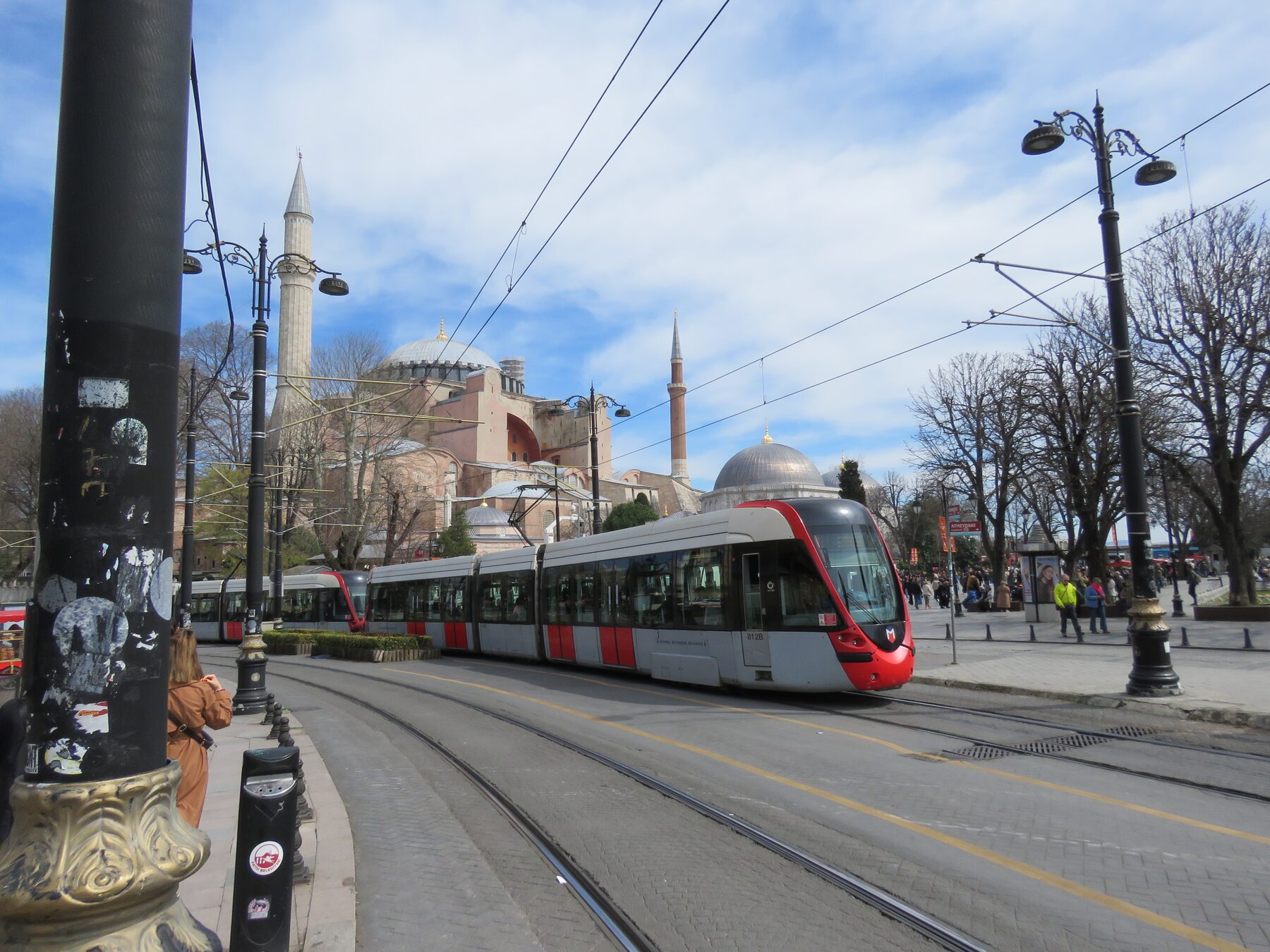
| T1 tram | Sultanahmet, Eminönü, Karaköy and Kabataş | Can become very crowded |
| Ferry | Europe–Asia crossings and Bosphorus views | Routes and frequency depend on pier and time |
| Marmaray | Fast rail crossing beneath the Bosphorus | Less scenic than a ferry |
| Bus | Areas beyond rail and ferry routes | Traffic makes journey times less predictable |
| Funicular | Short steep connections | Useful only on specific routes |
The simplest rule: use rail when speed matters, ferries when the waterfront route makes sense, and buses when the rail network does not solve the journey.
How to Pay for Transport in Istanbul
You do not necessarily need to buy a physical Istanbulkart for a short visit.
There are several ways to pay, and the most convenient choice depends on how often you expect to use public transport.
Istanbulkart
The standard Istanbulkart is a rechargeable transport card accepted across much of Istanbul’s public transport network.
It works on services including:
- metro;
- tram;
- municipal ferries;
- Marmaray;
- funiculars;
- buses.
For someone making many journeys over several days, it is usually the most practical option.
You can buy and top up Istanbulkart at official machines at many metro, tram and ferry stations.
Metro Istanbul currently lists a standard anonymous Istanbulkart separately from multi-use electronic tickets, so payment type can affect what you pay for a journey.
Paying With a Contactless Bank Card
For a short trip, I often skip the Istanbulkart completely and simply use my contactless bank card.
It can work out a little more expensive, but for me the difference is worth avoiding another card, balance and top-up process.
If you choose this option:
- look for a validator that accepts contactless bank-card payments;
- use the same card or device consistently;
- keep a backup payment method;
- remember that Istanbulkart-specific discounts, transfers or refunds may not work in the same way.
This is especially convenient if you only expect to make a handful of journeys.
Istanbulkart Mobil and QR Payment
There is also an official digital option.
Istanbulkart Mobil supports QR payments for public transport without requiring the physical card. The official Istanbulkart site says QR can be used for public transport payments through the app.
For a visitor, however, I would not install and configure an app purely for one or two rides unless it solves a particular problem. Registration and account requirements can change.
Which Payment Method Should You Choose?
Short trip and convenience matters most: contactless bank card can be the easiest.
Several days with frequent transport use: Istanbulkart is worth considering.
Already using Istanbulkart Mobil: QR payment is another option.
There is no reason to make the payment method more complicated than the trip requires.
Metro: Best for Distance and Predictable Travel Times
The metro is the easiest way to cover longer distances without getting stuck in Istanbul traffic.
The lines most visitors are likely to encounter include:
- M2 for Taksim, Şişhane and parts of the European side;
- M4 for Kadıköy and the Asian side;
- M11 for Istanbul Airport connections;
- Marmaray, technically suburban rail, for fast east–west journeys beneath the Bosphorus.
If you are arriving through Istanbul Airport, see my full guide to Istanbul Airport to Istanbul.
For Sabiha Gökçen, use the separate Sabiha Gökçen Airport to Istanbul guide.
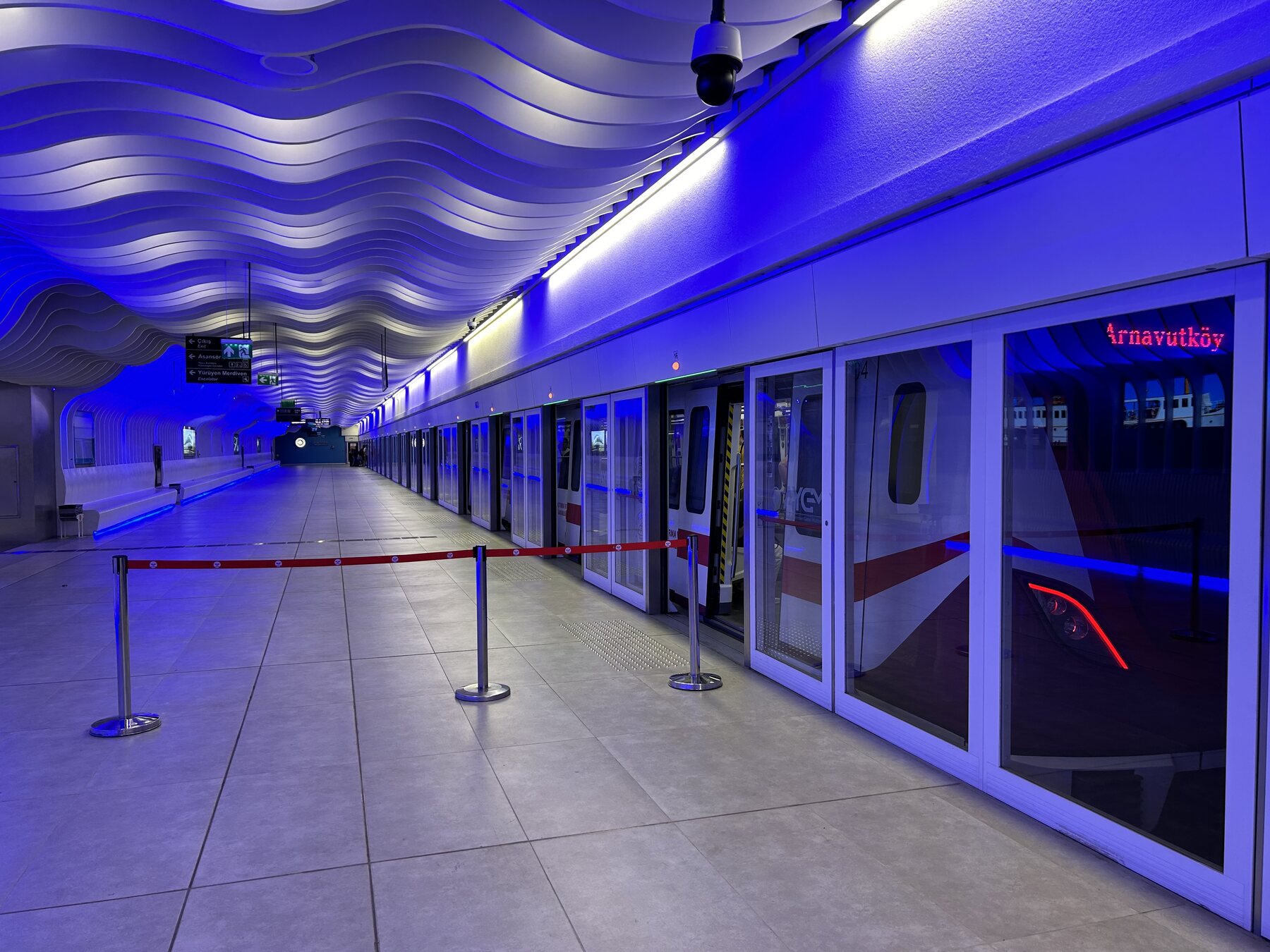
Do not assume that a hotel described as “near the metro” is necessarily easy with luggage.
Istanbul is hilly, stations can have several exits and choosing the wrong exit can add a surprisingly steep walk.
T1 Tram: The Most Useful Line for First-Time Sightseeing
For a first-time visitor, the T1 tram is probably the most useful surface line to recognize.
It connects several major sightseeing areas:
- Sultanahmet: Hagia Sophia, Blue Mosque, Basilica Cistern and the Topkapı area;
- Eminönü: Spice Bazaar, ferry piers and Galata Bridge;
- Karaköy: waterfront and access toward Galata;
- Kabataş: ferries, Dolmabahçe and the F1 funicular to Taksim.
The main drawback is crowding.
During busy periods, it can be easier to wait for the next tram rather than forcing yourself into a packed carriage.
Keep bags closed and in front of you when vehicles are crowded.
Ferries: Transport With a Bosphorus View
The ferry is one of the few forms of everyday public transport that can also become part of the sightseeing.
Useful waterfront connections include combinations of:
- Eminönü;
- Karaköy;
- Beşiktaş;
- Kadıköy;
- Üsküdar.
A ferry can often replace a more complicated land journey while giving you some of the best views of Istanbul.
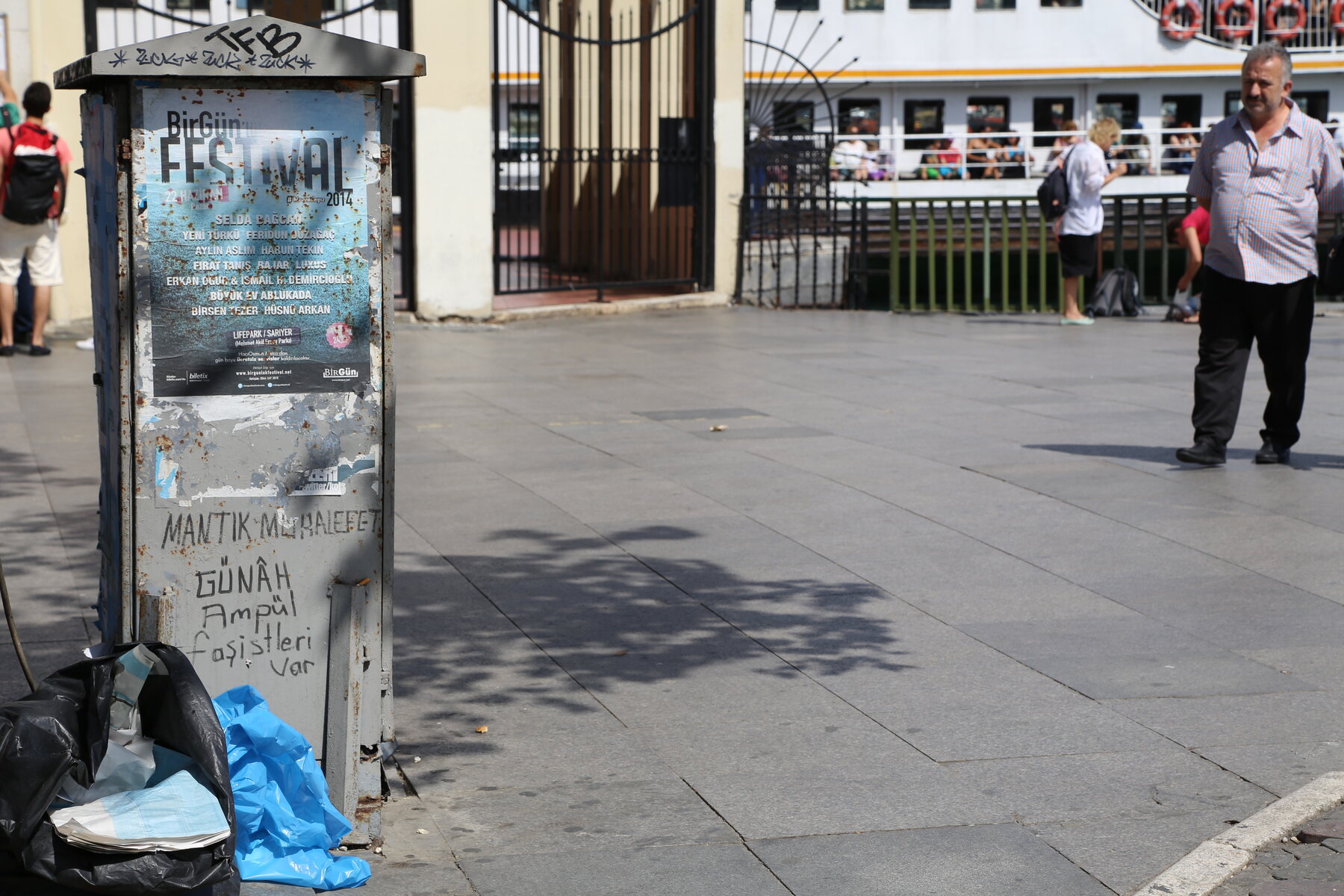
Check the exact pier before walking toward the waterfront. Large ferry areas may contain several nearby terminals and different operators.
Timetables also vary by route and time of day, so use current Şehir Hatları information when a particular crossing matters.
Ferry or Marmaray?
| Choose the ferry when… | Choose Marmaray when… |
|---|---|
| You want the Bosphorus view | You want the faster cross-Bosphorus connection |
| Your origin and destination are near the waterfront | You need to continue along the rail network |
| The weather is good | Weather makes a ferry less appealing |
| The journey itself is part of the day | You have a timed attraction or connection |
There is no universal winner.
If I am not in a hurry and the piers work for the route, I would usually rather take the ferry. If I simply need to cross the Bosphorus quickly, Marmaray is more practical.
Buses: Useful When Rail Does Not Solve the Route
Istanbul’s bus network reaches far more places than most visitors will ever need.
The downside is traffic.
A route that looks convenient in an app can become much slower at rush hour, and crowded buses are not particularly pleasant with luggage.
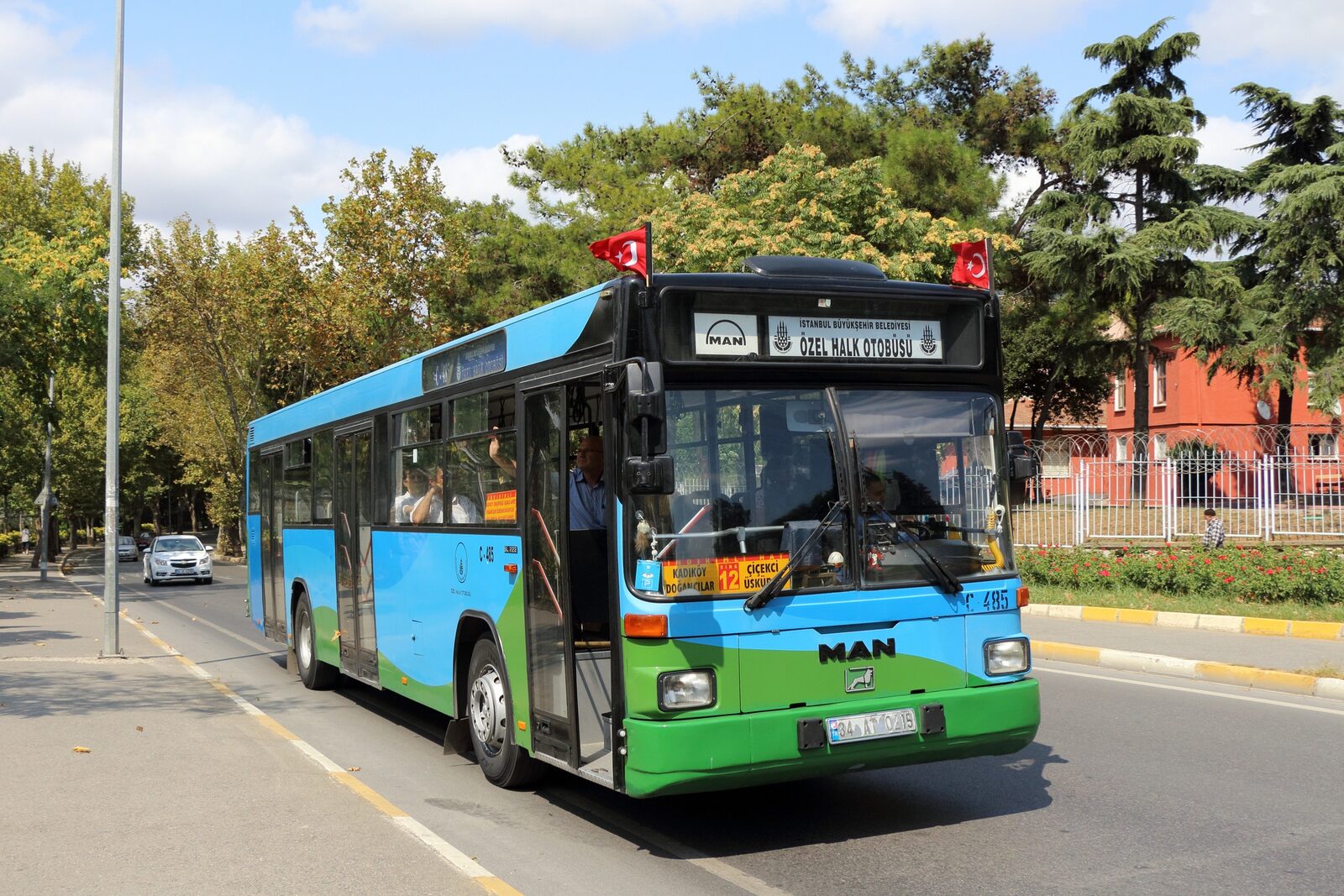
Use buses when they genuinely solve a route that metro, tram, Marmaray or ferry does not.
Before boarding, check:
- route number;
- direction;
- stop name;
- your live position during the journey.
Funiculars: Small Lines That Save Big Hills
Istanbul’s funiculars are short, but some are extremely useful.
The F1 between Kabataş and Taksim is the one many visitors will use.
It connects the waterfront, ferries and T1 tram area with Taksim without requiring a long uphill walk.
You do not need to memorize every funicular or cable-car line in Istanbul. Treat them as useful connectors when they appear on your route.
Four Useful Routes for a First Trip
| Journey | Simple option | Why it works |
|---|---|---|
| Sultanahmet → Karaköy | T1 tram | Direct and easy |
| Sultanahmet → Taksim | T1 to Kabataş + F1 | Avoids a steep final climb |
| Kadıköy → Eminönü / Karaköy | Ferry | Useful direct crossing with views |
| Üsküdar → Sirkeci | Marmaray | Fast cross-Bosphorus rail journey |
These four routes cover a surprising amount of a typical first Istanbul trip.
Do You Need Mobile Data for Istanbul Transport?
You can get around without being permanently online, but mobile data makes Istanbul considerably easier.
It helps when you need to:
- compare ferry and rail routes;
- find the correct station exit;
- follow your position on a bus;
- check a ferry timetable;
- react to a temporary service change.
Download an offline map as a backup even if you have mobile data.
Accessibility, Luggage and Traveling With Children
Lifts and Step-Free Access
Many modern stations have lifts, but the lift may be far from the exit you actually want or temporarily unavailable.
If step-free access is essential, check the station layout before relying on a specific interchange.
Luggage
Metro and Marmaray are predictable, but changing lines can involve long corridors.
With large suitcases, avoiding peak commuter periods makes the journey much easier.
Strollers
Modern rail is usually easier than crowded buses.
Ferry access depends on the pier and vessel, so conditions can vary.
Hills
This is easy to underestimate.
The transport line on the map may be flat. The street between the station and your hotel may not be.
If you are still choosing accommodation, my Where to Stay in Istanbul guide explains why the exact street matters.
Late-Night Transport in Istanbul
Do not assume that every line runs throughout the night.
Night and weekend services vary by route, and operating arrangements can change.
Before staying out late:
- check the specific line you need;
- check the final useful ferry or rail connection;
- keep a backup route;
- know roughly what a taxi would involve for the final journey.
Do not build an airport transfer or other important connection around an assumed night service without checking it first.
Common Istanbul Transport Mistakes
- Planning only by distance and ignoring hills.
- Choosing a bus through heavy traffic when rail is available.
- Taking large luggage onto the T1 at the busiest time.
- Assuming every ferry from the same waterfront area goes to the same place.
- Using an old fare chart or timetable screenshot.
- Choosing the wrong station exit and creating an unnecessary climb.
- Leaving no buffer before a timed attraction, flight or train.
- Buying an Istanbulkart automatically without first deciding whether you actually need one.
Istanbul Public Transport FAQ
Do Tourists Need an Istanbulkart?
No.
Istanbulkart is convenient if you expect to use public transport frequently, but it is not the only way to pay.
For a short trip, a contactless bank card may be simpler even if the fare is slightly higher. Istanbulkart Mobil also supports QR payment.
Is Istanbulkart Worth Buying?
It depends on how much public transport you plan to use.
For several days of frequent metro, tram and ferry journeys, it can make sense.
For a short visit with only a few rides, you may prefer the convenience of simply tapping a contactless bank card.
Can I Pay for Istanbul Transport With a Bank Card?
Contactless bank-card payment is available through compatible transport validators/payment infrastructure, though payment rules and fares can differ from Istanbulkart. Check the validator and current fare rules rather than assuming every payment method has identical pricing or benefits.
Can I Use My Phone Instead of an Istanbulkart?
Istanbulkart Mobil supports QR payment for public transport without a physical Istanbulkart.
Whether setting up the app is worthwhile for a tourist depends on the length of the trip and current registration requirements.
Is the Ferry Part of Istanbul Public Transport?
Municipal ferries are part of the public transport network.
They are different from dedicated sightseeing cruises and private tour products.
What Is the Best Public Transport for First-Time Visitors?
Most first trips rely mainly on:
- T1 tram;
- metro;
- Marmaray;
- F1 funicular;
- ferries between Europe and Asia.
Buses are useful when they fill a specific gap but rarely need to be your default transport.
Some links in this article are affiliate links. If you book or buy through them, I may earn a small commission at no extra cost to you.