Hagia Sophia Istanbul: Tickets, Dress Code & Visiting Tips
Hagia Sophia in Istanbul is one of the places where a little preparation can completely change your visit.
It is simultaneously an active mosque, one of the city’s most important historic monuments and, in 2026, the site of a major structural restoration. The visitor experience is also very different from the years when Hagia Sophia operated as a museum.
Foreign sightseeing visitors now follow a separate paid route through the upper gallery, while worship access operates separately. That visitor-management system was introduced in January 2024 and gives tourists views into the prayer hall as well as access to parts of the gallery containing Byzantine mosaics.
That means old travel posts, videos and maps can be actively misleading.
If Hagia Sophia is part of a first Istanbul trip, see my 22 Best Things to Do in Istanbul for help deciding how it fits with the rest of Sultanahmet.
This guide was checked in September 2026. Restoration work, prayer-time access, visitor routes and ticket arrangements can change, so confirm time-sensitive details before your visit.
Hagia Sophia Istanbul at a Glance
| Location | Sultanahmet, opposite the Blue Mosque |
| What it is today | Active mosque and historic monument |
| Tourist route | Separate paid upper-gallery route for foreign sightseeing visitors |
| Allow | Around 60–90 minutes, plus security and queue time |
| Dress code | Modest clothing; carry a head covering if required for mosque access |
| Best time | Earlier in the visitor day or outside the main group-tour peak |
| Main complication | Prayer access and restoration can alter the visitor experience |
Why Hagia Sophia Matters
The present Hagia Sophia was completed in 537 under Byzantine Emperor Justinian I.
Its immense central dome, structural ambition and interior scale made it one of the defining buildings of Byzantine architecture.
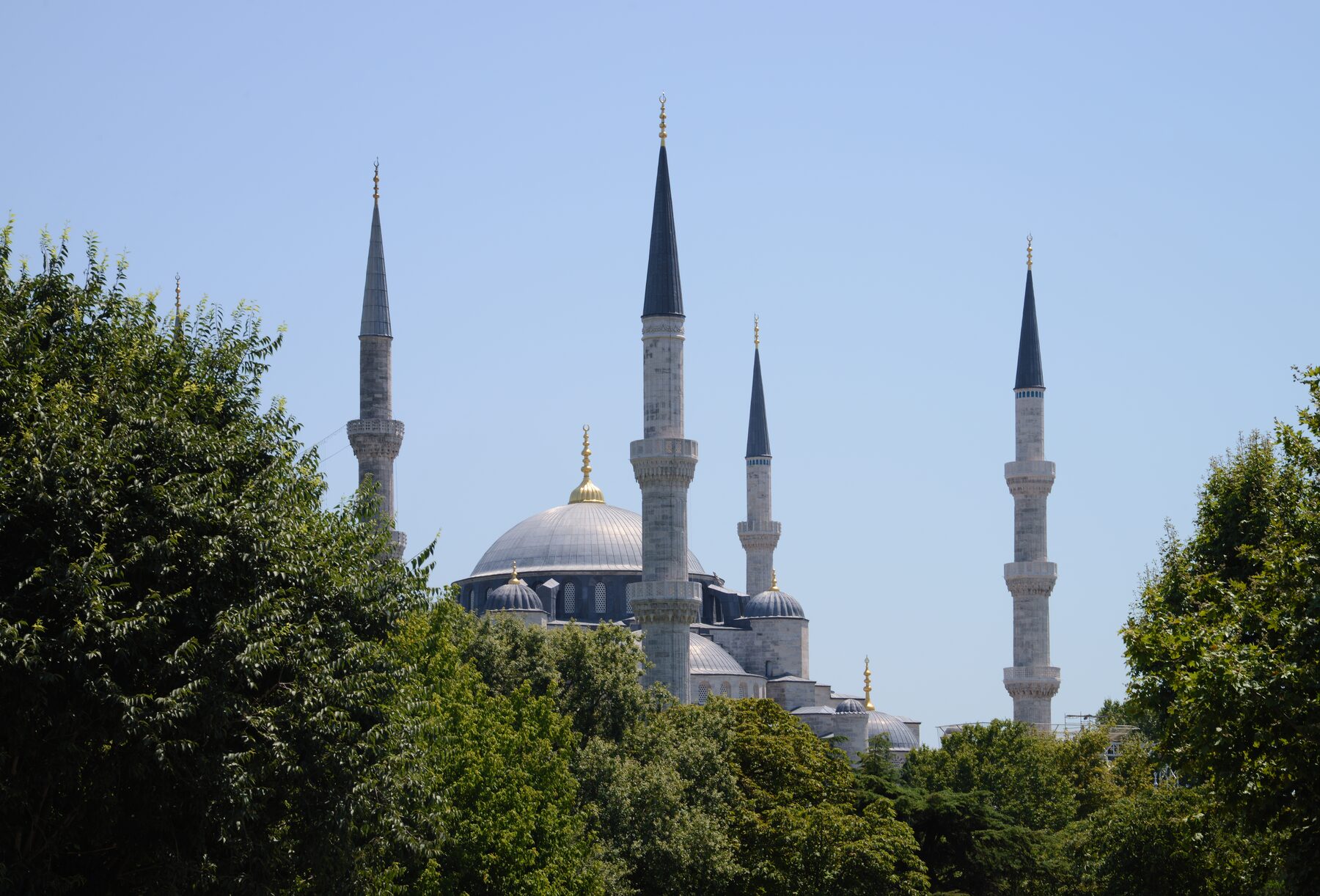
After the Ottoman conquest of Constantinople in 1453, Hagia Sophia became a mosque. Minarets, monumental calligraphic roundels, a mihrab, minbar and other Ottoman elements were added over time without erasing the building’s earlier Byzantine layers.
Hagia Sophia became a museum in the twentieth century and returned to mosque status in 2020.
That layered history is what makes the interior so unusual. Byzantine mosaics, imperial architecture and Islamic elements occupy the same building rather than existing as separate historical chapters.
How Visiting Hagia Sophia Works Now
This is the part many older guides get wrong.
Foreign visitors entering for tourism do not simply walk into the building using the former museum-era route.
A visitor-management system introduced in January 2024 separates tourist and worship flows. Foreign cultural visitors are directed through a dedicated entrance and upper-gallery route, while worshippers use a separate system. The gallery route allows visitors to look into the main prayer space and see Byzantine mosaics without disrupting worship below.
So when you visit, expect:
- a separate tourist entrance
- security screening
- a controlled visitor route
- upper-gallery viewpoints
- restricted access to parts of the active prayer area
- possible changes caused by restoration or prayer schedules.
Do not plan your visit using a video or blog post recorded before 2024.
Follow current signs and staff instructions when you arrive.
Hagia Sophia Tickets and Entrance Fees
Foreign sightseeing access to the upper visitor gallery is ticketed.
The visitor system launched with a €25 foreign tourist admission fee in 2024, and 2026 visitor information continues to list €25 for upper-gallery access. Because pricing and sales arrangements can change, check the current amount before your visit rather than treating any figure in a travel article as permanent.
A ticket does not mean you can bypass mandatory security.
Before booking:
- check whether you are buying admission only or a guided experience
- confirm whether the product includes the actual entrance ticket
- be cautious with vague “skip every line” language
- check the cancellation policy
- allow additional time during weekends and busy travel periods.
Some guided products provide historical explanation but handle admission separately, so read the inclusions rather than relying on the tour title.
Hagia Sophia Dress Code and Mosque Etiquette
Hagia Sophia is not only a monument. It is a functioning mosque.
Dress conservatively and be prepared to follow current mosque rules.
As a practical baseline:
- cover shoulders
- cover knees
- women should carry a lightweight scarf or head covering
- follow instructions about shoes in mosque areas
- keep voices low
- respect barriers separating visitor and worship spaces
- do not photograph worshippers intrusively.
Coverings may sometimes be available on site, but arriving dressed appropriately saves time and makes the visit simpler.
What to Look For Inside Hagia Sophia
It is easy to become so focused on getting through the queue and understanding the visitor route that you forget to actually look at the building.
The Dome and Supporting Structure
The enormous dome dominates the interior.
Its ring of windows creates the impression that the dome is suspended above the central space, but look downward as well.
Massive piers, arches, half-domes and supporting structures explain how the building carries such an extraordinary amount of weight.
Byzantine Mosaics
The surviving mosaics are among Hagia Sophia’s most important works.
The current upper-gallery visitor system was designed in part to give foreign visitors access to gallery-level historic elements, including Byzantine mosaics.
Exactly what is visible can still depend on:
- restoration coverings
- lighting
- temporary barriers
- the active visitor route.
Do not assume every famous mosaic you have seen online will necessarily be fully visible on your date.
Ottoman Additions
Look for the building’s Ottoman layers rather than treating them as later decoration added to a Byzantine church.
Important elements include:
- monumental calligraphic roundels
- the mihrab
- minbar
- imperial mosque additions
- Ottoman architectural interventions.
The mihrab is not aligned exactly with the original Byzantine axis because it indicates the direction of Mecca.
Marble and Historic Surfaces
Hagia Sophia rewards close observation.
Look at the marble panels, columns, worn thresholds and uneven surfaces as well as the monumental architecture above you.
Centuries of repair, reuse and movement are visible throughout the building.
The Major Hagia Sophia Restoration in 2026
Hagia Sophia is currently undergoing one of the most significant restoration and structural-protection programs in its modern history.
The Ministry of Culture and Tourism describes the ongoing work as the most comprehensive restoration of Hagia Sophia in the Republican era. The wider conservation program includes major structural interventions intended to protect the monument against earthquake risk and other long-term threats.
This means visitors may encounter:
- scaffolding
- cranes or external construction equipment
- protective structures
- covered architectural elements
- temporary circulation changes
- limited views of particular surfaces.
The aim has been to continue restoration without simply closing Hagia Sophia entirely to worship and visitors.
If restoration equipment is visible when you arrive, do not assume the visit is therefore “ruined.”
Hagia Sophia has survived centuries of structural interventions, repairs and transformations. The current conservation work is part of that continuing history.
Best Time to Visit Hagia Sophia
There is no guaranteed empty hour.
Earlier visitor periods generally give you a better chance of avoiding the largest concentration of tour groups.
Midday can be busier and may interact with prayer-related restrictions.
Late afternoon can work well, but the experience depends on the season, current access arrangements and visitor volume.
Friday requires more flexibility because congregational prayer changes the rhythm of the area.
Before heading to Sultanahmet, check:
- current visitor hours
- prayer times
- restoration notices
- any temporary access changes.
Do not schedule a tightly timed attraction immediately afterward.
How to Get to Hagia Sophia
Hagia Sophia stands in the center of Sultanahmet.
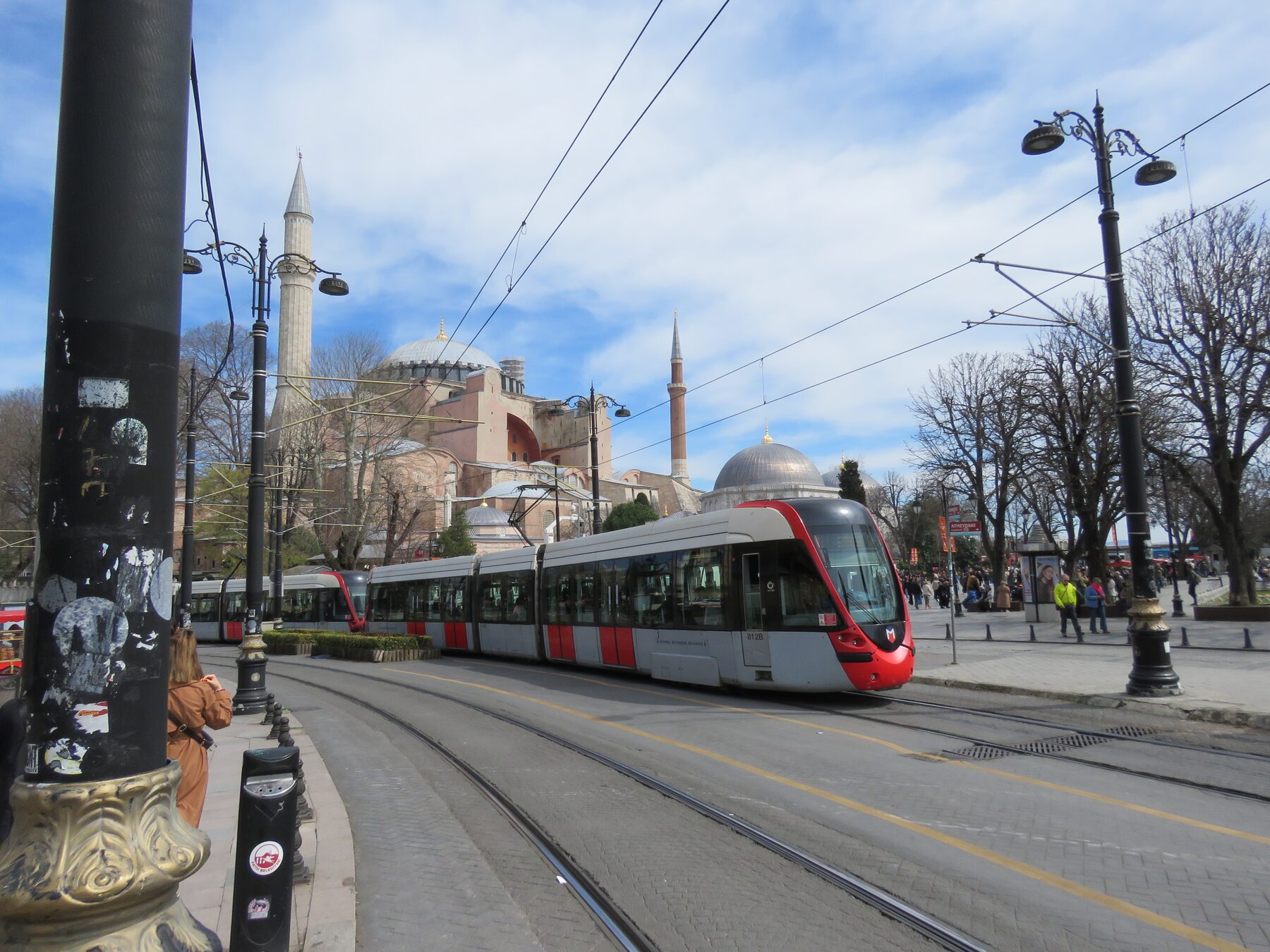
For most visitors staying elsewhere in central Istanbul, the T1 tram is the easiest public transport option.
Get off at Sultanahmet and walk across the square.
From Sirkeci or Eminönü, walking is possible, but the route becomes uphill in places.
Taxis are not necessarily faster because streets around the Historic Peninsula are busy and road access is restricted in several areas.
For the wider transport picture, see my Istanbul Travel Guide.
What to Combine With Hagia Sophia
Hagia Sophia sits in one of the densest sightseeing areas in Istanbul.
Blue Mosque
The Blue Mosque stands directly across Sultanahmet Square.
It is easy to combine geographically, but both buildings are active mosques, so prayer times can affect the order of your day.
Basilica Cistern
The Basilica Cistern is close enough to combine naturally with Hagia Sophia.
Because the visit is more compact than Topkapı Palace, it works well as the second major interior of a half-day.
Topkapı Palace
Topkapı is nearby but requires substantially more time.
Do not treat it as something you can squeeze into the final hour of a Sultanahmet morning.
Allow several hours if the palace is a priority.
Hippodrome
The former Hippodrome area is immediately accessible around Sultanahmet Square and works naturally between larger attractions.
Istanbul Archaeological Museums
The archaeological museums are another strong option if you want deeper historical context rather than another heavily visited landmark.
For a realistic way to combine these sights, use my Istanbul itinerary for 1, 2, 3, 4, 5 or 7 days.
Do not try to complete Hagia Sophia, Blue Mosque, Basilica Cistern, Topkapı Palace and the Grand Bazaar before lunch.
Two major interiors plus one shorter stop usually produces a much more manageable half-day.
Is a Hagia Sophia Guided Tour Worth It?
A guide can add genuine value here.
Hagia Sophia contains almost fifteen centuries of religious, political, architectural and artistic history, while the current visitor route means you do not necessarily experience the building in an intuitive chronological order.
A guide is particularly useful if you want help understanding:
- Byzantine Constantinople
- Justinian’s church
- mosaics
- Ottoman conversion and additions
- architectural engineering
- the building’s twentieth-century museum period
- its current role as a mosque.
An independent visit is perfectly possible if you already understand the basic chronology and prefer to spend more time looking rather than listening.
If you book a tour, choose one with a clearly stated:
- meeting point
- duration
- admission arrangement
- guide language
- cancellation policy.
For other experiences where paying for a guide can make sense, see my 9 Best Istanbul Tours & Experiences.
Staying Near Hagia Sophia
If the Historic Peninsula is the main focus of your first Istanbul trip, staying nearby can simplify the first few sightseeing days considerably.
Sultanahmet puts Hagia Sophia, the Blue Mosque, Basilica Cistern and Topkapı Palace within walking distance.
Sirkeci gives you easier transport connections while keeping the historic core close.
The trade-off is that Sultanahmet becomes much quieter in the evening than areas such as Karaköy, Galata or Kadıköy.
See my full guide to where to stay in Istanbul before choosing a neighborhood.
Hagia Sophia Accessibility and Practical Limits
Hagia Sophia is a historic building operating under a controlled modern visitor system.
Historic surfaces, route restrictions and restoration work can all affect accessibility.
If step-free access is essential, confirm the latest visitor arrangement before traveling rather than relying on an older accessibility report.
The same applies if you are visiting with:
- a wheelchair
- significant mobility limitations
- a stroller
- medical equipment.
Current on-site arrangements are more useful than a generic description because the visitor route can change during conservation work.
Common Hagia Sophia Mistakes
- Following visitor instructions written before 2024. The tourist circulation system has changed significantly.
- Assuming the tourist ticket gives access to every part of the mosque. Sightseeing and worship access operate differently.
- Arriving without checking prayer times. Hagia Sophia is an active mosque, not a conventional museum.
- Believing “skip the line” means no security queue. Mandatory security procedures still apply.
- Dressing as if you are visiting an ordinary museum. Mosque etiquette still matters.
- Expecting every mosaic and architectural detail to be visible. Restoration can temporarily cover or restrict areas.
- Scheduling Topkapı Palace immediately afterward with no buffer. Queues, prayer access and security can all affect timing.
- Relying on an old fixed ticket price. Check the current tariff before visiting.
Hagia Sophia Istanbul FAQ
Is Hagia Sophia a Mosque or a Museum?
Hagia Sophia is currently an active mosque and historic monument.
The visitor experience includes a separate tourist route rather than the former museum-era circulation system.
Do Tourists Need a Ticket for Hagia Sophia?
Foreign visitors using the sightseeing route to the upper gallery require a ticket under the current visitor-management system.
Check the current price and sales arrangement shortly before your visit.
Can Tourists Enter the Main Prayer Hall?
Tourist sightseeing and worship access operate under different arrangements.
Foreign sightseeing visitors are directed through the upper-gallery tourist route rather than simply using the mosque floor as the old museum route.
Follow current on-site instructions because prayer and restoration requirements can affect access.
Can You Visit Hagia Sophia During the Restoration?
Yes.
The restoration program has been planned while keeping Hagia Sophia functioning for worship and tourism, although scaffolding, protective structures and route changes can affect what visitors see.
How Long Do You Need at Hagia Sophia?
Around 60 to 90 minutes is a reasonable planning estimate for the visitor experience itself.
Add extra time for:
- security
- ticketing
- queues
- prayer-related interruptions.
Is Hagia Sophia Worth Visiting During Restoration?
For a first visit to Istanbul, yes.
Some architectural views may be affected, but Hagia Sophia’s significance does not depend on having every wall and section completely free of conservation equipment.
Should I Book Hagia Sophia in Advance?
Advance booking can be useful when you want a particular guided tour or want to reduce uncertainty around ticket purchase.
It does not eliminate mandatory security or guarantee that prayer and restoration arrangements will remain unchanged.
Last checked: September 2026. Visitor routes, restoration conditions, prayer access and ticket arrangements can change.
Some links in this article are affiliate links. If you book through them, I may earn a small commission at no extra cost to you.